Software Engineering
Mrs. R.K.Santhia /Assistant Professor-CSE
Types of software life cycle model
Classic Waterfall model
Iterative Lifecycle model
Prototyping model
Evolutionary model
Spiral model
WATERFALL MODEL
-Sandesh Jonchhe
2
WATERFALL MODEL
Alternative to SDLC
Most basic lifecycle model
Is a sequential software development model
Development is seen as flowing steadily downwards(like waterfall) through
several phases
In this model whole application is developed in a sequential approach
Each phase must be completed fully before the next phase begin
3
4
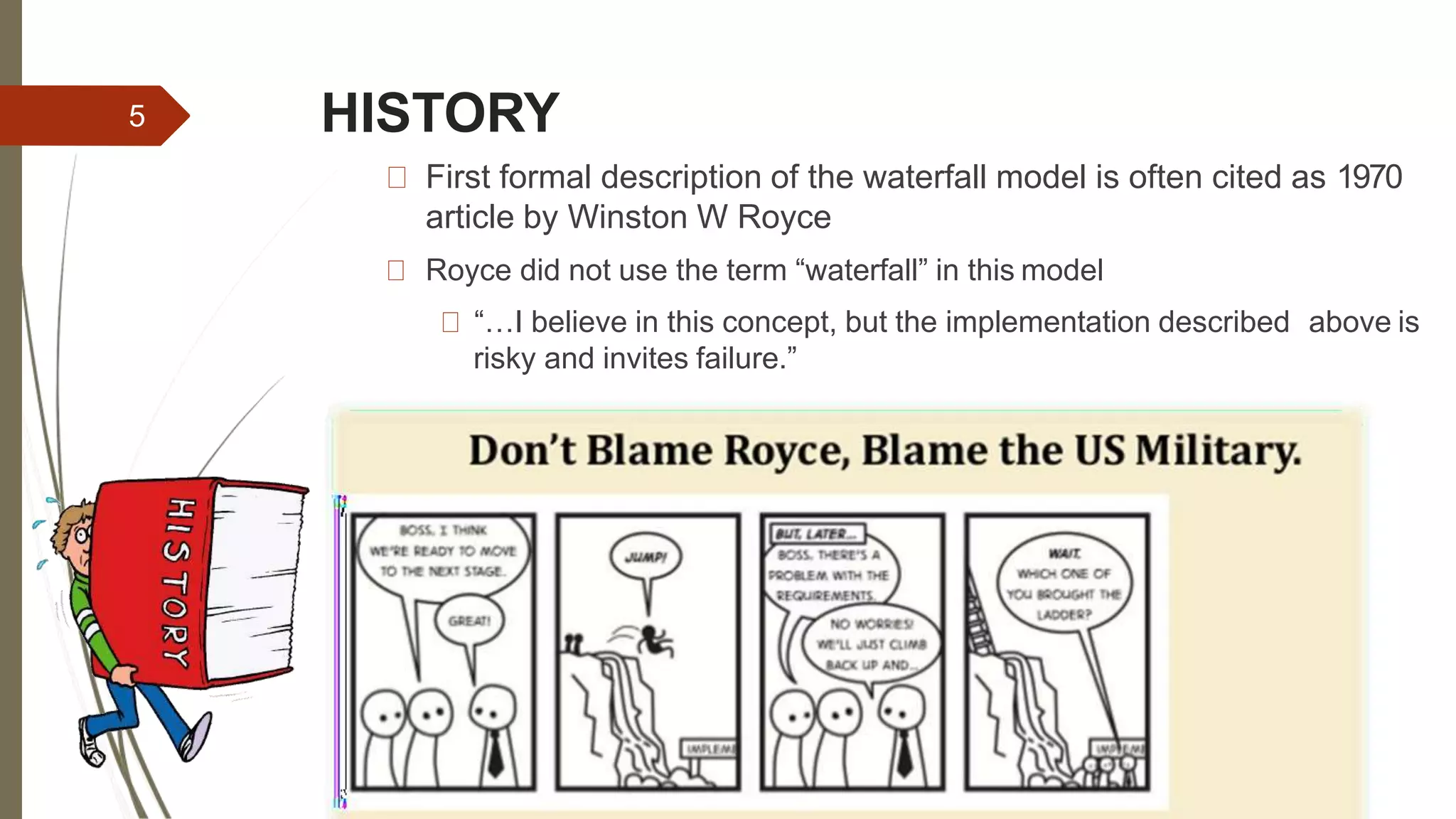
HISTORY
First formal description of the waterfall model is often cited as 1970
article by Winston W Royce
Royce did not use the term “waterfall” in this model
“…I believe in this concept, but the implementation described above is
risky and invites failure.”
5
WHEN TO USE
Requirements are very well known, clear and fixed
Product definition is stable
Technology is understood
There are no ambiguous requirements
The project is short
6
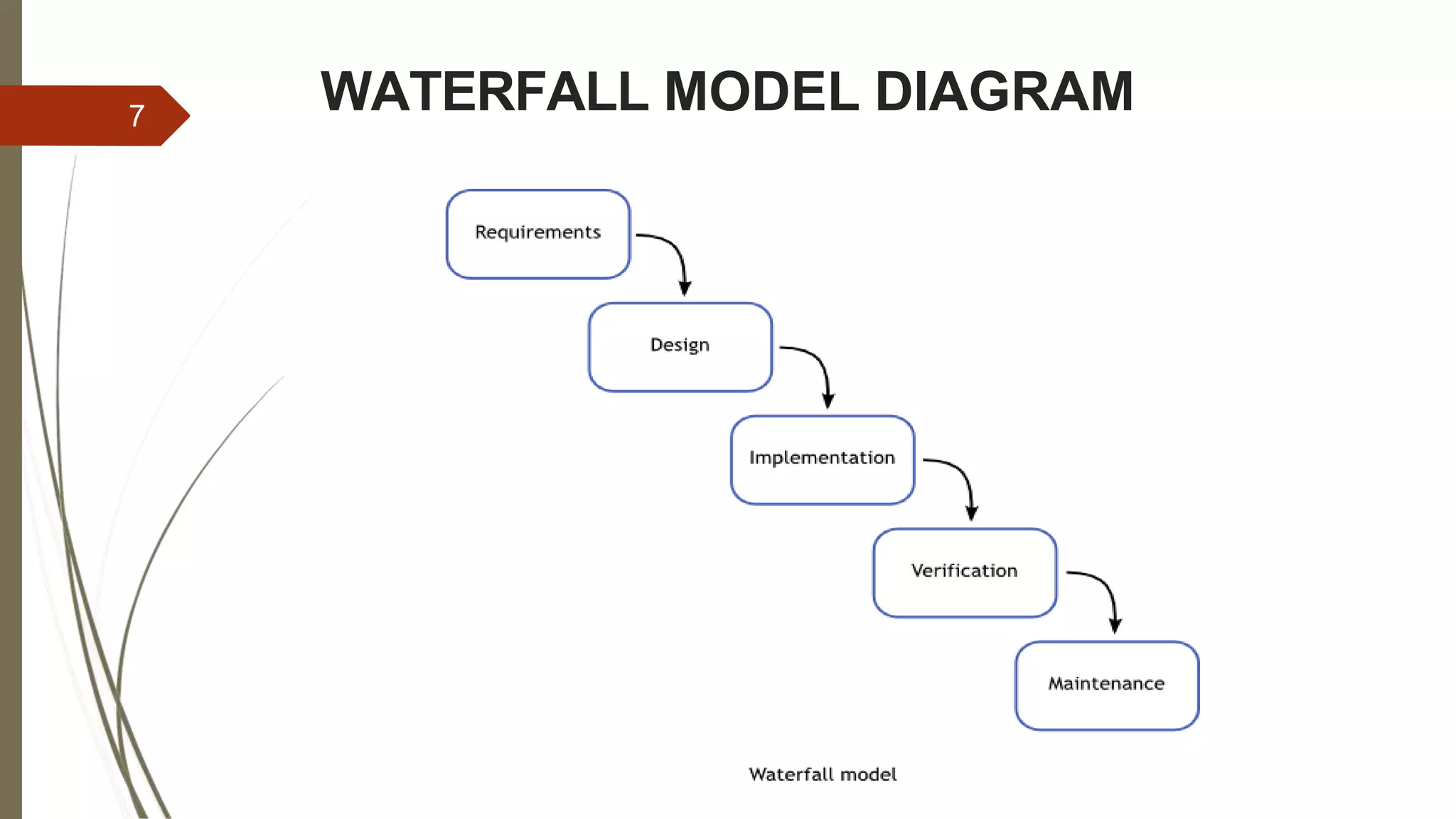
WATERFALL MODEL DIAGRAM7
8
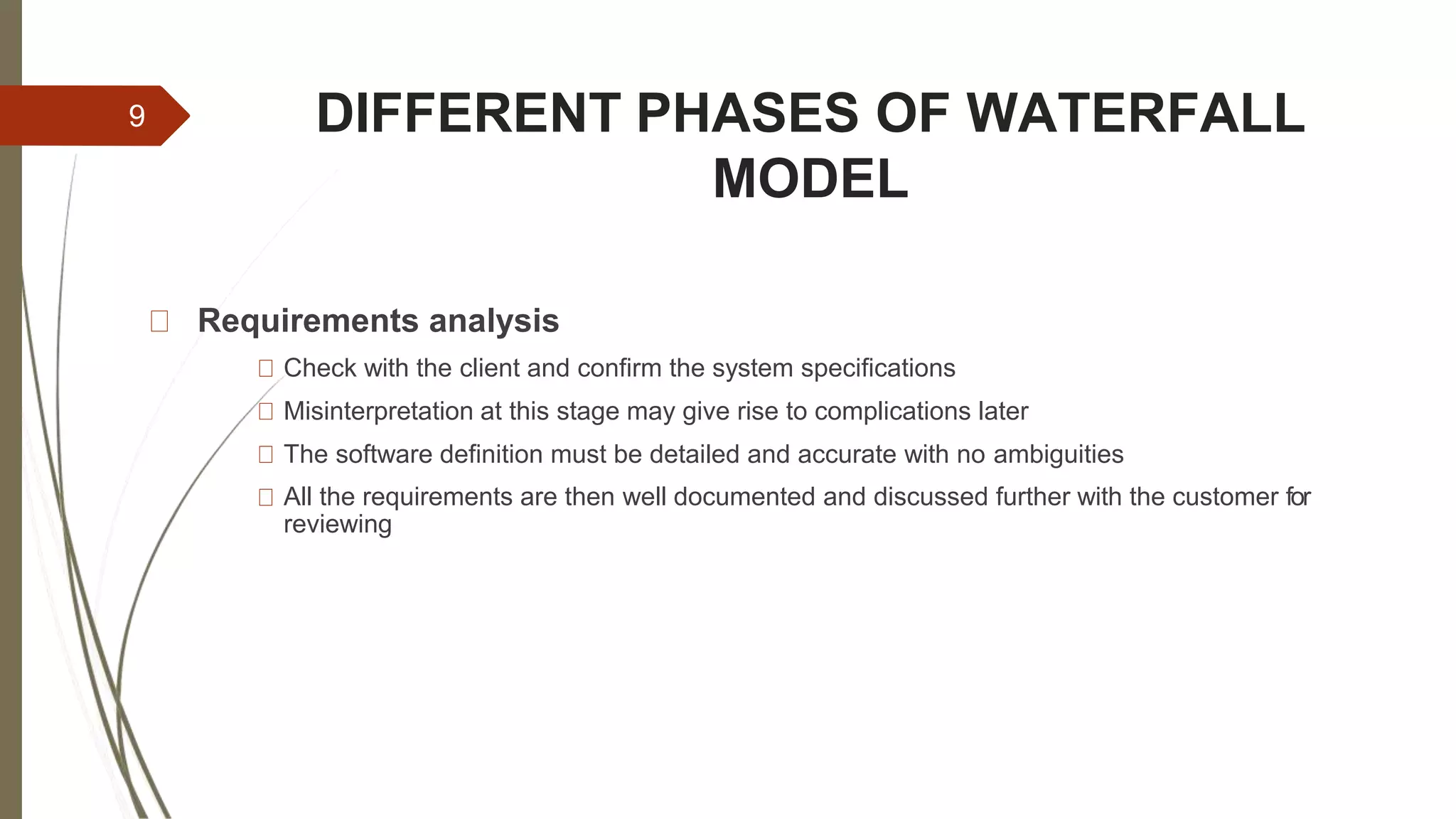
DIFFERENT PHASES OF WATERFALL
MODEL
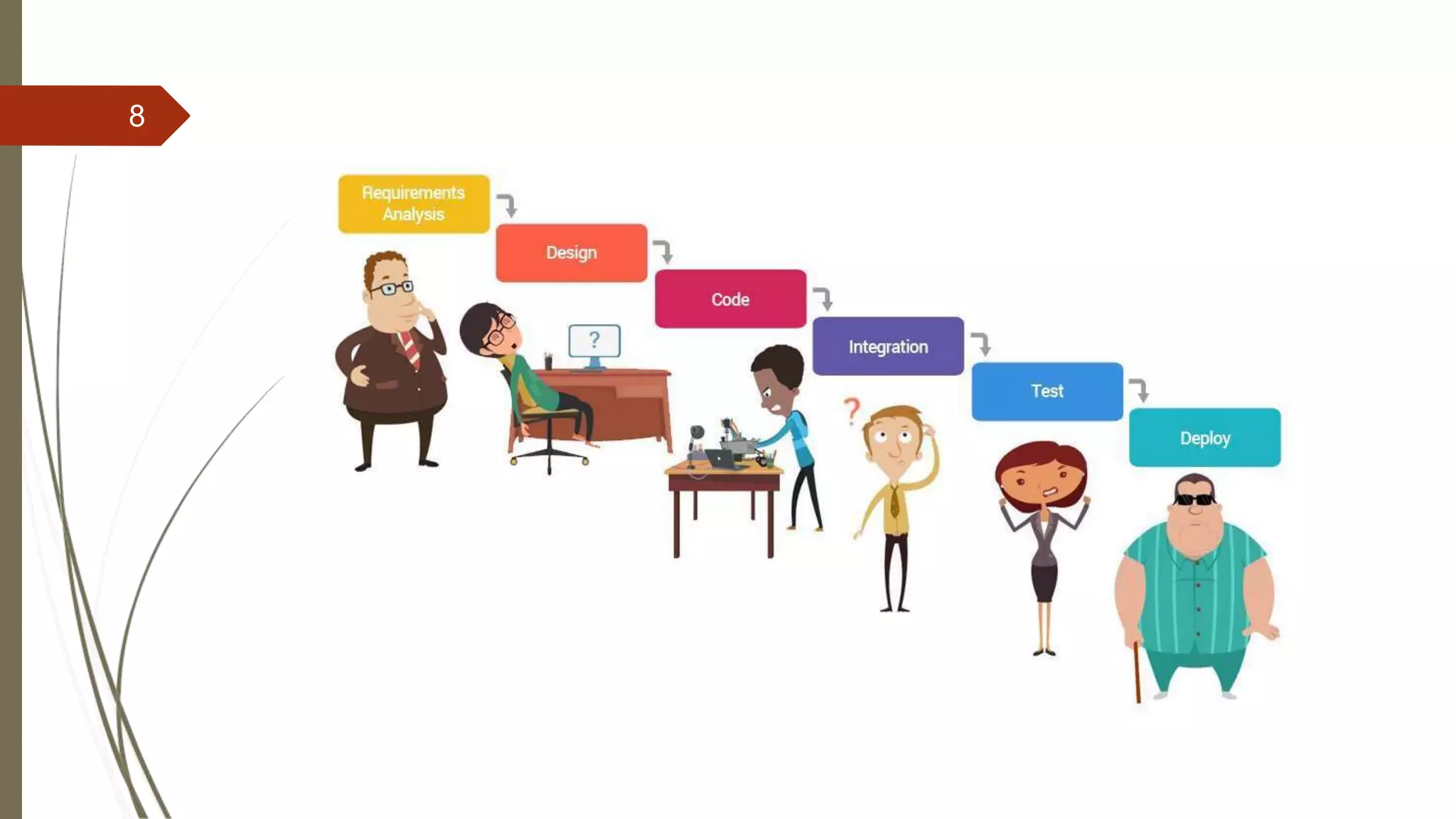
Requirements analysis
Check with the client and confirm the system specifications
Misinterpretation at this stage may give rise to complications later
The software definition must be detailed and accurate with no ambiguities
All the requirements are then well documented and discussed further with the customer for
reviewing
9
Design
Decide on the system architecture, or the big picture/skeleton.
Customer requirements are broken down into logical modules for the ease of
implementation
This phase lays a fundamental for actual programming and implementation
Requirements are translated in some easy to represent form using which coding can
be done effectively and efficiently
DIFFERENT PHASES(contd..)
Implementation(Coding)
Write the actual software itself/ coding
Design is translated into machine-readable form
If design is done in sufficient detail then coding can be done effectively
10
Verification
Same thing as testing.
The entire system will be tested for any faults and failures
Verification/testing mainly focuses on
Internal efficiency
External efficiency
DIFFERENT PHASES(contd..)
Maintenance
After the system/software has been deployed on the client site, it is the duty of the
software development team to undertake routine maintenance activities by visiting
the client site
Fix any bugs or issues that come up during operation.
If the customer suggests changes or enhancements the software process has to be
followed all over again right from the first phase i.e requirement analysis
11
ADVANTAGES
Simple and easy to understand and use
Easy to manage due to the rigidity of the model
Phases are processed and completed one at a time
Works well for smaller projects where requirements are very well
understood
Implementers have to follow the design accurately
As everything is documented a new team member can easily understand
what is to be done
12
DISADVANTAGES
You cannot go back a step; if the design phase has gone wrong, things
can get very complicated in the implementation phase
High amounts of risk and uncertainty
Not a good model for complex and object oriented projects
Poor model for long and on-going projects
Not suitable for the projects where requirements are at a moderate to
high risk of changing
Customer can see the working model of the project only at the end
13
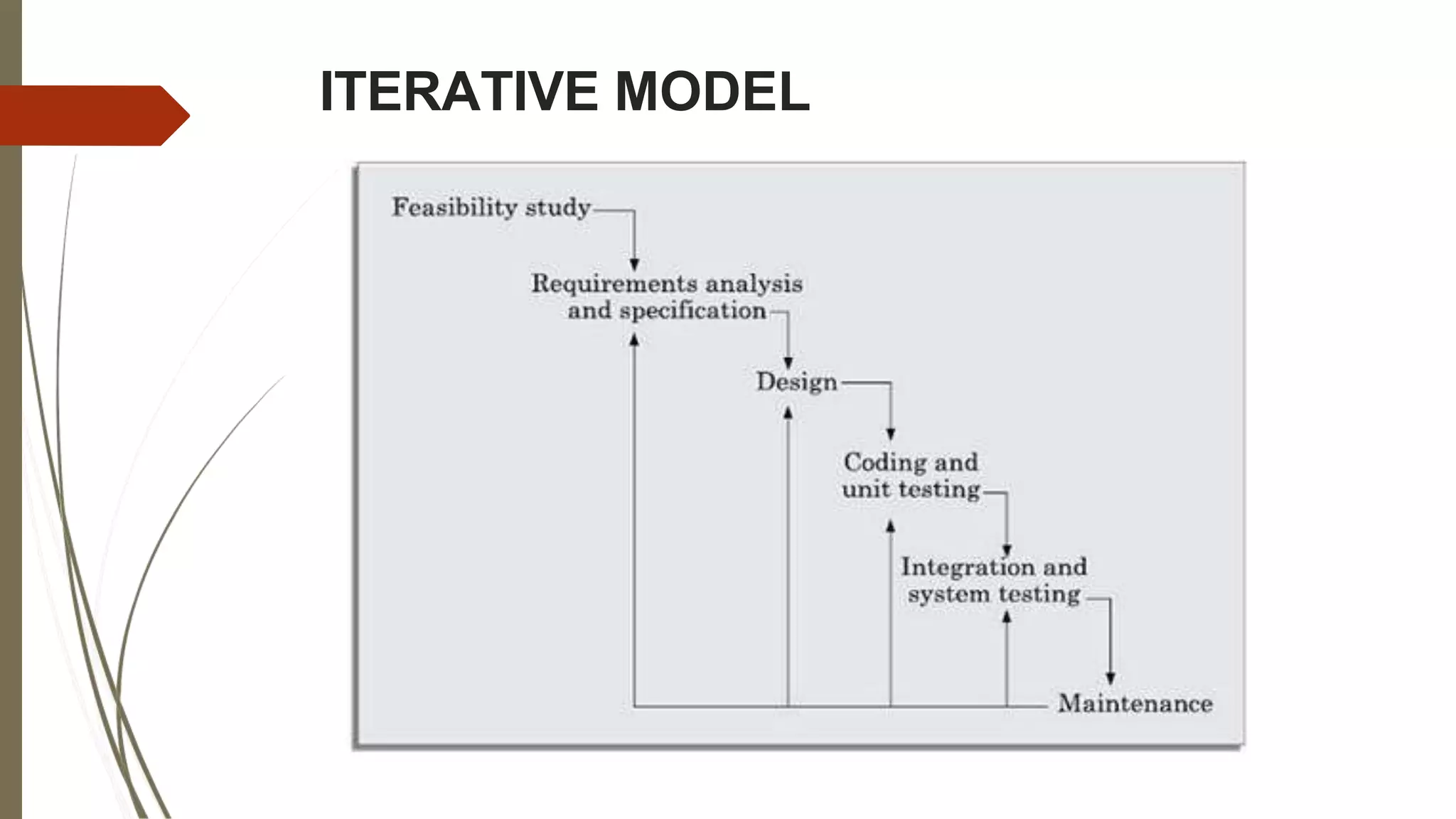
ITERATIVE MODEL
29
ITERATIVE MODEL
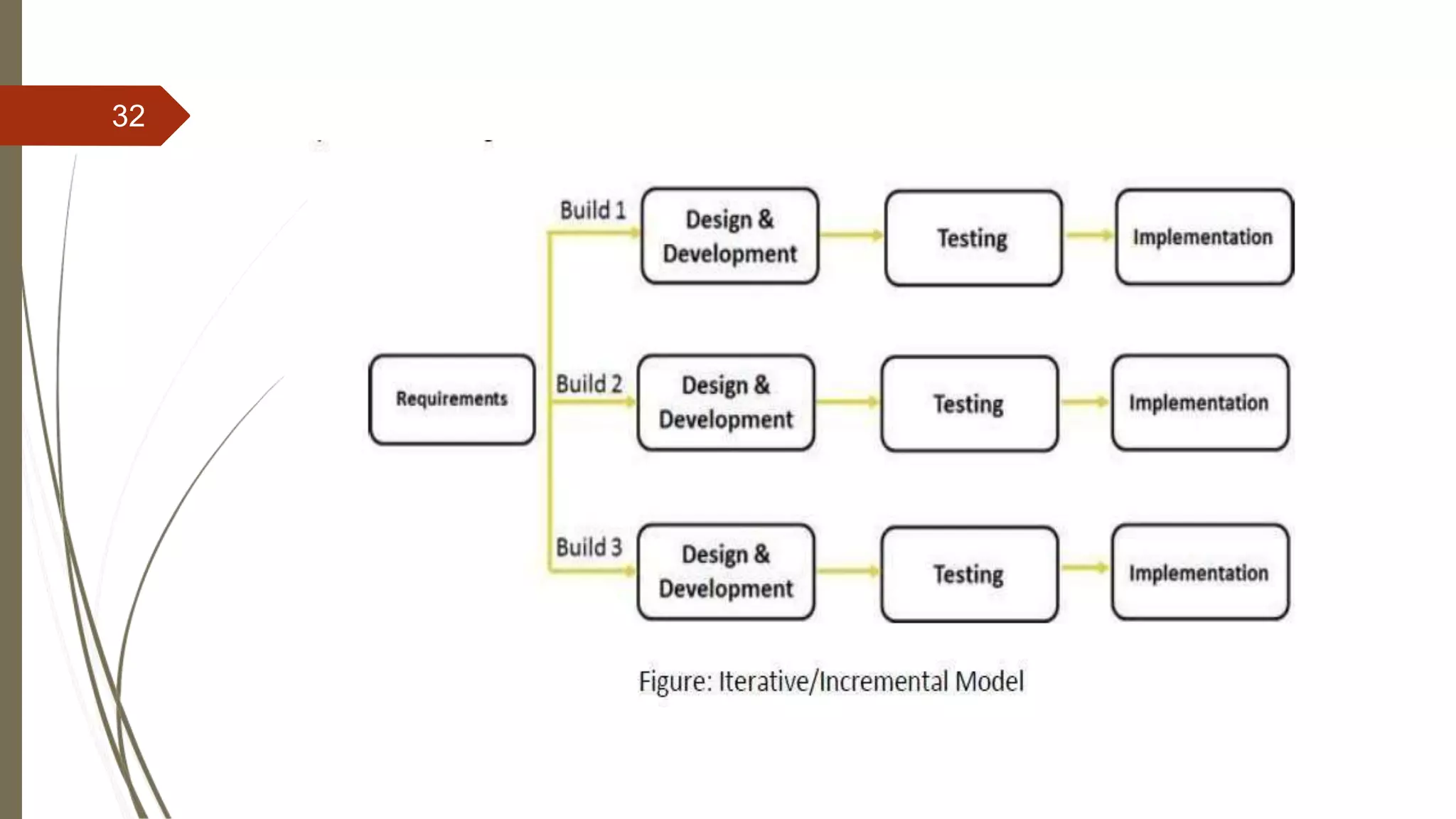
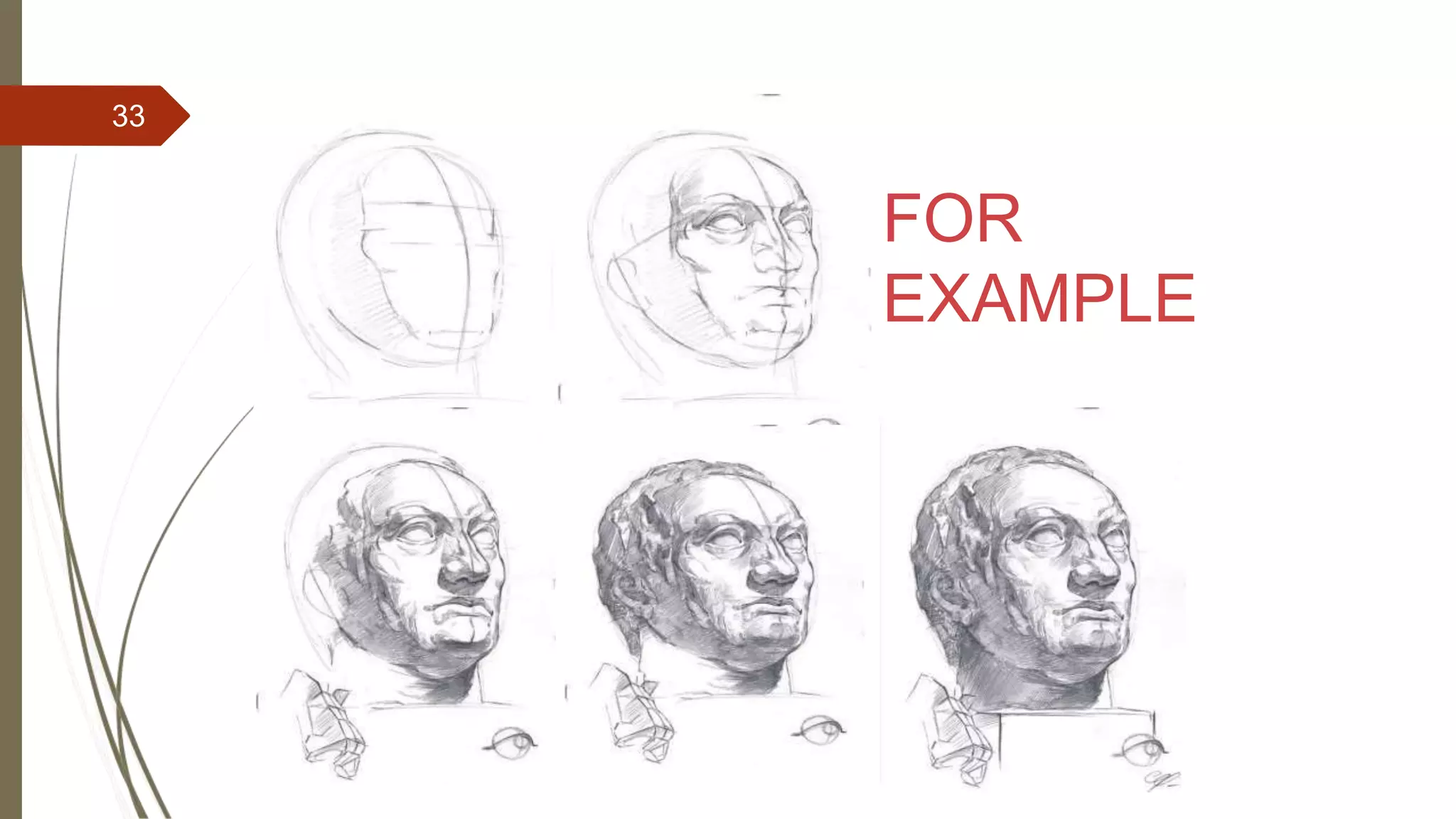
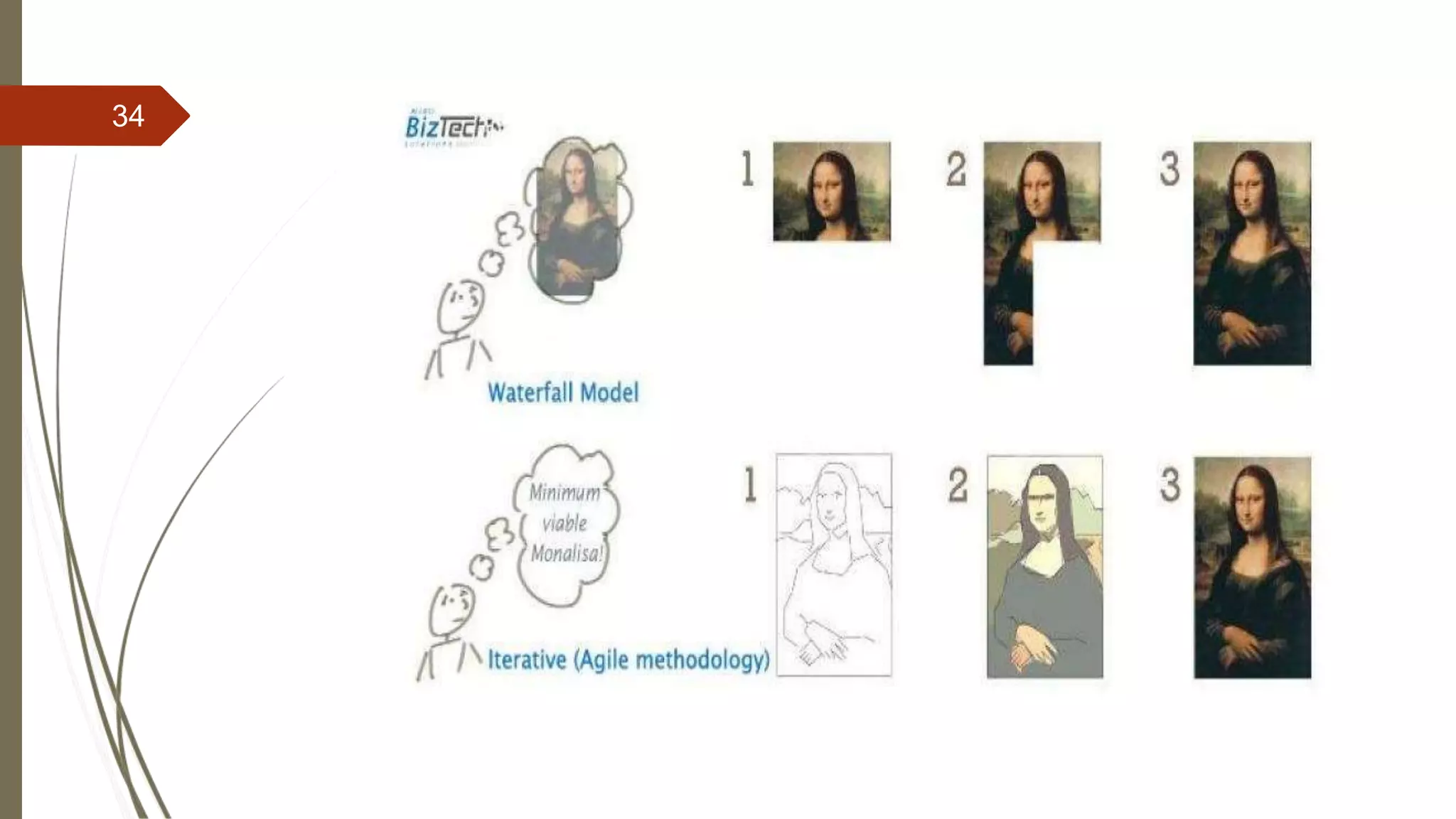
• Also called Incremental Model
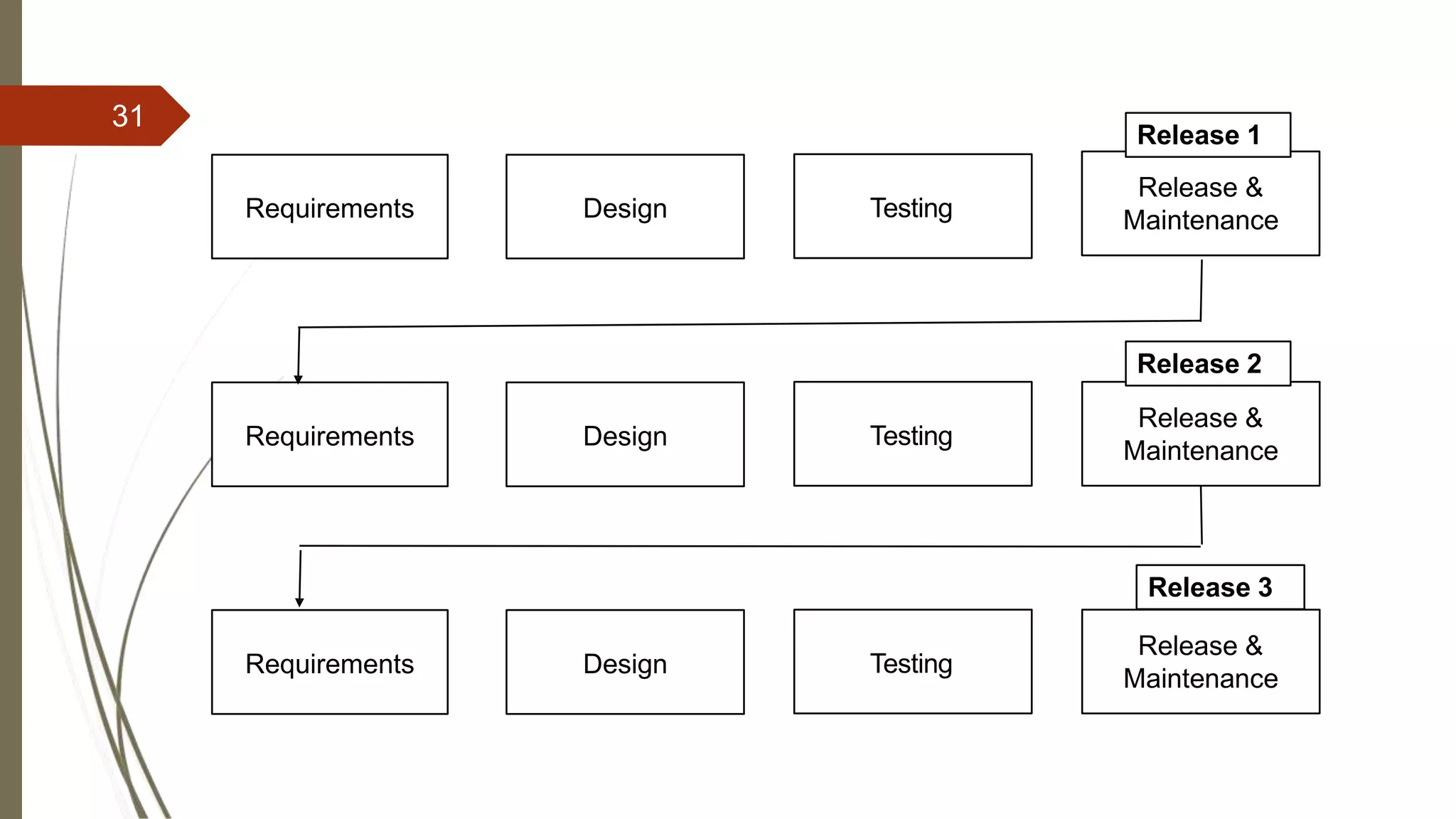
• Project is broken into small modules which can be delivered
• A working version of software is produced during the first module.
• Each subsequent release of the module adds functionality to the previous
release. The process continues till the complete system is achieved.
• Model very successfully when working with new technology
• Multiple life cycle makes it like a “multi waterfall” cycle.
30
ITERATIVE MODEL
31
Requirements Design Testing
Release &
Maintenance
Requirements Design Testing
Release &
Maintenance
Requirements Design Testing
Release &
Maintenance
Release 1
Release 2
Release 3
32
Planning Phase: This is the first stage of the iterative model, where proper planning
is done by the team, which helps them in mapping out the specifications documents,
establish software or hardware requirements and generally prepare for the upcoming
stages of the cycle.
DIFFERENT PHASES OF ITERATIVE MODEL
Analysis and Design Phase: Once the planning is complete for the cycle, an analysis
is performed to point out the appropriate business logic, database models and to
know any other requirements of this particular stage. Moreover, the design stage
also occurs in this phase of iterative model, where the technical requirements are
established that will be utilized in order to meet the need of analysis stage.
Implementation Phase: This is the third and the most important phase of the iterative
model. Here, the actual implementation and coding process is executed. All planning,
specification, and design documents up to this point are coded and implemented into
this initial iteration of the project.
Testing Phase: After the current build iteration is coded and implemented, testing is
initiated in the cycle to identify and locate any potential bugs or issues that may have
been in the software.
Evaluation Phase: The final phase of the Iterative life cycle is the evaluation phase,
where the entire team along with the client, examine the status of the project and
validate whether it is as per the suggested requirements.
DIFFERENT PHASES(contd..)
33
FOR
EXAMPLE
34
WHEN TO USE?
Requirement of the main system are clearly defined and understood
When the project is big
Major requirement must be defined ; however, some details can evolve
with time
35
ADVANTAGES36
• Software is produced early which facilitates customer evaluation and feedback
• Less costly to change requirements as compared to other models
• Easier to develop and test when iterations are small
• Customer can give his feedback during developing stage
• With every increment, operational product is delivered.
• Better suited for large and mission critical projects
DISADVANTAGES
• Comparatively more resources are required
• Costly system architecture or design issues may arise because not all
requirements are gathered up front for the entire lifecycle
• Cost is higher than Waterfall model
• Not suitable for smaller project
37
THANK YOU
38

Types of software life cycle model

  • 1.
    Software Engineering Mrs. R.K.Santhia/Assistant Professor-CSE
  • 2.
    Types of softwarelife cycle model Classic Waterfall model Iterative Lifecycle model Prototyping model Evolutionary model Spiral model
  • 3.
  • 4.
    WATERFALL MODEL Alternative toSDLC Most basic lifecycle model Is a sequential software development model Development is seen as flowing steadily downwards(like waterfall) through several phases In this model whole application is developed in a sequential approach Each phase must be completed fully before the next phase begin 3
  • 5.
  • 6.
    HISTORY First formal descriptionof the waterfall model is often cited as 1970 article by Winston W Royce Royce did not use the term “waterfall” in this model “…I believe in this concept, but the implementation described above is risky and invites failure.” 5
  • 7.
    WHEN TO USE Requirementsare very well known, clear and fixed Product definition is stable Technology is understood There are no ambiguous requirements The project is short 6
  • 8.
  • 9.
  • 10.
    DIFFERENT PHASES OFWATERFALL MODEL Requirements analysis Check with the client and confirm the system specifications Misinterpretation at this stage may give rise to complications later The software definition must be detailed and accurate with no ambiguities All the requirements are then well documented and discussed further with the customer for reviewing 9
  • 12.
    Design Decide on thesystem architecture, or the big picture/skeleton. Customer requirements are broken down into logical modules for the ease of implementation This phase lays a fundamental for actual programming and implementation Requirements are translated in some easy to represent form using which coding can be done effectively and efficiently DIFFERENT PHASES(contd..)
  • 14.
    DIFFERENT PHASES(contd..) Implementation(Coding) Write theactual software itself/ coding Design is translated into machine-readable form If design is done in sufficient detail then coding can be done effectively 10
  • 16.
    Verification Same thing astesting. The entire system will be tested for any faults and failures Verification/testing mainly focuses on Internal efficiency External efficiency DIFFERENT PHASES(contd..)
  • 18.
    DIFFERENT PHASES(contd..) Maintenance After thesystem/software has been deployed on the client site, it is the duty of the software development team to undertake routine maintenance activities by visiting the client site Fix any bugs or issues that come up during operation. If the customer suggests changes or enhancements the software process has to be followed all over again right from the first phase i.e requirement analysis 11
  • 20.
    ADVANTAGES Simple and easyto understand and use Easy to manage due to the rigidity of the model Phases are processed and completed one at a time Works well for smaller projects where requirements are very well understood Implementers have to follow the design accurately As everything is documented a new team member can easily understand what is to be done 12
  • 21.
    DISADVANTAGES You cannot goback a step; if the design phase has gone wrong, things can get very complicated in the implementation phase High amounts of risk and uncertainty Not a good model for complex and object oriented projects Poor model for long and on-going projects Not suitable for the projects where requirements are at a moderate to high risk of changing Customer can see the working model of the project only at the end 13
  • 22.
  • 23.
    ITERATIVE MODEL • Alsocalled Incremental Model • Project is broken into small modules which can be delivered • A working version of software is produced during the first module. • Each subsequent release of the module adds functionality to the previous release. The process continues till the complete system is achieved. • Model very successfully when working with new technology • Multiple life cycle makes it like a “multi waterfall” cycle. 30
  • 24.
  • 25.
    31 Requirements Design Testing Release& Maintenance Requirements Design Testing Release & Maintenance Requirements Design Testing Release & Maintenance Release 1 Release 2 Release 3
  • 26.
  • 27.
    Planning Phase: Thisis the first stage of the iterative model, where proper planning is done by the team, which helps them in mapping out the specifications documents, establish software or hardware requirements and generally prepare for the upcoming stages of the cycle. DIFFERENT PHASES OF ITERATIVE MODEL Analysis and Design Phase: Once the planning is complete for the cycle, an analysis is performed to point out the appropriate business logic, database models and to know any other requirements of this particular stage. Moreover, the design stage also occurs in this phase of iterative model, where the technical requirements are established that will be utilized in order to meet the need of analysis stage.
  • 28.
    Implementation Phase: Thisis the third and the most important phase of the iterative model. Here, the actual implementation and coding process is executed. All planning, specification, and design documents up to this point are coded and implemented into this initial iteration of the project. Testing Phase: After the current build iteration is coded and implemented, testing is initiated in the cycle to identify and locate any potential bugs or issues that may have been in the software. Evaluation Phase: The final phase of the Iterative life cycle is the evaluation phase, where the entire team along with the client, examine the status of the project and validate whether it is as per the suggested requirements. DIFFERENT PHASES(contd..)
  • 29.
  • 30.
  • 31.
    WHEN TO USE? Requirementof the main system are clearly defined and understood When the project is big Major requirement must be defined ; however, some details can evolve with time 35
  • 32.
    ADVANTAGES36 • Software isproduced early which facilitates customer evaluation and feedback • Less costly to change requirements as compared to other models • Easier to develop and test when iterations are small • Customer can give his feedback during developing stage • With every increment, operational product is delivered. • Better suited for large and mission critical projects
  • 33.
    DISADVANTAGES • Comparatively moreresources are required • Costly system architecture or design issues may arise because not all requirements are gathered up front for the entire lifecycle • Cost is higher than Waterfall model • Not suitable for smaller project 37
  • 34.