Download as PPSX, PPTX


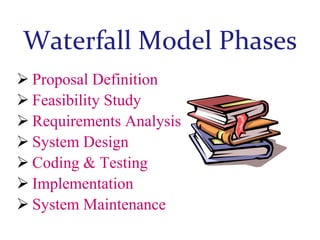
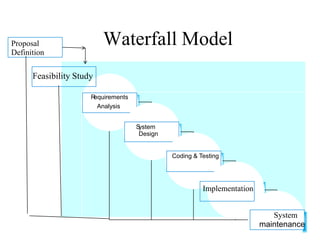


The Waterfall Model is a sequential software development process that consists of distinct phases: proposal definition, feasibility study, requirements analysis, system design, coding and testing, implementation, and system maintenance. It became popular in the 1970s as a structured approach to software development life cycles. Key strengths include its linear structure that is easy to understand and manage, while limitations are the inability to easily change requirements late in the process and lack of opportunity for customer feedback until full implementation. It works best when requirements are very stable and clearly defined.


