PRESENTATION ON TOPIC WATERFALL MODEL
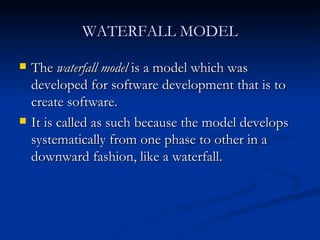
WATERFALL MODEL The  waterfall model  is a model which was developed for software development that is to create software.  It is called as such because the model develops systematically from one phase to other in a downward fashion, like a waterfall.
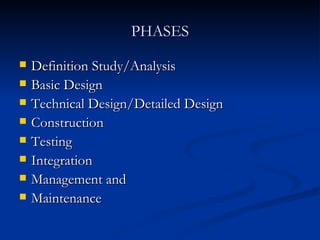
PHASES Definition Study/Analysis Basic Design Technical Design/Detailed Design Construction Testing Integration Management and Maintenance
Definition Study / Analysis   Definition Study / Analysis:  During this phase research is being conducted which includes brainstorming about the software, what it is going to be and what purpose is it going to fulfill.
Basic Design   Basic Design:  If the first phase gets successfully completed and a well thought out plan for the software development has been laid then the next step involves formulating the basic design of the software on paper.
Technical Design / Detail Design   Technical Design / Detail Design:   After the basic design gets approved, then a more elaborated technical design can be planned. Here the functions of each of the part are decided and the engineering units are placed for example modules, programs etc.
Construction / Implementation   Construction / Implementation:  In this phase the source code of the programs is written.
Testing Testing:  At this phase, the whole design and its construction is put under a test to check its functionality. If there are any errors then they will surface at this point of the process
Integration Integration:  in the phase of Integration, the company puts it in use after the system has been successfully tested
Management and Maintenance Management and Maintenance :  Maintenance and management is needed to ensure that the system will continue to perform as desired
ADVANTAGES 1. The Waterfall method is also well known amongst the software developers  2.  therefore it is easy to use.  3.  It is easier to develop various software through this method in short span of time.
DISADVANTAGES Many software projects are dependent upon external factors; out of which the client for which the software is being designed is the biggest factor. It happens a lot of times, that the client changes the requirement of the project, thereby influencing an alteration in the normal plan of construction and hence the functionality as well.  The Waterfall Model doesn’t work well in a situation like this as it assumes no alteration to occur once the process has started according to plan.

Waterfall

  • 1.
    PRESENTATION ON TOPICWATERFALL MODEL
  • 2.
    WATERFALL MODEL The waterfall model is a model which was developed for software development that is to create software. It is called as such because the model develops systematically from one phase to other in a downward fashion, like a waterfall.
  • 3.
    PHASES Definition Study/AnalysisBasic Design Technical Design/Detailed Design Construction Testing Integration Management and Maintenance
  • 4.
    Definition Study /Analysis Definition Study / Analysis: During this phase research is being conducted which includes brainstorming about the software, what it is going to be and what purpose is it going to fulfill.
  • 5.
    Basic Design Basic Design: If the first phase gets successfully completed and a well thought out plan for the software development has been laid then the next step involves formulating the basic design of the software on paper.
  • 6.
    Technical Design /Detail Design Technical Design / Detail Design:  After the basic design gets approved, then a more elaborated technical design can be planned. Here the functions of each of the part are decided and the engineering units are placed for example modules, programs etc.
  • 7.
    Construction / Implementation Construction / Implementation: In this phase the source code of the programs is written.
  • 8.
    Testing Testing: At this phase, the whole design and its construction is put under a test to check its functionality. If there are any errors then they will surface at this point of the process
  • 9.
    Integration Integration: in the phase of Integration, the company puts it in use after the system has been successfully tested
  • 10.
    Management and MaintenanceManagement and Maintenance : Maintenance and management is needed to ensure that the system will continue to perform as desired
  • 11.
    ADVANTAGES 1. TheWaterfall method is also well known amongst the software developers 2. therefore it is easy to use. 3. It is easier to develop various software through this method in short span of time.
  • 12.
    DISADVANTAGES Many softwareprojects are dependent upon external factors; out of which the client for which the software is being designed is the biggest factor. It happens a lot of times, that the client changes the requirement of the project, thereby influencing an alteration in the normal plan of construction and hence the functionality as well. The Waterfall Model doesn’t work well in a situation like this as it assumes no alteration to occur once the process has started according to plan.