RAM
RAM, or Random Access Memory, is a crucial
component of digital electronics. It's a type of
memory that allows data to be accessed and
modified in any order. RAM is used for storing data
and instructions that the CPU needs to access
quickly.
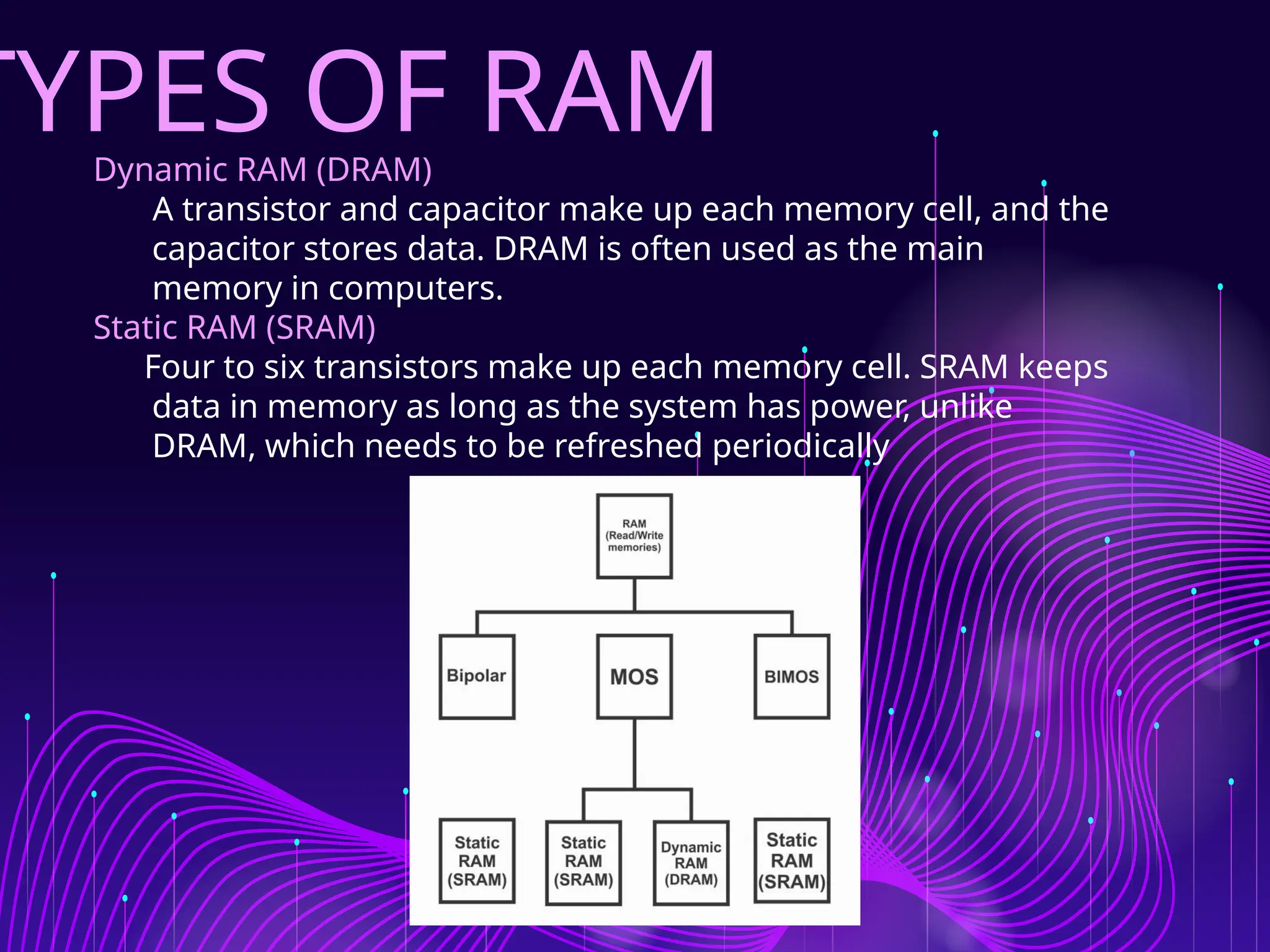
TYPES OF RAM
Dynamic RAM (DRAM)
A transistor and capacitor make up each memory cell, and the
capacitor stores data. DRAM is often used as the main
memory in computers.
Static RAM (SRAM)
Four to six transistors make up each memory cell. SRAM keeps
data in memory as long as the system has power, unlike
DRAM, which needs to be refreshed periodically
STATIC RAM (SRAM)
1 Fast Access
SRAM is known for its fast access
speeds, making it suitable for
applications requiring quick data
retrieval.
2 High Power Consumption
SRAM cells constantly consume power
even when idle, leading to higher
energy consumption.
3 Smaller Storage Capacity
SRAM generally has a smaller storage
capacity compared to DRAM due to its
more complex design.
4 Higher Cost
The complexity of SRAM design results
in higher manufacturing costs, making
it more expensive than DRAM.
DYNAMIC RAM (SRAM)
1 Slow Access
DRAM has slower access speeds
compared to SRAM due to the need for
refresh cycles.
2 Low Power Consumption
DRAM consumes less power compared
to SRAM because it stores data in
capacitors.
3 Larger Storage Capacity
DRAM can store a larger amount of
data than SRAM due to its simpler cell
design.
4 Lower Cost
DRAM's simple design results in lower
manufacturing costs, making it more
cost-effective.
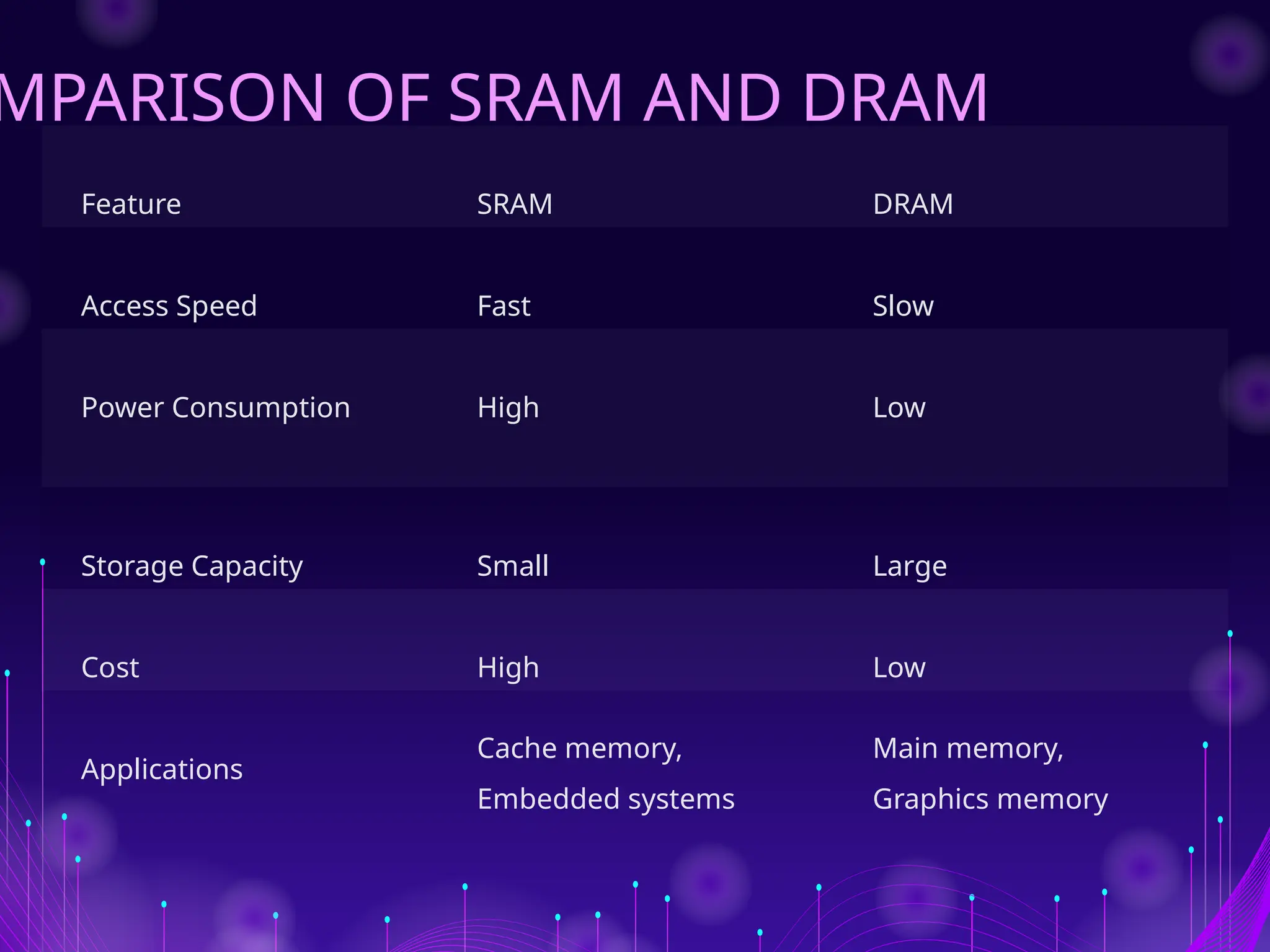
Feature SRAM DRAM
Access Speed Fast Slow
Power Consumption High Low
Storage Capacity Small Large
Cost High Low
Applications
Cache memory,
Embedded systems
Main memory,
Graphics memory
MPARISON OF SRAM AND DRAM
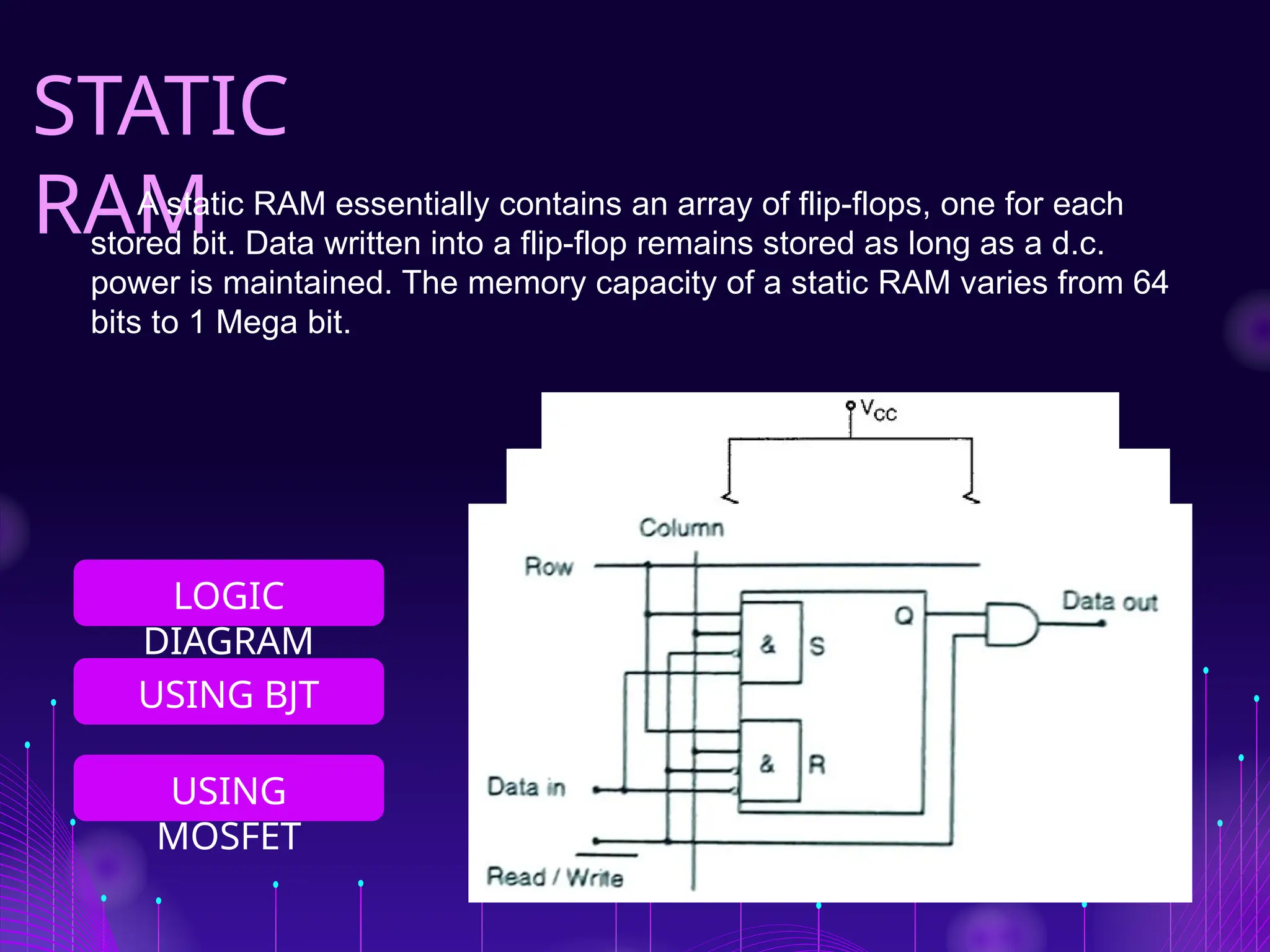
STATIC
RAM
LOGIC
DIAGRAM
USING BJT
USING
MOSFET
A static RAM essentially contains an array of flip-flops, one for each
stored bit. Data written into a flip-flop remains stored as long as a d.c.
power is maintained. The memory capacity of a static RAM varies from 64
bits to 1 Mega bit.
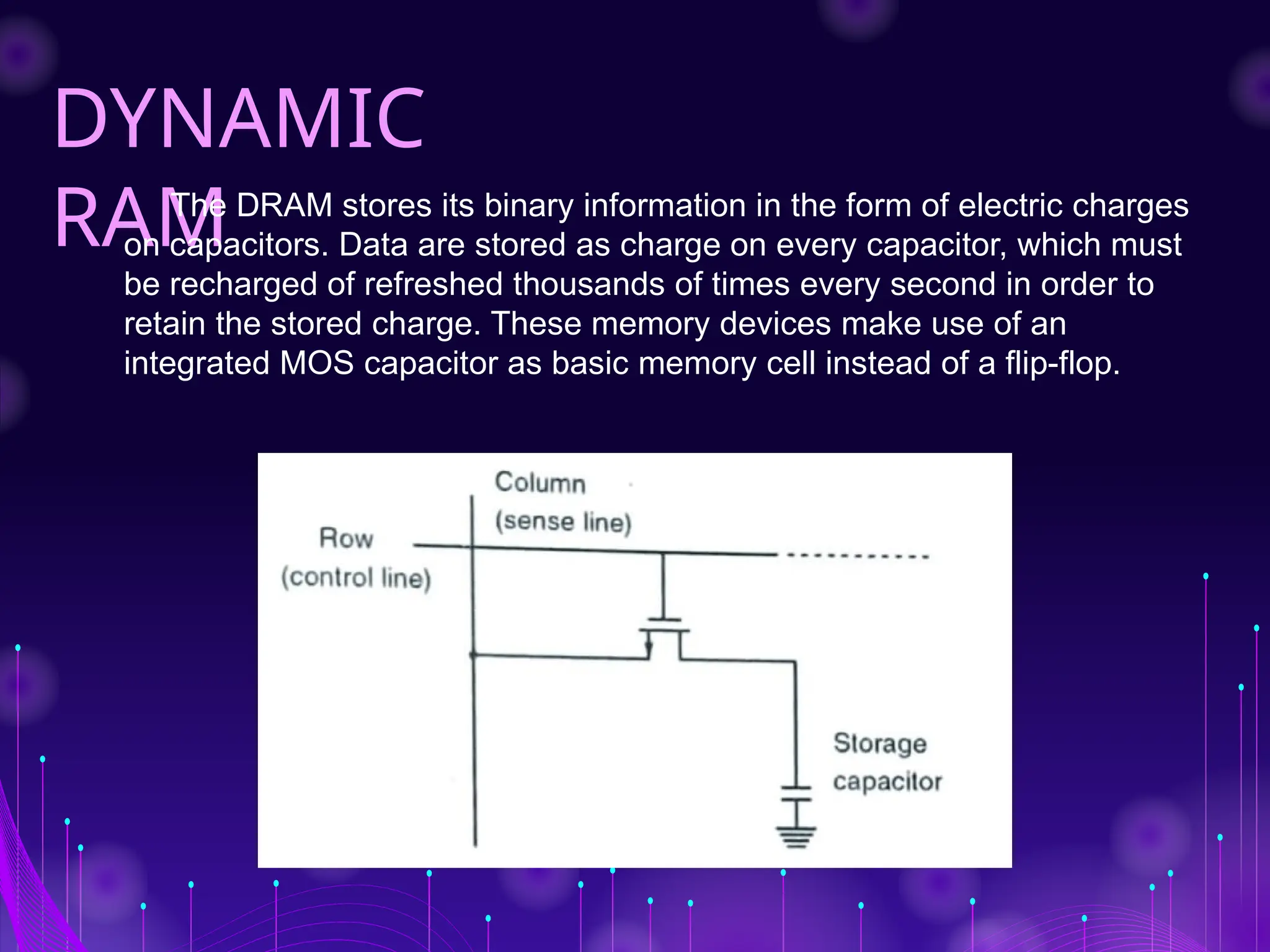
DYNAMIC
RAM
The DRAM stores its binary information in the form of electric charges
on capacitors. Data are stored as charge on every capacitor, which must
be recharged of refreshed thousands of times every second in order to
retain the stored charge. These memory devices make use of an
integrated MOS capacitor as basic memory cell instead of a flip-flop.
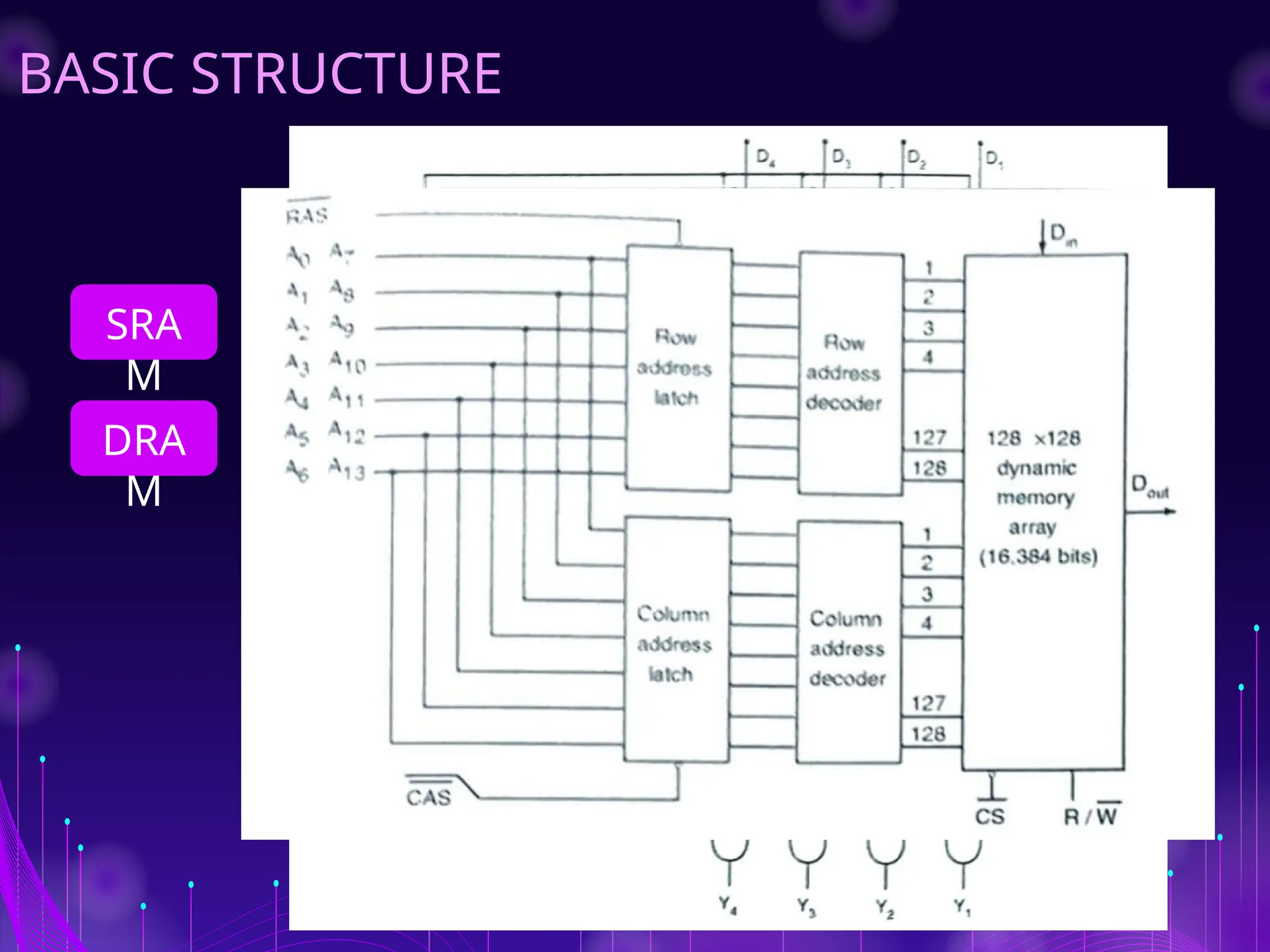
ROW AND COLUMN
SELECTION
BASIC STRUCTURE
SRA
M
DRA
M

Randam Access Memory. .pptx

  • 1.
    RAM RAM, or RandomAccess Memory, is a crucial component of digital electronics. It's a type of memory that allows data to be accessed and modified in any order. RAM is used for storing data and instructions that the CPU needs to access quickly.
  • 2.
    TYPES OF RAM DynamicRAM (DRAM) A transistor and capacitor make up each memory cell, and the capacitor stores data. DRAM is often used as the main memory in computers. Static RAM (SRAM) Four to six transistors make up each memory cell. SRAM keeps data in memory as long as the system has power, unlike DRAM, which needs to be refreshed periodically
  • 3.
    STATIC RAM (SRAM) 1Fast Access SRAM is known for its fast access speeds, making it suitable for applications requiring quick data retrieval. 2 High Power Consumption SRAM cells constantly consume power even when idle, leading to higher energy consumption. 3 Smaller Storage Capacity SRAM generally has a smaller storage capacity compared to DRAM due to its more complex design. 4 Higher Cost The complexity of SRAM design results in higher manufacturing costs, making it more expensive than DRAM.
  • 4.
    DYNAMIC RAM (SRAM) 1Slow Access DRAM has slower access speeds compared to SRAM due to the need for refresh cycles. 2 Low Power Consumption DRAM consumes less power compared to SRAM because it stores data in capacitors. 3 Larger Storage Capacity DRAM can store a larger amount of data than SRAM due to its simpler cell design. 4 Lower Cost DRAM's simple design results in lower manufacturing costs, making it more cost-effective.
  • 5.
    Feature SRAM DRAM AccessSpeed Fast Slow Power Consumption High Low Storage Capacity Small Large Cost High Low Applications Cache memory, Embedded systems Main memory, Graphics memory MPARISON OF SRAM AND DRAM
  • 6.
    STATIC RAM LOGIC DIAGRAM USING BJT USING MOSFET A staticRAM essentially contains an array of flip-flops, one for each stored bit. Data written into a flip-flop remains stored as long as a d.c. power is maintained. The memory capacity of a static RAM varies from 64 bits to 1 Mega bit.
  • 7.
    DYNAMIC RAM The DRAM storesits binary information in the form of electric charges on capacitors. Data are stored as charge on every capacitor, which must be recharged of refreshed thousands of times every second in order to retain the stored charge. These memory devices make use of an integrated MOS capacitor as basic memory cell instead of a flip-flop.
  • 8.
  • 9.