Performance Testing
NAVEENKUMAR N
QAINSIGHTS.COM
Introduction
 It is a process of validating application terms of responsiveness and stability
under a particular workload.
 It can also serve to investigate, measure, validate or verify other quality
attributes of the system, such as scalability, reliability and resource usage.
 There are three objectives (three S) of Performance testing to observe and
evaluate;
 Speed, Scalability and Stability
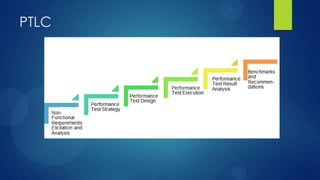
PTLC
Load Testing
 1. Load Testing
 Load Testing help us to study the behavior of the application under various loads. The
main parameter to focus is response time. This study reveals how the application
handles concurrent users effectively.
 Main parameter to focus: Response Time
Stress Testing
 2. Stress Testing
 Stress Testing help us to observe the stability of the application. The main intention is to
identify the breaking point of the server. The main parameter to focus is throughput
(how much data is being transferred between client and server)
 Main parameter to focus: Response Time and Throughput
Endurance Testing
 3. Endurance Testing
 Endurance testing reveals about memory utilization when you load your test for
prolong executions. Say if you execute your test 1 hour to perform load testing. But in
endurance testing, you execute your test at least for 8 hours with significant load.
 Main parameter to focus: Memory
Spike Testing
 4. Spike Testing
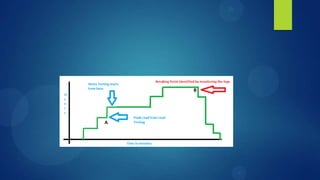
 Spike Testing is performed by sudden increase/decrease in load and observing the
behavior of the application. This help us to determine whether the application can
handle or not under significant changes in the load.
 Main parameter to focus: Response Time
Volume Testing
 5. Volume Testing
 Volume Testing is performance to identify whether the server can handle more
number of high complex queries under significant load. The main intention is to
observe how the database acts under various circumstances.
 Main parameter to focus: Response Time of Queries
Availability Testing
 6. Availability Testing
 This test ensures whether the application is available 24x7x365 days. If you would’ve
noticed any website hosting providers, they advertise as 99.9 per cent up time.
Availability testing helps us to determine whether the application is up and running
fine without any issues.
 Main parameter to focus: Response Time
Scalability Testing
 7. Scalability Testing
 Say, your website has 1000 visitors per month with 10% increase in unique visitors. By
forecasting the number of visitors by expected business growth and performing the
load test is called scalability testing.
 Main parameter to focus: Response Time and Maximum Transactions Per Second
Response Time
 After a request is sent to an application, "response time" measures how long it takes
for a response to return back from the application.
 This is also sometimes referred to as "round-trip" time
 Slow response time equals an unhappy user experience, and may also result in the
loss of revenue.
Throughput
 Throughput” is the amount of transactions produced over time during a test.
 It’s also expressed as the amount of capacity that a website or application can
handle.
 before starting a performance test it is common to have a throughput goal that the
application needs to be able to handle a specific number of request per hr.
References:
QAInsights.com
Thank you !
Visit www.QAInsights.com and www.youtube.com/QAInsights
for software related tutorials

Types of performance testing

  • 1.
  • 2.
    Introduction  It isa process of validating application terms of responsiveness and stability under a particular workload.  It can also serve to investigate, measure, validate or verify other quality attributes of the system, such as scalability, reliability and resource usage.  There are three objectives (three S) of Performance testing to observe and evaluate;  Speed, Scalability and Stability
  • 3.
  • 4.
    Load Testing  1.Load Testing  Load Testing help us to study the behavior of the application under various loads. The main parameter to focus is response time. This study reveals how the application handles concurrent users effectively.  Main parameter to focus: Response Time
  • 5.
    Stress Testing  2.Stress Testing  Stress Testing help us to observe the stability of the application. The main intention is to identify the breaking point of the server. The main parameter to focus is throughput (how much data is being transferred between client and server)  Main parameter to focus: Response Time and Throughput
  • 6.
    Endurance Testing  3.Endurance Testing  Endurance testing reveals about memory utilization when you load your test for prolong executions. Say if you execute your test 1 hour to perform load testing. But in endurance testing, you execute your test at least for 8 hours with significant load.  Main parameter to focus: Memory
  • 7.
    Spike Testing  4.Spike Testing  Spike Testing is performed by sudden increase/decrease in load and observing the behavior of the application. This help us to determine whether the application can handle or not under significant changes in the load.  Main parameter to focus: Response Time
  • 8.
    Volume Testing  5.Volume Testing  Volume Testing is performance to identify whether the server can handle more number of high complex queries under significant load. The main intention is to observe how the database acts under various circumstances.  Main parameter to focus: Response Time of Queries
  • 9.
    Availability Testing  6.Availability Testing  This test ensures whether the application is available 24x7x365 days. If you would’ve noticed any website hosting providers, they advertise as 99.9 per cent up time. Availability testing helps us to determine whether the application is up and running fine without any issues.  Main parameter to focus: Response Time
  • 10.
    Scalability Testing  7.Scalability Testing  Say, your website has 1000 visitors per month with 10% increase in unique visitors. By forecasting the number of visitors by expected business growth and performing the load test is called scalability testing.  Main parameter to focus: Response Time and Maximum Transactions Per Second
  • 11.
    Response Time  Aftera request is sent to an application, "response time" measures how long it takes for a response to return back from the application.  This is also sometimes referred to as "round-trip" time  Slow response time equals an unhappy user experience, and may also result in the loss of revenue.
  • 12.
    Throughput  Throughput” isthe amount of transactions produced over time during a test.  It’s also expressed as the amount of capacity that a website or application can handle.  before starting a performance test it is common to have a throughput goal that the application needs to be able to handle a specific number of request per hr.
  • 15.
  • 16.
    Thank you ! Visitwww.QAInsights.com and www.youtube.com/QAInsights for software related tutorials