Pulmonary tuberculosis
Anatomy and physiology of lungs:
The lungs are the site for gaseous exchange, and are situated within the
thoracic cavity. They occupy approximately 5% of the body volume in mammals
when relaxed, and their elastic nature allows them to expand and contract with the
processes of inspiration and expiration.
The lungs, along with the larynx and trachea, develop from a ventral respiratory
tract. After separation from the developing oesophagus, two lung buds develop,
which undergo divisions as they grow, forming the beginnings of the bronchial
tree. This process is not completed at the time of parturition.
Structure
The left and right lungs lie within their pleural sac and are only attached by
their roots, to the mediastinum, so they are fairly free within the thoracic cavity.
The right lung is always larger than the left, due to the positioning of the heart. The
apex of the lungs is their cranial point.
In most species, the lungs are divided into lobes by the bronchial tree:
Left Lung - Cranial and Caudal lobes.
Right Lung - Cranial, Caudal, Middle and Accessory lobes. The cranial lobe is
further divided by an external fissure.
The bulk of the lung consists of bronchi, blood vessels and connective tissue.
The terminal bronchioles have alveoli scattered along their length, and are
continued by alveolar ducts, alveolar sacs and finally alveoli.
Alveolar Ducts
These have alveoli which open on all of its sides, they have no 'walls' as such.
Openings to individual alveoli are guarded by smooth muscle.
Alveolar Sacs
These are rotunda-like areas on the end of each alveolar ducts which are usually
present in clusters.
Alveoli
Alveoli are minute, polygonal chambers, whose diameter changes with the
processes of inspiration and expiration, and varies by species. The wall of the
alveoli is extremely thin, consisting of 2 irregular layers of epithelial sheets,
'sandwiching' a network of capillaries. Thus the Blood-Gas Barrier at the thinnest
portions is a tripartite structure consisting of the pulmonary capillary endothelium,
a common basal lamina and the alveolar epithelium- ideal for gaseous exchange.
The alveolar interstitium is formed from connective tissue fibres and cells, which
include collagen fibrils and elastin fibres.
Function:
The main function of the lungs is gas exchange.
Vasculature:
The pulmonary arteries follow the bronchi, while the pulmonary veins
sometimes run separately. Bronchial arteries from the aorta supply the bronchi,
and bronchial veins may drain this blood to the right atrium via the azygous vein.
More often the blood from the bronchi drains directly to the left atrium.
Innervation:
Nervous supply to the lung is via the pulmonary plexus within the
mediastinum. The pulmonary plexus consists of sympathetic fibres largely from
the stellate ganglion, and parasympathetic fibres from the vagus nerve.
Lymphatics:
Lymph drains to the tracheobronchial and mediastinal lymph nodes.
Histology:
Pneumocytes are a type of epithelial cells that lines the alveoli.
 the Type I pneumocytes are simple squamous with a flattened central nucleus
that protrudes into the alveolar lume
 the Type II pneumocytes are round to pyramidal-shaped cells that are found
among the type I pneumocytes. The type II pneumocytes have a larger centrally
placed nucleus with a prominent nucleolus and a slightly vacuolated, foamy,
basophilic cytoplasm. The nucleus of these cells also has a nucleolus.
Species Differences:
The lungs of the horse show almost no lobation, and the right lung of the horse
lacks a middle lobe. In comparison to this, the lungs of ruminants and pigs are
obviously lobed. The fissures between the lobes (interlobar fissures) are deeper in
the dog and cat lung compared to other species. Avian respiration has many
fundamental differences to mammalian respiration. The respiratory systems of
non-homeotherms are also very different to that of mammals.
Introduction:
Tuberculosis is an infectious disease that primarily affects the lung
parenchyma. It may also affects the other parts of the body including the meninges,
kidney, bones, lymph nodes. The primary infectious agent is mycobacterium
tuberculosis, it is an acid fast aerobic rod that grows slowly and is sensitive to heat
and ultraviolet light. Mycobacterium bovis, mycobacterium avium have rarely
been associated with the development of a TB infection. TB is a world wide health
problem that is associated with the poverty, malnutrition, over crowding,
substandard housing, inadequate healthcare.
Definition:
A highly variable communicable disease of humans and some other vertebrates
that is caused by the tubercle bacillus and rarely in the U.S by a related
mycobacterium[mycobacterium bovis], that affects especially the lungs but spread
to other areas such as kidney or spinal column and that is characterized by fever,
cough, difficulty in breathing, formation of tuberculosis, caseation, pleural
effusion, and fibrosis.
Etiology and risk factors:
Etiology for tuberculosis can be divided into three types:
1. Agent factors
2. Host factors
3. Environmental factors
Agent factors:
The causative organism is mycobacterium tuberculosis which is an acid
fast aerobic rod that grows slowly and is sensitive to heat and ultraviolet radiation.
Host factors:
people who are affected with tuberculosis spreads the disease through the droplet
infection.
Environmental factors:
the environment which facilitates the spread of infection is:
1. Poverty
2. Malnutrition
3. Overcrowding
4. Substandard housing
5. Inadequate health care
TB spreads from person to person by airborne transmission . an infected person
releases droplet nuclei through talking, coughing, sneezing, laughing, singing.
 Larger droplet settle
 Smaller droplet suspends in the air and are inhaled by the susceptible person
Risk factors:
 Close contact with someone who has active TB. Inhalation of airborne
nuclei from infected person is proportional to the amount of time spent in the
same air space, the proximity of the person and the degree of ventilation.
 Immunocompramised status.
 Substance abuse.
 Any person without health care.
 Pre existing medical condition or special treatment.
 Diabetes
 Chronic renal failure
 Malnourishment
 Selected malignancies
 Hemodialysis
 Transplanted organ
 Gastrectomy
 Immigration from countries with high prevelance of TB [southeastern asia,
Africa, latin America]
 Institutionalization.
 Living in crowded, substandard housing.
Statistics related to tuberculosis:
According to WHO,
 8.8 million cases noted.
 1.1 million deaths in 2010.
In the united states:
 11,182 cases of TB were reported in 2010.
 In india each year approximately 2,20,000 deaths were reported due to TB.
 According to WHO, statistics for 2011 giving an estimated incidence
figure of 2.2 million cases of TB for india out of a global incidence of 9.6
million cases.
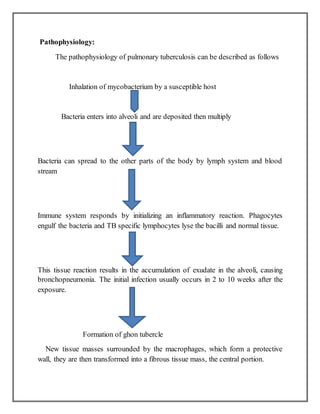
Pathophysiology:
The pathophysiology of pulmonary tuberculosis can be described as follows
Inhalation of mycobacterium by a susceptible host
Bacteria enters into alveoli and are deposited then multiply
Bacteria can spread to the other parts of the body by lymph system and blood
stream
Immune system responds by initializing an inflammatory reaction. Phagocytes
engulf the bacteria and TB specific lymphocytes lyse the bacilli and normal tissue.
This tissue reaction results in the accumulation of exudate in the alveoli, causing
bronchopneumonia. The initial infection usually occurs in 2 to 10 weeks after the
exposure.
Formation of ghon tubercle
New tissue masses surrounded by the macrophages, which form a protective
wall, they are then transformed into a fibrous tissue mass, the central portion.
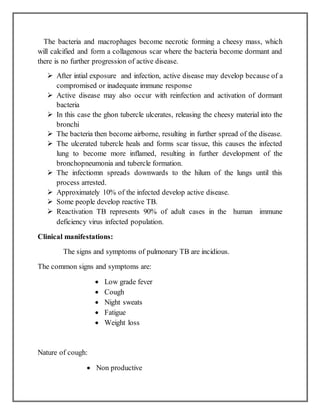
The bacteria and macrophages become necrotic forming a cheesy mass, which
will calcified and form a collagenous scar where the bacteria become dormant and
there is no further progression of active disease.
 After intial exposure and infection, active disease may develop because of a
compromised or inadequate immune response
 Active disease may also occur with reinfection and activation of dormant
bacteria
 In this case the ghon tubercle ulcerates, releasing the cheesy material into the
bronchi
 The bacteria then become airborne, resulting in further spread of the disease.
 The ulcerated tubercle heals and forms scar tissue, this causes the infected
lung to become more inflamed, resulting in further development of the
bronchopneumonia and tubercle formation.
 The infectiomn spreads downwards to the hilum of the lungs until this
process arrested.
 Approximately 10% of the infected develop active disease.
 Some people develop reactive TB.
 Reactivation TB represents 90% of adult cases in the human immune
deficiency virus infected population.
Clinical manifestations:
The signs and symptoms of pulmonary TB are incidious.
The common signs and symptoms are:
 Low grade fever
 Cough
 Night sweats
 Fatigue
 Weight loss
Nature of cough:
 Non productive
 Mucopurulent
 Hemoptosis may also occur
.
 People may experience, pain in the chest while breathing
SYSTEMATIC SYMPTOMS OF TUBERCULOSIS:
 CNS Involvement:
o Tuberculous Meningitis
 Headache
 Meningism
 Drowsiness
 Confusion
 Seizures
 Over 2-3 weeks
o Hydrocephalus
o Cranial nerve palsies
o Space occupying lesions
o Seizures (hyponatremia due to release of ADH like substances)
 Skeletal system:
o Back pain
o Stiffness
o Cord compression
o Monoarthritis
o Chronic osteomyelitis
 Genitourinary system:
o Flank pain
o Dysuria
o Frequency
o Hematuria
o Pyuria
o Lower abdominal pain
o Infertility
o Scrotal mass
o Perianal sinus
o Genital ulcer
 Gastrointestinal system:
o Non-healing oral and anal ulcers
o Dysphagia
o Abdominal pain
o Abdominal mass
o Malabsorption
o Obstruction
o Diarrhea
o Hematochezia
 Tuberculous Lymphadenopathy:
o Painless, lump on the neck
 Endocrine Involvement:
o Addison’s disease
o Diabetes mellitus
 Ophthalmic Involvement:
o Chorioretinitis
Assessment and diagnostic findings:
Once a patient is admitted with positive skin test, blood test, sputum culture for
AFB additional assessment must be done.
It includes:
1. Complete history
2. Physical examination
3. Tuberculin skin test
4. Chest x ray
5. Drug susceptibility test
6. Quantiform TB gold
7. Sputum culture
Complete history:
It includes: history collection, physical examination, family history,
environmental history, history of previous illness, history of previos
hospitalization.
Presenting complaints and associated symptoms:
 Chronic cough greater than 3 weeks with sputum production
 Low grade fever
 Night sweats
 Weight loss
 Hemoptysis
 Fatigue
 Chest pain
Past Medical History:
 Previous treatment of Tuberculosis
 Compliance
 BCG vaccination
 Malignancies (especially lymphoma, leukemias)
 Any immunosuppressive condition e.g Corticosterioids, HIV, cytotoxic
agents, anti-TNF agents
 Diabetes mellitus (especially type I)
 Chronic renal failure
 Silicosis
 Recent measles (increased risk of TB in children)
 Any condition leading to malnutrition e.g malabsorption, pancreatic
cancer
 Deficiency of vitamin D and A
Past Surgical History
 Segmentectomy, lobectomy and pneumonectomy
 Gastrectomy
 Jejuno-ileal bypass
Family History:
 Tuberculosis
 Treatment taken
 Treatment completed
 Other members involved
Socioeconomic history:
 Hygiene and sanitation
 Overcrowding
Personal History:
 Smoking
Occupation History:
 Sandblasting etc (i.e exposure to silicon)
Drug History:
 Corticosteroids
 Anti-TNF
 Cytotoxics
Physical examination:
 General Physical Examination:
o Emaciated, weak
o Tachypnea
o Lymph nodes palpable (mostly cervical)
o Clubbing if severe
o Jaundice (military tuberculosis)
o Pallor (anemia of chronic disorder, iron deficiency due to
hemoptysis, malabsorption, bone marrow involvement)
o Jugular venous pressure raised in case of pericardial
involvement
 Respiratory Examination:
o Decreased movements of the chest (Collapse, pneumothorax,
pain and pleural effusion)
o Mediastinum shift to the affected side (collapse)
o Mediastinum shift to opposite side (Tension pneumothorax due
to cavitatory lesion)
o Apex beat may shift (Tension pneumothorax/ collapse)
o Decreased chest expansion (Collapse)
o Vocal fremitus increased
o Dull percussion note (collapse, consolidation)
o Bronchial breathing (Consolidation)
o Vocal resonance increased (Consolidation)
o Pleural effusion:
 Decreased vocal fremitus
 Stony dull percussion note
 Absent/reduced breathing sounds
 Vocal resonance decreased
o Cardiovascular Examination:
 Shifted Apex beat
 Increased pericardial dullness (Pericardial effusion)
 Reduced heart sounds (Pericardial effusion)
o Gastrointestinal Examination:
 Mouth ulcers
 Abdominal mass (right iliac fossa most common)
 Hepatomegaly (miliary TB)
 Splenomegaly (miliary TB)
 Anal ulcers
o Musculoskeletal System:
 Spinal tenderness (Spinal TB)
 Gibbus (Spinal TB)
 Swelling of joint (hip, knee etc)
o Genitourinary System:
 Flank tenderness
 Perineal Abscess
 Genital ulcer
o Neurological Examination:
 Cranial nerve palsy
 Signs of meningism
 Signs of raised intracranial pressure
Tuberculin skin test:
 The mantoux method is used to determine whether a person has been
infected with the TB bacilli and is used widely in screening for latent M.
tuberculosis infection.
 The mantoux method is a standardized, intracutaneous injection procedure
and should be performed only by those trained in its administration and
reading.
 Tubercle bacillus extract, purified protein derivative, is injected into the
intradermal layer of the inner aspect of the forearm, approximately 4 inches
below the elbow. 0.1 ml of PPD is injected creating an elevation in the skin,
a well demarcated wheal 6 to 10 mm in diameter.
 The site, antigen name, strength, lot number, date, time of the test recorded.
 The test result in 48-72 hours after injection.
 Tests read after 72 hours tend to underestimate the true size of induration.
 A delayed localized reaction indicates that the person is sensitive to
tuberculin.
 The size if the induration determines the significance of the reaction.
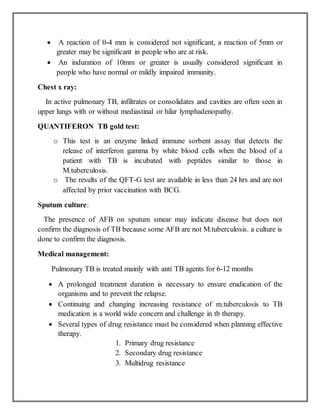
 A reaction of 0-4 mm is considered not significant, a reaction of 5mm or
greater may be significant in people who are at risk.
 An induration of 10mm or greater is usually considered significant in
people who have normal or mildly impaired immunity.
Chest x ray:
In active pulmonary TB, infiltrates or consolidates and cavities are often seen in
upper lungs with or without mediastinal or hilar lymphadenopathy.
QUANTIFERON TB gold test:
o This test is an enzyme linked immune sorbent assay that detects the
release of interferon gamma by white blood cells when the blood of a
patient with TB is incubated with peptides similar to those in
M.tuberculosis.
o The results of the QFT-G test are available in less than 24 hrs and are not
affected by prior vaccination with BCG.
Sputum culture:
The presence of AFB on sputum smear may indicate disease but does not
confirm the diagnosis of TB because some AFB are not M.tuberculosis. a culture is
done to confirm the diagnosis.
Medical management:
Pulmonary TB is treated mainly with anti TB agents for 6-12 months
 A prolonged treatment duration is necessary to ensure eradication of the
organisms and to prevent the relapse.
 Continuing and changing increasing resistance of m.tuberculosis to TB
medication is a world wide concern and challenge in tb therapy.
 Several types of drug resistance must be considered when planning effective
therapy.
1. Primary drug resistance
2. Secondary drug resistance
3. Multidrug resistance
Primary drug resistance:
Resistance to one of the first line ATT agents in people in who have
not had previous treatment.
Secondary drug resistance:
Resistance to one or more ATT agents in patients undergoing therapy.
Multidrug resistance:
Resistance to two agents, Isoniazed and rifampsin
HIV positive and institutionalized or homeless people are at greater risk for
multidrug resistance
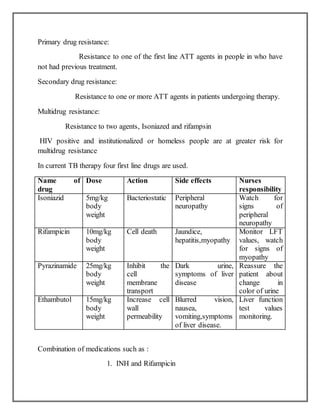
In current TB therapy four first line drugs are used.
Name of
drug
Dose Action Side effects Nurses
responsibility
Isoniazid 5mg/kg
body
weight
Bacteriostatic Peripheral
neuropathy
Watch for
signs of
peripheral
neuropathy
Rifampicin 10mg/kg
body
weight
Cell death Jaundice,
hepatitis,myopathy
Monitor LFT
values, watch
for signs of
myopathy
Pyrazinamide 25mg/kg
body
weight
Inhibit the
cell
membrane
transport
Dark urine,
symptoms of liver
disease
Reassure the
patient about
change in
color of urine
Ethambutol 15mg/kg
body
weight
Increase cell
wall
permeability
Blurred vision,
nausea,
vomiting,symptoms
of liver disease.
Liver function
test values
monitoring.
Combination of medications such as :
1. INH and Rifampicin
2. INH, pyrazinamide, Rifampicin
Second line medications:
 Capreomycin
 Ehtionamide
 Para amino salicylate sodium
 Cycloserine
Potentially effective medications:
1. Aminoglycosides
2. Quinolones
3. Rifabutin
4. Clofazimine
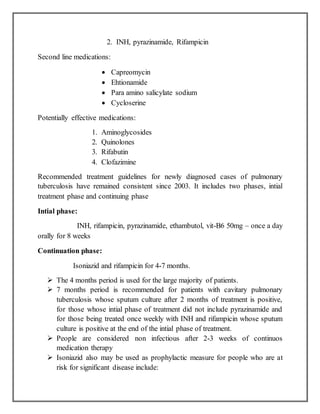
Recommended treatment guidelines for newly diagnosed cases of pulmonary
tuberculosis have remained consistent since 2003. It includes two phases, intial
treatment phase and continuing phase
Intial phase:
INH, rifampicin, pyrazinamide, ethambutol, vit-B6 50mg – once a day
orally for 8 weeks
Continuation phase:
Isoniazid and rifampicin for 4-7 months.
 The 4 months period is used for the large majority of patients.
 7 months period is recommended for patients with cavitary pulmonary
tuberculosis whose sputum culture after 2 months of treatment is positive,
for those whose intial phase of treatment did not include pyrazinamide and
for those being treated once weekly with INH and rifampicin whose sputum
culture is positive at the end of the intial phase of treatment.
 People are considered non infectious after 2-3 weeks of continuos
medication therapy
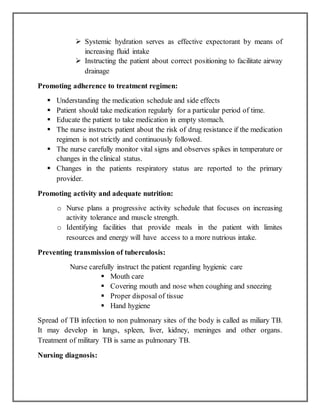
 Isoniazid also may be used as prophylactic measure for people who are at
risk for significant disease include:
 Household family members of patients with active disease.
 Patients with HIV infection
 Patients with fibrotic leisons suggestive of old TB
 Patients whose current PPD test results shows a change from
former test results, suggesting recent exposure to TB and possible
infection.
 Users of IV injections or drugs
 Patients with high risk co morbid conditions
Directly observed treatment, short-course (DOTS, also known as TB-DOTS) :
it is the name given to the tuberculosis (TB) control strategy recommended by
the world health organization.[1]According to WHO, "The most cost-effective way
to stop the spread of TB in communities with a high incidence is by curing it. The
best curative method for TB is known as DOTS."
DOTS have five main components:
 Government commitment (including political will at all levels, and
establishment of a centralized and prioritized system of TB monitoring,
recording and training)
 Case detection by sputum smear microscopy
 Standardized treatment regimen directly of six to nine months observed by a
healthcare worker or community health worker for at least the first two months
 Drug supply
 A standardized recording and reporting system that allows assessment of
treatment results
Nursing management:
Nursing management includes promoting airway clearance, advocating
adherence to the treatment regimen, promoting activity and nutrition and
preventing transmission.
Promoting airway clearance:
 Safe expectoration of sputum
 Safe sputum disposal
 Systemic hydration serves as effective expectorant by means of
increasing fluid intake
 Instructing the patient about correct positioning to facilitate airway
drainage
Promoting adherence to treatment regimen:
 Understanding the medication schedule and side effects
 Patient should take medication regularly for a particular period of time.
 Educate the patient to take medication in empty stomach.
 The nurse instructs patient about the risk of drug resistance if the medication
regimen is not strictly and continuously followed.
 The nurse carefully monitor vital signs and observes spikes in temperature or
changes in the clinical status.
 Changes in the patients respiratory status are reported to the primary
provider.
Promoting activity and adequate nutrition:
o Nurse plans a progressive activity schedule that focuses on increasing
activity tolerance and muscle strength.
o Identifying facilities that provide meals in the patient with limites
resources and energy will have access to a more nutrious intake.
Preventing transmission of tuberculosis:
Nurse carefully instruct the patient regarding hygienic care
 Mouth care
 Covering mouth and nose when coughing and sneezing
 Proper disposal of tissue
 Hand hygiene
Spread of TB infection to non pulmonary sites of the body is called as miliary TB.
It may develop in lungs, spleen, liver, kidney, meninges and other organs.
Treatment of military TB is same as pulmonary TB.
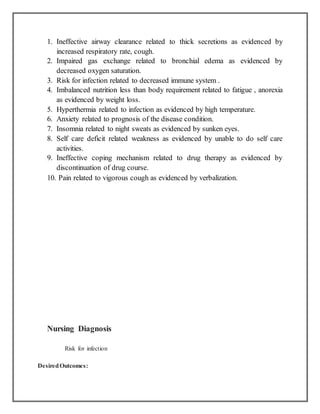
Nursing diagnosis:
1. Ineffective airway clearance related to thick secretions as evidenced by
increased respiratory rate, cough.
2. Impaired gas exchange related to bronchial edema as evidenced by
decreased oxygen saturation.
3. Risk for infection related to decreased immune system .
4. Imbalanced nutrition less than body requirement related to fatigue , anorexia
as evidenced by weight loss.
5. Hyperthermia related to infection as evidenced by high temperature.
6. Anxiety related to prognosis of the disease condition.
7. Insomnia related to night sweats as evidenced by sunken eyes.
8. Self care deficit related weakness as evidenced by unable to do self care
activities.
9. Ineffective coping mechanism related to drug therapy as evidenced by
discontinuation of drug course.
10. Pain related to vigorous cough as evidenced by verbalization.
Nursing Diagnosis
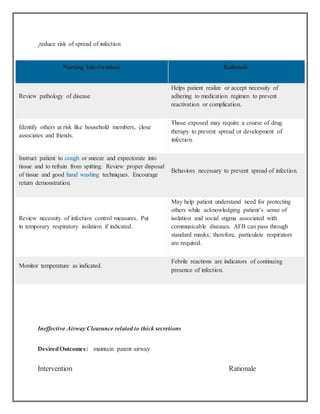
Risk for infection
DesiredOutcomes:
.reduce risk of spread of infection
Ineffective Airway Clearance related to thick secretions
DesiredOutcomes: maintain patent airway
Intervention Rationale
Nursing Interventions Rationale
Review pathology of disease
Helps patient realize or accept necessity of
adhering to medication regimen to prevent
reactivation or complication.
Identify others at risk like household members, close
associates and friends.
Those exposed may require a course of drug
therapy to prevent spread or development of
infection.
Instruct patient to cough or sneeze and expectorate into
tissue and to refrain from spitting. Review proper disposal
of tissue and good hand washing techniques. Encourage
return demonstration.
Behaviors necessary to prevent spread of infection.
Review necessity of infection control measures. Put
in temporary respiratory isolation if indicated.
May help patient understand need for protecting
others while acknowledging patient’s sense of
isolation and social stigma associated with
communicable diseases. AFB can pass through
standard masks; therefore, particulate respirators
are required.
Monitor temperature as indicated.
Febrile reactions are indicators of continuing
presence of infection.
Assess respiratory function noting breath sounds, rate,
rhythm, and depth, and use of accessory muscles.
Diminished breath sounds may reflect atelectasis.
Rhonchi, wheezes indicate accumulation of
secretions and inability to clear airways that may
lead to use of accessory muscles and increased
work of breathing
Note ability to expectorate mucus and cough effectively;
document character, amount of sputum, presence of
hemoptysis.
Expectoration may be difficult when secretions are
very thick as a result of infection and/or
inadequate hydration. Blood-tinged or frankly
bloody sputum results from tissue breakdown
(cavitation) in the lungs or from bronchial
ulceration and may require further evaluation or
intervention.
Place patient in semi or high-Fowler’s position. Assist patient
with coughing and deep-breathing exercises.
Positioning helps maximize lung expansion and
decreases respiratory effort. Maximal ventilation
may open atelectatic areas and promote movement
of secretions into larger airways for expectoration.
Clear secretions from mouth and trachea; suction as
necessary.
Prevents obstruction and aspiration. Suctioning
may be necessary if patient is unable to
expectorate secretions.
Maintain fluid intake of at least 2500 mL/day unless
contraindicated.
High fluid intake helps thin secretions, making
them easier to expectorate.
Humidify inspired air and oxygen
Prevents drying of mucous membranes and helps
thin secretions.
Risk for Impaired Gas Exchange related to decreased alveolar capacity of lungs
Desired Outcome: be free of respiratory distress
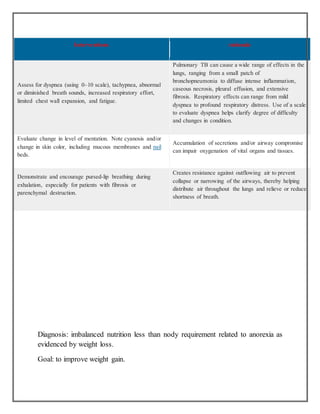
Interventions rationale
Assess for dyspnea (using 0–10 scale), tachypnea, abnormal
or diminished breath sounds, increased respiratory effort,
limited chest wall expansion, and fatigue.
Pulmonary TB can cause a wide range of effects in the
lungs, ranging from a small patch of
bronchopneumonia to diffuse intense inflammation,
caseous necrosis, pleural effusion, and extensive
fibrosis. Respiratory effects can range from mild
dyspnea to profound respiratory distress. Use of a scale
to evaluate dyspnea helps clarify degree of difficulty
and changes in condition.
Evaluate change in level of mentation. Note cyanosis and/or
change in skin color, including mucous membranes and nail
beds.
Accumulation of secretions and/or airway compromise
can impair oxygenation of vital organs and tissues.
Demonstrate and encourage pursed-lip breathing during
exhalation, especially for patients with fibrosis or
parenchymal destruction.
Creates resistance against outflowing air to prevent
collapse or narrowing of the airways, thereby helping
distribute air throughout the lungs and relieve or reduce
shortness of breath.
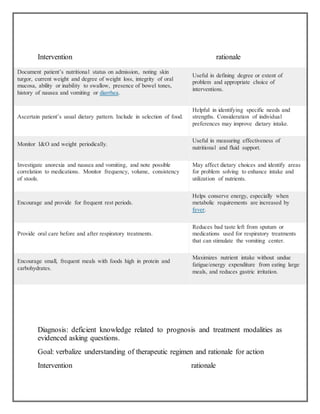
Diagnosis: imbalanced nutrition less than nody requirement related to anorexia as
evidenced by weight loss.
Goal: to improve weight gain.
Intervention rationale
Document patient’s nutritional status on admission, noting skin
turgor, current weight and degree of weight loss, integrity of oral
mucosa, ability or inability to swallow, presence of bowel tones,
history of nausea and vomiting or diarrhea.
Useful in defining degree or extent of
problem and appropriate choice of
interventions.
Ascertain patient’s usual dietary pattern. Include in selection of food.
Helpful in identifying specific needs and
strengths. Consideration of individual
preferences may improve dietary intake.
Monitor I&O and weight periodically.
Useful in measuring effectiveness of
nutritional and fluid support.
Investigate anorexia and nausea and vomiting, and note possible
correlation to medications. Monitor frequency, volume, consistency
of stools.
May affect dietary choices and identify areas
for problem solving to enhance intake and
utilization of nutrients.
Encourage and provide for frequent rest periods.
Helps conserve energy, especially when
metabolic requirements are increased by
fever.
Provide oral care before and after respiratory treatments.
Reduces bad taste left from sputum or
medications used for respiratory treatments
that can stimulate the vomiting center.
Encourage small, frequent meals with foods high in protein and
carbohydrates.
Maximizes nutrient intake without undue
fatigue/energy expenditure from eating large
meals, and reduces gastric irritation.
Diagnosis: deficient knowledge related to prognosis and treatment modalities as
evidenced asking questions.
Goal: verbalize understanding of therapeutic regimen and rationale for action
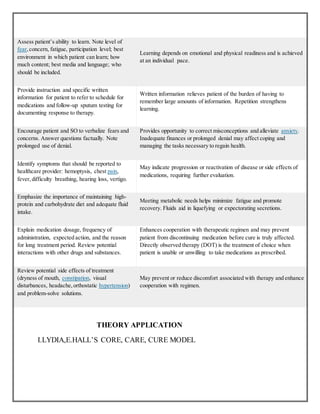
Intervention rationale
Assess patient’s ability to learn. Note level of
fear,concern, fatigue, participation level; best
environment in which patient can learn; how
much content; best media and language; who
should be included.
Learning depends on emotional and physical readiness and is achieved
at an individual pace.
Provide instruction and specific written
information for patient to refer to schedule for
medications and follow-up sputum testing for
documenting response to therapy.
Written information relieves patient of the burden of having to
remember large amounts of information. Repetition strengthens
learning.
Encourage patient and SO to verbalize fears and
concerns. Answer questions factually. Note
prolonged use of denial.
Provides opportunity to correct misconceptions and alleviate anxiety.
Inadequate finances or prolonged denial may affect coping and
managing the tasks necessary to regain health.
Identify symptoms that should be reported to
healthcare provider: hemoptysis, chest pain,
fever,difficulty breathing, hearing loss, vertigo.
May indicate progression or reactivation of disease or side effects of
medications, requiring further evaluation.
Emphasize the importance of maintaining high-
protein and carbohydrate diet and adequate fluid
intake.
Meeting metabolic needs helps minimize fatigue and promote
recovery. Fluids aid in liquefying or expectorating secretions.
Explain medication dosage, frequency of
administration, expected action, and the reason
for long treatment period. Review potential
interactions with other drugs and substances.
Enhances cooperation with therapeutic regimen and may prevent
patient from discontinuing medication before cure is truly affected.
Directly observed therapy (DOT) is the treatment of choice when
patient is unable or unwilling to take medications as prescribed.
Review potential side effects of treatment
(dryness of mouth, constipation, visual
disturbances, headache,orthostatic hypertension)
and problem-solve solutions.
May prevent or reduce discomfort associated with therapy and enhance
cooperation with regimen.
THEORY APPLICATION
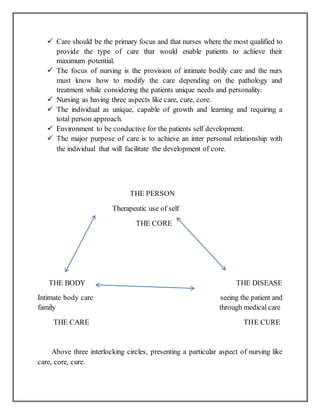
I.LYDIA,E.HALL’S CORE, CARE, CURE MODEL
 Care should be the primary focus and that nurses where the most qualified to
provide the type of care that would enable patients to achieve their
maximum potential.
 The focus of nursing is the provision of intimate bodily care and the nurs
must know how to modify the care depending on the pathology and
treatment while considering the patients unique needs and personality.
 Nursing as having three aspects like care, cure, core.
 The individual as unique, capable of growth and learning and requiring a
total person approach.
 Environment to be conductive for the patients self development.
 The major purpose of care is to achieve an inter personal relationship with
the individual that will facilitate the development of core.
THE PERSON
Therapeutic use of self
THE CORE
THE BODY THE DISEASE
Intimate body care seeing the patient and
family through medical care
THE CARE THE CURE
Above three interlocking circles, presenting a particular aspect of nursing like
care, core, cure.
So the patient who ever comes to hospital will be considered as a body, person
and disease. The nurse who is providing care to the patient should meet all his
bodily care like bathing, eating, elimination and dressing thereby meeting his
comfort.
During the care the nurse should develop an interpersonal relationship and
consider the patient as person to provide him a way to express his findings and
emotions to gain self identity. After developing an interpersonal relationship, the
nurse should see patient and family through medical care and consider him as a
diseased person and act as an advocate to cure his condition.
ABSTRACT
Y Ismail(2002), said that,The diagnosis of pulmonary tuberculosis is often
delayed due to atypical clinical features and difficulty in obtaining positive
bacteriology. The researcher reviewed 232 cases of pulmonary tuberculosis
diagnosed in Kedah Medical Centre, Alor Setar from January 1998 to December
2002. All age groups were affected with a male predominance (Male:Female ratio
= 60:40). Risk factors include underlying diabetes mellitus (17.7%), positive
family history (16.8%) and previous tuberculosis (5.2%). Nearly half (45.3%) of
patients had symptoms for more than one year. Only 22% of patients had typical
symptoms of tuberculosis (prolonged recurrent fever, cough, anorexia and weight
loss), whilst others presented with haemoptysis, chronic cough, COPD,
bronchiectasis, general ill-health, pyrexia of unknown origin or pleural effusion
without other systemic symptoms. Fifteen percent of the patients presented with
extrapulmonary diagnosis. Ninety percent of the patients had previous medical
consultations but 40% had no chest radiograph or sputum examination done. The
chest radiographs showed 'typical' changes of tuberculosis in 62% while in the
other 38% the radiological features were 'not typical'. Sputum direct smear was
positive for acid-fast bacilli in only 22.8% of patients and 11.2% were diagnosed
base on positive sputum culture. Sputum may be negative even in patients with
typical clinical presentations and chest radiograph changes. Bronchial washing
improved the diagnosis rate being positive in 49.1% of cases (24.1% by direct
smear and the other 25.0% by culture). In 16.8% of cases, the diagnosis was based
on a good response to empirical anti-tuberculosis therapy in patients with clinical
and radiological features characteristic of tuberculosis. In conclusions, the clinical
and radiological manifestations of pulmonary tuberculosis may be atypical.
Sputum is often negative and bronchoscopy with washings for Mycobacterium
culture gives a higher yield for diagnosis. In highly probable cases, empirical
therapy with antituberculosis drugs should be considered because it is safe and
beneficial.
Nature Reviews Disease Primers volume 2, Article number: 16076 (2016)
Tuberculosis (TB) is an airborne infectious disease caused by organisms of the
Mycobacterium tuberculosis complex. Although primarily a pulmonary
pathogen, M. tuberculosis can cause disease in almost any part of the body.
Infection with M. tuberculosis can evolve from containment in the host, in which
the bacteria are isolated within granulomas (latent TB infection), to a contagious
state, in which the patient will show symptoms that can include cough, fever,
night sweats and weight loss. Only active pulmonary TB is contagious. In many
low-income and middle-income countries, TB continues to be a major cause of
morbidity and mortality, and drug-resistant TB is a major concern in many
settings. Although several new TB diagnostics have been developed, including
rapid molecular tests, there is a need for simpler point-of-care tests. Treatment
usually requires a prolonged course of multiple antimicrobials, stimulating
efforts to develop shorter drug regimens. Although the Bacillus Calmette–Guérin
(BCG) vaccine is used worldwide, mainly to prevent life-threatening TB in
infants and young children, it has been ineffective in controlling the global TB
epidemic. Thus, efforts are underway to develop newer vaccines with improved
efficacy. New tools as well as improved programme implementation and
financing are necessary to end the global TB epidemic by 2035.
Vishal Goyal, Vijay Kadam, Prashant Narang and Vikram Singh,drug-
resistant pulmonary tuberculosis (DR-TB) is a significant public health issue that
considerably deters the ongoing TB control efforts in India. A systematic review
of published studies reporting prevalence of DR-TB from biomedical databases
(PubMed and IndMed) was conducted. Meta-analysis was performed using
random effects model and the pooled prevalence estimate (95% confidence
interval [CI]) of DR-TB, multidrug resistant (MDR-) TB, pre-extensively
drugresistant (pre-XDR) TB and XDR-TB were calculated across two study
periods (decade 1: 1995 to 2005; decade 2: 2006 to 2015), countrywide and in
different regions. Heterogeneity in this meta-analysis was assessed using I2
statistic. Results: A total of 75 of 635 screened studies that fulfilled the inclusion
criteria were selected. Over 40% of 45,076 isolates suspected for resistance to
any first-line anti-TB drugs tested positive. Comparative analysis revealed a
worsening trend in DR-TB between the two study decades (decade 1: 37.7%
[95% CI = 29.0; 46.4], n = 25 vs decade 2: 46.1% [95% CI = 39.0; 53.2], n =
36). The pooled estimate of MDR-TB resistance was higher in previously treated
patients (decade 1: 29.8% [95% CI = 20.7; 39.0], n = 13; decade 2: 35.8% [95%
CI = 29.2; 42.4], n = 24) as compared with the newly diagnosed cases (decade 1:
4.1% [95% CI = 2.7; 5.6], n = 13; decade 2: 5.6% [95% CI = 3.8; 7.4], n = 17).
Overall, studies from Western states of India reported highest prevalence of DR-
TB (57.8% [95% CI = 37.4; 78.2], n = 6) and MDR-TB (39.9% [95% CI = 21.7;
58.0], n = 6) during decade 2. Prevalence of pre-XDR TB was 7.9% (95% CI =
4.4; 11.4, n = 5) with resistance to fluoroquinolone (66.3% [95% CI = 58.2;
74.4], n = 5) being the highest. The prevalence of XDR-TB was 1.9% (95% CI =
1.2; 2.6, n = 14) over the 20-year period. The study concluded that alarming
increase in the trend of anti-TB drug resistance in India warrants the need for a
structured nationwide surveillance to assist the National TB Control Program in
strengthening treatment strategies for improved outcomes.
References:
Text book reference:
I. A text book of medical surgical nursing by
BRUNNER&SUDDARTH’S, 13 th edition, volume-1, page no: 598-
602.
II. A text book of medical surgical nursing by JOICE M.BLOCK, 8 th
edition, volume-1, page no: 588-591.
Journal reference:
1. A nature research journal by TB ANDERSON, article no 773.
Net reference:
 www.arohealth.com.
 http//medlineplus.gov.in.
Seminar on pulmonary tuberculosis
Submitted to: submitted by:
Prof.A.LATHA, M.Sc(N), M.SOWMYA,
HOD OF MSN dept. 1 st yr Msc nursing,
NCON, NCON,
NELLORE . NELLORE.

Tuberculosis

  • 1.
    Pulmonary tuberculosis Anatomy andphysiology of lungs: The lungs are the site for gaseous exchange, and are situated within the thoracic cavity. They occupy approximately 5% of the body volume in mammals when relaxed, and their elastic nature allows them to expand and contract with the processes of inspiration and expiration. The lungs, along with the larynx and trachea, develop from a ventral respiratory tract. After separation from the developing oesophagus, two lung buds develop, which undergo divisions as they grow, forming the beginnings of the bronchial tree. This process is not completed at the time of parturition. Structure The left and right lungs lie within their pleural sac and are only attached by their roots, to the mediastinum, so they are fairly free within the thoracic cavity. The right lung is always larger than the left, due to the positioning of the heart. The apex of the lungs is their cranial point. In most species, the lungs are divided into lobes by the bronchial tree: Left Lung - Cranial and Caudal lobes. Right Lung - Cranial, Caudal, Middle and Accessory lobes. The cranial lobe is further divided by an external fissure. The bulk of the lung consists of bronchi, blood vessels and connective tissue. The terminal bronchioles have alveoli scattered along their length, and are continued by alveolar ducts, alveolar sacs and finally alveoli. Alveolar Ducts These have alveoli which open on all of its sides, they have no 'walls' as such. Openings to individual alveoli are guarded by smooth muscle. Alveolar Sacs These are rotunda-like areas on the end of each alveolar ducts which are usually present in clusters.
  • 2.
    Alveoli Alveoli are minute,polygonal chambers, whose diameter changes with the processes of inspiration and expiration, and varies by species. The wall of the alveoli is extremely thin, consisting of 2 irregular layers of epithelial sheets, 'sandwiching' a network of capillaries. Thus the Blood-Gas Barrier at the thinnest portions is a tripartite structure consisting of the pulmonary capillary endothelium, a common basal lamina and the alveolar epithelium- ideal for gaseous exchange. The alveolar interstitium is formed from connective tissue fibres and cells, which include collagen fibrils and elastin fibres. Function: The main function of the lungs is gas exchange. Vasculature: The pulmonary arteries follow the bronchi, while the pulmonary veins sometimes run separately. Bronchial arteries from the aorta supply the bronchi, and bronchial veins may drain this blood to the right atrium via the azygous vein. More often the blood from the bronchi drains directly to the left atrium. Innervation: Nervous supply to the lung is via the pulmonary plexus within the mediastinum. The pulmonary plexus consists of sympathetic fibres largely from the stellate ganglion, and parasympathetic fibres from the vagus nerve. Lymphatics: Lymph drains to the tracheobronchial and mediastinal lymph nodes. Histology: Pneumocytes are a type of epithelial cells that lines the alveoli.  the Type I pneumocytes are simple squamous with a flattened central nucleus that protrudes into the alveolar lume  the Type II pneumocytes are round to pyramidal-shaped cells that are found among the type I pneumocytes. The type II pneumocytes have a larger centrally placed nucleus with a prominent nucleolus and a slightly vacuolated, foamy, basophilic cytoplasm. The nucleus of these cells also has a nucleolus. Species Differences: The lungs of the horse show almost no lobation, and the right lung of the horse lacks a middle lobe. In comparison to this, the lungs of ruminants and pigs are obviously lobed. The fissures between the lobes (interlobar fissures) are deeper in the dog and cat lung compared to other species. Avian respiration has many
  • 3.
    fundamental differences tomammalian respiration. The respiratory systems of non-homeotherms are also very different to that of mammals. Introduction: Tuberculosis is an infectious disease that primarily affects the lung parenchyma. It may also affects the other parts of the body including the meninges, kidney, bones, lymph nodes. The primary infectious agent is mycobacterium tuberculosis, it is an acid fast aerobic rod that grows slowly and is sensitive to heat and ultraviolet light. Mycobacterium bovis, mycobacterium avium have rarely been associated with the development of a TB infection. TB is a world wide health problem that is associated with the poverty, malnutrition, over crowding, substandard housing, inadequate healthcare. Definition: A highly variable communicable disease of humans and some other vertebrates that is caused by the tubercle bacillus and rarely in the U.S by a related mycobacterium[mycobacterium bovis], that affects especially the lungs but spread to other areas such as kidney or spinal column and that is characterized by fever, cough, difficulty in breathing, formation of tuberculosis, caseation, pleural effusion, and fibrosis. Etiology and risk factors: Etiology for tuberculosis can be divided into three types: 1. Agent factors 2. Host factors 3. Environmental factors Agent factors: The causative organism is mycobacterium tuberculosis which is an acid fast aerobic rod that grows slowly and is sensitive to heat and ultraviolet radiation.
  • 4.
    Host factors: people whoare affected with tuberculosis spreads the disease through the droplet infection. Environmental factors: the environment which facilitates the spread of infection is: 1. Poverty 2. Malnutrition 3. Overcrowding 4. Substandard housing 5. Inadequate health care TB spreads from person to person by airborne transmission . an infected person releases droplet nuclei through talking, coughing, sneezing, laughing, singing.  Larger droplet settle  Smaller droplet suspends in the air and are inhaled by the susceptible person Risk factors:  Close contact with someone who has active TB. Inhalation of airborne nuclei from infected person is proportional to the amount of time spent in the same air space, the proximity of the person and the degree of ventilation.  Immunocompramised status.  Substance abuse.  Any person without health care.  Pre existing medical condition or special treatment.  Diabetes  Chronic renal failure  Malnourishment  Selected malignancies  Hemodialysis  Transplanted organ  Gastrectomy
  • 5.
     Immigration fromcountries with high prevelance of TB [southeastern asia, Africa, latin America]  Institutionalization.  Living in crowded, substandard housing. Statistics related to tuberculosis: According to WHO,  8.8 million cases noted.  1.1 million deaths in 2010. In the united states:  11,182 cases of TB were reported in 2010.  In india each year approximately 2,20,000 deaths were reported due to TB.  According to WHO, statistics for 2011 giving an estimated incidence figure of 2.2 million cases of TB for india out of a global incidence of 9.6 million cases.
  • 6.
    Pathophysiology: The pathophysiology ofpulmonary tuberculosis can be described as follows Inhalation of mycobacterium by a susceptible host Bacteria enters into alveoli and are deposited then multiply Bacteria can spread to the other parts of the body by lymph system and blood stream Immune system responds by initializing an inflammatory reaction. Phagocytes engulf the bacteria and TB specific lymphocytes lyse the bacilli and normal tissue. This tissue reaction results in the accumulation of exudate in the alveoli, causing bronchopneumonia. The initial infection usually occurs in 2 to 10 weeks after the exposure. Formation of ghon tubercle New tissue masses surrounded by the macrophages, which form a protective wall, they are then transformed into a fibrous tissue mass, the central portion.
  • 7.
    The bacteria andmacrophages become necrotic forming a cheesy mass, which will calcified and form a collagenous scar where the bacteria become dormant and there is no further progression of active disease.  After intial exposure and infection, active disease may develop because of a compromised or inadequate immune response  Active disease may also occur with reinfection and activation of dormant bacteria  In this case the ghon tubercle ulcerates, releasing the cheesy material into the bronchi  The bacteria then become airborne, resulting in further spread of the disease.  The ulcerated tubercle heals and forms scar tissue, this causes the infected lung to become more inflamed, resulting in further development of the bronchopneumonia and tubercle formation.  The infectiomn spreads downwards to the hilum of the lungs until this process arrested.  Approximately 10% of the infected develop active disease.  Some people develop reactive TB.  Reactivation TB represents 90% of adult cases in the human immune deficiency virus infected population. Clinical manifestations: The signs and symptoms of pulmonary TB are incidious. The common signs and symptoms are:  Low grade fever  Cough  Night sweats  Fatigue  Weight loss Nature of cough:  Non productive
  • 8.
     Mucopurulent  Hemoptosismay also occur .  People may experience, pain in the chest while breathing SYSTEMATIC SYMPTOMS OF TUBERCULOSIS:  CNS Involvement: o Tuberculous Meningitis  Headache  Meningism  Drowsiness  Confusion  Seizures  Over 2-3 weeks o Hydrocephalus o Cranial nerve palsies o Space occupying lesions o Seizures (hyponatremia due to release of ADH like substances)  Skeletal system: o Back pain o Stiffness o Cord compression o Monoarthritis o Chronic osteomyelitis  Genitourinary system: o Flank pain o Dysuria o Frequency o Hematuria o Pyuria o Lower abdominal pain o Infertility
  • 9.
    o Scrotal mass oPerianal sinus o Genital ulcer  Gastrointestinal system: o Non-healing oral and anal ulcers o Dysphagia o Abdominal pain o Abdominal mass o Malabsorption o Obstruction o Diarrhea o Hematochezia  Tuberculous Lymphadenopathy: o Painless, lump on the neck  Endocrine Involvement: o Addison’s disease o Diabetes mellitus  Ophthalmic Involvement: o Chorioretinitis Assessment and diagnostic findings: Once a patient is admitted with positive skin test, blood test, sputum culture for AFB additional assessment must be done. It includes: 1. Complete history 2. Physical examination 3. Tuberculin skin test 4. Chest x ray 5. Drug susceptibility test 6. Quantiform TB gold 7. Sputum culture Complete history:
  • 10.
    It includes: historycollection, physical examination, family history, environmental history, history of previous illness, history of previos hospitalization. Presenting complaints and associated symptoms:  Chronic cough greater than 3 weeks with sputum production  Low grade fever  Night sweats  Weight loss  Hemoptysis  Fatigue  Chest pain Past Medical History:  Previous treatment of Tuberculosis  Compliance  BCG vaccination  Malignancies (especially lymphoma, leukemias)  Any immunosuppressive condition e.g Corticosterioids, HIV, cytotoxic agents, anti-TNF agents  Diabetes mellitus (especially type I)  Chronic renal failure  Silicosis  Recent measles (increased risk of TB in children)  Any condition leading to malnutrition e.g malabsorption, pancreatic cancer  Deficiency of vitamin D and A Past Surgical History  Segmentectomy, lobectomy and pneumonectomy  Gastrectomy
  • 11.
     Jejuno-ileal bypass FamilyHistory:  Tuberculosis  Treatment taken  Treatment completed  Other members involved Socioeconomic history:  Hygiene and sanitation  Overcrowding Personal History:  Smoking Occupation History:  Sandblasting etc (i.e exposure to silicon) Drug History:  Corticosteroids  Anti-TNF  Cytotoxics Physical examination:  General Physical Examination: o Emaciated, weak
  • 12.
    o Tachypnea o Lymphnodes palpable (mostly cervical) o Clubbing if severe o Jaundice (military tuberculosis) o Pallor (anemia of chronic disorder, iron deficiency due to hemoptysis, malabsorption, bone marrow involvement) o Jugular venous pressure raised in case of pericardial involvement  Respiratory Examination: o Decreased movements of the chest (Collapse, pneumothorax, pain and pleural effusion) o Mediastinum shift to the affected side (collapse) o Mediastinum shift to opposite side (Tension pneumothorax due to cavitatory lesion) o Apex beat may shift (Tension pneumothorax/ collapse) o Decreased chest expansion (Collapse) o Vocal fremitus increased o Dull percussion note (collapse, consolidation) o Bronchial breathing (Consolidation) o Vocal resonance increased (Consolidation) o Pleural effusion:  Decreased vocal fremitus  Stony dull percussion note  Absent/reduced breathing sounds  Vocal resonance decreased o Cardiovascular Examination:  Shifted Apex beat  Increased pericardial dullness (Pericardial effusion)  Reduced heart sounds (Pericardial effusion) o Gastrointestinal Examination:  Mouth ulcers  Abdominal mass (right iliac fossa most common)  Hepatomegaly (miliary TB)
  • 13.
     Splenomegaly (miliaryTB)  Anal ulcers o Musculoskeletal System:  Spinal tenderness (Spinal TB)  Gibbus (Spinal TB)  Swelling of joint (hip, knee etc) o Genitourinary System:  Flank tenderness  Perineal Abscess  Genital ulcer o Neurological Examination:  Cranial nerve palsy  Signs of meningism  Signs of raised intracranial pressure Tuberculin skin test:  The mantoux method is used to determine whether a person has been infected with the TB bacilli and is used widely in screening for latent M. tuberculosis infection.  The mantoux method is a standardized, intracutaneous injection procedure and should be performed only by those trained in its administration and reading.  Tubercle bacillus extract, purified protein derivative, is injected into the intradermal layer of the inner aspect of the forearm, approximately 4 inches below the elbow. 0.1 ml of PPD is injected creating an elevation in the skin, a well demarcated wheal 6 to 10 mm in diameter.  The site, antigen name, strength, lot number, date, time of the test recorded.  The test result in 48-72 hours after injection.  Tests read after 72 hours tend to underestimate the true size of induration.  A delayed localized reaction indicates that the person is sensitive to tuberculin.  The size if the induration determines the significance of the reaction.
  • 14.
     A reactionof 0-4 mm is considered not significant, a reaction of 5mm or greater may be significant in people who are at risk.  An induration of 10mm or greater is usually considered significant in people who have normal or mildly impaired immunity. Chest x ray: In active pulmonary TB, infiltrates or consolidates and cavities are often seen in upper lungs with or without mediastinal or hilar lymphadenopathy. QUANTIFERON TB gold test: o This test is an enzyme linked immune sorbent assay that detects the release of interferon gamma by white blood cells when the blood of a patient with TB is incubated with peptides similar to those in M.tuberculosis. o The results of the QFT-G test are available in less than 24 hrs and are not affected by prior vaccination with BCG. Sputum culture: The presence of AFB on sputum smear may indicate disease but does not confirm the diagnosis of TB because some AFB are not M.tuberculosis. a culture is done to confirm the diagnosis. Medical management: Pulmonary TB is treated mainly with anti TB agents for 6-12 months  A prolonged treatment duration is necessary to ensure eradication of the organisms and to prevent the relapse.  Continuing and changing increasing resistance of m.tuberculosis to TB medication is a world wide concern and challenge in tb therapy.  Several types of drug resistance must be considered when planning effective therapy. 1. Primary drug resistance 2. Secondary drug resistance 3. Multidrug resistance
  • 15.
    Primary drug resistance: Resistanceto one of the first line ATT agents in people in who have not had previous treatment. Secondary drug resistance: Resistance to one or more ATT agents in patients undergoing therapy. Multidrug resistance: Resistance to two agents, Isoniazed and rifampsin HIV positive and institutionalized or homeless people are at greater risk for multidrug resistance In current TB therapy four first line drugs are used. Name of drug Dose Action Side effects Nurses responsibility Isoniazid 5mg/kg body weight Bacteriostatic Peripheral neuropathy Watch for signs of peripheral neuropathy Rifampicin 10mg/kg body weight Cell death Jaundice, hepatitis,myopathy Monitor LFT values, watch for signs of myopathy Pyrazinamide 25mg/kg body weight Inhibit the cell membrane transport Dark urine, symptoms of liver disease Reassure the patient about change in color of urine Ethambutol 15mg/kg body weight Increase cell wall permeability Blurred vision, nausea, vomiting,symptoms of liver disease. Liver function test values monitoring. Combination of medications such as : 1. INH and Rifampicin
  • 16.
    2. INH, pyrazinamide,Rifampicin Second line medications:  Capreomycin  Ehtionamide  Para amino salicylate sodium  Cycloserine Potentially effective medications: 1. Aminoglycosides 2. Quinolones 3. Rifabutin 4. Clofazimine Recommended treatment guidelines for newly diagnosed cases of pulmonary tuberculosis have remained consistent since 2003. It includes two phases, intial treatment phase and continuing phase Intial phase: INH, rifampicin, pyrazinamide, ethambutol, vit-B6 50mg – once a day orally for 8 weeks Continuation phase: Isoniazid and rifampicin for 4-7 months.  The 4 months period is used for the large majority of patients.  7 months period is recommended for patients with cavitary pulmonary tuberculosis whose sputum culture after 2 months of treatment is positive, for those whose intial phase of treatment did not include pyrazinamide and for those being treated once weekly with INH and rifampicin whose sputum culture is positive at the end of the intial phase of treatment.  People are considered non infectious after 2-3 weeks of continuos medication therapy  Isoniazid also may be used as prophylactic measure for people who are at risk for significant disease include:
  • 17.
     Household familymembers of patients with active disease.  Patients with HIV infection  Patients with fibrotic leisons suggestive of old TB  Patients whose current PPD test results shows a change from former test results, suggesting recent exposure to TB and possible infection.  Users of IV injections or drugs  Patients with high risk co morbid conditions Directly observed treatment, short-course (DOTS, also known as TB-DOTS) : it is the name given to the tuberculosis (TB) control strategy recommended by the world health organization.[1]According to WHO, "The most cost-effective way to stop the spread of TB in communities with a high incidence is by curing it. The best curative method for TB is known as DOTS." DOTS have five main components:  Government commitment (including political will at all levels, and establishment of a centralized and prioritized system of TB monitoring, recording and training)  Case detection by sputum smear microscopy  Standardized treatment regimen directly of six to nine months observed by a healthcare worker or community health worker for at least the first two months  Drug supply  A standardized recording and reporting system that allows assessment of treatment results Nursing management: Nursing management includes promoting airway clearance, advocating adherence to the treatment regimen, promoting activity and nutrition and preventing transmission. Promoting airway clearance:  Safe expectoration of sputum  Safe sputum disposal
  • 18.
     Systemic hydrationserves as effective expectorant by means of increasing fluid intake  Instructing the patient about correct positioning to facilitate airway drainage Promoting adherence to treatment regimen:  Understanding the medication schedule and side effects  Patient should take medication regularly for a particular period of time.  Educate the patient to take medication in empty stomach.  The nurse instructs patient about the risk of drug resistance if the medication regimen is not strictly and continuously followed.  The nurse carefully monitor vital signs and observes spikes in temperature or changes in the clinical status.  Changes in the patients respiratory status are reported to the primary provider. Promoting activity and adequate nutrition: o Nurse plans a progressive activity schedule that focuses on increasing activity tolerance and muscle strength. o Identifying facilities that provide meals in the patient with limites resources and energy will have access to a more nutrious intake. Preventing transmission of tuberculosis: Nurse carefully instruct the patient regarding hygienic care  Mouth care  Covering mouth and nose when coughing and sneezing  Proper disposal of tissue  Hand hygiene Spread of TB infection to non pulmonary sites of the body is called as miliary TB. It may develop in lungs, spleen, liver, kidney, meninges and other organs. Treatment of military TB is same as pulmonary TB. Nursing diagnosis:
  • 19.
    1. Ineffective airwayclearance related to thick secretions as evidenced by increased respiratory rate, cough. 2. Impaired gas exchange related to bronchial edema as evidenced by decreased oxygen saturation. 3. Risk for infection related to decreased immune system . 4. Imbalanced nutrition less than body requirement related to fatigue , anorexia as evidenced by weight loss. 5. Hyperthermia related to infection as evidenced by high temperature. 6. Anxiety related to prognosis of the disease condition. 7. Insomnia related to night sweats as evidenced by sunken eyes. 8. Self care deficit related weakness as evidenced by unable to do self care activities. 9. Ineffective coping mechanism related to drug therapy as evidenced by discontinuation of drug course. 10. Pain related to vigorous cough as evidenced by verbalization. Nursing Diagnosis Risk for infection DesiredOutcomes:
  • 20.
    .reduce risk ofspread of infection Ineffective Airway Clearance related to thick secretions DesiredOutcomes: maintain patent airway Intervention Rationale Nursing Interventions Rationale Review pathology of disease Helps patient realize or accept necessity of adhering to medication regimen to prevent reactivation or complication. Identify others at risk like household members, close associates and friends. Those exposed may require a course of drug therapy to prevent spread or development of infection. Instruct patient to cough or sneeze and expectorate into tissue and to refrain from spitting. Review proper disposal of tissue and good hand washing techniques. Encourage return demonstration. Behaviors necessary to prevent spread of infection. Review necessity of infection control measures. Put in temporary respiratory isolation if indicated. May help patient understand need for protecting others while acknowledging patient’s sense of isolation and social stigma associated with communicable diseases. AFB can pass through standard masks; therefore, particulate respirators are required. Monitor temperature as indicated. Febrile reactions are indicators of continuing presence of infection.
  • 21.
    Assess respiratory functionnoting breath sounds, rate, rhythm, and depth, and use of accessory muscles. Diminished breath sounds may reflect atelectasis. Rhonchi, wheezes indicate accumulation of secretions and inability to clear airways that may lead to use of accessory muscles and increased work of breathing Note ability to expectorate mucus and cough effectively; document character, amount of sputum, presence of hemoptysis. Expectoration may be difficult when secretions are very thick as a result of infection and/or inadequate hydration. Blood-tinged or frankly bloody sputum results from tissue breakdown (cavitation) in the lungs or from bronchial ulceration and may require further evaluation or intervention. Place patient in semi or high-Fowler’s position. Assist patient with coughing and deep-breathing exercises. Positioning helps maximize lung expansion and decreases respiratory effort. Maximal ventilation may open atelectatic areas and promote movement of secretions into larger airways for expectoration. Clear secretions from mouth and trachea; suction as necessary. Prevents obstruction and aspiration. Suctioning may be necessary if patient is unable to expectorate secretions. Maintain fluid intake of at least 2500 mL/day unless contraindicated. High fluid intake helps thin secretions, making them easier to expectorate. Humidify inspired air and oxygen Prevents drying of mucous membranes and helps thin secretions. Risk for Impaired Gas Exchange related to decreased alveolar capacity of lungs Desired Outcome: be free of respiratory distress
  • 22.
    Interventions rationale Assess fordyspnea (using 0–10 scale), tachypnea, abnormal or diminished breath sounds, increased respiratory effort, limited chest wall expansion, and fatigue. Pulmonary TB can cause a wide range of effects in the lungs, ranging from a small patch of bronchopneumonia to diffuse intense inflammation, caseous necrosis, pleural effusion, and extensive fibrosis. Respiratory effects can range from mild dyspnea to profound respiratory distress. Use of a scale to evaluate dyspnea helps clarify degree of difficulty and changes in condition. Evaluate change in level of mentation. Note cyanosis and/or change in skin color, including mucous membranes and nail beds. Accumulation of secretions and/or airway compromise can impair oxygenation of vital organs and tissues. Demonstrate and encourage pursed-lip breathing during exhalation, especially for patients with fibrosis or parenchymal destruction. Creates resistance against outflowing air to prevent collapse or narrowing of the airways, thereby helping distribute air throughout the lungs and relieve or reduce shortness of breath. Diagnosis: imbalanced nutrition less than nody requirement related to anorexia as evidenced by weight loss. Goal: to improve weight gain.
  • 23.
    Intervention rationale Document patient’snutritional status on admission, noting skin turgor, current weight and degree of weight loss, integrity of oral mucosa, ability or inability to swallow, presence of bowel tones, history of nausea and vomiting or diarrhea. Useful in defining degree or extent of problem and appropriate choice of interventions. Ascertain patient’s usual dietary pattern. Include in selection of food. Helpful in identifying specific needs and strengths. Consideration of individual preferences may improve dietary intake. Monitor I&O and weight periodically. Useful in measuring effectiveness of nutritional and fluid support. Investigate anorexia and nausea and vomiting, and note possible correlation to medications. Monitor frequency, volume, consistency of stools. May affect dietary choices and identify areas for problem solving to enhance intake and utilization of nutrients. Encourage and provide for frequent rest periods. Helps conserve energy, especially when metabolic requirements are increased by fever. Provide oral care before and after respiratory treatments. Reduces bad taste left from sputum or medications used for respiratory treatments that can stimulate the vomiting center. Encourage small, frequent meals with foods high in protein and carbohydrates. Maximizes nutrient intake without undue fatigue/energy expenditure from eating large meals, and reduces gastric irritation. Diagnosis: deficient knowledge related to prognosis and treatment modalities as evidenced asking questions. Goal: verbalize understanding of therapeutic regimen and rationale for action Intervention rationale
  • 24.
    Assess patient’s abilityto learn. Note level of fear,concern, fatigue, participation level; best environment in which patient can learn; how much content; best media and language; who should be included. Learning depends on emotional and physical readiness and is achieved at an individual pace. Provide instruction and specific written information for patient to refer to schedule for medications and follow-up sputum testing for documenting response to therapy. Written information relieves patient of the burden of having to remember large amounts of information. Repetition strengthens learning. Encourage patient and SO to verbalize fears and concerns. Answer questions factually. Note prolonged use of denial. Provides opportunity to correct misconceptions and alleviate anxiety. Inadequate finances or prolonged denial may affect coping and managing the tasks necessary to regain health. Identify symptoms that should be reported to healthcare provider: hemoptysis, chest pain, fever,difficulty breathing, hearing loss, vertigo. May indicate progression or reactivation of disease or side effects of medications, requiring further evaluation. Emphasize the importance of maintaining high- protein and carbohydrate diet and adequate fluid intake. Meeting metabolic needs helps minimize fatigue and promote recovery. Fluids aid in liquefying or expectorating secretions. Explain medication dosage, frequency of administration, expected action, and the reason for long treatment period. Review potential interactions with other drugs and substances. Enhances cooperation with therapeutic regimen and may prevent patient from discontinuing medication before cure is truly affected. Directly observed therapy (DOT) is the treatment of choice when patient is unable or unwilling to take medications as prescribed. Review potential side effects of treatment (dryness of mouth, constipation, visual disturbances, headache,orthostatic hypertension) and problem-solve solutions. May prevent or reduce discomfort associated with therapy and enhance cooperation with regimen. THEORY APPLICATION I.LYDIA,E.HALL’S CORE, CARE, CURE MODEL
  • 25.
     Care shouldbe the primary focus and that nurses where the most qualified to provide the type of care that would enable patients to achieve their maximum potential.  The focus of nursing is the provision of intimate bodily care and the nurs must know how to modify the care depending on the pathology and treatment while considering the patients unique needs and personality.  Nursing as having three aspects like care, cure, core.  The individual as unique, capable of growth and learning and requiring a total person approach.  Environment to be conductive for the patients self development.  The major purpose of care is to achieve an inter personal relationship with the individual that will facilitate the development of core. THE PERSON Therapeutic use of self THE CORE THE BODY THE DISEASE Intimate body care seeing the patient and family through medical care THE CARE THE CURE Above three interlocking circles, presenting a particular aspect of nursing like care, core, cure.
  • 26.
    So the patientwho ever comes to hospital will be considered as a body, person and disease. The nurse who is providing care to the patient should meet all his bodily care like bathing, eating, elimination and dressing thereby meeting his comfort. During the care the nurse should develop an interpersonal relationship and consider the patient as person to provide him a way to express his findings and emotions to gain self identity. After developing an interpersonal relationship, the nurse should see patient and family through medical care and consider him as a diseased person and act as an advocate to cure his condition. ABSTRACT
  • 27.
    Y Ismail(2002), saidthat,The diagnosis of pulmonary tuberculosis is often delayed due to atypical clinical features and difficulty in obtaining positive bacteriology. The researcher reviewed 232 cases of pulmonary tuberculosis diagnosed in Kedah Medical Centre, Alor Setar from January 1998 to December 2002. All age groups were affected with a male predominance (Male:Female ratio = 60:40). Risk factors include underlying diabetes mellitus (17.7%), positive family history (16.8%) and previous tuberculosis (5.2%). Nearly half (45.3%) of patients had symptoms for more than one year. Only 22% of patients had typical symptoms of tuberculosis (prolonged recurrent fever, cough, anorexia and weight loss), whilst others presented with haemoptysis, chronic cough, COPD, bronchiectasis, general ill-health, pyrexia of unknown origin or pleural effusion without other systemic symptoms. Fifteen percent of the patients presented with extrapulmonary diagnosis. Ninety percent of the patients had previous medical consultations but 40% had no chest radiograph or sputum examination done. The chest radiographs showed 'typical' changes of tuberculosis in 62% while in the other 38% the radiological features were 'not typical'. Sputum direct smear was positive for acid-fast bacilli in only 22.8% of patients and 11.2% were diagnosed base on positive sputum culture. Sputum may be negative even in patients with typical clinical presentations and chest radiograph changes. Bronchial washing improved the diagnosis rate being positive in 49.1% of cases (24.1% by direct smear and the other 25.0% by culture). In 16.8% of cases, the diagnosis was based on a good response to empirical anti-tuberculosis therapy in patients with clinical and radiological features characteristic of tuberculosis. In conclusions, the clinical and radiological manifestations of pulmonary tuberculosis may be atypical. Sputum is often negative and bronchoscopy with washings for Mycobacterium culture gives a higher yield for diagnosis. In highly probable cases, empirical therapy with antituberculosis drugs should be considered because it is safe and beneficial. Nature Reviews Disease Primers volume 2, Article number: 16076 (2016) Tuberculosis (TB) is an airborne infectious disease caused by organisms of the Mycobacterium tuberculosis complex. Although primarily a pulmonary pathogen, M. tuberculosis can cause disease in almost any part of the body.
  • 28.
    Infection with M.tuberculosis can evolve from containment in the host, in which the bacteria are isolated within granulomas (latent TB infection), to a contagious state, in which the patient will show symptoms that can include cough, fever, night sweats and weight loss. Only active pulmonary TB is contagious. In many low-income and middle-income countries, TB continues to be a major cause of morbidity and mortality, and drug-resistant TB is a major concern in many settings. Although several new TB diagnostics have been developed, including rapid molecular tests, there is a need for simpler point-of-care tests. Treatment usually requires a prolonged course of multiple antimicrobials, stimulating efforts to develop shorter drug regimens. Although the Bacillus Calmette–Guérin (BCG) vaccine is used worldwide, mainly to prevent life-threatening TB in infants and young children, it has been ineffective in controlling the global TB epidemic. Thus, efforts are underway to develop newer vaccines with improved efficacy. New tools as well as improved programme implementation and financing are necessary to end the global TB epidemic by 2035. Vishal Goyal, Vijay Kadam, Prashant Narang and Vikram Singh,drug- resistant pulmonary tuberculosis (DR-TB) is a significant public health issue that considerably deters the ongoing TB control efforts in India. A systematic review of published studies reporting prevalence of DR-TB from biomedical databases (PubMed and IndMed) was conducted. Meta-analysis was performed using random effects model and the pooled prevalence estimate (95% confidence interval [CI]) of DR-TB, multidrug resistant (MDR-) TB, pre-extensively drugresistant (pre-XDR) TB and XDR-TB were calculated across two study periods (decade 1: 1995 to 2005; decade 2: 2006 to 2015), countrywide and in different regions. Heterogeneity in this meta-analysis was assessed using I2 statistic. Results: A total of 75 of 635 screened studies that fulfilled the inclusion criteria were selected. Over 40% of 45,076 isolates suspected for resistance to any first-line anti-TB drugs tested positive. Comparative analysis revealed a worsening trend in DR-TB between the two study decades (decade 1: 37.7% [95% CI = 29.0; 46.4], n = 25 vs decade 2: 46.1% [95% CI = 39.0; 53.2], n = 36). The pooled estimate of MDR-TB resistance was higher in previously treated patients (decade 1: 29.8% [95% CI = 20.7; 39.0], n = 13; decade 2: 35.8% [95% CI = 29.2; 42.4], n = 24) as compared with the newly diagnosed cases (decade 1: 4.1% [95% CI = 2.7; 5.6], n = 13; decade 2: 5.6% [95% CI = 3.8; 7.4], n = 17). Overall, studies from Western states of India reported highest prevalence of DR- TB (57.8% [95% CI = 37.4; 78.2], n = 6) and MDR-TB (39.9% [95% CI = 21.7; 58.0], n = 6) during decade 2. Prevalence of pre-XDR TB was 7.9% (95% CI = 4.4; 11.4, n = 5) with resistance to fluoroquinolone (66.3% [95% CI = 58.2; 74.4], n = 5) being the highest. The prevalence of XDR-TB was 1.9% (95% CI =
  • 29.
    1.2; 2.6, n= 14) over the 20-year period. The study concluded that alarming increase in the trend of anti-TB drug resistance in India warrants the need for a structured nationwide surveillance to assist the National TB Control Program in strengthening treatment strategies for improved outcomes. References: Text book reference: I. A text book of medical surgical nursing by BRUNNER&SUDDARTH’S, 13 th edition, volume-1, page no: 598- 602. II. A text book of medical surgical nursing by JOICE M.BLOCK, 8 th edition, volume-1, page no: 588-591. Journal reference: 1. A nature research journal by TB ANDERSON, article no 773. Net reference:  www.arohealth.com.  http//medlineplus.gov.in.
  • 30.
    Seminar on pulmonarytuberculosis Submitted to: submitted by: Prof.A.LATHA, M.Sc(N), M.SOWMYA, HOD OF MSN dept. 1 st yr Msc nursing, NCON, NCON, NELLORE . NELLORE.