RHEUMATIC HEART DISEASE
INTRODUCTION
Infection is the invasion of an organism's body tissues by disease-causing agents, their
multiplication, and the reaction of host tissues to these organisms and the toxins they
produce. Infectious disease, also known as transmissible disease or communicable disease, is
illness resulting from an infection. Rheumatic fever is one of the complications associated with
strep throat. It’s a relatively serious illness that can cause stroke, permanent damage to your
heart, and death if it’s left untreated.
Rheumatic heart disease (RHD) is damage to one or more heart valves that remains after an
episode of acute rheumatic fever (ARF) is resolved. It is caused by an episode or recurrent
episodes of ARF, where the heart has become inflamed. The heart valves can remain stretched
and/or scarred, and normal blood flow through damaged valves is interrupted. Blood may flow
backward through stretched valves that do not close properly, or may be blocked due to scarred
valves not opening properly. When the heart is damaged in this way, the heart valves are unable
to function adequately, and heart surgery may be required
ANATOMYAND PHYSIOLOGYOF HEART:
 The heart is the organ that helps supply blood and oxygen to all parts of the body.
 It is divided by a partition or septum into two halves, and the halves are in turn divided into
four chambers.
 The heart is situated within the chest cavity and surrounded by a fluid filled sac called the
pericardium.
Chambers of the heart:
 Atria - Upper two chambers of the heart.
 Ventricles - Lower two chambers of the heart.
Heart walls:
 Epicardium - The outer layer of the wall of the heart.
 Myocardium - The muscular middle layer of the wall of the heart.
 Endocardium - The inner layer of the heart.
Valves of the heart:
Heart valves are flap-like structures that allow blood to flow in one direction. Below are the four
valves of the heart:
 Aortic valve - Prevents the back flow of blood as it is pumped from the left ventricle to the
aorta.
 Mitral valve - Prevents the back flow of blood as it is pumped from the left atrium to the left
ventricle.
 Pulmonary valve - Prevents the back flow of blood as it is pumped from the right ventricle to
the pulmonary artery.
Blood vessels of the heart:
Blood vessels are intricate networks of hollow tubes that transport blood throughout the entire
body. The following are some of the blood vessels associated with the heart.
Arteries:
 Aorta - The largest artery in the body of which most major arteries branch off from.
 Brachiocephalic artery - Carries oxygenated blood from the aorta to the head, neck and arm
regions of the body.
 Carotid arteries - Supply oxygenated blood to the head and neck regions of the body.
 Tricuspid valve - Prevents the back flow of blood as it is pumped from the right atrium to the
right ventricle
DEFINITION:
Rheumatic heart disease is a chronic condition resulting from rheumatic fever that is
characterized by scaring and deformity of the heart valves.
-lewis
Rheumatic heart disease invvoves all the layers of the heart pancarditis can cause major cardiac
sequale
-Harsh mohan
CAUSES:
 Group A streptococcus infections of the throat cause strep throat or, less commonly, scarlet
fever.
 Group A streptococcus infections of the skin or other parts of the body rarely trigger
rheumatic fever.
Risk factors
Various pre-disposing factors for Rheumatic Heart Disease are
1. Poor Socio-Economic status.
2. Over crowding atmosphere.
3. Unhygienic living conditions
4. Seasonal influences like more in winter and early spring.
Family history. Some people carry a gene or genes that might make them more likely to develop
rheumatic fever.
Environmental factors. A greater risk of rheumatic fever is associated with overcrowding, poor
sanitation and other conditions that can easily result in the rapid transmission or multiple
exposures to strep bacteria
Type of strepbacteria. Certainstrains of strepbacteriaare more likelyto contribute to
rheumatic fever than are other strains.
PATHOPHYSIOLOGY
Due to group-A beta hemolytic streptococcal infection
Infections, inflammation of heart tissue& fever that affect the heart valves
Leakage narrowing
Compansatory changes in the chamber sizes & thickness of chamber wall occur
Heart involvement pericarditis, myocarditis ,endocarditis
CLINICAL MANIFESTATIONS:
Major criteria
 Polyarthritis: A temporary migrating inflammation of the large joints, usually starting in
the legs and migrating upwards.
 Carditis: Inflammation of the heart muscle (myocarditis) which can manifest as
congestive heart failure with shortness of breath, pericarditis with a rub, or a new heart
murmur.
 Subcutaneous nodules: Painless, firm collections of collagen fibers over bones or
tendons. They commonly appear on the back of the wrist, the outside elbow, and the front
of the knees.
 Erythema marginatum: A long-lasting reddish rash that begins on the trunk or arms as
macules, which spread outward and clear in the middle to form rings, which continue to
spread and coalesce with other rings, ultimately taking on a snake-like appearance. This
rash typically spares the face and is made worse with heat.
Minor criteria
 Fever of 38.2–38.9 °C (101–102 °F)
 Arthralgia: Joint pain without swelling (Cannot be included if polyarthritis is present as a
major symptom)
 Raised erythrocyte sedimentation rate or C reactive protein
 Leukocytosis
 ECG showing features of heart block, such as a prolonged PR interval (Cannot be
included if carditis is present as a major symptom)
 Previous episode of rheumatic fever or inactive heart diseas
Rheumatic fever symptoms vary. You can have few symptoms or several, and symptoms can
change during the course of the disease. The onset of rheumatic fever usually occurs about two
to four weeks after a strep throat infection.
Rheumatic fever signs and symptoms — which result from inflammation in the heart, joints, skin
or central nervous system — can include:
 Fever
 Painful and tender joints — most often in the knees, ankles, elbows and wrists
 Pain in one joint that migrates to another joint
 Red, hot or swollen joints
 Small, painless bumps (nodules) beneath the skin
 Chest pain
 Heart murmur
 Fatigue
 Flat or slightly raised, painless rash with a ragged edge (erythema marginatum)
 Jerky, uncontrollable body movements (Sydenham chorea, or St. Vitus' dance) — most often
in the hands, feet and face
 Outbursts of unusual behavior, such as crying or inappropriate laughing, that accompanies
Sydenham chorea
DIAGNOSIS:
Diagnosis may include:
History collection: past history of rheumatic fever
 Physical examination – while a heart murmur may suggest RHD, many patients with RHD do
not have a murmur
 Medical history – including evidence of past ARF or strep infection
 Chest x-ray – to check for enlargement of the heart or fluid on the lungs
 Electrocardiogram (ECG) – to check if the
 chambers of the heart have enlarged or if there is an abnormal heart rhythm (arrhythmia)
 Echocardiogram – to check the heart valves for any damage or infection and assessing if there is
heart failure. This is the most useful test for finding out if RHD is present.
 Echocardiogram (echo). This test uses sound waves to check the heart's chambers and
valves. The echo sound waves create a picture on a screen as an ultrasound transducer is
passed over the skin over the heart. Echo can show damage to the valve flaps, backflow of
blood through a leaky valve, and heart enlargement. It’s the most useful test for diagnosing
heart valve problems.
 Electrocardiogram (ECG). This test records the strength and timing of the electrical
activity of the heart. It shows abnormal rhythms (arrhythmias or dysrhythmias) and can
sometimes detect heart muscle damage. Small sensors are taped to your skin to pick up the
electrical activity.
 Chest X-ray. An X-ray may be done to check your lungs and see if your heart is enlarged.
 Cardiac MRI. This is an imaging test that takes detailed pictures of the heart. It may be
used to get a more precise look at the heart valves and heart muscle.
 Blood tests. Certain blood tests may be used to look for infection and inflammation
MANAGEMENT:
Treatment depends on the severity of rheumatic heart disease, but may include:
 Hospital admission to treat heart failure
 Antibiotics for infection (especially of the heart valves)
 Pencillin :
 Benzyl pencilln
 Dose:1.2 milion units adults
 0.6 million units chldrens
 Non narcotic analgesics:
 Acetaminophen:650mg
 Side effect: liver damage
 NSAIDS: ibuprofen
 Narcotic analgesics: morphine, oxycodene
 Side effect: stomach upset ,ulcer
 Corticosteroids: betamethasone, prednisalone
 Side effect: excessive hair growth,hypertension
 Blood-thinning medicine : heparin to prevent stroke or thin blood for replacement valves
 Balloons inserted through a vein to open up stuck valves
 Heart valve surgery to repair or replace damaged heart valves.
 COMPLICATIONS:
 Heart failure
 Stroke
 Arrhythmia
 Endocarditis
 Complications during pregnancy
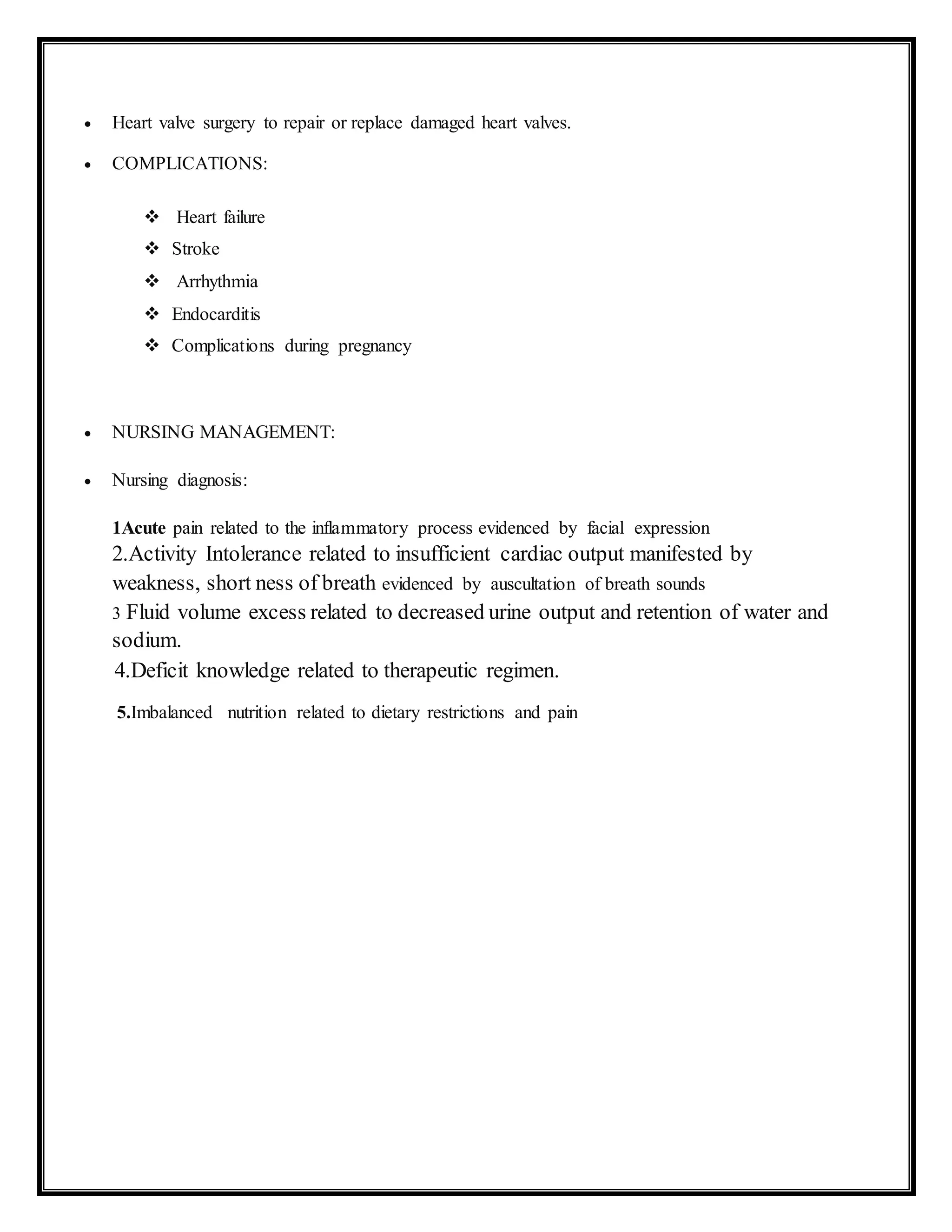
 NURSING MANAGEMENT:
 Nursing diagnosis:
1Acute pain related to the inflammatory process evidenced by facial expression
2.Activity Intolerance related to insufficient cardiac output manifested by
weakness, short ness of breath evidenced by auscultation of breath sounds
3 Fluid volume excess related to decreased urine output and retention of water and
sodium.
4.Deficit knowledge related to therapeutic regimen.
5.Imbalanced nutrition related to dietary restrictions and pain
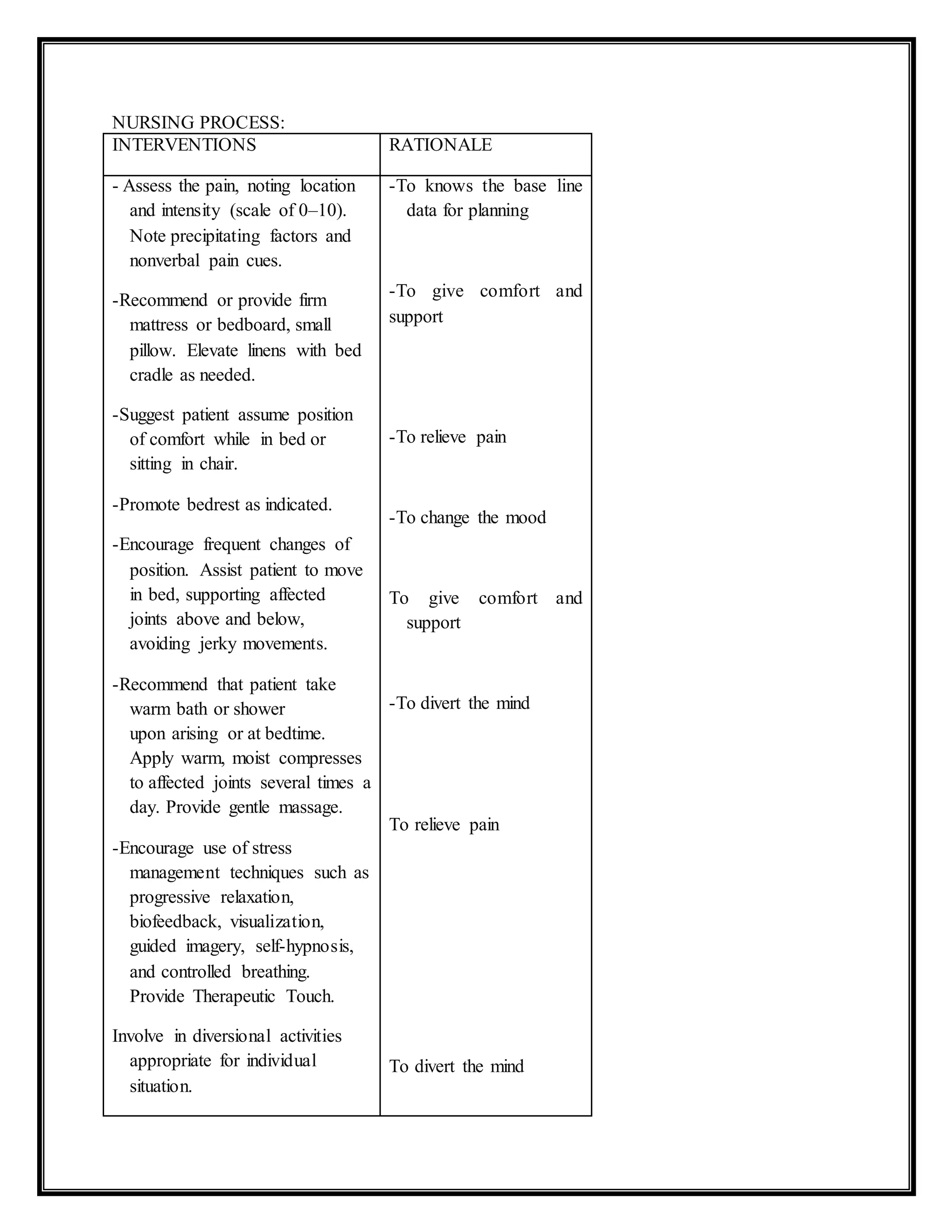
NURSING PROCESS:
INTERVENTIONS RATIONALE
- Assess the pain, noting location
and intensity (scale of 0–10).
Note precipitating factors and
nonverbal pain cues.
-Recommend or provide firm
mattress or bedboard, small
pillow. Elevate linens with bed
cradle as needed.
-Suggest patient assume position
of comfort while in bed or
sitting in chair.
-Promote bedrest as indicated.
-Encourage frequent changes of
position. Assist patient to move
in bed, supporting affected
joints above and below,
avoiding jerky movements.
-Recommend that patient take
warm bath or shower
upon arising or at bedtime.
Apply warm, moist compresses
to affected joints several times a
day. Provide gentle massage.
-Encourage use of stress
management techniques such as
progressive relaxation,
biofeedback, visualization,
guided imagery, self-hypnosis,
and controlled breathing.
Provide Therapeutic Touch.
Involve in diversional activities
appropriate for individual
situation.
-To knows the base line
data for planning
-To give comfort and
support
-To relieve pain
-To change the mood
To give comfort and
support
-To divert the mind
To relieve pain
To divert the mind
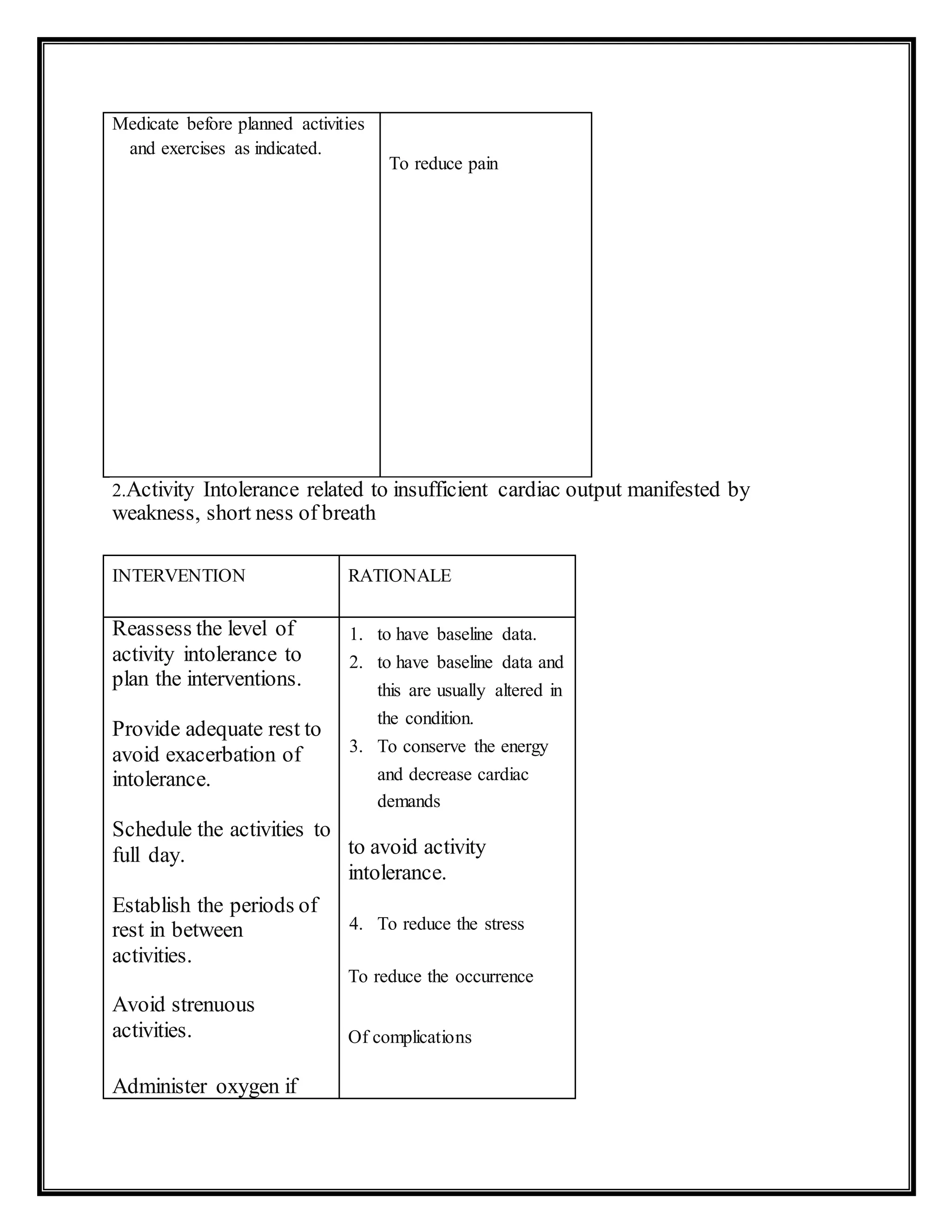
Medicate before planned activities
and exercises as indicated.
To reduce pain
2.Activity Intolerance related to insufficient cardiac output manifested by
weakness, short ness of breath
INTERVENTION RATIONALE
Reassess the level of
activity intolerance to
plan the interventions.
Provide adequate rest to
avoid exacerbation of
intolerance.
Schedule the activities to
full day.
Establish the periods of
rest in between
activities.
Avoid strenuous
activities.
Administer oxygen if
1. to have baseline data.
2. to have baseline data and
this are usually altered in
the condition.
3. To conserve the energy
and decrease cardiac
demands
to avoid activity
intolerance.
4. To reduce the stress
To reduce the occurrence
Of complications
ordered. To reduce the dyspnea

Rhd (4)

  • 1.
    RHEUMATIC HEART DISEASE INTRODUCTION Infectionis the invasion of an organism's body tissues by disease-causing agents, their multiplication, and the reaction of host tissues to these organisms and the toxins they produce. Infectious disease, also known as transmissible disease or communicable disease, is illness resulting from an infection. Rheumatic fever is one of the complications associated with strep throat. It’s a relatively serious illness that can cause stroke, permanent damage to your heart, and death if it’s left untreated. Rheumatic heart disease (RHD) is damage to one or more heart valves that remains after an episode of acute rheumatic fever (ARF) is resolved. It is caused by an episode or recurrent episodes of ARF, where the heart has become inflamed. The heart valves can remain stretched and/or scarred, and normal blood flow through damaged valves is interrupted. Blood may flow backward through stretched valves that do not close properly, or may be blocked due to scarred valves not opening properly. When the heart is damaged in this way, the heart valves are unable to function adequately, and heart surgery may be required ANATOMYAND PHYSIOLOGYOF HEART:  The heart is the organ that helps supply blood and oxygen to all parts of the body.  It is divided by a partition or septum into two halves, and the halves are in turn divided into four chambers.  The heart is situated within the chest cavity and surrounded by a fluid filled sac called the pericardium. Chambers of the heart:  Atria - Upper two chambers of the heart.  Ventricles - Lower two chambers of the heart.
  • 2.
    Heart walls:  Epicardium- The outer layer of the wall of the heart.  Myocardium - The muscular middle layer of the wall of the heart.  Endocardium - The inner layer of the heart. Valves of the heart: Heart valves are flap-like structures that allow blood to flow in one direction. Below are the four valves of the heart:  Aortic valve - Prevents the back flow of blood as it is pumped from the left ventricle to the aorta.  Mitral valve - Prevents the back flow of blood as it is pumped from the left atrium to the left ventricle.  Pulmonary valve - Prevents the back flow of blood as it is pumped from the right ventricle to the pulmonary artery.
  • 3.
    Blood vessels ofthe heart: Blood vessels are intricate networks of hollow tubes that transport blood throughout the entire body. The following are some of the blood vessels associated with the heart. Arteries:  Aorta - The largest artery in the body of which most major arteries branch off from.  Brachiocephalic artery - Carries oxygenated blood from the aorta to the head, neck and arm regions of the body.  Carotid arteries - Supply oxygenated blood to the head and neck regions of the body.  Tricuspid valve - Prevents the back flow of blood as it is pumped from the right atrium to the right ventricle DEFINITION: Rheumatic heart disease is a chronic condition resulting from rheumatic fever that is characterized by scaring and deformity of the heart valves. -lewis Rheumatic heart disease invvoves all the layers of the heart pancarditis can cause major cardiac sequale -Harsh mohan CAUSES:  Group A streptococcus infections of the throat cause strep throat or, less commonly, scarlet fever.  Group A streptococcus infections of the skin or other parts of the body rarely trigger rheumatic fever. Risk factors Various pre-disposing factors for Rheumatic Heart Disease are 1. Poor Socio-Economic status. 2. Over crowding atmosphere.
  • 4.
    3. Unhygienic livingconditions 4. Seasonal influences like more in winter and early spring. Family history. Some people carry a gene or genes that might make them more likely to develop rheumatic fever. Environmental factors. A greater risk of rheumatic fever is associated with overcrowding, poor sanitation and other conditions that can easily result in the rapid transmission or multiple exposures to strep bacteria Type of strepbacteria. Certainstrains of strepbacteriaare more likelyto contribute to rheumatic fever than are other strains. PATHOPHYSIOLOGY Due to group-A beta hemolytic streptococcal infection Infections, inflammation of heart tissue& fever that affect the heart valves Leakage narrowing Compansatory changes in the chamber sizes & thickness of chamber wall occur Heart involvement pericarditis, myocarditis ,endocarditis CLINICAL MANIFESTATIONS: Major criteria  Polyarthritis: A temporary migrating inflammation of the large joints, usually starting in the legs and migrating upwards.
  • 5.
     Carditis: Inflammationof the heart muscle (myocarditis) which can manifest as congestive heart failure with shortness of breath, pericarditis with a rub, or a new heart murmur.  Subcutaneous nodules: Painless, firm collections of collagen fibers over bones or tendons. They commonly appear on the back of the wrist, the outside elbow, and the front of the knees.  Erythema marginatum: A long-lasting reddish rash that begins on the trunk or arms as macules, which spread outward and clear in the middle to form rings, which continue to spread and coalesce with other rings, ultimately taking on a snake-like appearance. This rash typically spares the face and is made worse with heat. Minor criteria  Fever of 38.2–38.9 °C (101–102 °F)  Arthralgia: Joint pain without swelling (Cannot be included if polyarthritis is present as a major symptom)  Raised erythrocyte sedimentation rate or C reactive protein  Leukocytosis  ECG showing features of heart block, such as a prolonged PR interval (Cannot be included if carditis is present as a major symptom)  Previous episode of rheumatic fever or inactive heart diseas Rheumatic fever symptoms vary. You can have few symptoms or several, and symptoms can change during the course of the disease. The onset of rheumatic fever usually occurs about two to four weeks after a strep throat infection. Rheumatic fever signs and symptoms — which result from inflammation in the heart, joints, skin or central nervous system — can include:  Fever  Painful and tender joints — most often in the knees, ankles, elbows and wrists
  • 6.
     Pain inone joint that migrates to another joint  Red, hot or swollen joints  Small, painless bumps (nodules) beneath the skin  Chest pain  Heart murmur  Fatigue  Flat or slightly raised, painless rash with a ragged edge (erythema marginatum)  Jerky, uncontrollable body movements (Sydenham chorea, or St. Vitus' dance) — most often in the hands, feet and face  Outbursts of unusual behavior, such as crying or inappropriate laughing, that accompanies Sydenham chorea DIAGNOSIS: Diagnosis may include: History collection: past history of rheumatic fever  Physical examination – while a heart murmur may suggest RHD, many patients with RHD do not have a murmur  Medical history – including evidence of past ARF or strep infection  Chest x-ray – to check for enlargement of the heart or fluid on the lungs  Electrocardiogram (ECG) – to check if the  chambers of the heart have enlarged or if there is an abnormal heart rhythm (arrhythmia)  Echocardiogram – to check the heart valves for any damage or infection and assessing if there is heart failure. This is the most useful test for finding out if RHD is present.  Echocardiogram (echo). This test uses sound waves to check the heart's chambers and valves. The echo sound waves create a picture on a screen as an ultrasound transducer is passed over the skin over the heart. Echo can show damage to the valve flaps, backflow of blood through a leaky valve, and heart enlargement. It’s the most useful test for diagnosing heart valve problems.
  • 7.
     Electrocardiogram (ECG).This test records the strength and timing of the electrical activity of the heart. It shows abnormal rhythms (arrhythmias or dysrhythmias) and can sometimes detect heart muscle damage. Small sensors are taped to your skin to pick up the electrical activity.  Chest X-ray. An X-ray may be done to check your lungs and see if your heart is enlarged.  Cardiac MRI. This is an imaging test that takes detailed pictures of the heart. It may be used to get a more precise look at the heart valves and heart muscle.  Blood tests. Certain blood tests may be used to look for infection and inflammation MANAGEMENT: Treatment depends on the severity of rheumatic heart disease, but may include:  Hospital admission to treat heart failure  Antibiotics for infection (especially of the heart valves)  Pencillin :  Benzyl pencilln  Dose:1.2 milion units adults  0.6 million units chldrens  Non narcotic analgesics:  Acetaminophen:650mg  Side effect: liver damage  NSAIDS: ibuprofen  Narcotic analgesics: morphine, oxycodene  Side effect: stomach upset ,ulcer  Corticosteroids: betamethasone, prednisalone  Side effect: excessive hair growth,hypertension  Blood-thinning medicine : heparin to prevent stroke or thin blood for replacement valves  Balloons inserted through a vein to open up stuck valves
  • 8.
     Heart valvesurgery to repair or replace damaged heart valves.  COMPLICATIONS:  Heart failure  Stroke  Arrhythmia  Endocarditis  Complications during pregnancy  NURSING MANAGEMENT:  Nursing diagnosis: 1Acute pain related to the inflammatory process evidenced by facial expression 2.Activity Intolerance related to insufficient cardiac output manifested by weakness, short ness of breath evidenced by auscultation of breath sounds 3 Fluid volume excess related to decreased urine output and retention of water and sodium. 4.Deficit knowledge related to therapeutic regimen. 5.Imbalanced nutrition related to dietary restrictions and pain
  • 9.
    NURSING PROCESS: INTERVENTIONS RATIONALE -Assess the pain, noting location and intensity (scale of 0–10). Note precipitating factors and nonverbal pain cues. -Recommend or provide firm mattress or bedboard, small pillow. Elevate linens with bed cradle as needed. -Suggest patient assume position of comfort while in bed or sitting in chair. -Promote bedrest as indicated. -Encourage frequent changes of position. Assist patient to move in bed, supporting affected joints above and below, avoiding jerky movements. -Recommend that patient take warm bath or shower upon arising or at bedtime. Apply warm, moist compresses to affected joints several times a day. Provide gentle massage. -Encourage use of stress management techniques such as progressive relaxation, biofeedback, visualization, guided imagery, self-hypnosis, and controlled breathing. Provide Therapeutic Touch. Involve in diversional activities appropriate for individual situation. -To knows the base line data for planning -To give comfort and support -To relieve pain -To change the mood To give comfort and support -To divert the mind To relieve pain To divert the mind
  • 10.
    Medicate before plannedactivities and exercises as indicated. To reduce pain 2.Activity Intolerance related to insufficient cardiac output manifested by weakness, short ness of breath INTERVENTION RATIONALE Reassess the level of activity intolerance to plan the interventions. Provide adequate rest to avoid exacerbation of intolerance. Schedule the activities to full day. Establish the periods of rest in between activities. Avoid strenuous activities. Administer oxygen if 1. to have baseline data. 2. to have baseline data and this are usually altered in the condition. 3. To conserve the energy and decrease cardiac demands to avoid activity intolerance. 4. To reduce the stress To reduce the occurrence Of complications
  • 11.
    ordered. To reducethe dyspnea