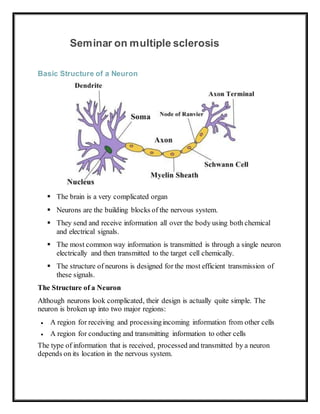
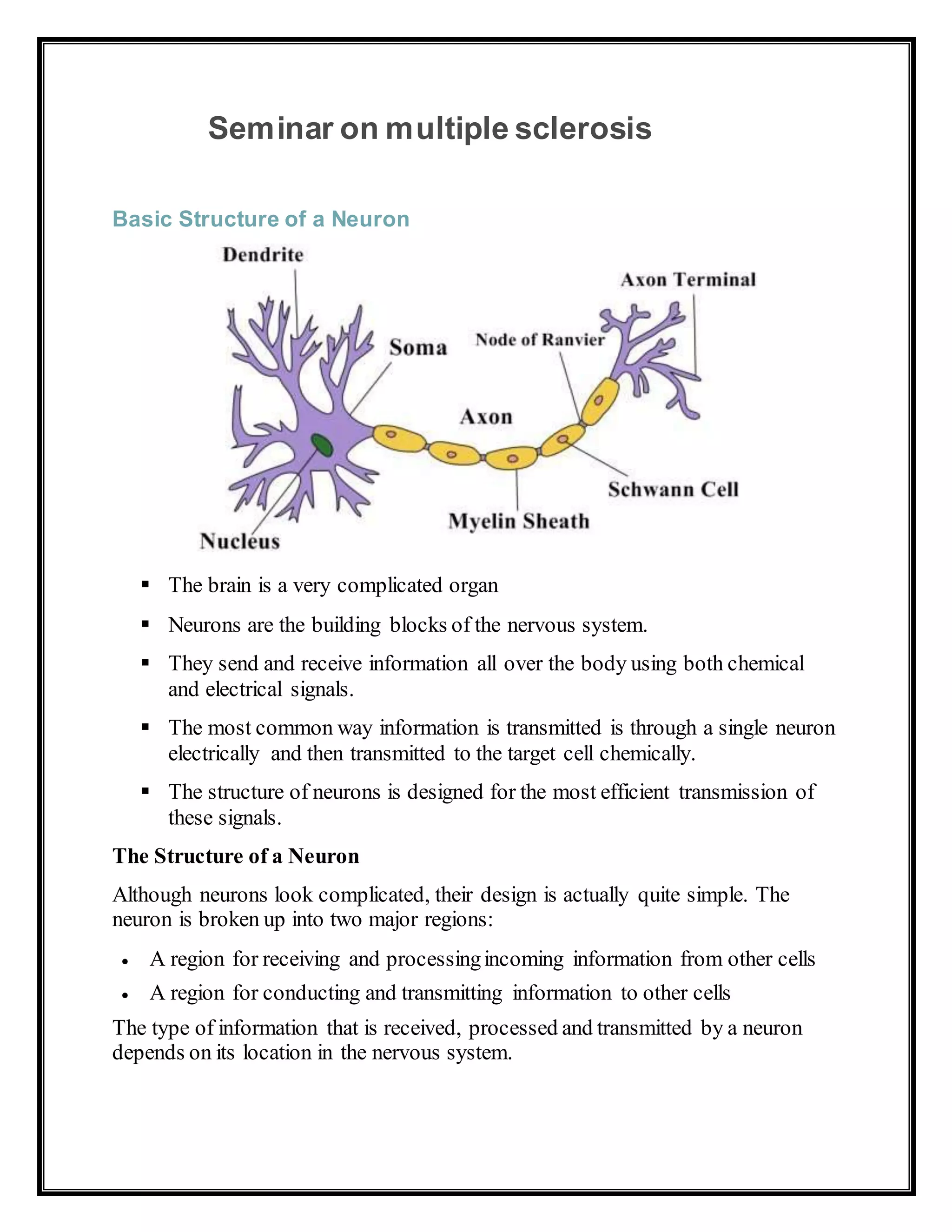
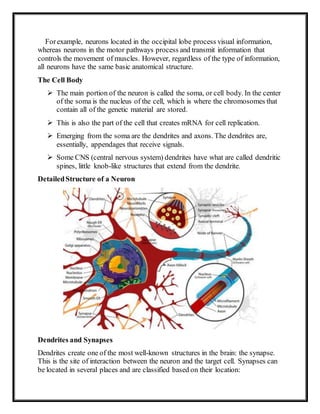
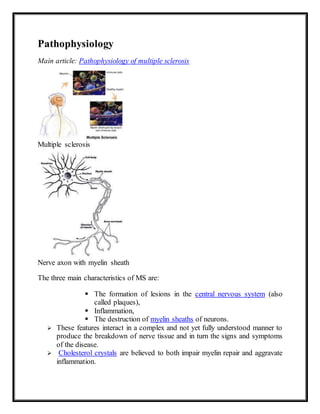
This document provides information on the structure and function of neurons and how they are affected in multiple sclerosis (MS). It discusses that neurons transmit electrical and chemical signals throughout the body. The neuron has a cell body that contains the nucleus, and dendrites and an axon that receive and transmit signals. The myelin sheath, formed by glial cells, insulates the axon and increases signal transmission speed. In MS, the immune system attacks the myelin sheath, slowing transmission and causing symptoms. MS can take several forms depending on whether symptoms are relapsing-remitting or progressively worsening over time. Genetic and environmental factors like viruses may contribute to MS, though the exact causes are unknown.
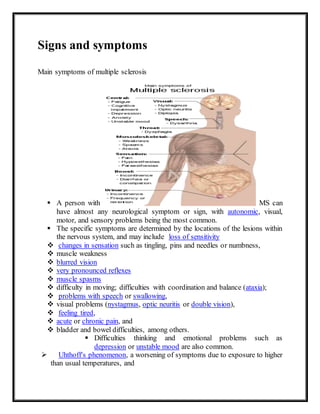


![Multiple sclerosis- Sushila [Autosaved].ppt](https://cdn.slidesharecdn.com/ss_thumbnails/multiplesclerosis-sushilaautosaved-230522133935-4f68df92-thumbnail.jpg?width=640&height=640&fit=bounds)


