
TUBERCULOSIS
PRESENTEDBY:
SHREE HARSHA PB
3RD PHARM D
PRESENTED TO:
DR.SHAHINUR SIR
 DEFINITION
 EPIDEMIOLOGY
 AETIOLOGY
 RISK FACTORS
 TRANSMISSION OF THE DISEASE
 PATHOPHYSIOLOGY
 CLINICAL MANIFESTATIONS
 DIAGNOSIS
 TREATMENT
 RNTCP
 DOTS THERAPY
DEFINITION :
Tuberculosis (TB) is a potentially fatal contagious disease that can affect almost
any part of the body but is mainly an infection of the lungs.
Neo-latin word :
“Tubercule” - Round nodule/Swelling
“osis”- Condition
WHO DEFINITION:
Tuberculosis (TB) is caused by bacteria (Mycobacterium tuberculosis) that most
often affect the lungs. Tuberculosis is curable and preventable.
TB is spread from person to person through the air. When people with lung TB
cough, sneeze or spit, they propel the TB germs into the air. A person needs to
inhale only a few of these germs to become infected.
EPIDEMIOLOGY
GLOBAL BURDEN
More than two billion people (about 30 percent of the world
population) are estimated to be infected with M. tuberculosis . The
global incidence of tuberculosis (TB) peaked around 2003 and
appears to be declining slowly . According to the World Health
Organization (WHO), in 2016, 10.4 million individuals became ill with
TB and 1.7 million died .
ETIOLOGY.
• Tuberculosis is caused by bacteria that spread from person to
person through microscopic droplets released into the air. This can
happen when someone with the untreated, active form of
tuberculosis coughs, speaks, sneezes, spits, laughs or sings.
• People who are infected with HIV are 20 to 30 times more likely to
develop active TB . The risk of active TB is also greater in persons
suffering from other conditions that impair the immune system.
CAUSATIVE ORGANISMS
• Mycobacterium tuberculosis-human
• Mycobacterium bovis-animals
Other causative organisms
• Mycobacterium africanum
• Mycobacterium microti
• Mycobacterium leprae
• Mycobacterium avium
• Mycobacterium asiaticu
CHARACTERISTICS :
RISK FACTORS:
Anyone can get tuberculosis, but certain factors can increase your risk of the disease. These factors
include:
Weakened immune system :A healthy immune system often successfully fights TB bacteria, but your body
can't mount an effective defense if your resistance is low. A number of diseases and medications can
weaken your immune system, including:
• HIV/AIDS
• Diabetes
• Severe kidney disease
• Certain cancers and Cancer treatment, such as chemotherapy
• Drugs to prevent rejection of transplanted organs
• Some drugs used to treat rheumatoid arthritis, Crohn's disease and psoriasis
• Malnutrition, low body weight.
• Very young or advanced age
• Haemotological malignancy : leukemia and lymphomas.
• Low body weight
• Silicosis , a respiratory condition caused by inhaling silica dust.
TRANSMISSION OF DISEASE:
Tuberculosis (TB) is transmitted from an infected
person to a susceptible person in airborne particles,
called droplet nuclei. These are 1–5 microns in
diameter. These infectious droplet nuclei are tiny
water droplets with the bacteria that are released
when persons who have pulmonary or laryngeal
tuberculosis cough, sneeze, laugh, shout etc. These
tiny droplet nuclei remain suspended in the air for
up to several hours. Tuberculosis bacteria,
(Mycobacterium tuberculosis) however are
transmitted through the air, not by surface contact.
This means touching cannot spread the infection
unless it is breathed in.
TYPES OF TUBERCULOSIS:
• Active TB: is an illness in which the TB bacteria are rapidly multiplying and invading different
organs of the body. The typical symptoms of active TB variably include cough, phlegm, chest
pain, weakness, weight loss, fever, chills and sweating at night. A person with active
pulmonary TB disease may spread TB to others by airborne transmission of infectious
particles coughed into the air. The most common form of active TB is lung disease, but it may
invade other organs, so-called "extrapulmonary TB."
• Miliary TB: it is a rare form of active disease that occurs when TB bacteria find their way into
the bloodstream. In this form, the bacteria quickly spread all over the body in tiny nodules
and affect multiple organs at once. This form of TB can be rapidly fatal.
• Latent TB: Many of those who are infected with TB do not develop overt disease. They have
no symptoms and their chest x-ray may be normal. The only manifestation of this encounter
may be reaction to the tuberculin skin test (TST) or interferon-gamma release assay (IGRA).
However, there is an ongoing risk that the latent infection may escalate to active disease. The
risk is increased by other illnesses such as HIV or medications which compromise the immune
system
PATHOPHYSIOLOGY:
• TB infection begins when droplet nuclei reach pulmonary alveoli.
• They invade and replicate within the endosomes of alveolar macrophages causing the
macrophages to rupture.
• The primary site of infection in the lungs is called Ghon focus.
• Active division of M. tuberculosis attracts immune cells to the area.
• Immune cells form a barrier shell that keep the bacilli contained. Bacilli remain viable &
dormant (LTBI).
• Attempt to control the infection by immune cells produce toxic substances & damages
surrounding lung tissue
• Macrophages(Giant cells), lymphocytes and fibroblasts encircle this area of dead tissue to
form tubercle or granuloma
• Tubercle consists of gelatinous mass of host cells and bacilli that gives the damaged tissue
cheese like appearance known as caseation necrosis.
• When these bacilli infect lower portions of the lungs or enter the bronchi, result in an active
case of pulmonary tuberculosis
TST
SIGNS AND SYMPTOMS:
• Pain areas: in the chest
• Pain circumstances: can occur while breathing
• Cough: can be chronic or with blood
• Whole body: fatigue, fever, loss of appetite, malaise, night sweats, or
sweating
• Also common: loss of muscle, phlegm, severe unintentional weight loss,
shortness of breath, or swollen lymph nodes
You should be tested for TB if:
• You think you might have active TB disease.
• You have spent time with a person you know or suspect has active TB disease.
• You are infected with HIV or have another condition that puts you at high risk for active TB
disease.
• You are from a country where active TB disease is very common (most countries in Latin
America, the Caribbean, Africa, and Asia and Eastern Europe and Russia).
• You live or work somewhere where active TB disease is more common, such as a homeless
shelter, migrant farm camp, prison or jail, or some nursing homes.
• You use illegal intravenous drugs.
• Getting an accurate history is important in diagnosing and treating TB. Like any disease, early
intervention and treatment is very important.
DIAGNOSIS:
THE DIAGNOSIS WILL BE DONE BY FOLLOWING TESTS:
I. Tuberculosis Skin test (Mantoux test)
II. Tuberculosis blood test
III. Chest X-ray
IV. Sputum Test
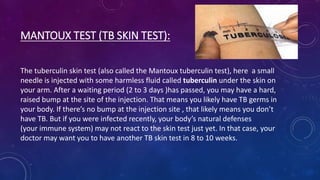
MANTOUX TEST (TB SKIN TEST):
The tuberculin skin test (also called the Mantoux tuberculin test), here a small
needle is injected with some harmless fluid called tuberculin under the skin on
your arm. After a waiting period (2 to 3 days )has passed, you may have a hard,
raised bump at the site of the injection. That means you likely have TB germs in
your body. If there’s no bump at the injection site , that likely means you don’t
have TB. But if you were infected recently, your body’s natural defenses
(your immune system) may not react to the skin test just yet. In that case, your
doctor may want you to have another TB skin test in 8 to 10 weeks.
TB BLOOD TEST:
The tuberculosis (TB) blood test, also called an Interferon Gamma
Release Assay or IGRA,
There are two kinds of TB blood tests:
• QuantiFERON®-TB
• T-SPOT®.TB
Blood Test for M. tuberculosis infection that is based on measurement of a cell-
mediated immune response. A cocktail of 3 mycobacterial proteins (ESAT-6, CFP-10, and
TB 7.7) stimulate the patient's T-cells in vitro to release interferon-gamma, which is
then measured using ELISA technology. The test detects infections produced by the M.
tuberculosis complex (including M. tuberculosis, M. bovis, and M.
africanum infections). patients either vaccinated with BCG or infected with most
environmental mycobacteria should test negative.
CHEST X-RAY:
If a person has had TB bacteria which have caused
inflammation in the lungs, an abnormal shadow may
be visible on a chest x-ray. Also, acute pulmonary TB
can be easily seen on an X-ray.
Chest X-Rays are a simple procedure to confirm the presence of TB in
the patient. During the procedure, the clinician will simply take X-
rays of the chest from multiple angles. A clinician will analyze the
results to determine if the lung X-rays show any signs of advance
pulmonary tuberculosis or any existing damage for patients who
have a documented history of testing positive.
SPUTUM TEST:
• Sputum smear microscopy is a test for TB.
• Smear microscopy of sputum is often the first TB test to be used in countries
with a high rate of TB infection.
• Sputum is a thick fluid that is produced in the lungs and the airways leading to
the lungs.
• A sample of sputum is usually collected by the person coughing.
• The test also can show if a lung infection is caused by some other kind of
bacteria. A sputum culture can take 1 to 8 weeks to provide results. Rapid
sputum tests can tell if a person has TB within 24 hours.
Sputum is mucous that you cough up from deep inside your lungs. It is usually thick, cloudy and
sticky. Sputum is not saliva (spit). Saliva comes from your mouth and is thin, clear and watery.
Do not collect saliva for this test.
To collect sputum, follow these steps:
• Collect your sputum in the early morning unless your health care provider gives you different instructions.
• Do not eat, drink, smoke, brush your teeth, or use mouthwash before collecting your sputum.
• Make sure your first name, last name, and date of birth are on the label of the sample bottles.
• Collect your sputum away from other people. If possible, go outside or open a window while you collect your
sputum.
• Open a sample bottle. Do not touch inside the sample bottle or inside the cap.
• Take a deep breath. Hold the air for a few seconds. Breathe out slowly. Take another deep breath. Cough hard until
sputum comes up in your mouth.
• Spit the sputum into the sample bottle. Do this until there is enough sputum to cover the bottom of the bottle.
• Screw the cap on the sample bottle tightly so it does not leak.
• Write the date and time you collected the sputum on the label of the sample bottle.
• Seal the sample bottle in the plastic bag it came with. Do not put more than one sample bottle in each plastic bag.
• Make sure the test requisition paper is put in the pouch on the outside of the plastic bag (not inside with the sample
bottle).
• After you finish collecting your sputum, wash your hands.
PHARMACOLOGICAL STUDIES:
• The anti-tubercular drugs are used in different combinations in different circumstances.
• Some anti tb drugs are only used for the treatment of new patients who are very unlikely to
have resistance to any of the tb drugs(first line drugs).
Ex: ISONIAZID (INH)(H),RIFAMPIN (R),REFABUTINE,REFAPENTINE,PYRAZINAMIDE (Z),
ETHAMBUTOL (E).
• There are other tb drugs, the second line drugs , that are only used for the treatment of drug
resistant tb.
Ex: CYCLOSERINE, ETHIONAMIDE, STREPTOMYCIN, AMIKACIN-KANAMYCIN, CAPREOMYCIN,
P- AMINO SALICYLIC ACID (PAS), LEVOFLOXACIN, MOXIFLOXACIN, GATIFLOXACIN
• Newer drugs ex: CIPROFLOXACIN,OFLOXACIN,CLARITHROMYCIN,AZITHROMYCIN
RIFABUTIN
DRUG MONOGRAPHS:
ISONAZIDS:Tuberculostatic.Inhibition of synthesis of mycolic acid (Cell wall component) ,used with other drugs to avoid
or delay emergence of resistance.
• White ,crystalline powder or colourless crystals.
• Freely soluble in water ,sparingly soluble in alcohol
• A 5% solution in water has a pH of 6.0 to 8.0.
• Store in air tight container ; protect from light.
KINETIC PARAMETERS:
• Readily absorbed from GIT and following intramuscular injection.
• Peak conc. of about 3 to 7 micrograms/ml appear in blood 1 to 2 hrs after a fasting dose of 300 mg orally.
• Rate and extend of absorption reduced by food.
• Appears in foetal blood if given during pregnancy.and is distributed in breast milk.
• Plasma half-life ranges from 1 to 6 hrs.
• Metabolized in liver and small intestine.
• 75% of the drug is excreted renally as metabolite.small amount also appear on feaces.
Incompatibility.
It has been recommended that sugars such as glucose, fructose, and sucrose should not be used in isoniazid syrup
preparations because the absorption of the drug was impaired.
• Sorbitol maybe a suitable substitute if necessary.
DOSAGE:Tablets:50mg,100mg,300mg
• oral syrup-50mg/5mL
• injectable solution-100mg/mL
Adverse Effects
• Peripheral neuritis, numbness, hepatitis, convulsions
• Patients whose nutrition is poor are at risk of peripheral neuritis which is one of the commonest
adverse effects of isoniazid
• Other neurological adverse effects include psychotic reactions and convulsions
• Optic neuritis .
• Transient increases in liver enzymes occur in 10 to 20% of patients during the first few months of
treatment.
• Symptomatic hepatitis occurs in about 0.1 to 0.15% of patients given isoniazid as monotherapy, but this
can increase with age, regular alcohol consumption, and in those with chronic liver disease.
• Elevated liver enzymes associated with clinical signs of hepatitis such as nausea and vomiting, or fatigue
may indicate hepatic damage; in these circumstances, isoniazid should be stopped pending evaluation
and should only be reintroduced.
Symptoms of over dosage include slurred speech, metabolic acidosis, hallucinations, hyper glycaemia,
respiratory distress or tachypnea, convulsions, and coma
RIFAMPICIN:
• A reddish-brown or brownish-red crystalline powder.
• Slightly soluble in water, in alcohol, and in acetone; soluble in methyl alcohol.
• A 1% suspension in water has a pH of 4.5 to 6.5.
• Store at a temperature between 25° - 40° in airtight containers.
• Protect from light.
KINETIC PARAMETERS
• Readily absorbed from the GIT.
• peak plasma concentrations varying from 4 to 32 mcg/mL (average 7 mcg/mL) have been reported after a dose of
600 mg.
• Food may reduce and delay absorption.
• 80% bound to plasma proteins.
• It is widely distributed in body tissues and fluids and diffusion into the CSF is increased when the meninges are
inflamed.
• Half-life: Ranges from 2 to 5 hours. Prolonged in patients with severe hepatic impairment
MOA :Interferes with bacterial synthesis of nucleic acids by inhibiting DNA-dependent RNA-polymerase.
• It possesses the ability to eliminate semi-dormant or persisting organisms.
• Acquired resistance to rifampicin develops rapidly if it is used alone. Resistance is thought to be due to a single-step
mutation of the DNA-dependent RNA polymerase.
DOSAGE:10 mg/kg/dose (Max: 600 mg/dose) given PO or IV once daily or 2, 3, or 5 times per
week
ADVERSE DRUG REACTIONS
• Flushing, edema, headache, drowsiness , dizziness ,confusion ,numbness,
behavioral changes, urticaria, eosinophilia, leukopenia, hemolysis, hemolytic
anemia, thrombocytopenia, hepatitis ,ataxia, myalgia ,weakness, osteomalacia ,
visual changes,
• Dermatologic :rash
• Gastro intestinal :epigastric distress , anorexia ,nausea , vomiting, diarrhea,
cramps, pancreatitis.
• Hepatic : increased LFTs
MONITORING PARAMETERS
Periodic monitoring of liver functions, mental status, chest x-ray,
Every 2-3 months.
• Pregnancy Risk Factor- C CATEGORY
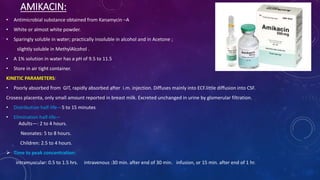
AMIKACIN:
• Antimicrobial substance obtained from Kanamycin –A
• White or almost white powder.
• Sparingly soluble in water; practically insoluble in alcohol and in Acetone ;
slightly soluble in MethylAlcohol .
• A 1% solution in water has a pH of 9.5 to 11.5
• Store in air tight container.
KINETIC PARAMETERS:
• Poorly absorbed from GIT, rapidly absorbed after i.m. injection. Diffuses mainly into ECF.little diffusion into CSF.
Crosess placenta, only small amount reported in breast milk. Excreted unchanged in urine by glomerular filtration.
• Distribution half-life—5 to 15 minutes
• Elimination half-life—
Adults—: 2 to 4 hours.
Neonates: 5 to 8 hours.
Children: 2.5 to 4 hours.
 Time to peak concentration:
intramuscular: 0.5 to 1.5 hrs. intravenous :30 min. after end of 30 min. infusion, or 15 min. after end of 1 hr.
• MOA: Actively transported across the bacterial cell membrane →irreversibly binds to one or more
specific receptor proteins on the 30 S subunit of bacterial ribosomes→ interferes with an initiation
complex between messenger RNA (mRNA) and the 30 S subunit →DNA misread producing
nonfunctional proteins→ polyribosomes split apart and are unable to synthesize protein.
This results in accelerated aminoglycoside transport, increasing the disruption of bacterial cytoplasmic
membranes, and eventual cell death.
• ADR: Tinnitus, vertigo; ataxia and overt deafness.
Potentially Fatal: Ototoxicity, nephrotoxicity, neuromuscular blockade.
• DRUG INTERACTIONS
Amphotericin B may lead to increased nephrotoxicity and reduced clearance of amikacin when used
together.
Potentially Fatal:
Increased ototoxic or nephrotoxic effects with other nephrotoxic or ototoxic drugs.
Enhanced neuromuscular blockade with neuromuscular blocking drugs.
Increased risk of ototoxicity with potent diuretics.
DOTS:
Tuberculosis is completely curable through
short-course chemotherapy. Treating TB cases who
are sputum-smear positive (and who can therefore
spread the disease to others) at the source, it is the
most effective means of eliminating TB from a
population.
• Treatment of tuberculosis under RNTCP is based on Direct observation of
treatment (DOT) ensures the best possible result.
• Here an observer watches and assists the patient in swallowing the tablets,
thereby ensuring that the patient receives the medication.
• Many patients who do not receive directly observed treatment stop taking
drugs after two months because they feel better.
RNTCP:
Revised National Tuberculosis Control
Program is the state-run tuberculosis
control initiative of the Government of India.
As per the National Strategic Plan 2012–17,
the program has a vision of achieving a "TB free India", and aims to
achieve Universal Access to TB control services.
RNTCP India was implemented in 1997 based on the WHO
recommended strategy of Directly Observed Treatment, Short
Course (DOTS). The diagnosis is made primarily by sputum
microscopy, which is made available free of cost to patients at
designated microscopy centers
PROCEDURE FOLLOWED IN RNTCP CENTERS:
RECENT WHO CLASSIFICATION
GROUP 1 (FIRST LINE ORAL AGENTS)
• ISONIAZID, RIFAMPICIN, ETHAMBUTOL, PYRAZINAMIDE
GROUP 2 (INJECTABLE AGENTS)
• KANAMYCIN, , AMIKACIN, CAPREOMYCIN, STREPTOMYCIN
GROUP 3 (FLUOROQUINOLONES)
• LEVOFLOXACIN, , MOXIFLOXACIN, OFLOXACIN
GROUP 4 (ORAL BACTERIOSTATIC AGENTS)
• ETHIONAMIDE, CYCLOSERINE, PARA-AMINOSALICYLIC ACID (PAS), PROTHIONAMIDE,
TERIZADONE
GROUP 5 (AGENTS WITH UNCLEAR EFFICACY)
• LINAZOLID, , AMOXICILLIN/CLAVULANATE, IMIPENEM/CILASTATIN, THIOACETAZONE,
HIGH-DOSE ISONIAZID, CLARITHROMYCIN,
ANTI-TB DRUGS USED IN RNTCP
FIRST LINE DRUGS:
INH (H)
RIFAMPICIN (R)
PYRAZINAMIDE (Z)
ETHAMBUTOL (E)
STREPTOMYCIN (S)
SECOND LINE DRUGS:
AMIKACIN, KANAMYCIN,
FLUOROQUINOLONES,
CAPREOMYCIN,
ETHIONAMIDE
PAS, CYCLOSERINE, etc…
• Intensive Phase(IP): Meant to kill as many bacilli rapidly as
possible
• Continuation Phase(CP): Aimed to sterilize smaller number of
dormant/persisting bacilli to prevent relapse.
PHASES OF TREATMENT
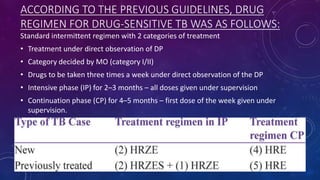
ACCORDING TO THE PREVIOUS GUIDELINES, DRUG
REGIMEN FOR DRUG-SENSITIVE TB WAS AS FOLLOWS:
Standard intermittent regimen with 2 categories of treatment
• Treatment under direct observation of DP
• Category decided by MO (category I/II)
• Drugs to be taken three times a week under direct observation of the DP
• Intensive phase (IP) for 2–3 months – all doses given under supervision
• Continuation phase (CP) for 4–5 months – first dose of the week given under
supervision.
FOR NEW TB CASES
• Treatment in IP will consist of 8 weeks of INH, Rifampicin, Pyrazinamide and Ethambutol in
daily dosages as per four weight bands categories
• There will be no need for extension of IP
• Only Pyrazinamide will be stopped in CP while the other three drugs will be continued for
another 16 weeks as daily dosages.
FOR PREVIOUSLY TREATED CASES:
• IP will be of 12 weeks, where injection Streptomycin will be stopped after 8 weeks and the
remaining four drugs in daily dosages as per weight band for another 4 weeks
• No need of extension of IP
• At the start of CP, Pyrazinamide will be stopped while rest of the drugs will be continued for
another 20 weeks as daily dosages.
MANAGEMENT OF EXTRA-PULMONARY TB (NEW GUIDELINES) :
• The CP in both new and previously treated cases may be extended 3–6
months in certain TB such as CNS, skeletal, disseminated TB, and so on based
on clinical decision of the treating physicians
• Extension beyond 3 months will only be on recommendation of experts of
concerned field.(In the previous guidelines, extension of ATD in case of CNS
and skeletal TB was maximum 3 months).
• According to the new guidelines, ATD are to be given in fixed dose
combination as daily doses;
Drug Dosage for Adult TB
In patients above 50 years of age, maximum dose of Streptomycin
should be 0.75 g.
DRUG DOSAGE FOR PEDIATRIC TB:
FOLLOW-UP OF TREATMENT:
Clinical follow-up – (new addition):Should be at least monthly – the patient may visit the
clinical facility, or the medical officer may conduct the review when she/he visits the house of
the patient to observe improvement of chest symptoms, weight gain, control the co-morbid
conditions such as HIV and diabetes and to monitor any adverse reaction to ATD.
Follow-up laboratory investigation: For PTB cases – sputum smear examination at the
end of IP and at the end of treatment. (In the previous guidelines, follow-up sputum smear to be
done at 2, 4 and 6 months for new cases and 3, 5 and 8 months in previously treated cases.)
In case of clinical deterioration, the Medical Officer may consider repeat sputum smear even
during CP. (New addition.)
• At the completion of treatment, sputum smear and culture should be done for every patient
• CXR – to be offered whenever required and available.
Long-term follow-up: After completion of treatment, the patient should be followed up at
the end of 6, 12, 18 and 24 months. Any clinical symptoms and/or cough, sputum microscopy
and/or culture should be considered. (New addition) However, there was no provision of long-
term follow-up in the previous guidelines
REFERENCE:
EricT. Harfindal, Dick R. Gourley; Text Book Of Therapeutics Drug and Disease Management. ;Lippincott Williams and
Wilking; Seventh Edition ; Page No. 1444-1445.
• REVISED NATIONAL TUBERCULOSIS CONTROL PROGRAMME, TRAINING MODULE FOR COMMUNITYP HARMACISTS
2013 BY GOI
• Joseph T.Dipiro, Robert L. Talbert,Gary C. Yee, Gary R. Matzke, Barbara G. Wells , L. Michael posey ; Pharmacotherapy
A Pathophysiologic Approach; Mc Graw Hill Medical Publishing Division; Sixth Edition; Page no. 2019-2029
• Afranio Kritski and Fernando Augusto Fiuza de Melo, Tuberculosis in Adults TUBERCULOSIS 2007 by
Palomino,Leao,Ritacco PageNo 487-524
• L.K Nehaul,tuberculosis,Textbook of Clinical Pharmacy and Therapeutics by Roger Walker and Cate Whittlesea Pgno
608-618
• Recent changes in technical and operational guidelines for tuberculous control program in India
LOGOUT

Tuberculosis

  • 1.
    TUBERCULOSIS PRESENTEDBY: SHREE HARSHA PB 3RDPHARM D PRESENTED TO: DR.SHAHINUR SIR
  • 2.
     DEFINITION  EPIDEMIOLOGY AETIOLOGY  RISK FACTORS  TRANSMISSION OF THE DISEASE  PATHOPHYSIOLOGY  CLINICAL MANIFESTATIONS  DIAGNOSIS  TREATMENT  RNTCP  DOTS THERAPY
  • 3.
    DEFINITION : Tuberculosis (TB)is a potentially fatal contagious disease that can affect almost any part of the body but is mainly an infection of the lungs. Neo-latin word : “Tubercule” - Round nodule/Swelling “osis”- Condition WHO DEFINITION: Tuberculosis (TB) is caused by bacteria (Mycobacterium tuberculosis) that most often affect the lungs. Tuberculosis is curable and preventable. TB is spread from person to person through the air. When people with lung TB cough, sneeze or spit, they propel the TB germs into the air. A person needs to inhale only a few of these germs to become infected.
  • 4.
  • 5.
    GLOBAL BURDEN More thantwo billion people (about 30 percent of the world population) are estimated to be infected with M. tuberculosis . The global incidence of tuberculosis (TB) peaked around 2003 and appears to be declining slowly . According to the World Health Organization (WHO), in 2016, 10.4 million individuals became ill with TB and 1.7 million died .
  • 7.
    ETIOLOGY. • Tuberculosis iscaused by bacteria that spread from person to person through microscopic droplets released into the air. This can happen when someone with the untreated, active form of tuberculosis coughs, speaks, sneezes, spits, laughs or sings. • People who are infected with HIV are 20 to 30 times more likely to develop active TB . The risk of active TB is also greater in persons suffering from other conditions that impair the immune system.
  • 8.
    CAUSATIVE ORGANISMS • Mycobacteriumtuberculosis-human • Mycobacterium bovis-animals Other causative organisms • Mycobacterium africanum • Mycobacterium microti • Mycobacterium leprae • Mycobacterium avium • Mycobacterium asiaticu
  • 9.
  • 10.
    RISK FACTORS: Anyone canget tuberculosis, but certain factors can increase your risk of the disease. These factors include: Weakened immune system :A healthy immune system often successfully fights TB bacteria, but your body can't mount an effective defense if your resistance is low. A number of diseases and medications can weaken your immune system, including: • HIV/AIDS • Diabetes • Severe kidney disease • Certain cancers and Cancer treatment, such as chemotherapy • Drugs to prevent rejection of transplanted organs • Some drugs used to treat rheumatoid arthritis, Crohn's disease and psoriasis • Malnutrition, low body weight. • Very young or advanced age • Haemotological malignancy : leukemia and lymphomas. • Low body weight • Silicosis , a respiratory condition caused by inhaling silica dust.
  • 11.
    TRANSMISSION OF DISEASE: Tuberculosis(TB) is transmitted from an infected person to a susceptible person in airborne particles, called droplet nuclei. These are 1–5 microns in diameter. These infectious droplet nuclei are tiny water droplets with the bacteria that are released when persons who have pulmonary or laryngeal tuberculosis cough, sneeze, laugh, shout etc. These tiny droplet nuclei remain suspended in the air for up to several hours. Tuberculosis bacteria, (Mycobacterium tuberculosis) however are transmitted through the air, not by surface contact. This means touching cannot spread the infection unless it is breathed in.
  • 14.
    TYPES OF TUBERCULOSIS: •Active TB: is an illness in which the TB bacteria are rapidly multiplying and invading different organs of the body. The typical symptoms of active TB variably include cough, phlegm, chest pain, weakness, weight loss, fever, chills and sweating at night. A person with active pulmonary TB disease may spread TB to others by airborne transmission of infectious particles coughed into the air. The most common form of active TB is lung disease, but it may invade other organs, so-called "extrapulmonary TB." • Miliary TB: it is a rare form of active disease that occurs when TB bacteria find their way into the bloodstream. In this form, the bacteria quickly spread all over the body in tiny nodules and affect multiple organs at once. This form of TB can be rapidly fatal. • Latent TB: Many of those who are infected with TB do not develop overt disease. They have no symptoms and their chest x-ray may be normal. The only manifestation of this encounter may be reaction to the tuberculin skin test (TST) or interferon-gamma release assay (IGRA). However, there is an ongoing risk that the latent infection may escalate to active disease. The risk is increased by other illnesses such as HIV or medications which compromise the immune system
  • 15.
    PATHOPHYSIOLOGY: • TB infectionbegins when droplet nuclei reach pulmonary alveoli. • They invade and replicate within the endosomes of alveolar macrophages causing the macrophages to rupture. • The primary site of infection in the lungs is called Ghon focus. • Active division of M. tuberculosis attracts immune cells to the area. • Immune cells form a barrier shell that keep the bacilli contained. Bacilli remain viable & dormant (LTBI). • Attempt to control the infection by immune cells produce toxic substances & damages surrounding lung tissue • Macrophages(Giant cells), lymphocytes and fibroblasts encircle this area of dead tissue to form tubercle or granuloma • Tubercle consists of gelatinous mass of host cells and bacilli that gives the damaged tissue cheese like appearance known as caseation necrosis. • When these bacilli infect lower portions of the lungs or enter the bronchi, result in an active case of pulmonary tuberculosis
  • 17.
  • 18.
    SIGNS AND SYMPTOMS: •Pain areas: in the chest • Pain circumstances: can occur while breathing • Cough: can be chronic or with blood • Whole body: fatigue, fever, loss of appetite, malaise, night sweats, or sweating • Also common: loss of muscle, phlegm, severe unintentional weight loss, shortness of breath, or swollen lymph nodes
  • 20.
    You should betested for TB if: • You think you might have active TB disease. • You have spent time with a person you know or suspect has active TB disease. • You are infected with HIV or have another condition that puts you at high risk for active TB disease. • You are from a country where active TB disease is very common (most countries in Latin America, the Caribbean, Africa, and Asia and Eastern Europe and Russia). • You live or work somewhere where active TB disease is more common, such as a homeless shelter, migrant farm camp, prison or jail, or some nursing homes. • You use illegal intravenous drugs. • Getting an accurate history is important in diagnosing and treating TB. Like any disease, early intervention and treatment is very important.
  • 21.
    DIAGNOSIS: THE DIAGNOSIS WILLBE DONE BY FOLLOWING TESTS: I. Tuberculosis Skin test (Mantoux test) II. Tuberculosis blood test III. Chest X-ray IV. Sputum Test
  • 22.
    MANTOUX TEST (TBSKIN TEST): The tuberculin skin test (also called the Mantoux tuberculin test), here a small needle is injected with some harmless fluid called tuberculin under the skin on your arm. After a waiting period (2 to 3 days )has passed, you may have a hard, raised bump at the site of the injection. That means you likely have TB germs in your body. If there’s no bump at the injection site , that likely means you don’t have TB. But if you were infected recently, your body’s natural defenses (your immune system) may not react to the skin test just yet. In that case, your doctor may want you to have another TB skin test in 8 to 10 weeks.
  • 24.
    TB BLOOD TEST: Thetuberculosis (TB) blood test, also called an Interferon Gamma Release Assay or IGRA, There are two kinds of TB blood tests: • QuantiFERON®-TB • T-SPOT®.TB Blood Test for M. tuberculosis infection that is based on measurement of a cell- mediated immune response. A cocktail of 3 mycobacterial proteins (ESAT-6, CFP-10, and TB 7.7) stimulate the patient's T-cells in vitro to release interferon-gamma, which is then measured using ELISA technology. The test detects infections produced by the M. tuberculosis complex (including M. tuberculosis, M. bovis, and M. africanum infections). patients either vaccinated with BCG or infected with most environmental mycobacteria should test negative.
  • 25.
    CHEST X-RAY: If aperson has had TB bacteria which have caused inflammation in the lungs, an abnormal shadow may be visible on a chest x-ray. Also, acute pulmonary TB can be easily seen on an X-ray. Chest X-Rays are a simple procedure to confirm the presence of TB in the patient. During the procedure, the clinician will simply take X- rays of the chest from multiple angles. A clinician will analyze the results to determine if the lung X-rays show any signs of advance pulmonary tuberculosis or any existing damage for patients who have a documented history of testing positive.
  • 26.
    SPUTUM TEST: • Sputumsmear microscopy is a test for TB. • Smear microscopy of sputum is often the first TB test to be used in countries with a high rate of TB infection. • Sputum is a thick fluid that is produced in the lungs and the airways leading to the lungs. • A sample of sputum is usually collected by the person coughing. • The test also can show if a lung infection is caused by some other kind of bacteria. A sputum culture can take 1 to 8 weeks to provide results. Rapid sputum tests can tell if a person has TB within 24 hours.
  • 27.
    Sputum is mucousthat you cough up from deep inside your lungs. It is usually thick, cloudy and sticky. Sputum is not saliva (spit). Saliva comes from your mouth and is thin, clear and watery. Do not collect saliva for this test. To collect sputum, follow these steps: • Collect your sputum in the early morning unless your health care provider gives you different instructions. • Do not eat, drink, smoke, brush your teeth, or use mouthwash before collecting your sputum. • Make sure your first name, last name, and date of birth are on the label of the sample bottles. • Collect your sputum away from other people. If possible, go outside or open a window while you collect your sputum. • Open a sample bottle. Do not touch inside the sample bottle or inside the cap. • Take a deep breath. Hold the air for a few seconds. Breathe out slowly. Take another deep breath. Cough hard until sputum comes up in your mouth. • Spit the sputum into the sample bottle. Do this until there is enough sputum to cover the bottom of the bottle. • Screw the cap on the sample bottle tightly so it does not leak. • Write the date and time you collected the sputum on the label of the sample bottle. • Seal the sample bottle in the plastic bag it came with. Do not put more than one sample bottle in each plastic bag. • Make sure the test requisition paper is put in the pouch on the outside of the plastic bag (not inside with the sample bottle). • After you finish collecting your sputum, wash your hands.
  • 29.
    PHARMACOLOGICAL STUDIES: • Theanti-tubercular drugs are used in different combinations in different circumstances. • Some anti tb drugs are only used for the treatment of new patients who are very unlikely to have resistance to any of the tb drugs(first line drugs). Ex: ISONIAZID (INH)(H),RIFAMPIN (R),REFABUTINE,REFAPENTINE,PYRAZINAMIDE (Z), ETHAMBUTOL (E). • There are other tb drugs, the second line drugs , that are only used for the treatment of drug resistant tb. Ex: CYCLOSERINE, ETHIONAMIDE, STREPTOMYCIN, AMIKACIN-KANAMYCIN, CAPREOMYCIN, P- AMINO SALICYLIC ACID (PAS), LEVOFLOXACIN, MOXIFLOXACIN, GATIFLOXACIN • Newer drugs ex: CIPROFLOXACIN,OFLOXACIN,CLARITHROMYCIN,AZITHROMYCIN RIFABUTIN
  • 31.
    DRUG MONOGRAPHS: ISONAZIDS:Tuberculostatic.Inhibition ofsynthesis of mycolic acid (Cell wall component) ,used with other drugs to avoid or delay emergence of resistance. • White ,crystalline powder or colourless crystals. • Freely soluble in water ,sparingly soluble in alcohol • A 5% solution in water has a pH of 6.0 to 8.0. • Store in air tight container ; protect from light. KINETIC PARAMETERS: • Readily absorbed from GIT and following intramuscular injection. • Peak conc. of about 3 to 7 micrograms/ml appear in blood 1 to 2 hrs after a fasting dose of 300 mg orally. • Rate and extend of absorption reduced by food. • Appears in foetal blood if given during pregnancy.and is distributed in breast milk. • Plasma half-life ranges from 1 to 6 hrs. • Metabolized in liver and small intestine. • 75% of the drug is excreted renally as metabolite.small amount also appear on feaces. Incompatibility. It has been recommended that sugars such as glucose, fructose, and sucrose should not be used in isoniazid syrup preparations because the absorption of the drug was impaired. • Sorbitol maybe a suitable substitute if necessary.
  • 32.
    DOSAGE:Tablets:50mg,100mg,300mg • oral syrup-50mg/5mL •injectable solution-100mg/mL Adverse Effects • Peripheral neuritis, numbness, hepatitis, convulsions • Patients whose nutrition is poor are at risk of peripheral neuritis which is one of the commonest adverse effects of isoniazid • Other neurological adverse effects include psychotic reactions and convulsions • Optic neuritis . • Transient increases in liver enzymes occur in 10 to 20% of patients during the first few months of treatment. • Symptomatic hepatitis occurs in about 0.1 to 0.15% of patients given isoniazid as monotherapy, but this can increase with age, regular alcohol consumption, and in those with chronic liver disease. • Elevated liver enzymes associated with clinical signs of hepatitis such as nausea and vomiting, or fatigue may indicate hepatic damage; in these circumstances, isoniazid should be stopped pending evaluation and should only be reintroduced. Symptoms of over dosage include slurred speech, metabolic acidosis, hallucinations, hyper glycaemia, respiratory distress or tachypnea, convulsions, and coma
  • 33.
    RIFAMPICIN: • A reddish-brownor brownish-red crystalline powder. • Slightly soluble in water, in alcohol, and in acetone; soluble in methyl alcohol. • A 1% suspension in water has a pH of 4.5 to 6.5. • Store at a temperature between 25° - 40° in airtight containers. • Protect from light. KINETIC PARAMETERS • Readily absorbed from the GIT. • peak plasma concentrations varying from 4 to 32 mcg/mL (average 7 mcg/mL) have been reported after a dose of 600 mg. • Food may reduce and delay absorption. • 80% bound to plasma proteins. • It is widely distributed in body tissues and fluids and diffusion into the CSF is increased when the meninges are inflamed. • Half-life: Ranges from 2 to 5 hours. Prolonged in patients with severe hepatic impairment MOA :Interferes with bacterial synthesis of nucleic acids by inhibiting DNA-dependent RNA-polymerase. • It possesses the ability to eliminate semi-dormant or persisting organisms. • Acquired resistance to rifampicin develops rapidly if it is used alone. Resistance is thought to be due to a single-step mutation of the DNA-dependent RNA polymerase.
  • 34.
    DOSAGE:10 mg/kg/dose (Max:600 mg/dose) given PO or IV once daily or 2, 3, or 5 times per week ADVERSE DRUG REACTIONS • Flushing, edema, headache, drowsiness , dizziness ,confusion ,numbness, behavioral changes, urticaria, eosinophilia, leukopenia, hemolysis, hemolytic anemia, thrombocytopenia, hepatitis ,ataxia, myalgia ,weakness, osteomalacia , visual changes, • Dermatologic :rash • Gastro intestinal :epigastric distress , anorexia ,nausea , vomiting, diarrhea, cramps, pancreatitis. • Hepatic : increased LFTs MONITORING PARAMETERS Periodic monitoring of liver functions, mental status, chest x-ray, Every 2-3 months. • Pregnancy Risk Factor- C CATEGORY
  • 35.
    AMIKACIN: • Antimicrobial substanceobtained from Kanamycin –A • White or almost white powder. • Sparingly soluble in water; practically insoluble in alcohol and in Acetone ; slightly soluble in MethylAlcohol . • A 1% solution in water has a pH of 9.5 to 11.5 • Store in air tight container. KINETIC PARAMETERS: • Poorly absorbed from GIT, rapidly absorbed after i.m. injection. Diffuses mainly into ECF.little diffusion into CSF. Crosess placenta, only small amount reported in breast milk. Excreted unchanged in urine by glomerular filtration. • Distribution half-life—5 to 15 minutes • Elimination half-life— Adults—: 2 to 4 hours. Neonates: 5 to 8 hours. Children: 2.5 to 4 hours.  Time to peak concentration: intramuscular: 0.5 to 1.5 hrs. intravenous :30 min. after end of 30 min. infusion, or 15 min. after end of 1 hr.
  • 36.
    • MOA: Activelytransported across the bacterial cell membrane →irreversibly binds to one or more specific receptor proteins on the 30 S subunit of bacterial ribosomes→ interferes with an initiation complex between messenger RNA (mRNA) and the 30 S subunit →DNA misread producing nonfunctional proteins→ polyribosomes split apart and are unable to synthesize protein. This results in accelerated aminoglycoside transport, increasing the disruption of bacterial cytoplasmic membranes, and eventual cell death. • ADR: Tinnitus, vertigo; ataxia and overt deafness. Potentially Fatal: Ototoxicity, nephrotoxicity, neuromuscular blockade. • DRUG INTERACTIONS Amphotericin B may lead to increased nephrotoxicity and reduced clearance of amikacin when used together. Potentially Fatal: Increased ototoxic or nephrotoxic effects with other nephrotoxic or ototoxic drugs. Enhanced neuromuscular blockade with neuromuscular blocking drugs. Increased risk of ototoxicity with potent diuretics.
  • 37.
    DOTS: Tuberculosis is completelycurable through short-course chemotherapy. Treating TB cases who are sputum-smear positive (and who can therefore spread the disease to others) at the source, it is the most effective means of eliminating TB from a population. • Treatment of tuberculosis under RNTCP is based on Direct observation of treatment (DOT) ensures the best possible result. • Here an observer watches and assists the patient in swallowing the tablets, thereby ensuring that the patient receives the medication. • Many patients who do not receive directly observed treatment stop taking drugs after two months because they feel better.
  • 40.
    RNTCP: Revised National TuberculosisControl Program is the state-run tuberculosis control initiative of the Government of India. As per the National Strategic Plan 2012–17, the program has a vision of achieving a "TB free India", and aims to achieve Universal Access to TB control services. RNTCP India was implemented in 1997 based on the WHO recommended strategy of Directly Observed Treatment, Short Course (DOTS). The diagnosis is made primarily by sputum microscopy, which is made available free of cost to patients at designated microscopy centers
  • 41.
    PROCEDURE FOLLOWED INRNTCP CENTERS:
  • 42.
    RECENT WHO CLASSIFICATION GROUP1 (FIRST LINE ORAL AGENTS) • ISONIAZID, RIFAMPICIN, ETHAMBUTOL, PYRAZINAMIDE GROUP 2 (INJECTABLE AGENTS) • KANAMYCIN, , AMIKACIN, CAPREOMYCIN, STREPTOMYCIN GROUP 3 (FLUOROQUINOLONES) • LEVOFLOXACIN, , MOXIFLOXACIN, OFLOXACIN GROUP 4 (ORAL BACTERIOSTATIC AGENTS) • ETHIONAMIDE, CYCLOSERINE, PARA-AMINOSALICYLIC ACID (PAS), PROTHIONAMIDE, TERIZADONE GROUP 5 (AGENTS WITH UNCLEAR EFFICACY) • LINAZOLID, , AMOXICILLIN/CLAVULANATE, IMIPENEM/CILASTATIN, THIOACETAZONE, HIGH-DOSE ISONIAZID, CLARITHROMYCIN,
  • 43.
    ANTI-TB DRUGS USEDIN RNTCP FIRST LINE DRUGS: INH (H) RIFAMPICIN (R) PYRAZINAMIDE (Z) ETHAMBUTOL (E) STREPTOMYCIN (S) SECOND LINE DRUGS: AMIKACIN, KANAMYCIN, FLUOROQUINOLONES, CAPREOMYCIN, ETHIONAMIDE PAS, CYCLOSERINE, etc…
  • 44.
    • Intensive Phase(IP):Meant to kill as many bacilli rapidly as possible • Continuation Phase(CP): Aimed to sterilize smaller number of dormant/persisting bacilli to prevent relapse. PHASES OF TREATMENT
  • 45.
    ACCORDING TO THEPREVIOUS GUIDELINES, DRUG REGIMEN FOR DRUG-SENSITIVE TB WAS AS FOLLOWS: Standard intermittent regimen with 2 categories of treatment • Treatment under direct observation of DP • Category decided by MO (category I/II) • Drugs to be taken three times a week under direct observation of the DP • Intensive phase (IP) for 2–3 months – all doses given under supervision • Continuation phase (CP) for 4–5 months – first dose of the week given under supervision.
  • 46.
    FOR NEW TBCASES • Treatment in IP will consist of 8 weeks of INH, Rifampicin, Pyrazinamide and Ethambutol in daily dosages as per four weight bands categories • There will be no need for extension of IP • Only Pyrazinamide will be stopped in CP while the other three drugs will be continued for another 16 weeks as daily dosages. FOR PREVIOUSLY TREATED CASES: • IP will be of 12 weeks, where injection Streptomycin will be stopped after 8 weeks and the remaining four drugs in daily dosages as per weight band for another 4 weeks • No need of extension of IP • At the start of CP, Pyrazinamide will be stopped while rest of the drugs will be continued for another 20 weeks as daily dosages.
  • 47.
    MANAGEMENT OF EXTRA-PULMONARYTB (NEW GUIDELINES) : • The CP in both new and previously treated cases may be extended 3–6 months in certain TB such as CNS, skeletal, disseminated TB, and so on based on clinical decision of the treating physicians • Extension beyond 3 months will only be on recommendation of experts of concerned field.(In the previous guidelines, extension of ATD in case of CNS and skeletal TB was maximum 3 months). • According to the new guidelines, ATD are to be given in fixed dose combination as daily doses;
  • 48.
    Drug Dosage forAdult TB In patients above 50 years of age, maximum dose of Streptomycin should be 0.75 g.
  • 49.
    DRUG DOSAGE FORPEDIATRIC TB:
  • 50.
    FOLLOW-UP OF TREATMENT: Clinicalfollow-up – (new addition):Should be at least monthly – the patient may visit the clinical facility, or the medical officer may conduct the review when she/he visits the house of the patient to observe improvement of chest symptoms, weight gain, control the co-morbid conditions such as HIV and diabetes and to monitor any adverse reaction to ATD. Follow-up laboratory investigation: For PTB cases – sputum smear examination at the end of IP and at the end of treatment. (In the previous guidelines, follow-up sputum smear to be done at 2, 4 and 6 months for new cases and 3, 5 and 8 months in previously treated cases.) In case of clinical deterioration, the Medical Officer may consider repeat sputum smear even during CP. (New addition.) • At the completion of treatment, sputum smear and culture should be done for every patient • CXR – to be offered whenever required and available. Long-term follow-up: After completion of treatment, the patient should be followed up at the end of 6, 12, 18 and 24 months. Any clinical symptoms and/or cough, sputum microscopy and/or culture should be considered. (New addition) However, there was no provision of long- term follow-up in the previous guidelines
  • 51.
    REFERENCE: EricT. Harfindal, DickR. Gourley; Text Book Of Therapeutics Drug and Disease Management. ;Lippincott Williams and Wilking; Seventh Edition ; Page No. 1444-1445. • REVISED NATIONAL TUBERCULOSIS CONTROL PROGRAMME, TRAINING MODULE FOR COMMUNITYP HARMACISTS 2013 BY GOI • Joseph T.Dipiro, Robert L. Talbert,Gary C. Yee, Gary R. Matzke, Barbara G. Wells , L. Michael posey ; Pharmacotherapy A Pathophysiologic Approach; Mc Graw Hill Medical Publishing Division; Sixth Edition; Page no. 2019-2029 • Afranio Kritski and Fernando Augusto Fiuza de Melo, Tuberculosis in Adults TUBERCULOSIS 2007 by Palomino,Leao,Ritacco PageNo 487-524 • L.K Nehaul,tuberculosis,Textbook of Clinical Pharmacy and Therapeutics by Roger Walker and Cate Whittlesea Pgno 608-618 • Recent changes in technical and operational guidelines for tuberculous control program in India
  • 52.

Editor's Notes

  • #18 Tst-tuberculin skin test,ptb-pulmonary tb,cavitation-formationof empty space within a solid object,
  • #20 Anorexia-eating disorder causing people to obsess about weight and what they eat,hemoptysis:
  • #25 . BCG strains and the majority of other non-tuberculosis mycobacteria do not harbor ESAT-6, CFP-10, and TB 7.7 proteins; 
  • #39 Pilot testing is a small-scale trial, where a few examinees take the test and comment on the mechanics of the test. They point out any problems with the test instructions, instances where items are not clear, and formatting and other typographical errors and/or issues.
  • #46 intensive phase (IP), Continuation phase (CP).DP –DOTS PROVIDER.MO-Medical officer
  • #49 A combination drug is a fixed-dose combination (FDC) that includes two or more active pharmaceutical ingredients (APIs) combined in a single dosage form, which is manufactured and distributed in fixed doses.
  • #51  Clinical Deterioration. Ensuring that patients whodeteriorate receive appropriate and timely care is a key safety and quality challenge. All patients should receive comprehensive care regardless of their location in the hospital or the time of day.