
Downloaded 252 times




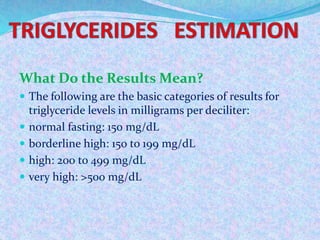

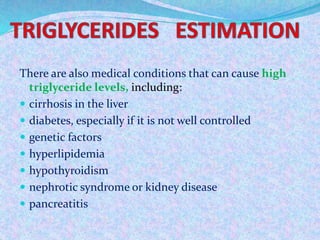






The triglyceride level test measures the amount of triglycerides in the blood. Triglycerides are a type of fat that provides energy and high levels can increase the risk of heart disease. The test is ordered to determine heart disease risk, estimate LDL cholesterol, check for pancreas inflammation, and assess risk of atherosclerosis. Doctors recommend getting tested every 5 years as part of a regular checkup, more often if being treated for high triglycerides or if diabetic. Elevated levels may be due to lifestyle factors like smoking or diet, or medical conditions like diabetes, and can be controlled through diet and exercise changes.


![PERI-PROSTHETIC FRACTURE NAIL-PLATE CONSTRUCT [NPC].pptx](https://cdn.slidesharecdn.com/ss_thumbnails/drarunkumardrmohamedashrafperiprostheticfrasturenail-plateconstructnpc-260209164459-7e9d15a1-thumbnail.jpg?width=640&height=640&fit=bounds)


![ONFH[AVN HIP] -TRIPLE REGIME -A NOVAL SURGICAL CONCEPT .pptx](https://cdn.slidesharecdn.com/ss_thumbnails/onfhavnhip2026koaconcalicutdrgokuldevdrmashraf-260210064517-213ec005-thumbnail.jpg?width=640&height=640&fit=bounds)


