Hypoplastic Left Heart Syndrome
(HLHS)
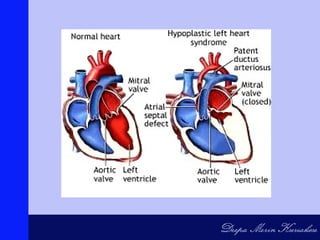
Hypoplastic left heart syndrome occurs
when parts of the left side of the heart (mitral
valve, left ventricle, aortic valve, and aorta) do
not develop completely. The left ventricle is
nonfunctional. Thus the left side of the heart is
completely unable to supply blood to the
systemic circulation.
The condition is present at birth
(congenital).It is a duct dependent lesion
(systemic flow depends upon patency of
ductus).
HLHS is the 4th
most common congenital
heart defect. Occurs in up to 4% of cases of
CHD. (Miyamoto et al, 2011)
In patients with HLHS, the left side of the
heart is unable to send enough blood to the
body. As a result, the right side of the heart
must maintain the circulation for both the lungs
and the body. Blood returning from the lungs
into the left atrium must pass through an ASD to
the right side of the heart. The right ventricle
must then pump blood to the lungs and also to
the systemic circulation through the PDA.
Pathophysiology
A few days after birth when the ductus
arteriosus closes, the heart cannot pump
blood into the systemic circulation, causing
poor perfusion of the vital organs & shock.
Death will occur rapidly without intervention.
The right ventricle can support the irculation
to both the lungs and the body for a while, but
this extra workload eventually causes the
right side of the heart to fail.
Pathophysiology contd…
The only possibility of survival is a
connection between the right and left side of
the heart.
Coronary arteries are filled by
retrograde flow from ductus through the
hypoplastic ascending aorta.
Pathophysiology contd…
The neonates are born healthy, no
cyanosis, no murmur. But after some hours
to a day or two, the infant becomes critically
ill & may die due to closure of ductus.
Cyanosis, irritability, low volume pulse
with hypotension, RV impulse, single heart
sound and no murmur.
Clinical manifestations
Health history: Onset of cyanosis,
Poor feeding,
History of tiring easily.
Physical examination: Evaluate vital signs
noting tachycardia, tachypnea, & hypothermia.
Observe for increased work of breathing and
gradually increasing cyanosis. Note pallor of
the extremities.
Health history & Physical examination
Pulse oximetry: shows decreased oxygen
saturation. Auscultation of the heart & lungs:
adventitious breath sounds, a gallop rhythm, a
single second heart sound, and a soft systolic
ejection or holosystolic murmur.
Prenatally, a fetal echocardiogram can
diagnose this syndrome, as can a maternal
ultrasound. After birth, the echocardiogram
illustrates the defect.
Diagnostic measures
-Once the diagnosis of hypoplastic left heart is
made, the baby will be admitted to the neonatal
intensive care unit.
-A ventilator may be needed to help the baby
breathe.
-Prostaglandin E1 is used to keep the ductus
arteriosus open.
Management
Medical Management
-Surgery is done by staged reconstructive
approach.
-The first surgery, called the Norwood
operation, occurs within the baby’s first few
days of life. Stage I of the Norwood procedure
consists of building a new aorta by :- using
the pulmonary valve and artery
Surgical Management
- connecting the hypoplastic old aorta
and coronary arteries to the new aorta
- removing the wall between the atria
(atrial septum)
- making an artificial connection from
either the right ventricle or a body-
wide artery to the pulmonary artery
to maintain blood flow to the lungs
(called a shunt).
Afterwards, the baby usually goes home.
The child will need to take daily medicines
and be closely followed by a pediatric
cardiologist, who will determine when the
second stage of surgery should be done.
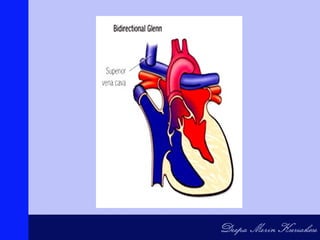
Stage II of the operation is called the
Glenn shunt or hemi- Fontan procedure. This
procedure connects the superior vena cava
directly to pulmonary arteries to get oxygen.
The surgery is usually done when the child is 4
to 6 months of age.
During stages I and II, the child may still
appear somewhat blue(cyanotic).
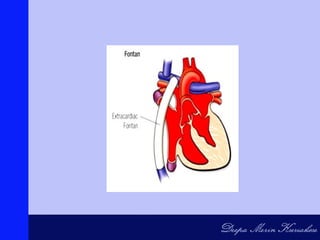
Stage III, the final step, is called the
Fontan procedure, in which the inferior vena
cava is connected directly to the pulmonary
arteries. The right ventricle now serves only
as the pumping chamber for the body. This
surgery is usually performed when the baby
is 18 months to 3 years old. After this final
step baby is no longer blue.
Some patients need more surgeries in
their 20s or 30s if they develop hard to
control arrhythmias or other complications of
the Fontan procedure.
In some hospitals, heart transplantation
is considered a better choice than the three
step surgery process. However there are few
donated hearts available for small infants.
Preoperatively administer prostagland
in infusion to prevent closing of the ductus
arteriosus. After palliative repairs, monitor
for dysrhythmias or worsening ventricular
function.
Nursing management
If left untreated, hypoplastic left heart
syndrome is fatal. Survival rates for the
staged repair continue to rise as surgery
techniques and care after surgery improves.
Survival after the first stage is more than 75%.
The child’s outcome after surgery
depends on the size and function of the right
ventricle.
Prognosis
Thank
You…
Deepa Merin
Kuriakose
Assistant Professor
Govt. College of
Nursing, Kottayam

H l h s

  • 1.
  • 2.
    Hypoplastic Left HeartSyndrome (HLHS) Hypoplastic left heart syndrome occurs when parts of the left side of the heart (mitral valve, left ventricle, aortic valve, and aorta) do not develop completely. The left ventricle is nonfunctional. Thus the left side of the heart is completely unable to supply blood to the systemic circulation.
  • 4.
    The condition ispresent at birth (congenital).It is a duct dependent lesion (systemic flow depends upon patency of ductus). HLHS is the 4th most common congenital heart defect. Occurs in up to 4% of cases of CHD. (Miyamoto et al, 2011)
  • 5.
    In patients withHLHS, the left side of the heart is unable to send enough blood to the body. As a result, the right side of the heart must maintain the circulation for both the lungs and the body. Blood returning from the lungs into the left atrium must pass through an ASD to the right side of the heart. The right ventricle must then pump blood to the lungs and also to the systemic circulation through the PDA. Pathophysiology
  • 6.
    A few daysafter birth when the ductus arteriosus closes, the heart cannot pump blood into the systemic circulation, causing poor perfusion of the vital organs & shock. Death will occur rapidly without intervention. The right ventricle can support the irculation to both the lungs and the body for a while, but this extra workload eventually causes the right side of the heart to fail. Pathophysiology contd…
  • 7.
    The only possibilityof survival is a connection between the right and left side of the heart. Coronary arteries are filled by retrograde flow from ductus through the hypoplastic ascending aorta. Pathophysiology contd…
  • 8.
    The neonates areborn healthy, no cyanosis, no murmur. But after some hours to a day or two, the infant becomes critically ill & may die due to closure of ductus. Cyanosis, irritability, low volume pulse with hypotension, RV impulse, single heart sound and no murmur. Clinical manifestations
  • 9.
    Health history: Onsetof cyanosis, Poor feeding, History of tiring easily. Physical examination: Evaluate vital signs noting tachycardia, tachypnea, & hypothermia. Observe for increased work of breathing and gradually increasing cyanosis. Note pallor of the extremities. Health history & Physical examination
  • 10.
    Pulse oximetry: showsdecreased oxygen saturation. Auscultation of the heart & lungs: adventitious breath sounds, a gallop rhythm, a single second heart sound, and a soft systolic ejection or holosystolic murmur.
  • 11.
    Prenatally, a fetalechocardiogram can diagnose this syndrome, as can a maternal ultrasound. After birth, the echocardiogram illustrates the defect. Diagnostic measures
  • 12.
    -Once the diagnosisof hypoplastic left heart is made, the baby will be admitted to the neonatal intensive care unit. -A ventilator may be needed to help the baby breathe. -Prostaglandin E1 is used to keep the ductus arteriosus open. Management Medical Management
  • 13.
    -Surgery is doneby staged reconstructive approach. -The first surgery, called the Norwood operation, occurs within the baby’s first few days of life. Stage I of the Norwood procedure consists of building a new aorta by :- using the pulmonary valve and artery Surgical Management
  • 14.
    - connecting thehypoplastic old aorta and coronary arteries to the new aorta - removing the wall between the atria (atrial septum) - making an artificial connection from either the right ventricle or a body- wide artery to the pulmonary artery to maintain blood flow to the lungs (called a shunt).
  • 15.
    Afterwards, the babyusually goes home. The child will need to take daily medicines and be closely followed by a pediatric cardiologist, who will determine when the second stage of surgery should be done. Stage II of the operation is called the Glenn shunt or hemi- Fontan procedure. This procedure connects the superior vena cava directly to pulmonary arteries to get oxygen. The surgery is usually done when the child is 4 to 6 months of age.
  • 17.
    During stages Iand II, the child may still appear somewhat blue(cyanotic). Stage III, the final step, is called the Fontan procedure, in which the inferior vena cava is connected directly to the pulmonary arteries. The right ventricle now serves only as the pumping chamber for the body. This surgery is usually performed when the baby is 18 months to 3 years old. After this final step baby is no longer blue.
  • 19.
    Some patients needmore surgeries in their 20s or 30s if they develop hard to control arrhythmias or other complications of the Fontan procedure. In some hospitals, heart transplantation is considered a better choice than the three step surgery process. However there are few donated hearts available for small infants.
  • 20.
    Preoperatively administer prostagland ininfusion to prevent closing of the ductus arteriosus. After palliative repairs, monitor for dysrhythmias or worsening ventricular function. Nursing management
  • 21.
    If left untreated,hypoplastic left heart syndrome is fatal. Survival rates for the staged repair continue to rise as surgery techniques and care after surgery improves. Survival after the first stage is more than 75%. The child’s outcome after surgery depends on the size and function of the right ventricle. Prognosis
  • 22.