Transport triggered architecture
Block Diagram
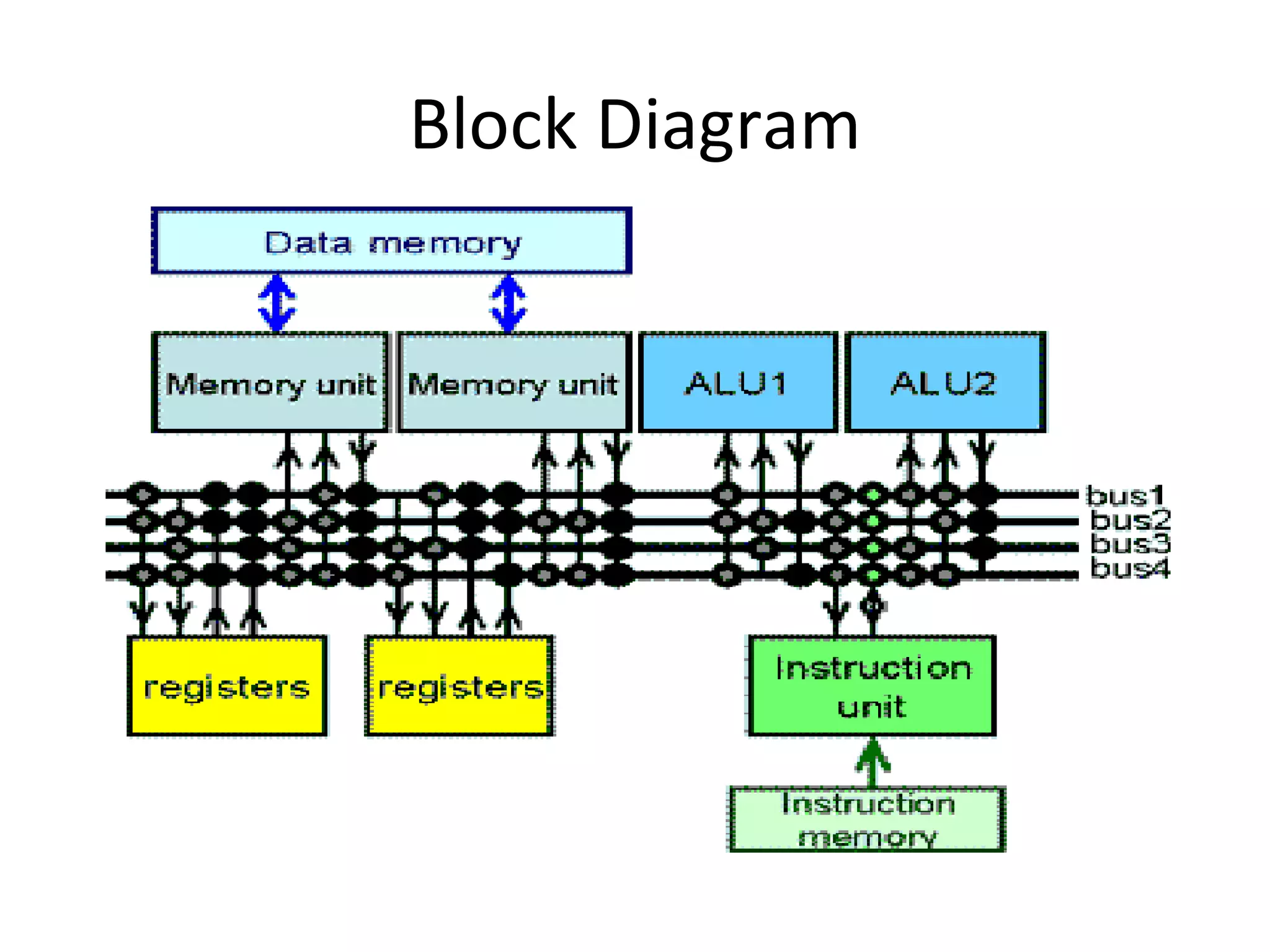
Block Diagram
Structure
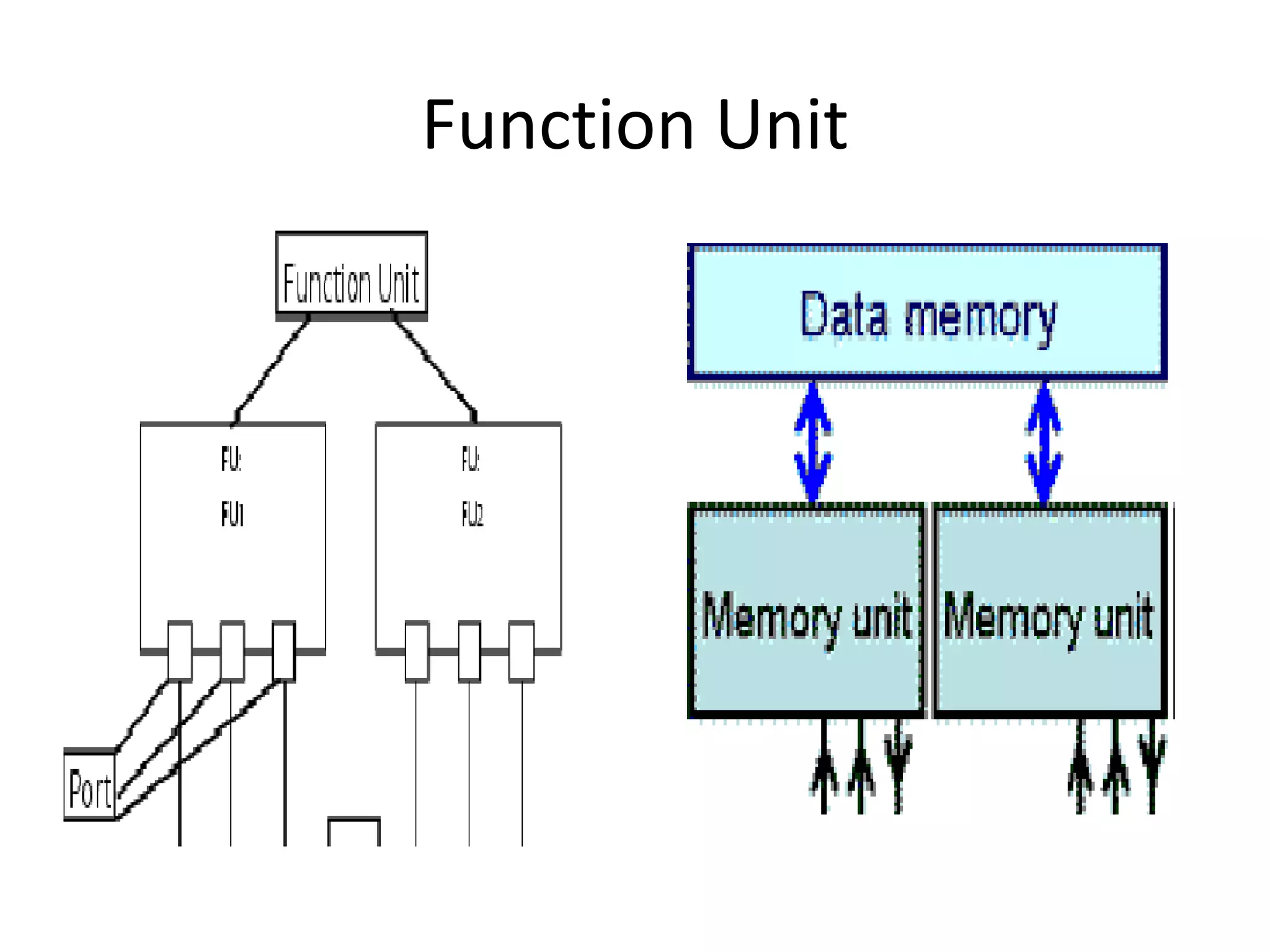
• Function unit
• Each function unit implements one or more operations, which
  implement functionality ranging from a simple addition of integers
  to a complex and arbitrary user-defined application-specific
  computation. Operands for operations are transferred through
  function unit ports.
• Each function unit may have an independent pipeline. In case a
  function unit is fully pipelined, a new operation that takes multiple
  clock cycles to finish can be started in every clock cycle. On the
  other hand, a pipeline can be such that it does not always accept
  new operation start requests while an old one is still executing.
• Data memory access and communication to outside of the
  processor is handled by using special function units. Function units
  that implement memory accessing operations and connect to a
  memory module are often called load/store units
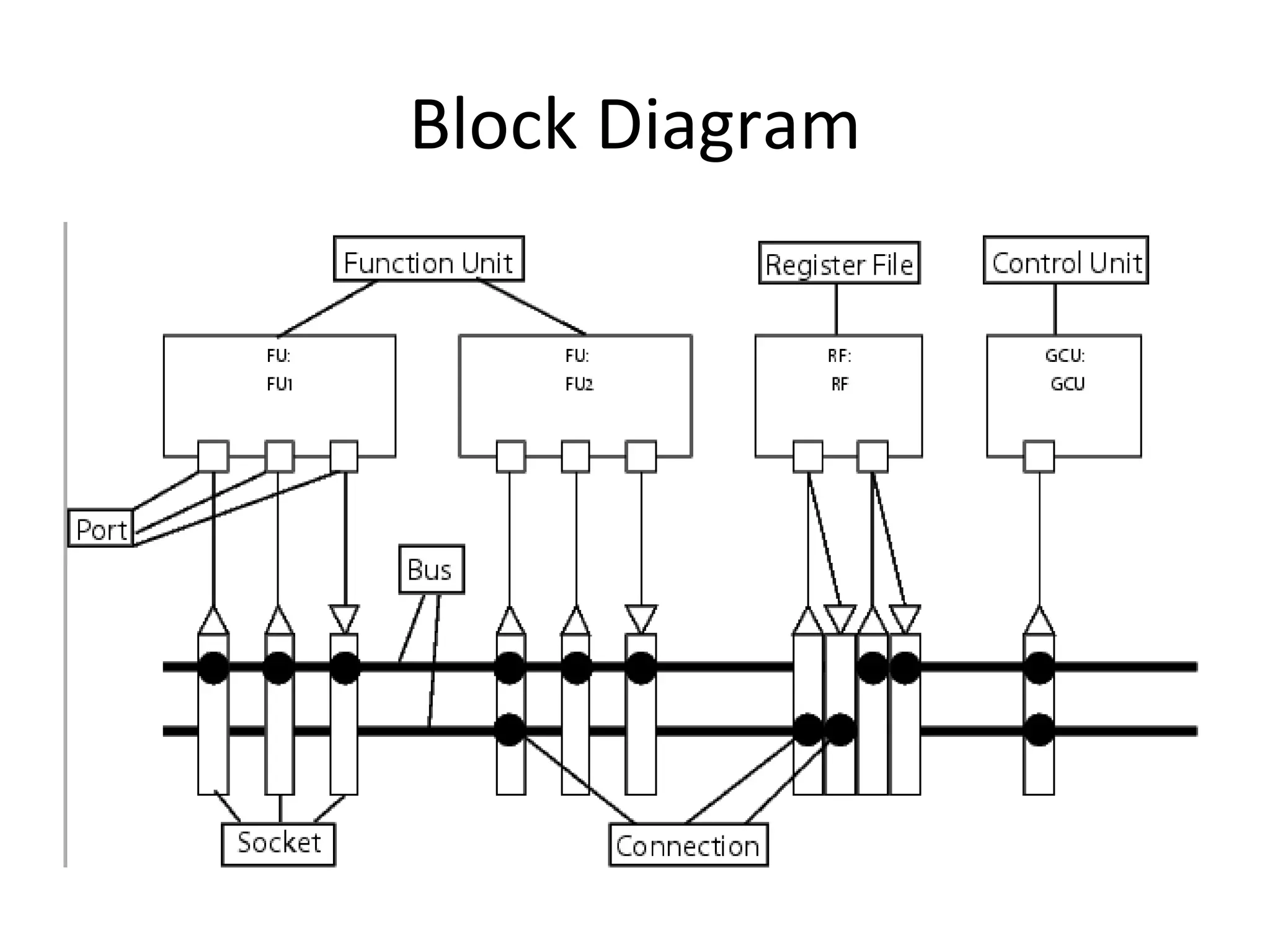
Function Unit
Structure
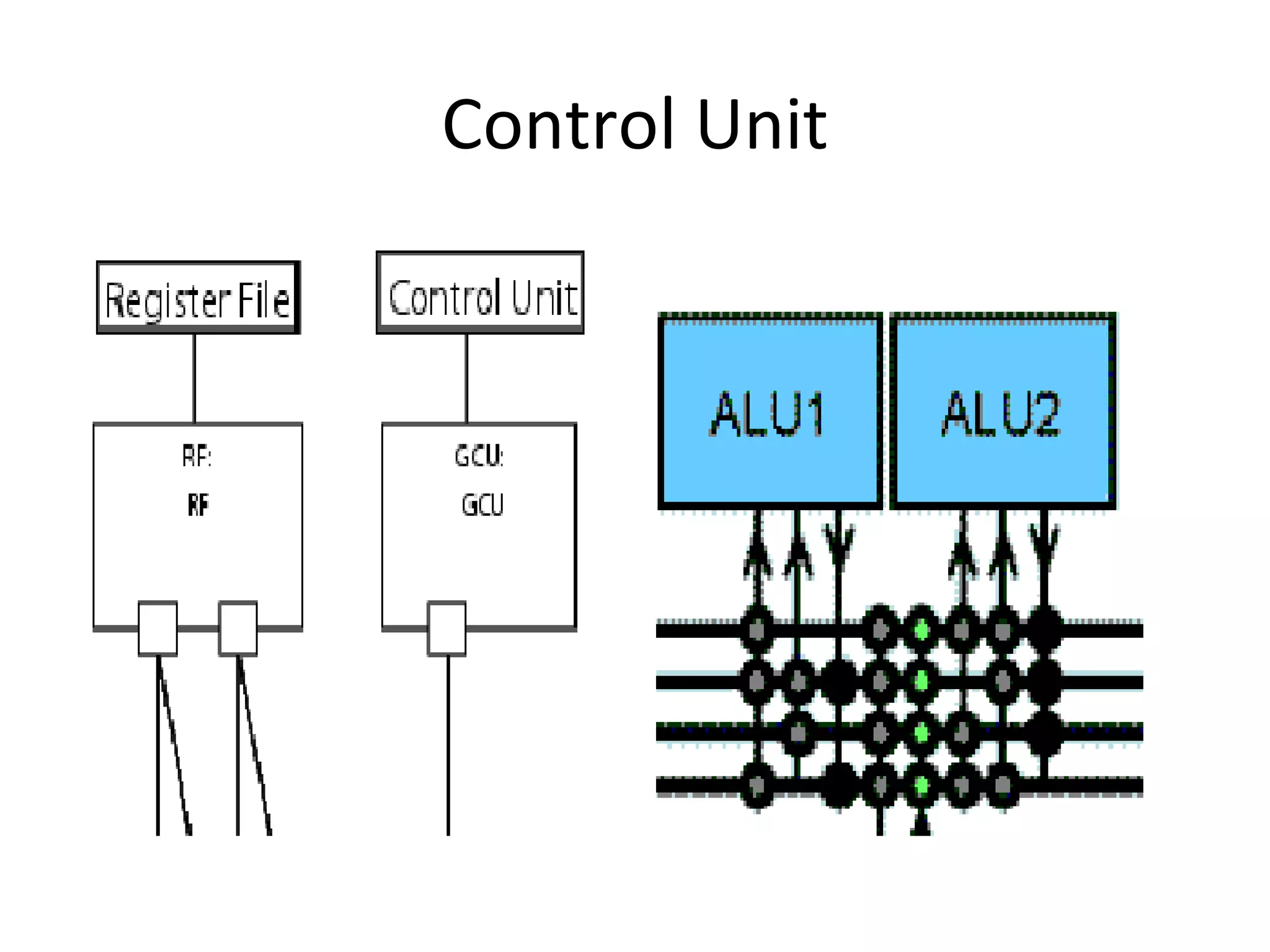
• Control unit
• Control unit is a special case of function units which
  controls execution of programs. Control unit has
  access to the instruction memory in order to fetch the
  instructions to be executed. In order to allow the
  executed programs to transfer the execution (jump) to
  an arbitrary position in the executed program, control
  unit provides control flow operations. A control unit
  usually has an instruction pipeline, which consists of
  stages for fetching, decoding and executing program
  instructions
Control Unit
Structure
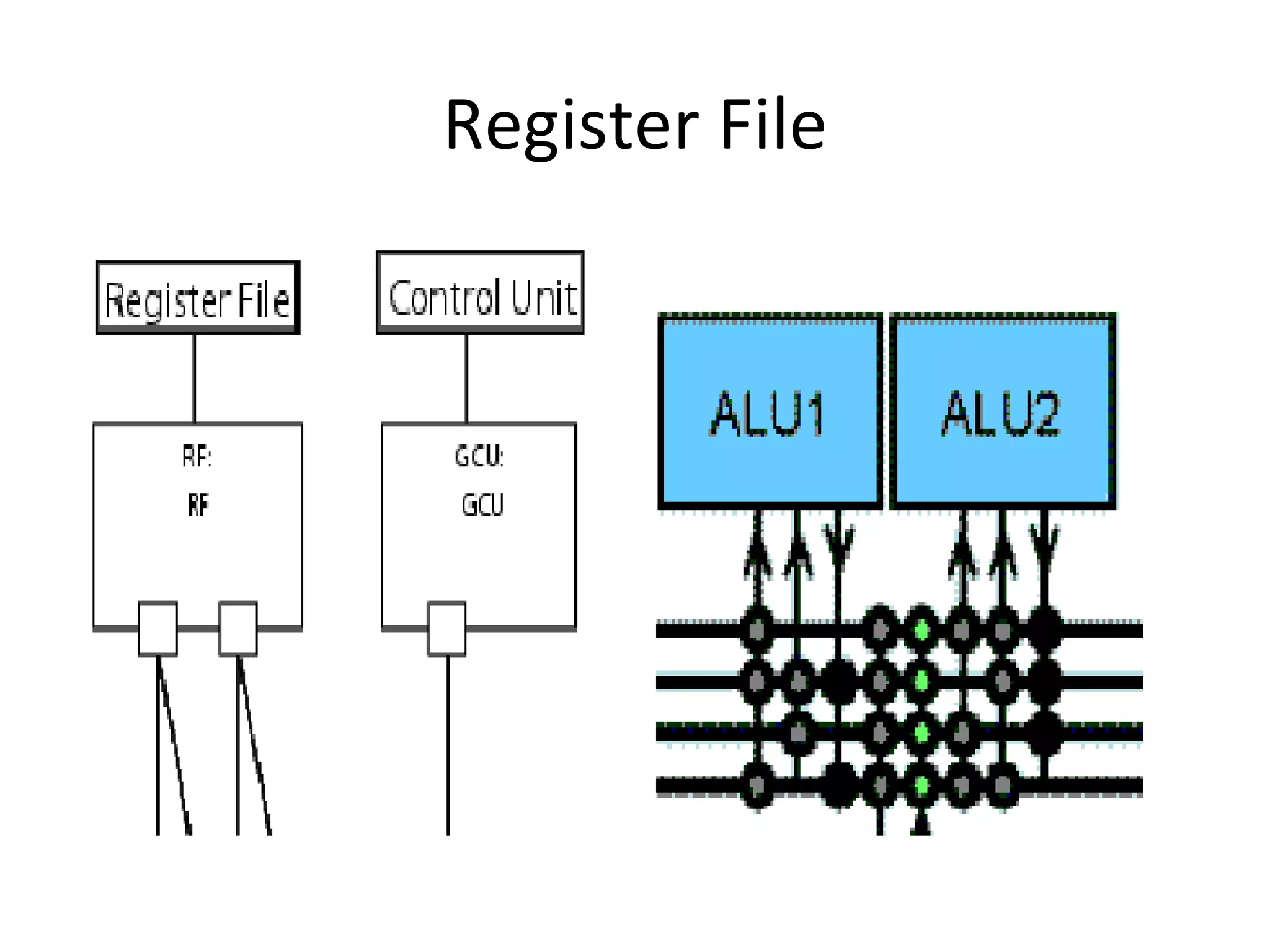
• Register files
• Register files contain
  general purpose registers, which are used to
  store variables in programs. Like function
  units, also register files have input and output
  ports. The number of read and write ports,
  that is, the capability of being able to read and
  write multiple registers in a same clock cycle,
  can vary in each register file
Register File
Structure
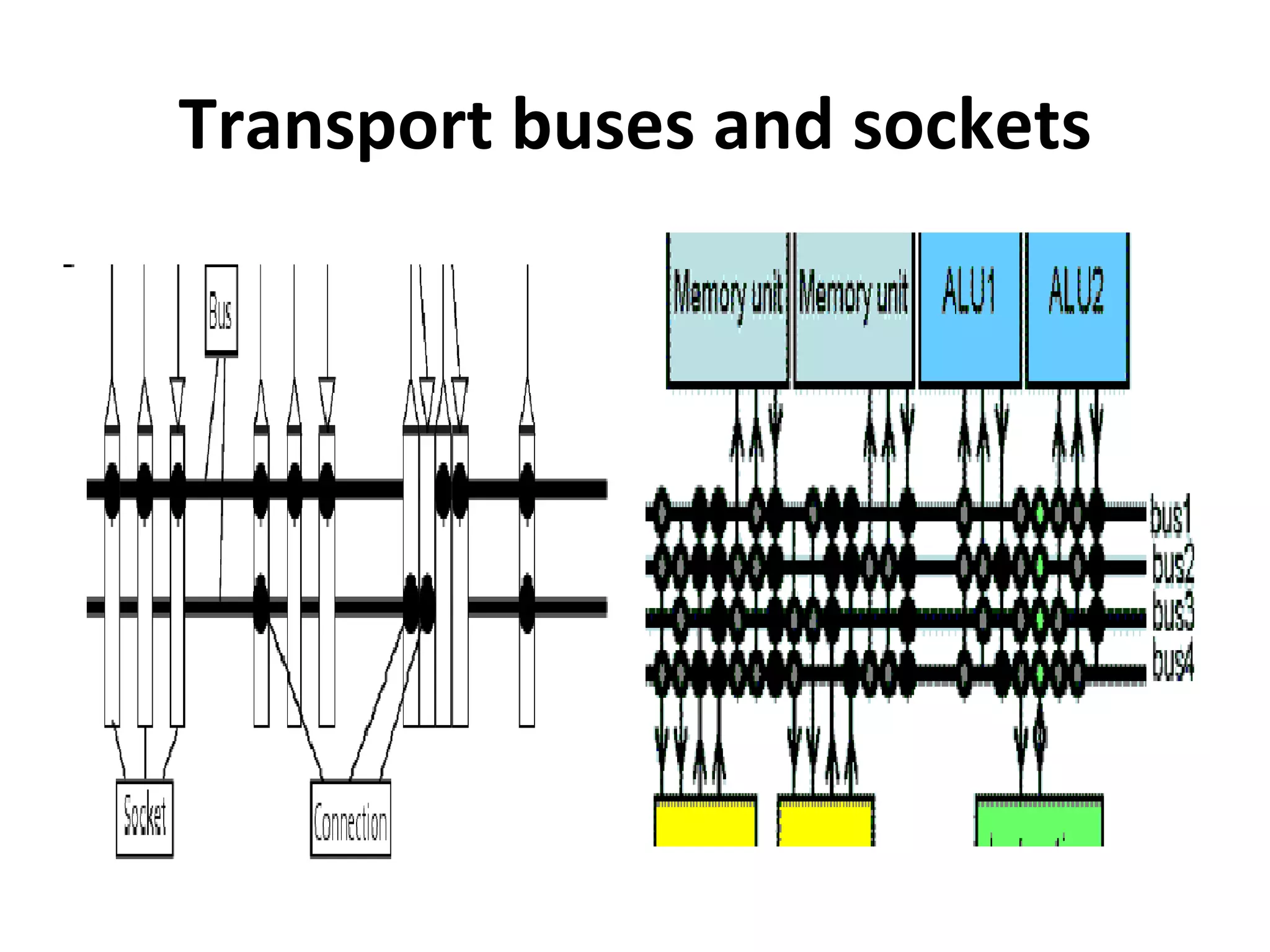
• Transport buses and sockets
• Interconnect architecture consists of transport buses which are
  connected to function unit ports by means of sockets. Due to
  expense of connectivity, it is usual to reduce the number of
  connections between units (function units and register files). A TTA
  is said to be fully connected in case there is a path from each unit
  output port to every unit's input ports.
• Conditional execution is implemented with the aid of guards. Each
  data transport can be conditionalized by a guard, which is
  connected to a register (often a 1-bit conditional register) and to a
  bus. In case the value of the guarded register evaluates to false
  (zero), the data transport programmed for the bus the guard is
  connected to is squashed, that is, not written to its destination
Transport buses and sockets

Transport triggered architecture

  • 1.
  • 2.
  • 3.
  • 4.
    Structure • Function unit •Each function unit implements one or more operations, which implement functionality ranging from a simple addition of integers to a complex and arbitrary user-defined application-specific computation. Operands for operations are transferred through function unit ports. • Each function unit may have an independent pipeline. In case a function unit is fully pipelined, a new operation that takes multiple clock cycles to finish can be started in every clock cycle. On the other hand, a pipeline can be such that it does not always accept new operation start requests while an old one is still executing. • Data memory access and communication to outside of the processor is handled by using special function units. Function units that implement memory accessing operations and connect to a memory module are often called load/store units
  • 5.
  • 6.
    Structure • Control unit •Control unit is a special case of function units which controls execution of programs. Control unit has access to the instruction memory in order to fetch the instructions to be executed. In order to allow the executed programs to transfer the execution (jump) to an arbitrary position in the executed program, control unit provides control flow operations. A control unit usually has an instruction pipeline, which consists of stages for fetching, decoding and executing program instructions
  • 7.
  • 8.
    Structure • Register files •Register files contain general purpose registers, which are used to store variables in programs. Like function units, also register files have input and output ports. The number of read and write ports, that is, the capability of being able to read and write multiple registers in a same clock cycle, can vary in each register file
  • 9.
  • 10.
    Structure • Transport busesand sockets • Interconnect architecture consists of transport buses which are connected to function unit ports by means of sockets. Due to expense of connectivity, it is usual to reduce the number of connections between units (function units and register files). A TTA is said to be fully connected in case there is a path from each unit output port to every unit's input ports. • Conditional execution is implemented with the aid of guards. Each data transport can be conditionalized by a guard, which is connected to a register (often a 1-bit conditional register) and to a bus. In case the value of the guarded register evaluates to false (zero), the data transport programmed for the bus the guard is connected to is squashed, that is, not written to its destination
  • 11.