
KARNATAKA COLLEGE OF PHARMACY
DEPARTMENT OF PHARMACOLOGY
PHARMACOLOGICAL AND TOXICOLOGICAL SCREENING METHOD
PRESENTATION OF
ALTERNATE ANIMAL EXPERIMENT
PREPARED BY : SUDARSHAN SINGH
M pharmacy ( dept; pharmacology)
CONTENT
Limitation of animal experimentation
Alternate animal experiment
Screening of alternate animal experiment
Limitation of animal
experimentation
Animal research and testing to protect and improve
human health is not only unsafe
 But also expensive, time-consuming, and unreliable
Animal models to study human diseases. Species
differences in anatomy, organ structure and function
 Examples
 penicillin is toxic to guinea pigs
 aspirin is poisonous to cats
Animal Alternatives:
It is not possible to replace whole animal models with
in vitro systems to evaluate drug effects on major organ
systems
Alternative techniques: definition
The term ‘alternative’ is used to refer to those
techniques or methods that replace the use of
laboratory animals altogether, reduce the numbers of
animals required,or procedure or technique to
minimize the level of stress endured by the animal.
 Screening methods of alternate animal experiment
1) Full thickness skin model (invitro method)*¹.
2) In sillico methods*².
3) cell line technique.
4) Patch clamp method
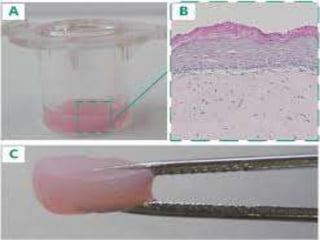
Full Thickness Skin Model:
Robust full thickness skin model
 A test substance is applied to the Full Thickness Skin
Model so that its effect on the skin tissue can be
systematically evaluated. The substance,
e.g. a cream formulation, is applied topically using a
brush
 done several times over a period of at least nine days.
 substance on the cell layers in the skin can be studied
 The standardized production of the model, in
combination with its special properties, make it
suitable for use as an in-vitro alternative to animal
testing.
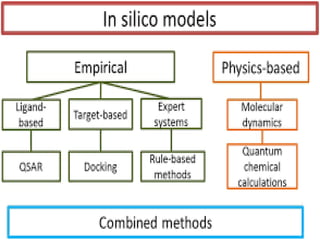
In-sillico methods
 Substances with similar chemical structures often have
similar properties
 knowledge of the properties of a few representative
substances is sufficient to be able to deduce the
properties of a series of similar substances.
 certain properties of these representative substances
can also be assumed to be properties of the other
substances in the series.
 The required calculations are performed using
specially developed computer programs.
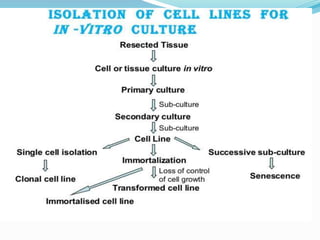
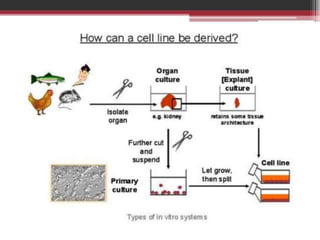
Cell line technique:
 The term cell line refers to the propagation of culture
after the first subculture.
 Once the primary culture is sub cultured, it becomes a
cell line
 A cell line derived by selection or cloning is referred to
as cell strain.
 Cell strain do not have infinite life, as they die after
some divisions.
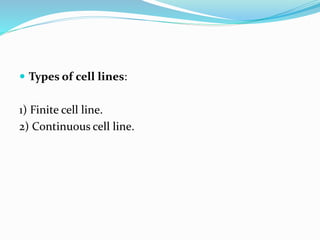
 Types of cell lines:
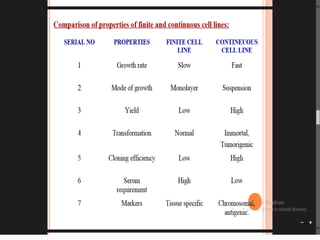
1) Finite cell line.
2) Continuous cell line.
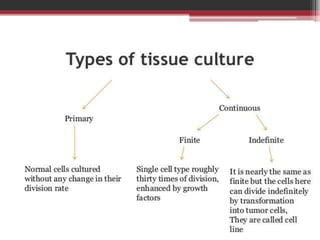
 (1) FINITE CELL LINE:
 The cell line with limited culture life spans are referred to as
Finite cell line.
 The cell normally divide 20-100 times before extinction.
 The actual number of doublings depends on the species, cell
lineage differences, culture conditions etc.
 (2) CONTINUOUS CELL LINE:
 The continuous cell lines are transformed, immortal and
tumorigenic.
 A few cells in culture may acquire different morphology and
get altered. Such cells are capable of growing faster resulting
in an independent culture.
 The progeny derived from these altered cells have unlimited
life.
 APPLICATIONS OF CELL LINE:
 Screening of anti cancer drugs
 Cell based bioassays
 In vitro screening of several drugs
 Production of anti viral vacci
 Gene therapy
 Recombinant DNA therapy
 Biotechnology
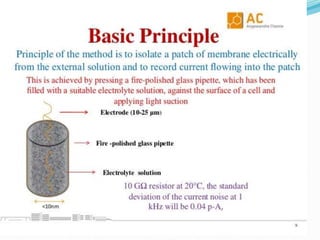
PATCH CLAMP TECHNIQUE
 Patch clamp technique is a technique in
electrophysiology that allows the study of individual
ion channels in cells. The technique is used to study
excitable cells such as neurons, muscle fibers and the
beta cells of the pancreas
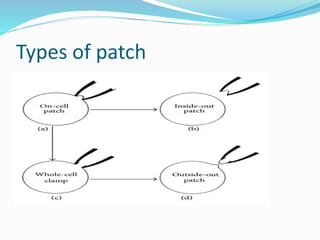
Types of patch
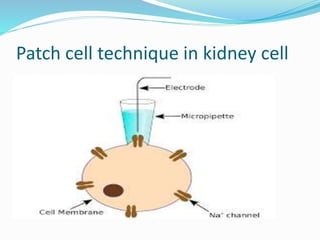
Patch cell technique in kidney cell
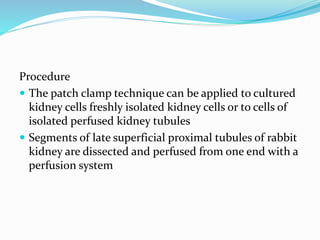
Procedure
 The patch clamp technique can be applied to cultured
kidney cells freshly isolated kidney cells or to cells of
isolated perfused kidney tubules
 Segments of late superficial proximal tubules of rabbit
kidney are dissected and perfused from one end with a
perfusion system
Evaluation
In isolated perfused renal tubules, concentration
response curves of drugs which inhibit ion channels
can be obtained with the patch clamp technique
Applications of Patch Clamp
Technique:
 For the evaluation of antiarrhythmics agents.
 In kidney cells. Used for isolated ventricular
myocytes from Guinea pigs to study a cardio selective
inhibition of the ATP sensitive potassium channel
Thank you

Alternative animal experimentation technique

  • 1.
    KARNATAKA COLLEGE OFPHARMACY DEPARTMENT OF PHARMACOLOGY PHARMACOLOGICAL AND TOXICOLOGICAL SCREENING METHOD PRESENTATION OF ALTERNATE ANIMAL EXPERIMENT PREPARED BY : SUDARSHAN SINGH M pharmacy ( dept; pharmacology)
  • 2.
    CONTENT Limitation of animalexperimentation Alternate animal experiment Screening of alternate animal experiment
  • 3.
    Limitation of animal experimentation Animalresearch and testing to protect and improve human health is not only unsafe  But also expensive, time-consuming, and unreliable Animal models to study human diseases. Species differences in anatomy, organ structure and function
  • 4.
     Examples  penicillinis toxic to guinea pigs  aspirin is poisonous to cats
  • 5.
    Animal Alternatives: It isnot possible to replace whole animal models with in vitro systems to evaluate drug effects on major organ systems
  • 6.
    Alternative techniques: definition Theterm ‘alternative’ is used to refer to those techniques or methods that replace the use of laboratory animals altogether, reduce the numbers of animals required,or procedure or technique to minimize the level of stress endured by the animal.
  • 7.
     Screening methodsof alternate animal experiment 1) Full thickness skin model (invitro method)*¹. 2) In sillico methods*². 3) cell line technique. 4) Patch clamp method
  • 8.
    Full Thickness SkinModel: Robust full thickness skin model  A test substance is applied to the Full Thickness Skin Model so that its effect on the skin tissue can be systematically evaluated. The substance, e.g. a cream formulation, is applied topically using a brush
  • 10.
     done severaltimes over a period of at least nine days.  substance on the cell layers in the skin can be studied  The standardized production of the model, in combination with its special properties, make it suitable for use as an in-vitro alternative to animal testing.
  • 11.
    In-sillico methods  Substanceswith similar chemical structures often have similar properties  knowledge of the properties of a few representative substances is sufficient to be able to deduce the properties of a series of similar substances.  certain properties of these representative substances can also be assumed to be properties of the other substances in the series.  The required calculations are performed using specially developed computer programs.
  • 13.
    Cell line technique: The term cell line refers to the propagation of culture after the first subculture.  Once the primary culture is sub cultured, it becomes a cell line  A cell line derived by selection or cloning is referred to as cell strain.  Cell strain do not have infinite life, as they die after some divisions.
  • 15.
     Types ofcell lines: 1) Finite cell line. 2) Continuous cell line.
  • 18.
     (1) FINITECELL LINE:  The cell line with limited culture life spans are referred to as Finite cell line.  The cell normally divide 20-100 times before extinction.  The actual number of doublings depends on the species, cell lineage differences, culture conditions etc.
  • 19.
     (2) CONTINUOUSCELL LINE:  The continuous cell lines are transformed, immortal and tumorigenic.  A few cells in culture may acquire different morphology and get altered. Such cells are capable of growing faster resulting in an independent culture.  The progeny derived from these altered cells have unlimited life.
  • 21.
     APPLICATIONS OFCELL LINE:  Screening of anti cancer drugs  Cell based bioassays  In vitro screening of several drugs  Production of anti viral vacci  Gene therapy  Recombinant DNA therapy  Biotechnology
  • 22.
    PATCH CLAMP TECHNIQUE Patch clamp technique is a technique in electrophysiology that allows the study of individual ion channels in cells. The technique is used to study excitable cells such as neurons, muscle fibers and the beta cells of the pancreas
  • 23.
  • 24.
    Patch cell techniquein kidney cell
  • 26.
    Procedure  The patchclamp technique can be applied to cultured kidney cells freshly isolated kidney cells or to cells of isolated perfused kidney tubules  Segments of late superficial proximal tubules of rabbit kidney are dissected and perfused from one end with a perfusion system
  • 27.
    Evaluation In isolated perfusedrenal tubules, concentration response curves of drugs which inhibit ion channels can be obtained with the patch clamp technique
  • 28.
    Applications of PatchClamp Technique:  For the evaluation of antiarrhythmics agents.  In kidney cells. Used for isolated ventricular myocytes from Guinea pigs to study a cardio selective inhibition of the ATP sensitive potassium channel
  • 29.