ARTHRITIS.
 Herbal medicine is the root of various
traditional medicine systems around the world.
 Herbs had been an integral part of the growth
of the modern civilization with their use dating
back to centuries.1
 Traditional medicines are getting significant
attention in global debates.
 80% of African population use some form of
traditional herbal medicine with world wide
market approaching US$ 60 billion.
 Many hope that traditional herbal medicines will play
a critical role in global health.
 Countries like China, India, Nigeria, the United
States of America and WHO(World Health
Organization) have all made substantial research
investments in traditional herbal medicines.
 WHO estimates that 4 billion people, around 80% of
world population, presently uses herbal medicines for
some aspect of primary care with 119 plant derived
pharmaceutical medicines, about 74% are used in
modern medicine.
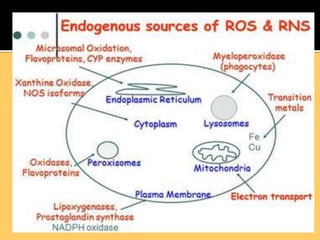
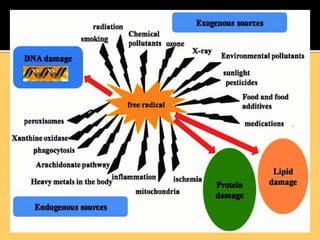
 Oxygen is the element fundamental for life.
When cells utilize oxygen to produce energy, free
radicals are generated as a result of
ATP(adenosine triphosphate) generation via the
mitochondria. These byproducts are mostly
reactive oxygen species(ROS) as well as reactive
nitrogen species(RNS). The formation of free
radicals or reactive oxygen species if exceeds the
level of defensive mechanism leads to
degenerative diseases such as aging, diabetes,
arthritis, carcinogenesis, and cardiovascular
disease.
 Although therapies involving these agents
have shown promise, many of the drugs still
remain untested with their use being either
poorly monitored or not monitored at all.
 Thus inadequate knowledge of their mode of
action, potential adverse reactions,
contraindications and interactions with the
existing orthodox pharmaceuticals and
functional foods to promote both safe and
rational use of these agents is the
consequence.
 A joint means the structural arrangement which
connects two or more bones of the skeletal system. It
is also known as arthroses or articulation.
 Generally the long bones articulate by their ends,
whereas the short or irregular bones articulate by
their surface.
 At the same time flat bones articulate by their
margins.
 Joints are mainly classified as: Fibrous joint,
Cartilaginous joint and Synovial joint.
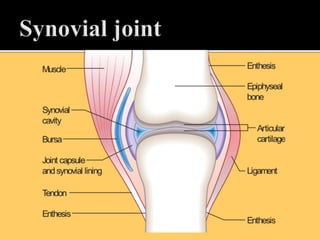
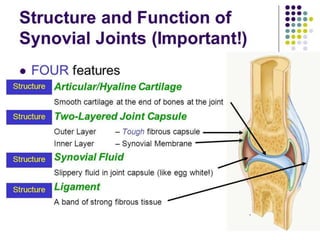
 Synovial joints are characterized by the presence of a
joint cavity. The walls of the space are formed by the
articular capsule, a fibrous connective tissue structure
that is attached to each bone just outside the area of the
bone’s articulating surface.
 However the articular cartilages are discontinuous with
others and acts like a Teflon coating over the surface,
allowing the articulating bones to move smoothly against
each other.
 Thus it causes no damage to the underlying bone tissue.
 Lining the inner surface of the articulating capsule is
the thin synovial membrane.
 The cells of this membrane secrete synovial
fluid(Synovia = a thick fluid), which provides
lubrication to further reduce friction in between the
bones and the joints.
 The fluid at the same time provides nourishment to
the articular cartilage, which does not contain blood
cells.
 The ability of the bones to move smoothly against
each other within the joint cavity and the freedom of
joint movement means that each synovial joint is
functionally known as diarthrosis.
 The bones are connected together by ligaments which
are strong bands of fibrous connective tissue.
 Ligament allows for normal movement at the joints,
but limit the range of these motions, thus preventing
excessive or abnormal joint movements.
 A few synovial joints of the body have a fibro -
cartilage structure located in between the articulating
bones. This is called an articular disc, which is
generally small and oval shaped, or a meniscus which
is C-shaped.
 The disc provides shock absorption and cushioning
in between the bones.
 Additional structure associated with synovial joints
prevent friction between the bones of the joint and
the overlying muscle tendons or the skin.
 A bursa(plural=bursae) is a thin connective tissue sac
filled with lubricating fluid.
 Bursae reduces friction by separating the adjacent
structures, preventing them from rubbing directly
against each other.
 Another one is a tendon sheath, a connective tissue
sac that surrounds a muscle tendon at places where
tendon crosses a joint.
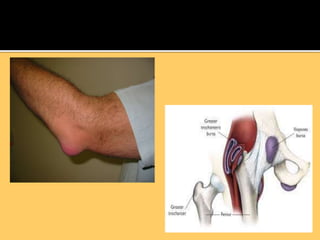
 It is the inflammation of the bursa near a joint.
 This causes pain and swelling and may result on
joint stiffness.
 Bursitis is more common with the bursa found near
the shoulder, knee or hip, elbow or knee joints.
 In case of shoulder subachromial bursitis may occur
in the bursa that separates the acromion of the
scapula from the tendon of a shoulder muscle.
 It can be acute or chronic that arises from muscle
overuse, trauma, exercise or prolonged pressure on
the skin.
 Arthritis from (Greek arthro = joint + itis =
inflammation; plural: arthritides) is a form joint
disorder that involves inflammation in one or more
joint causing pain and stiffness that can worsen with
age, but can also affect children.
 About 1 in 1,000 children develop arthritis, often
called as juvenile idiopathic arthritis(JIA).
 There are two main types of arthritis i.e.
Osteoarthritis and Rheumatoid arthritis(RA) to be
mentioned among many.
 Osteoarthritis
 Rheumatoid Arthritis
 Juvenile Rheumatoid Arthritis.
 Gout
 Infectious arthritis
 Bacterial infection: It results in an acute suppurative arthritis.
 Viral infections: Caused by virus inducing colds, HIV,
hepatitis, rubella and mumps.
 Psoriatic arthritis
 Fibromyalgia
 Lupus
 Bursitis and Tendonitis
 Ankylosing spondylitis
 Reactive arthritis
 Polymalgia arthritis
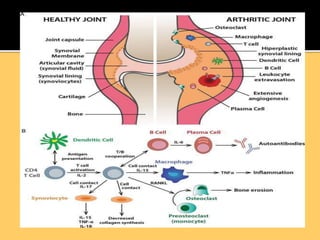
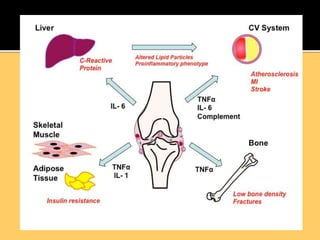
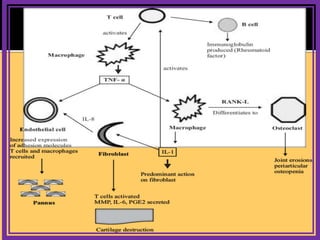
 Rheumatoid arthritis(RA) is a chronic autoimmune
disease characterized by inflammation of the joints,
with proliferation of the synovium and progressive
erosion of the cartilage and bone.
 Extra-articular immunologic abnormalities may
extend to involve other organ systems as well.
 Rheumatoid arthritis in 70% of the individuals have
been reported to have been caused due to positive
rheumatoid factor(RF) directed against antigenic
determinants on the Fc (fragment crystallizable
region) fragments of immunoglobulin.
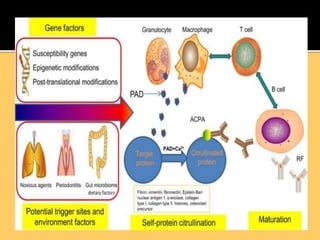
 Rheumatoid factor is an antibody directed against the
Fc region of human IgG(Immunoglobulin G).
 Deposits of RF linked with IgG occur in various
tissues, such as the synovium or joints, thus
interfering with the normal function of the joint and
promote local inflammation.
 This results in local tissue damages, and sometimes
damage to blood vessels in the affected area.
 Thus RF test is used as a diagnostic marker for the
rheumatoid arthritis, since its presence is associated
with increasing risk of developing the disease.
 Why people develop Rheumatoid arthritis is
unknown to scientists and doctors.
 However the latest scientific findings have suggested
that rheumatoid arthritis may be caused due to:
 Genetic factors
 Environmental factors
 Hormonal factors
 RA is one of the many chronic autoimmune diseases
that predominate in women more than men.
 The ratio of female to male patients is approximately
2.4:1.
 The basis of the gender differences is unknown.
However it is presumably related to the effects of the
hormonal milieu on immune function.
 Another type of arthritis i.e. osteoarthritis is strongly
associated with aging and a heavy physical
occupational activity required livelihood for many
people living in the rural areas of developing
countries.
 Throughout the world, ethnic groups like the North
America Pima Indians and southeast Alaskan Indians
have a much higher incidence of RA.
 The incidence of RA rises dramatically during adulthood
and peaks in individuals aged 40-60 years.
 Patients who are woman, have a less formal education,
greater number of affected joints and worse functional
status appears to have worse morbidity and mortality.
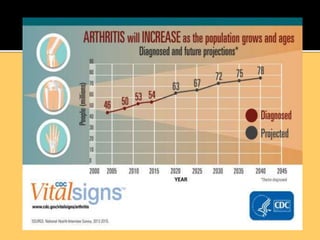
 Arthritis related statistics in USA from 2013-2015 states
that 54.4 million adults annually have ever been told by
doctor that they had some form of arthritis, RA or gout or
lupus.
 By 2040 , an estimated 78 million(26%) US adults aged
18 years or older are projected to have doctor diagnosed
arthritis.
 Thus risk of arthritis increases with age and arthritis is
more common among women than men.
 From 2013 to 2015 in USA:
1. Of people aged 18 to 44 years, 7.1% ever reported
doctor diagnosed arthritis.
2. Of people aged 45 to 64 years, 29.3% ever reported
doctor-diagnosed arthritis.
3. Of people aged 65 years or older, 49.6% ever reported
doctor diagnosed arthritis.
4. Also from 2013 to 2015 26% women and19.1% men
ever reported doctor diagnosed arthritis.
 4.4 million Hispanic adults ever reported doctor-
diagnosed arthritis.
 41.3 million Non- Hispanic whites ever reported
doctor-diagnosed arthritis.
 6.1 million Non-Hispanic blacks ever reported
doctor-diagnosed arthritis.
 1.5 million Non-Hispanic Asians ever reported
doctor-diagnosed arthritis.
 Adults aged 18 years or older who are overweight or
obese report doctor-diagnosed arthritis more often
than adults with a lower body mass index(BMI).
 More than 16% of under/normal weight adults report
doctor-diagnosed arthritis.
 Almost 23% of overweight and 31% of obese US
adults report doctor diagnosed arthritis.
 Arthritis and other rheumatic conditions are a leading
cause of work disability among US adults.
 Adults aged 18 – 64 years face work limitations they
attribute to arthritis.
 The worldwide prevalence of R=A has been
estimated as 0.24% based on the Global Burden of
Disease 2010 study.
 Estimates of RA are typically usually 0.5 to 1 % in
the European countries and in the USA.
 The annual incidence of RA in the United States is
estimated to be around 40 per 100,000 persons.
 The lifetime risk of developing RA is 3.6% in women
and 1.7% in men due to high incidence and
prevalence rates in women compared to men.
 Joint swelling
 Pain /stiffness( commonly in morning and
lasting> 1 h)
 Weakness
 Deformity
 Fatigue
 Malaise
 Fever
 Weight loss
 Depression
 Palpation tenderness
 Synovial thickening
 Effusion
 Erythema
 Decreased range of motion
 Ankylosis
 Subluxation
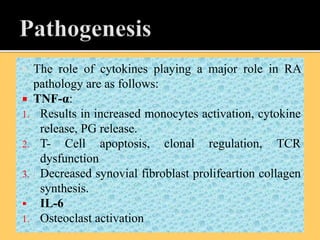
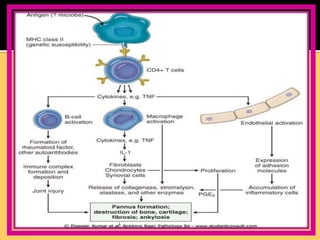
 The role of cytokines playing a major role in RA
pathology are as follows:
 TNF-α:
1. Results in increased monocytes activation, cytokine
release, PG release.
2. T- Cell apoptosis, clonal regulation, TCR
dysfunction
3. Decreased synovial fibroblast prolifeartion collagen
synthesis.
 IL-6
1. Osteoclast activation
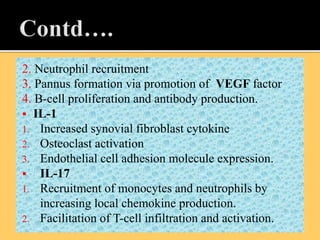
2. Neutrophil recruitment
3. Pannus formation via promotion of VEGF factor
4. B-cell proliferation and antibody production.
 IL-1
1. Increased synovial fibroblast cytokine
2. Osteoclast activation
3. Endothelial cell adhesion molecule expression.
 IL-17
1. Recruitment of monocytes and neutrophils by
increasing local chemokine production.
2. Facilitation of T-cell infiltration and activation.
3. Amplification of immune response.
4. Increased synovial fibroblast cytokine and MMP
release.
5. Osteoclastogenesis and cartilage damage.
 VEGF(Vascular endothelial growth factor)
1. Angiogenesis, contributing pannus formation
4. Note: Pannus is abnormal layer of fibro vascular
tissue or granulation tissue.
 In humans susceptibility to RA is highly associated
with HLA-DR1 and HLA-DR4 MHC class II
molecules.
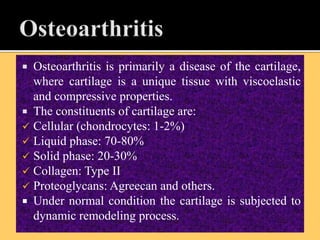
 Osteoarthritis is primarily a disease of the cartilage,
where cartilage is a unique tissue with viscoelastic
and compressive properties.
 The constituents of cartilage are:
 Cellular (chondrocytes: 1-2%)
 Liquid phase: 70-80%
 Solid phase: 20-30%
 Collagen: Type II
 Proteoglycans: Agreecan and others.
 Under normal condition the cartilage is subjected to
dynamic remodeling process.
 The remodeling is carried out by the balance of
activities of degradative and synthetic enzymes, such
that the volume of cartilage is maintained.
 In osteoarthritis this balance is shifted in favour of
net degradation, with resultant loss of collagen and
proteoglycan from the matrix.
 In response to this initially chondrocytes proliferate
and synthesize enhanced amount of Proteoglycans
and collagen molecules.
 As the disease progresses reparative attempts are
submatched by the progressive cartilage degradation,
 fibrillation, erosion and cracking .
 These affects are observed in the superficial layers
and slowly progresses over time to deeper layers
resulting eventually in larger clinical observable
erosions.
 The primary enzymes responsible for the degradation
of cartilage are the matrix metalloproteinases
(MMPs).
 The MMPs are secreted by both the synovial cells
and chondrocytes.
 Under normal conditions MMP synthesis and
activation are tightly regulated at several levels
where they are secreted as inactive proenzymes that
require cleavage in order to become activated.
 Once activated MMPs become susceptible to the
plasma derived MMP inhibitor, α-2 macroglobulin
and to tissue inhibitors of MMPs that are also
secreted by the synovial cells and chondrocytes.
 However in case of osteoarthritis MMP synthesis is
greatly enhanced thus the inhibitors are overwhelmed
 thus resulting in net degradation of the cartilagfe.
 Factors responsible for inducing MMP synthesis;
 Cytokines
 Adipokines
 Prostaglandins, leukotrienes and other lipid
mediators
 IL-1(Interleukin-1) is a potent pro-inflammatory
cytokine that, in-vitro, is capable of inducing
chondrocytes and synovial cells to synthesize MMPs.
 IL-1 promote cartilage degradation by enhancing:
MMP synthesis, Prostanoid synthesis and
Chondrocytes apoptosis.
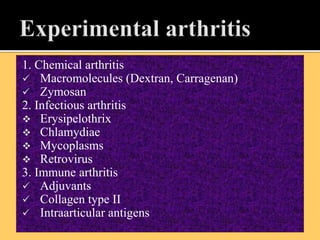
1. Chemical arthritis
 Macromolecules (Dextran, Carragenan)
 Zymosan
2. Infectious arthritis
 Erysipelothrix
 Chlamydiae
 Mycoplasms
 Retrovirus
3. Immune arthritis
 Adjuvants
 Collagen type II
 Intraarticular antigens
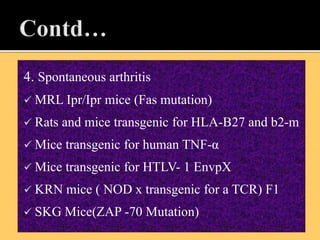
4. Spontaneous arthritis
 MRL Ipr/Ipr mice (Fas mutation)
 Rats and mice transgenic for HLA-B27 and b2-m
 Mice transgenic for human TNF-α
 Mice transgenic for HTLV- 1 EnvpX
 KRN mice ( NOD x transgenic for a TCR) F1
 SKG Mice(ZAP -70 Mutation)
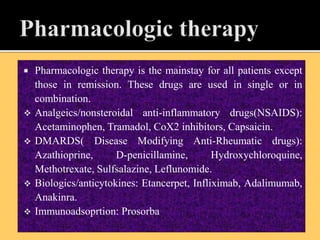
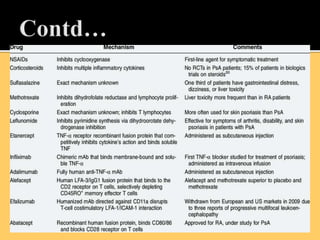
 Pharmacologic therapy is the mainstay for all patients except
those in remission. These drugs are used in single or in
combination.
 Analgeics/nonsteroidal anti-inflammatory drugs(NSAIDS):
Acetaminophen, Tramadol, CoX2 inhibitors, Capsaicin.
 DMARDS( Disease Modifying Anti-Rheumatic drugs):
Azathioprine, D-penicillamine, Hydroxychloroquine,
Methotrexate, Sulfsalazine, Leflunomide.
 Biologics/anticytokines: Etancerpet, Infliximab, Adalimumab,
Anakinra.
 Immunoadsoprtion: Prosorba
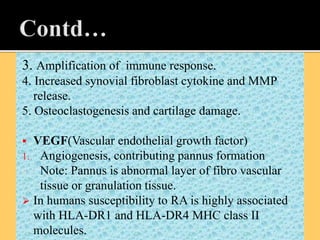
 Free radicals are oxygen containing molecules with
an uneven number of electrons.
 The uneven number allows them to easily react with
other molecules.
 Free radicals can cause large chain chemical
reactions in the body which is known as oxidation.
 The most important electron acceptor in the
biosphere is molecular oxygen because of its bi-
radial nature , readily accepts unpaired electrons to
give rise to a series of partially reduced species
collectively known as reduced oxygen species(ROS).
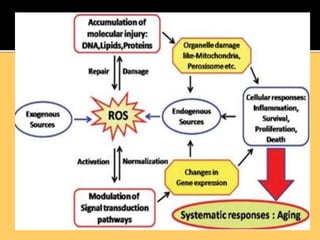
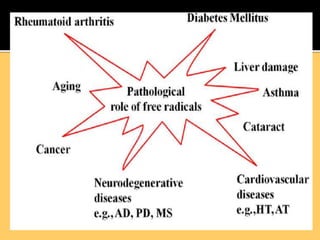
 The free radicals induced oxidative stress has been
reported to be involved in several diseased conditions
such diabetes mellitus, neurodegenerative disease,
Alzheimer’s disease, Multiple sclerosis, Rheumatoid
arthritis and in various cancers.
 Free radicals can abstract electrons from other
compounds to attain stability; thus the attacked
molecule loses its electron and becomes a free radical
itself, beginning a chain reaction cascade.
 RA is one such condition that induces oxidative
stress.
 A fivefold increase in mitochondrial ROS production
in whole blood and monocytes of RA patients-
compared with the healthy subjects – suggests that
oxidative stress is the hallmark of rheumatoid
arthritis.
 Free radicals are indirectly implicated in joint
damage because they play an important role as
secondary messengers in inflammatory and
immunological cellular response in RA.
 Also the free radicals can degrade directly the joint
cartilage, attacking its proteoglycan and inhibiting its
synthesis.
 Oxidative damage of hyaluronic acid and
lipoperoxidation products and oxidation of low
density lipoproteins have also been demonstrated in
RA.
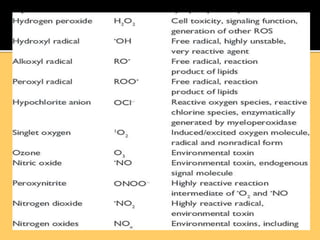
 Among ROS, the superoxide anion (O 2
_) plays an
important role in inflammation especially in patients
with inflammatory joint disease.
 These radicals attack directly or indirectly by
reducing matrix components synthesis and reducing
the sulfation of newly synthesised
glycosaminoglycans, inducing apoptosis.
 Advanced oxidation proteins products(AOPPs) have
been confirmed to accumulate in RA patients.
 Ye at al. demonstrated that AOPPs induce apoptosis of
human chondrocytes via ROS-related mitochondrial
dysfunction and endoplasmic reticulum pathways.
 Further it seems to accurate redox balance is necessary
to sustain an immune state that both prevents the
development of an overt autoimmunity and minimizes
collateral damage.
 It is well documented that ROS can activate different
signalling pathways having a vital importance in the
pathophysiology of RA.
 Epidemiological studies have shown that RA can
occur in previously healthy subjects who had low
levels of circulating antioxidants including Vitamin
C, E, β-carotene, selenium and zinc.
 In order to prevent the damaging effect of pro-
oxidants the body has an antioxidant defence system
that protects cellular systems from oxidative damage.
 These include enzymes like superoxide
dismutase(SOD), glutathione peroxidase(GPX),
Catalase(Cat), glutathione reductase(GR) and
peroxiredoxins.
 The non-enzymatic antioxidant taking part in the first
line of defence are represented by metal binding
proteins such as ceruloplasmin, ferritin, lactoferrin,
transferrin and albumin.
 These proteins inhibit the formation of ROS by
binding with the transition metal ions.
 Also metallothionein plays an important role in the
prevention against ROS.
 The third line of defence includes repair mechanism
against oxidised lipids, stop chain propagation of
peroxyl radicals and repair damaged cell membranes.
 Natural compounds from medicinal plants having
antioxidant and immune modulatory activities
through dietary supplementation with antioxidants
can also help in such situation.
 The ability of the antioxidants to demolish the free
radicals protects the structural integrity of cells and
tissues,.
 In addition to that they have the ability to transform
ROS into constant and harmless compounds or by
scavenging both ROS and RNS with a redox based
mechanism.
Arthritis
Arthritis

Arthritis

  • 1.
  • 2.
     Herbal medicineis the root of various traditional medicine systems around the world.  Herbs had been an integral part of the growth of the modern civilization with their use dating back to centuries.1  Traditional medicines are getting significant attention in global debates.  80% of African population use some form of traditional herbal medicine with world wide market approaching US$ 60 billion.
  • 3.
     Many hopethat traditional herbal medicines will play a critical role in global health.  Countries like China, India, Nigeria, the United States of America and WHO(World Health Organization) have all made substantial research investments in traditional herbal medicines.  WHO estimates that 4 billion people, around 80% of world population, presently uses herbal medicines for some aspect of primary care with 119 plant derived pharmaceutical medicines, about 74% are used in modern medicine.
  • 4.
     Oxygen isthe element fundamental for life. When cells utilize oxygen to produce energy, free radicals are generated as a result of ATP(adenosine triphosphate) generation via the mitochondria. These byproducts are mostly reactive oxygen species(ROS) as well as reactive nitrogen species(RNS). The formation of free radicals or reactive oxygen species if exceeds the level of defensive mechanism leads to degenerative diseases such as aging, diabetes, arthritis, carcinogenesis, and cardiovascular disease.
  • 5.
     Although therapiesinvolving these agents have shown promise, many of the drugs still remain untested with their use being either poorly monitored or not monitored at all.  Thus inadequate knowledge of their mode of action, potential adverse reactions, contraindications and interactions with the existing orthodox pharmaceuticals and functional foods to promote both safe and rational use of these agents is the consequence.
  • 6.
     A jointmeans the structural arrangement which connects two or more bones of the skeletal system. It is also known as arthroses or articulation.  Generally the long bones articulate by their ends, whereas the short or irregular bones articulate by their surface.  At the same time flat bones articulate by their margins.  Joints are mainly classified as: Fibrous joint, Cartilaginous joint and Synovial joint.
  • 7.
     Synovial jointsare characterized by the presence of a joint cavity. The walls of the space are formed by the articular capsule, a fibrous connective tissue structure that is attached to each bone just outside the area of the bone’s articulating surface.  However the articular cartilages are discontinuous with others and acts like a Teflon coating over the surface, allowing the articulating bones to move smoothly against each other.  Thus it causes no damage to the underlying bone tissue.
  • 8.
     Lining theinner surface of the articulating capsule is the thin synovial membrane.  The cells of this membrane secrete synovial fluid(Synovia = a thick fluid), which provides lubrication to further reduce friction in between the bones and the joints.  The fluid at the same time provides nourishment to the articular cartilage, which does not contain blood cells.  The ability of the bones to move smoothly against each other within the joint cavity and the freedom of joint movement means that each synovial joint is functionally known as diarthrosis.
  • 9.
     The bonesare connected together by ligaments which are strong bands of fibrous connective tissue.  Ligament allows for normal movement at the joints, but limit the range of these motions, thus preventing excessive or abnormal joint movements.  A few synovial joints of the body have a fibro - cartilage structure located in between the articulating bones. This is called an articular disc, which is generally small and oval shaped, or a meniscus which is C-shaped.  The disc provides shock absorption and cushioning in between the bones.
  • 12.
     Additional structureassociated with synovial joints prevent friction between the bones of the joint and the overlying muscle tendons or the skin.  A bursa(plural=bursae) is a thin connective tissue sac filled with lubricating fluid.  Bursae reduces friction by separating the adjacent structures, preventing them from rubbing directly against each other.  Another one is a tendon sheath, a connective tissue sac that surrounds a muscle tendon at places where tendon crosses a joint.
  • 13.
     It isthe inflammation of the bursa near a joint.  This causes pain and swelling and may result on joint stiffness.  Bursitis is more common with the bursa found near the shoulder, knee or hip, elbow or knee joints.  In case of shoulder subachromial bursitis may occur in the bursa that separates the acromion of the scapula from the tendon of a shoulder muscle.  It can be acute or chronic that arises from muscle overuse, trauma, exercise or prolonged pressure on the skin.
  • 15.
     Arthritis from(Greek arthro = joint + itis = inflammation; plural: arthritides) is a form joint disorder that involves inflammation in one or more joint causing pain and stiffness that can worsen with age, but can also affect children.  About 1 in 1,000 children develop arthritis, often called as juvenile idiopathic arthritis(JIA).  There are two main types of arthritis i.e. Osteoarthritis and Rheumatoid arthritis(RA) to be mentioned among many.
  • 17.
     Osteoarthritis  RheumatoidArthritis  Juvenile Rheumatoid Arthritis.  Gout  Infectious arthritis  Bacterial infection: It results in an acute suppurative arthritis.  Viral infections: Caused by virus inducing colds, HIV, hepatitis, rubella and mumps.
  • 18.
     Psoriatic arthritis Fibromyalgia  Lupus  Bursitis and Tendonitis  Ankylosing spondylitis  Reactive arthritis  Polymalgia arthritis
  • 19.
     Rheumatoid arthritis(RA)is a chronic autoimmune disease characterized by inflammation of the joints, with proliferation of the synovium and progressive erosion of the cartilage and bone.  Extra-articular immunologic abnormalities may extend to involve other organ systems as well.  Rheumatoid arthritis in 70% of the individuals have been reported to have been caused due to positive rheumatoid factor(RF) directed against antigenic determinants on the Fc (fragment crystallizable region) fragments of immunoglobulin.
  • 20.
     Rheumatoid factoris an antibody directed against the Fc region of human IgG(Immunoglobulin G).  Deposits of RF linked with IgG occur in various tissues, such as the synovium or joints, thus interfering with the normal function of the joint and promote local inflammation.  This results in local tissue damages, and sometimes damage to blood vessels in the affected area.  Thus RF test is used as a diagnostic marker for the rheumatoid arthritis, since its presence is associated with increasing risk of developing the disease.
  • 21.
     Why peopledevelop Rheumatoid arthritis is unknown to scientists and doctors.  However the latest scientific findings have suggested that rheumatoid arthritis may be caused due to:  Genetic factors  Environmental factors  Hormonal factors
  • 23.
     RA isone of the many chronic autoimmune diseases that predominate in women more than men.  The ratio of female to male patients is approximately 2.4:1.  The basis of the gender differences is unknown. However it is presumably related to the effects of the hormonal milieu on immune function.  Another type of arthritis i.e. osteoarthritis is strongly associated with aging and a heavy physical occupational activity required livelihood for many people living in the rural areas of developing countries.
  • 24.
     Throughout theworld, ethnic groups like the North America Pima Indians and southeast Alaskan Indians have a much higher incidence of RA.  The incidence of RA rises dramatically during adulthood and peaks in individuals aged 40-60 years.  Patients who are woman, have a less formal education, greater number of affected joints and worse functional status appears to have worse morbidity and mortality.
  • 25.
     Arthritis relatedstatistics in USA from 2013-2015 states that 54.4 million adults annually have ever been told by doctor that they had some form of arthritis, RA or gout or lupus.  By 2040 , an estimated 78 million(26%) US adults aged 18 years or older are projected to have doctor diagnosed arthritis.  Thus risk of arthritis increases with age and arthritis is more common among women than men.
  • 26.
     From 2013to 2015 in USA: 1. Of people aged 18 to 44 years, 7.1% ever reported doctor diagnosed arthritis. 2. Of people aged 45 to 64 years, 29.3% ever reported doctor-diagnosed arthritis. 3. Of people aged 65 years or older, 49.6% ever reported doctor diagnosed arthritis. 4. Also from 2013 to 2015 26% women and19.1% men ever reported doctor diagnosed arthritis.
  • 28.
     4.4 millionHispanic adults ever reported doctor- diagnosed arthritis.  41.3 million Non- Hispanic whites ever reported doctor-diagnosed arthritis.  6.1 million Non-Hispanic blacks ever reported doctor-diagnosed arthritis.  1.5 million Non-Hispanic Asians ever reported doctor-diagnosed arthritis.
  • 29.
     Adults aged18 years or older who are overweight or obese report doctor-diagnosed arthritis more often than adults with a lower body mass index(BMI).  More than 16% of under/normal weight adults report doctor-diagnosed arthritis.  Almost 23% of overweight and 31% of obese US adults report doctor diagnosed arthritis.  Arthritis and other rheumatic conditions are a leading cause of work disability among US adults.  Adults aged 18 – 64 years face work limitations they attribute to arthritis.
  • 30.
     The worldwideprevalence of R=A has been estimated as 0.24% based on the Global Burden of Disease 2010 study.  Estimates of RA are typically usually 0.5 to 1 % in the European countries and in the USA.  The annual incidence of RA in the United States is estimated to be around 40 per 100,000 persons.  The lifetime risk of developing RA is 3.6% in women and 1.7% in men due to high incidence and prevalence rates in women compared to men.
  • 31.
     Joint swelling Pain /stiffness( commonly in morning and lasting> 1 h)  Weakness  Deformity  Fatigue  Malaise  Fever  Weight loss  Depression
  • 32.
     Palpation tenderness Synovial thickening  Effusion  Erythema  Decreased range of motion  Ankylosis  Subluxation
  • 34.
     The roleof cytokines playing a major role in RA pathology are as follows:  TNF-α: 1. Results in increased monocytes activation, cytokine release, PG release. 2. T- Cell apoptosis, clonal regulation, TCR dysfunction 3. Decreased synovial fibroblast prolifeartion collagen synthesis.  IL-6 1. Osteoclast activation
  • 35.
    2. Neutrophil recruitment 3.Pannus formation via promotion of VEGF factor 4. B-cell proliferation and antibody production.  IL-1 1. Increased synovial fibroblast cytokine 2. Osteoclast activation 3. Endothelial cell adhesion molecule expression.  IL-17 1. Recruitment of monocytes and neutrophils by increasing local chemokine production. 2. Facilitation of T-cell infiltration and activation.
  • 36.
    3. Amplification ofimmune response. 4. Increased synovial fibroblast cytokine and MMP release. 5. Osteoclastogenesis and cartilage damage.  VEGF(Vascular endothelial growth factor) 1. Angiogenesis, contributing pannus formation 4. Note: Pannus is abnormal layer of fibro vascular tissue or granulation tissue.  In humans susceptibility to RA is highly associated with HLA-DR1 and HLA-DR4 MHC class II molecules.
  • 40.
     Osteoarthritis isprimarily a disease of the cartilage, where cartilage is a unique tissue with viscoelastic and compressive properties.  The constituents of cartilage are:  Cellular (chondrocytes: 1-2%)  Liquid phase: 70-80%  Solid phase: 20-30%  Collagen: Type II  Proteoglycans: Agreecan and others.  Under normal condition the cartilage is subjected to dynamic remodeling process.
  • 41.
     The remodelingis carried out by the balance of activities of degradative and synthetic enzymes, such that the volume of cartilage is maintained.  In osteoarthritis this balance is shifted in favour of net degradation, with resultant loss of collagen and proteoglycan from the matrix.  In response to this initially chondrocytes proliferate and synthesize enhanced amount of Proteoglycans and collagen molecules.  As the disease progresses reparative attempts are submatched by the progressive cartilage degradation,
  • 42.
     fibrillation, erosionand cracking .  These affects are observed in the superficial layers and slowly progresses over time to deeper layers resulting eventually in larger clinical observable erosions.  The primary enzymes responsible for the degradation of cartilage are the matrix metalloproteinases (MMPs).
  • 43.
     The MMPsare secreted by both the synovial cells and chondrocytes.  Under normal conditions MMP synthesis and activation are tightly regulated at several levels where they are secreted as inactive proenzymes that require cleavage in order to become activated.  Once activated MMPs become susceptible to the plasma derived MMP inhibitor, α-2 macroglobulin and to tissue inhibitors of MMPs that are also secreted by the synovial cells and chondrocytes.  However in case of osteoarthritis MMP synthesis is greatly enhanced thus the inhibitors are overwhelmed
  • 44.
     thus resultingin net degradation of the cartilagfe.  Factors responsible for inducing MMP synthesis;  Cytokines  Adipokines  Prostaglandins, leukotrienes and other lipid mediators  IL-1(Interleukin-1) is a potent pro-inflammatory cytokine that, in-vitro, is capable of inducing chondrocytes and synovial cells to synthesize MMPs.  IL-1 promote cartilage degradation by enhancing: MMP synthesis, Prostanoid synthesis and Chondrocytes apoptosis.
  • 45.
    1. Chemical arthritis Macromolecules (Dextran, Carragenan)  Zymosan 2. Infectious arthritis  Erysipelothrix  Chlamydiae  Mycoplasms  Retrovirus 3. Immune arthritis  Adjuvants  Collagen type II  Intraarticular antigens
  • 46.
    4. Spontaneous arthritis MRL Ipr/Ipr mice (Fas mutation)  Rats and mice transgenic for HLA-B27 and b2-m  Mice transgenic for human TNF-α  Mice transgenic for HTLV- 1 EnvpX  KRN mice ( NOD x transgenic for a TCR) F1  SKG Mice(ZAP -70 Mutation)
  • 47.
     Pharmacologic therapyis the mainstay for all patients except those in remission. These drugs are used in single or in combination.  Analgeics/nonsteroidal anti-inflammatory drugs(NSAIDS): Acetaminophen, Tramadol, CoX2 inhibitors, Capsaicin.  DMARDS( Disease Modifying Anti-Rheumatic drugs): Azathioprine, D-penicillamine, Hydroxychloroquine, Methotrexate, Sulfsalazine, Leflunomide.  Biologics/anticytokines: Etancerpet, Infliximab, Adalimumab, Anakinra.  Immunoadsoprtion: Prosorba
  • 49.
     Free radicalsare oxygen containing molecules with an uneven number of electrons.  The uneven number allows them to easily react with other molecules.  Free radicals can cause large chain chemical reactions in the body which is known as oxidation.  The most important electron acceptor in the biosphere is molecular oxygen because of its bi- radial nature , readily accepts unpaired electrons to give rise to a series of partially reduced species collectively known as reduced oxygen species(ROS).
  • 50.
     The freeradicals induced oxidative stress has been reported to be involved in several diseased conditions such diabetes mellitus, neurodegenerative disease, Alzheimer’s disease, Multiple sclerosis, Rheumatoid arthritis and in various cancers.  Free radicals can abstract electrons from other compounds to attain stability; thus the attacked molecule loses its electron and becomes a free radical itself, beginning a chain reaction cascade.  RA is one such condition that induces oxidative stress.
  • 56.
     A fivefoldincrease in mitochondrial ROS production in whole blood and monocytes of RA patients- compared with the healthy subjects – suggests that oxidative stress is the hallmark of rheumatoid arthritis.  Free radicals are indirectly implicated in joint damage because they play an important role as secondary messengers in inflammatory and immunological cellular response in RA.  Also the free radicals can degrade directly the joint cartilage, attacking its proteoglycan and inhibiting its synthesis.
  • 57.
     Oxidative damageof hyaluronic acid and lipoperoxidation products and oxidation of low density lipoproteins have also been demonstrated in RA.  Among ROS, the superoxide anion (O 2 _) plays an important role in inflammation especially in patients with inflammatory joint disease.  These radicals attack directly or indirectly by reducing matrix components synthesis and reducing the sulfation of newly synthesised glycosaminoglycans, inducing apoptosis.
  • 58.
     Advanced oxidationproteins products(AOPPs) have been confirmed to accumulate in RA patients.  Ye at al. demonstrated that AOPPs induce apoptosis of human chondrocytes via ROS-related mitochondrial dysfunction and endoplasmic reticulum pathways.  Further it seems to accurate redox balance is necessary to sustain an immune state that both prevents the development of an overt autoimmunity and minimizes collateral damage.  It is well documented that ROS can activate different signalling pathways having a vital importance in the pathophysiology of RA.
  • 59.
     Epidemiological studieshave shown that RA can occur in previously healthy subjects who had low levels of circulating antioxidants including Vitamin C, E, β-carotene, selenium and zinc.  In order to prevent the damaging effect of pro- oxidants the body has an antioxidant defence system that protects cellular systems from oxidative damage.  These include enzymes like superoxide dismutase(SOD), glutathione peroxidase(GPX), Catalase(Cat), glutathione reductase(GR) and peroxiredoxins.
  • 60.
     The non-enzymaticantioxidant taking part in the first line of defence are represented by metal binding proteins such as ceruloplasmin, ferritin, lactoferrin, transferrin and albumin.  These proteins inhibit the formation of ROS by binding with the transition metal ions.  Also metallothionein plays an important role in the prevention against ROS.  The third line of defence includes repair mechanism against oxidised lipids, stop chain propagation of peroxyl radicals and repair damaged cell membranes.
  • 61.
     Natural compoundsfrom medicinal plants having antioxidant and immune modulatory activities through dietary supplementation with antioxidants can also help in such situation.  The ability of the antioxidants to demolish the free radicals protects the structural integrity of cells and tissues,.  In addition to that they have the ability to transform ROS into constant and harmless compounds or by scavenging both ROS and RNS with a redox based mechanism.