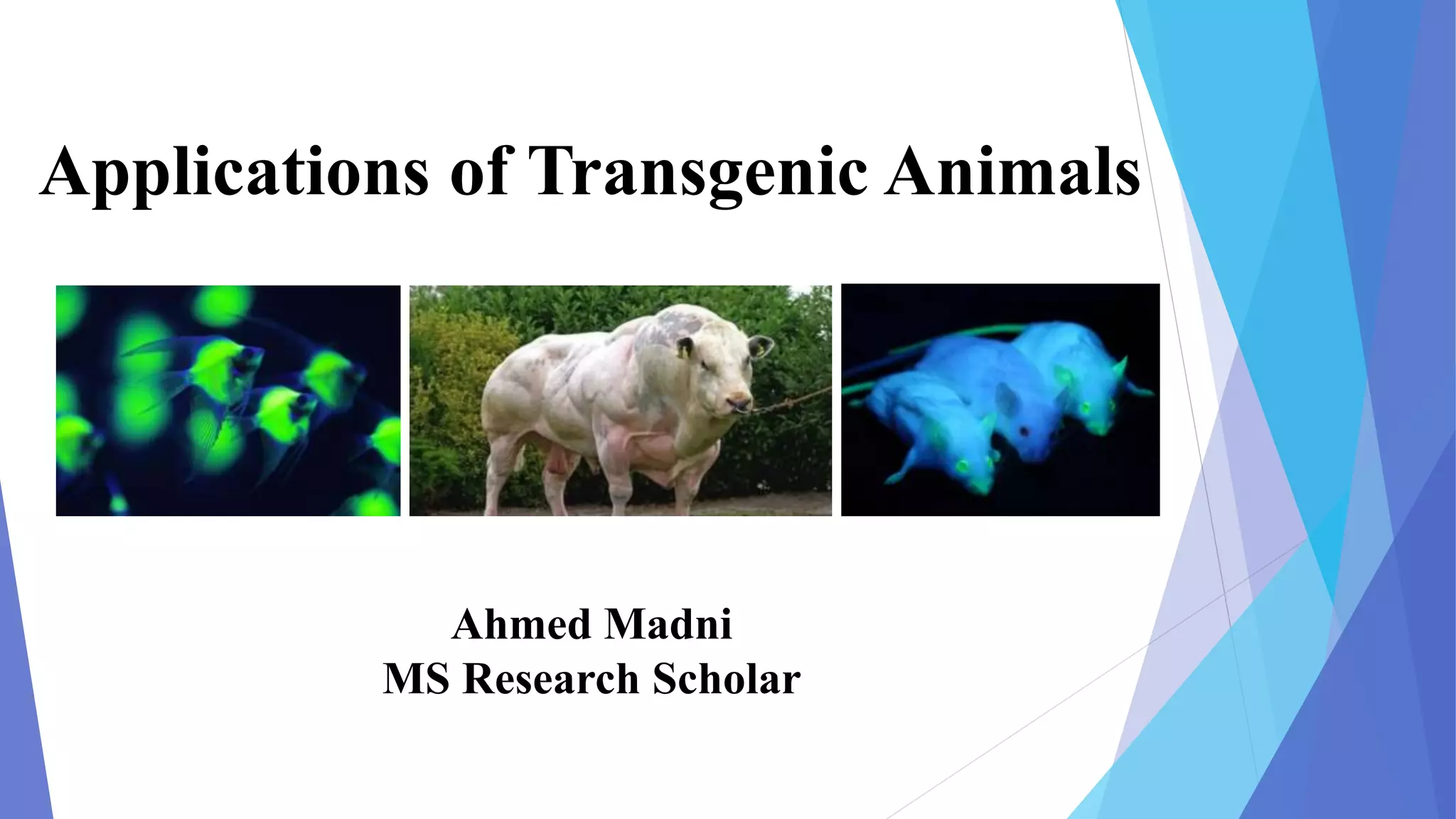
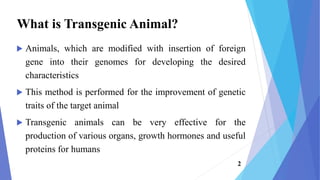
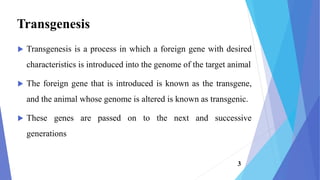

Applications of Transgenic Animals
Ahmed Madni
MS Research Scholar
What is Transgenic Animal?
 Animals, which are modified with insertion of foreign
gene into their genomes for developing the desired
characteristics
 This method is performed for the improvement of genetic
traits of the target animal
 Transgenic animals can be very effective for the
production of various organs, growth hormones and useful
proteins for humans
2
 Transgenesis is a process in which a foreign gene with desired
characteristics is introduced into the genome of the target animal
 The foreign gene that is introduced is known as the transgene,
and the animal whose genome is altered is known as transgenic.
 These genes are passed on to the next and successive
generations
Transgenesis
3
There are three methods are used for production of
transgenic animals
 Microinjection
 Retrovirus-mediated gene transfer
 Embryonic Stem cell-mediated gene transfer
Methods Used in Production of Transgenic
Animals
4
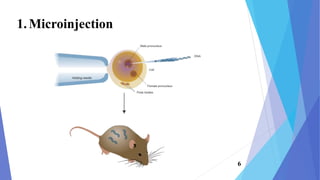
1.Microinjection
 In this method, the desired gene construct is transferred from
other member of same specie or different species into the
pro-nucleus of reproductive cell
 The manipulate cell is cultured in lab (in vitro condition) and
play a role for developing embryonic phase and then
transferred to the recipient female
 The first successful DNA microinjection was carried in
mouse
5
1.Microinjection
6
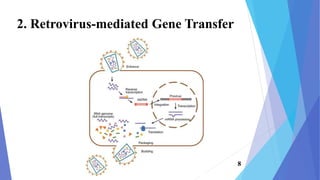
 Retrovirus is the virus that has the ability to carry its
genetic material in the form RNA rather than DNA
 In this method, the retrovirus is used as the vector for
the transfer of genetic material into the host cell
2. Retrovirus-mediated Gene Transfer
7
2. Retrovirus-mediated Gene Transfer
8
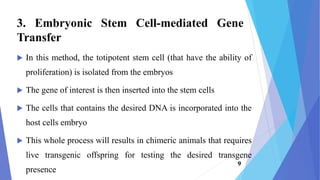
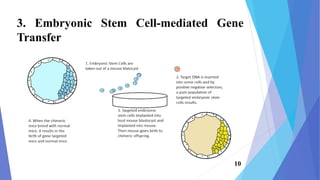
 In this method, the totipotent stem cell (that have the ability of
proliferation) is isolated from the embryos
 The gene of interest is then inserted into the stem cells
 The cells that contains the desired DNA is incorporated into the
host cells embryo
 This whole process will results in chimeric animals that requires
live transgenic offspring for testing the desired transgene
presence
3. Embryonic Stem Cell-mediated Gene
Transfer
9
3. Embryonic Stem Cell-mediated Gene
Transfer
10
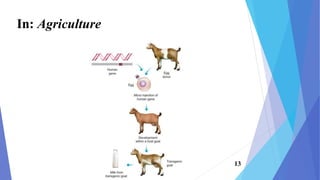
 Increased amount of milk, meat, insulin,
haemoglobulin, etc
 Such animals also promotes the study of gene
regulation and the their effect on routinely functions
of the body
Applications of Transgenic Animals
11
In: Agriculture
 In livestock, when the transgenic animals start breeding
with normal animals, the generation produced from
these animals contains the healthy organs milk and
meat
 Transgenic techniques made possible the quick
production of animals while the conventional methods
of animals breeding is time taking
12
In: Agriculture
13
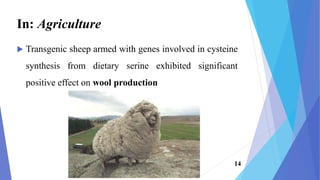
 Transgenic sheep armed with genes involved in cysteine
synthesis from dietary serine exhibited significant
positive effect on wool production
In: Agriculture
14
 Various heterologous protein has been produced in the milk of
pigs using cDNA encoding human protein for production of
functional human haemoglobulin
 Similarly, a heterologous protein, such as a variant of human
tissue plasminogen activator has also been produced in goat
which is being used in patient suffering from thrombosis, for
dissolving blood clots
In: Agriculture
15
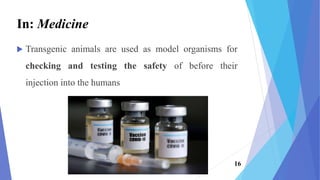
 Transgenic animals are used as model organisms for
checking and testing the safety of before their
injection into the humans
In: Medicine
16
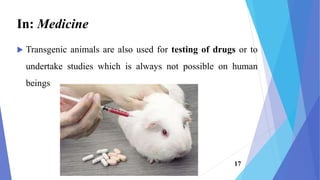
 Transgenic animals are also used for testing of drugs or to
undertake studies which is always not possible on human
beings
In: Medicine
17
 Transgenic animals are mostly designed for studying the role
of genes in the development of many diseases
 To cure and relief from these diseases, transgenic animals are
used for model organisms and they also helps in research for
the development of medicine
 For example, transgenic models for diseases like cancer and
Alzheimer’s
In: Medicine
18
 Transgenic animal helps in Xenotransplantation
 Patients die every year due to lack of transplant organs like
liver, heart and kidney
 Transgenic pigs helps to resolve such problem, they provide
the transplant organs to overcome this problem
 In Xenotransplantation, the transplantation of living cells,
tissues and organs is done from one specie to another specie
In: Medicine
19
 Increasing the yield of disease resistance in Animals
 Transgenic processes have been adopted to increase the
disease resistance in animals, such as genetic immunization
with recombinant plasmid containing gene for antigen of
interest to attempt for prevention of infectious diseases, e.g.,
rabies, pseudo rabies virus, etc
In: Medicine
20
In: Medicine
 To study the genetic diseases
 Transgenic animals have also been produced to serve as
model to understand particular disease like cystic fibrosis
 This is caused by a defective gene which can be mimicked
in a transgenic mouse
 Such transgenic animals allow the testing of drugs or to
undertake studies not always possible on human 21
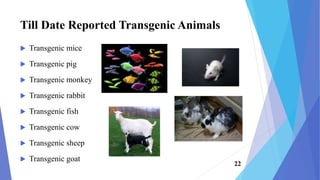
Till Date Reported Transgenic Animals
 Transgenic mice
 Transgenic pig
 Transgenic monkey
 Transgenic rabbit
 Transgenic fish
 Transgenic cow
 Transgenic sheep
 Transgenic goat
22
 https://www.slideshare.net/dvanecoutinho/transgenic-
animals-and-its-applications
 https://byjus.com/biology/transgenic-animals/
 https://www.slideshare.net/shysorcerer/xenotransplantation
-30155819
References
23
Transgenic animals

Transgenic animals

  • 1.
    Applications of TransgenicAnimals Ahmed Madni MS Research Scholar
  • 2.
    What is TransgenicAnimal?  Animals, which are modified with insertion of foreign gene into their genomes for developing the desired characteristics  This method is performed for the improvement of genetic traits of the target animal  Transgenic animals can be very effective for the production of various organs, growth hormones and useful proteins for humans 2
  • 3.
     Transgenesis isa process in which a foreign gene with desired characteristics is introduced into the genome of the target animal  The foreign gene that is introduced is known as the transgene, and the animal whose genome is altered is known as transgenic.  These genes are passed on to the next and successive generations Transgenesis 3
  • 4.
    There are threemethods are used for production of transgenic animals  Microinjection  Retrovirus-mediated gene transfer  Embryonic Stem cell-mediated gene transfer Methods Used in Production of Transgenic Animals 4
  • 5.
    1.Microinjection  In thismethod, the desired gene construct is transferred from other member of same specie or different species into the pro-nucleus of reproductive cell  The manipulate cell is cultured in lab (in vitro condition) and play a role for developing embryonic phase and then transferred to the recipient female  The first successful DNA microinjection was carried in mouse 5
  • 6.
  • 7.
     Retrovirus isthe virus that has the ability to carry its genetic material in the form RNA rather than DNA  In this method, the retrovirus is used as the vector for the transfer of genetic material into the host cell 2. Retrovirus-mediated Gene Transfer 7
  • 8.
  • 9.
     In thismethod, the totipotent stem cell (that have the ability of proliferation) is isolated from the embryos  The gene of interest is then inserted into the stem cells  The cells that contains the desired DNA is incorporated into the host cells embryo  This whole process will results in chimeric animals that requires live transgenic offspring for testing the desired transgene presence 3. Embryonic Stem Cell-mediated Gene Transfer 9
  • 10.
    3. Embryonic StemCell-mediated Gene Transfer 10
  • 11.
     Increased amountof milk, meat, insulin, haemoglobulin, etc  Such animals also promotes the study of gene regulation and the their effect on routinely functions of the body Applications of Transgenic Animals 11
  • 12.
    In: Agriculture  Inlivestock, when the transgenic animals start breeding with normal animals, the generation produced from these animals contains the healthy organs milk and meat  Transgenic techniques made possible the quick production of animals while the conventional methods of animals breeding is time taking 12
  • 13.
  • 14.
     Transgenic sheeparmed with genes involved in cysteine synthesis from dietary serine exhibited significant positive effect on wool production In: Agriculture 14
  • 15.
     Various heterologousprotein has been produced in the milk of pigs using cDNA encoding human protein for production of functional human haemoglobulin  Similarly, a heterologous protein, such as a variant of human tissue plasminogen activator has also been produced in goat which is being used in patient suffering from thrombosis, for dissolving blood clots In: Agriculture 15
  • 16.
     Transgenic animalsare used as model organisms for checking and testing the safety of before their injection into the humans In: Medicine 16
  • 17.
     Transgenic animalsare also used for testing of drugs or to undertake studies which is always not possible on human beings In: Medicine 17
  • 18.
     Transgenic animalsare mostly designed for studying the role of genes in the development of many diseases  To cure and relief from these diseases, transgenic animals are used for model organisms and they also helps in research for the development of medicine  For example, transgenic models for diseases like cancer and Alzheimer’s In: Medicine 18
  • 19.
     Transgenic animalhelps in Xenotransplantation  Patients die every year due to lack of transplant organs like liver, heart and kidney  Transgenic pigs helps to resolve such problem, they provide the transplant organs to overcome this problem  In Xenotransplantation, the transplantation of living cells, tissues and organs is done from one specie to another specie In: Medicine 19
  • 20.
     Increasing theyield of disease resistance in Animals  Transgenic processes have been adopted to increase the disease resistance in animals, such as genetic immunization with recombinant plasmid containing gene for antigen of interest to attempt for prevention of infectious diseases, e.g., rabies, pseudo rabies virus, etc In: Medicine 20
  • 21.
    In: Medicine  Tostudy the genetic diseases  Transgenic animals have also been produced to serve as model to understand particular disease like cystic fibrosis  This is caused by a defective gene which can be mimicked in a transgenic mouse  Such transgenic animals allow the testing of drugs or to undertake studies not always possible on human 21
  • 22.
    Till Date ReportedTransgenic Animals  Transgenic mice  Transgenic pig  Transgenic monkey  Transgenic rabbit  Transgenic fish  Transgenic cow  Transgenic sheep  Transgenic goat 22
  • 23.