Transactional Analysis
Presentation By:-
Aijaz Ahmed Rather
I.K.G P.T University
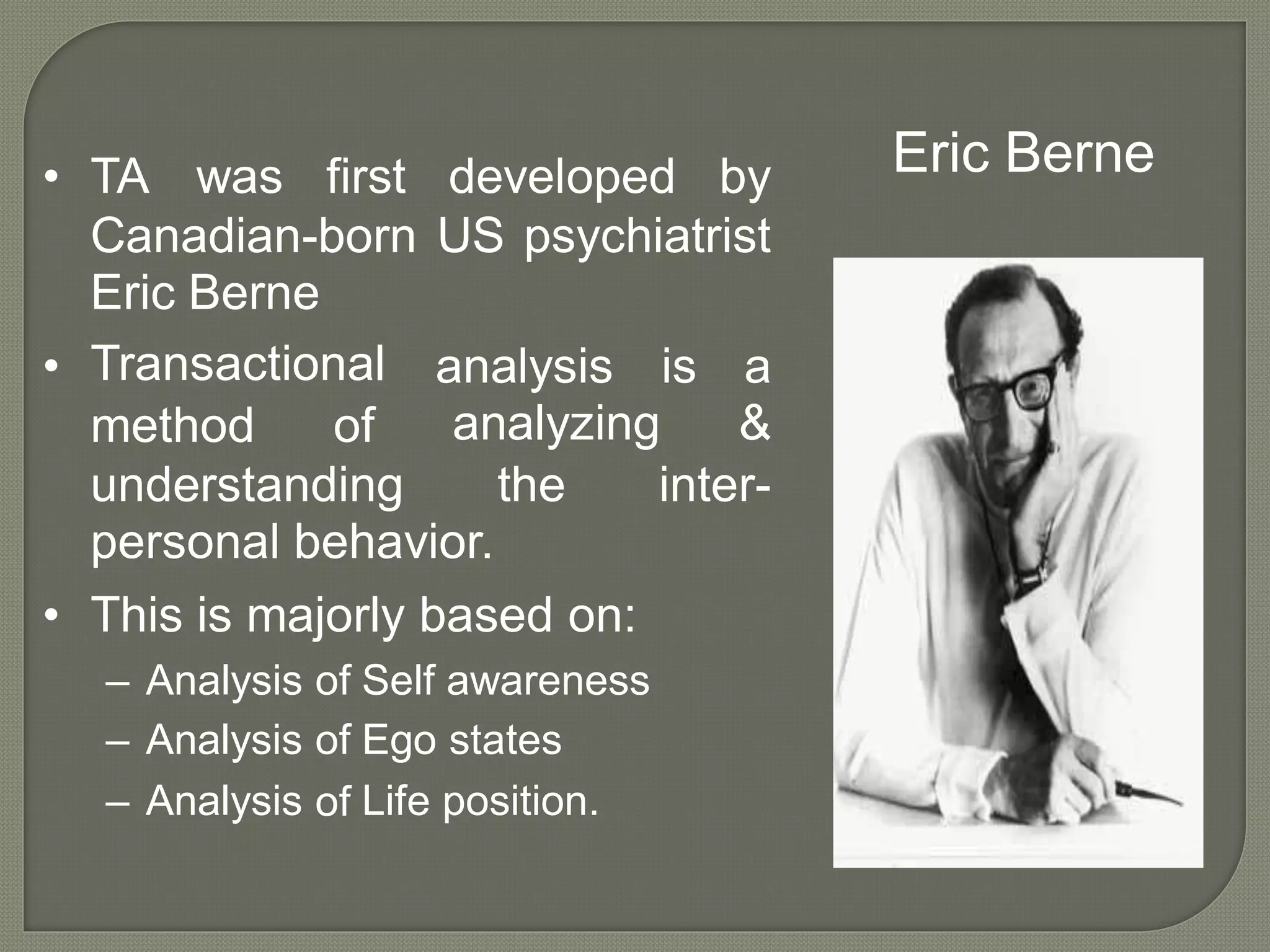
Eric Berne• TA was first developed by
Canadian-born
Eric Berne
Transactional
US psychiatrist
• analysis
analyzing
is a
&method of
understanding
personal behavior.
the inter-
• This is majorly based on:
–
–
–
Analysis
Analysis
Analysis
of
of
of
Self awareness
Ego states
Life position.
Analysis of Self awareness
• Interpersonal
interself.
relations are composed of
• Self awareness is a
Luft
cognitive concept.
Developed by Joseph and Harry Ingham
(the word “Johari” comes from Joseph Luft and
Harry Ingham).
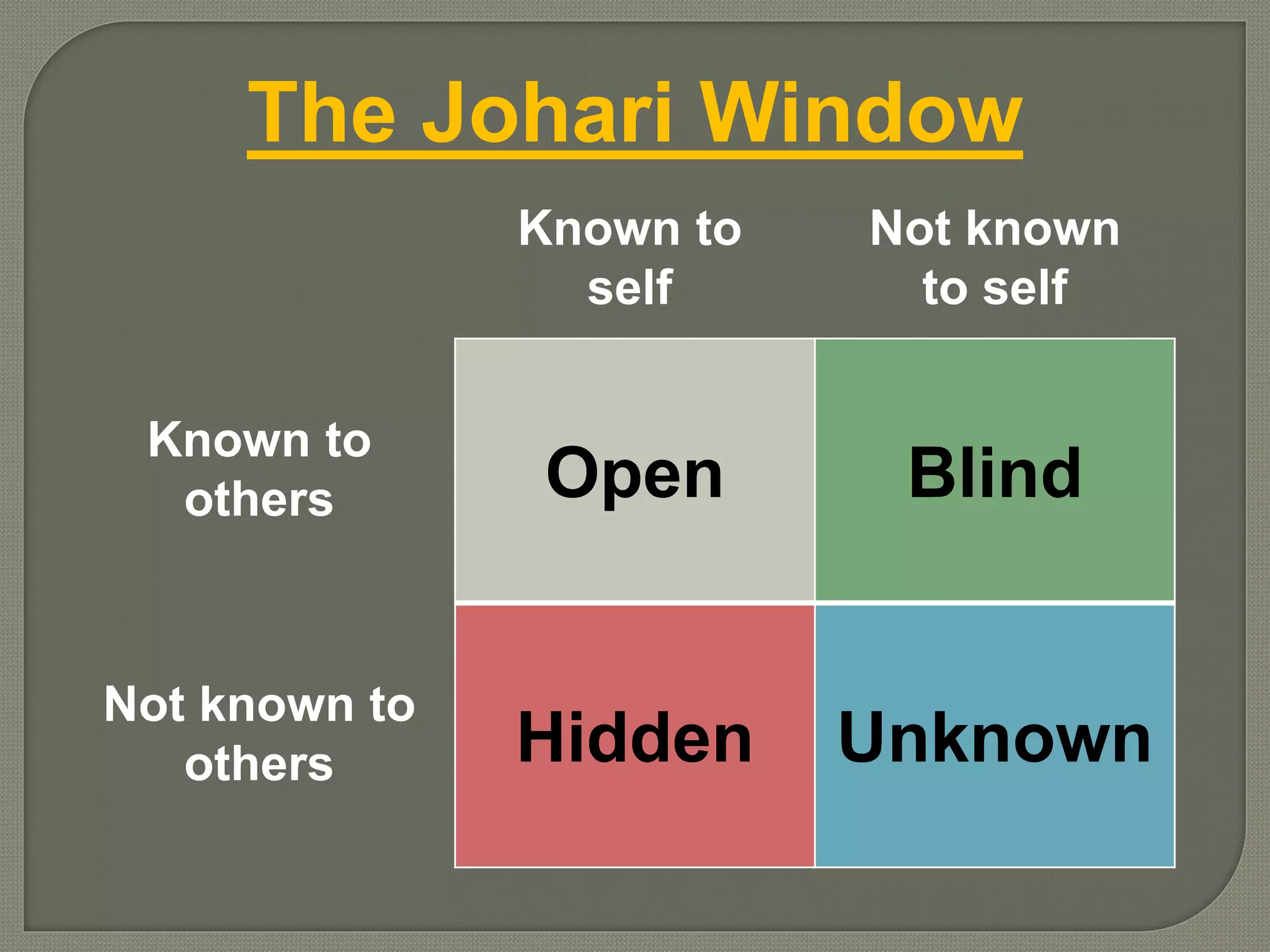
• They have developed a diagram including
individual behavior & attitude that can be known
& unknown to self & known & unknown to
others. They named it as JOHARI WINDOW.
Open Blind
Hidden Unknown
Known to
self
Not known
to self
Known to
others
Not known to
others
The Johari Window
Ego States
Berne believed that when we interact with other people,
our state of mind affects what happens
He believed that there were three states of mind in all
humans, no matter how old they were, called ego states.
•
•
– Each ego state has particular verbal and non-verbal
characteristics,
people.
which can be observed, if you are watching
– Each ego state has a positive and negative aspect.
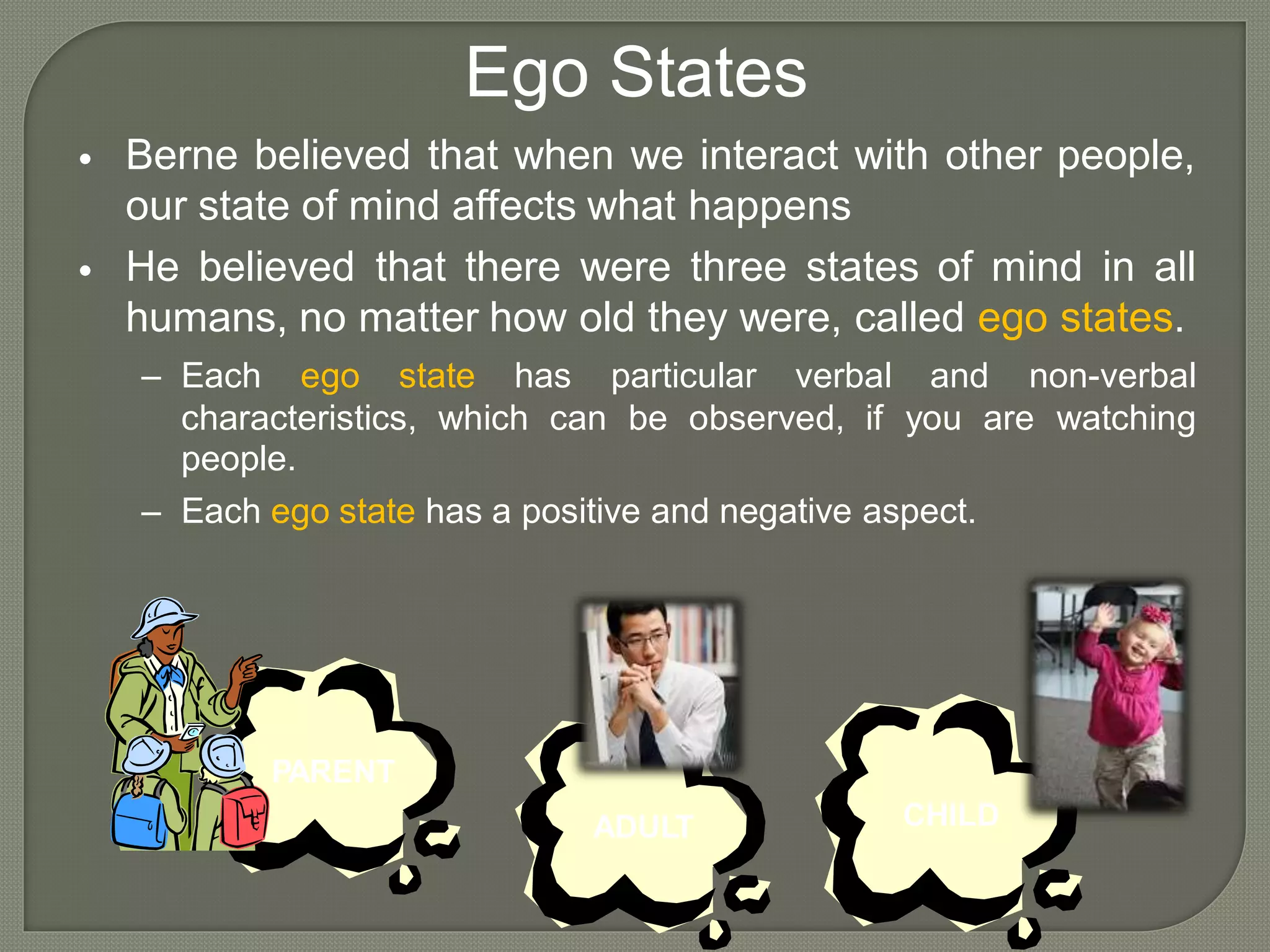
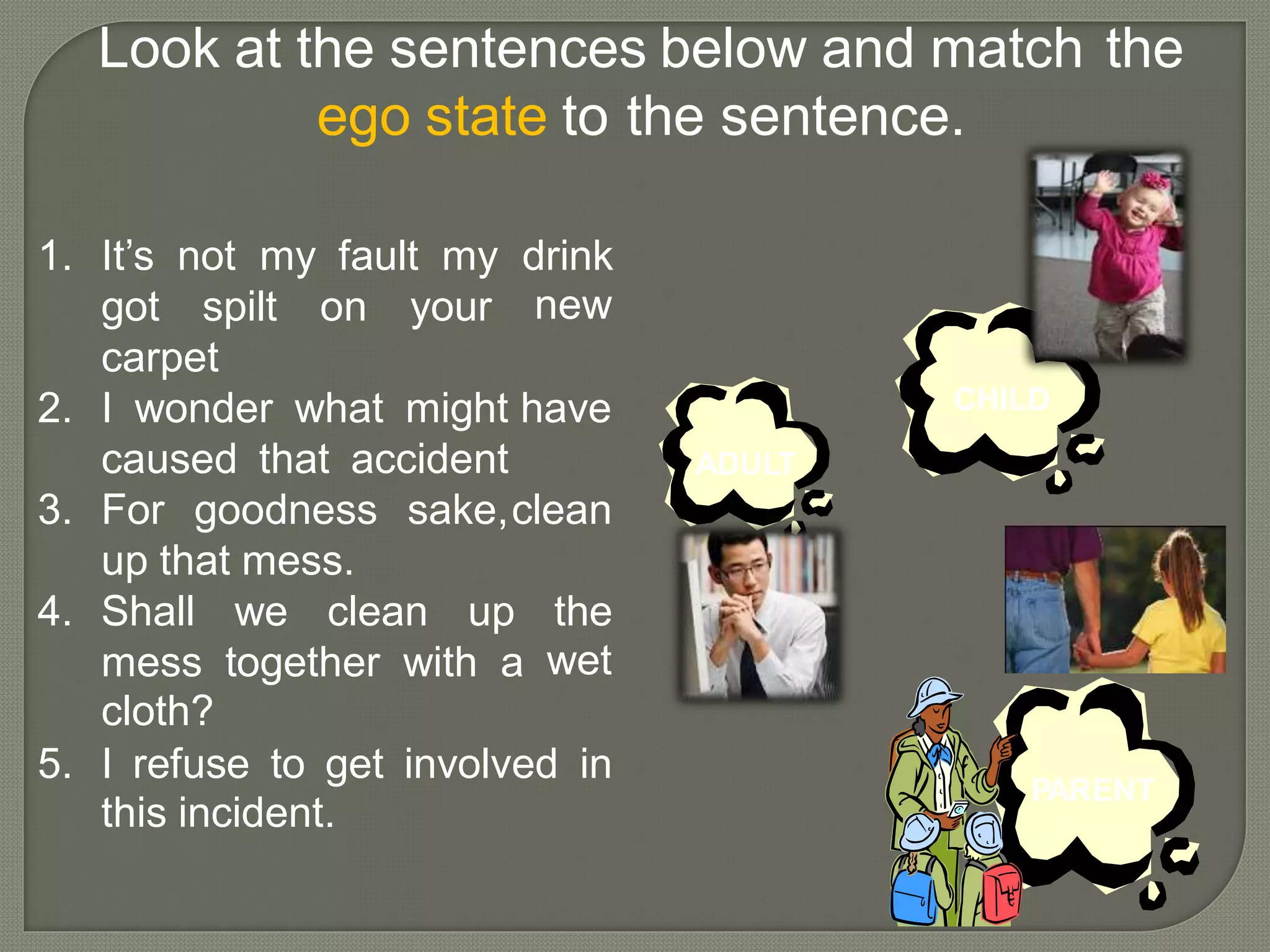
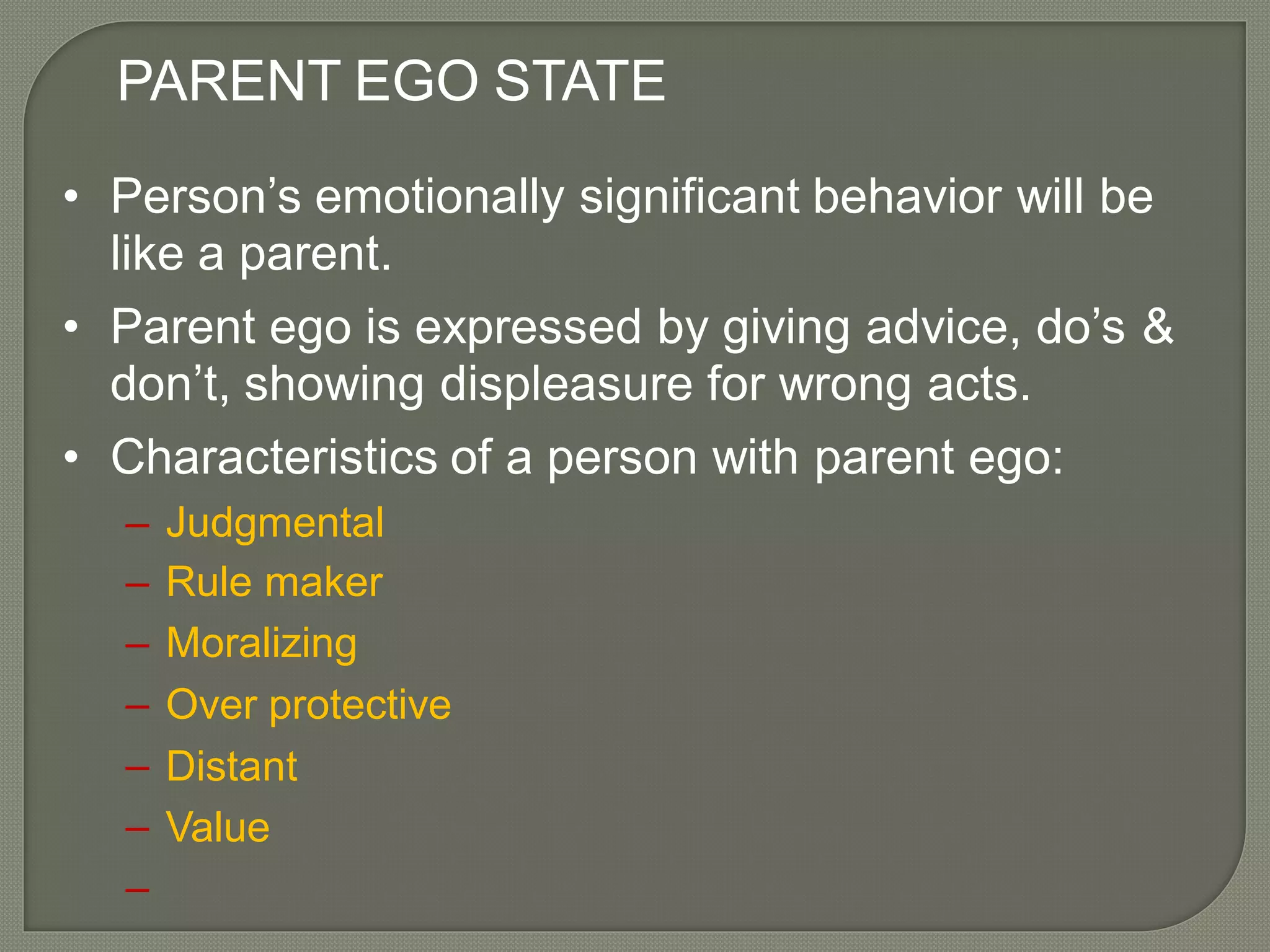
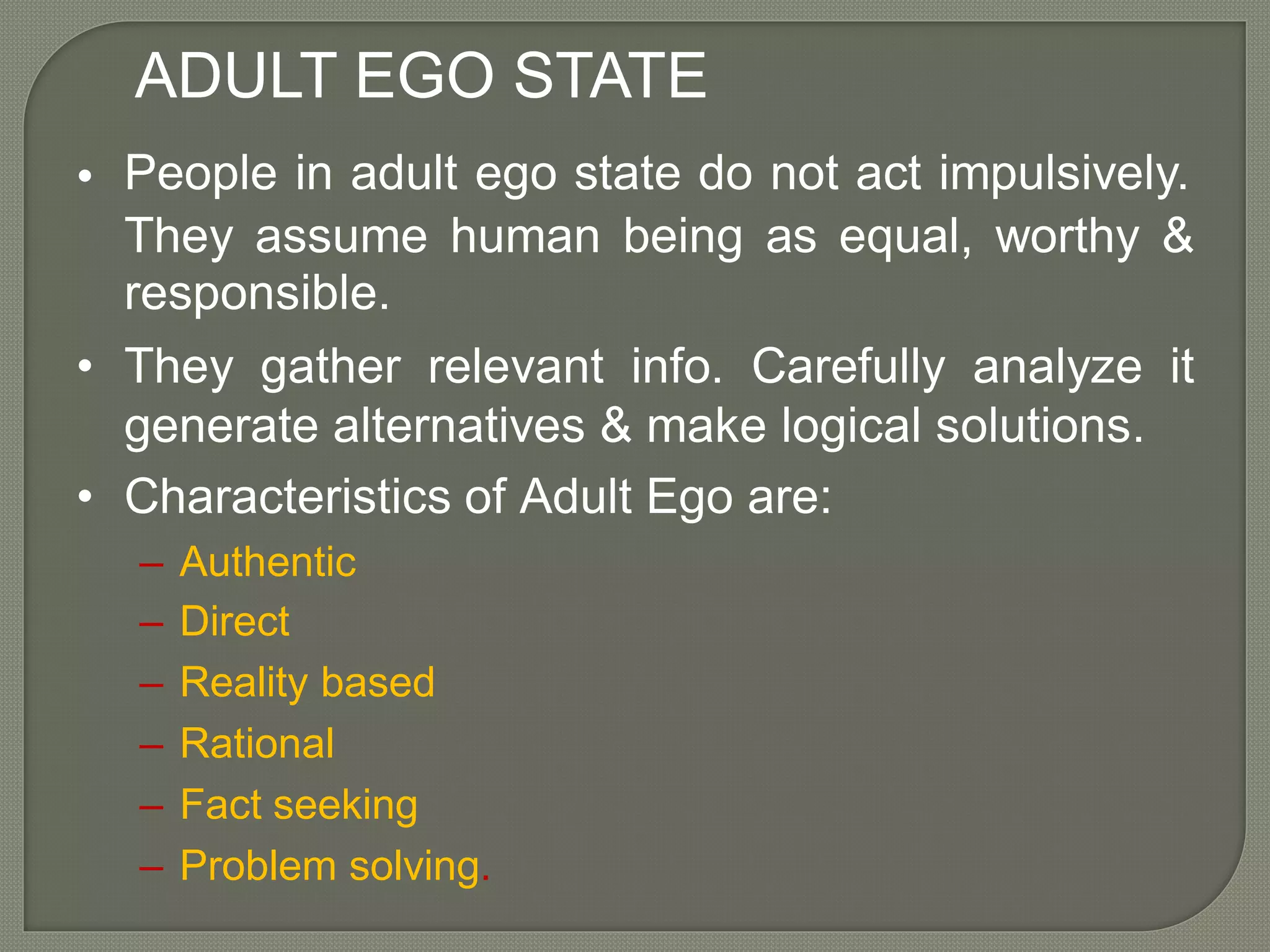
PARENT
CHILDADULT
Look at the sentences below and match the
ego state to the sentence.
1. It’s not my fault my drink
newgot spilt on your
carpet
I wonder what might
caused that accident
For goodness sake,
up that mess.
CHILD2. have
ADULT
3. clean
4. Shall we clean up the
wetmess together with
cloth?
a
5. I refuse to get involved in
this incident.
PARENT
PARENT EGO STATE
• Person’s emotionally significant behavior will be
like a parent.
• Parent ego is expressed by giving advice, do’s
don’t, showing displeasure for wrong acts.
&
• Characteristics of a person with parent ego:
–
–
–
–
–
–
–
Judgmental
Rule maker
Moralizing
Over protective
Distant
Value
ADULT EGO STATE
People in adult ego state do not act impulsively.•
They assume
responsible.
human being as equal, worthy &
• They gather relevant info. Carefully analyze it
generate alternatives & make logical solutions.
• Characteristics of Adult Ego are:
–
–
–
–
–
–
Authentic
Direct
Reality based
Rational
Fact seeking
Problem solving.
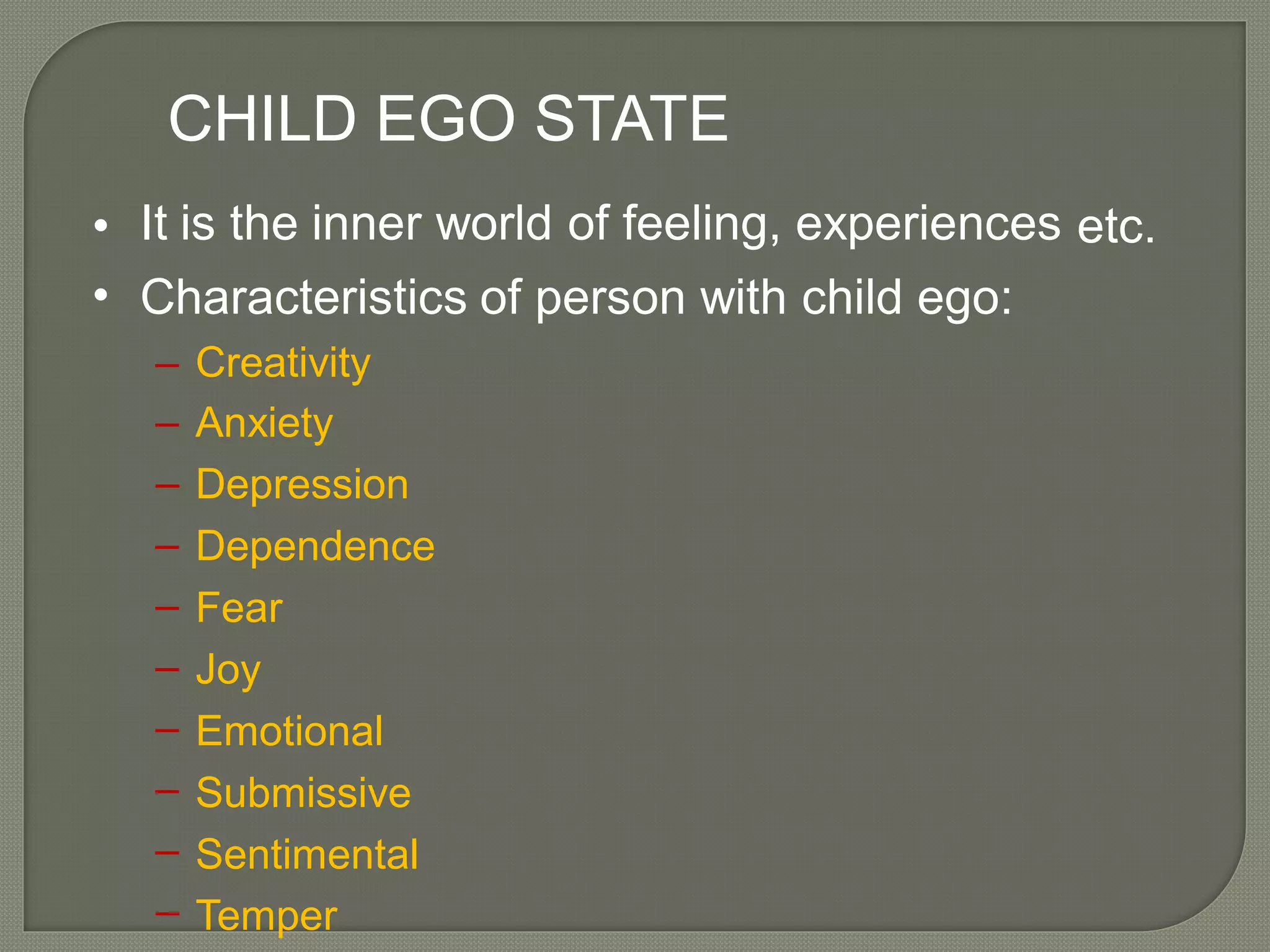
CHILD EGO STATE
It is the inner world of feeling, experiences•
•
etc.
Characteristics of person with child ego:
–
–
–
–
–
–
–
–
–
–
Creativity
Anxiety
Depression
Dependence
Fear
Joy
Emotional
Submissive
Sentimental
Temper
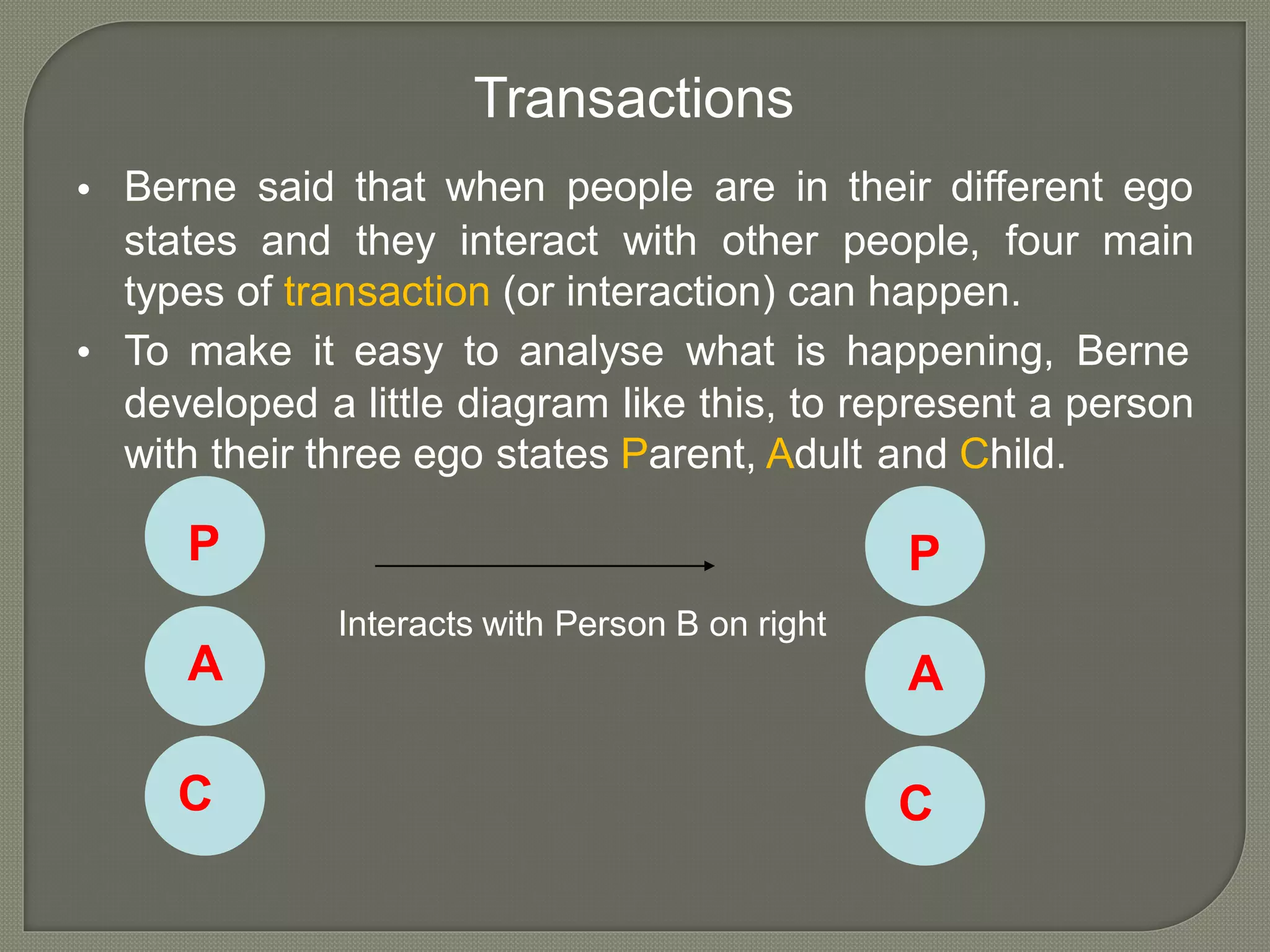
Transactions
Berne said that when people are in their different ego•
states and they interact with other people, four main
types of transaction (or interaction) can happen.
To make it easy to analyse what is happening, Berne•
developed a little diagram like this, to represent a person
with their three ego states Parent, Adult and Child.
P P
Interacts with Person B on right
A A
C C
Types of Transaction
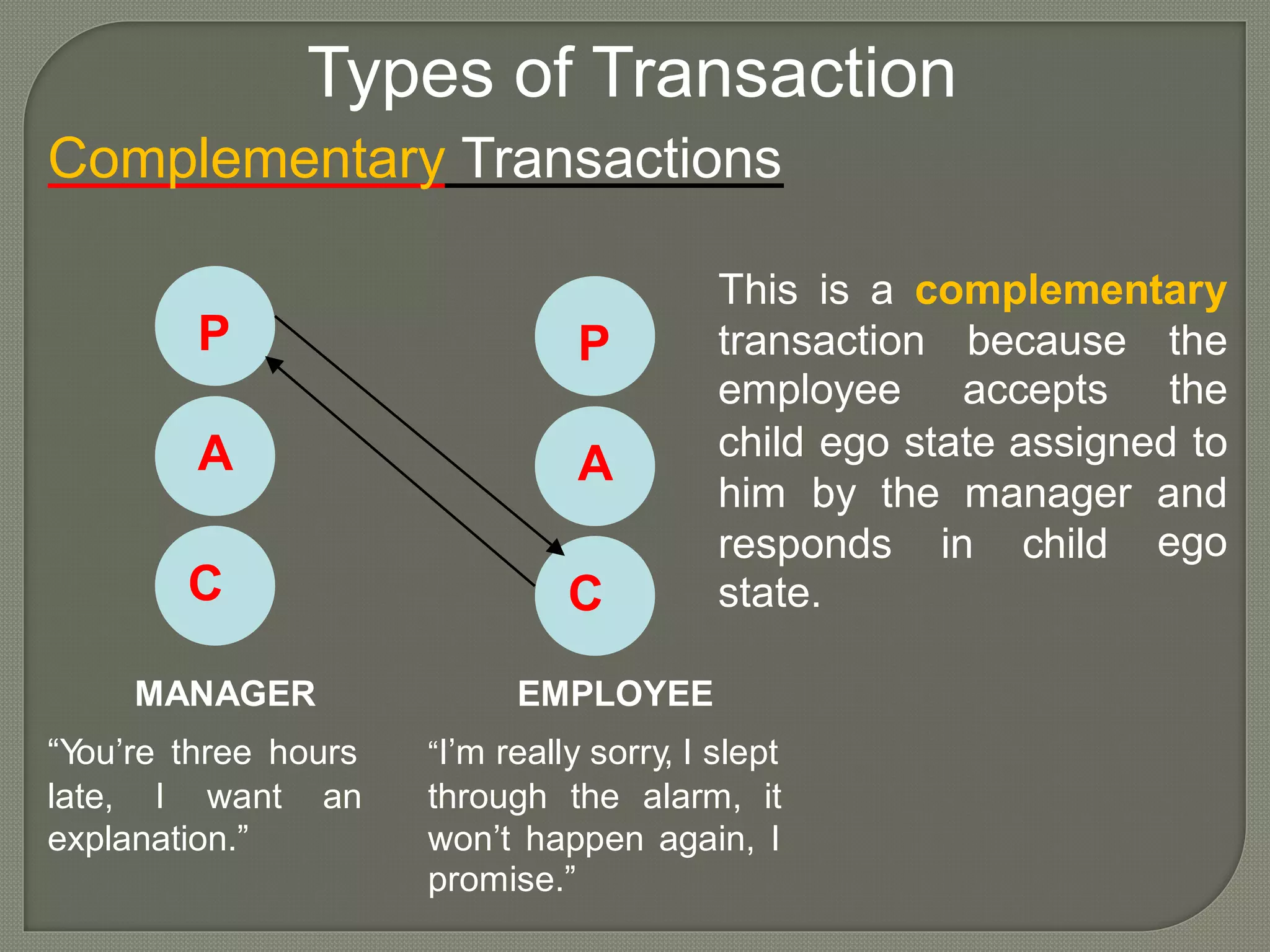
Complementary Transactions
This is a complementary
P P transaction
employee
because
accepts
the
the
child ego state assigned toA A
him by the manager and
egoresponds
state.
in child
C C
MANAGER
“You’re three hours
EMPLOYEE
“I’m really sorry, I slept
late, I want an through the alarm, it
explanation.” won’t happen again, I
promise.”
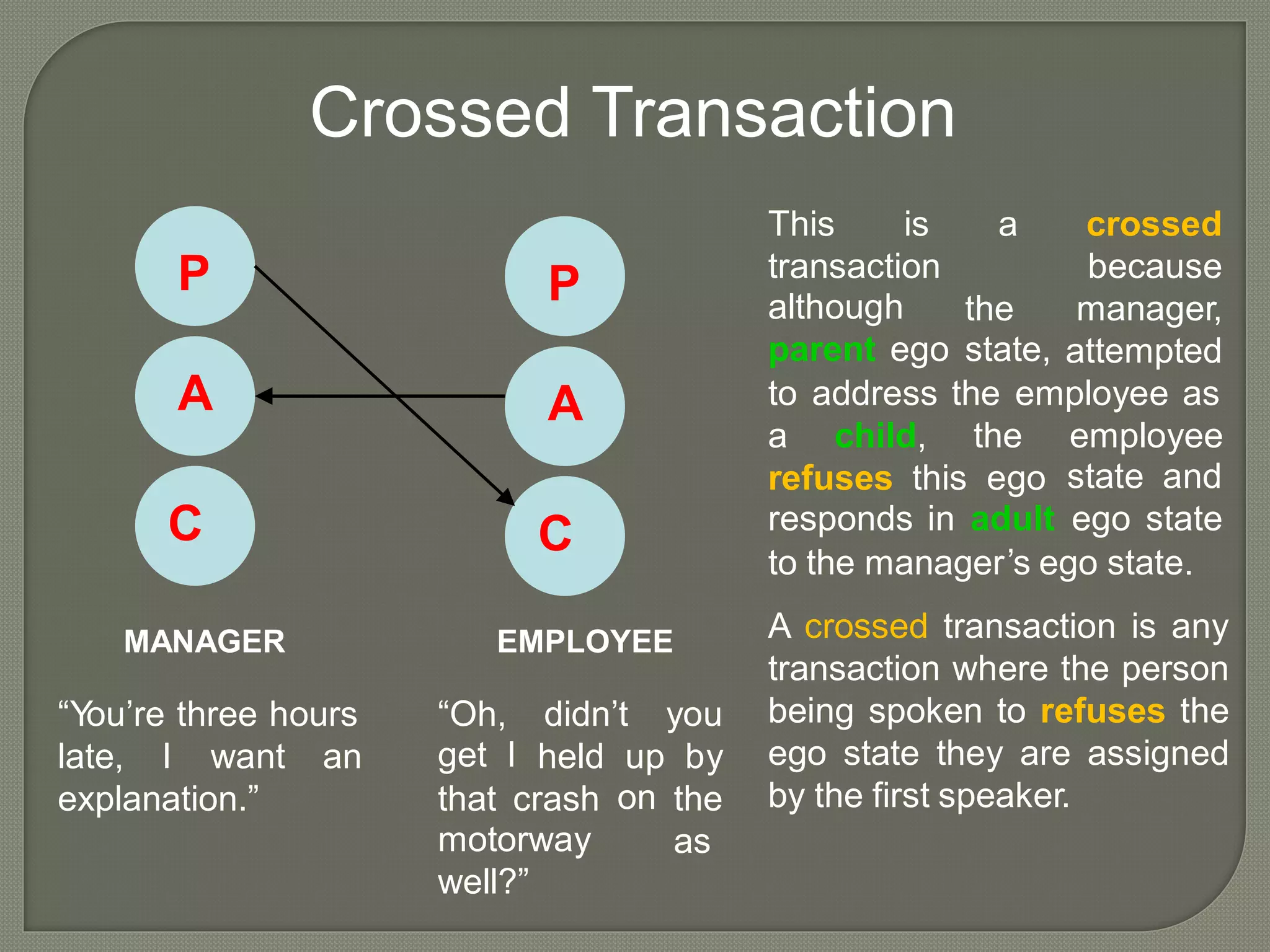
Crossed Transaction
This is a crossed
because
manager,
attempted
P transaction
although
parent ego
P the
state,
A to address the employee asA
a child, the employee
state and
ego state
refuses this ego
responds in adultC C to the manager’s ego state.
A crossed transaction is any
transaction where the person
being spoken to refuses the
ego state they are assigned
by the first speaker.
MANAGER EMPLOYEE
“You’re three hours “Oh,
get I
didn’t you
by
the
as
late, I want an held up
onexplanation.” that crash
motorway
well?”
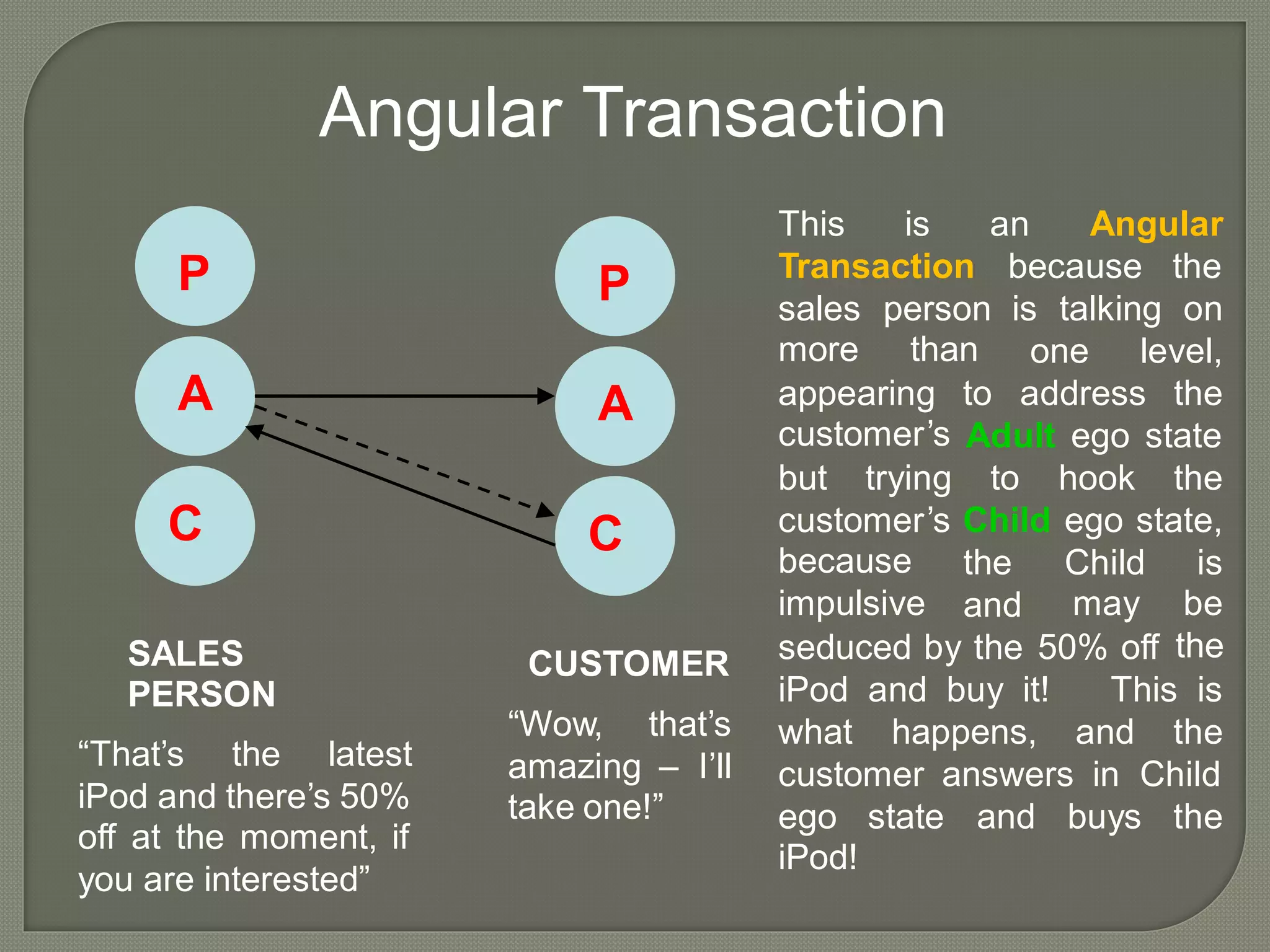
Angular Transaction
This is an Angular
P Transaction because the
P sales
more
person
than
is talking on
one level,
A appearing
customer’s
to address theA
Adult ego state
but trying to
Child
the
and
hook the
C customer’s
because
impulsive
ego state,
C Child
may
is
be
theseduced by the 50% offSALES
PERSON
CUSTOMER
iPod and buy it! This is
“Wow, that’s what happens, and the
“That’s the latest amazing –
take one!”
I’ll customer answers in Child
iPod and there’s 50%
off at the moment, if
you are interested”
ego state
iPod!
and buys the
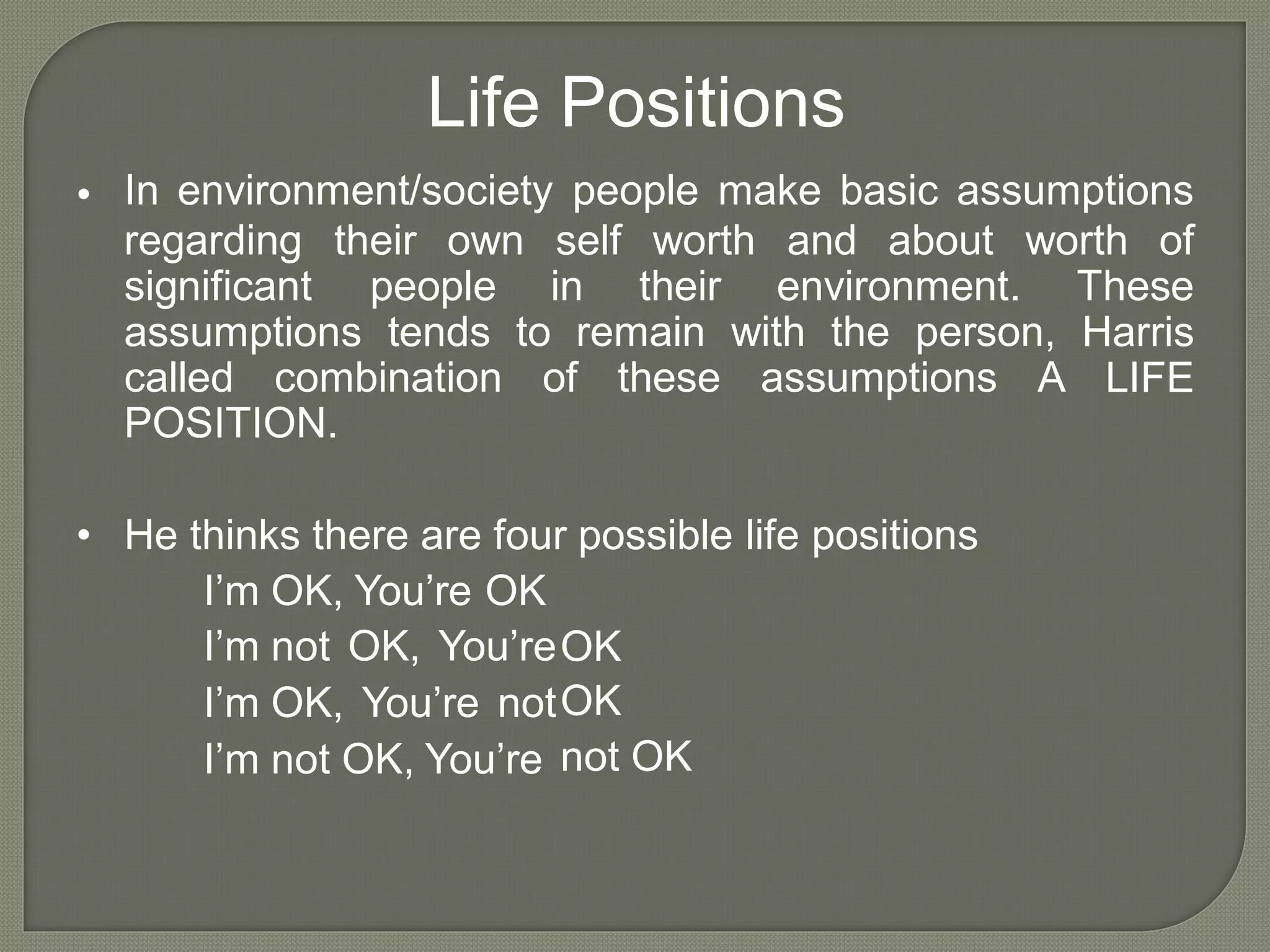
Life Positions
In environment/society people make basic assumptions•
regarding their own self worth and about worth of
significant
assumptions
people
tends
in their environment. These
Harris
LIFE
to remain with the person,
called combination of these assumptions A
POSITION.
• He thinks there are four possible life positions
I’m
I’m
I’m
I’m
OK, You’re OK
not OK, You’re
OK, You’re not
not OK, You’re
OK
OK
not OK
Thank You

Transactional analysis

  • 1.
    Transactional Analysis Presentation By:- AijazAhmed Rather I.K.G P.T University
  • 2.
    Eric Berne• TAwas first developed by Canadian-born Eric Berne Transactional US psychiatrist • analysis analyzing is a &method of understanding personal behavior. the inter- • This is majorly based on: – – – Analysis Analysis Analysis of of of Self awareness Ego states Life position.
  • 3.
    Analysis of Selfawareness • Interpersonal interself. relations are composed of • Self awareness is a Luft cognitive concept. Developed by Joseph and Harry Ingham (the word “Johari” comes from Joseph Luft and Harry Ingham). • They have developed a diagram including individual behavior & attitude that can be known & unknown to self & known & unknown to others. They named it as JOHARI WINDOW.
  • 4.
    Open Blind Hidden Unknown Knownto self Not known to self Known to others Not known to others The Johari Window
  • 5.
    Ego States Berne believedthat when we interact with other people, our state of mind affects what happens He believed that there were three states of mind in all humans, no matter how old they were, called ego states. • • – Each ego state has particular verbal and non-verbal characteristics, people. which can be observed, if you are watching – Each ego state has a positive and negative aspect. PARENT CHILDADULT
  • 6.
    Look at thesentences below and match the ego state to the sentence. 1. It’s not my fault my drink newgot spilt on your carpet I wonder what might caused that accident For goodness sake, up that mess. CHILD2. have ADULT 3. clean 4. Shall we clean up the wetmess together with cloth? a 5. I refuse to get involved in this incident. PARENT
  • 7.
    PARENT EGO STATE •Person’s emotionally significant behavior will be like a parent. • Parent ego is expressed by giving advice, do’s don’t, showing displeasure for wrong acts. & • Characteristics of a person with parent ego: – – – – – – – Judgmental Rule maker Moralizing Over protective Distant Value
  • 8.
    ADULT EGO STATE Peoplein adult ego state do not act impulsively.• They assume responsible. human being as equal, worthy & • They gather relevant info. Carefully analyze it generate alternatives & make logical solutions. • Characteristics of Adult Ego are: – – – – – – Authentic Direct Reality based Rational Fact seeking Problem solving.
  • 9.
    CHILD EGO STATE Itis the inner world of feeling, experiences• • etc. Characteristics of person with child ego: – – – – – – – – – – Creativity Anxiety Depression Dependence Fear Joy Emotional Submissive Sentimental Temper
  • 10.
    Transactions Berne said thatwhen people are in their different ego• states and they interact with other people, four main types of transaction (or interaction) can happen. To make it easy to analyse what is happening, Berne• developed a little diagram like this, to represent a person with their three ego states Parent, Adult and Child. P P Interacts with Person B on right A A C C
  • 11.
    Types of Transaction ComplementaryTransactions This is a complementary P P transaction employee because accepts the the child ego state assigned toA A him by the manager and egoresponds state. in child C C MANAGER “You’re three hours EMPLOYEE “I’m really sorry, I slept late, I want an through the alarm, it explanation.” won’t happen again, I promise.”
  • 12.
    Crossed Transaction This isa crossed because manager, attempted P transaction although parent ego P the state, A to address the employee asA a child, the employee state and ego state refuses this ego responds in adultC C to the manager’s ego state. A crossed transaction is any transaction where the person being spoken to refuses the ego state they are assigned by the first speaker. MANAGER EMPLOYEE “You’re three hours “Oh, get I didn’t you by the as late, I want an held up onexplanation.” that crash motorway well?”
  • 13.
    Angular Transaction This isan Angular P Transaction because the P sales more person than is talking on one level, A appearing customer’s to address theA Adult ego state but trying to Child the and hook the C customer’s because impulsive ego state, C Child may is be theseduced by the 50% offSALES PERSON CUSTOMER iPod and buy it! This is “Wow, that’s what happens, and the “That’s the latest amazing – take one!” I’ll customer answers in Child iPod and there’s 50% off at the moment, if you are interested” ego state iPod! and buys the
  • 14.
    Life Positions In environment/societypeople make basic assumptions• regarding their own self worth and about worth of significant assumptions people tends in their environment. These Harris LIFE to remain with the person, called combination of these assumptions A POSITION. • He thinks there are four possible life positions I’m I’m I’m I’m OK, You’re OK not OK, You’re OK, You’re not not OK, You’re OK OK not OK
  • 15.