

Aijaz Ahmed Rather
I.K Gujral P.T.U
Quality Management
 Quality management may be defined as a creating an
organizational culture committed to the continuous
improvement of skills , teamwork, processes, and
product - service quality and customer satisfaction.
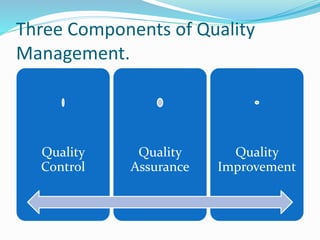
Three Components of Quality
Management.
Quality
Control
Quality
Assurance
Quality
Improvement
Quality Control
 It is the operational techniques and activities used to
fulfill requirements for quality.
Quality assurance.
 It refers to all the planned and systematic activities
implemented within the quality system that can be
demonstrated to provide confidence that a product or
service will fulfill requirements for quality.
Quality improvement .
 It refers to anything that enhances an organizations
ability to meet quality requirements.it covers product
improvement, process improvement and people based
improvement.
Quality Characteristics of Goods
and Services.
 Performance: How will the product or service perform and
meet the customers intended use . E.g.. The speed of a sports car.
 Features: The special characteristics that appeal to customers
intended use. E.g.. The power steering of an automobile.
 Serviceability: the speed, cost and convenience of repairs and
maintenance. Higher the serviceability better will be the quality
of the product.
 Appearance : the effect or human senses, the look, feel, taste,
smell or sound .
 Customer service: the treatment recived by customers before
, during and after the sale.
 Safety: how will the product protects users before, during and
after use.
Quality management

Quality management

  • 1.
  • 2.
    Quality Management  Qualitymanagement may be defined as a creating an organizational culture committed to the continuous improvement of skills , teamwork, processes, and product - service quality and customer satisfaction.
  • 3.
    Three Components ofQuality Management. Quality Control Quality Assurance Quality Improvement
  • 4.
    Quality Control  Itis the operational techniques and activities used to fulfill requirements for quality.
  • 5.
    Quality assurance.  Itrefers to all the planned and systematic activities implemented within the quality system that can be demonstrated to provide confidence that a product or service will fulfill requirements for quality.
  • 6.
    Quality improvement . It refers to anything that enhances an organizations ability to meet quality requirements.it covers product improvement, process improvement and people based improvement.
  • 7.
    Quality Characteristics ofGoods and Services.  Performance: How will the product or service perform and meet the customers intended use . E.g.. The speed of a sports car.  Features: The special characteristics that appeal to customers intended use. E.g.. The power steering of an automobile.  Serviceability: the speed, cost and convenience of repairs and maintenance. Higher the serviceability better will be the quality of the product.  Appearance : the effect or human senses, the look, feel, taste, smell or sound .  Customer service: the treatment recived by customers before , during and after the sale.  Safety: how will the product protects users before, during and after use.