











Training on
INTRODUCTION
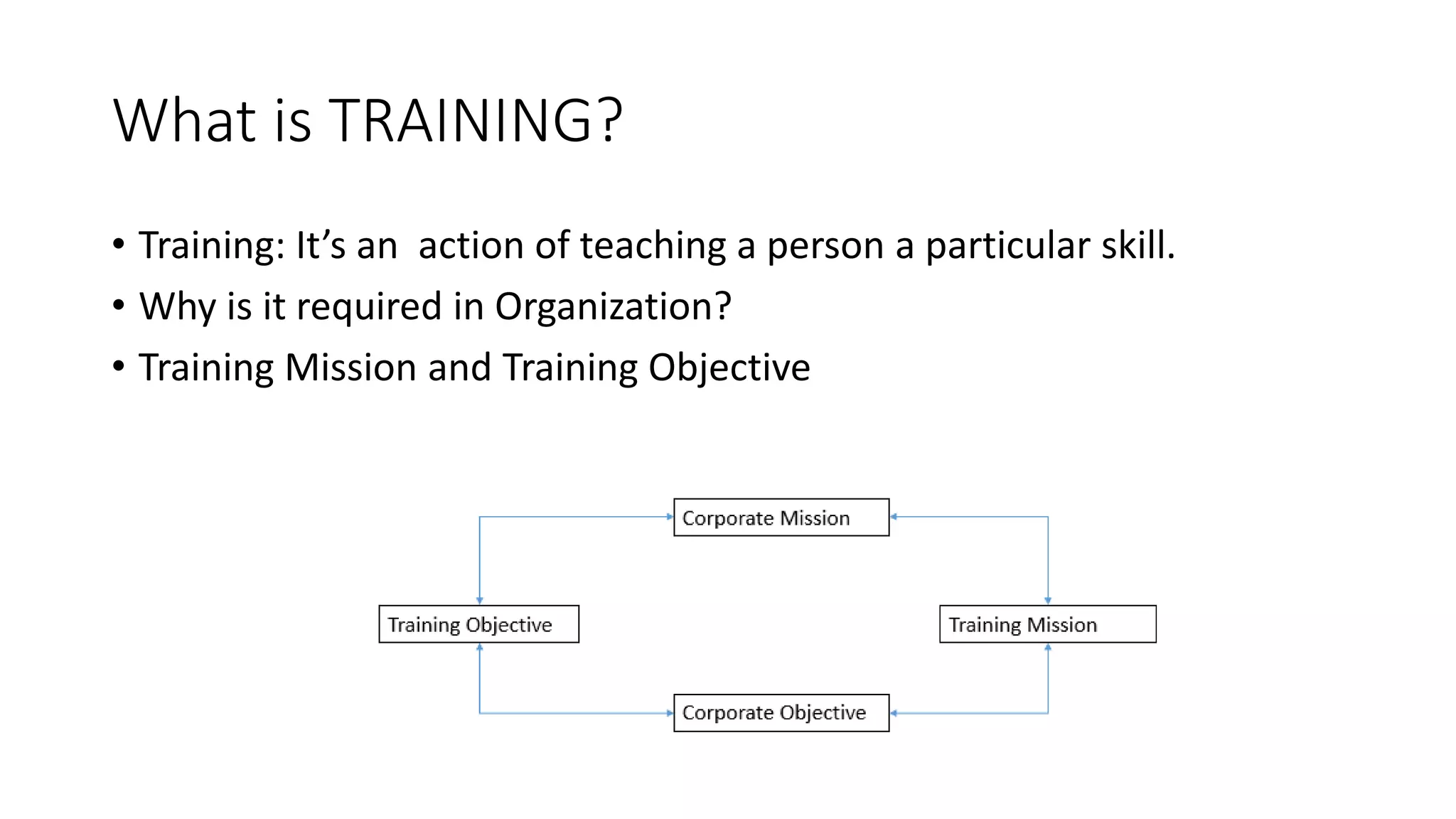
What is TRAINING? 
• Training: It’s an action of teaching a person a particular skill. 
• Why is it required in Organization? 
• Training Mission and Training Objective
Methods of Training 
• On Job Training 
• Vestibule Training 
• Apprenticeships 
• Coaching 
• Class room based Training 
• Computer Based Training
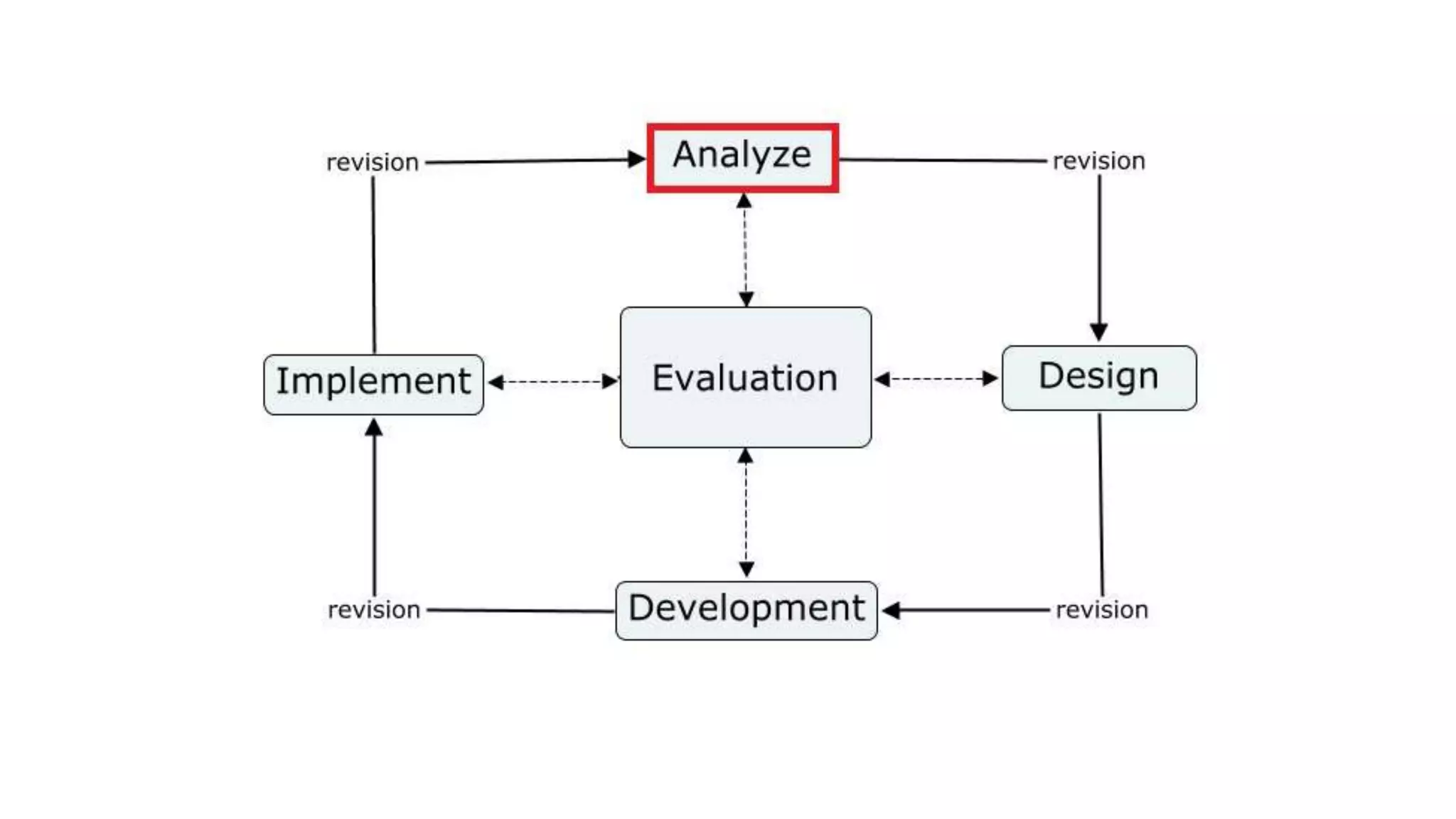
ANALYSIS
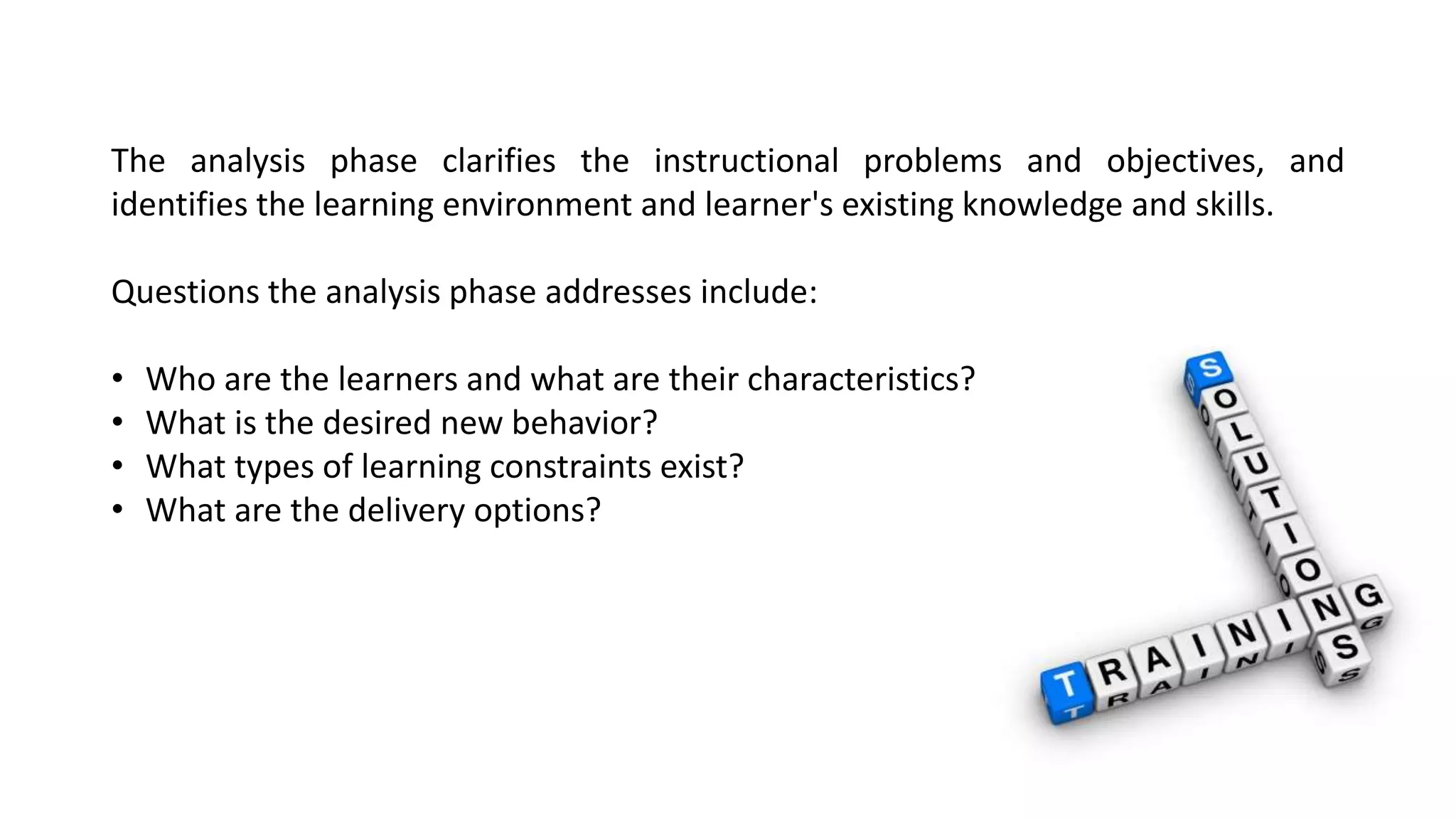
The analysis phase clarifies the instructional problems and objectives, and 
identifies the learning environment and learner's existing knowledge and skills. 
Questions the analysis phase addresses include: 
• Who are the learners and what are their characteristics? 
• What is the desired new behavior? 
• What types of learning constraints exist? 
• What are the delivery options?
• It is to ensure that money, time and effort is spent on ‘true needs, rather than 
needless wants’ 
• In order to design training programs, which satisfy both the organization and its 
employees, training needs must be identified by performing 3 levels of analysis: 
• Organizational 
• Operational 
• Individual
Organizational Level Analysis 
• Information needed to conduct organizational analysis will be 
obtained from variety of sources: 
• Organizational goals and objectives 
• Strategic plans 
• Organizational climate indices 
• Customer needs 
• Observation of employee skills 
• Customer complaints
Operational Level Analysis 
• Operational analysis will provide data about the job or group of jobs and the 
knowledge, skills, attitudes and abilities needed to achieve optimum 
performance. 
• The data for task analysis can be obtained from various sources: 
• Job Description 
• KSA Analysis 
• Performance standards 
• Job inventory questionnaire 
• Review literature about the job 
• Analysis
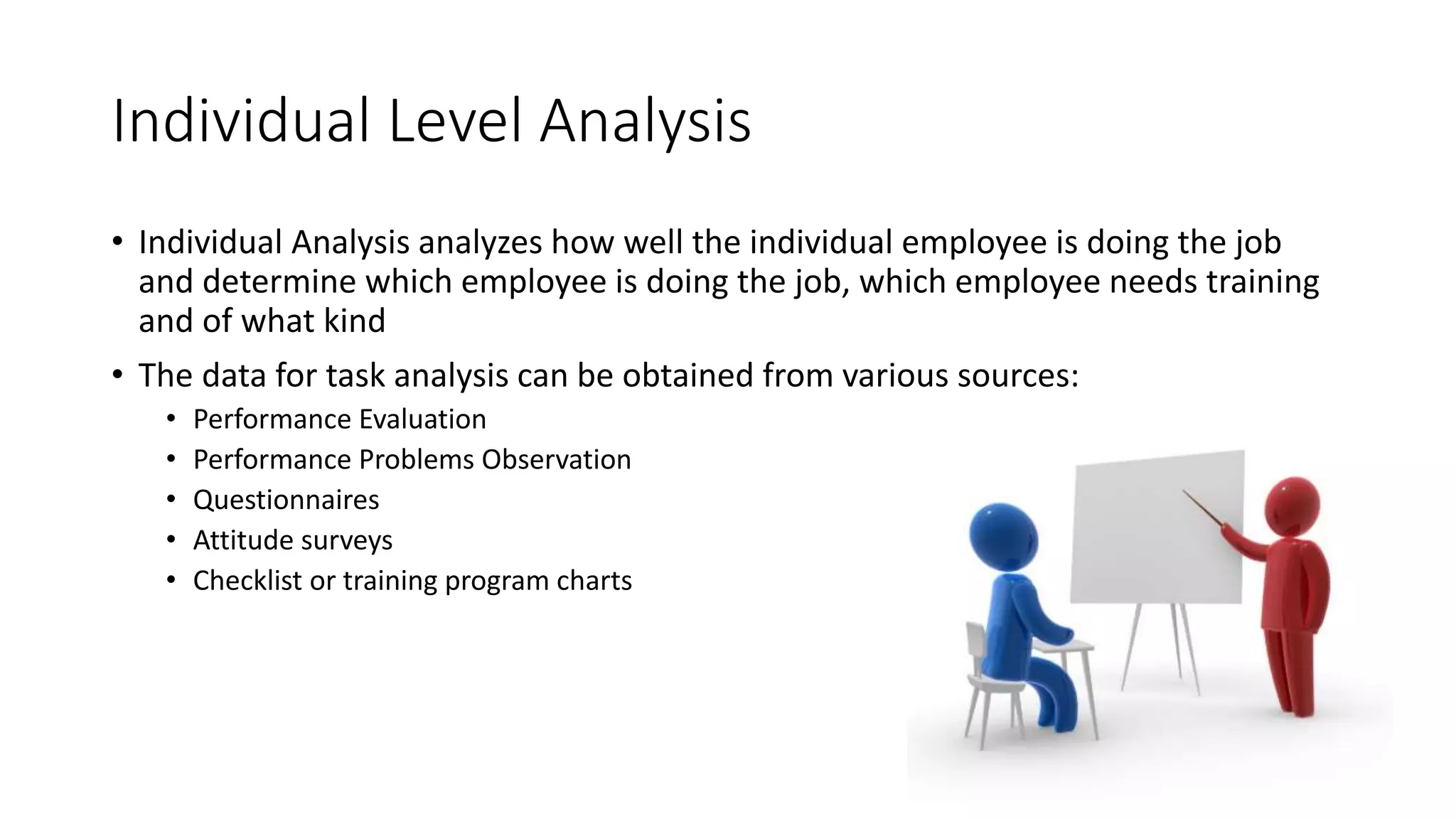
Individual Level Analysis 
• Individual Analysis analyzes how well the individual employee is doing the job 
and determine which employee is doing the job, which employee needs training 
and of what kind 
• The data for task analysis can be obtained from various sources: 
• Performance Evaluation 
• Performance Problems Observation 
• Questionnaires 
• Attitude surveys 
• Checklist or training program charts
DESIGN
Learning Objectives 
• Analysis of the audience and the content to talk about 
• Delivering a presentation using proper voice modulation trying to 
influence the audience 
• Maintaining appropriate body language, posture, gestures and 
selecting the right approach to deliver the presentation 
• Effective designing of slides and proper usage of visuals and visual 
aids 
• Evaluating the effectiveness of the training program through tests and 
events
Audience analysis 
• How does your audience like to learn? 
• What is the level of knowledge of the audience regarding 
the topic?
Facilities 
• Booking the rooms 
• Arranging the laptops for the facilitators 
• Making sure that projectors in proper working conditions are present 
• Deciding the number of facilitators required 
• Approaching the facilitators 
• Arranging for Videos that will be used in the training 
• Arranging for caterers
Expenses & Funding 
Expenses 
• Facilitators’ remuneration 
• Promotions 
• Caterers 
• Certificates 
Funding 
• Fees. Rs. 300/- 
• Sponsorship from the Institute 
of Management, Christ 
University.
DEVELPOMENT
Promotion 
• Sending e-mails to the students 
• Banners across the college 
• Class announcements 
• Word of mouth
Enrollment and Fee Collection 
Enrollment 
• Sending a spreadsheet across 
the students with a deadline 
• On spot registrations till half an 
hour before the training session 
starts 
Fee Collection 
• Will be done by the POC’s 
assigned to each class which will 
then be given to the MBA office 
• Will be collected from the MBA 
office on the day before the 1st 
day of training 
• On spot registrations should pay 
the fee immediately
Designing the manuals 
• Participants will be requiring the manuals 
• Manuals will be designed according to the course 
• Will contain the schedule as well as detailed information regarding 
the agenda of the training 
• Will contain information about the facilitators i.e., Name, 
Qualification, Contact details 
• Will contain a feedback form which can later be submitted to the 
Coordinators of the training program
IMPLEMENTATION
Day 1 
Content and Delivery
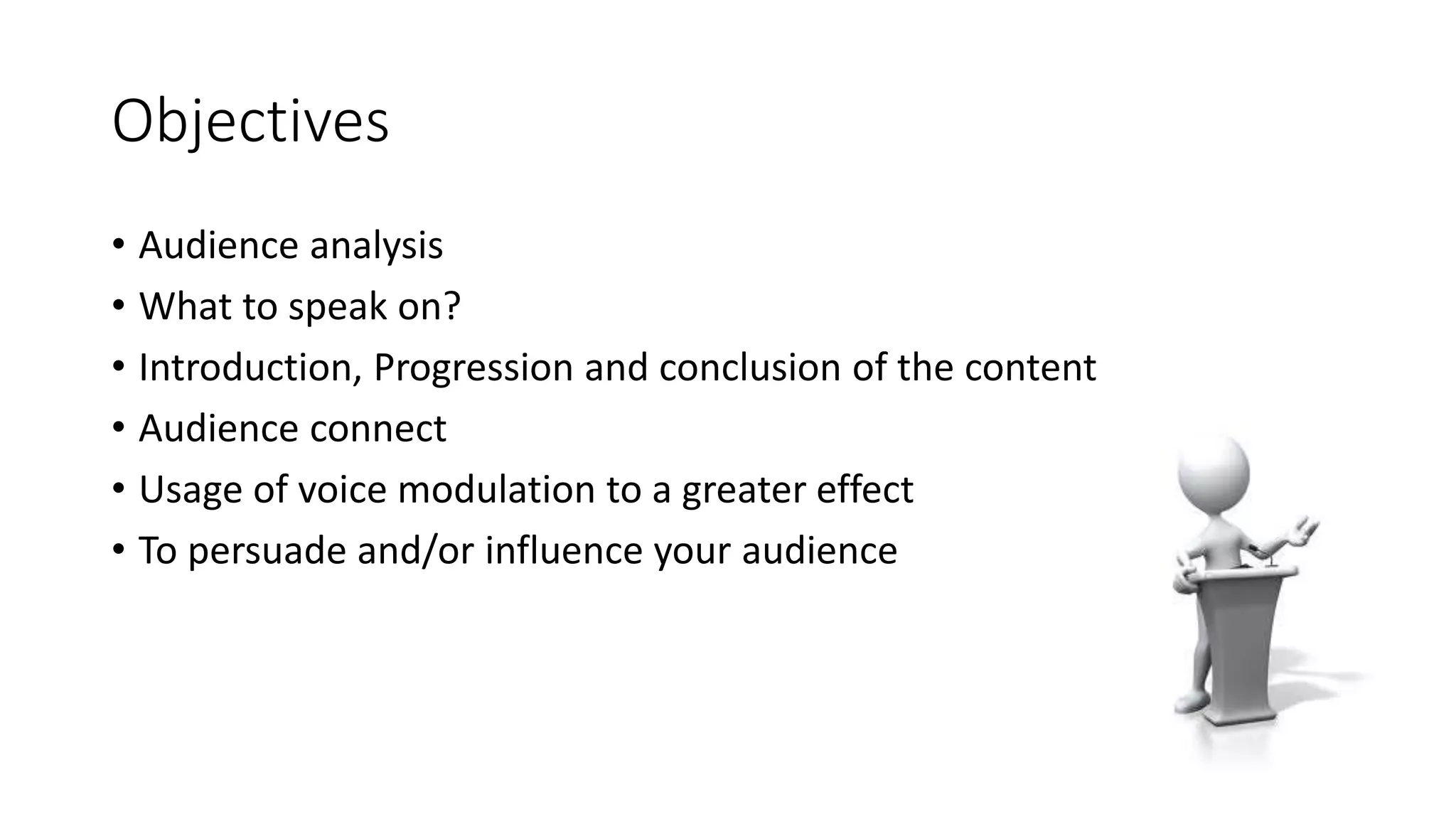
Objectives 
• Audience analysis 
• What to speak on? 
• Introduction, Progression and conclusion of the content 
• Audience connect 
• Usage of voice modulation to a greater effect 
• To persuade and/or influence your audience
Schedule 
• Sessions on Content: 10:00 AM - 11:30 AM 
• Break: 11:30 AM - 12:00 PM 
• Sessions on Delivery of the content: 12:00 PM - 1:30 PM
Day 2 
Body language and PPT skills
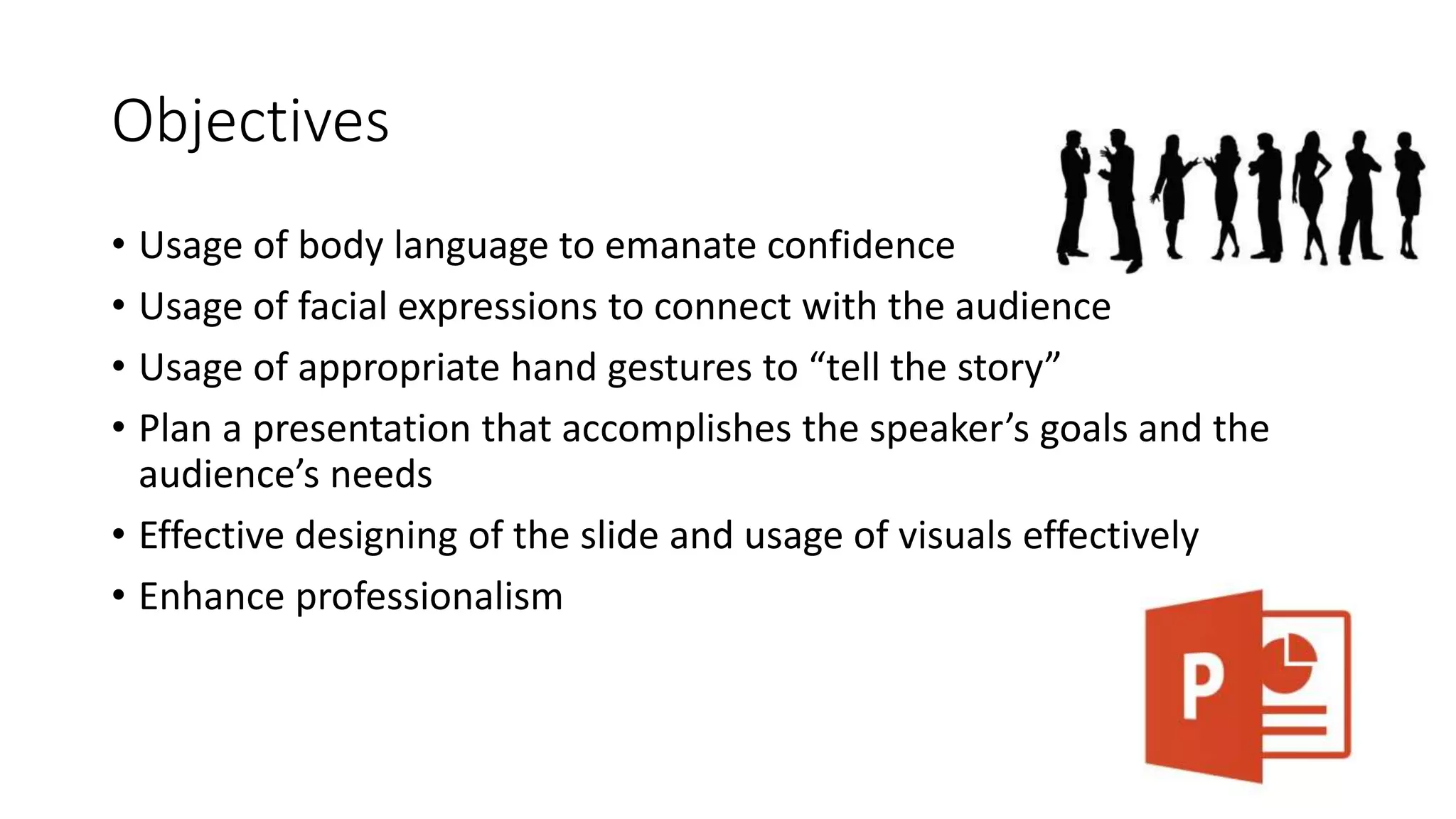
Objectives 
• Usage of body language to emanate confidence 
• Usage of facial expressions to connect with the audience 
• Usage of appropriate hand gestures to “tell the story” 
• Plan a presentation that accomplishes the speaker’s goals and the 
audience’s needs 
• Effective designing of the slide and usage of visuals effectively 
• Enhance professionalism
Schedule 
• Sessions on Body language: 10:00 AM - 11:30 AM 
• Break: 11:30 AM - 12:00 PM 
• Sessions on PowerPoint skills: 12:00 PM - 1:30 PM
Day 3 
Evaluation
• Speech on a prior given topic 
• Extempore 
• PowerPoint Presentation on a prior given topic 
• Distribution of certificates 
• Feedback
Schedule 
• Speech and Extempore: 10:00 AM - 11:30 AM 
• Break: 11:30 AM - 12:00 PM 
• PowerPoint Presentation: 12:00 PM - 1:30 PM
EVALUATION
Importance of Evaluation 
• Results in evidence-based practice 
• Helps us to identify the most effective & strategic interventions 
(make a difference or add value) 
• Leads to sustainable & enjoyable practice 
• Provides accountability to School & Group leadership
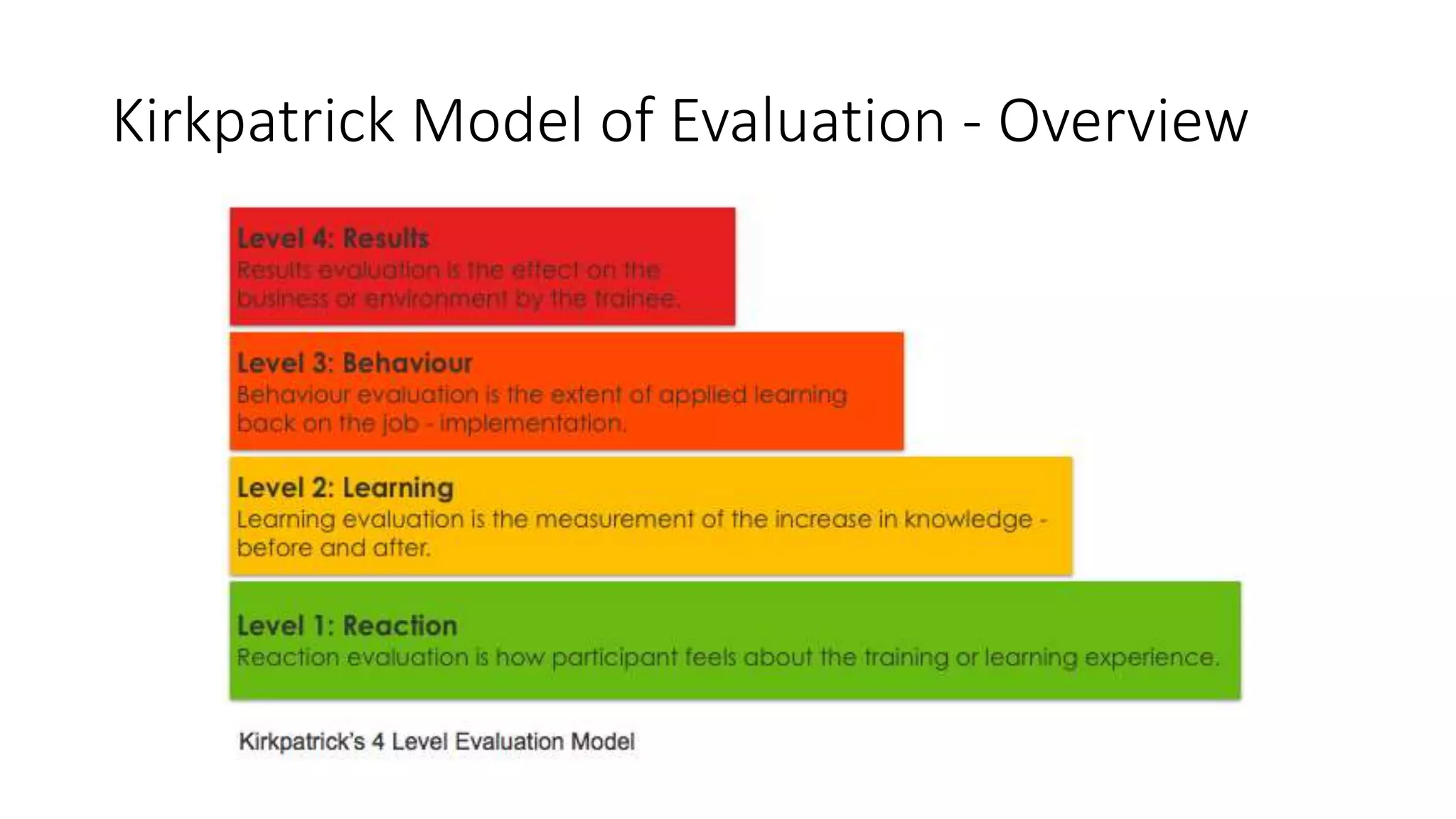
Kirkpatrick Model of Evaluation - Overview
Training session on presentation skills for corporate professionals

Training session on presentation skills for corporate professionals

  • 1.
  • 2.
  • 3.
    What is TRAINING? • Training: It’s an action of teaching a person a particular skill. • Why is it required in Organization? • Training Mission and Training Objective
  • 4.
    Methods of Training • On Job Training • Vestibule Training • Apprenticeships • Coaching • Class room based Training • Computer Based Training
  • 5.
  • 7.
    The analysis phaseclarifies the instructional problems and objectives, and identifies the learning environment and learner's existing knowledge and skills. Questions the analysis phase addresses include: • Who are the learners and what are their characteristics? • What is the desired new behavior? • What types of learning constraints exist? • What are the delivery options?
  • 8.
    • It isto ensure that money, time and effort is spent on ‘true needs, rather than needless wants’ • In order to design training programs, which satisfy both the organization and its employees, training needs must be identified by performing 3 levels of analysis: • Organizational • Operational • Individual
  • 9.
    Organizational Level Analysis • Information needed to conduct organizational analysis will be obtained from variety of sources: • Organizational goals and objectives • Strategic plans • Organizational climate indices • Customer needs • Observation of employee skills • Customer complaints
  • 10.
    Operational Level Analysis • Operational analysis will provide data about the job or group of jobs and the knowledge, skills, attitudes and abilities needed to achieve optimum performance. • The data for task analysis can be obtained from various sources: • Job Description • KSA Analysis • Performance standards • Job inventory questionnaire • Review literature about the job • Analysis
  • 11.
    Individual Level Analysis • Individual Analysis analyzes how well the individual employee is doing the job and determine which employee is doing the job, which employee needs training and of what kind • The data for task analysis can be obtained from various sources: • Performance Evaluation • Performance Problems Observation • Questionnaires • Attitude surveys • Checklist or training program charts
  • 12.
  • 13.
    Learning Objectives •Analysis of the audience and the content to talk about • Delivering a presentation using proper voice modulation trying to influence the audience • Maintaining appropriate body language, posture, gestures and selecting the right approach to deliver the presentation • Effective designing of slides and proper usage of visuals and visual aids • Evaluating the effectiveness of the training program through tests and events
  • 14.
    Audience analysis •How does your audience like to learn? • What is the level of knowledge of the audience regarding the topic?
  • 15.
    Facilities • Bookingthe rooms • Arranging the laptops for the facilitators • Making sure that projectors in proper working conditions are present • Deciding the number of facilitators required • Approaching the facilitators • Arranging for Videos that will be used in the training • Arranging for caterers
  • 16.
    Expenses & Funding Expenses • Facilitators’ remuneration • Promotions • Caterers • Certificates Funding • Fees. Rs. 300/- • Sponsorship from the Institute of Management, Christ University.
  • 17.
  • 18.
    Promotion • Sendinge-mails to the students • Banners across the college • Class announcements • Word of mouth
  • 19.
    Enrollment and FeeCollection Enrollment • Sending a spreadsheet across the students with a deadline • On spot registrations till half an hour before the training session starts Fee Collection • Will be done by the POC’s assigned to each class which will then be given to the MBA office • Will be collected from the MBA office on the day before the 1st day of training • On spot registrations should pay the fee immediately
  • 20.
    Designing the manuals • Participants will be requiring the manuals • Manuals will be designed according to the course • Will contain the schedule as well as detailed information regarding the agenda of the training • Will contain information about the facilitators i.e., Name, Qualification, Contact details • Will contain a feedback form which can later be submitted to the Coordinators of the training program
  • 21.
  • 22.
    Day 1 Contentand Delivery
  • 23.
    Objectives • Audienceanalysis • What to speak on? • Introduction, Progression and conclusion of the content • Audience connect • Usage of voice modulation to a greater effect • To persuade and/or influence your audience
  • 24.
    Schedule • Sessionson Content: 10:00 AM - 11:30 AM • Break: 11:30 AM - 12:00 PM • Sessions on Delivery of the content: 12:00 PM - 1:30 PM
  • 25.
    Day 2 Bodylanguage and PPT skills
  • 26.
    Objectives • Usageof body language to emanate confidence • Usage of facial expressions to connect with the audience • Usage of appropriate hand gestures to “tell the story” • Plan a presentation that accomplishes the speaker’s goals and the audience’s needs • Effective designing of the slide and usage of visuals effectively • Enhance professionalism
  • 27.
    Schedule • Sessionson Body language: 10:00 AM - 11:30 AM • Break: 11:30 AM - 12:00 PM • Sessions on PowerPoint skills: 12:00 PM - 1:30 PM
  • 28.
  • 29.
    • Speech ona prior given topic • Extempore • PowerPoint Presentation on a prior given topic • Distribution of certificates • Feedback
  • 30.
    Schedule • Speechand Extempore: 10:00 AM - 11:30 AM • Break: 11:30 AM - 12:00 PM • PowerPoint Presentation: 12:00 PM - 1:30 PM
  • 31.
  • 32.
    Importance of Evaluation • Results in evidence-based practice • Helps us to identify the most effective & strategic interventions (make a difference or add value) • Leads to sustainable & enjoyable practice • Provides accountability to School & Group leadership
  • 33.
    Kirkpatrick Model ofEvaluation - Overview