- RAHUL KANTAK
Meaning:
 Training evaluation involves assessing the
 effectiveness of the training program carried out
 by the organization in terms of the benefits to the
 trainees as well as the company.
 Since companies spend a lot of money on training it is
 very important for them to know the usefulness of
 such training.

 To know whether the employees were satisfied with
 the training, whether they were able to learn
 something important from such training and also to
 know whether they are able to apply whatever they
 have learnt.
Two basic issues to be addressed:
1. Design of the study

2. What to measure ?
Design of the study
1. Time series design
2. Controlled Experimentation


      Training
                        Control group
       group
Time series design:
 Here we consider the performance of the employees
 before and after training to check the effectiveness of
 the training.
Controlled experimentation:
 It uses two groups for the evaluation. Here we take two
 similar groups and keep a track of their performances. One
 group is called the training group and the other is called
 the controlled group.

 The training group is given training and the controlled
 group is not given training. After the training the
 performances of both the groups is record over some
 period of time. If there is some improvement in the
 performance of the training group then the training
 program is said to be effective.
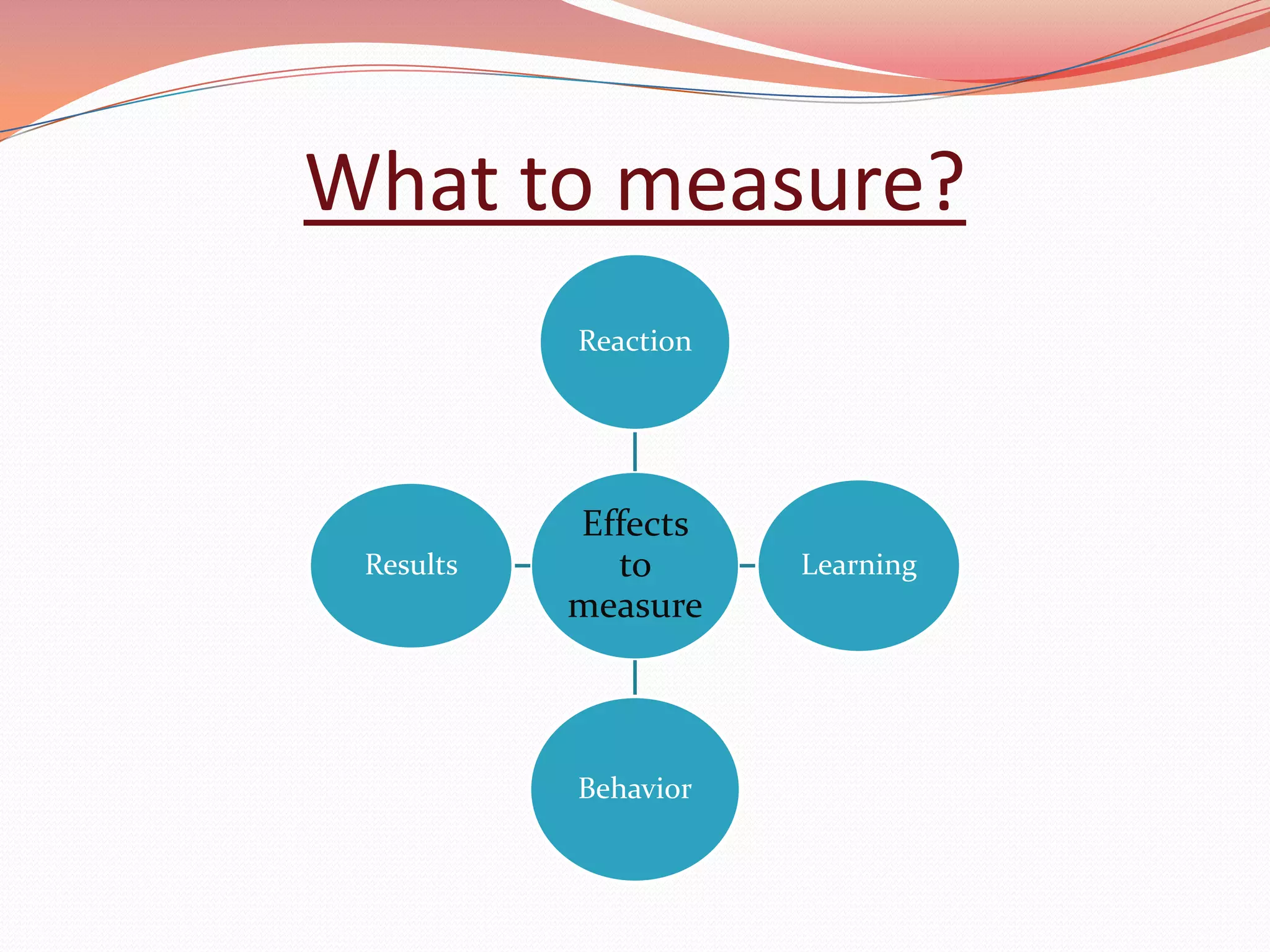
What to measure?
           Reaction


           Effects
 Results     to       Learning
           measure


           Behavior
We can measure four basic training
            outcomes:
 We can measure four basic training outcomes:


 Reaction: we need to evaluate employees’ reaction to
 the program i.e. whether they liked it…whether they
 considered it worthwhile.

 Learning: we need to evaluate or test the employees to
 see whether they learned the skills, the principles or
 concepts that they were supposed to learn through the
 training program.
 Behavior: we need to see whether the employees’ on
 the job behavior changed because of the training
 program. i.e whether there is any difference in their
 job performance after the training.

 Results: most important is to find out the final results
 that have been achieved because of the training
 program. Whether the results of the training are as per
 the objectives set. For eg: if the training was to
 improve the skills of the sales person so as to increase
 the sales, then if there is actual increase in sales it
 means that the training was effective.
Training Evaluation

Training Evaluation

  • 1.
  • 2.
    Meaning:  Training evaluationinvolves assessing the effectiveness of the training program carried out by the organization in terms of the benefits to the trainees as well as the company.
  • 3.
     Since companiesspend a lot of money on training it is very important for them to know the usefulness of such training.  To know whether the employees were satisfied with the training, whether they were able to learn something important from such training and also to know whether they are able to apply whatever they have learnt.
  • 4.
    Two basic issuesto be addressed: 1. Design of the study 2. What to measure ?
  • 5.
    Design of thestudy 1. Time series design 2. Controlled Experimentation Training Control group group
  • 6.
    Time series design: Here we consider the performance of the employees before and after training to check the effectiveness of the training.
  • 7.
    Controlled experimentation:  Ituses two groups for the evaluation. Here we take two similar groups and keep a track of their performances. One group is called the training group and the other is called the controlled group.  The training group is given training and the controlled group is not given training. After the training the performances of both the groups is record over some period of time. If there is some improvement in the performance of the training group then the training program is said to be effective.
  • 8.
    What to measure? Reaction Effects Results to Learning measure Behavior
  • 9.
    We can measurefour basic training outcomes:  We can measure four basic training outcomes:  Reaction: we need to evaluate employees’ reaction to the program i.e. whether they liked it…whether they considered it worthwhile.  Learning: we need to evaluate or test the employees to see whether they learned the skills, the principles or concepts that they were supposed to learn through the training program.
  • 10.
     Behavior: weneed to see whether the employees’ on the job behavior changed because of the training program. i.e whether there is any difference in their job performance after the training.  Results: most important is to find out the final results that have been achieved because of the training program. Whether the results of the training are as per the objectives set. For eg: if the training was to improve the skills of the sales person so as to increase the sales, then if there is actual increase in sales it means that the training was effective.