By Mounika Ramachnadruni (16A91E0049)
What is compensation ?
 Compensation is the total cash and non-cash
payments that you give to an employee in exchange
for the work they do for your business.
 It is typically one of the biggest expenses for
businesses with employees. Compensation is more
than an employee’s regular paid wages.
 It also includes many other types of wages and
benefits.
Definition
 Edwin B Flippo: “The function of compensation is
defined as the adequate and equitable remuneration of
personnel for their contributions to the organizational
objectives.”
 Benham: “Compensation is the value of work of the
employees according to the agreement between
employer and employee.”
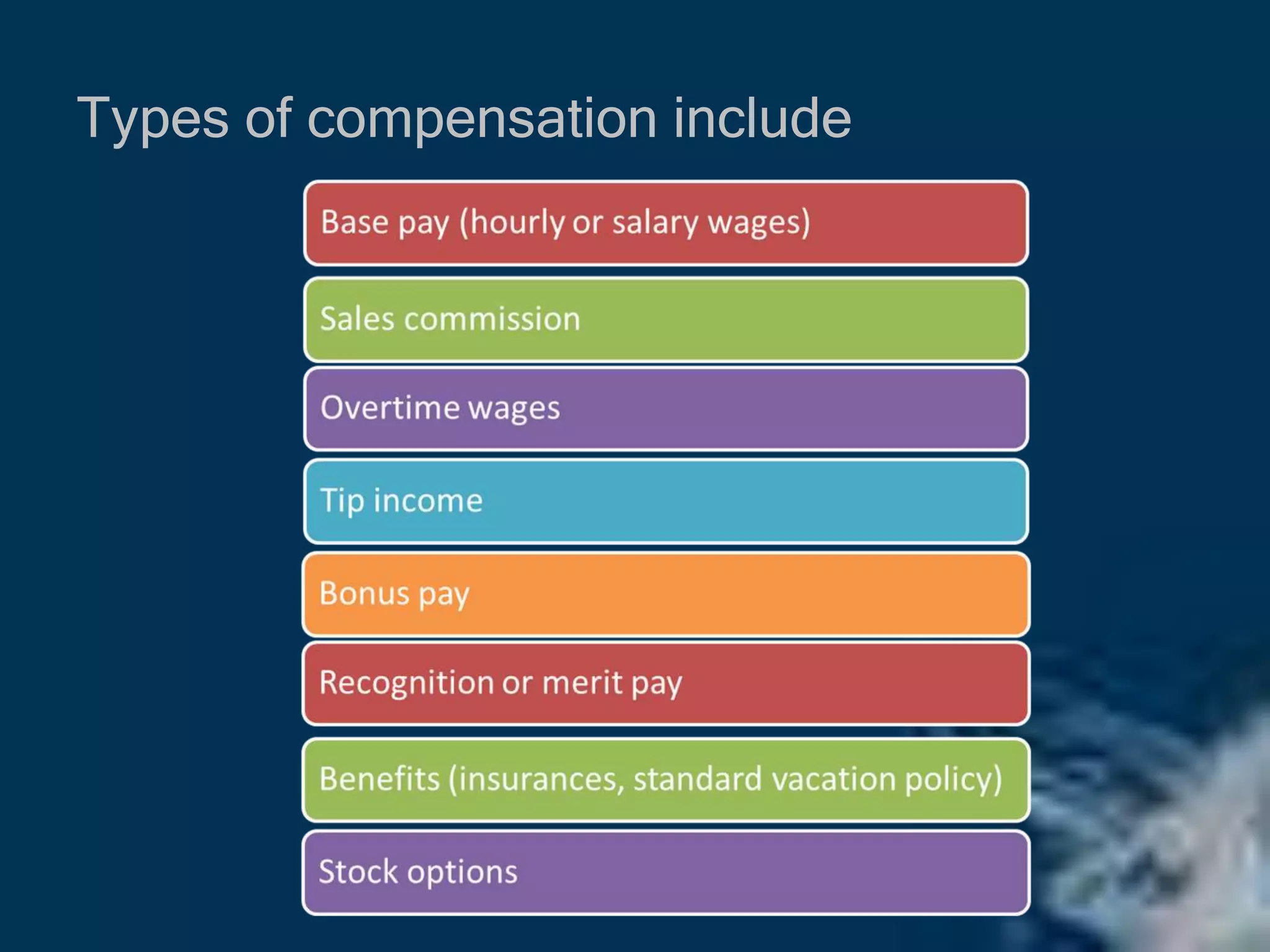
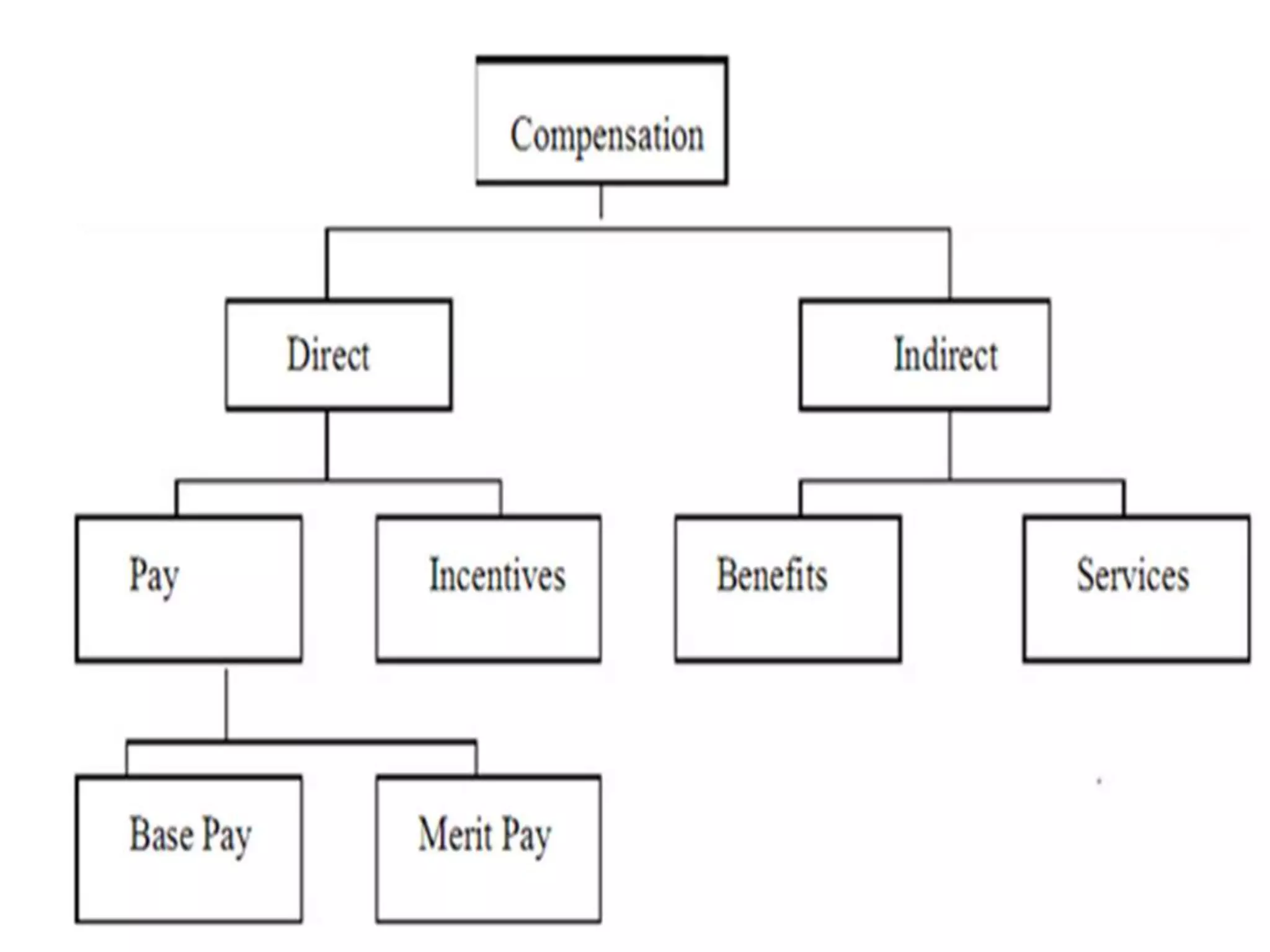
Types of compensation include
Compensation management
 Compensation management refers to all forms of financial
rewards received by employees. Employees of an
organisation use their overall efforts that need to be valued
financially.
 According to Michael Armstrong," Compensation
management is essentially about designing, implementing
and maintaining pay system which helps to improve
organizational performance."
Direct compensation:
Pay:
 Pay refers to the wages or salary received by the
employee. It can be base pay or merit pay.
 Base pay is hourly, weekly or monthly pay and merit pay
is performance based pay.
 It is an addition to the base pay.
Direct compensation
Incentive pay:
 Higher performance based reward is an incentive
compensation.
 They can give piece wages, commission, bonus, profit
sharing, the stock option.
 This is a variable kind of compensation and is found with
salaried staff to incentivize them for a specific objective
whether time or volume based.
Indirect compensation
Benefits:
 Benefits is an addition to pay.
 They are membership base financial rewards.
 They can pay for time not work, retirement benefits and
executive benefits.
Benefits:
 Pay for time not work is like paid vacation, holidays,
leaves, lunch breaks, bereavement.
 Retirement benefits are like pension, gratuity, insurance
payments, provident fund, medical care etc. and
executively is like a free newspaper, telephone rental,
rent, vehicle etc.
Services:
 Services are not cash payment but considered as
financial reward. It increases employee well-being.
 It comprises reward like housing, fooding, furnishing,
child care and children education expenses, company
car, aeroplane, discount on a purchase, credit card,
loans, free legal advice and counselling for financial
management and stock option scheme.
Conclusion
Most organization give compensation as a package. It
consists of pay plus benefits and services. Compensation
management must be flexible enough to get popularity in
this human resource management function area.
Compensation and reward management-types of compensation

Compensation and reward management-types of compensation

  • 1.
  • 2.
    What is compensation?  Compensation is the total cash and non-cash payments that you give to an employee in exchange for the work they do for your business.  It is typically one of the biggest expenses for businesses with employees. Compensation is more than an employee’s regular paid wages.  It also includes many other types of wages and benefits.
  • 3.
    Definition  Edwin BFlippo: “The function of compensation is defined as the adequate and equitable remuneration of personnel for their contributions to the organizational objectives.”  Benham: “Compensation is the value of work of the employees according to the agreement between employer and employee.”
  • 4.
  • 5.
    Compensation management  Compensationmanagement refers to all forms of financial rewards received by employees. Employees of an organisation use their overall efforts that need to be valued financially.  According to Michael Armstrong," Compensation management is essentially about designing, implementing and maintaining pay system which helps to improve organizational performance."
  • 7.
    Direct compensation: Pay:  Payrefers to the wages or salary received by the employee. It can be base pay or merit pay.  Base pay is hourly, weekly or monthly pay and merit pay is performance based pay.  It is an addition to the base pay.
  • 8.
    Direct compensation Incentive pay: Higher performance based reward is an incentive compensation.  They can give piece wages, commission, bonus, profit sharing, the stock option.  This is a variable kind of compensation and is found with salaried staff to incentivize them for a specific objective whether time or volume based.
  • 9.
    Indirect compensation Benefits:  Benefitsis an addition to pay.  They are membership base financial rewards.  They can pay for time not work, retirement benefits and executive benefits.
  • 10.
    Benefits:  Pay fortime not work is like paid vacation, holidays, leaves, lunch breaks, bereavement.  Retirement benefits are like pension, gratuity, insurance payments, provident fund, medical care etc. and executively is like a free newspaper, telephone rental, rent, vehicle etc.
  • 11.
    Services:  Services arenot cash payment but considered as financial reward. It increases employee well-being.  It comprises reward like housing, fooding, furnishing, child care and children education expenses, company car, aeroplane, discount on a purchase, credit card, loans, free legal advice and counselling for financial management and stock option scheme.
  • 12.
    Conclusion Most organization givecompensation as a package. It consists of pay plus benefits and services. Compensation management must be flexible enough to get popularity in this human resource management function area.