Traditional training
methods
Presentation by:Aditi Ambaskar
Shivam Gupta
Kaustubh Dave
Shonak Dey
Vaibhav Singh
Rathore
Traditional Training
• Presentation method
• Hands on method
• Group building method
1. Presentation Method
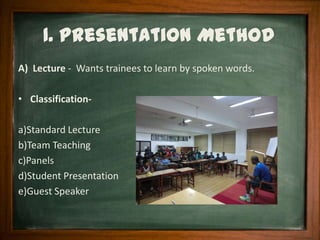
A) Lecture - Wants trainees to learn by spoken words.
• Classificationa)Standard Lecture
b)Team Teaching
c)Panels
d)Student Presentation
e)Guest Speaker
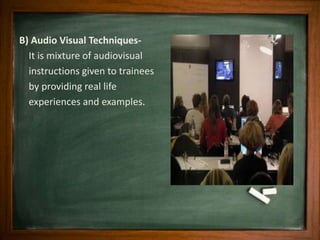
B) Audio Visual TechniquesIt is mixture of audiovisual
instructions given to trainees
by providing real life
experiences and examples.
2. Hands on method
Training methods that require the trainee to be involved
in learning.
It includes:•
•
•
•
•
•

On the job training
Simulations
Case studies
Business games
Role plays
Behavior modeling
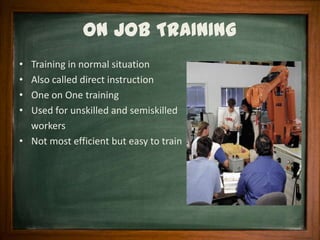
ON JOB TRAINING
•
•
•
•

Training in normal situation
Also called direct instruction
One on One training
Used for unskilled and semiskilled
workers
• Not most efficient but easy to train
Simulation
Simulation means imitation of a real life process using
computer or other technical device
• Types
I. Live
II. Virtual
III. constructive
Case studies
• Description about how employees or an organization dealt
with a difficult situation
• Trainees required to
– Analyze
– Actions
– Suggestions
Business game
Business game refers to simulation games that are used at an
educational tool for teaching business. Business games may
be carried out for various business training such as: general
management, finance, organizational behavior, human
resources etc.
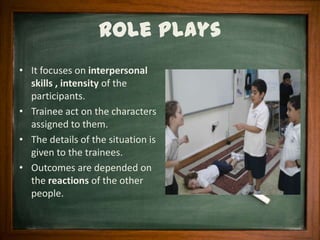
Role Plays
• It focuses on interpersonal
skills , intensity of the
participants.
• Trainee act on the characters
assigned to them.
• The details of the situation is
given to the trainees.
• Outcomes are depended on
the reactions of the other
people.
Behaviour Modelling
• Based on principle of social learning theory.
• Helps in teaching interpersonal and computer skills.
• It is appropriate for learning and behavioural skills
than factual information.
• Involves presenting trainees with the model who
demonstrate key behaviour.
3. Group Building Methods
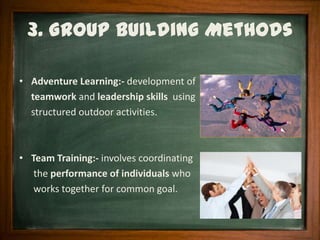
• Adventure Learning:- development of
teamwork and leadership skills using
structured outdoor activities.

• Team Training:- involves coordinating
the performance of individuals who
works together for common goal.
• Action learning:- involves giving leaders
or work groups an actual problem
having them work on solving it.

• Experimental training:- The trainees
are moved outside their comfort zones
but within limit so as not to reduce
trainee motivation or ability.
conclusion
Traditional training methods involves various
criteria's for employees working with a
instructor to review different situations that
occur considering how employees can deliver
their best.
disclaimer
This is prepared simply for practicing presentation-skills and
understanding “slideshare”’s online platform. All content is
simply for the learning purpose. We don’t claim accuracy or
complete information. All information is presented just for
overview. Any inadvertent use of company name, images are
unintentional. & if brought to notice, we will remove them.

Traditional training methods

  • 1.
    Traditional training methods Presentation by:AditiAmbaskar Shivam Gupta Kaustubh Dave Shonak Dey Vaibhav Singh Rathore
  • 2.
    Traditional Training • Presentationmethod • Hands on method • Group building method
  • 3.
    1. Presentation Method A)Lecture - Wants trainees to learn by spoken words. • Classificationa)Standard Lecture b)Team Teaching c)Panels d)Student Presentation e)Guest Speaker
  • 4.
    B) Audio VisualTechniquesIt is mixture of audiovisual instructions given to trainees by providing real life experiences and examples.
  • 5.
    2. Hands onmethod Training methods that require the trainee to be involved in learning. It includes:• • • • • • On the job training Simulations Case studies Business games Role plays Behavior modeling
  • 6.
    ON JOB TRAINING • • • • Trainingin normal situation Also called direct instruction One on One training Used for unskilled and semiskilled workers • Not most efficient but easy to train
  • 7.
    Simulation Simulation means imitationof a real life process using computer or other technical device • Types I. Live II. Virtual III. constructive
  • 8.
    Case studies • Descriptionabout how employees or an organization dealt with a difficult situation • Trainees required to – Analyze – Actions – Suggestions
  • 9.
    Business game Business gamerefers to simulation games that are used at an educational tool for teaching business. Business games may be carried out for various business training such as: general management, finance, organizational behavior, human resources etc.
  • 10.
    Role Plays • Itfocuses on interpersonal skills , intensity of the participants. • Trainee act on the characters assigned to them. • The details of the situation is given to the trainees. • Outcomes are depended on the reactions of the other people.
  • 11.
    Behaviour Modelling • Basedon principle of social learning theory. • Helps in teaching interpersonal and computer skills. • It is appropriate for learning and behavioural skills than factual information. • Involves presenting trainees with the model who demonstrate key behaviour.
  • 12.
    3. Group BuildingMethods • Adventure Learning:- development of teamwork and leadership skills using structured outdoor activities. • Team Training:- involves coordinating the performance of individuals who works together for common goal.
  • 13.
    • Action learning:-involves giving leaders or work groups an actual problem having them work on solving it. • Experimental training:- The trainees are moved outside their comfort zones but within limit so as not to reduce trainee motivation or ability.
  • 14.
    conclusion Traditional training methodsinvolves various criteria's for employees working with a instructor to review different situations that occur considering how employees can deliver their best.
  • 15.
    disclaimer This is preparedsimply for practicing presentation-skills and understanding “slideshare”’s online platform. All content is simply for the learning purpose. We don’t claim accuracy or complete information. All information is presented just for overview. Any inadvertent use of company name, images are unintentional. & if brought to notice, we will remove them.