-RAHUL KANTAK
   Migration is the movement of large number of
    animals from one place to another for various
    reasons like:

   -Food Gathering
   -Breeding
   -Temperature Adjustments
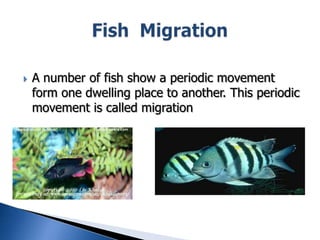
   A number of fish show a periodic movement
    form one dwelling place to another. This periodic
    movement is called migration
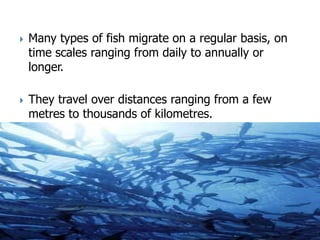
   Many types of fish migrate on a regular basis, on
    time scales ranging from daily to annually or
    longer.

   They travel over distances ranging from a few
    metres to thousands of kilometres.
   Daily : Mainly for food gathering.

   Annual : Mainly for reproduction.

   Generational : Parent migrate to release eggs &
    die, then there young once migrate to there
    home.
   When large numbers of fishes come together
    and move socially it is called shoaling.

   Sometimes migrating fishes exhibit high
    degree of coordination in their movements
    and carry out synchronized manoeuvres to
    produce different types of shapes. This is
    called schooling, as seen in tunas and
    sardines.
   Feeding or Alimental Migration

   Spawning Migration

   Juvenile Migration

   Recruitment Migration

   Seasonal Migration
   Takes place in fishes for feeding.

   In high populations fishes exhaust food resources
    in an area quickly and therefore must migrate
    constantly in search of new feeding resources.

   Salmons, cods and sword fish constantly migrate
    for food from one place to another in the sea.
   Takes place in breeding season in those fishes
    which have spawning grounds far away from
    feeding places.

    Migratory fishes such as eels and salmons and a
    large number of riverine fishes spawn in
    tributaries of river in hills and migrate in large
    number for laying eggs in these oxygen rich
    waters.
   Involves larval stages of fishes.


   These hatch in spawning grounds
    and must migrate long distances in
    order to reach the feeding habitats of
    their parents.
   Takes place when large number of larvae moves
    from nursery habitat to the habitat of adults which
    may sometimes be distinctly different.

    Adults of eels live in rivers in Europe and America
    but their larval stages live and grown in sea and
    migrate to reach rivers which may take one to two
    years.
   Takes place in fishes that inhabit arctic areas
    where in summer climate is conducive and food
    abundant but as winter approaches temperatures
    fall below zero and food becomes scarce.

   Hence fishes must migrate towards subtropical
    and tropical areas to escape extremes of weather
    conditions.
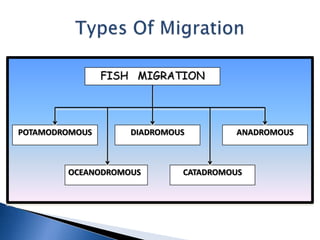
FISH MIGRATION


POTAMODROMOUS       DIADROMOUS        ANADROMOUS


        OCEANODROMOUS        CATADROMOUS
   When fishes migrate from one freshwater habitat to
    another in search of food or for spawning, it is called
    potamodromous migration.

   Fishes generally migrate for food on daily basis as the
    availability of food differs from place to place and from
    season to season.

   Fishes also must migrate to lay their eggs in places
    where oxygen concentration in water is more and where
    there is abundance of food for juveniles when they
    hatch from eggs.
   This migration is from sea water to sea water.

   There are no barriers within the sea and fishes
    have learned to migrate in order to take
    advantage of favourable conditions wherever they
    occur.

   Thus there are about 12,000 marine species that
    regularly migrate within sea water.
   When fishes can migrate from fresh water to sea
    or from sea to fresh water, it is called diadromous
    migration.

   There are about 120 species of fishes that are
    capable of overcoming osmotic barriers and
    migrate in these two different types of habitats.
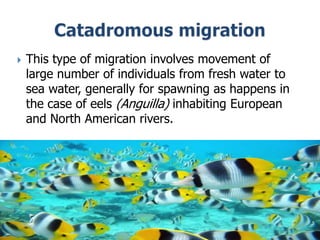
   This type of migration involves movement of
    large number of individuals from fresh water to
    sea water, generally for spawning as happens in
    the case of eels (Anguilla) inhabiting European
    and North American rivers.
   Adults of anadromous fishes live and feed in
    ocean waters but their spawning grounds lie in the
    tributaries of rivers.

   Salmons, sturgeons, Hilsa and lampreys are some
    of the marine fishes that undertake anadromous
    migration to spawn in rivers.
Fish migration

Fish migration

  • 1.
  • 2.
    Migration is the movement of large number of animals from one place to another for various reasons like:  -Food Gathering  -Breeding  -Temperature Adjustments
  • 3.
    A number of fish show a periodic movement form one dwelling place to another. This periodic movement is called migration
  • 4.
    Many types of fish migrate on a regular basis, on time scales ranging from daily to annually or longer.  They travel over distances ranging from a few metres to thousands of kilometres.
  • 5.
    Daily : Mainly for food gathering.  Annual : Mainly for reproduction.  Generational : Parent migrate to release eggs & die, then there young once migrate to there home.
  • 6.
    When large numbers of fishes come together and move socially it is called shoaling.  Sometimes migrating fishes exhibit high degree of coordination in their movements and carry out synchronized manoeuvres to produce different types of shapes. This is called schooling, as seen in tunas and sardines.
  • 7.
    Feeding or Alimental Migration  Spawning Migration  Juvenile Migration  Recruitment Migration  Seasonal Migration
  • 8.
    Takes place in fishes for feeding.  In high populations fishes exhaust food resources in an area quickly and therefore must migrate constantly in search of new feeding resources.  Salmons, cods and sword fish constantly migrate for food from one place to another in the sea.
  • 9.
    Takes place in breeding season in those fishes which have spawning grounds far away from feeding places.  Migratory fishes such as eels and salmons and a large number of riverine fishes spawn in tributaries of river in hills and migrate in large number for laying eggs in these oxygen rich waters.
  • 10.
    Involves larval stages of fishes.  These hatch in spawning grounds and must migrate long distances in order to reach the feeding habitats of their parents.
  • 11.
    Takes place when large number of larvae moves from nursery habitat to the habitat of adults which may sometimes be distinctly different.  Adults of eels live in rivers in Europe and America but their larval stages live and grown in sea and migrate to reach rivers which may take one to two years.
  • 12.
    Takes place in fishes that inhabit arctic areas where in summer climate is conducive and food abundant but as winter approaches temperatures fall below zero and food becomes scarce.  Hence fishes must migrate towards subtropical and tropical areas to escape extremes of weather conditions.
  • 13.
    FISH MIGRATION POTAMODROMOUS DIADROMOUS ANADROMOUS OCEANODROMOUS CATADROMOUS
  • 14.
    When fishes migrate from one freshwater habitat to another in search of food or for spawning, it is called potamodromous migration.  Fishes generally migrate for food on daily basis as the availability of food differs from place to place and from season to season.  Fishes also must migrate to lay their eggs in places where oxygen concentration in water is more and where there is abundance of food for juveniles when they hatch from eggs.
  • 15.
    This migration is from sea water to sea water.  There are no barriers within the sea and fishes have learned to migrate in order to take advantage of favourable conditions wherever they occur.  Thus there are about 12,000 marine species that regularly migrate within sea water.
  • 16.
    When fishes can migrate from fresh water to sea or from sea to fresh water, it is called diadromous migration.  There are about 120 species of fishes that are capable of overcoming osmotic barriers and migrate in these two different types of habitats.
  • 17.
    This type of migration involves movement of large number of individuals from fresh water to sea water, generally for spawning as happens in the case of eels (Anguilla) inhabiting European and North American rivers.
  • 18.
    Adults of anadromous fishes live and feed in ocean waters but their spawning grounds lie in the tributaries of rivers.  Salmons, sturgeons, Hilsa and lampreys are some of the marine fishes that undertake anadromous migration to spawn in rivers.