CHAPTER 9 Training Human Resources Section 3   Developing Human Resources
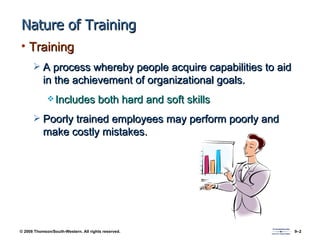
Nature of Training Training A process whereby people acquire capabilities to aid in the achievement of organizational goals. Includes both hard and soft skills Poorly trained employees may perform poorly and make costly mistakes.
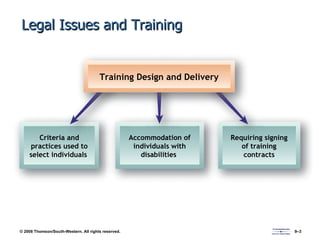
Legal Issues and Training Training Design and Delivery Criteria and practices used to select individuals  Accommodation of individuals with disabilities  Requiring signing of training contracts
Training and Organizational Strategy Benefits of Strategic Training HR and trainers partner with operating managers to solve problems, and to make contributions to organizational results. Managers are less likely to think that training alone can solve performance problems. Organization Competitiveness and Training Training makes organizations more competitive. Training helps retain valuable employees. Training helps accomplish organizational strategies.
Organizational Competitiveness and Training Knowledge Management and Training Is identifying and leveraging intellectual capital to create value and be competitive. Is a conscious effort to get the right knowledge to the right people at the right time so that it can be shared and put into action. Training as a Revenue Source Marketing training with or alongside products can contribute significantly to a firm’s revenues.
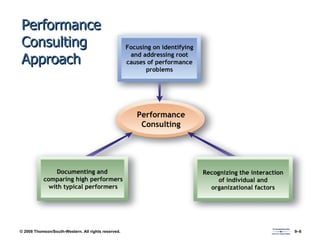
Performance Consulting Approach Focusing on identifying and addressing root causes of performance problems Documenting and  comparing high performers with typical performers Recognizing the interaction of individual and organizational factors Performance Consulting
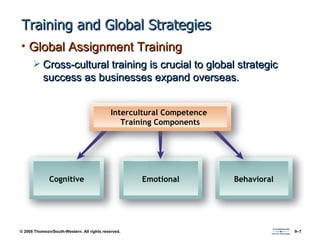
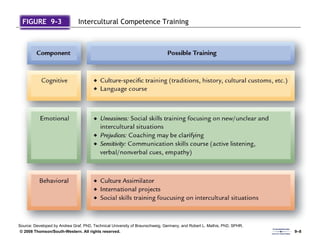
Training and Global Strategies Global Assignment Training Cross-cultural training is crucial to global strategic success as businesses expand overseas. Intercultural Competence  Training Components Cognitive Emotional Behavioral
FIGURE  9-3 Intercultural Competence Training Source: Developed by Andrea Graf, PhD, Technical University of Braunschweig, Germany, and Robert L. Mathis, PhD, SPHR.
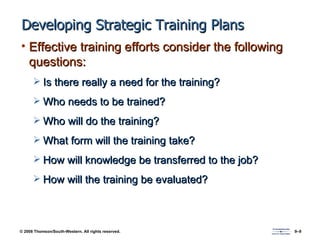
Developing Strategic Training Plans Effective training efforts consider the following questions: Is there really a need for the training? Who needs to be trained? Who will do the training? What form will the training take? How will knowledge be transferred to the job? How will the training be evaluated?
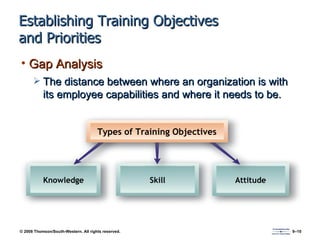
Establishing Training Objectives  and Priorities Gap Analysis The distance between where an organization is with its employee capabilities and where it needs to be. Types of Training Objectives Knowledge Skill Attitude
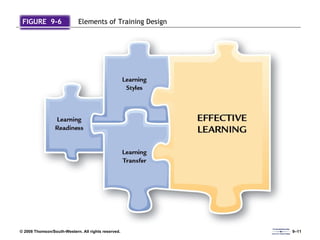
FIGURE  9-6 Elements of Training Design
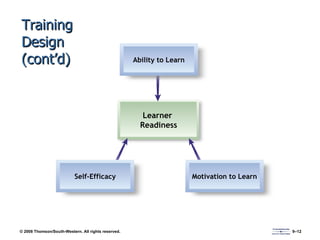
Training Design (cont’d) Learner  Readiness Self-Efficacy Motivation to Learn Ability to Learn
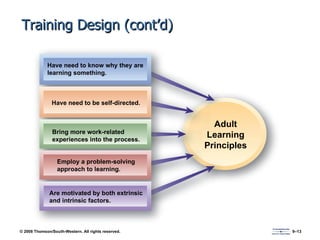
Training Design (cont’d) Have need to know why they are learning something. Have need to be self-directed. Bring more work-related experiences into the process. Employ a problem-solving approach to learning. Are motivated by both extrinsic and intrinsic factors.  Adult Learning Principles
Training Design (cont’d) Behavior Modeling Copying someone else’s behavior by observing how another person deals with a problem. Reinforcement Law of effect states that people tend to repeat behaviors that are rewarded and avoid behaviors that are punished. Immediate Confirmation Reinforcement and feedback are most effective when given as soon as possible after training.
Training Design (cont’d) Transfer of Training Occurs when trainees actually use on the job what they learned and maintain use of the learned material over time. Increasing the Transfer of training Offering trainees an overview of training content and process. Ensuring that the training mirrors the job context.
Internal Training Informal Training Training that occurs through interactions and feedback among employees. On-the-Job Training (OJT) Based on a guided form of training known as  job instruction training (JIT)  Problems with OJT Poorly-qualified or indifferent trainers Disruption of regular work Bad or incorrect habits passed on
Internal Training Cross-Training Is training people to do more than one job. Increases flexibility and development Challenges of Cross-Training Is not favored by employees Threatens unions with loss of job jurisdiction and broadening of jobs Requires different scheduling during training Causes loss of productivity as people learn
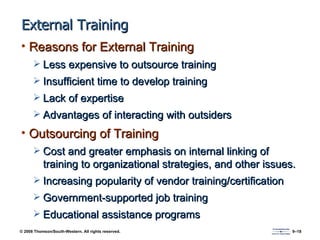
External Training Reasons for External Training Less expensive to outsource training Insufficient time to develop training Lack of expertise Advantages of interacting with outsiders Outsourcing of Training Cost and greater emphasis on internal linking of training to organizational strategies, and other issues. Increasing popularity of vendor training/certification Government-supported job training Educational assistance programs
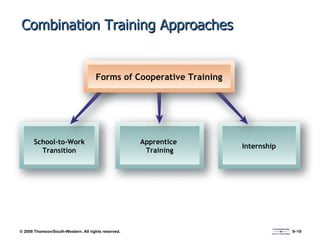
Combination Training Approaches Forms of Cooperative Training School-to-Work Transition Apprentice  Training Internship
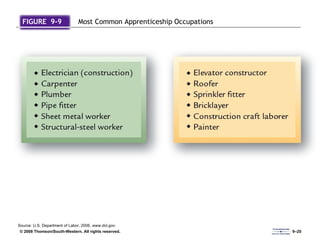
FIGURE  9-9 Most Common Apprenticeship Occupations Source: U.S. Department of Labor, 2006,  www.dol.gov.
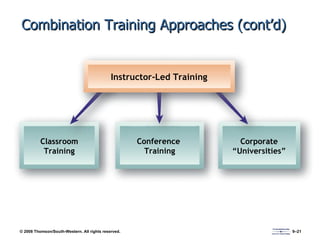
Combination Training Approaches (cont’d) Instructor-Led Training Classroom Training Conference  Training Corporate “Universities”
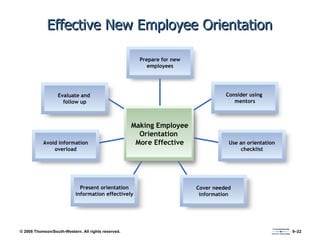
Effective New Employee Orientation Sample Sample Sample Sample Sample Sample Sample Prepare for new employees Consider using  mentors Use an orientation checklist Cover needed information Present orientation information effectively Avoid information overload Evaluate and  follow up Making Employee Orientation  More Effective
Training Evaluation Methods Cost-Benefit Analysis A comparison of costs and benefits associated with organizational training efforts Measurement of both the costs and the benefits may be difficult. Return on Investment (ROI) Analysis Benchmarking

Mathis 12e-ch09-sh

  • 1.
    CHAPTER 9 TrainingHuman Resources Section 3 Developing Human Resources
  • 2.
    Nature of TrainingTraining A process whereby people acquire capabilities to aid in the achievement of organizational goals. Includes both hard and soft skills Poorly trained employees may perform poorly and make costly mistakes.
  • 3.
    Legal Issues andTraining Training Design and Delivery Criteria and practices used to select individuals Accommodation of individuals with disabilities Requiring signing of training contracts
  • 4.
    Training and OrganizationalStrategy Benefits of Strategic Training HR and trainers partner with operating managers to solve problems, and to make contributions to organizational results. Managers are less likely to think that training alone can solve performance problems. Organization Competitiveness and Training Training makes organizations more competitive. Training helps retain valuable employees. Training helps accomplish organizational strategies.
  • 5.
    Organizational Competitiveness andTraining Knowledge Management and Training Is identifying and leveraging intellectual capital to create value and be competitive. Is a conscious effort to get the right knowledge to the right people at the right time so that it can be shared and put into action. Training as a Revenue Source Marketing training with or alongside products can contribute significantly to a firm’s revenues.
  • 6.
    Performance Consulting ApproachFocusing on identifying and addressing root causes of performance problems Documenting and comparing high performers with typical performers Recognizing the interaction of individual and organizational factors Performance Consulting
  • 7.
    Training and GlobalStrategies Global Assignment Training Cross-cultural training is crucial to global strategic success as businesses expand overseas. Intercultural Competence Training Components Cognitive Emotional Behavioral
  • 8.
    FIGURE 9-3Intercultural Competence Training Source: Developed by Andrea Graf, PhD, Technical University of Braunschweig, Germany, and Robert L. Mathis, PhD, SPHR.
  • 9.
    Developing Strategic TrainingPlans Effective training efforts consider the following questions: Is there really a need for the training? Who needs to be trained? Who will do the training? What form will the training take? How will knowledge be transferred to the job? How will the training be evaluated?
  • 10.
    Establishing Training Objectives and Priorities Gap Analysis The distance between where an organization is with its employee capabilities and where it needs to be. Types of Training Objectives Knowledge Skill Attitude
  • 11.
    FIGURE 9-6Elements of Training Design
  • 12.
    Training Design (cont’d)Learner Readiness Self-Efficacy Motivation to Learn Ability to Learn
  • 13.
    Training Design (cont’d)Have need to know why they are learning something. Have need to be self-directed. Bring more work-related experiences into the process. Employ a problem-solving approach to learning. Are motivated by both extrinsic and intrinsic factors. Adult Learning Principles
  • 14.
    Training Design (cont’d)Behavior Modeling Copying someone else’s behavior by observing how another person deals with a problem. Reinforcement Law of effect states that people tend to repeat behaviors that are rewarded and avoid behaviors that are punished. Immediate Confirmation Reinforcement and feedback are most effective when given as soon as possible after training.
  • 15.
    Training Design (cont’d)Transfer of Training Occurs when trainees actually use on the job what they learned and maintain use of the learned material over time. Increasing the Transfer of training Offering trainees an overview of training content and process. Ensuring that the training mirrors the job context.
  • 16.
    Internal Training InformalTraining Training that occurs through interactions and feedback among employees. On-the-Job Training (OJT) Based on a guided form of training known as job instruction training (JIT) Problems with OJT Poorly-qualified or indifferent trainers Disruption of regular work Bad or incorrect habits passed on
  • 17.
    Internal Training Cross-TrainingIs training people to do more than one job. Increases flexibility and development Challenges of Cross-Training Is not favored by employees Threatens unions with loss of job jurisdiction and broadening of jobs Requires different scheduling during training Causes loss of productivity as people learn
  • 18.
    External Training Reasonsfor External Training Less expensive to outsource training Insufficient time to develop training Lack of expertise Advantages of interacting with outsiders Outsourcing of Training Cost and greater emphasis on internal linking of training to organizational strategies, and other issues. Increasing popularity of vendor training/certification Government-supported job training Educational assistance programs
  • 19.
    Combination Training ApproachesForms of Cooperative Training School-to-Work Transition Apprentice Training Internship
  • 20.
    FIGURE 9-9Most Common Apprenticeship Occupations Source: U.S. Department of Labor, 2006, www.dol.gov.
  • 21.
    Combination Training Approaches(cont’d) Instructor-Led Training Classroom Training Conference Training Corporate “Universities”
  • 22.
    Effective New EmployeeOrientation Sample Sample Sample Sample Sample Sample Sample Prepare for new employees Consider using mentors Use an orientation checklist Cover needed information Present orientation information effectively Avoid information overload Evaluate and follow up Making Employee Orientation More Effective
  • 23.
    Training Evaluation MethodsCost-Benefit Analysis A comparison of costs and benefits associated with organizational training efforts Measurement of both the costs and the benefits may be difficult. Return on Investment (ROI) Analysis Benchmarking