Overview of
Performance
Reviews
Performance Management Defined
• A process to ensure that goals are consistently
  being met in an effective and efficient manner.
• Performance management looks at:
   – Job descriptions
   – Standards, dimensions, measurements
   – Performance expectations
   – Frequent and ongoing dialogue
   – Process to monitor and evaluate
   – Appraisal forms and interviews
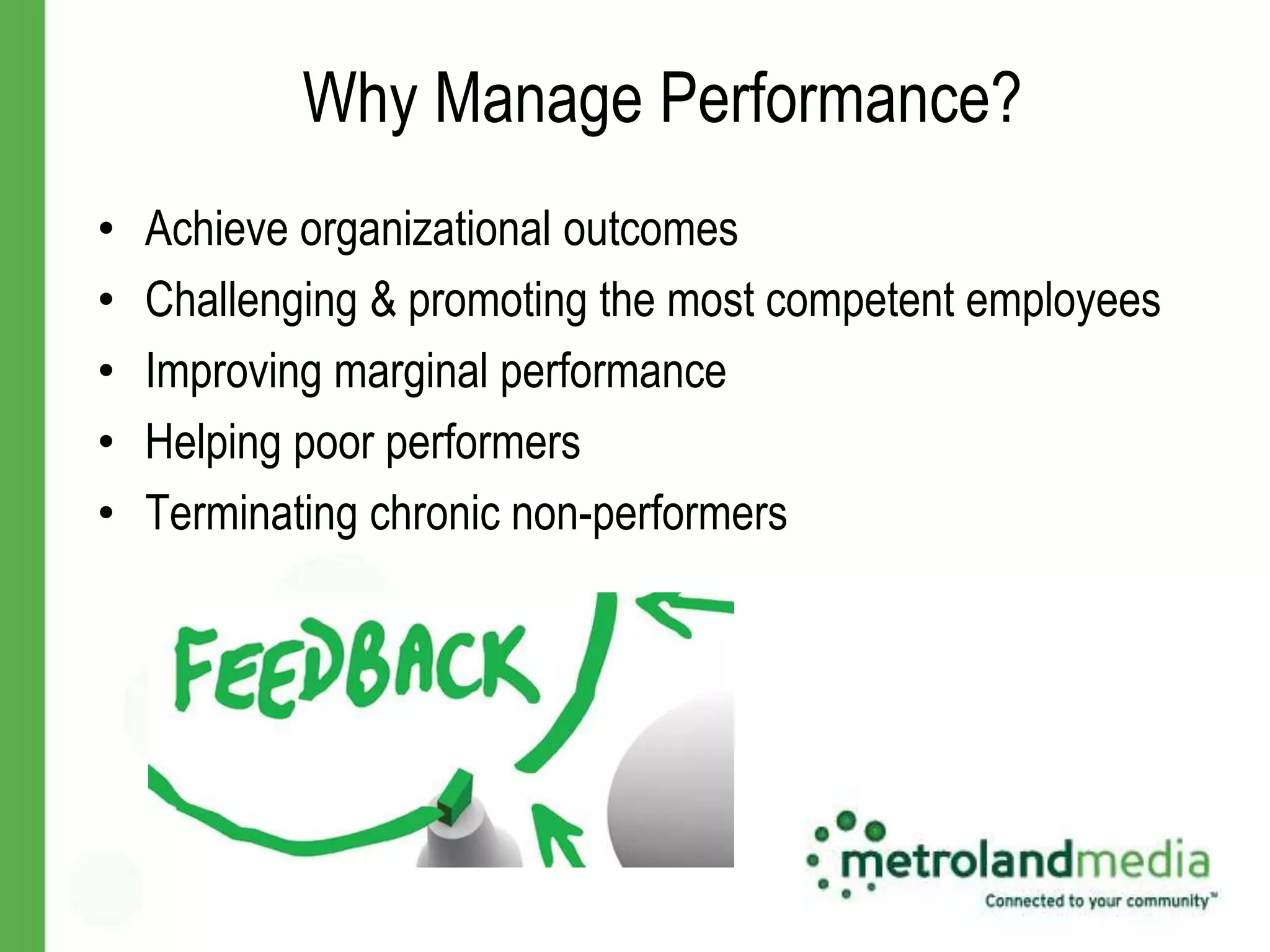
Why Manage Performance?
•   Achieve organizational outcomes
•   Challenging & promoting the most competent employees
•   Improving marginal performance
•   Helping poor performers
•   Terminating chronic non-performers
Purpose of Performance Development
• Alignment of individual performance objectives with
  corporate objectives
• Increased communication between Manager and
  Employee on performance
• Employee awareness of strengths and areas for
  improvement
Purpose of Performance Development

•   Fair and consistent process
•   Improved individual performance
•   Consistently strong individual and team performance
•   Identifies further areas for talent development and
    informs succession planning (ensuring a talent pool
    within Metroland to avoid skills shortages)
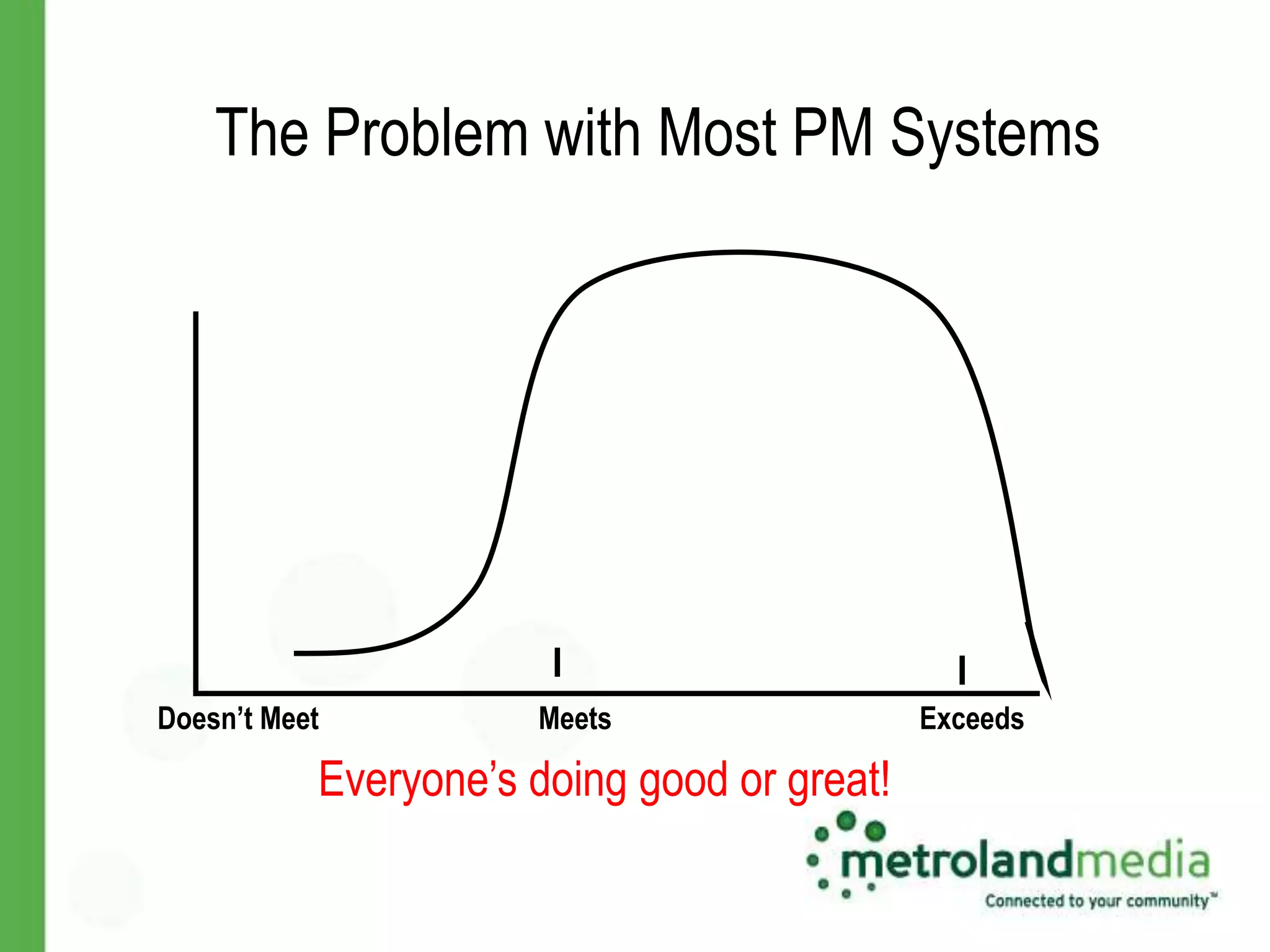
The Problem with Most PM Systems


Doesn’t Meet          Meets                  Exceeds

           Everyone’s doing good or great!
Shortcomings of Traditional Approach


• 85 to 95 percent of employees are rated at or above average
• No link to tools to remediate poor performance
• Managers are not good at giving critical feedback
• Managers inflate their ratings & hold back negative
  opinions
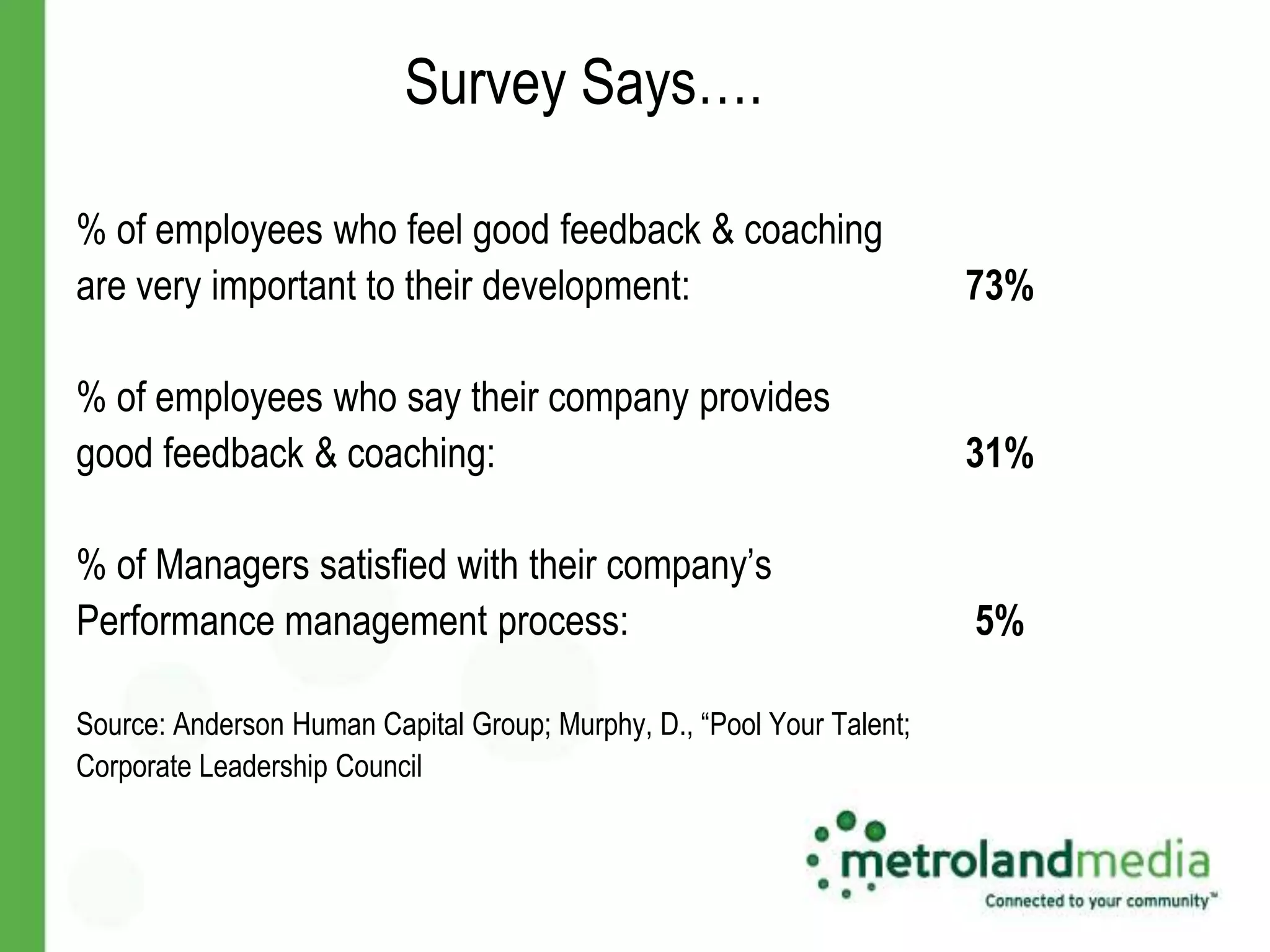
Survey Says….

% of employees who feel good feedback & coaching
are very important to their development:                               73%

% of employees who say their company provides
good feedback & coaching:                                              31%

% of Managers satisfied with their company’s
Performance management process:                                        5%

Source: Anderson Human Capital Group; Murphy, D., “Pool Your Talent;
Corporate Leadership Council
Why This Approach to Performance
              Management?
• Achieve organizational outcomes with regard to
  products, services and profitability
• Increase employee engagement by clearly articulating
  organizational goals and setting realistic performance
  expectations
• Foster a culture of continuous improvement
• Create a reputation for personal and career development

Revised Overview Of Performance Reviews

  • 1.
  • 2.
    Performance Management Defined •A process to ensure that goals are consistently being met in an effective and efficient manner. • Performance management looks at: – Job descriptions – Standards, dimensions, measurements – Performance expectations – Frequent and ongoing dialogue – Process to monitor and evaluate – Appraisal forms and interviews
  • 3.
    Why Manage Performance? • Achieve organizational outcomes • Challenging & promoting the most competent employees • Improving marginal performance • Helping poor performers • Terminating chronic non-performers
  • 4.
    Purpose of PerformanceDevelopment • Alignment of individual performance objectives with corporate objectives • Increased communication between Manager and Employee on performance • Employee awareness of strengths and areas for improvement
  • 5.
    Purpose of PerformanceDevelopment • Fair and consistent process • Improved individual performance • Consistently strong individual and team performance • Identifies further areas for talent development and informs succession planning (ensuring a talent pool within Metroland to avoid skills shortages)
  • 6.
    The Problem withMost PM Systems Doesn’t Meet Meets Exceeds Everyone’s doing good or great!
  • 7.
    Shortcomings of TraditionalApproach • 85 to 95 percent of employees are rated at or above average • No link to tools to remediate poor performance • Managers are not good at giving critical feedback • Managers inflate their ratings & hold back negative opinions
  • 8.
    Survey Says…. % ofemployees who feel good feedback & coaching are very important to their development: 73% % of employees who say their company provides good feedback & coaching: 31% % of Managers satisfied with their company’s Performance management process: 5% Source: Anderson Human Capital Group; Murphy, D., “Pool Your Talent; Corporate Leadership Council
  • 9.
    Why This Approachto Performance Management? • Achieve organizational outcomes with regard to products, services and profitability • Increase employee engagement by clearly articulating organizational goals and setting realistic performance expectations • Foster a culture of continuous improvement • Create a reputation for personal and career development