
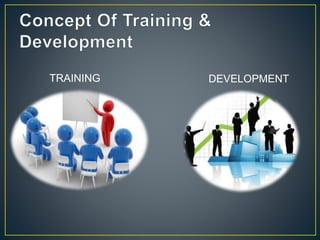
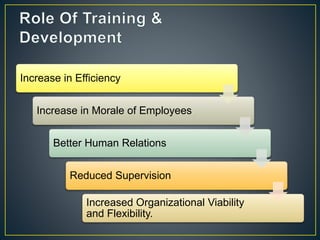
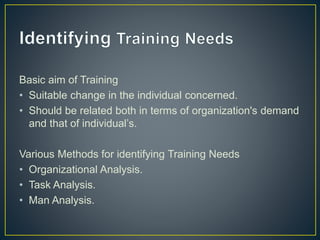
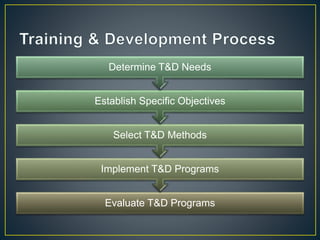
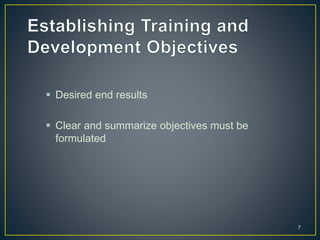
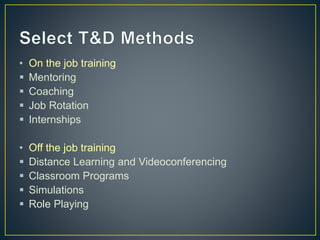
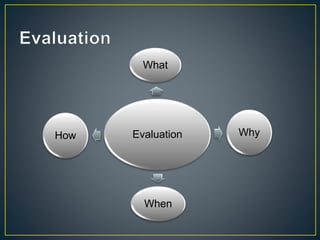
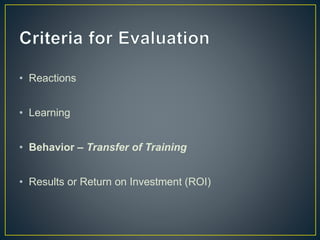


This document outlines the training and development process in an organization. It discusses how training can increase efficiency, morale, and flexibility while reducing supervision. It also describes the basic aim of training to suit organizational and individual needs. Various methods for identifying training needs include organizational, task, and man analysis. The document then covers establishing objectives, determining needs, selecting training methods, implementing programs, and evaluating their effectiveness. It provides examples of on-the-job and off-the-job training methods and stresses the importance of evaluation.


