TRADITIONAL
TRAINING
METHODS
Several studies
have shown that
most workplace
learning doesn’t
occur through
formal or programs.
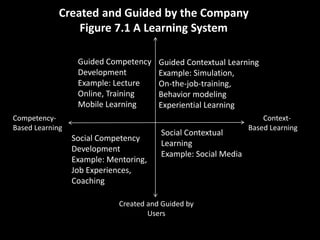
Created and Guided by the Company
Figure 7.1 A Learning System
Guided Competency
Development
Example: Lecture
Online, Training
Mobile Learning
Competency-
Based Learning
Guided Contextual Learning
Example: Simulation,
On-the-job-training,
Behavior modeling
Experiential Learning
Context-
Based Learning
Social Competency
Development
Example: Mentoring,
Job Experiences,
Coaching
Social Contextual
Learning
Example: Social Media
Created and Guided by
Users
This chapter focuses
on training methods
which require an
instructor or a
facilitator and
involve face to face
interaction between
trainees.
ICE BREAKER
T P R E O P A L D E C I
O T U I N T R Y
7 LETTERS
THE CORRECT ANSWER IS:
T R A D I T I O N A L
PRESENTATION METHODS
• are methods in which trainees
are passive recipients of
information.
• this information may include
facts, processes, and problem
solving methods.
LECTURE
In a lecture trainers
communicate through
spoken words what they
want the trainees to
learn.
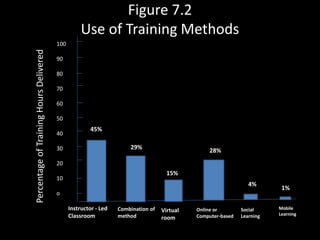
45%
29%
15%
28%
4%
1%
Instructor - Led
Classroom
Combination of
method
Virtual
room
Online or
Computer-based
Social
Learning
Mobile
Learning
100
90
80
70
60
50
40
30
20
10
o
PercentageofTrainingHoursDelivered
Figure 7.2
Use of Training Methods
Audio Visual Techniques
• Audiovisual instruction
includes overheads, slides and
video.
• Video is use for improving
communication skills,
interviewing skills, and
customer-service skills.
HANDS-ON METHODS
• Are training methods that
require the trainee to be
actively involve in
training.
• These methods includes
OJT, simulations, case
studies, business games,
role playing and behavior
modeling.
ON THE JOB TRAINING (OJT)
• Refers to new or
inexperienced employees
learning in the work setting
and during work by observing
peers or managers performing
the job and then trying to
imitate their behavior.
Effective OJT Training includes;
• A policy statement that describes the
purpose of OJT and emphasizes the
company’s support for it.
• A clear specification of who is accountable
for including OJT. If managers conduct OJT,
this is mentioned in their job descriptions
and is part of their performance evaluation.
Effective OJT Training includes;
• A thorough review of OJT practices.
• Training of managers and peers in the
principle of structured OJT.
• Availability of lesson plans, checklists,
procedure manuals, training manuals,
learning contract and progress reports
for use by employees who conduct OJT.
• Evaluation of employees’ levels of basic
skill.
SELF-DIRECTED
LEARNING
Has employees take responsibility
for all aspects of learning, including
when it is conducted and who will
be involved.
APPRENTICESHIP
A work-study training method with
both on-the-job and classroom
training.
SIMULATIONS
A training method that represents a real-
life situation, with trainees’ decisions
resulting in outcomes that mirror what
would happen if they were on the job.
Case study
A description about how employees or an
organization dealt with a difficult
situation.
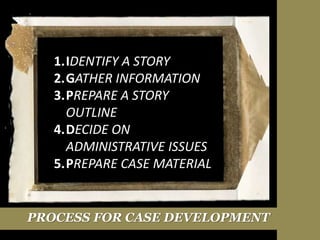
1.IDENTIFY A STORY
2.GATHER INFORMATION
3.PREPARE A STORY
OUTLINE
4.DECIDE ON
ADMINISTRATIVE ISSUES
5.PREPARE CASE MATERIAL
PROCESS FOR CASE DEVELOPMENT
Team Training
 Refers to training that is designed to improve
team effectiveness.
• There are many different types of teams in
companies, including production teams,
service teams, committees, project teams,
and management teams.
• Teamwork tends to be episodic.
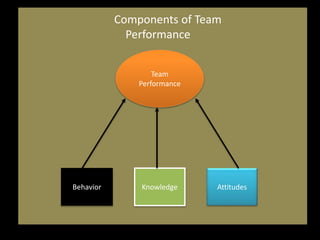
Team
Performance
Behavior Knowledge Attitudes
Components of Team
Performance
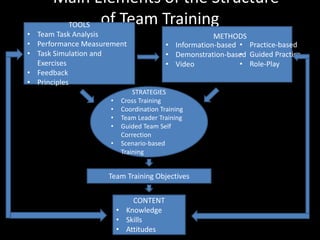
Main Elements of the Structure
of Team TrainingTOOLS
• Team Task Analysis
• Performance Measurement
• Task Simulation and
Exercises
• Feedback
• Principles
• Information-based
• Demonstration-based
• Video
STRATEGIES
• Cross Training
• Coordination Training
• Team Leader Training
• Guided Team Self
Correction
• Scenario-based
Training
Team Training Objectives
CONTENT
• Knowledge
• Skills
• Attitudes
• Practice-based
• Guided Practice
• Role-Play
METHODS
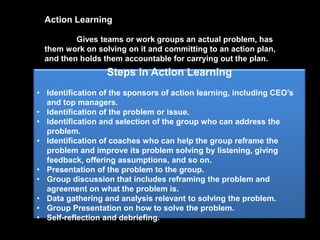
Action Learning
Gives teams or work groups an actual problem, has
them work on solving on it and committing to an action plan,
and then holds them accountable for carrying out the plan.
Steps in Action Learning
• Identification of the sponsors of action learning, including CEO’s
and top managers.
• Identification of the problem or issue.
• Identification and selection of the group who can address the
problem.
• Identification of coaches who can help the group reframe the
problem and improve its problem solving by listening, giving
feedback, offering assumptions, and so on.
• Presentation of the problem to the group.
• Group discussion that includes reframing the problem and
agreement on what the problem is.
• Data gathering and analysis relevant to solving the problem.
• Group Presentation on how to solve the problem.
• Self-reflection and debriefing.
Six Sigma-Black Belt Training and
Kaizen
• Six Sigma and Kaizen, Black Belt
Training programs, involve principles of
action learning.
• Six Sigma and Kaizen provide employees
with measurement and statistical tools to
help reduce defects to cut costs.
• There are several levels of Six Sigma
Training, resulting in employees
becoming certified as green belts,
champions, or black belts.
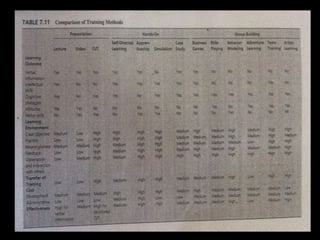
Choosing a Training Method
As a trainer or manager, you will likely
be asked to choose a training method given
the large number of training methods
available to you, this task may seem
difficult. One way to choose a training
method is to compare methods.
traditional training methods

traditional training methods

  • 1.
  • 2.
    Several studies have shownthat most workplace learning doesn’t occur through formal or programs.
  • 3.
    Created and Guidedby the Company Figure 7.1 A Learning System Guided Competency Development Example: Lecture Online, Training Mobile Learning Competency- Based Learning Guided Contextual Learning Example: Simulation, On-the-job-training, Behavior modeling Experiential Learning Context- Based Learning Social Competency Development Example: Mentoring, Job Experiences, Coaching Social Contextual Learning Example: Social Media Created and Guided by Users
  • 4.
    This chapter focuses ontraining methods which require an instructor or a facilitator and involve face to face interaction between trainees.
  • 5.
    ICE BREAKER T PR E O P A L D E C I O T U I N T R Y 7 LETTERS
  • 6.
    THE CORRECT ANSWERIS: T R A D I T I O N A L
  • 7.
    PRESENTATION METHODS • aremethods in which trainees are passive recipients of information. • this information may include facts, processes, and problem solving methods.
  • 8.
    LECTURE In a lecturetrainers communicate through spoken words what they want the trainees to learn.
  • 9.
    45% 29% 15% 28% 4% 1% Instructor - Led Classroom Combinationof method Virtual room Online or Computer-based Social Learning Mobile Learning 100 90 80 70 60 50 40 30 20 10 o PercentageofTrainingHoursDelivered Figure 7.2 Use of Training Methods
  • 10.
    Audio Visual Techniques •Audiovisual instruction includes overheads, slides and video. • Video is use for improving communication skills, interviewing skills, and customer-service skills.
  • 11.
    HANDS-ON METHODS • Aretraining methods that require the trainee to be actively involve in training. • These methods includes OJT, simulations, case studies, business games, role playing and behavior modeling.
  • 12.
    ON THE JOBTRAINING (OJT) • Refers to new or inexperienced employees learning in the work setting and during work by observing peers or managers performing the job and then trying to imitate their behavior.
  • 13.
    Effective OJT Trainingincludes; • A policy statement that describes the purpose of OJT and emphasizes the company’s support for it. • A clear specification of who is accountable for including OJT. If managers conduct OJT, this is mentioned in their job descriptions and is part of their performance evaluation.
  • 14.
    Effective OJT Trainingincludes; • A thorough review of OJT practices. • Training of managers and peers in the principle of structured OJT. • Availability of lesson plans, checklists, procedure manuals, training manuals, learning contract and progress reports for use by employees who conduct OJT. • Evaluation of employees’ levels of basic skill.
  • 15.
    SELF-DIRECTED LEARNING Has employees takeresponsibility for all aspects of learning, including when it is conducted and who will be involved.
  • 16.
    APPRENTICESHIP A work-study trainingmethod with both on-the-job and classroom training.
  • 17.
    SIMULATIONS A training methodthat represents a real- life situation, with trainees’ decisions resulting in outcomes that mirror what would happen if they were on the job.
  • 18.
    Case study A descriptionabout how employees or an organization dealt with a difficult situation.
  • 19.
    1.IDENTIFY A STORY 2.GATHERINFORMATION 3.PREPARE A STORY OUTLINE 4.DECIDE ON ADMINISTRATIVE ISSUES 5.PREPARE CASE MATERIAL PROCESS FOR CASE DEVELOPMENT
  • 20.
    Team Training  Refersto training that is designed to improve team effectiveness. • There are many different types of teams in companies, including production teams, service teams, committees, project teams, and management teams. • Teamwork tends to be episodic.
  • 21.
  • 22.
    Main Elements ofthe Structure of Team TrainingTOOLS • Team Task Analysis • Performance Measurement • Task Simulation and Exercises • Feedback • Principles • Information-based • Demonstration-based • Video STRATEGIES • Cross Training • Coordination Training • Team Leader Training • Guided Team Self Correction • Scenario-based Training Team Training Objectives CONTENT • Knowledge • Skills • Attitudes • Practice-based • Guided Practice • Role-Play METHODS
  • 23.
    Action Learning Gives teamsor work groups an actual problem, has them work on solving on it and committing to an action plan, and then holds them accountable for carrying out the plan. Steps in Action Learning • Identification of the sponsors of action learning, including CEO’s and top managers. • Identification of the problem or issue. • Identification and selection of the group who can address the problem. • Identification of coaches who can help the group reframe the problem and improve its problem solving by listening, giving feedback, offering assumptions, and so on. • Presentation of the problem to the group. • Group discussion that includes reframing the problem and agreement on what the problem is. • Data gathering and analysis relevant to solving the problem. • Group Presentation on how to solve the problem. • Self-reflection and debriefing.
  • 24.
    Six Sigma-Black BeltTraining and Kaizen • Six Sigma and Kaizen, Black Belt Training programs, involve principles of action learning. • Six Sigma and Kaizen provide employees with measurement and statistical tools to help reduce defects to cut costs. • There are several levels of Six Sigma Training, resulting in employees becoming certified as green belts, champions, or black belts.
  • 25.
    Choosing a TrainingMethod As a trainer or manager, you will likely be asked to choose a training method given the large number of training methods available to you, this task may seem difficult. One way to choose a training method is to compare methods.