Training and development
 Environmental change
 Organizational complexity
 Human relations
 Change in job assignment
 To match employee specification with job
requirements and organization needs
 Training require to the process of imparting specific skill.
 Training defined as the organized procedure by which people
learn knowledge or/ skills for a definite purpose.
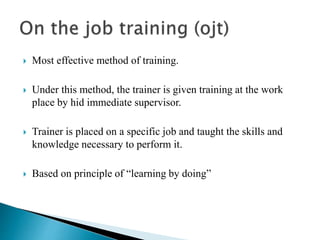
 Most effective method of training.
 Under this method, the trainer is given training at the work
place by hid immediate supervisor.
 Trainer is placed on a specific job and taught the skills and
knowledge necessary to perform it.
 Based on principle of “learning by doing”
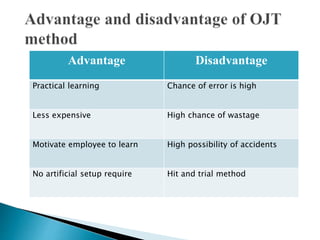
Advantage Disadvantage
Practical learning Chance of error is high
Less expensive High chance of wastage
Motivate employee to learn High possibility of accidents
No artificial setup require Hit and trial method
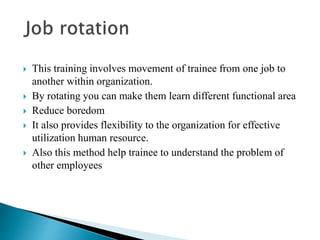
 This training involves movement of trainee from one job to
another within organization.
 By rotating you can make them learn different functional area
 Reduce boredom
 It also provides flexibility to the organization for effective
utilization human resource.
 Also this method help trainee to understand the problem of
other employees
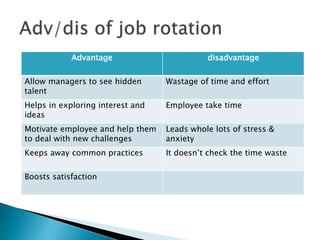
Advantage disadvantage
Allow managers to see hidden
talent
Wastage of time and effort
Helps in exploring interest and
ideas
Employee take time
Motivate employee and help them
to deal with new challenges
Leads whole lots of stress &
anxiety
Keeps away common practices It doesn’t check the time waste
Boosts satisfaction
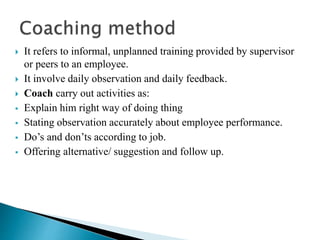
 It refers to informal, unplanned training provided by supervisor
or peers to an employee.
 It involve daily observation and daily feedback.
 Coach carry out activities as:
 Explain him right way of doing thing
 Stating observation accurately about employee performance.
 Do’s and don’ts according to job.
 Offering alternative/ suggestion and follow up.
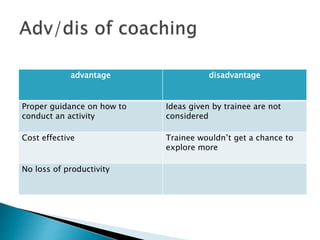
advantage disadvantage
Proper guidance on how to
conduct an activity
Ideas given by trainee are not
considered
Cost effective Trainee wouldn’t get a chance to
explore more
No loss of productivity
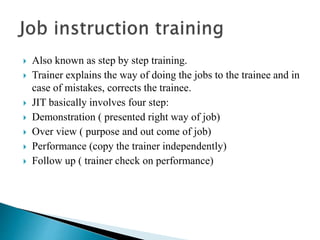
 Also known as step by step training.
 Trainer explains the way of doing the jobs to the trainee and in
case of mistakes, corrects the trainee.
 JIT basically involves four step:
 Demonstration ( presented right way of job)
 Over view ( purpose and out come of job)
 Performance (copy the trainer independently)
 Follow up ( trainer check on performance)
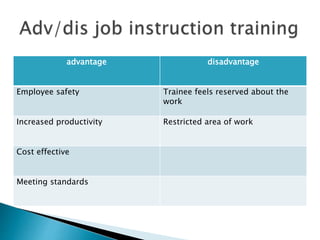
advantage disadvantage
Employee safety Trainee feels reserved about the
work
Increased productivity Restricted area of work
Cost effective
Meeting standards
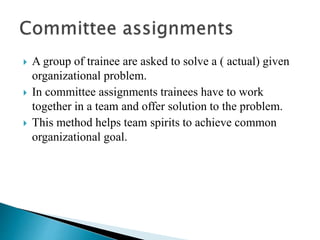
 A group of trainee are asked to solve a ( actual) given
organizational problem.
 In committee assignments trainees have to work
together in a team and offer solution to the problem.
 This method helps team spirits to achieve common
organizational goal.
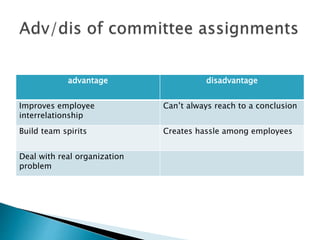
advantage disadvantage
Improves employee
interrelationship
Can’t always reach to a conclusion
Build team spirits Creates hassle among employees
Deal with real organization
problem
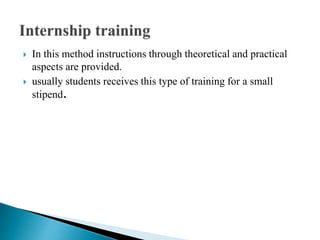
 In this method instructions through theoretical and practical
aspects are provided.
 usually students receives this type of training for a small
stipend.
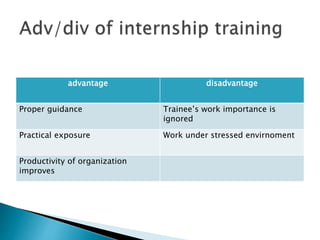
advantage disadvantage
Proper guidance Trainee’s work importance is
ignored
Practical exposure Work under stressed envirnoment
Productivity of organization
improves
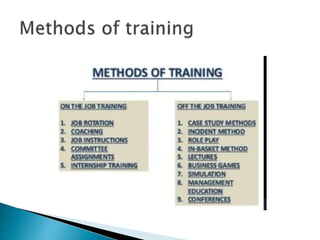
 The method of training which are adopted for the
development of employee away from field of the job.
 Its generally for a specific time, depending upon job
nature.
 Trainee feel relaxed as there are no pressure of doing
work.
 Same as classroom learning.
 This include both knowledge and skill
 It deals with any problem confronted by a business
which can be solved by an employee.
 The trainee is given a opportunity to analyze the case
and come with all possible solutions
 This method can enhance analytic and critical
thinking of employee
 Incidents already occurred are presented in front of
trainee as real life situation
 Hey are asked to take decisions individually.
 Analyze the incident with all aspects
 Later, entire group discuss the incidents and take the
final decision after group discussions.
 In this case situation is given by the trainer to trainee
 Trainer asked you to act in the given situation.
 Sometime script is also given, and sometimes you
need to write the script.
 The idea is to make trainee feel and play the role
allotted to them and learn accordingly.
 The employee are given information about an
imaginary company , its activities and products and
all data related to the firm.
 the trainee ( employee under training) has to make
notes, delegate task and prepare schedules within a
specified time.
 They can develop situational judgments and quick
decision making skills of employees.
 This will be suitable method when the numbers of
trainees are quite large.
 Lectures can be very much helpful in explaining the
concepts and principles very clearly
 And face to fact interaction is very much possible.
 Experience trainer can make lectures really effective
 Employee divided into groups.
 Each group has to discuss about various activities and
functions of an imaginary organization.
 They will discuss and decide about various aspect
like production , promotion etc
 This gives result in cooperative decision making
process.
 If your team wins , you could learn why we better
than other.
 If not, u can learn you weaknesses.
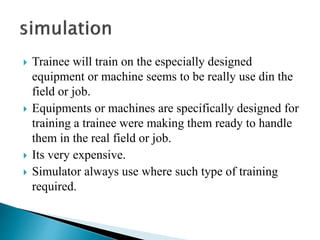
 Trainee will train on the especially designed
equipment or machine seems to be really use din the
field or job.
 Equipments or machines are specifically designed for
training a trainee were making them ready to handle
them in the real field or job.
 Its very expensive.
 Simulator always use where such type of training
required.
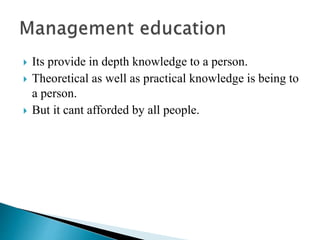
 Its provide in depth knowledge to a person.
 Theoretical as well as practical knowledge is being to
a person.
 But it cant afforded by all people.
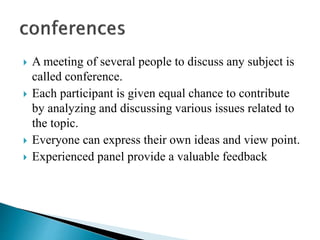
 A meeting of several people to discuss any subject is
called conference.
 Each participant is given equal chance to contribute
by analyzing and discussing various issues related to
the topic.
 Everyone can express their own ideas and view point.
 Experienced panel provide a valuable feedback
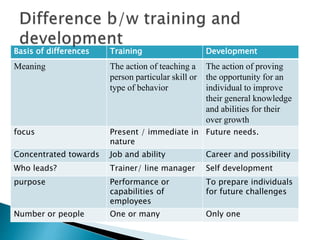
Basis of differences Training Development
Meaning The action of teaching a
person particular skill or
type of behavior
The action of proving
the opportunity for an
individual to improve
their general knowledge
and abilities for their
over growth
focus Present / immediate in
nature
Future needs.
Concentrated towards Job and ability Career and possibility
Who leads? Trainer/ line manager Self development
purpose Performance or
capabilities of
employees
To prepare individuals
for future challenges
Number or people One or many Only one

Method of Training chp 5.pptx

  • 1.
  • 2.
     Environmental change Organizational complexity  Human relations  Change in job assignment  To match employee specification with job requirements and organization needs
  • 3.
     Training requireto the process of imparting specific skill.  Training defined as the organized procedure by which people learn knowledge or/ skills for a definite purpose.
  • 5.
     Most effectivemethod of training.  Under this method, the trainer is given training at the work place by hid immediate supervisor.  Trainer is placed on a specific job and taught the skills and knowledge necessary to perform it.  Based on principle of “learning by doing”
  • 6.
    Advantage Disadvantage Practical learningChance of error is high Less expensive High chance of wastage Motivate employee to learn High possibility of accidents No artificial setup require Hit and trial method
  • 7.
     This traininginvolves movement of trainee from one job to another within organization.  By rotating you can make them learn different functional area  Reduce boredom  It also provides flexibility to the organization for effective utilization human resource.  Also this method help trainee to understand the problem of other employees
  • 8.
    Advantage disadvantage Allow managersto see hidden talent Wastage of time and effort Helps in exploring interest and ideas Employee take time Motivate employee and help them to deal with new challenges Leads whole lots of stress & anxiety Keeps away common practices It doesn’t check the time waste Boosts satisfaction
  • 9.
     It refersto informal, unplanned training provided by supervisor or peers to an employee.  It involve daily observation and daily feedback.  Coach carry out activities as:  Explain him right way of doing thing  Stating observation accurately about employee performance.  Do’s and don’ts according to job.  Offering alternative/ suggestion and follow up.
  • 10.
    advantage disadvantage Proper guidanceon how to conduct an activity Ideas given by trainee are not considered Cost effective Trainee wouldn’t get a chance to explore more No loss of productivity
  • 11.
     Also knownas step by step training.  Trainer explains the way of doing the jobs to the trainee and in case of mistakes, corrects the trainee.  JIT basically involves four step:  Demonstration ( presented right way of job)  Over view ( purpose and out come of job)  Performance (copy the trainer independently)  Follow up ( trainer check on performance)
  • 12.
    advantage disadvantage Employee safetyTrainee feels reserved about the work Increased productivity Restricted area of work Cost effective Meeting standards
  • 13.
     A groupof trainee are asked to solve a ( actual) given organizational problem.  In committee assignments trainees have to work together in a team and offer solution to the problem.  This method helps team spirits to achieve common organizational goal.
  • 14.
    advantage disadvantage Improves employee interrelationship Can’talways reach to a conclusion Build team spirits Creates hassle among employees Deal with real organization problem
  • 15.
     In thismethod instructions through theoretical and practical aspects are provided.  usually students receives this type of training for a small stipend.
  • 16.
    advantage disadvantage Proper guidanceTrainee’s work importance is ignored Practical exposure Work under stressed envirnoment Productivity of organization improves
  • 17.
     The methodof training which are adopted for the development of employee away from field of the job.  Its generally for a specific time, depending upon job nature.  Trainee feel relaxed as there are no pressure of doing work.  Same as classroom learning.  This include both knowledge and skill
  • 18.
     It dealswith any problem confronted by a business which can be solved by an employee.  The trainee is given a opportunity to analyze the case and come with all possible solutions  This method can enhance analytic and critical thinking of employee
  • 19.
     Incidents alreadyoccurred are presented in front of trainee as real life situation  Hey are asked to take decisions individually.  Analyze the incident with all aspects  Later, entire group discuss the incidents and take the final decision after group discussions.
  • 20.
     In thiscase situation is given by the trainer to trainee  Trainer asked you to act in the given situation.  Sometime script is also given, and sometimes you need to write the script.  The idea is to make trainee feel and play the role allotted to them and learn accordingly.
  • 21.
     The employeeare given information about an imaginary company , its activities and products and all data related to the firm.  the trainee ( employee under training) has to make notes, delegate task and prepare schedules within a specified time.  They can develop situational judgments and quick decision making skills of employees.
  • 22.
     This willbe suitable method when the numbers of trainees are quite large.  Lectures can be very much helpful in explaining the concepts and principles very clearly  And face to fact interaction is very much possible.  Experience trainer can make lectures really effective
  • 23.
     Employee dividedinto groups.  Each group has to discuss about various activities and functions of an imaginary organization.  They will discuss and decide about various aspect like production , promotion etc  This gives result in cooperative decision making process.  If your team wins , you could learn why we better than other.  If not, u can learn you weaknesses.
  • 24.
     Trainee willtrain on the especially designed equipment or machine seems to be really use din the field or job.  Equipments or machines are specifically designed for training a trainee were making them ready to handle them in the real field or job.  Its very expensive.  Simulator always use where such type of training required.
  • 25.
     Its providein depth knowledge to a person.  Theoretical as well as practical knowledge is being to a person.  But it cant afforded by all people.
  • 26.
     A meetingof several people to discuss any subject is called conference.  Each participant is given equal chance to contribute by analyzing and discussing various issues related to the topic.  Everyone can express their own ideas and view point.  Experienced panel provide a valuable feedback
  • 27.
    Basis of differencesTraining Development Meaning The action of teaching a person particular skill or type of behavior The action of proving the opportunity for an individual to improve their general knowledge and abilities for their over growth focus Present / immediate in nature Future needs. Concentrated towards Job and ability Career and possibility Who leads? Trainer/ line manager Self development purpose Performance or capabilities of employees To prepare individuals for future challenges Number or people One or many Only one