TOURISM 
What? 
All temporary visits to 
another region (domestic) or 
country (international) 
lasting more than 24 hours. 
REASON FOR & TRENDS 
IN THE GROWTH OF 
TOURISM 
-Physical attraction of the area, e.g. national park, forest, beaches, climates; hot & 
sunny, seasonality of climate. 
-Culture-language, customs, dance, etc 
-Economic-exchange rates, foreign currency earns, employment, multiplier effects. 
-Political factors-political instability; war, terrorism 
-Diseases spread-Ebola in Africa in 1995 led to drop in tourism, other; malaria, 
cholera etc. 
-Sporting events; world cup (USA, 1994, sea games, Olympics Atlanta 1996. 
-Demographic- increase affluence and leisure times, longer holidays, paid holidays, 
improve mobility and transport links, more working women. 
Impact of tourism Refer Waugh, p 590 
Carrying capacity Multiplier effects 
Managing tourist 
resort/ area Jamaica 
Eco-tourism- 
Ecuador/Belize 
Life cycle model –Waugh, p 595 
Negative economic 
impact (Leakage) 
The carrying capacity of a tourist 
resort is the number of visitors that 
can be catered for in a resort before 
the tourist experiences declines and 
the resort becomes less attractive as a 
destination. 
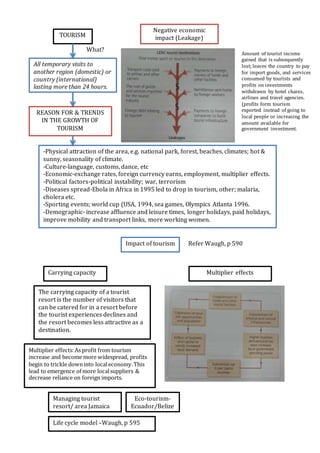
Amount of tourist income 
gained that is subsequently 
lost; leaves the country to pay 
for import goods, and services 
consumed by tourists and 
profits on investments 
withdrawn by hotel chains, 
airlines and travel agencies. 
(profits form tourism 
exported instead of going to 
local people or increasing the 
amount available for 
government investment. 
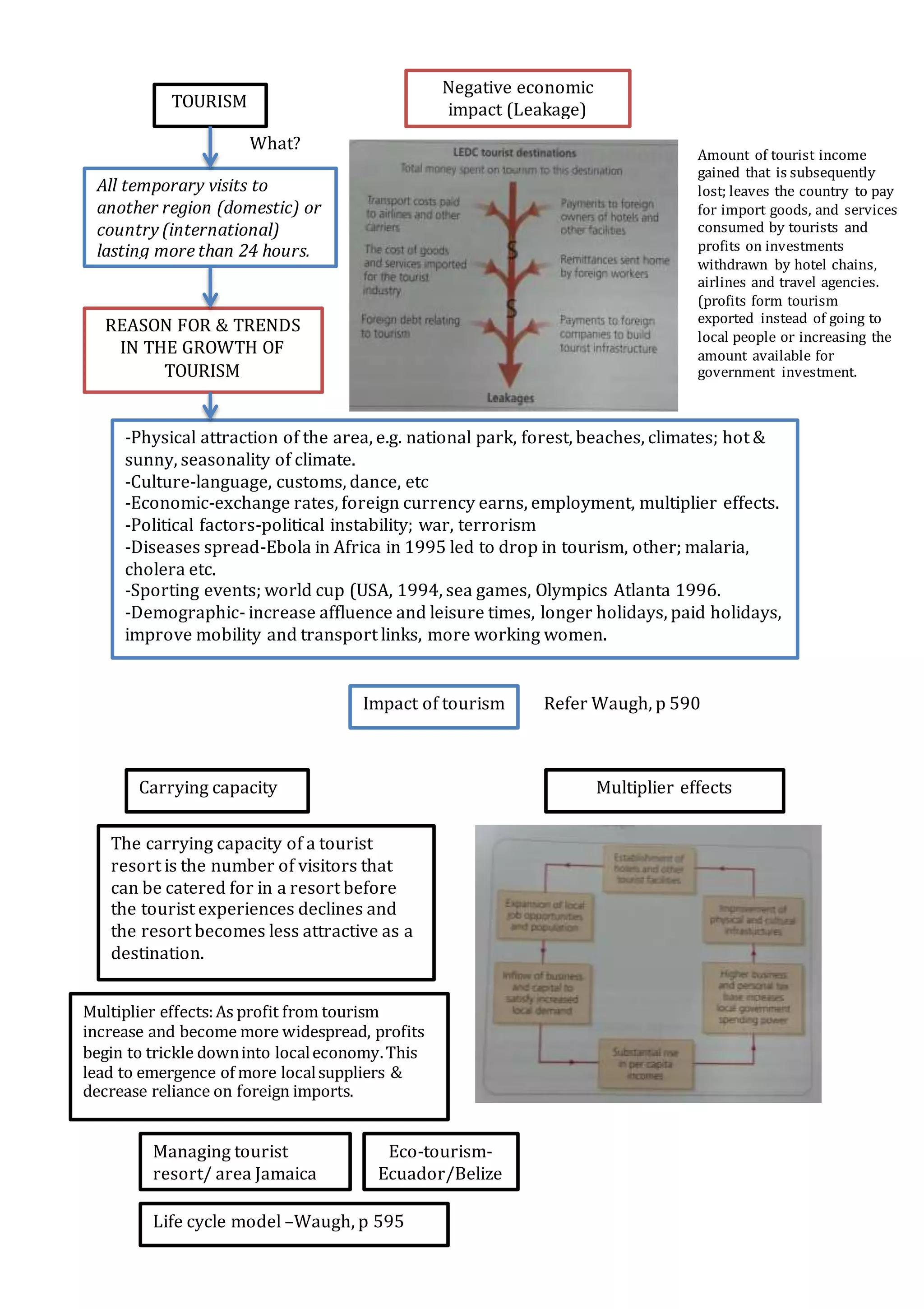
Multiplier effects: As profit from tourism 
increase and become more widespread, profits 
begin to trickle down into local economy. This 
lead to emergence of more local suppliers & 
decrease reliance on foreign imports.

Tourism flow diagram revision 2014

  • 1.
    TOURISM What? Alltemporary visits to another region (domestic) or country (international) lasting more than 24 hours. REASON FOR & TRENDS IN THE GROWTH OF TOURISM -Physical attraction of the area, e.g. national park, forest, beaches, climates; hot & sunny, seasonality of climate. -Culture-language, customs, dance, etc -Economic-exchange rates, foreign currency earns, employment, multiplier effects. -Political factors-political instability; war, terrorism -Diseases spread-Ebola in Africa in 1995 led to drop in tourism, other; malaria, cholera etc. -Sporting events; world cup (USA, 1994, sea games, Olympics Atlanta 1996. -Demographic- increase affluence and leisure times, longer holidays, paid holidays, improve mobility and transport links, more working women. Impact of tourism Refer Waugh, p 590 Carrying capacity Multiplier effects Managing tourist resort/ area Jamaica Eco-tourism- Ecuador/Belize Life cycle model –Waugh, p 595 Negative economic impact (Leakage) The carrying capacity of a tourist resort is the number of visitors that can be catered for in a resort before the tourist experiences declines and the resort becomes less attractive as a destination. Amount of tourist income gained that is subsequently lost; leaves the country to pay for import goods, and services consumed by tourists and profits on investments withdrawn by hotel chains, airlines and travel agencies. (profits form tourism exported instead of going to local people or increasing the amount available for government investment. Multiplier effects: As profit from tourism increase and become more widespread, profits begin to trickle down into local economy. This lead to emergence of more local suppliers & decrease reliance on foreign imports.