Introduction to Tourism and
        Its Impacts
A) Introduction to Tourism


 The world is a book, he who stays at
 home reads only one page.
Tourism – World’s Biggest Industry
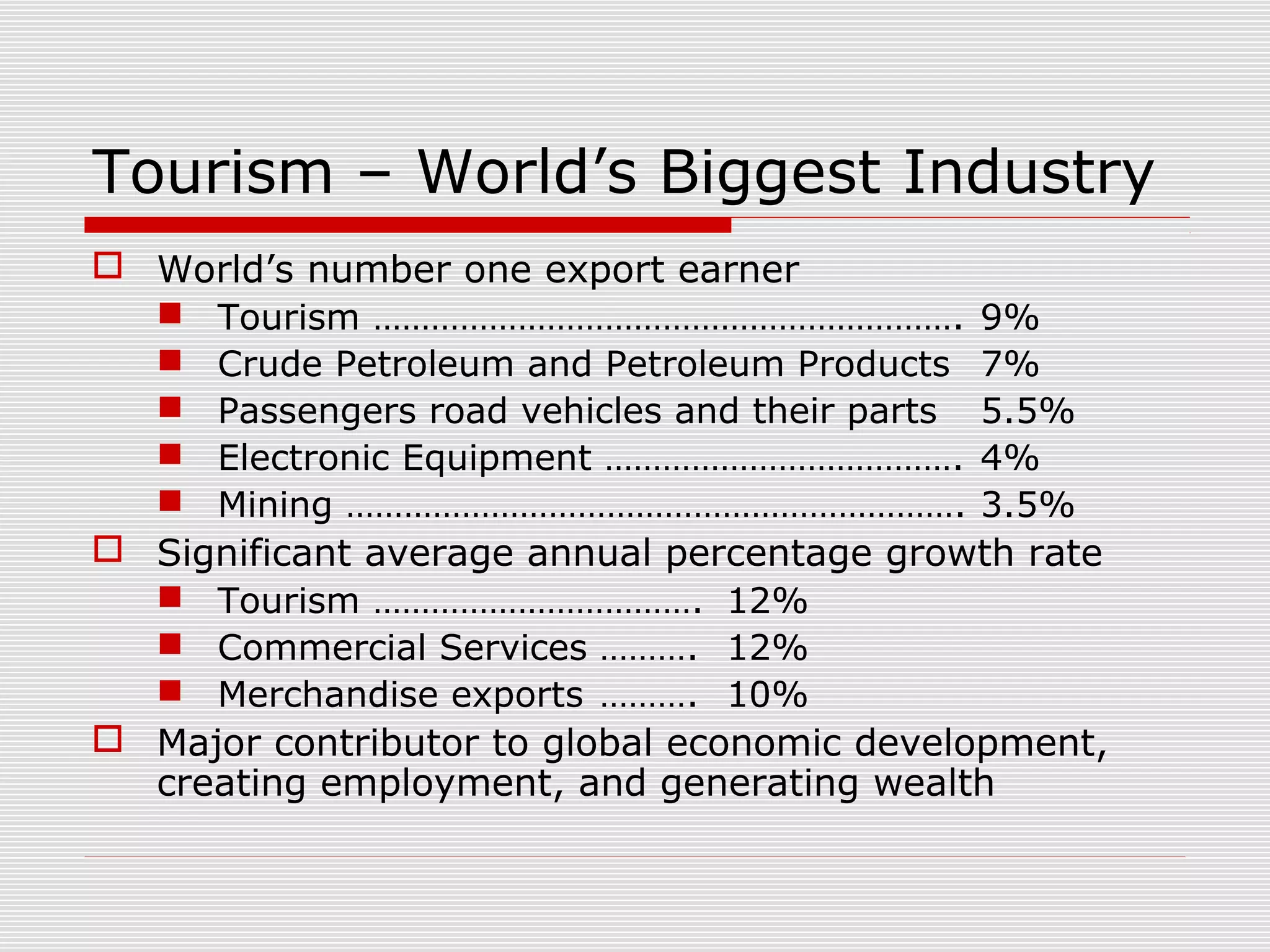
 World’s number one export earner
   Tourism ……………………………………………………. 9%
   Crude Petroleum and Petroleum Products 7%
   Passengers road vehicles and their parts 5.5%
   Electronic Equipment ………………………………. 4%
   Mining ………………………………………………………. 3.5%
 Significant average annual percentage growth rate
   Tourism ……………………………. 12%
   Commercial Services ………. 12%
   Merchandise exports ………. 10%
 Major contributor to global economic development,
  creating employment, and generating wealth
Historical Perspective
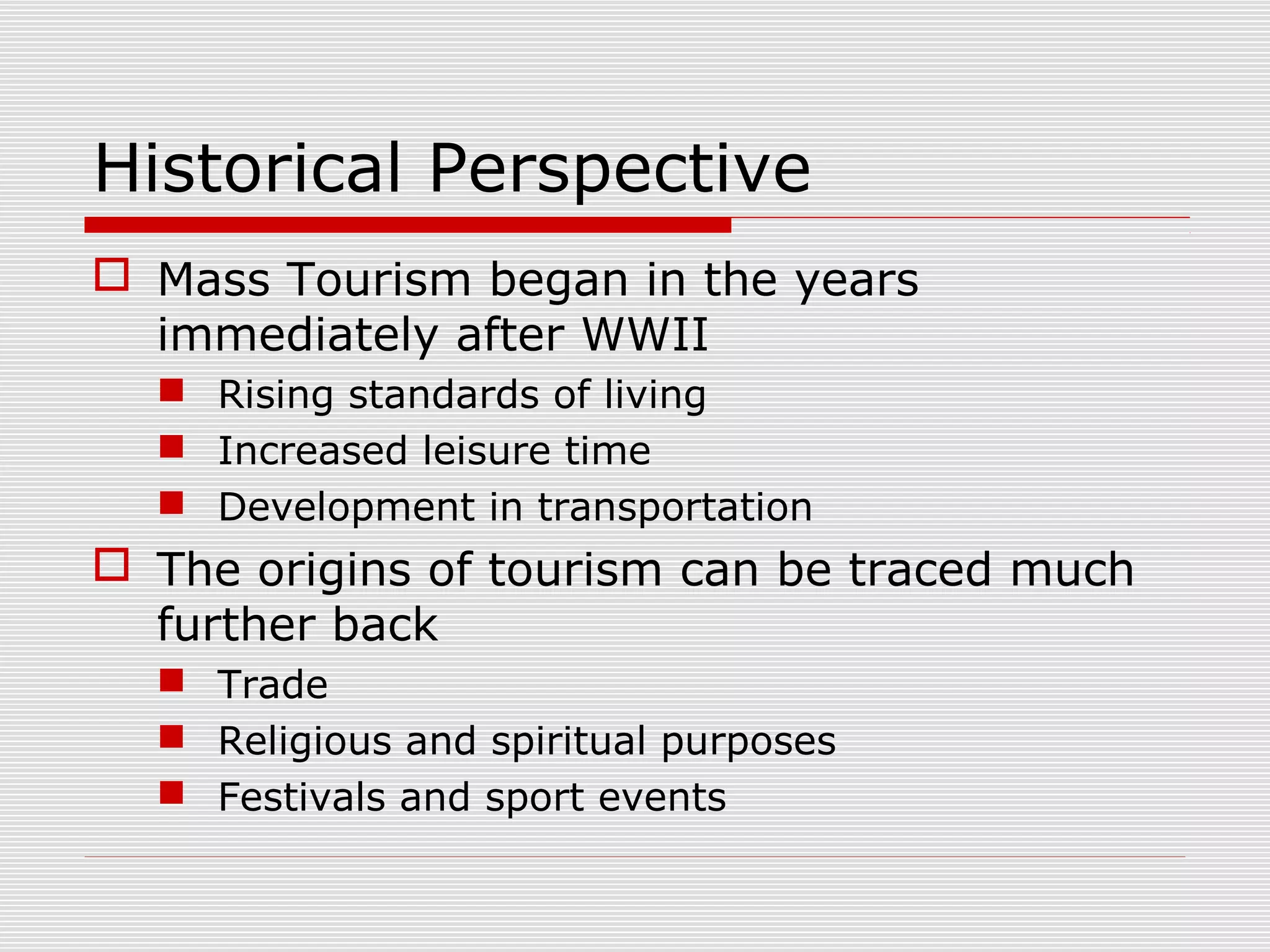
 Mass Tourism began in the years
  immediately after WWII
   Rising standards of living
   Increased leisure time
   Development in transportation
 The origins of tourism can be traced much
  further back
   Trade
   Religious and spiritual purposes
   Festivals and sport events
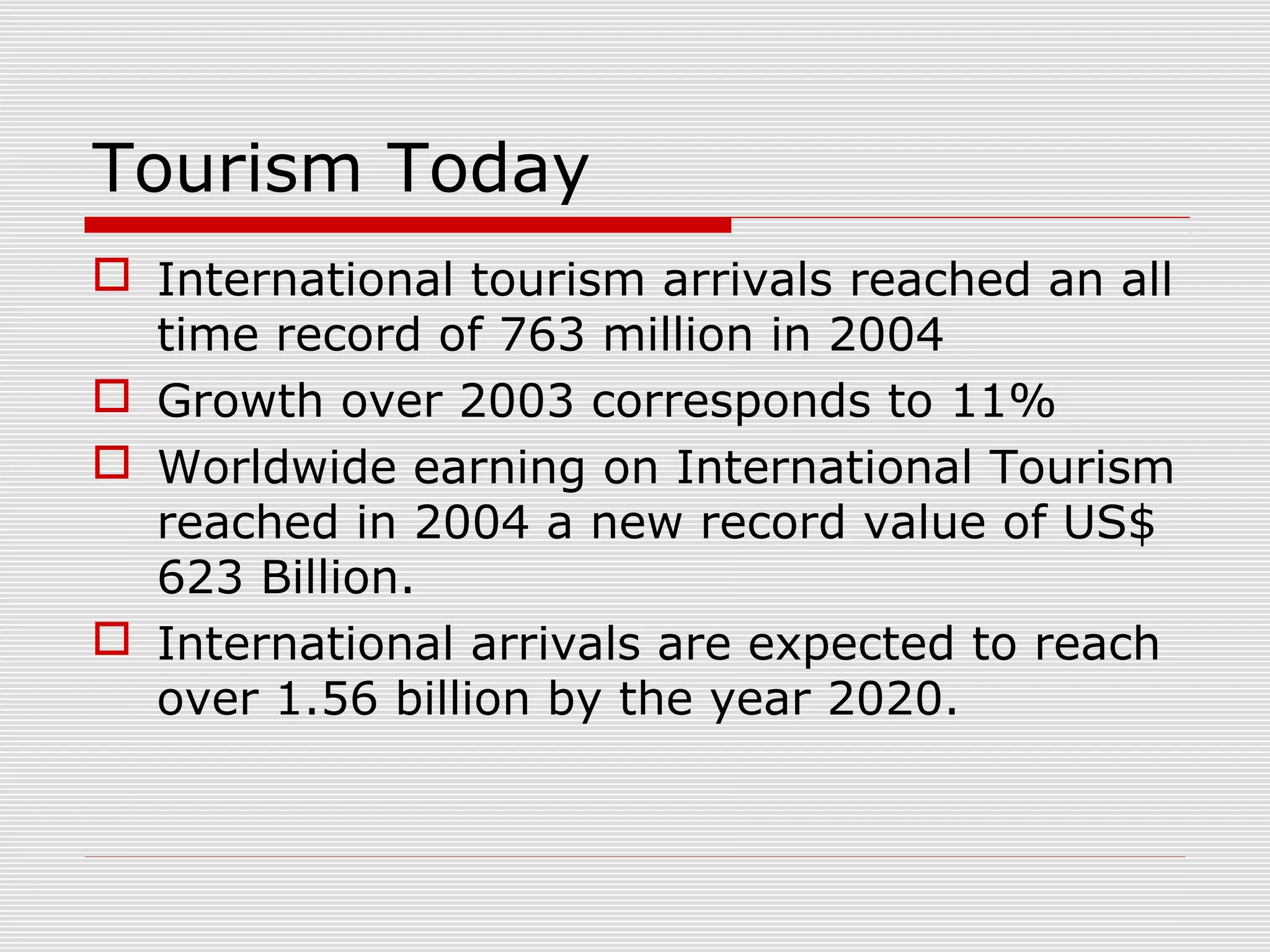
Tourism Today
 International tourism arrivals reached an all
  time record of 763 million in 2004
 Growth over 2003 corresponds to 11%
 Worldwide earning on International Tourism
  reached in 2004 a new record value of US$
  623 Billion.
 International arrivals are expected to reach
  over 1.56 billion by the year 2020.
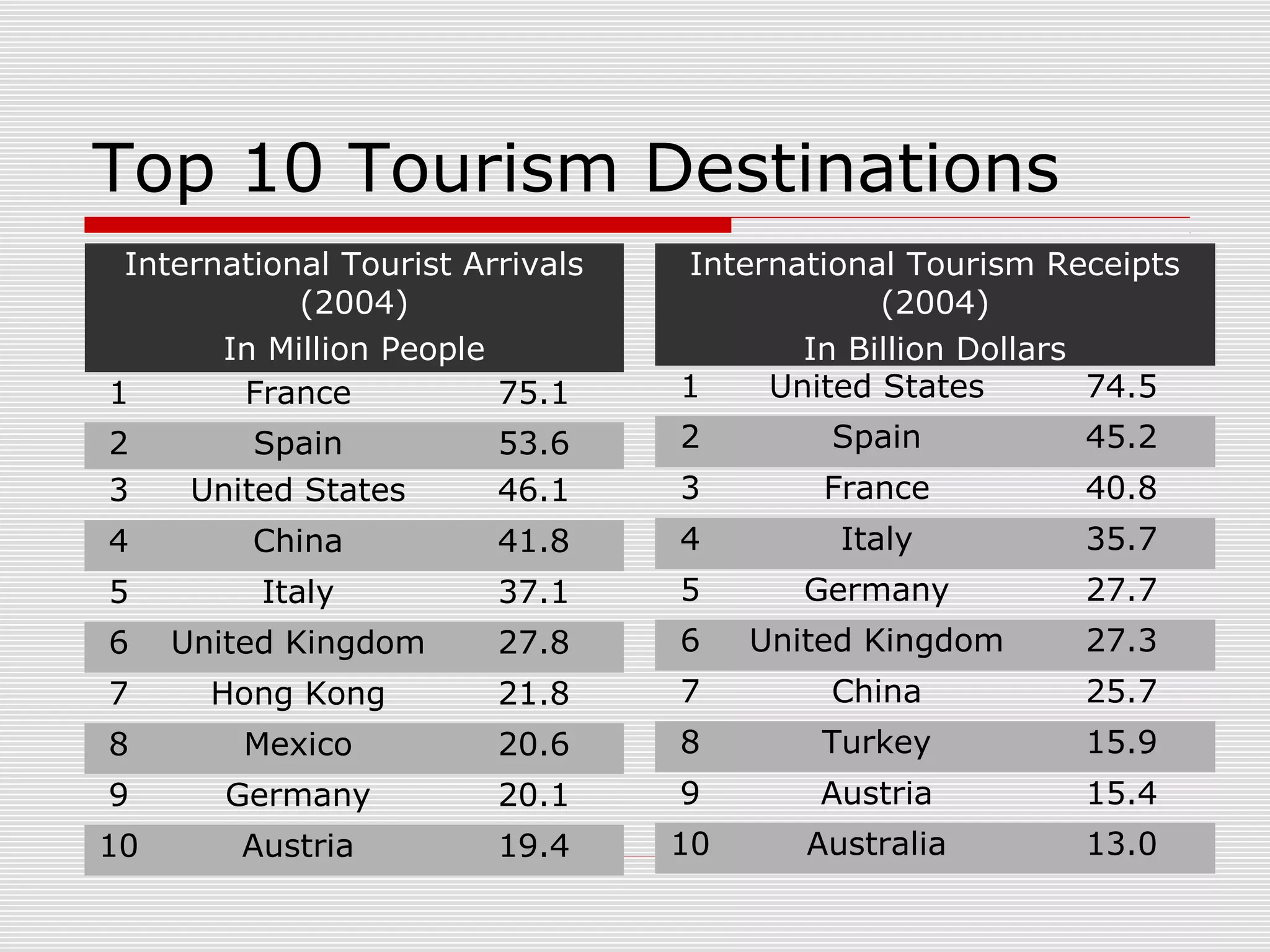
Top 10 Tourism Destinations
 International Tourist Arrivals   International Tourism Receipts
            (2004)                            (2004)
       In Million People                 In Billion Dollars
1       France           75.1     1    United States        74.5
2         Spain          53.6     2        Spain          45.2
3     United States      46.1     3        France         40.8
4        China           41.8     4         Italy         35.7
5         Italy          37.1     5       Germany         27.7
6    United Kingdom      27.8     6    United Kingdom     27.3
7      Hong Kong         21.8     7        China          25.7
8        Mexico          20.6     8       Turkey          15.9
9       Germany          20.1     9       Austria         15.4
10       Austria         19.4     10      Australia       13.0
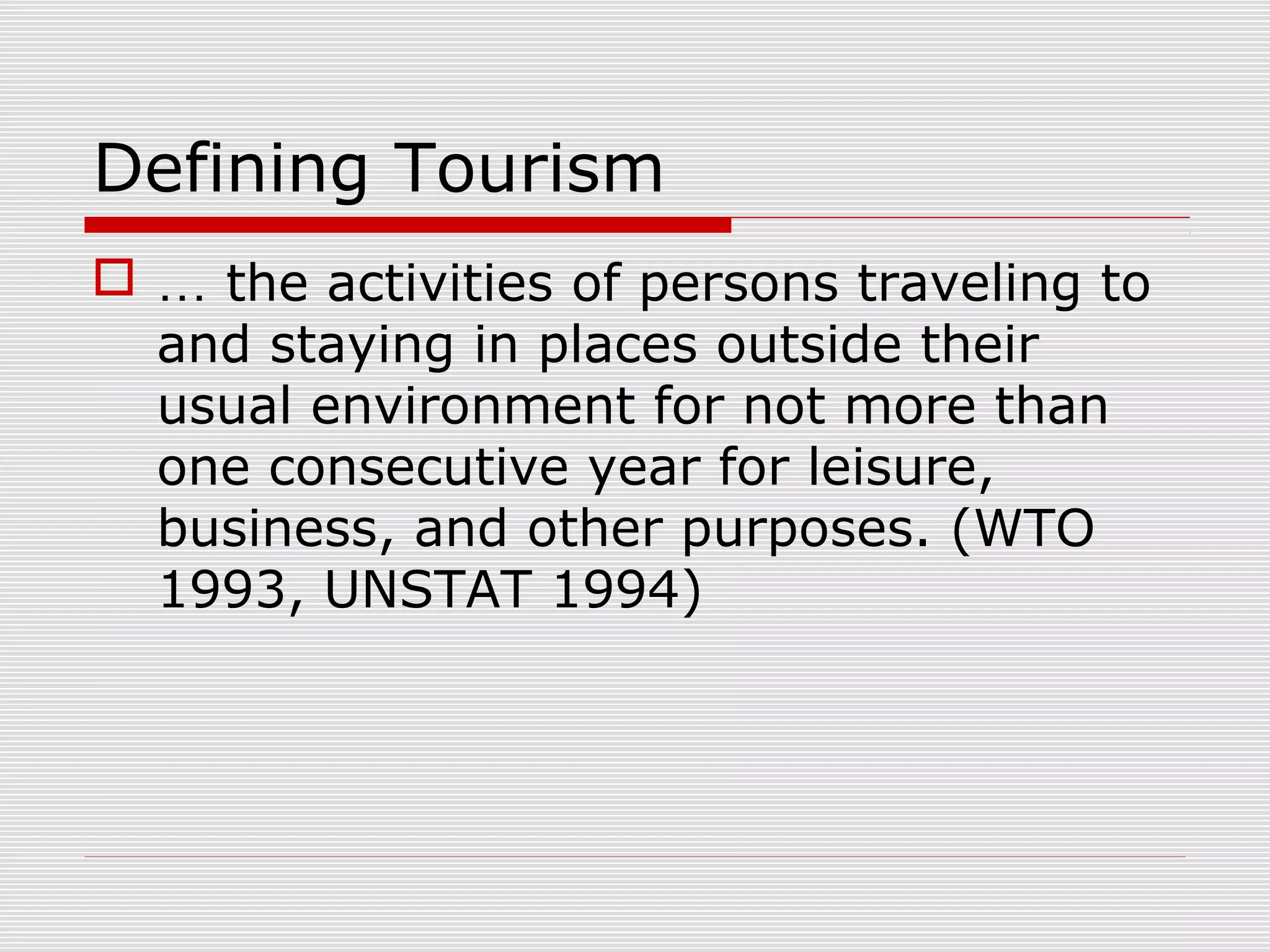
Defining Tourism
 … the activities of persons traveling to
  and staying in places outside their
  usual environment for not more than
  one consecutive year for leisure,
  business, and other purposes. (WTO
  1993, UNSTAT 1994)
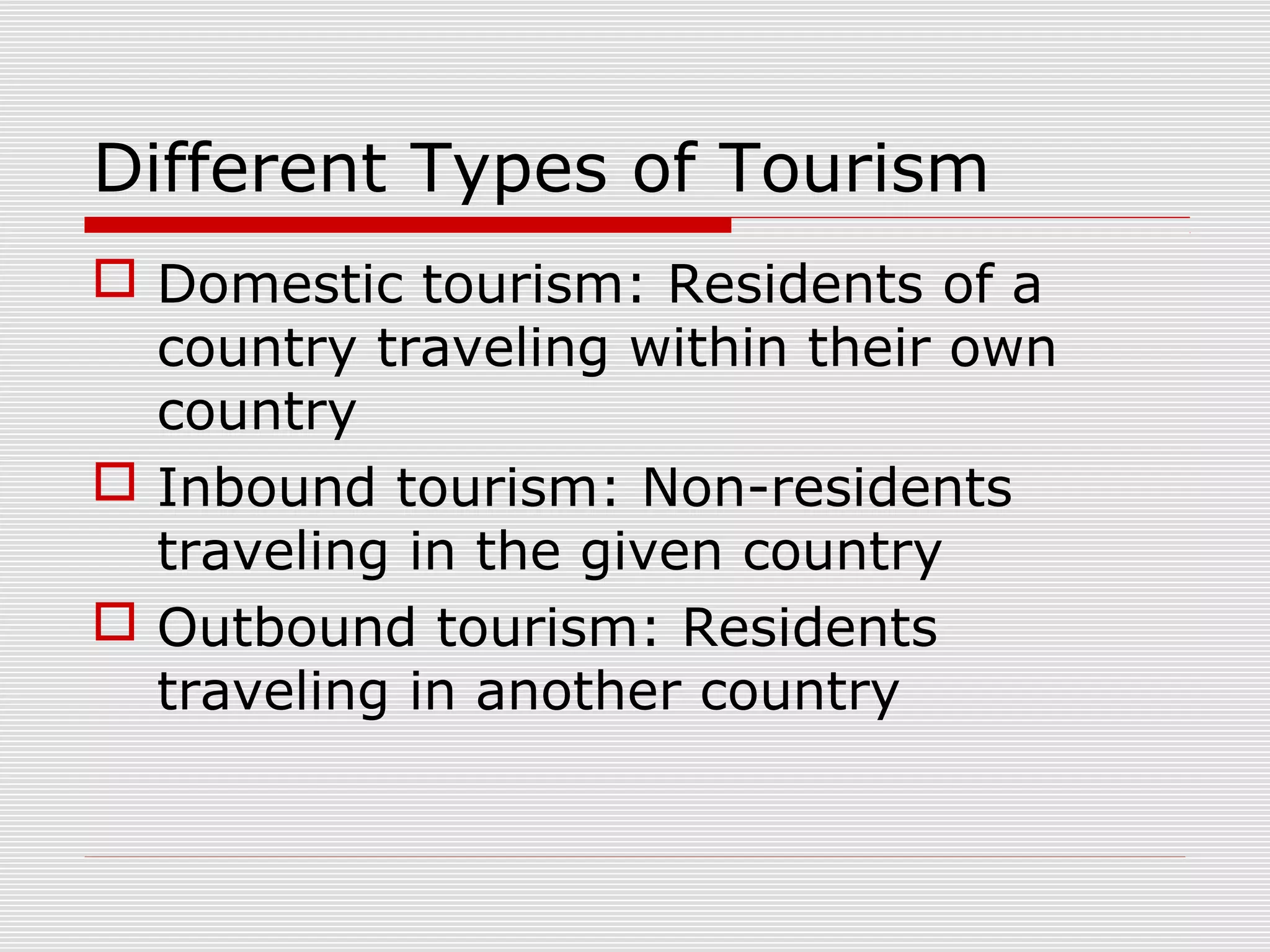
Different Types of Tourism
 Domestic tourism: Residents of a
  country traveling within their own
  country
 Inbound tourism: Non-residents
  traveling in the given country
 Outbound tourism: Residents
  traveling in another country
Purpose of Travel
 Leisure tourism
   Holidays
   Health and fitness
   Sport
   Religion
   Education
   Cultural
 Visiting friends and relatives (VFR)
 Business tourism
   Conferences and training events
   Business meetings
   Exhibitions
   Trade fairs
B) Impacts of Tourism


 Economic Impacts
 Environmental Impacts
 Socio-Cultural Impacts
Economic Impacts
Positive
 International level
   Tourism generated US$ 623 billion in earnings
    and contributed over 10% of global Gross
    Domestic Product
   In 2006, tourism employs 385 million people
    (11.1% of the world’s labor)
 National level
   Tourism contribution to GNP: Tourism dominates
    economic activities in many countries such as
    Caribbean islands. Anguilla (90% of GNP),
    Antigua and Barbuda (87% of GNP)
Economic Impacts
Positive
 Regional and local levels
   Injecting revenue into urban and rural
    areas
   Creating employment opportunities
   Stimulating the creation of new business
    enterprises
   Contributing towards extra inward
    investment through the promotion of a
    positive image of an area
Economic Impacts
Positive
 Summary
  Wealth generation
  Employment creation
Economic Impacts
Negative
 The loss of labor from traditional,
  primary industries
 Price rises in destination areas
 Local shops are lost in favor of tourist
  outlets
 Displacement effect
   The development of infrastructure and
    facilities for tourism can divert resources
    away from other capital projects
Environmental Impacts
Negative
   Water supply
   Physical erosion
       Wearing away of natural features such as river banks,
        mountain passes, soil and vegetation
       Destruction of archeological sites and historic monuments
   Water pollution
       Poorly managed sewage treatment and waste disposal
        processes
   Loss of wildlife habitats
       Ecological destruction due to overuse
   Waste disposal (Littering)
   Air pollution
   Noise pollution
       Overcrowding
       Different modes of tourism transport
Environmental Impacts
Positive
 Conservation of natural and built resources
   National parks
   Ancient monuments
 Improvement of general environment of a destination
   Amenity planting in public parks and gardens
   Upgraded ‘street furniture’ (lighting, public seating
     and litter bins)
   Improved signage
   Clearance of derelict land
   Renovations to buildings
 Exposure of detrimental environmental activities in
  remote areas
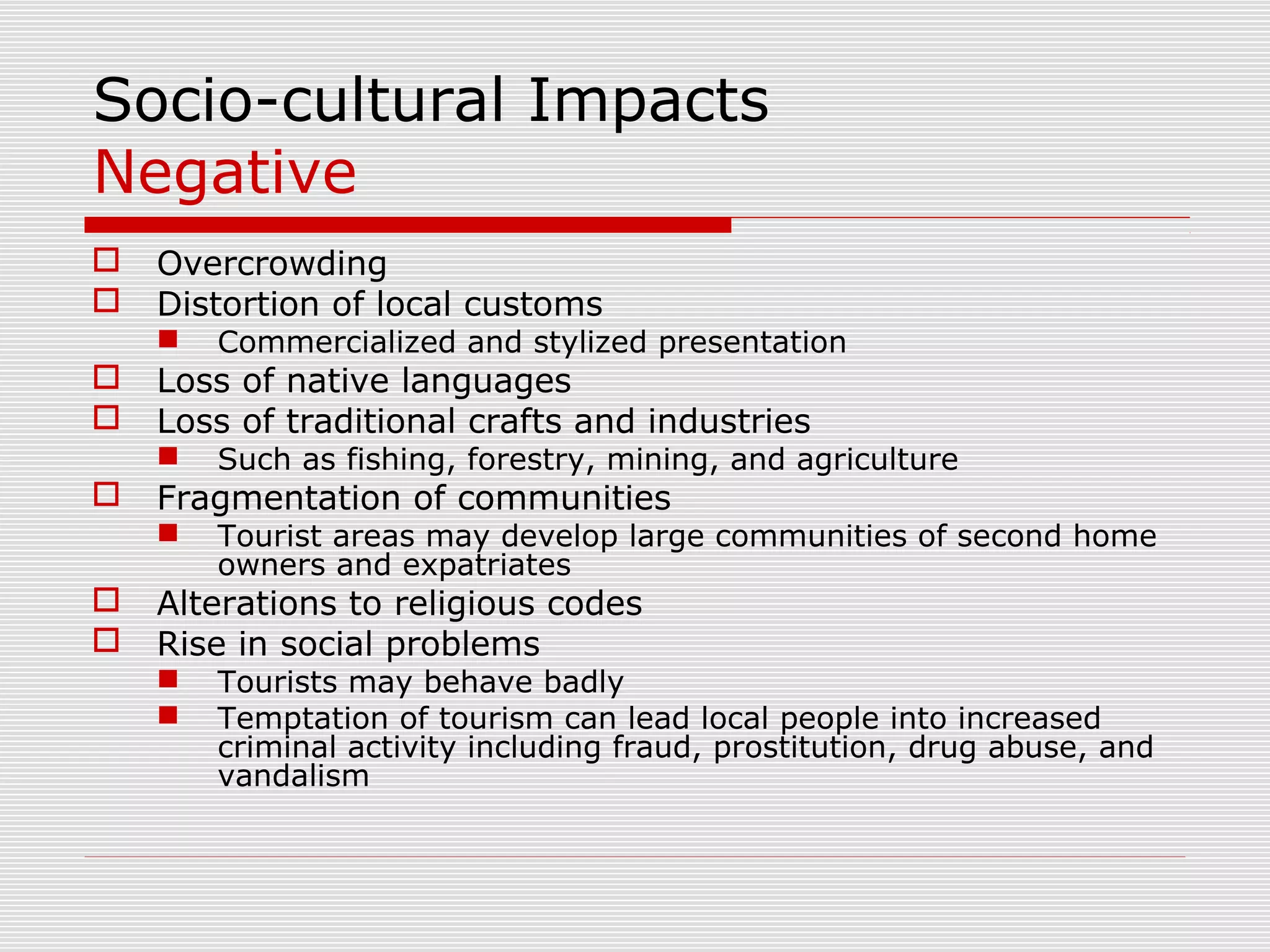
Socio-cultural Impacts
Negative
   Overcrowding
   Distortion of local customs
       Commercialized and stylized presentation
   Loss of native languages
   Loss of traditional crafts and industries
       Such as fishing, forestry, mining, and agriculture
   Fragmentation of communities
       Tourist areas may develop large communities of second home
        owners and expatriates
   Alterations to religious codes
   Rise in social problems
       Tourists may behave badly
       Temptation of tourism can lead local people into increased
        criminal activity including fraud, prostitution, drug abuse, and
        vandalism
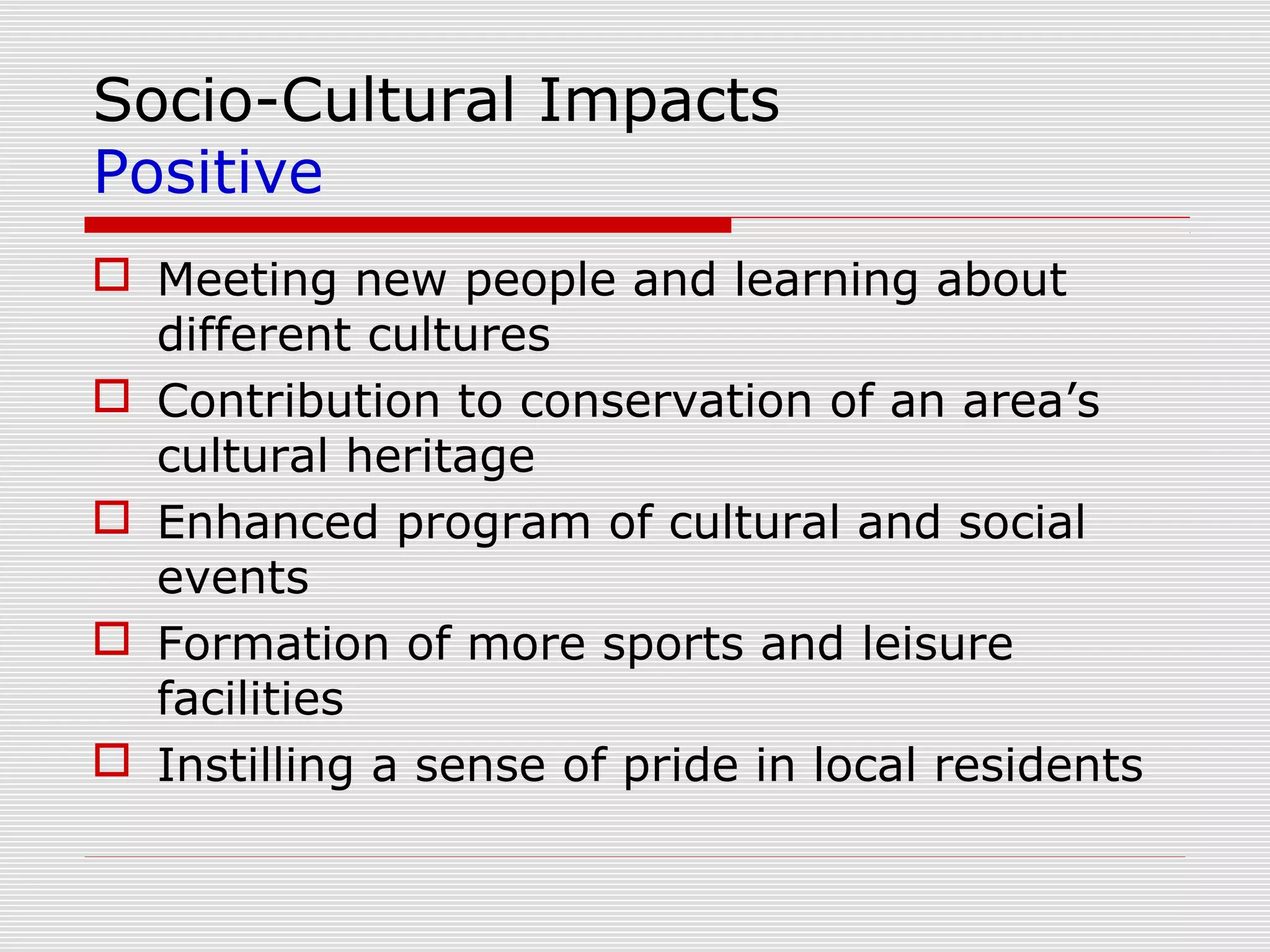
Socio-Cultural Impacts
Positive
 Meeting new people and learning about
  different cultures
 Contribution to conservation of an area’s
  cultural heritage
 Enhanced program of cultural and social
  events
 Formation of more sports and leisure
  facilities
 Instilling a sense of pride in local residents

Introduction to tourism and its impacts

  • 1.
    Introduction to Tourismand Its Impacts
  • 2.
    A) Introduction toTourism The world is a book, he who stays at home reads only one page.
  • 3.
    Tourism – World’sBiggest Industry  World’s number one export earner  Tourism ……………………………………………………. 9%  Crude Petroleum and Petroleum Products 7%  Passengers road vehicles and their parts 5.5%  Electronic Equipment ………………………………. 4%  Mining ………………………………………………………. 3.5%  Significant average annual percentage growth rate  Tourism ……………………………. 12%  Commercial Services ………. 12%  Merchandise exports ………. 10%  Major contributor to global economic development, creating employment, and generating wealth
  • 4.
    Historical Perspective  MassTourism began in the years immediately after WWII  Rising standards of living  Increased leisure time  Development in transportation  The origins of tourism can be traced much further back  Trade  Religious and spiritual purposes  Festivals and sport events
  • 5.
    Tourism Today  Internationaltourism arrivals reached an all time record of 763 million in 2004  Growth over 2003 corresponds to 11%  Worldwide earning on International Tourism reached in 2004 a new record value of US$ 623 Billion.  International arrivals are expected to reach over 1.56 billion by the year 2020.
  • 6.
    Top 10 TourismDestinations International Tourist Arrivals International Tourism Receipts (2004) (2004) In Million People In Billion Dollars 1 France 75.1 1 United States 74.5 2 Spain 53.6 2 Spain 45.2 3 United States 46.1 3 France 40.8 4 China 41.8 4 Italy 35.7 5 Italy 37.1 5 Germany 27.7 6 United Kingdom 27.8 6 United Kingdom 27.3 7 Hong Kong 21.8 7 China 25.7 8 Mexico 20.6 8 Turkey 15.9 9 Germany 20.1 9 Austria 15.4 10 Austria 19.4 10 Australia 13.0
  • 7.
    Defining Tourism  …the activities of persons traveling to and staying in places outside their usual environment for not more than one consecutive year for leisure, business, and other purposes. (WTO 1993, UNSTAT 1994)
  • 8.
    Different Types ofTourism  Domestic tourism: Residents of a country traveling within their own country  Inbound tourism: Non-residents traveling in the given country  Outbound tourism: Residents traveling in another country
  • 9.
    Purpose of Travel Leisure tourism  Holidays  Health and fitness  Sport  Religion  Education  Cultural  Visiting friends and relatives (VFR)  Business tourism  Conferences and training events  Business meetings  Exhibitions  Trade fairs
  • 10.
    B) Impacts ofTourism  Economic Impacts  Environmental Impacts  Socio-Cultural Impacts
  • 11.
    Economic Impacts Positive  Internationallevel  Tourism generated US$ 623 billion in earnings and contributed over 10% of global Gross Domestic Product  In 2006, tourism employs 385 million people (11.1% of the world’s labor)  National level  Tourism contribution to GNP: Tourism dominates economic activities in many countries such as Caribbean islands. Anguilla (90% of GNP), Antigua and Barbuda (87% of GNP)
  • 12.
    Economic Impacts Positive  Regionaland local levels  Injecting revenue into urban and rural areas  Creating employment opportunities  Stimulating the creation of new business enterprises  Contributing towards extra inward investment through the promotion of a positive image of an area
  • 13.
    Economic Impacts Positive  Summary  Wealth generation  Employment creation
  • 14.
    Economic Impacts Negative  Theloss of labor from traditional, primary industries  Price rises in destination areas  Local shops are lost in favor of tourist outlets  Displacement effect  The development of infrastructure and facilities for tourism can divert resources away from other capital projects
  • 15.
    Environmental Impacts Negative  Water supply  Physical erosion  Wearing away of natural features such as river banks, mountain passes, soil and vegetation  Destruction of archeological sites and historic monuments  Water pollution  Poorly managed sewage treatment and waste disposal processes  Loss of wildlife habitats  Ecological destruction due to overuse  Waste disposal (Littering)  Air pollution  Noise pollution  Overcrowding  Different modes of tourism transport
  • 16.
    Environmental Impacts Positive  Conservationof natural and built resources  National parks  Ancient monuments  Improvement of general environment of a destination  Amenity planting in public parks and gardens  Upgraded ‘street furniture’ (lighting, public seating and litter bins)  Improved signage  Clearance of derelict land  Renovations to buildings  Exposure of detrimental environmental activities in remote areas
  • 17.
    Socio-cultural Impacts Negative  Overcrowding  Distortion of local customs  Commercialized and stylized presentation  Loss of native languages  Loss of traditional crafts and industries  Such as fishing, forestry, mining, and agriculture  Fragmentation of communities  Tourist areas may develop large communities of second home owners and expatriates  Alterations to religious codes  Rise in social problems  Tourists may behave badly  Temptation of tourism can lead local people into increased criminal activity including fraud, prostitution, drug abuse, and vandalism
  • 18.
    Socio-Cultural Impacts Positive  Meetingnew people and learning about different cultures  Contribution to conservation of an area’s cultural heritage  Enhanced program of cultural and social events  Formation of more sports and leisure facilities  Instilling a sense of pride in local residents