
Torque this!


   What is torque?
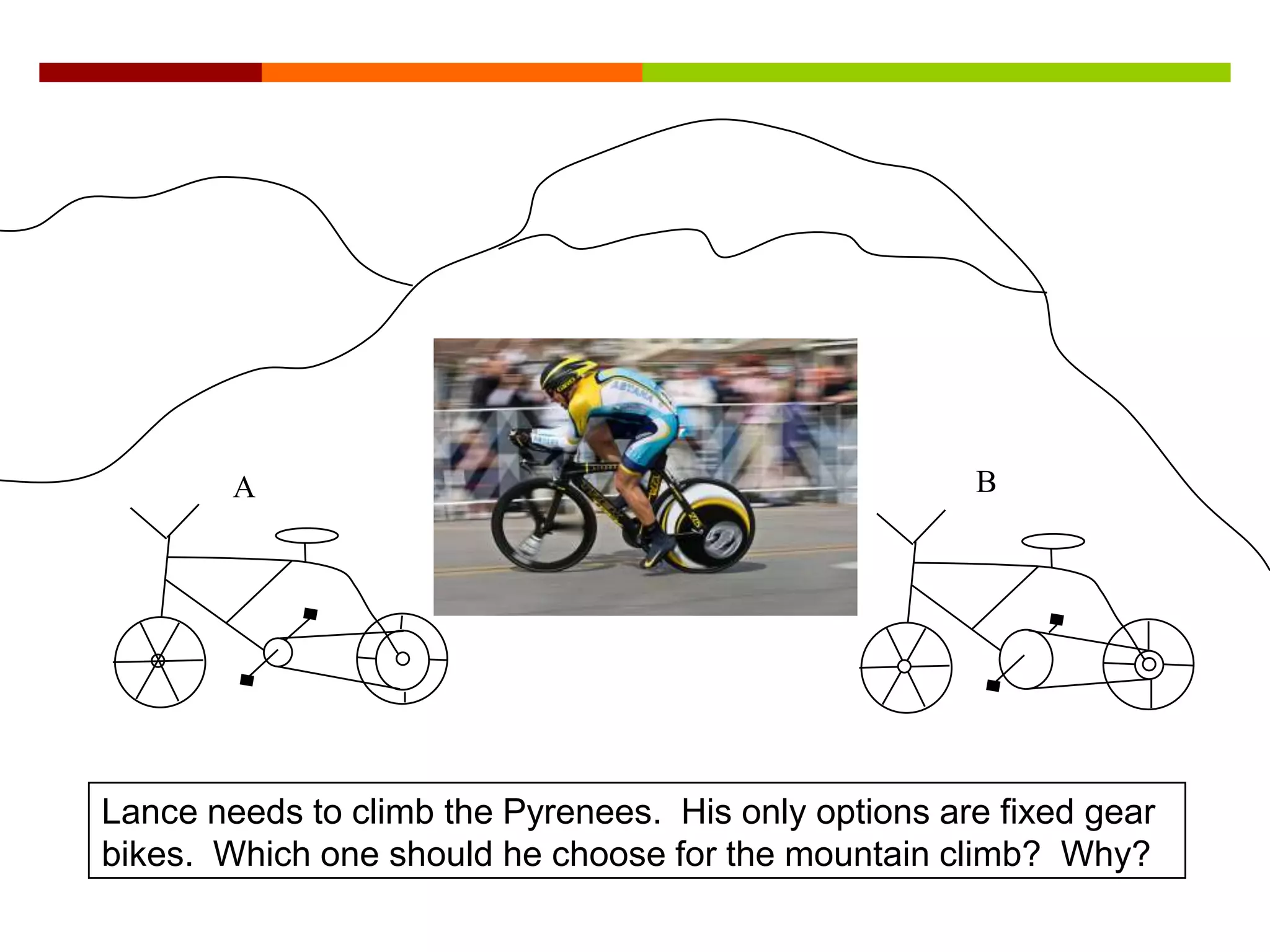
A                                             B


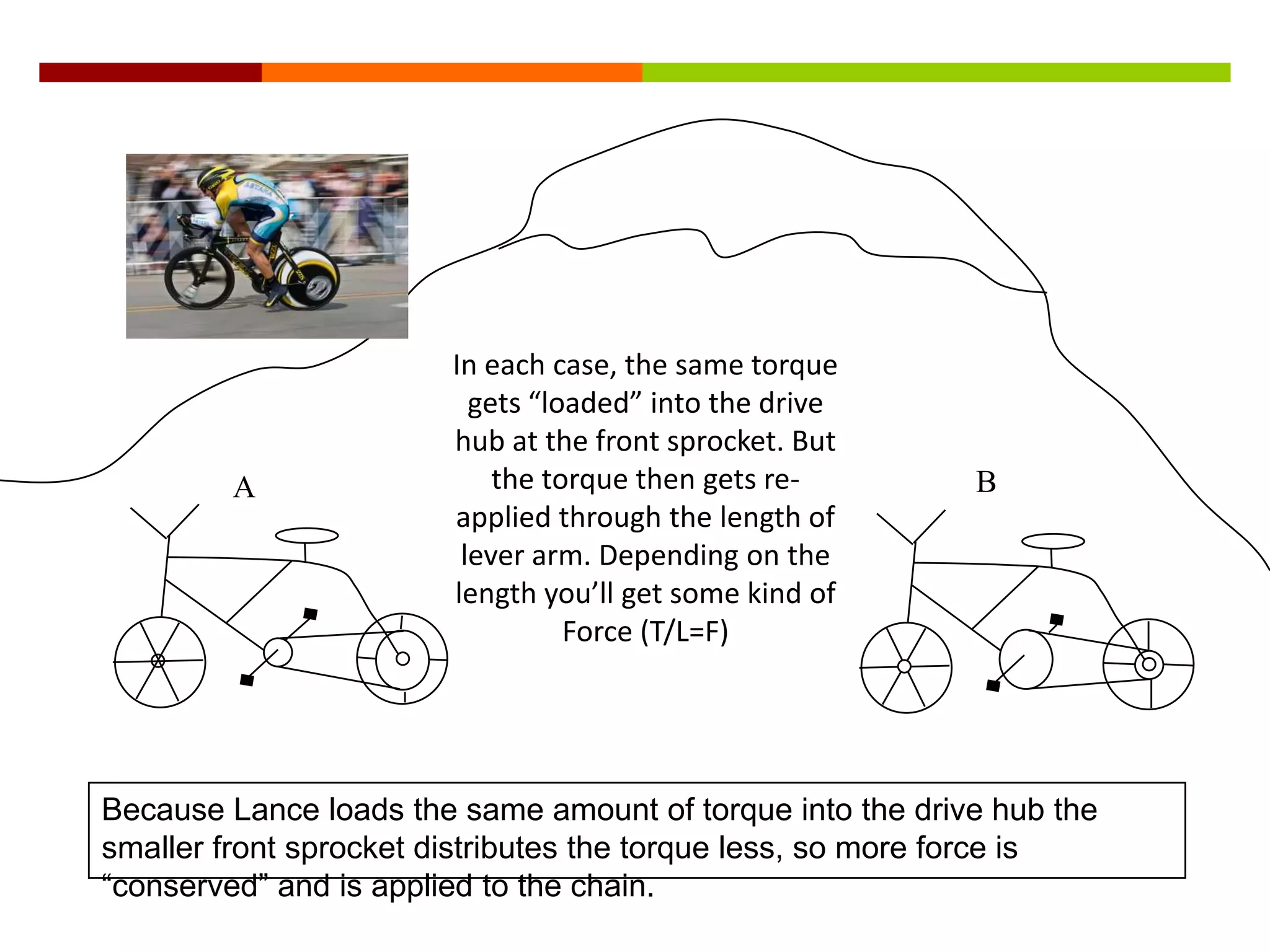
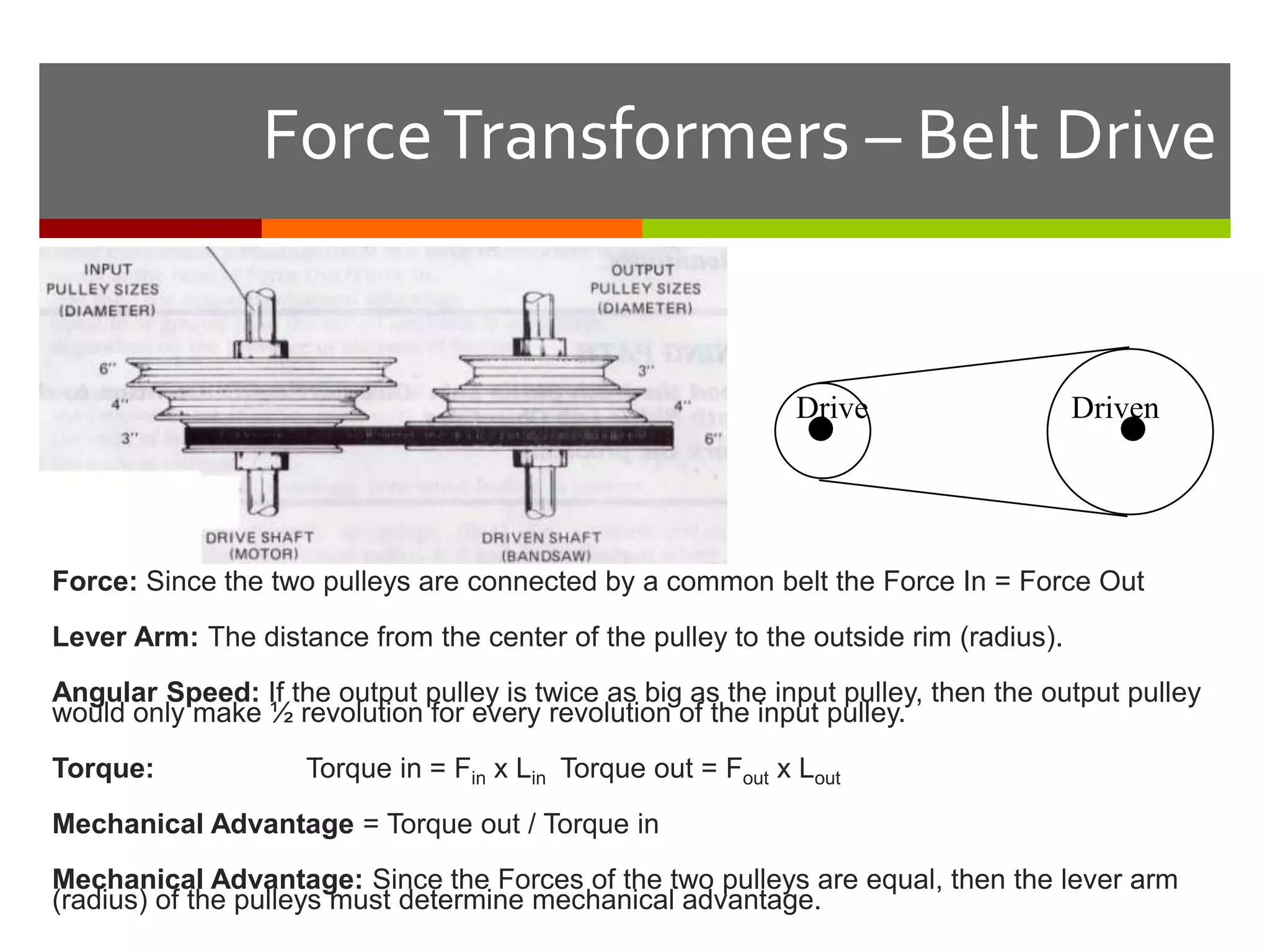
Lance needs to climb the Pyrenees. His only options are fixed gear
bikes. Which one should he choose for the mountain climb? Why?
Torque (Rotational Force)
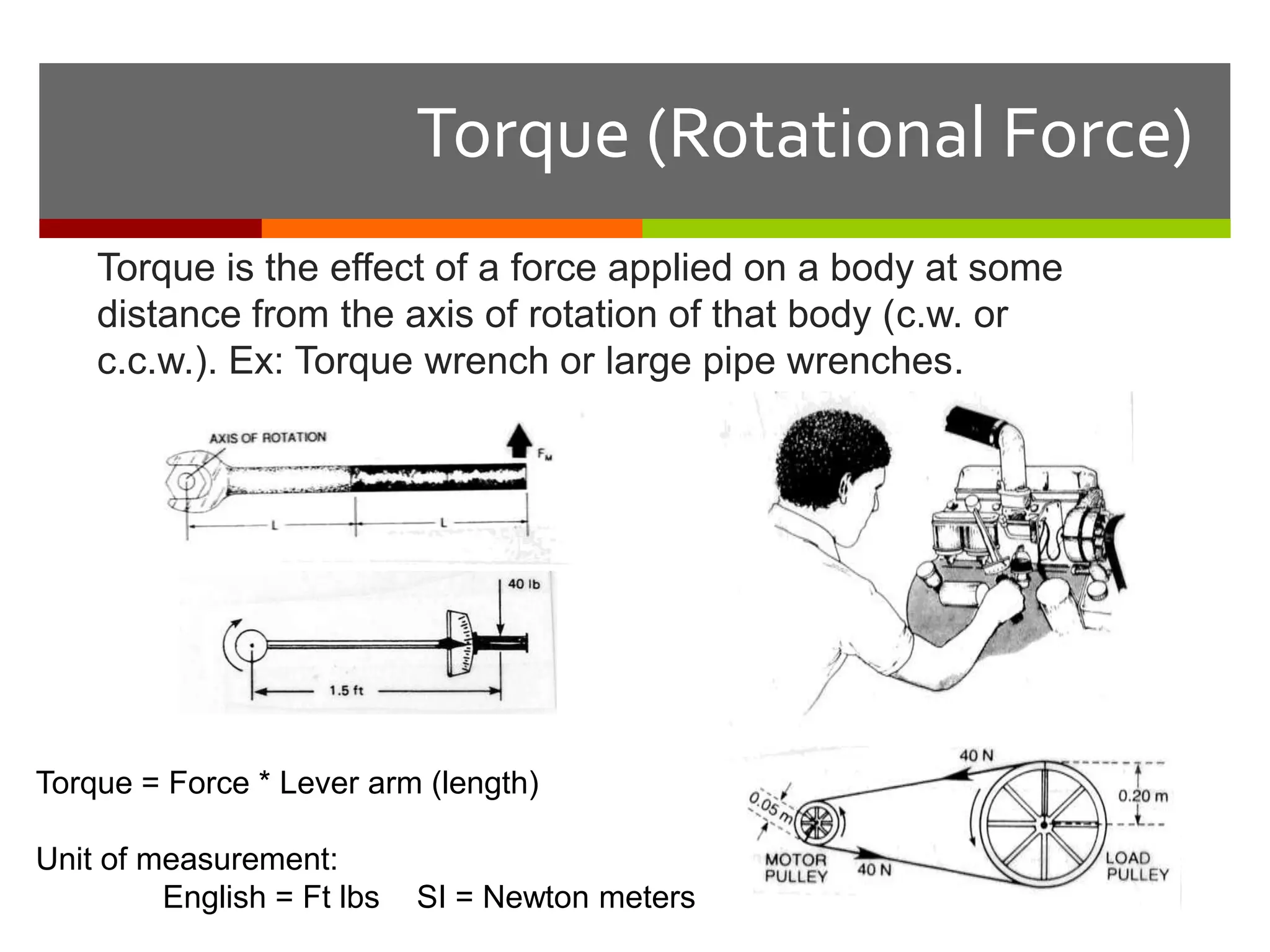
    Torque is the effect of a force applied on a body at some
    distance from the axis of rotation of that body (c.w. or
    c.c.w.). Ex: Torque wrench or large pipe wrenches.


Torque = Force * Lever arm (length)

Unit of measurement:
         English = Ft lbs   SI = Newton meters
How is it calculated?

 As you apply a force to any point on a lever arm
   (FxL) it gives you a Torque value that is “in waiting”
   at the point of rotation.

 If you try to “feel” or re-apply that torque at any
   other lever distance from the axis of rotation, the
   torque is the distributed along the lever length (L).

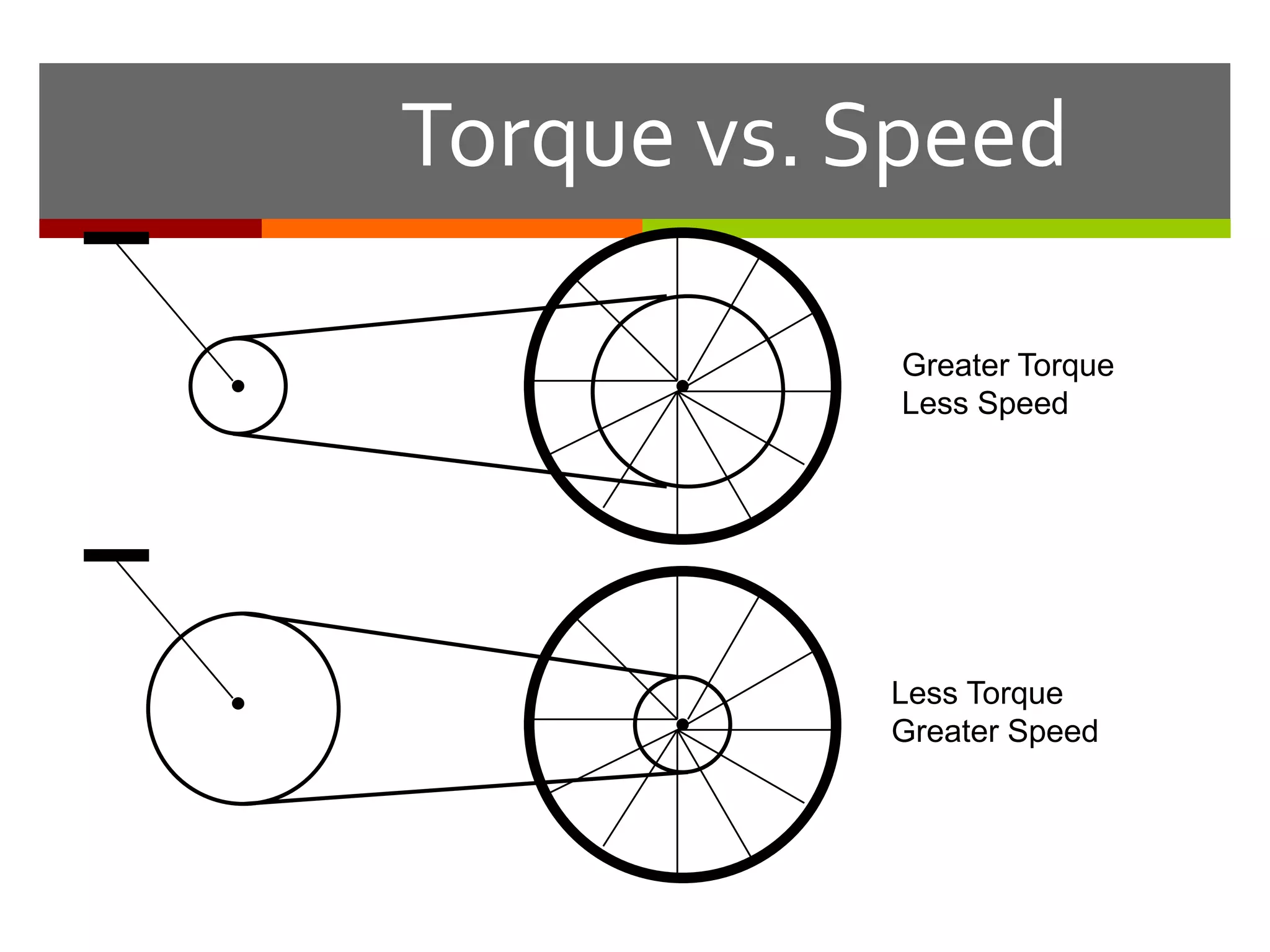
 The shorter the Lever or smaller the sprocket, the
   greater the Force that is applied from Torque.
In each case, the same torque
                         gets “loaded” into the drive
                       hub at the front sprocket. But
        A                  the torque then gets re-        B
                       applied through the length of
                        lever arm. Depending on the
                       length you’ll get some kind of
                                 Force (T/L=F)


Because Lance loads the same amount of torque into the drive hub the
smaller front sprocket distributes the torque less, so more force is
“conserved” and is applied to the chain.
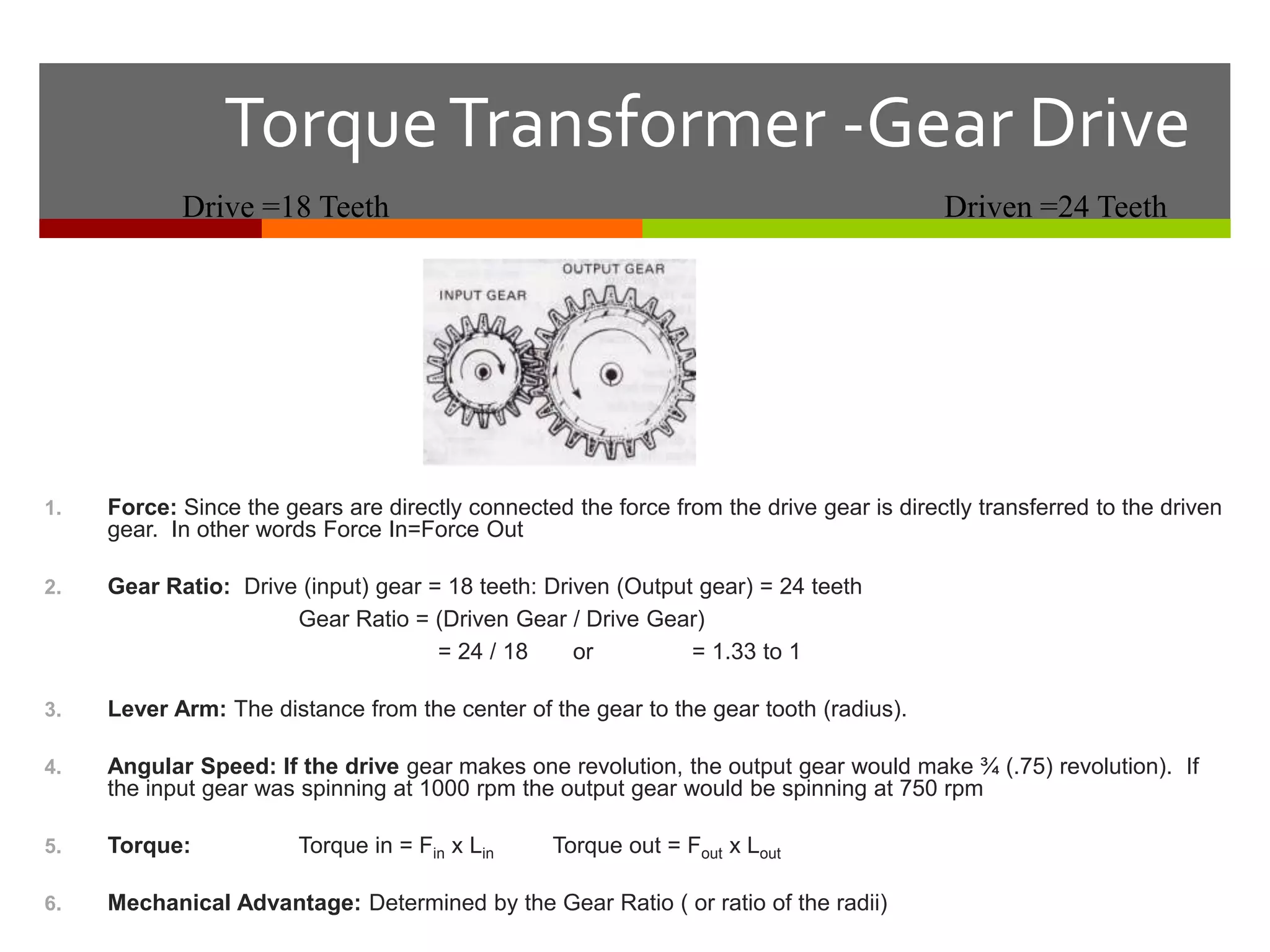
Force Transformers – Belt Drive


                                                               Drive                 Driven


Force: Since the two pulleys are connected by a common belt the Force In = Force Out
Lever Arm: The distance from the center of the pulley to the outside rim (radius).
Angular Speed: If the output pulley is twice as big as the input pulley, then the output pulley
would only make ½ revolution for every revolution of the input pulley.
Torque:              Torque in = Fin x Lin Torque out = Fout x Lout
Mechanical Advantage = Torque out / Torque in
Mechanical Advantage: Since the Forces of the two pulleys are equal, then the lever arm
(radius) of the pulleys must determine mechanical advantage.
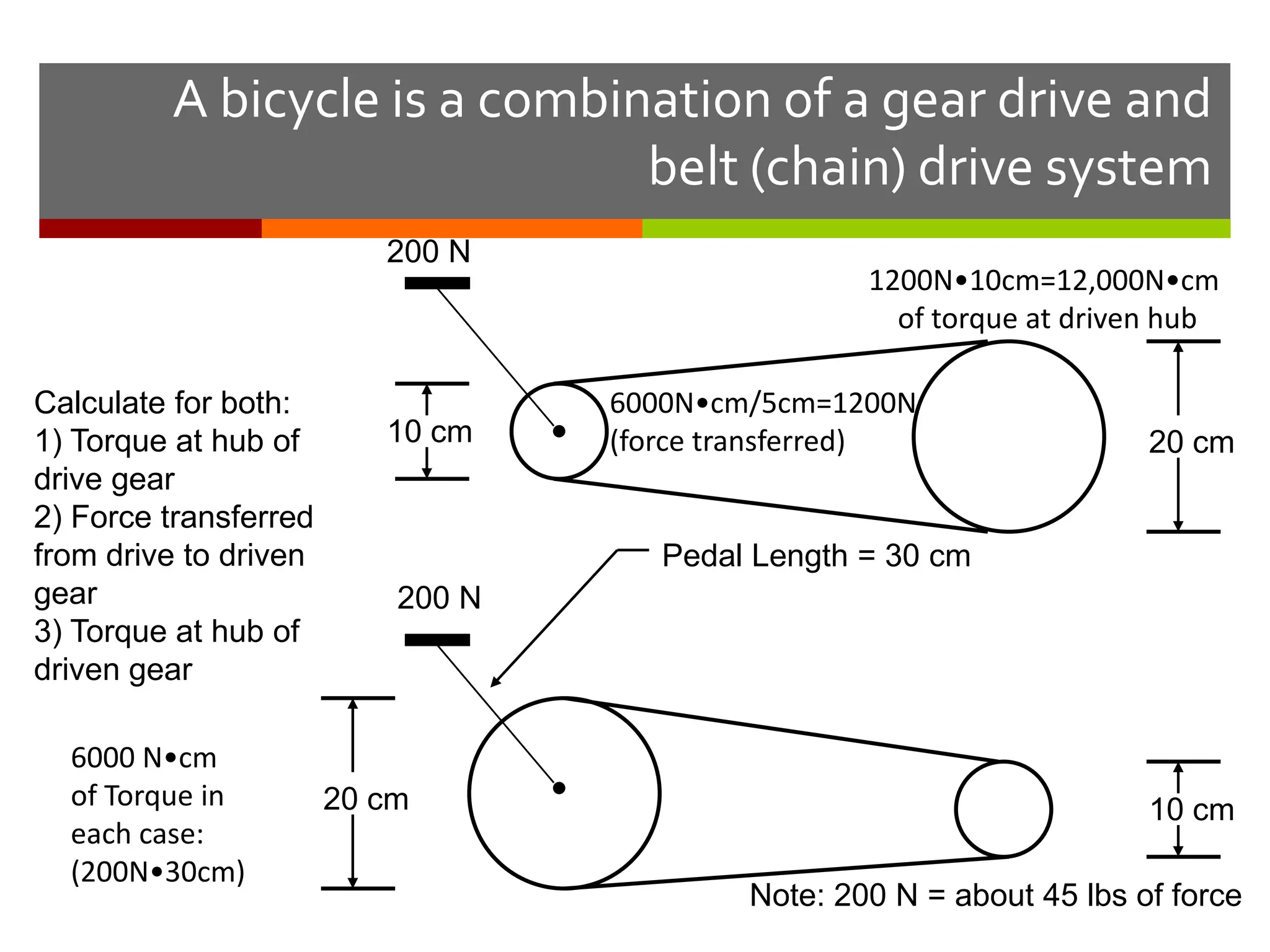
Torque Transformer -Gear Drive
            Drive =18 Teeth                                                              Driven =24 Teeth


1.   Force: Since the gears are directly connected the force from the drive gear is directly transferred to the driven
     gear. In other words Force In=Force Out

2.   Gear Ratio: Drive (input) gear = 18 teeth: Driven (Output gear) = 24 teeth
                      Gear Ratio = (Driven Gear / Drive Gear)
                                     = 24 / 18     or         = 1.33 to 1

3.   Lever Arm: The distance from the center of the gear to the gear tooth (radius).

4.   Angular Speed: If the drive gear makes one revolution, the output gear would make ¾ (.75) revolution). If
     the input gear was spinning at 1000 rpm the output gear would be spinning at 750 rpm

5.   Torque:            Torque in = Fin x Lin     Torque out = Fout x Lout

6.   Mechanical Advantage: Determined by the Gear Ratio ( or ratio of the radii)
A bicycle is a combination of a gear drive and
                              belt (chain) drive system
                          200 N
                                                   1200N•10cm=12,000N•cm
                                                     of torque at driven hub

Calculate for both:                6000N•cm/5cm=1200N
1) Torque at hub of       10 cm    (force transferred)                 20 cm
drive gear
2) Force transferred
from drive to driven                  Pedal Length = 30 cm
gear                       200 N
3) Torque at hub of
driven gear

  6000 N•cm
  of Torque in         20 cm                                           10 cm
  each case:
  (200N•30cm)
                                           Note: 200 N = about 45 lbs of force
Torque vs. Speed

            Greater Torque
            Less Speed


           Less Torque
           Greater Speed
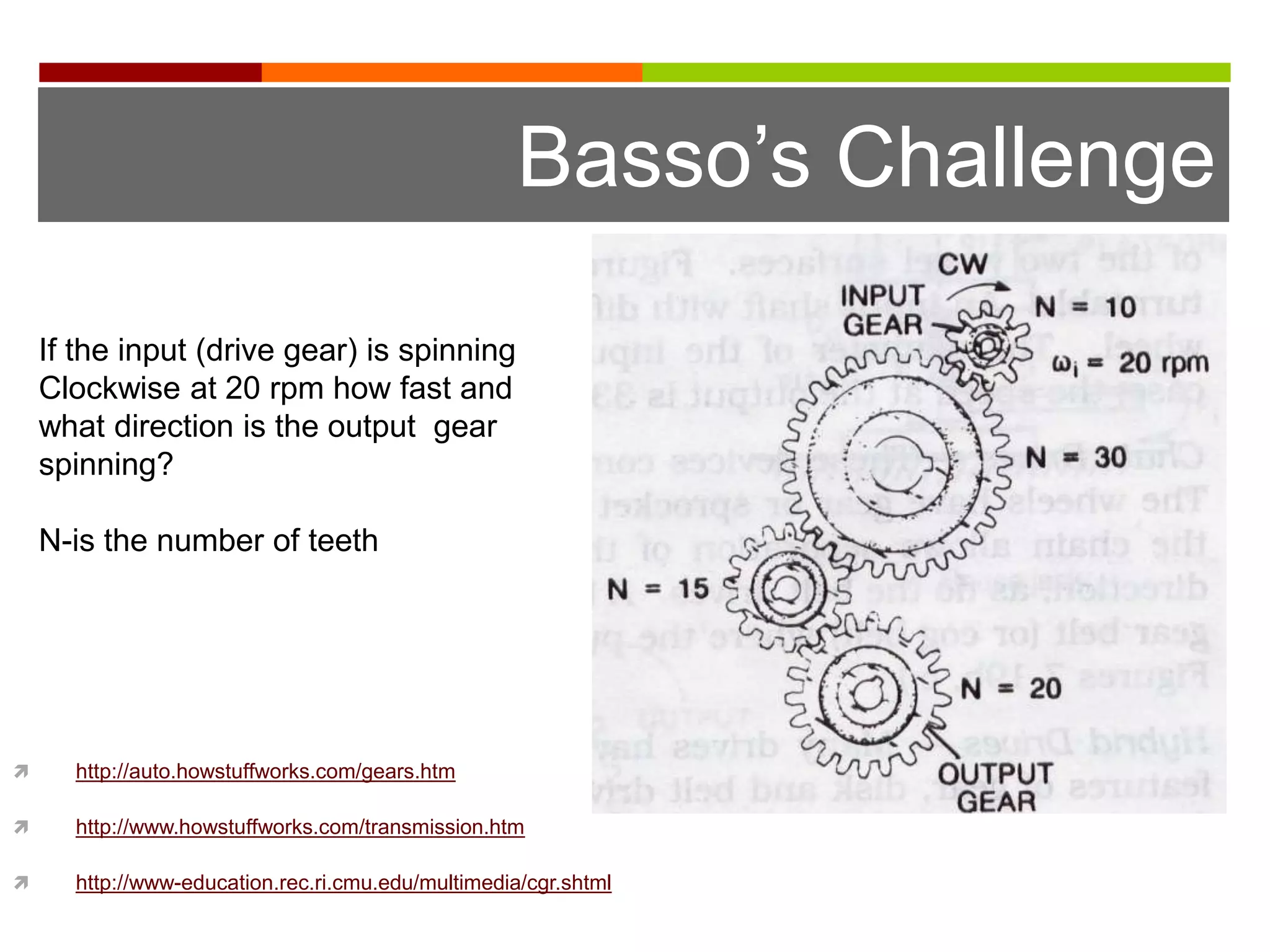
Basso’s Challenge

    If the input (drive gear) is spinning
    Clockwise at 20 rpm how fast and
    what direction is the output gear
    spinning?

    N-is the number of teeth


     http://auto.howstuffworks.com/gears.htm

     http://www.howstuffworks.com/transmission.htm

     http://www-education.rec.ri.cmu.edu/multimedia/cgr.shtml

Torque

  • 1.
     Torque this! What is torque?
  • 2.
    A B Lance needs to climb the Pyrenees. His only options are fixed gear bikes. Which one should he choose for the mountain climb? Why?
  • 3.
    Torque (Rotational Force) Torque is the effect of a force applied on a body at some distance from the axis of rotation of that body (c.w. or c.c.w.). Ex: Torque wrench or large pipe wrenches. Torque = Force * Lever arm (length) Unit of measurement: English = Ft lbs SI = Newton meters
  • 4.
    How is itcalculated?  As you apply a force to any point on a lever arm (FxL) it gives you a Torque value that is “in waiting” at the point of rotation.  If you try to “feel” or re-apply that torque at any other lever distance from the axis of rotation, the torque is the distributed along the lever length (L).  The shorter the Lever or smaller the sprocket, the greater the Force that is applied from Torque.
  • 5.
    In each case,the same torque gets “loaded” into the drive hub at the front sprocket. But A the torque then gets re- B applied through the length of lever arm. Depending on the length you’ll get some kind of Force (T/L=F) Because Lance loads the same amount of torque into the drive hub the smaller front sprocket distributes the torque less, so more force is “conserved” and is applied to the chain.
  • 6.
    Force Transformers –Belt Drive Drive Driven Force: Since the two pulleys are connected by a common belt the Force In = Force Out Lever Arm: The distance from the center of the pulley to the outside rim (radius). Angular Speed: If the output pulley is twice as big as the input pulley, then the output pulley would only make ½ revolution for every revolution of the input pulley. Torque: Torque in = Fin x Lin Torque out = Fout x Lout Mechanical Advantage = Torque out / Torque in Mechanical Advantage: Since the Forces of the two pulleys are equal, then the lever arm (radius) of the pulleys must determine mechanical advantage.
  • 7.
    Torque Transformer -GearDrive Drive =18 Teeth Driven =24 Teeth 1. Force: Since the gears are directly connected the force from the drive gear is directly transferred to the driven gear. In other words Force In=Force Out 2. Gear Ratio: Drive (input) gear = 18 teeth: Driven (Output gear) = 24 teeth Gear Ratio = (Driven Gear / Drive Gear) = 24 / 18 or = 1.33 to 1 3. Lever Arm: The distance from the center of the gear to the gear tooth (radius). 4. Angular Speed: If the drive gear makes one revolution, the output gear would make ¾ (.75) revolution). If the input gear was spinning at 1000 rpm the output gear would be spinning at 750 rpm 5. Torque: Torque in = Fin x Lin Torque out = Fout x Lout 6. Mechanical Advantage: Determined by the Gear Ratio ( or ratio of the radii)
  • 8.
    A bicycle isa combination of a gear drive and belt (chain) drive system 200 N 1200N•10cm=12,000N•cm of torque at driven hub Calculate for both: 6000N•cm/5cm=1200N 1) Torque at hub of 10 cm (force transferred) 20 cm drive gear 2) Force transferred from drive to driven Pedal Length = 30 cm gear 200 N 3) Torque at hub of driven gear 6000 N•cm of Torque in 20 cm 10 cm each case: (200N•30cm) Note: 200 N = about 45 lbs of force
  • 9.
    Torque vs. Speed Greater Torque Less Speed Less Torque Greater Speed
  • 10.
    Basso’s Challenge If the input (drive gear) is spinning Clockwise at 20 rpm how fast and what direction is the output gear spinning? N-is the number of teeth  http://auto.howstuffworks.com/gears.htm  http://www.howstuffworks.com/transmission.htm  http://www-education.rec.ri.cmu.edu/multimedia/cgr.shtml