Tools and Equipment
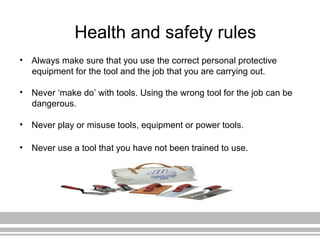
Health and safety rules
• Always make sure that you use the correct personal protective
equipment for the tool and the job that you are carrying out.
• Never ‘make do’ with tools. Using the wrong tool for the job can be
dangerous.
• Never play or misuse tools, equipment or power tools.
• Never use a tool that you have not been trained to use.
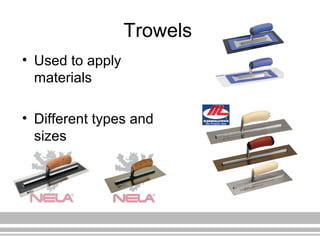
Trowels
• Used to apply
materials
• Different types and
sizes
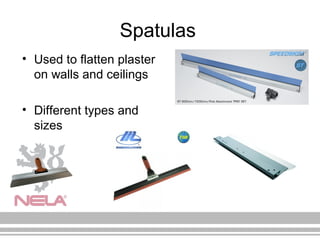
Spatulas
• Used to flatten plaster
on walls and ceilings
• Different types and
sizes
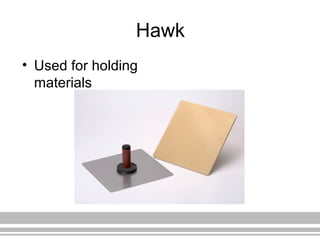
Hawk
• Used for holding
materials
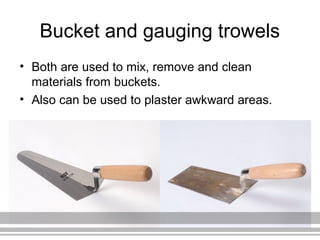
Bucket and gauging trowels
• Both are used to mix, remove and clean
materials from buckets.
• Also can be used to plaster awkward areas.
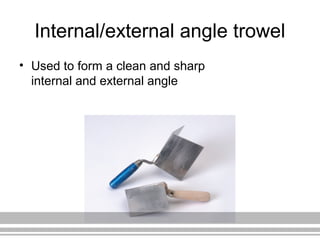
Internal/external angle trowel
• Used to form a clean and sharp
internal and external angle
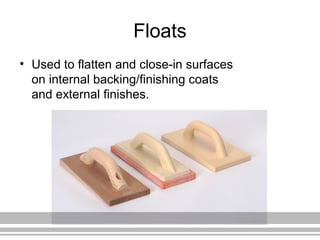
Floats
• Used to flatten and close-in surfaces
on internal backing/finishing coats
and external finishes.
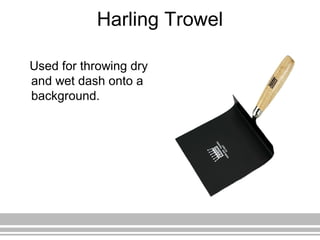
Harling Trowel
Used for throwing dry
and wet dash onto a
background.
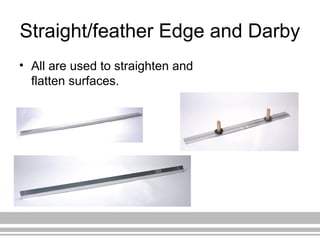
Straight/feather Edge and Darby
• All are used to straighten and
flatten surfaces.
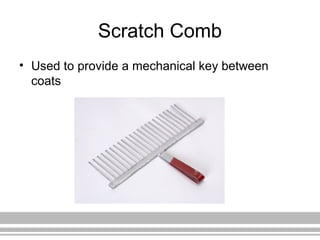
Scratch Comb
• Used to provide a mechanical key between
coats
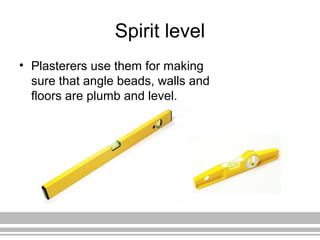
Spirit level
• Plasterers use them for making
sure that angle beads, walls and
floors are plumb and level.
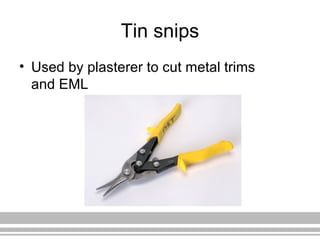
Tin snips
• Used by plasterer to cut metal trims
and EML
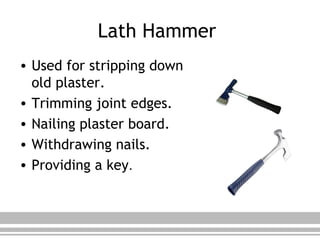
Lath Hammer
• Used for stripping down
old plaster.
• Trimming joint edges.
• Nailing plaster board.
• Withdrawing nails.
• Providing a key.
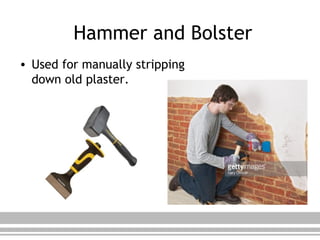
Hammer and Bolster
• Used for manually stripping
down old plaster.
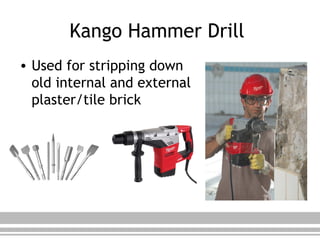
Kango Hammer Drill
• Used for stripping down
old internal and external
plaster/tile brick
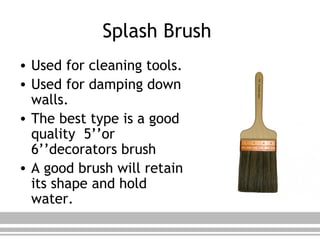
Splash Brush
• Used for cleaning tools.
• Used for damping down
walls.
• The best type is a good
quality 5’’or
6’’decorators brush
• A good brush will retain
its shape and hold
water.
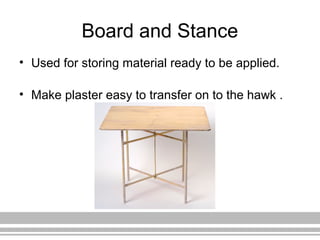
Board and Stance
• Used for storing material ready to be applied.
• Make plaster easy to transfer on to the hawk .
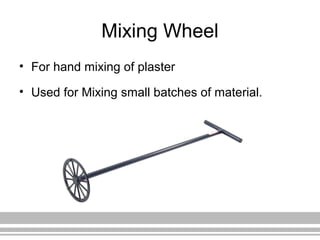
Mixing Wheel
• For hand mixing of plaster
• Used for Mixing small batches of material.
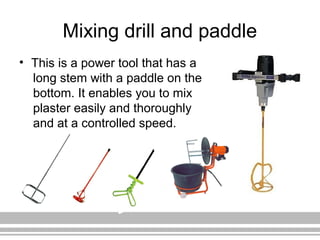
Mixing drill and paddle
• This is a power tool that has a
long stem with a paddle on the
bottom. It enables you to mix
plaster easily and thoroughly
and at a controlled speed.
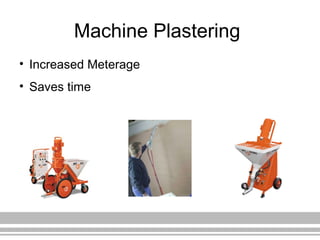
Machine Plastering
• Increased Meterage
• Saves time
Maintenance
• All should be kept clean throughout the
day.
• Cleaned free from plaster, dried and
oiled/lubricated where necessary.
• Stored in a safe and secure place.

Tools and Equipment

  • 1.
  • 2.
    Health and safetyrules • Always make sure that you use the correct personal protective equipment for the tool and the job that you are carrying out. • Never ‘make do’ with tools. Using the wrong tool for the job can be dangerous. • Never play or misuse tools, equipment or power tools. • Never use a tool that you have not been trained to use.
  • 3.
    Trowels • Used toapply materials • Different types and sizes
  • 4.
    Spatulas • Used toflatten plaster on walls and ceilings • Different types and sizes
  • 5.
    Hawk • Used forholding materials
  • 6.
    Bucket and gaugingtrowels • Both are used to mix, remove and clean materials from buckets. • Also can be used to plaster awkward areas.
  • 7.
    Internal/external angle trowel •Used to form a clean and sharp internal and external angle
  • 8.
    Floats • Used toflatten and close-in surfaces on internal backing/finishing coats and external finishes.
  • 9.
    Harling Trowel Used forthrowing dry and wet dash onto a background.
  • 10.
    Straight/feather Edge andDarby • All are used to straighten and flatten surfaces.
  • 11.
    Scratch Comb • Usedto provide a mechanical key between coats
  • 12.
    Spirit level • Plasterersuse them for making sure that angle beads, walls and floors are plumb and level.
  • 13.
    Tin snips • Usedby plasterer to cut metal trims and EML
  • 14.
    Lath Hammer • Usedfor stripping down old plaster. • Trimming joint edges. • Nailing plaster board. • Withdrawing nails. • Providing a key.
  • 15.
    Hammer and Bolster •Used for manually stripping down old plaster.
  • 16.
    Kango Hammer Drill •Used for stripping down old internal and external plaster/tile brick
  • 17.
    Splash Brush • Usedfor cleaning tools. • Used for damping down walls. • The best type is a good quality 5’’or 6’’decorators brush • A good brush will retain its shape and hold water.
  • 18.
    Board and Stance •Used for storing material ready to be applied. • Make plaster easy to transfer on to the hawk .
  • 19.
    Mixing Wheel • Forhand mixing of plaster • Used for Mixing small batches of material.
  • 20.
    Mixing drill andpaddle • This is a power tool that has a long stem with a paddle on the bottom. It enables you to mix plaster easily and thoroughly and at a controlled speed.
  • 21.
    Machine Plastering • IncreasedMeterage • Saves time
  • 22.
    Maintenance • All shouldbe kept clean throughout the day. • Cleaned free from plaster, dried and oiled/lubricated where necessary. • Stored in a safe and secure place.