Section E: Environmental Awareness
What your employer should do:
• Explain specific environmental issues at induction
• Let you know about their methods to avoid
pollution
• Provide means to distribute, store and use
materials in a manner that avoids damage to the
environment
• Provide means to dispose of waste
• Provide emergency response methods (such as
spill kits)
Environmental Awareness
Section E: Environmental Awareness
What you should do for your employer:
• Reuse materials where possible
• Dispose of waste correctly
• Avoid creating dust or noise
• Know where the spill kit is located
Environmental Awareness
Section E: Environmental Awareness
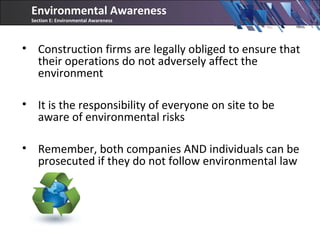
• Construction firms are legally obliged to ensure that
their operations do not adversely affect the
environment
• It is the responsibility of everyone on site to be
aware of environmental risks
• Remember, both companies AND individuals can be
prosecuted if they do not follow environmental law
Environmental Awareness
Section E: Environmental Awareness
Sustainability means carrying out construction work in a
responsible manner with a view to minimising
environmental damage
Examples of good practice include:
• Using local products to minimise transport
• Using local labour and services
• Saving energy by turning off equipment when not in
use
• Designing out waste
• Reusing left over materials to conserve raw
materials
• Segregating waste into different types to improve
recycling
• Using reclaimed materials
Sustainability
Section E: Environmental Awareness
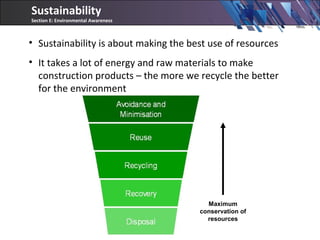
• Sustainability is about making the best use of resources
• It takes a lot of energy and raw materials to make
construction products – the more we recycle the better
for the environment
Maximum
conservation of
resources
Sustainability
Section E: Environmental Awareness
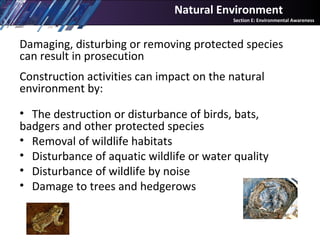
Damaging, disturbing or removing protected species
can result in prosecution
Construction activities can impact on the natural
environment by:
• The destruction or disturbance of birds, bats,
badgers and other protected species
• Removal of wildlife habitats
• Disturbance of aquatic wildlife or water quality
• Disturbance of wildlife by noise
• Damage to trees and hedgerows
Natural Environment
Section E: Environmental Awareness
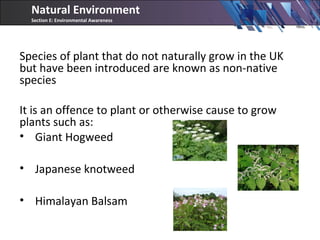
Species of plant that do not naturally grow in the UK
but have been introduced are known as non-native
species
It is an offence to plant or otherwise cause to grow
plants such as:
• Giant Hogweed
• Japanese knotweed
• Himalayan Balsam
Natural Environment
Section E: Environmental Awareness
What are the causes of pollution?
• Deliberately or accidentally allowing substances to
soak into the ground or enter rivers or burns
• Allowing smoke fumes or dust to contaminate the air
• Causing excessive noise, light or vibration that can
affect the quality of life for nearby residents
• Mixing contaminated waste with ‘clean’ waste
• The destruction or disturbance of the habitats of
plants or wildlife
Pollution
Section E: Environmental Awareness
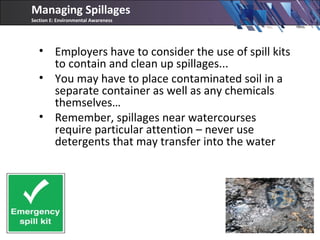
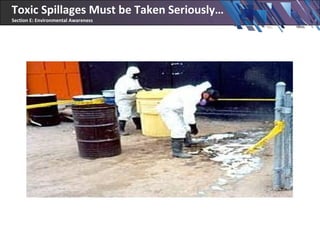
• Employers have to consider the use of spill kits
to contain and clean up spillages...
• You may have to place contaminated soil in a
separate container as well as any chemicals
themselves…
• Remember, spillages near watercourses
require particular attention – never use
detergents that may transfer into the water
Managing Spillages
Section E: Environmental Awareness
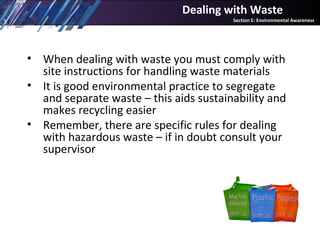
• When dealing with waste you must comply with
site instructions for handling waste materials
• It is good environmental practice to segregate
and separate waste – this aids sustainability and
makes recycling easier
• Remember, there are specific rules for dealing
with hazardous waste – if in doubt consult your
supervisor
Dealing with Waste
Section E: Environmental Awareness
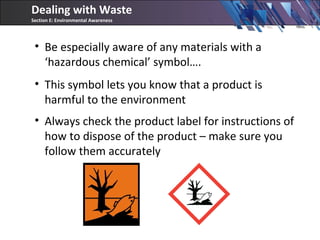
• Be especially aware of any materials with a
‘hazardous chemical’ symbol….
• This symbol lets you know that a product is
harmful to the environment
• Always check the product label for instructions of
how to dispose of the product – make sure you
follow them accurately
Dealing with Waste
Section E: Environmental Awareness
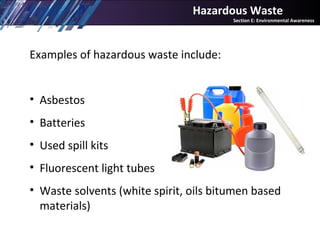
Examples of hazardous waste include:
• Asbestos
• Batteries
• Used spill kits
• Fluorescent light tubes
• Waste solvents (white spirit, oils bitumen based
materials)
Hazardous Waste
Section E: Environmental Awareness
Toxic Spillages Must be Taken Seriously…
Section E: Environmental Awareness
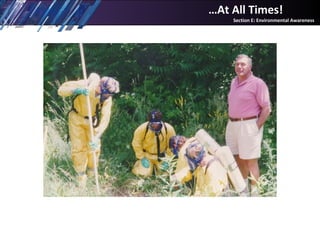
…At All Times!
Section E: Environmental Awareness
Questions
Section E: Environmental Awareness

E Environmental Awareness

  • 1.
  • 2.
    What your employershould do: • Explain specific environmental issues at induction • Let you know about their methods to avoid pollution • Provide means to distribute, store and use materials in a manner that avoids damage to the environment • Provide means to dispose of waste • Provide emergency response methods (such as spill kits) Environmental Awareness Section E: Environmental Awareness
  • 3.
    What you shoulddo for your employer: • Reuse materials where possible • Dispose of waste correctly • Avoid creating dust or noise • Know where the spill kit is located Environmental Awareness Section E: Environmental Awareness
  • 4.
    • Construction firmsare legally obliged to ensure that their operations do not adversely affect the environment • It is the responsibility of everyone on site to be aware of environmental risks • Remember, both companies AND individuals can be prosecuted if they do not follow environmental law Environmental Awareness Section E: Environmental Awareness
  • 5.
    Sustainability means carryingout construction work in a responsible manner with a view to minimising environmental damage Examples of good practice include: • Using local products to minimise transport • Using local labour and services • Saving energy by turning off equipment when not in use • Designing out waste • Reusing left over materials to conserve raw materials • Segregating waste into different types to improve recycling • Using reclaimed materials Sustainability Section E: Environmental Awareness
  • 6.
    • Sustainability isabout making the best use of resources • It takes a lot of energy and raw materials to make construction products – the more we recycle the better for the environment Maximum conservation of resources Sustainability Section E: Environmental Awareness
  • 7.
    Damaging, disturbing orremoving protected species can result in prosecution Construction activities can impact on the natural environment by: • The destruction or disturbance of birds, bats, badgers and other protected species • Removal of wildlife habitats • Disturbance of aquatic wildlife or water quality • Disturbance of wildlife by noise • Damage to trees and hedgerows Natural Environment Section E: Environmental Awareness
  • 8.
    Species of plantthat do not naturally grow in the UK but have been introduced are known as non-native species It is an offence to plant or otherwise cause to grow plants such as: • Giant Hogweed • Japanese knotweed • Himalayan Balsam Natural Environment Section E: Environmental Awareness
  • 9.
    What are thecauses of pollution? • Deliberately or accidentally allowing substances to soak into the ground or enter rivers or burns • Allowing smoke fumes or dust to contaminate the air • Causing excessive noise, light or vibration that can affect the quality of life for nearby residents • Mixing contaminated waste with ‘clean’ waste • The destruction or disturbance of the habitats of plants or wildlife Pollution Section E: Environmental Awareness
  • 10.
    • Employers haveto consider the use of spill kits to contain and clean up spillages... • You may have to place contaminated soil in a separate container as well as any chemicals themselves… • Remember, spillages near watercourses require particular attention – never use detergents that may transfer into the water Managing Spillages Section E: Environmental Awareness
  • 11.
    • When dealingwith waste you must comply with site instructions for handling waste materials • It is good environmental practice to segregate and separate waste – this aids sustainability and makes recycling easier • Remember, there are specific rules for dealing with hazardous waste – if in doubt consult your supervisor Dealing with Waste Section E: Environmental Awareness
  • 12.
    • Be especiallyaware of any materials with a ‘hazardous chemical’ symbol…. • This symbol lets you know that a product is harmful to the environment • Always check the product label for instructions of how to dispose of the product – make sure you follow them accurately Dealing with Waste Section E: Environmental Awareness
  • 13.
    Examples of hazardouswaste include: • Asbestos • Batteries • Used spill kits • Fluorescent light tubes • Waste solvents (white spirit, oils bitumen based materials) Hazardous Waste Section E: Environmental Awareness
  • 14.
    Toxic Spillages Mustbe Taken Seriously… Section E: Environmental Awareness
  • 15.
    …At All Times! SectionE: Environmental Awareness
  • 16.