Copyright © 2009 The Open Group. All Rights Reserved. 
TOGAF™ is a trademark of The Open Group. 
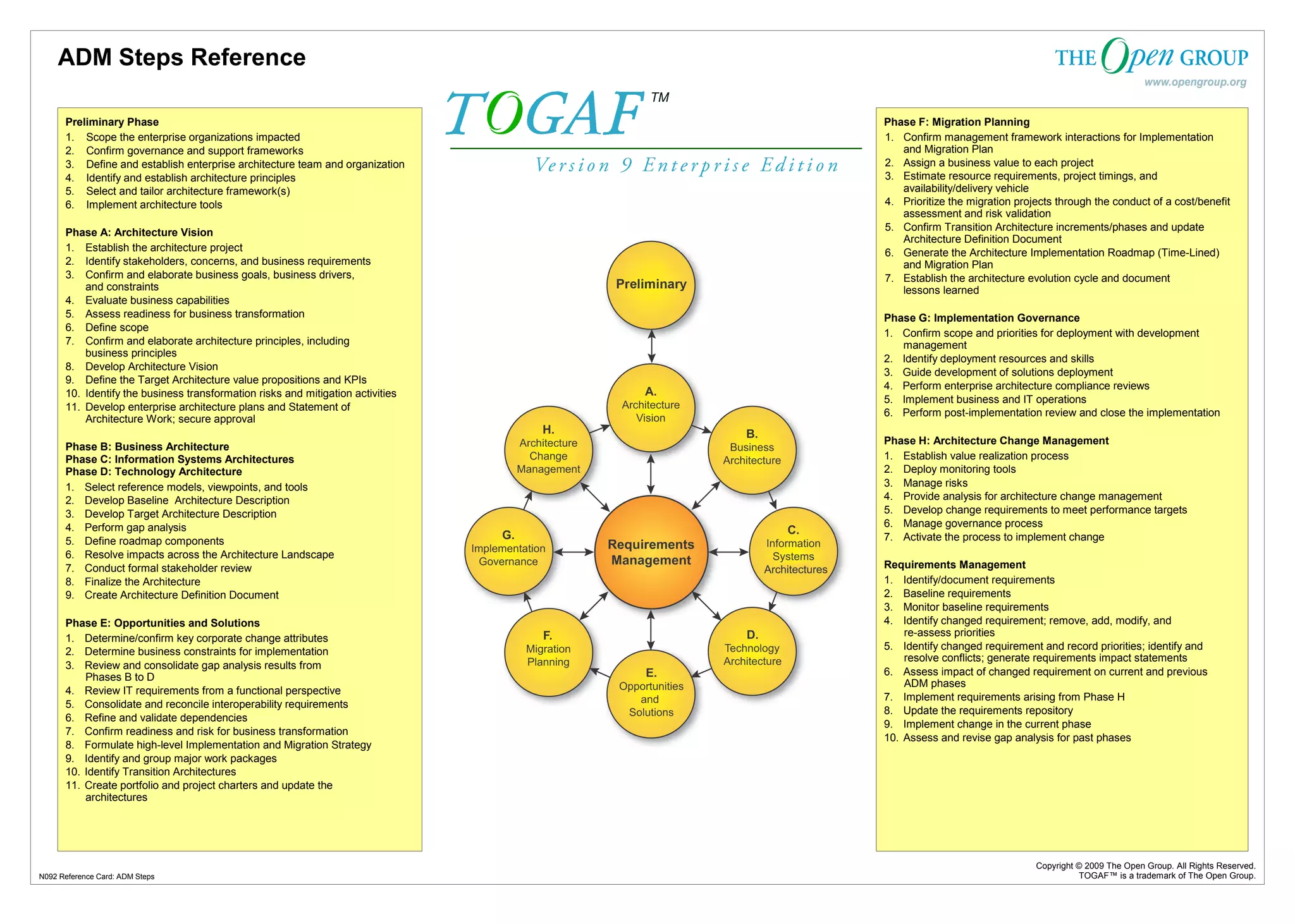
ADM Steps Reference 
Preliminary Phase 
1. Scope the enterprise organizations impacted 
2. Confirm governance and support frameworks 
3. Define and establish enterprise architecture team and organization 
4. Identify and establish architecture principles 
5. Select and tailor architecture framework(s) 
6. Implement architecture tools 
Phase A: Architecture Vision 
1. Establish the architecture project 
2. Identify stakeholders, concerns, and business requirements 
3. Confirm and elaborate business goals, business drivers, 
and constraints 
4. Evaluate business capabilities 
5. Assess readiness for business transformation 
6. Define scope 
7. Confirm and elaborate architecture principles, including 
business principles 
8. Develop Architecture Vision 
9. Define the Target Architecture value propositions and KPIs 
10. Identify the business transformation risks and mitigation activities 
11. Develop enterprise architecture plans and Statement of 
Architecture Work; secure approval 
Phase B: Business Architecture 
Phase C: Information Systems Architectures 
Phase D: Technology Architecture 
1. Select reference models, viewpoints, and tools 
2. Develop Baseline Architecture Description 
3. Develop Target Architecture Description 
4. Perform gap analysis 
5. Define roadmap components 
6. Resolve impacts across the Architecture Landscape 
7. Conduct formal stakeholder review 
8. Finalize the Architecture 
9. Create Architecture Definition Document 
Phase E: Opportunities and Solutions 
1. Determine/confirm key corporate change attributes 
2. Determine business constraints for implementation 
3. Review and consolidate gap analysis results from 
Phases B to D 
4. Review IT requirements from a functional perspective 
5. Consolidate and reconcile interoperability requirements 
6. Refine and validate dependencies 
7. Confirm readiness and risk for business transformation 
8. Formulate high-level Implementation and Migration Strategy 
9. Identify and group major work packages 
10. Identify Transition Architectures 
11. Create portfolio and project charters and update the 
architectures 
Phase F: Migration Planning 
1. Confirm management framework interactions for Implementation 
and Migration Plan 
2. Assign a business value to each project 
3. Estimate resource requirements, project timings, and 
availability/delivery vehicle 
4. Prioritize the migration projects through the conduct of a cost/benefit 
assessment and risk validation 
5. Confirm Transition Architecture increments/phases and update 
Architecture Definition Document 
6. Generate the Architecture Implementation Roadmap (Time-Lined) 
and Migration Plan 
7. Establish the architecture evolution cycle and document 
lessons learned 
Phase G: Implementation Governance 
1. Confirm scope and priorities for deployment with development 
management 
2. Identify deployment resources and skills 
3. Guide development of solutions deployment 
4. Perform enterprise architecture compliance reviews 
5. Implement business and IT operations 
6. Perform post-implementation review and close the implementation 
Phase H: Architecture Change Management 
1. Establish value realization process 
2. Deploy monitoring tools 
3. Manage risks 
4. Provide analysis for architecture change management 
5. Develop change requirements to meet performance targets 
6. Manage governance process 
7. Activate the process to implement change 
Requirements Management 
1. Identify/document requirements 
2. Baseline requirements 
3. Monitor baseline requirements 
4. Identify changed requirement; remove, add, modify, and 
re-assess priorities 
5. Identify changed requirement and record priorities; identify and 
resolve conflicts; generate requirements impact statements 
6. Assess impact of changed requirement on current and previous 
ADM phases 
7. Implement requirements arising from Phase H 
8. Update the requirements repository 
9. Implement change in the current phase 
10. Assess and revise gap analysis for past phases 
N092 Reference Card: ADM Steps
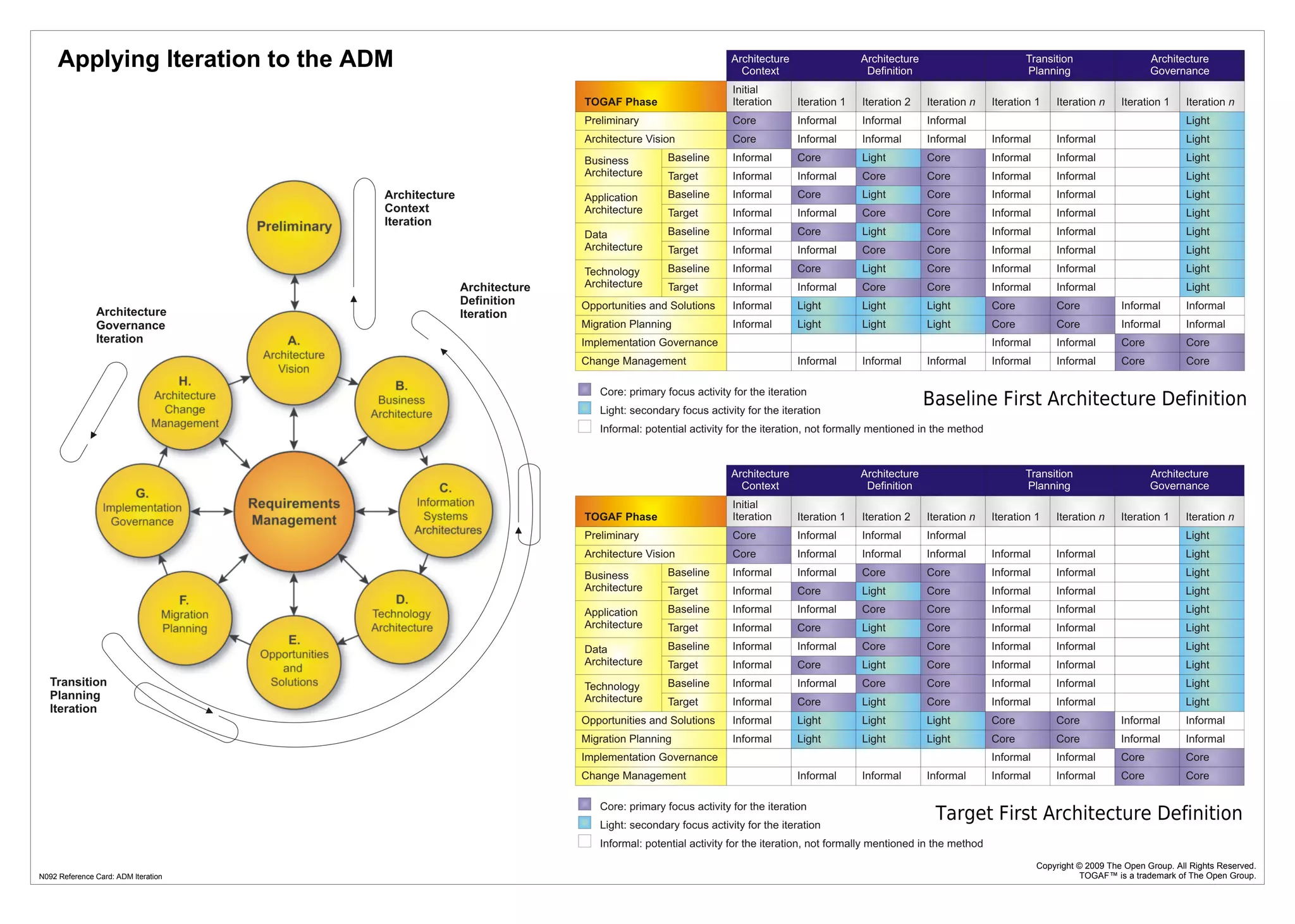
Baseline First Architecture Definition 
Target First Architecture Definition 
Applying Iteration to the ADM 
Copyright © 2009 The Open Group. All Rights Reserved. 
TOGAF™ is a trademark N092 Reference Card: ADM Iteration of The Open Group.

TOGAF in 8 Steps

  • 1.
    Copyright © 2009The Open Group. All Rights Reserved. TOGAF™ is a trademark of The Open Group. ADM Steps Reference Preliminary Phase 1. Scope the enterprise organizations impacted 2. Confirm governance and support frameworks 3. Define and establish enterprise architecture team and organization 4. Identify and establish architecture principles 5. Select and tailor architecture framework(s) 6. Implement architecture tools Phase A: Architecture Vision 1. Establish the architecture project 2. Identify stakeholders, concerns, and business requirements 3. Confirm and elaborate business goals, business drivers, and constraints 4. Evaluate business capabilities 5. Assess readiness for business transformation 6. Define scope 7. Confirm and elaborate architecture principles, including business principles 8. Develop Architecture Vision 9. Define the Target Architecture value propositions and KPIs 10. Identify the business transformation risks and mitigation activities 11. Develop enterprise architecture plans and Statement of Architecture Work; secure approval Phase B: Business Architecture Phase C: Information Systems Architectures Phase D: Technology Architecture 1. Select reference models, viewpoints, and tools 2. Develop Baseline Architecture Description 3. Develop Target Architecture Description 4. Perform gap analysis 5. Define roadmap components 6. Resolve impacts across the Architecture Landscape 7. Conduct formal stakeholder review 8. Finalize the Architecture 9. Create Architecture Definition Document Phase E: Opportunities and Solutions 1. Determine/confirm key corporate change attributes 2. Determine business constraints for implementation 3. Review and consolidate gap analysis results from Phases B to D 4. Review IT requirements from a functional perspective 5. Consolidate and reconcile interoperability requirements 6. Refine and validate dependencies 7. Confirm readiness and risk for business transformation 8. Formulate high-level Implementation and Migration Strategy 9. Identify and group major work packages 10. Identify Transition Architectures 11. Create portfolio and project charters and update the architectures Phase F: Migration Planning 1. Confirm management framework interactions for Implementation and Migration Plan 2. Assign a business value to each project 3. Estimate resource requirements, project timings, and availability/delivery vehicle 4. Prioritize the migration projects through the conduct of a cost/benefit assessment and risk validation 5. Confirm Transition Architecture increments/phases and update Architecture Definition Document 6. Generate the Architecture Implementation Roadmap (Time-Lined) and Migration Plan 7. Establish the architecture evolution cycle and document lessons learned Phase G: Implementation Governance 1. Confirm scope and priorities for deployment with development management 2. Identify deployment resources and skills 3. Guide development of solutions deployment 4. Perform enterprise architecture compliance reviews 5. Implement business and IT operations 6. Perform post-implementation review and close the implementation Phase H: Architecture Change Management 1. Establish value realization process 2. Deploy monitoring tools 3. Manage risks 4. Provide analysis for architecture change management 5. Develop change requirements to meet performance targets 6. Manage governance process 7. Activate the process to implement change Requirements Management 1. Identify/document requirements 2. Baseline requirements 3. Monitor baseline requirements 4. Identify changed requirement; remove, add, modify, and re-assess priorities 5. Identify changed requirement and record priorities; identify and resolve conflicts; generate requirements impact statements 6. Assess impact of changed requirement on current and previous ADM phases 7. Implement requirements arising from Phase H 8. Update the requirements repository 9. Implement change in the current phase 10. Assess and revise gap analysis for past phases N092 Reference Card: ADM Steps
  • 2.
    Baseline First ArchitectureDefinition Target First Architecture Definition Applying Iteration to the ADM Copyright © 2009 The Open Group. All Rights Reserved. TOGAF™ is a trademark N092 Reference Card: ADM Iteration of The Open Group.