Enterprise Architecture
Vikas Grover
vgrover@redhat.com
512 550 5387
 Changing IT Skills and Roles
−Expanding Red Hat
−Evolving CIO Role
Business Aligned IT (BAIT)
−Enterprise Architecture (EA)
−Solution Architect and Enterprise Architect
−Enterprise Architecture as Strategy (MIT)
− Architecture Development Frameworks
−TOGAF Overview (High Level)
−Netting it Out
−Framework Comparison
Next Steps
Thank You
Contents
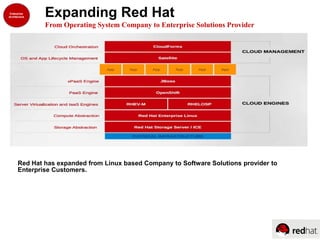
Red Hat has expanded from Linux based Company to Software Solutions provider to
Enterprise Customers.
Expanding Red Hat
From Operating System Company to Enterprise Solutions Provider
Evolving CIO Roles
From Operational IT to Business Transformational IT
.....And As CIO Role is evolving, Solution Architects skills should also
expand to
Align with ‘C’ Level Executives
Position our offerings as Business Transformation tools
Understand Business needs and align Business strategy with technical
strategy
…..Expand Skills
Enterprise Architecture
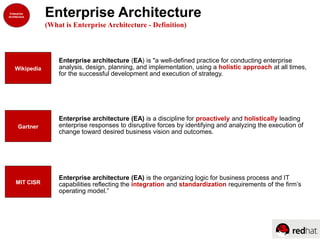
(What is Enterprise Architecture - Definition)
Enterprise architecture (EA) is "a well-defined practice for conducting enterprise
analysis, design, planning, and implementation, using a holistic approach at all times,
for the successful development and execution of strategy.
Enterprise architecture (EA) is a discipline for proactively and holistically leading
enterprise responses to disruptive forces by identifying and analyzing the execution of
change toward desired business vision and outcomes.
Enterprise architecture (EA) is the organizing logic for business process and IT
capabilities reflecting the integration and standardization requirements of the firm’s
operating model.”
Wikipedia
Gartner
MIT CISR
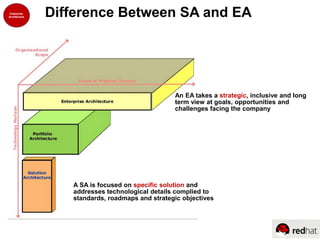
Difference Between SA and EA
An EA takes a strategic, inclusive and long
term view at goals, opportunities and
challenges facing the company
A SA is focused on specific solution and
addresses technological details complied to
standards, roadmaps and strategic objectives
Let’s Look at MIT CISR approach to Enterprise Architecture
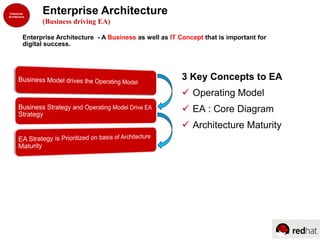
Enterprise Architecture
(Business driving EA)
3 Key Concepts to EA
 Operating Model
 EA : Core Diagram
 Architecture Maturity
Enterprise Architecture - A Business as well as IT Concept that is important for
digital success.
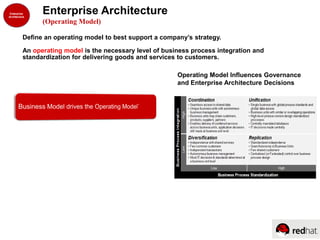
Operating Model Influences Governance
and Enterprise Architecture Decisions
Enterprise Architecture
(Operating Model)
Define an operating model to best support a company’s strategy.
An operating model is the necessary level of business process integration and
standardization for delivering goods and services to customers.
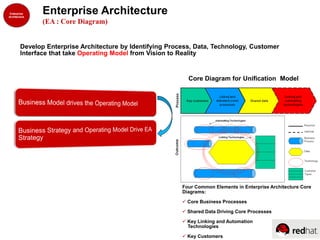
Enterprise Architecture
(EA : Core Diagram)
Four Common Elements in Enterprise Architecture Core
Diagrams:
 Core Business Processes
 Shared Data Driving Core Processes
 Key Linking and Automation
Technologies
 Key Customers
Develop Enterprise Architecture by Identifying Process, Data, Technology, Customer
Interface that take Operating Model from Vision to Reality
Core Diagram for Unification Model
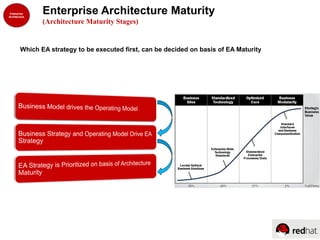
Enterprise Architecture Maturity
(Architecture Maturity Stages)
Which EA strategy to be executed first, can be decided on basis of EA Maturity
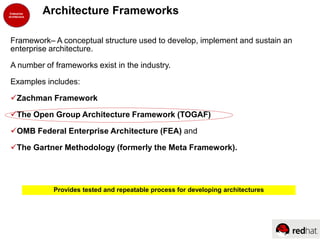
Architecture Frameworks
Framework– A conceptual structure used to develop, implement and sustain an
enterprise architecture.
A number of frameworks exist in the industry.
Examples includes:
Zachman Framework
The Open Group Architecture Framework (TOGAF)
OMB Federal Enterprise Architecture (FEA) and
The Gartner Methodology (formerly the Meta Framework).
Provides tested and repeatable process for developing architectures
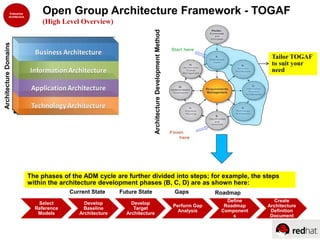
Open Group Architecture Framework - TOGAF
(High Level Overview)
ArchitectureDomains
ArchitectureDevelopmentMethod
Tailor TOGAF
to suit your
need
Select
Reference
Models
Develop
Baseline
Architecture
Develop
Target
Architecture
Perform Gap
Analysis
Define
Roadmap
Component
s
Create
Architecture
Definition
Document
The phases of the ADM cycle are further divided into steps; for example, the steps
within the architecture development phases (B, C, D) are as shown here:
Current State Future State Gaps Roadmap
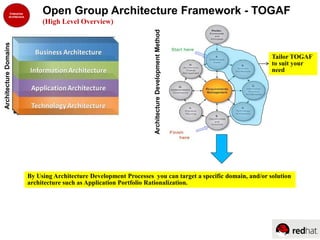
Open Group Architecture Framework - TOGAF
(High Level Overview)
ArchitectureDomains
ArchitectureDevelopmentMethod
Tailor TOGAF
to suit your
need
By Using Architecture Development Processes you can target a specific domain, and/or solution
architecture such as Application Portfolio Rationalization.
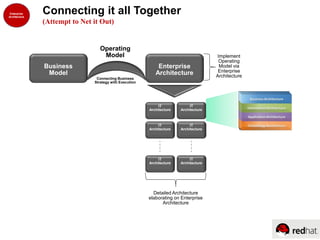
Business
Model
Enterprise
Architecture
Operating
Model
IT
Architecture
IT
Architecture
IT
Architecture
IT
Architecture
IT
Architecture
IT
Architecture
Connecting it all Together
(Attempt to Net it Out)
Connecting Business
Strategy with Execution
Implement
Operating
Model via
Enterprise
Architecture
Detailed Architecture
elaborating on Enterprise
Architecture
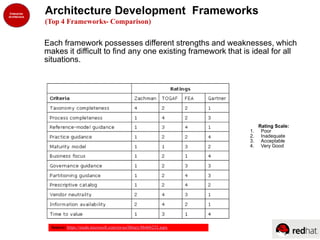
Architecture Development Frameworks
(Top 4 Frameworks- Comparison)
Source: https://msdn.microsoft.com/en-us/library/bb466232.aspx
Each framework possesses different strengths and weaknesses, which
makes it difficult to find any one existing framework that is ideal for all
situations.
Rating Scale:
1. Poor
2. Inadequate
3. Acceptable
4. Very Good
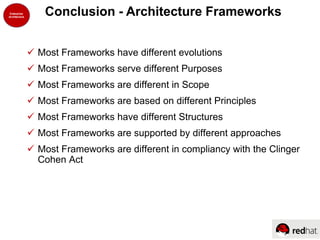
Conclusion - Architecture Frameworks
 Most Frameworks have different evolutions
 Most Frameworks serve different Purposes
 Most Frameworks are different in Scope
 Most Frameworks are based on different Principles
 Most Frameworks have different Structures
 Most Frameworks are supported by different approaches
 Most Frameworks are different in compliancy with the Clinger
Cohen Act
Framework for Your Organization
(Create or Choose?)
Create your own, for eg: tailor TOGAF, or Choose Existing
Architecture Development Framework
Next Steps
Gather Feedback
Determine Further Steps Accordingly
Vikas Grover
Sr. Solution Architect
8260 Greensboro Drive
McLean, VA 22102 Email: vgrover@redhat.com
Mobile: 512 550 5387
Thank You
BACKGROUND:
• 10+ years experience in SOA/Middleware/BPM and
integration technology architecture and delivery.
• Advising clients for complex strategic architecture
initiatives, using industry best practices and a variety of
reference architectures
EXPERTISE:
• Worked in Financial, Insurance and Telecom industry.
Knowledge of industries such as Manufacturing, Media
and Entertainment
• Enterprise Architecture Practitioner. Developing future
state architectures and actionable implementation
roadmaps.
• Understanding Business Case, Envisioning Solution and
architecture & design of Global SOA and BPM Projects
• Enterprise Business Integration and Technology
Architecture.
EDUCATION:
• BTech in Computer Sciences & Engineering
CERTIFICATIONS:
• Certified Scrum Master
• Developing and Managing a Successful Product
Strategy – MIT Sloan School of Management

Enterprise Architecture

  • 1.
  • 2.
     Changing ITSkills and Roles −Expanding Red Hat −Evolving CIO Role Business Aligned IT (BAIT) −Enterprise Architecture (EA) −Solution Architect and Enterprise Architect −Enterprise Architecture as Strategy (MIT) − Architecture Development Frameworks −TOGAF Overview (High Level) −Netting it Out −Framework Comparison Next Steps Thank You Contents
  • 3.
    Red Hat hasexpanded from Linux based Company to Software Solutions provider to Enterprise Customers. Expanding Red Hat From Operating System Company to Enterprise Solutions Provider
  • 4.
    Evolving CIO Roles FromOperational IT to Business Transformational IT
  • 5.
    .....And As CIORole is evolving, Solution Architects skills should also expand to Align with ‘C’ Level Executives Position our offerings as Business Transformation tools Understand Business needs and align Business strategy with technical strategy …..Expand Skills
  • 6.
  • 7.
    Enterprise Architecture (What isEnterprise Architecture - Definition) Enterprise architecture (EA) is "a well-defined practice for conducting enterprise analysis, design, planning, and implementation, using a holistic approach at all times, for the successful development and execution of strategy. Enterprise architecture (EA) is a discipline for proactively and holistically leading enterprise responses to disruptive forces by identifying and analyzing the execution of change toward desired business vision and outcomes. Enterprise architecture (EA) is the organizing logic for business process and IT capabilities reflecting the integration and standardization requirements of the firm’s operating model.” Wikipedia Gartner MIT CISR
  • 8.
    Difference Between SAand EA An EA takes a strategic, inclusive and long term view at goals, opportunities and challenges facing the company A SA is focused on specific solution and addresses technological details complied to standards, roadmaps and strategic objectives
  • 9.
    Let’s Look atMIT CISR approach to Enterprise Architecture
  • 10.
    Enterprise Architecture (Business drivingEA) 3 Key Concepts to EA  Operating Model  EA : Core Diagram  Architecture Maturity Enterprise Architecture - A Business as well as IT Concept that is important for digital success.
  • 11.
    Operating Model InfluencesGovernance and Enterprise Architecture Decisions Enterprise Architecture (Operating Model) Define an operating model to best support a company’s strategy. An operating model is the necessary level of business process integration and standardization for delivering goods and services to customers.
  • 12.
    Enterprise Architecture (EA :Core Diagram) Four Common Elements in Enterprise Architecture Core Diagrams:  Core Business Processes  Shared Data Driving Core Processes  Key Linking and Automation Technologies  Key Customers Develop Enterprise Architecture by Identifying Process, Data, Technology, Customer Interface that take Operating Model from Vision to Reality Core Diagram for Unification Model
  • 13.
    Enterprise Architecture Maturity (ArchitectureMaturity Stages) Which EA strategy to be executed first, can be decided on basis of EA Maturity
  • 14.
    Architecture Frameworks Framework– Aconceptual structure used to develop, implement and sustain an enterprise architecture. A number of frameworks exist in the industry. Examples includes: Zachman Framework The Open Group Architecture Framework (TOGAF) OMB Federal Enterprise Architecture (FEA) and The Gartner Methodology (formerly the Meta Framework). Provides tested and repeatable process for developing architectures
  • 15.
    Open Group ArchitectureFramework - TOGAF (High Level Overview) ArchitectureDomains ArchitectureDevelopmentMethod Tailor TOGAF to suit your need Select Reference Models Develop Baseline Architecture Develop Target Architecture Perform Gap Analysis Define Roadmap Component s Create Architecture Definition Document The phases of the ADM cycle are further divided into steps; for example, the steps within the architecture development phases (B, C, D) are as shown here: Current State Future State Gaps Roadmap
  • 16.
    Open Group ArchitectureFramework - TOGAF (High Level Overview) ArchitectureDomains ArchitectureDevelopmentMethod Tailor TOGAF to suit your need By Using Architecture Development Processes you can target a specific domain, and/or solution architecture such as Application Portfolio Rationalization.
  • 17.
    Business Model Enterprise Architecture Operating Model IT Architecture IT Architecture IT Architecture IT Architecture IT Architecture IT Architecture Connecting it allTogether (Attempt to Net it Out) Connecting Business Strategy with Execution Implement Operating Model via Enterprise Architecture Detailed Architecture elaborating on Enterprise Architecture
  • 18.
    Architecture Development Frameworks (Top4 Frameworks- Comparison) Source: https://msdn.microsoft.com/en-us/library/bb466232.aspx Each framework possesses different strengths and weaknesses, which makes it difficult to find any one existing framework that is ideal for all situations. Rating Scale: 1. Poor 2. Inadequate 3. Acceptable 4. Very Good
  • 19.
    Conclusion - ArchitectureFrameworks  Most Frameworks have different evolutions  Most Frameworks serve different Purposes  Most Frameworks are different in Scope  Most Frameworks are based on different Principles  Most Frameworks have different Structures  Most Frameworks are supported by different approaches  Most Frameworks are different in compliancy with the Clinger Cohen Act
  • 20.
    Framework for YourOrganization (Create or Choose?) Create your own, for eg: tailor TOGAF, or Choose Existing Architecture Development Framework
  • 21.
  • 22.
    Vikas Grover Sr. SolutionArchitect 8260 Greensboro Drive McLean, VA 22102 Email: vgrover@redhat.com Mobile: 512 550 5387 Thank You BACKGROUND: • 10+ years experience in SOA/Middleware/BPM and integration technology architecture and delivery. • Advising clients for complex strategic architecture initiatives, using industry best practices and a variety of reference architectures EXPERTISE: • Worked in Financial, Insurance and Telecom industry. Knowledge of industries such as Manufacturing, Media and Entertainment • Enterprise Architecture Practitioner. Developing future state architectures and actionable implementation roadmaps. • Understanding Business Case, Envisioning Solution and architecture & design of Global SOA and BPM Projects • Enterprise Business Integration and Technology Architecture. EDUCATION: • BTech in Computer Sciences & Engineering CERTIFICATIONS: • Certified Scrum Master • Developing and Managing a Successful Product Strategy – MIT Sloan School of Management