THIAMINE (VITAMIN B1)
Maryam Fida (o-1827)
Source: Biochemistry – Lippincott’s Illustrated
Reviews
World Wide Web
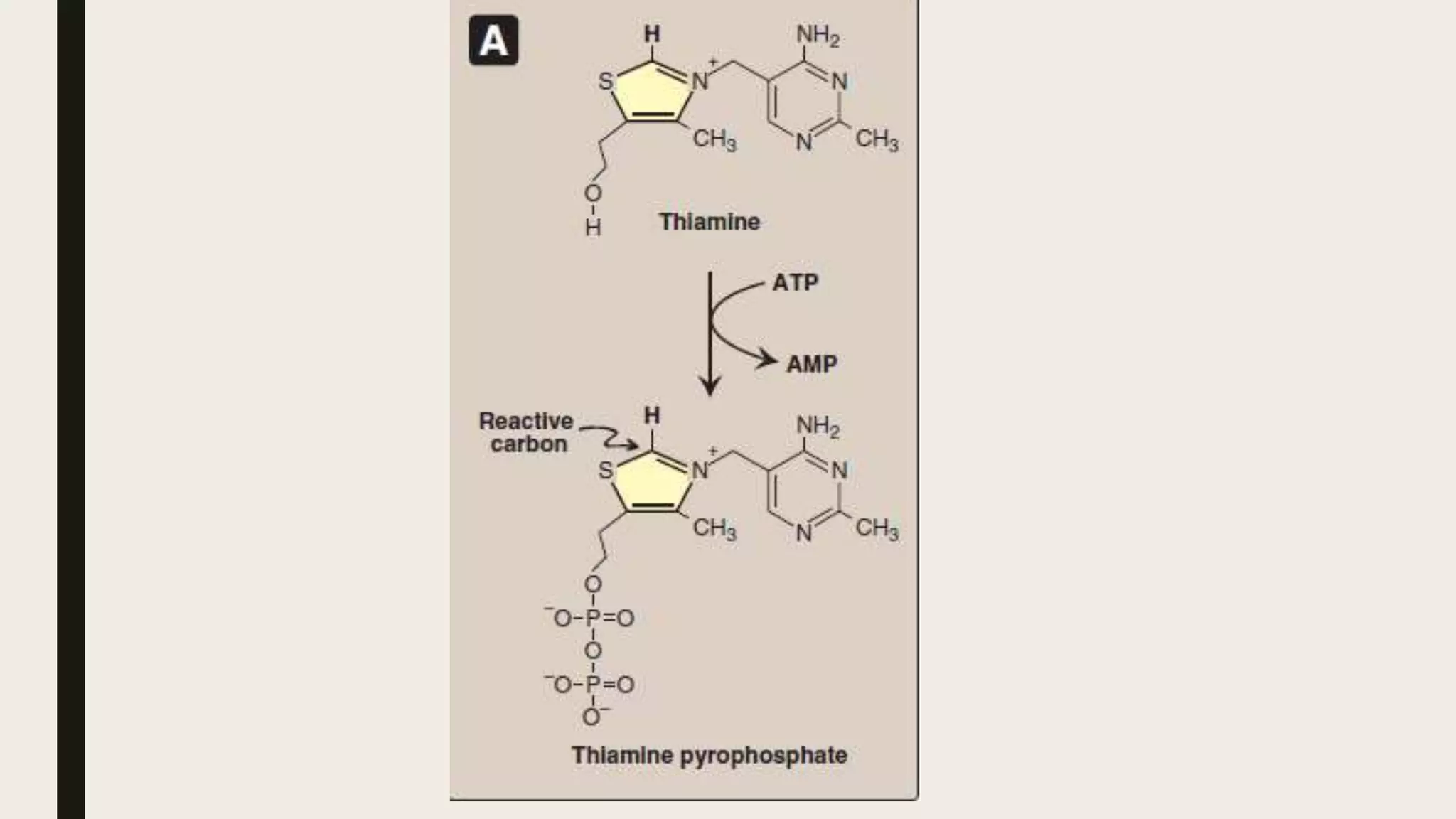
■ Thiamine pyrophosphate is the biologically
active form of the vitamin, formed by the
transfer of a pyrophosphate group (PPi) from
adenosine triphosphate (ATP) to thiamine
■ ATP → AMP + PPi
TPP serves as a coenzyme (a non-protein compound
that is necessary for the functioning of the enzyme)
■ In the formation or degradation of α-ketols by
transketolase (A)
■ In the oxidative decarboxylation of α-keto acids (B)
■ ATP
 α-ketoglutarate Dehydrogenase
Pyruvate Dehydrogenase
■ The oxidative decarboxylation of pyruvate and
α-ketoglutarate, which plays a key role in
energy metabolism of most cells, is
particularly important in tissues of the
nervous system.
■ In thiamine deficiency, the activity of these two
dehydrogenase-catalyzed reactions is decreased,
resulting in a decreased production of ATP and
thus, impaired cellular function
■ Highly aerobic tissues like brain and heart are
affected first
■ Thiamine deficiency is diagnosed by an
increase in erythrocyte transketolase activity
observed on addition of thiamine
pyrophosphate
Deficiency of Thiamine
1. Beri Beri
a) Adult Beriberi
i) Dry Beriberi
ii) Wet Beriberi
b) Infantile Beriberi
2. Wernicke-Korsakoff Syndrome
■ Due to
 Malnutrition
Alcoholism (second to malnutrition and
malabsorption)
■ Spell beriberi as Ber1 Ber1 to remember
vitamin B1
Thiamine Deficiency
■ Beriberi: This is a severe thiamine-deficiency syndrome found in areas where polished rice is
the major component of the diet
■ Adult Beriberi is of two types:
 Dry Beriberi: Polyneuritis, symmetrical muscle wasting
 Wet Beri Beri: high – output cardiac failure (dilated
cardiomyopathy), edema
■ Infantile Beriberi is seen in nursing infants whose mothers are deficient in thiamine
Wernicke-Korsakoff syndrome
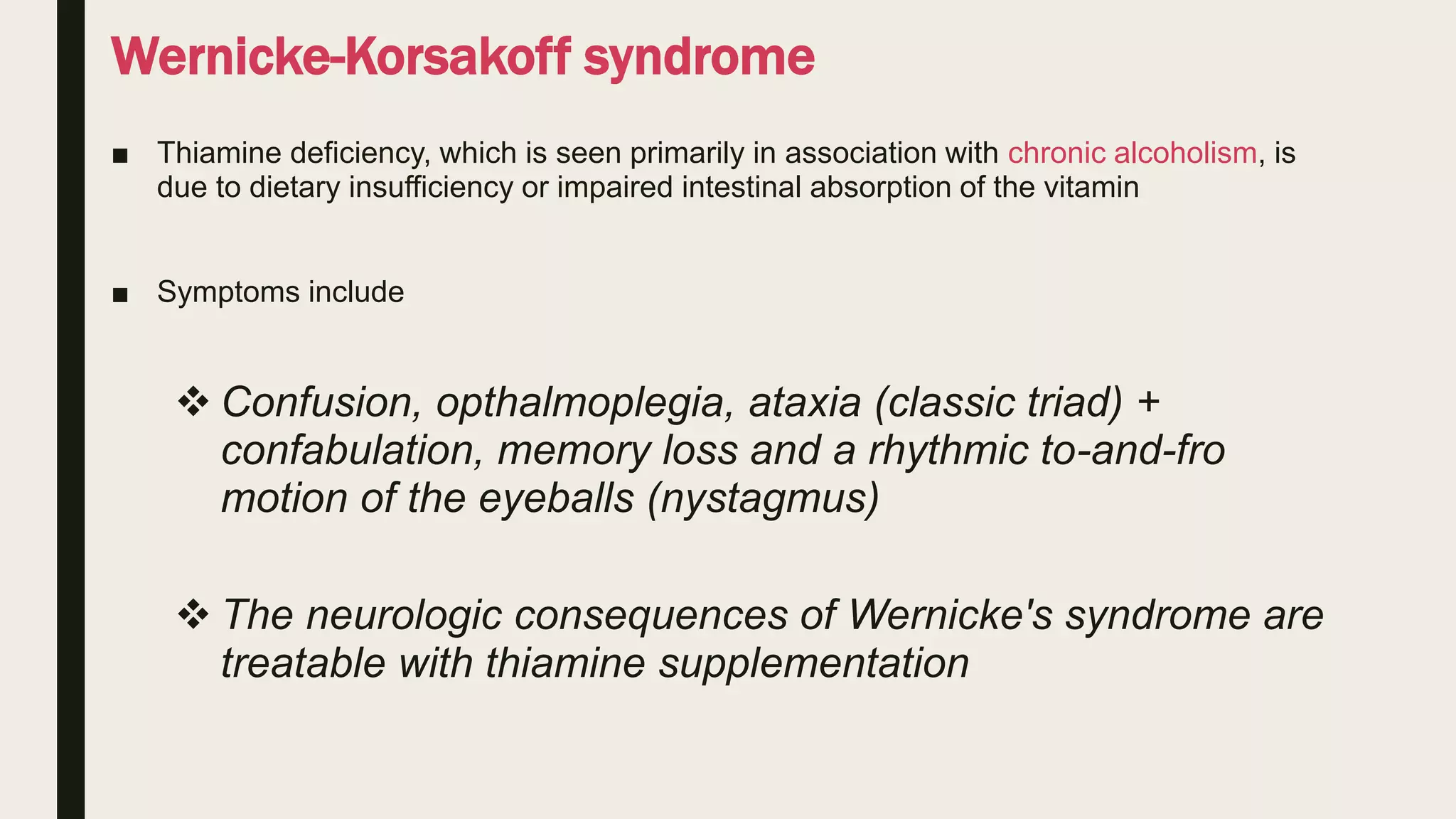
■ Thiamine deficiency, which is seen primarily in association with chronic alcoholism, is
due to dietary insufficiency or impaired intestinal absorption of the vitamin
■ Symptoms include
 Confusion, opthalmoplegia, ataxia (classic triad) +
confabulation, memory loss and a rhythmic to-and-fro
motion of the eyeballs (nystagmus)
 The neurologic consequences of Wernicke's syndrome are
treatable with thiamine supplementation

Thiamine (vitamin b1) Biochemistry – Lippincott’s Illustrated Reviews World Wide Web

  • 1.
    THIAMINE (VITAMIN B1) MaryamFida (o-1827) Source: Biochemistry – Lippincott’s Illustrated Reviews World Wide Web
  • 2.
    ■ Thiamine pyrophosphateis the biologically active form of the vitamin, formed by the transfer of a pyrophosphate group (PPi) from adenosine triphosphate (ATP) to thiamine ■ ATP → AMP + PPi
  • 4.
    TPP serves asa coenzyme (a non-protein compound that is necessary for the functioning of the enzyme) ■ In the formation or degradation of α-ketols by transketolase (A) ■ In the oxidative decarboxylation of α-keto acids (B)
  • 6.
    ■ ATP  α-ketoglutarateDehydrogenase Pyruvate Dehydrogenase
  • 7.
    ■ The oxidativedecarboxylation of pyruvate and α-ketoglutarate, which plays a key role in energy metabolism of most cells, is particularly important in tissues of the nervous system.
  • 8.
    ■ In thiaminedeficiency, the activity of these two dehydrogenase-catalyzed reactions is decreased, resulting in a decreased production of ATP and thus, impaired cellular function ■ Highly aerobic tissues like brain and heart are affected first
  • 9.
    ■ Thiamine deficiencyis diagnosed by an increase in erythrocyte transketolase activity observed on addition of thiamine pyrophosphate
  • 10.
    Deficiency of Thiamine 1.Beri Beri a) Adult Beriberi i) Dry Beriberi ii) Wet Beriberi b) Infantile Beriberi 2. Wernicke-Korsakoff Syndrome ■ Due to  Malnutrition Alcoholism (second to malnutrition and malabsorption)
  • 11.
    ■ Spell beriberias Ber1 Ber1 to remember vitamin B1
  • 12.
    Thiamine Deficiency ■ Beriberi:This is a severe thiamine-deficiency syndrome found in areas where polished rice is the major component of the diet ■ Adult Beriberi is of two types:  Dry Beriberi: Polyneuritis, symmetrical muscle wasting  Wet Beri Beri: high – output cardiac failure (dilated cardiomyopathy), edema ■ Infantile Beriberi is seen in nursing infants whose mothers are deficient in thiamine
  • 13.
    Wernicke-Korsakoff syndrome ■ Thiaminedeficiency, which is seen primarily in association with chronic alcoholism, is due to dietary insufficiency or impaired intestinal absorption of the vitamin ■ Symptoms include  Confusion, opthalmoplegia, ataxia (classic triad) + confabulation, memory loss and a rhythmic to-and-fro motion of the eyeballs (nystagmus)  The neurologic consequences of Wernicke's syndrome are treatable with thiamine supplementation

Editor's Notes

  • #5 Alpha-keto acids, Alpha-ketoacids, or 2-oxoacids, such as pyruvic acid, have the keto group adjacent to the carboxylic acid. One important alpha-keto acid is oxaloacetic acid, a component of the Krebs cycle.[3] Another is alpha-ketoglutarate,  
  • #6 Alpha-keto acids, Alpha-ketoacids, or 2-oxoacids, such as pyruvic acid, have the keto group adjacent to the carboxylic acid. One important alpha-keto acid is oxaloacetic acid, a component of the Krebs cycle.[3] Another is alpha-ketoglutarate,