Thermal
Remote
Sensing and
environmental
applications
By
Manisha
Thermal remote sensing.
What is it??
Thermal remote sensing is the branch of remote sensing that deals with the
acquisition, processing and interpretation of data acquired primarily in the thermal
infrared (TIR) region of the electromagnetic (EM) spectrum. In thermal remote
sensing we measure the radiations 'emitted' from the surface of the target, as
opposed to optical remote sensing where we measure the radiations 'reflected' by
the target under consideration.
In the TIR region of the EM spectrum, the radiations emitted by the earth due to
its thermal state are far more intense than the solar reflected radiations and
therefore, sensors operating in this wavelength region primarily detect thermal
radiative properties of the ground material.
CONCEPT
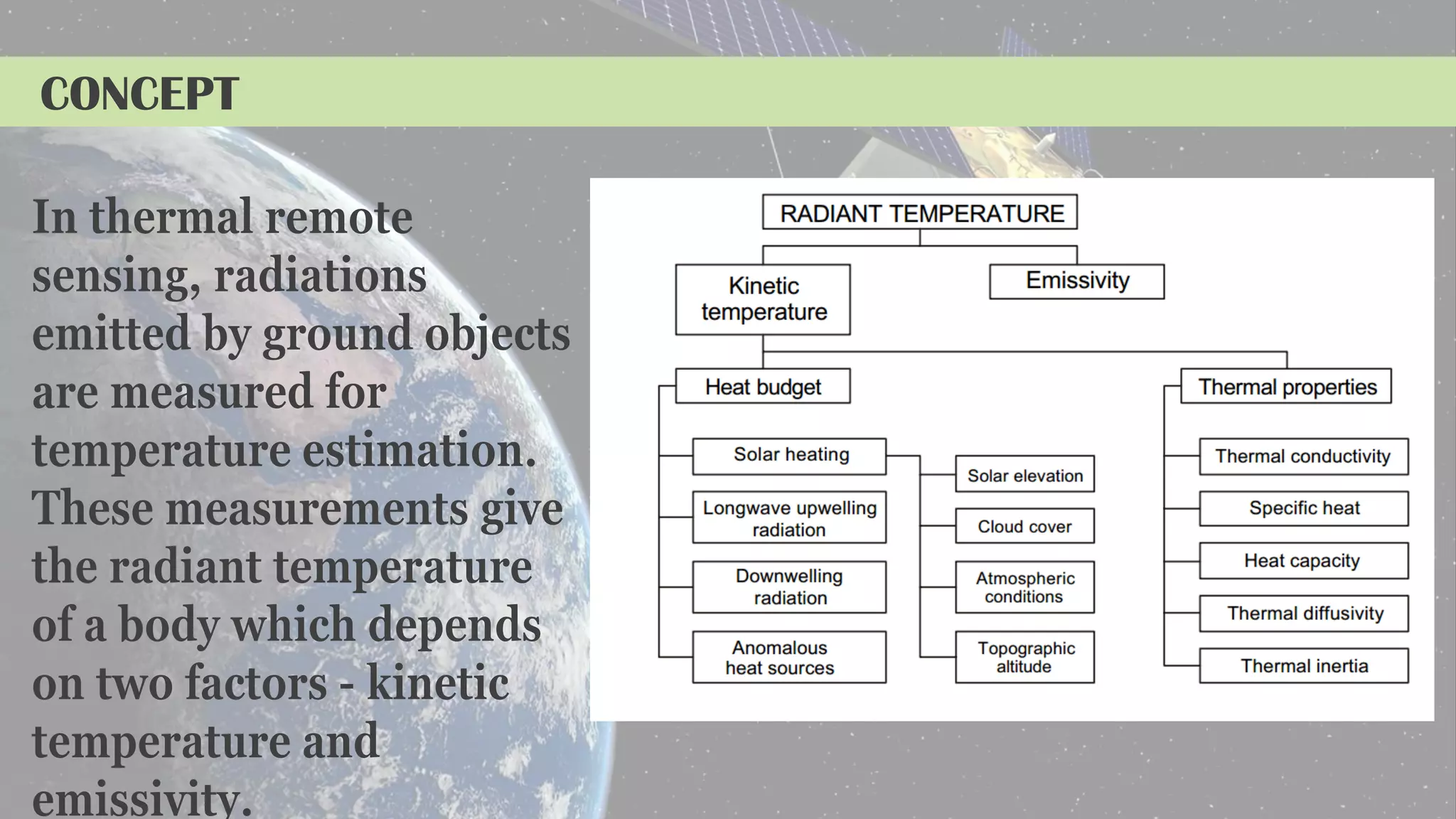
In thermal remote
sensing, radiations
emitted by ground objects
are measured for
temperature estimation.
These measurements give
the radiant temperature
of a body which depends
on two factors - kinetic
temperature and
emissivity.
Wavelength or spectral range
The infrared portion of the electromagnetic spectrum is usually considered
to be from 0.7 to 1,000 µm. Within this infrared portion, there are various
nomenclatures and little consensus among various groups to define the sub
boundaries. In terrestrial remote sensing the region of 3 to 35 µm is
popularly called thermal-infrared.
Within the thermal infrared an excellent atmospheric window lies between
8-14 µm wavelength. Poorer windows lie in 3-5 µm and 17-25 µm.
Interpretation of the data in 3-5 µm is complicated due to overlap with
solar reflection in day imagery and 17-25 µm region is still not well
investigated. Thus 8-14 µm region has been of greatest interest for thermal
remote sensing.
Spectral Emissivity and Kinetic Temperature
Thermal remote sensing exploits the fact that everything above absolute
zero (0 K or -273.15 °C or –459 °F) emits radiation in the infrared range of
the electromagnetic spectrum. How much energy is radiated, and at which
wavelengths, depends on the emissivity of the surface and on its kinetic
temperature. Emissivity is the emitting ability of a real material compared
to that of a black body , and is a spectral property that varies with
composition of material and geometric configuration of the surface.
Emissivity denoted by epsilon (ε) is a ratio and varies between 0 and 1. For
most natural materials, it ranges between 0.7 and 0.95. Kinetic temperature
is the surface temperature of a body/ground and is a measure of the amount
of heat energy contained in it . It is measured in different units, such as in
Kelvin (K); degrees Centigrade (°C); degrees Fahrenheit (°F).
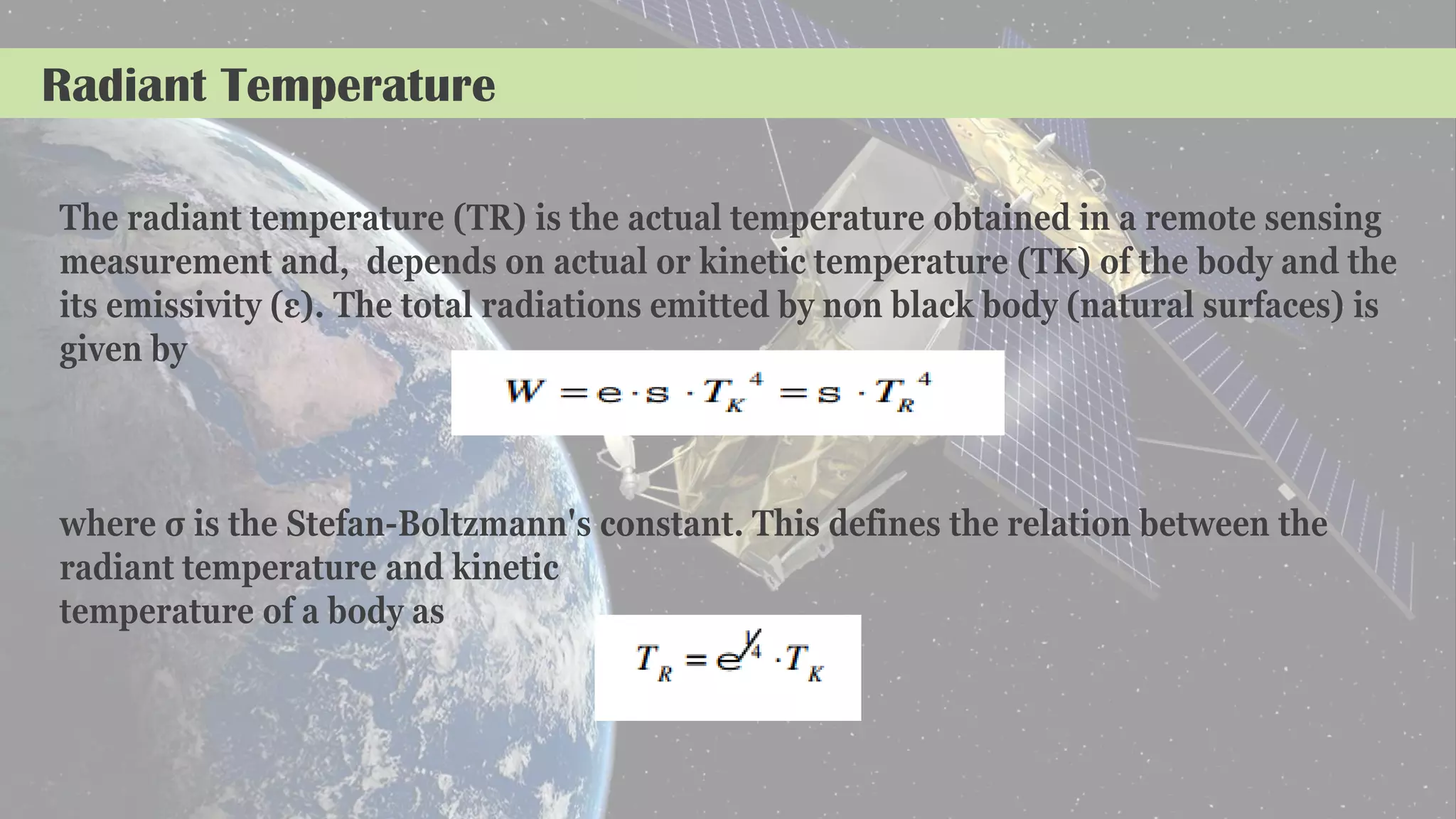
Radiant Temperature
The radiant temperature (TR) is the actual temperature obtained in a remote sensing
measurement and, depends on actual or kinetic temperature (TK) of the body and the
its emissivity (ε). The total radiations emitted by non black body (natural surfaces) is
given by
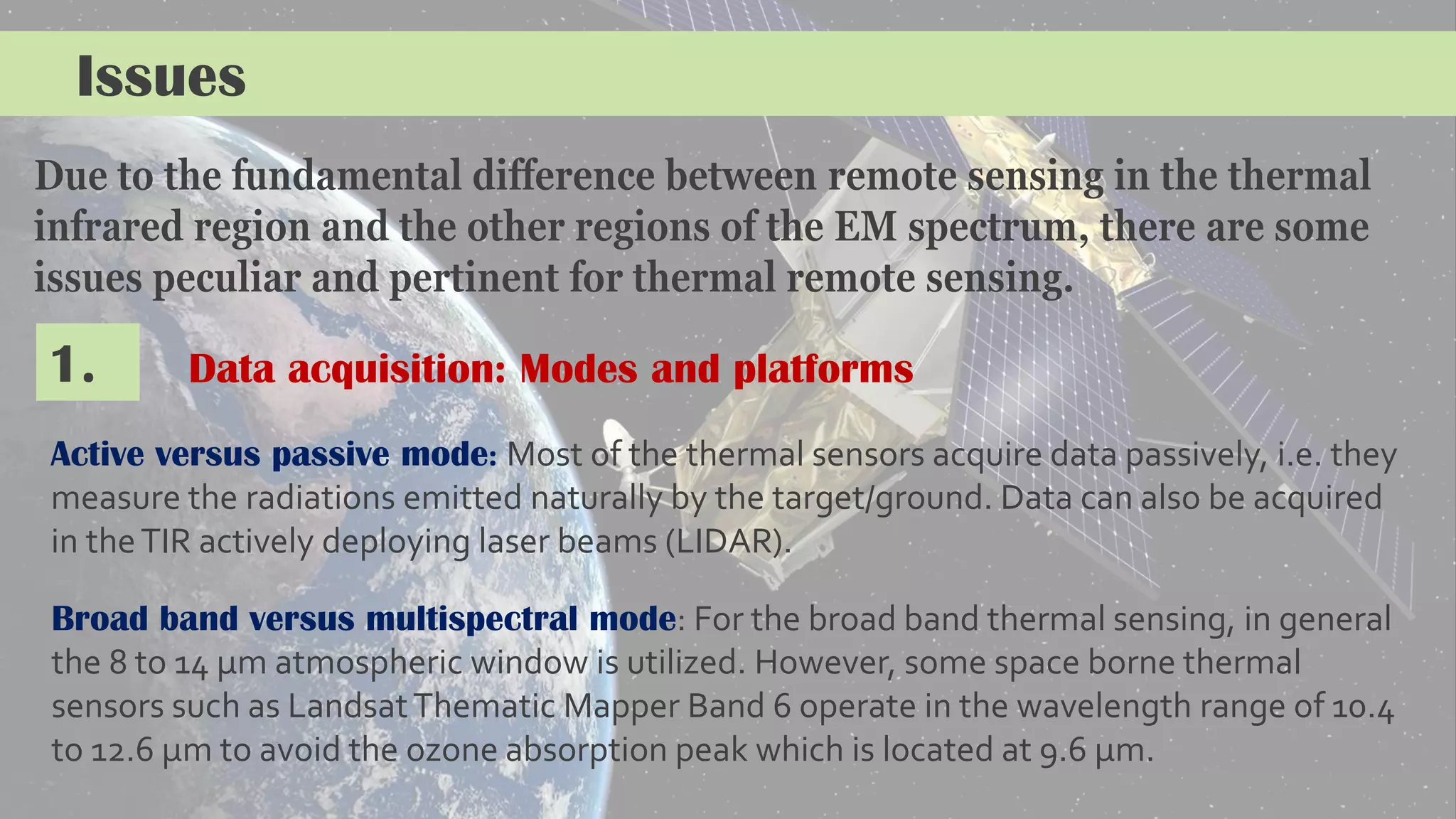
where σ is the Stefan-Boltzmann's constant. This defines the relation between the
radiant temperature and kinetic
temperature of a body as
Issues
Due to the fundamental difference between remote sensing in the thermal
infrared region and the other regions of the EM spectrum, there are some
issues peculiar and pertinent for thermal remote sensing.
1. Data acquisition: Modes and platforms
Active versus passive mode: Most of the thermal sensors acquire data passively, i.e. they
measure the radiations emitted naturally by the target/ground. Data can also be acquired
in theTIR actively deploying laser beams (LIDAR).
Broad band versus multispectral mode: For the broad band thermal sensing, in general
the 8 to 14 µm atmospheric window is utilized. However, some space borne thermal
sensors such as LandsatThematic Mapper Band 6 operate in the wavelength range of 10.4
to 12.6 µm to avoid the ozone absorption peak which is located at 9.6 µm.
Daytime versus night-time acquisition: Thermal data can be acquired during the day
and during the night. For some applications it is useful to have data from both the times.
However, for many applications night-time or more specifically pre-dawn images are
preferred as during this time the effect of differential solar heating is the minimal.
Spatial resolution and geometric correction2.
As the sensors measure emitted radiations, there is also a heating effect and constant
cooling of the sensors is required.This poses a physical limit to the measuring capability
of the sensors and therefore the spatial resolution of the acquired data.The coarse
spatial resolution, specially of satellite borne broad band thermal data poses some
additional problems in geometrically registering it to other data, specially when the
latter have much higher spatial resolution. Identification of corresponding reliable
control points on data sets with such wide differences in spatial resolution is not only
difficult but when tried may result in unacceptable transformation results.
APPLICATIONS
• Identification of geological units and structures
• Soil moisture studies
• Hydrology
• Coastal zones
• Volcanology
• Forest fires
• Coal fires
• Seismology
• Environmental modelling
• Meteorology
• Medical sciences
• Vetenary sciences
• Intelligence / military applications
• Heat loss from buildings
• Others
Environmental applications
1. urban climates
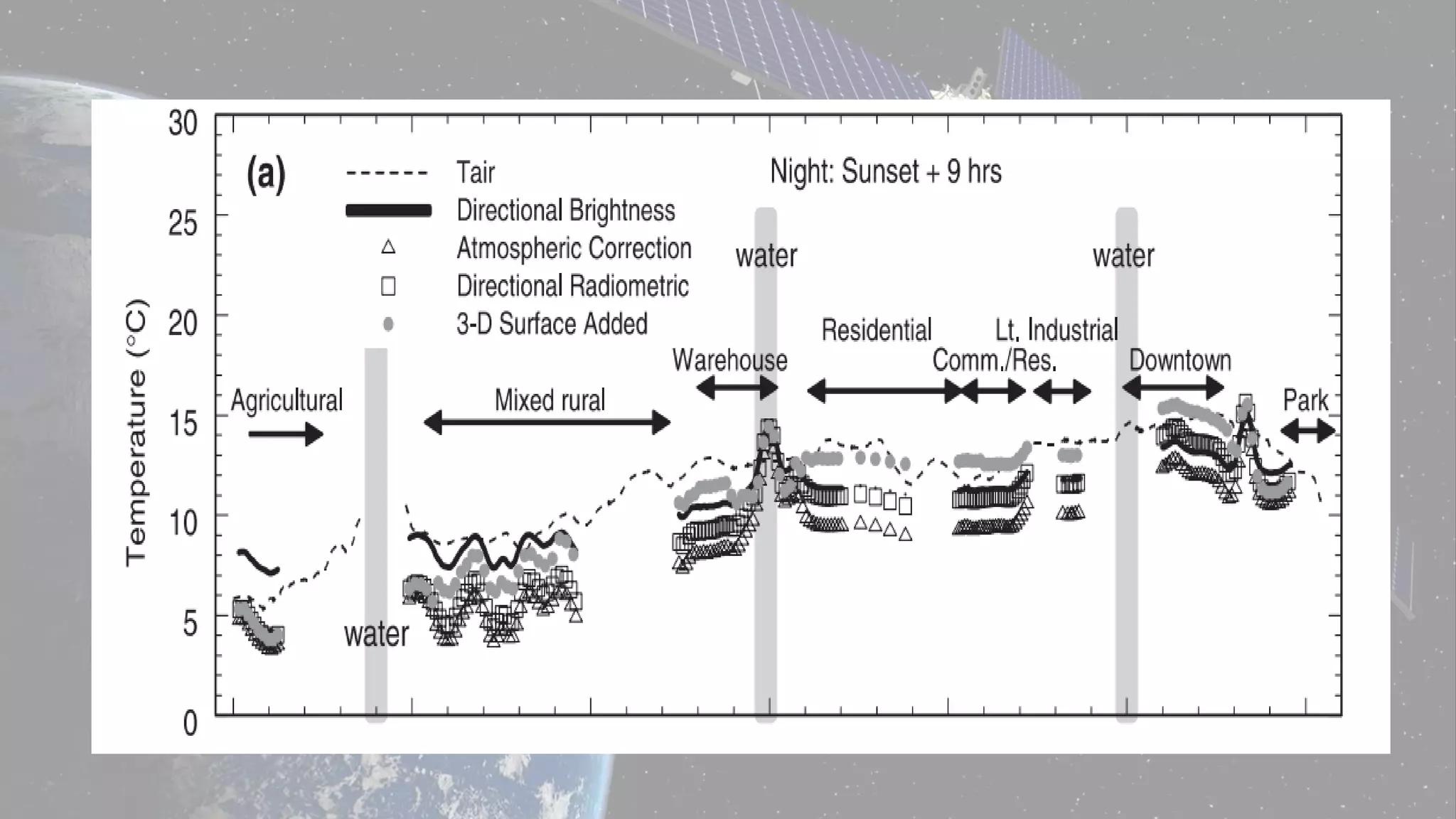
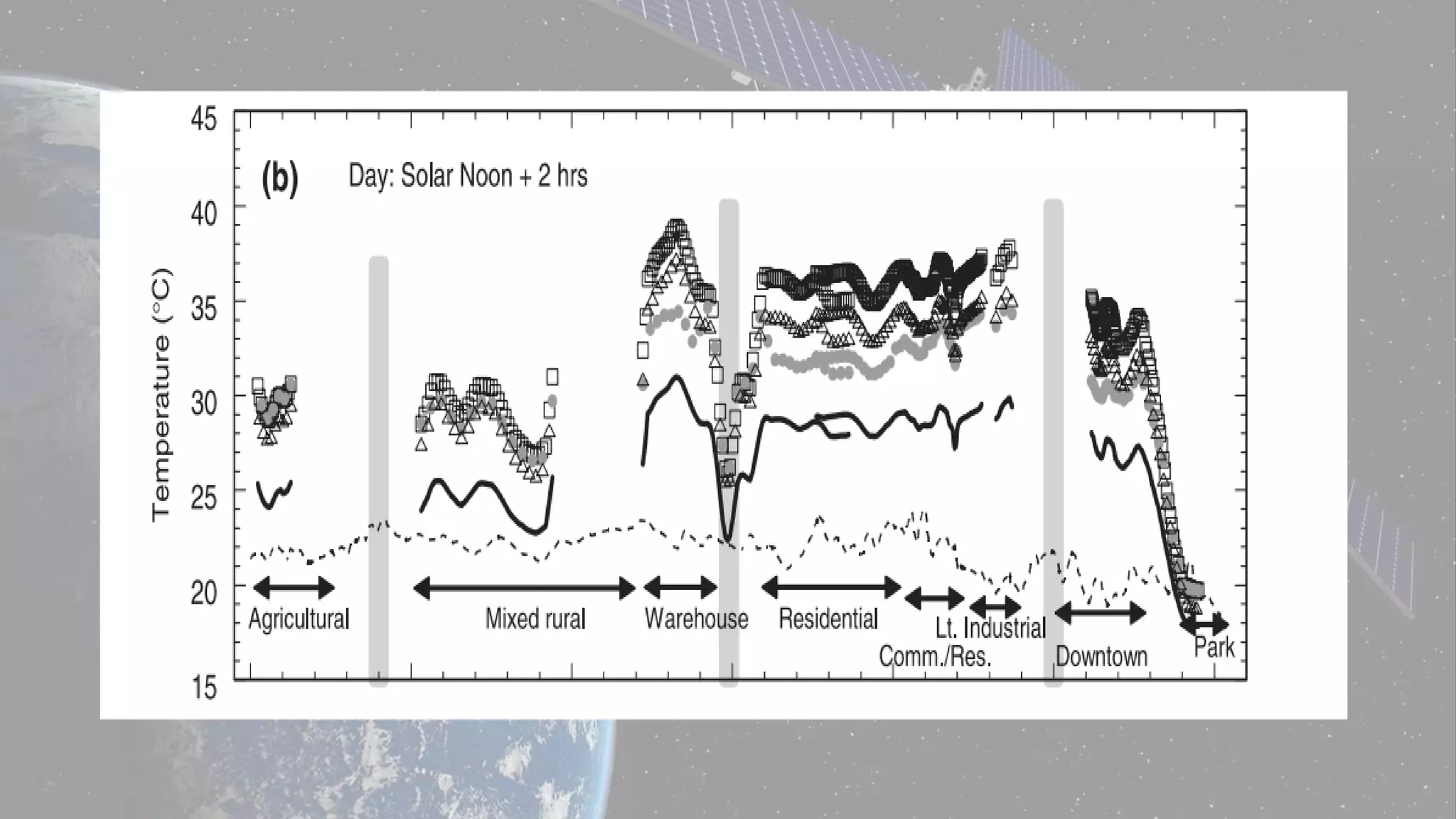
The surface temperature is of prime importance to the study of urban climatology. It
modulates the air temperature of the lowest layers of the urban atmosphere, is central
to the energy balance of the surface, helps to determine the internal climates of
buildings and affects the energy exchanges that affect the comfort of city dwellers.
Surface and atmospheric modifications due to urbanization generally lead to a modified
thermal climate that is warmer than the surrounding non-urbanized areas, particularly
at night. This phenomenon is the urban heat island (UHI).
With the advent of thermal remote sensing technology, remote observation of UHIs
became
possible using satellite and aircraft platforms and has provided new avenues for the
observation of UHIs and the study of their causation through the combination of
thermal remote sensing and urban micrometeorology.
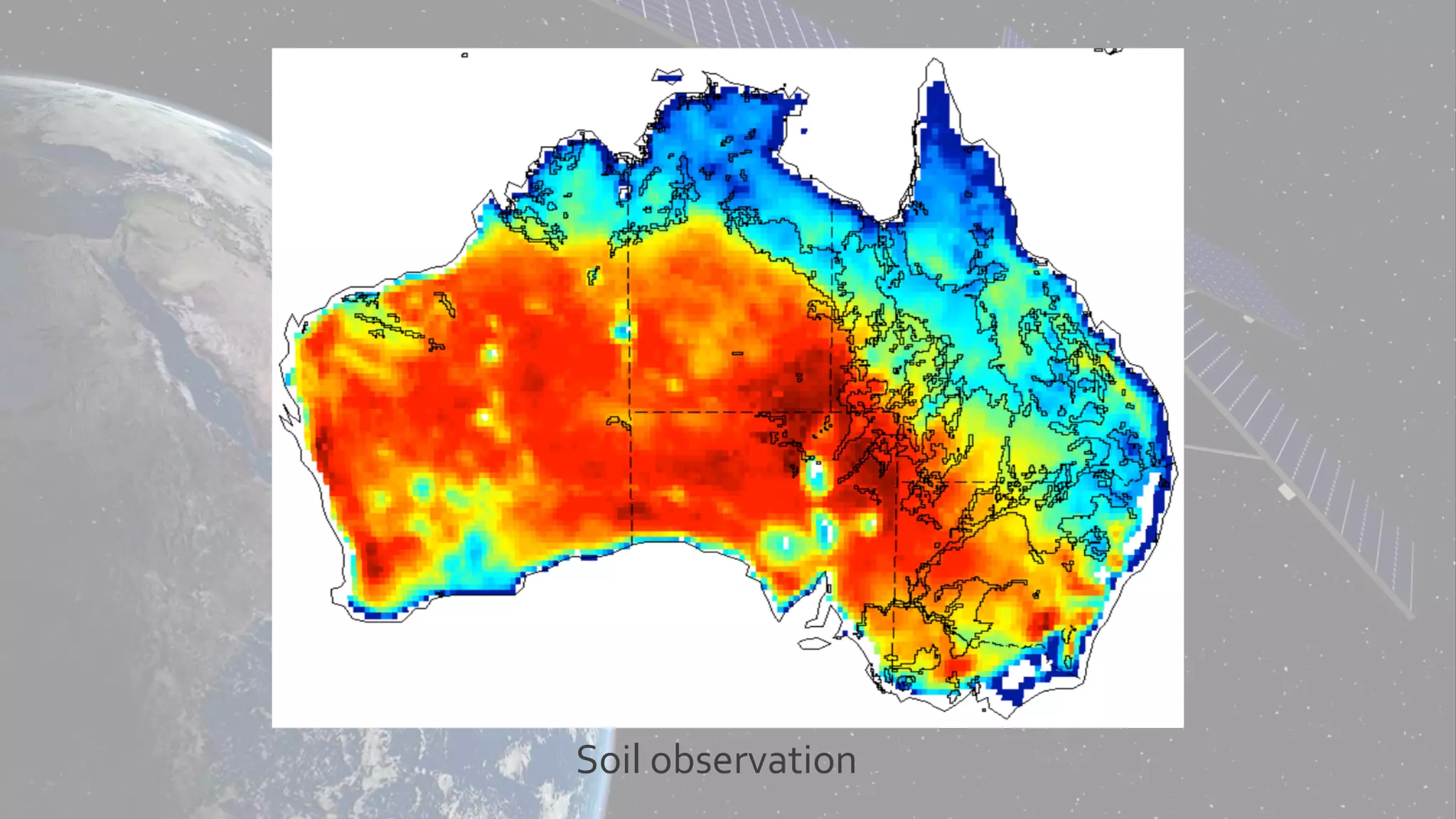
2. Soil Properties
The feasibility of the thermal infrared (TIR) wavelength region (within the
atmospheric window between 8 and 11.5 μm) together with the traditional solar
reflective wavelengths is used for quantifying soil properties for coarse-textured soils.
Soil properties are predicted using multivariate analysis techniques (partial least
square regression). The spectra were resampled to operational imaging spectroscopy
sensor characteristics (HyMAP and TASI-600). To assess the relevance of specific
wavelength regions in the prediction, the drivers of the PLS models were interpreted
with respect to the spectral characteristics of the soils’ chemical and physical
composition
It can also be used to measure soil moisture.
Soil observation
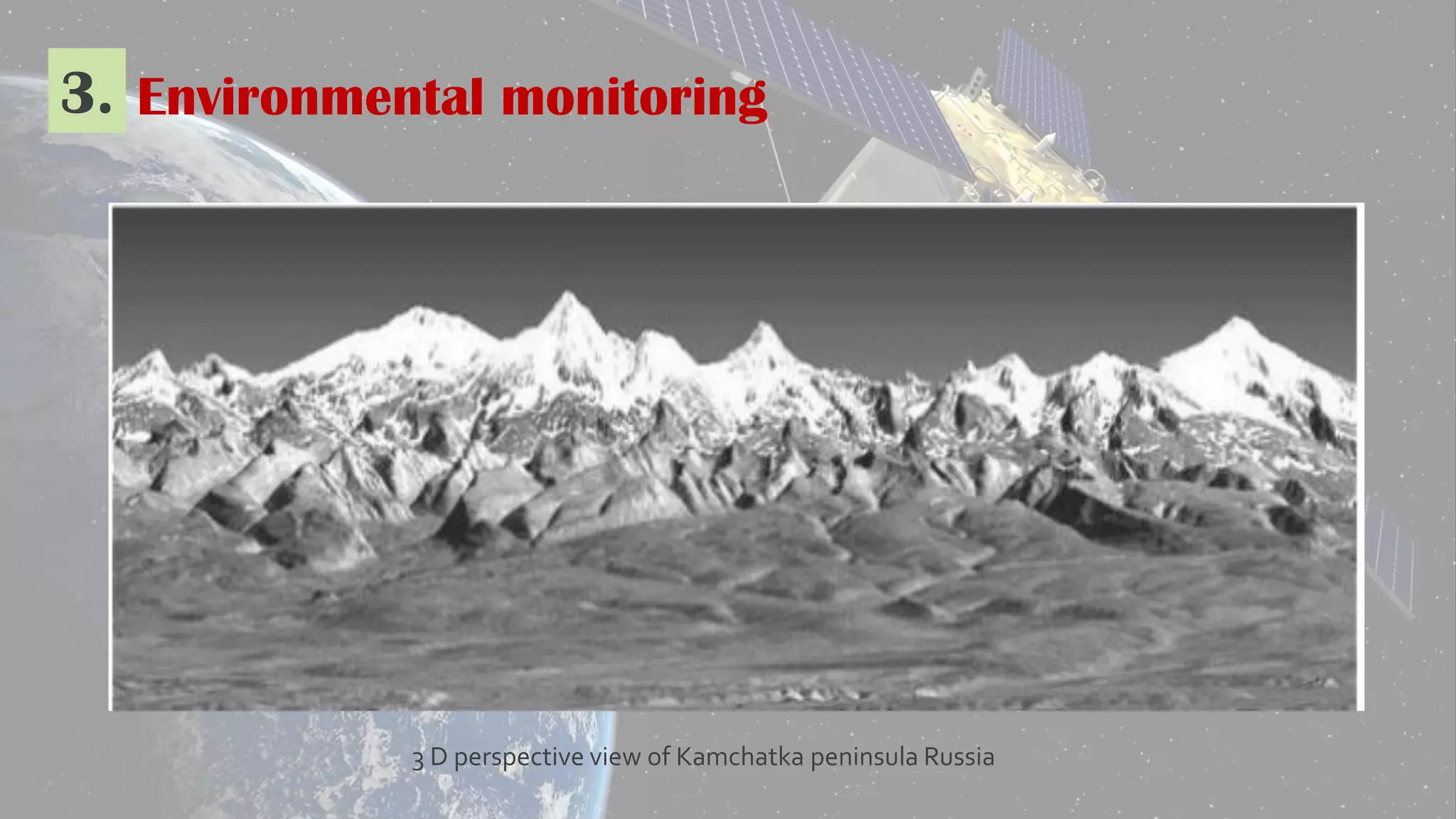
3. Environmental monitoring
3 D perspective view of Kamchatka peninsula Russia
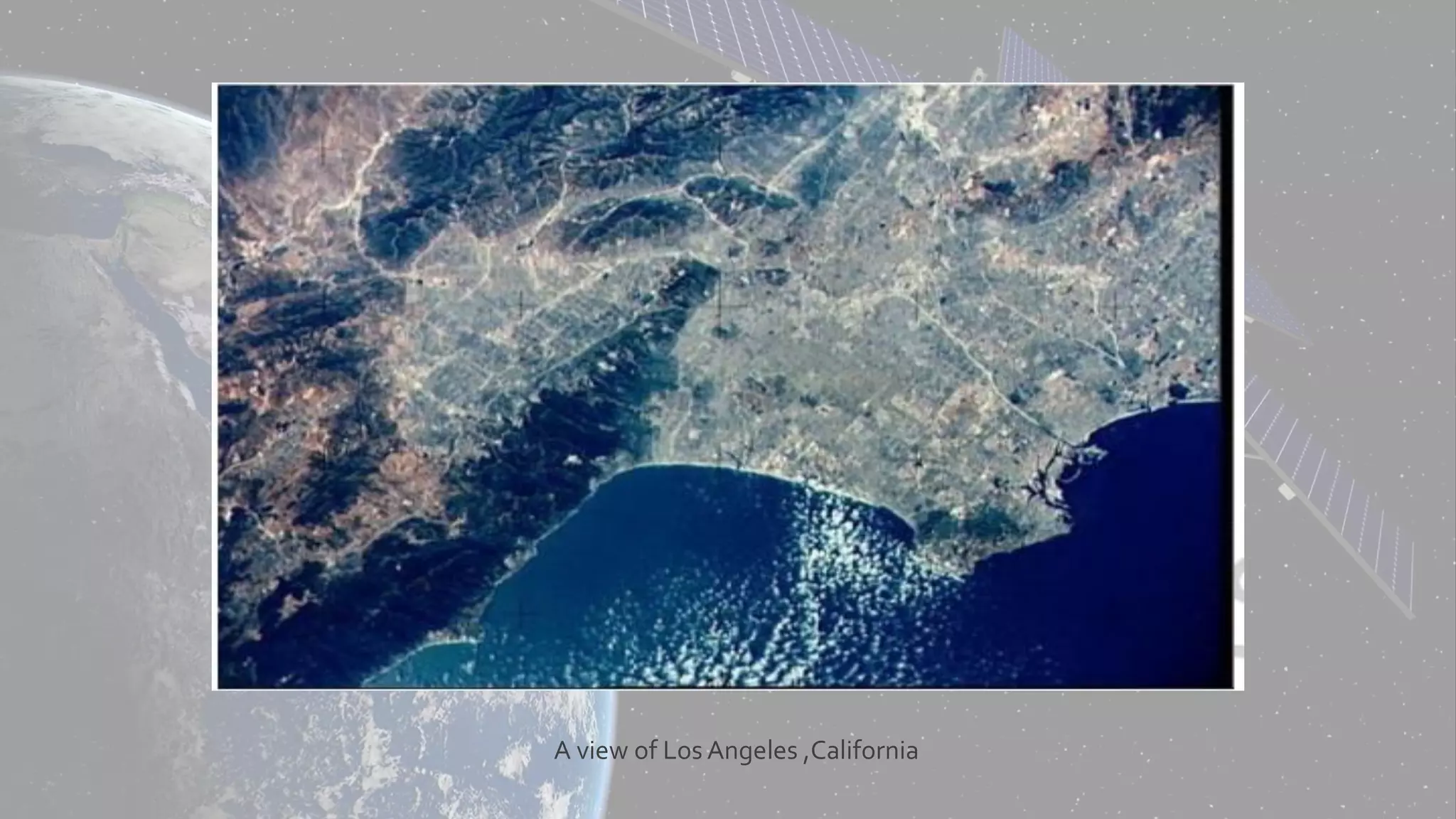
A view of Los Angeles ,California
Thermal remote sensing and environmental applications

Thermal remote sensing and environmental applications

  • 1.
  • 2.
    Thermal remote sensing. Whatis it?? Thermal remote sensing is the branch of remote sensing that deals with the acquisition, processing and interpretation of data acquired primarily in the thermal infrared (TIR) region of the electromagnetic (EM) spectrum. In thermal remote sensing we measure the radiations 'emitted' from the surface of the target, as opposed to optical remote sensing where we measure the radiations 'reflected' by the target under consideration. In the TIR region of the EM spectrum, the radiations emitted by the earth due to its thermal state are far more intense than the solar reflected radiations and therefore, sensors operating in this wavelength region primarily detect thermal radiative properties of the ground material.
  • 4.
    CONCEPT In thermal remote sensing,radiations emitted by ground objects are measured for temperature estimation. These measurements give the radiant temperature of a body which depends on two factors - kinetic temperature and emissivity.
  • 5.
    Wavelength or spectralrange The infrared portion of the electromagnetic spectrum is usually considered to be from 0.7 to 1,000 µm. Within this infrared portion, there are various nomenclatures and little consensus among various groups to define the sub boundaries. In terrestrial remote sensing the region of 3 to 35 µm is popularly called thermal-infrared. Within the thermal infrared an excellent atmospheric window lies between 8-14 µm wavelength. Poorer windows lie in 3-5 µm and 17-25 µm. Interpretation of the data in 3-5 µm is complicated due to overlap with solar reflection in day imagery and 17-25 µm region is still not well investigated. Thus 8-14 µm region has been of greatest interest for thermal remote sensing.
  • 6.
    Spectral Emissivity andKinetic Temperature Thermal remote sensing exploits the fact that everything above absolute zero (0 K or -273.15 °C or –459 °F) emits radiation in the infrared range of the electromagnetic spectrum. How much energy is radiated, and at which wavelengths, depends on the emissivity of the surface and on its kinetic temperature. Emissivity is the emitting ability of a real material compared to that of a black body , and is a spectral property that varies with composition of material and geometric configuration of the surface. Emissivity denoted by epsilon (ε) is a ratio and varies between 0 and 1. For most natural materials, it ranges between 0.7 and 0.95. Kinetic temperature is the surface temperature of a body/ground and is a measure of the amount of heat energy contained in it . It is measured in different units, such as in Kelvin (K); degrees Centigrade (°C); degrees Fahrenheit (°F).
  • 7.
    Radiant Temperature The radianttemperature (TR) is the actual temperature obtained in a remote sensing measurement and, depends on actual or kinetic temperature (TK) of the body and the its emissivity (ε). The total radiations emitted by non black body (natural surfaces) is given by where σ is the Stefan-Boltzmann's constant. This defines the relation between the radiant temperature and kinetic temperature of a body as
  • 8.
    Issues Due to thefundamental difference between remote sensing in the thermal infrared region and the other regions of the EM spectrum, there are some issues peculiar and pertinent for thermal remote sensing. 1. Data acquisition: Modes and platforms Active versus passive mode: Most of the thermal sensors acquire data passively, i.e. they measure the radiations emitted naturally by the target/ground. Data can also be acquired in theTIR actively deploying laser beams (LIDAR). Broad band versus multispectral mode: For the broad band thermal sensing, in general the 8 to 14 µm atmospheric window is utilized. However, some space borne thermal sensors such as LandsatThematic Mapper Band 6 operate in the wavelength range of 10.4 to 12.6 µm to avoid the ozone absorption peak which is located at 9.6 µm.
  • 9.
    Daytime versus night-timeacquisition: Thermal data can be acquired during the day and during the night. For some applications it is useful to have data from both the times. However, for many applications night-time or more specifically pre-dawn images are preferred as during this time the effect of differential solar heating is the minimal. Spatial resolution and geometric correction2. As the sensors measure emitted radiations, there is also a heating effect and constant cooling of the sensors is required.This poses a physical limit to the measuring capability of the sensors and therefore the spatial resolution of the acquired data.The coarse spatial resolution, specially of satellite borne broad band thermal data poses some additional problems in geometrically registering it to other data, specially when the latter have much higher spatial resolution. Identification of corresponding reliable control points on data sets with such wide differences in spatial resolution is not only difficult but when tried may result in unacceptable transformation results.
  • 10.
    APPLICATIONS • Identification ofgeological units and structures • Soil moisture studies • Hydrology • Coastal zones • Volcanology • Forest fires • Coal fires • Seismology • Environmental modelling • Meteorology • Medical sciences • Vetenary sciences • Intelligence / military applications • Heat loss from buildings • Others
  • 11.
    Environmental applications 1. urbanclimates The surface temperature is of prime importance to the study of urban climatology. It modulates the air temperature of the lowest layers of the urban atmosphere, is central to the energy balance of the surface, helps to determine the internal climates of buildings and affects the energy exchanges that affect the comfort of city dwellers. Surface and atmospheric modifications due to urbanization generally lead to a modified thermal climate that is warmer than the surrounding non-urbanized areas, particularly at night. This phenomenon is the urban heat island (UHI). With the advent of thermal remote sensing technology, remote observation of UHIs became possible using satellite and aircraft platforms and has provided new avenues for the observation of UHIs and the study of their causation through the combination of thermal remote sensing and urban micrometeorology.
  • 14.
    2. Soil Properties Thefeasibility of the thermal infrared (TIR) wavelength region (within the atmospheric window between 8 and 11.5 μm) together with the traditional solar reflective wavelengths is used for quantifying soil properties for coarse-textured soils. Soil properties are predicted using multivariate analysis techniques (partial least square regression). The spectra were resampled to operational imaging spectroscopy sensor characteristics (HyMAP and TASI-600). To assess the relevance of specific wavelength regions in the prediction, the drivers of the PLS models were interpreted with respect to the spectral characteristics of the soils’ chemical and physical composition It can also be used to measure soil moisture.
  • 15.
  • 16.
    3. Environmental monitoring 3D perspective view of Kamchatka peninsula Russia
  • 17.
    A view ofLos Angeles ,California