
EVE GEORGIEVA

Research & Service Design
@dryandusty

@wearesnook
THERE’S MORE TO SERVICE DESIGN
THAN MEETS THE POST-IT NOTES
#UPFRONT
What is service design?
“Frankly, one of the great strengths of design
is that we have not settled on a single
definition. Fields in which definitions is now a
settled matter tend to be lethargic, dying, or
dead fields, where inquiry no longer provides
challenges to what is accepted as truth”
- Richard Buchanan, 2001
Service design is the
design of a service
4
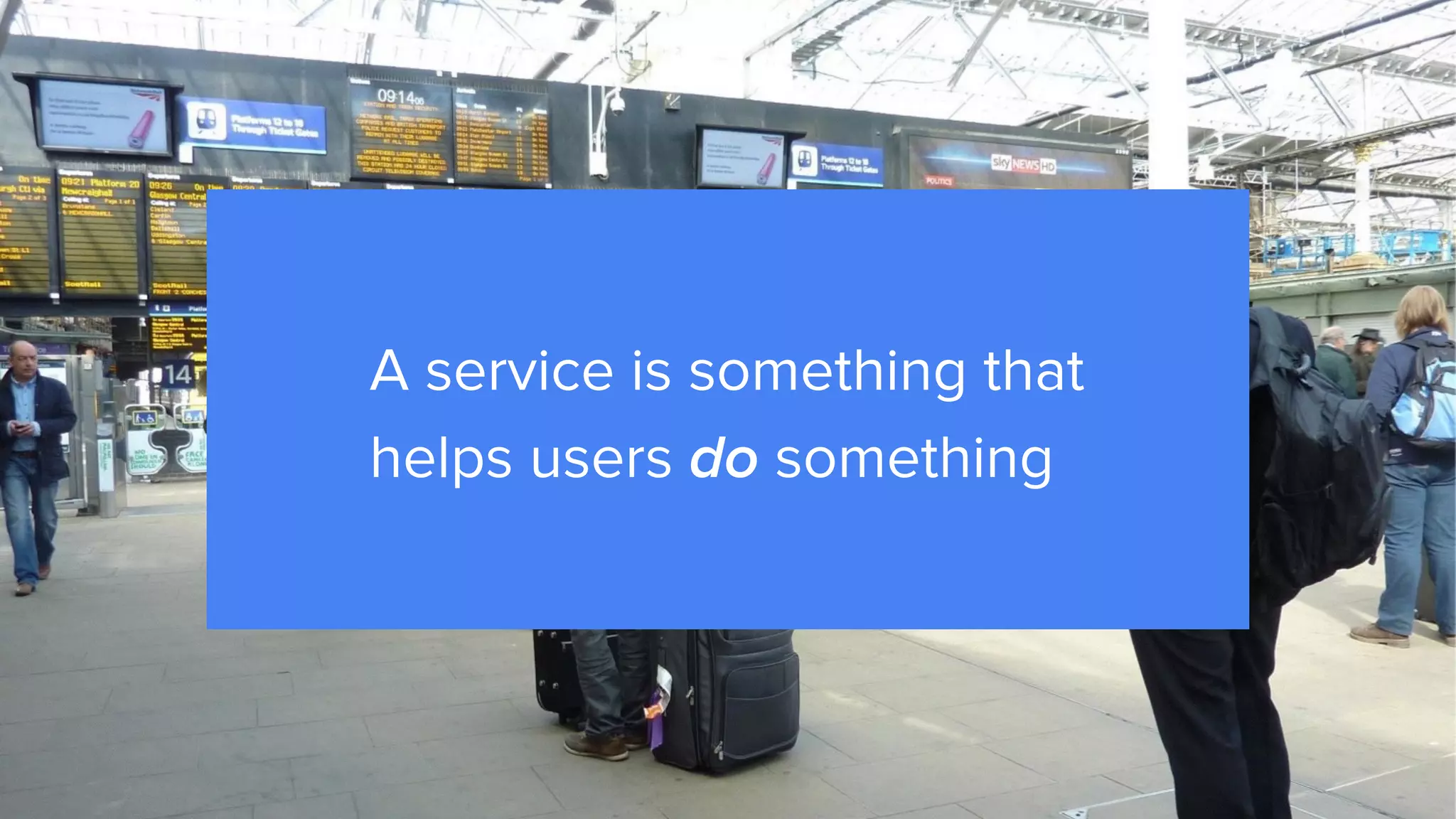
A service is something that
helps users do something
6
5 principles of
service design:
1 User-centred
2 Co-creative
3 End-to-end
4 Aligning experiences
5 Holistic
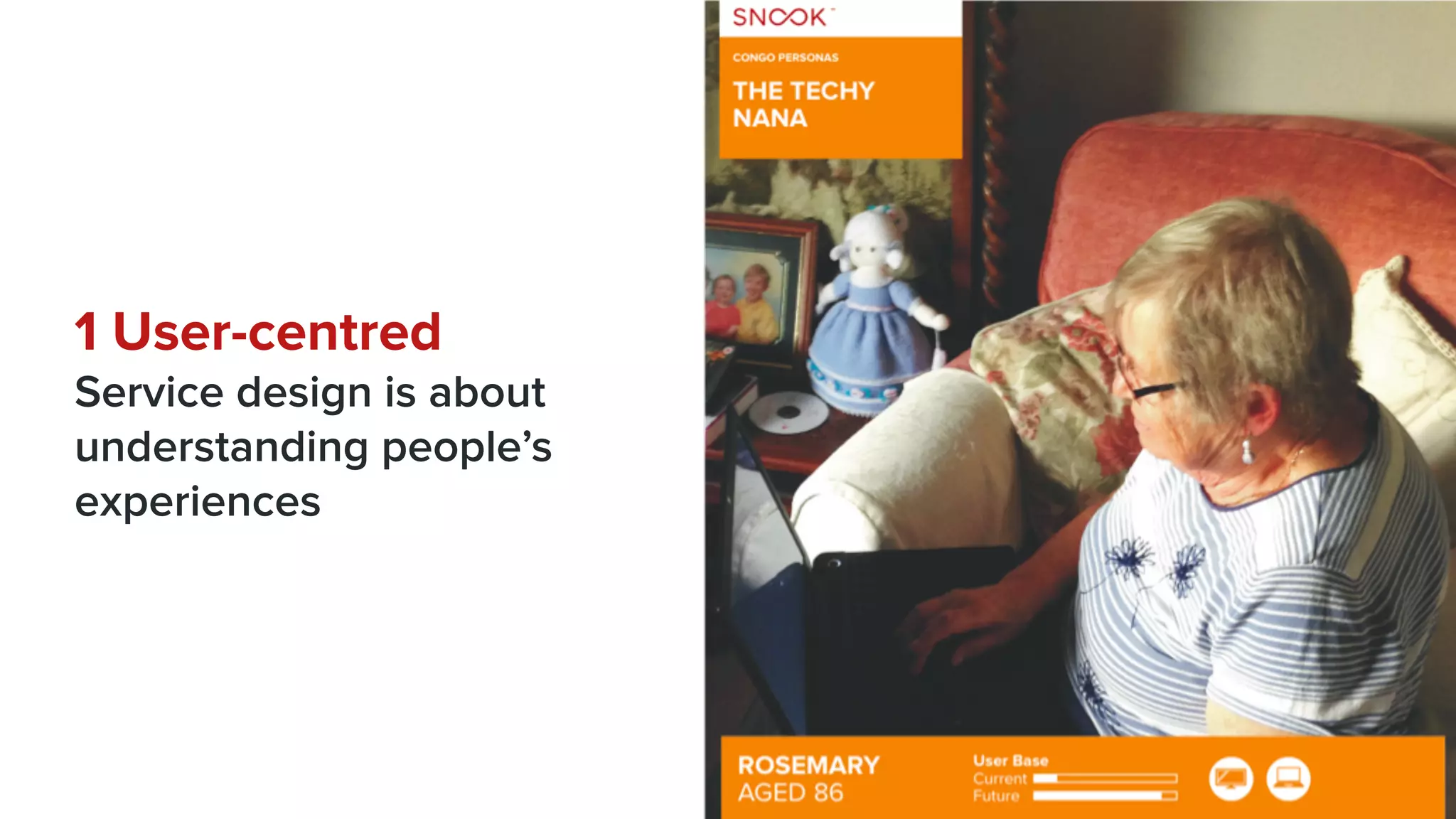
1 User-centred
Service design is about
understanding people’s
experiences
2 Co-creative
Service design includes
everyone
3 End-to-end
Service design considers
the end-to-end user
journey
4 Aligning
experiences
Considering experiences
from different perspectives
and matching these in the
process
5 Holistic
Service design considers
the entire environment of a
service
12
Service design is the
design of services but
what are our guides?
13
Snook’s principles
1 Working live
2 People as assets
3 Relationships as materials
4 Playing with politics
5 Designing sensitively
14
Why is it important to
build and nurture
relationships?
15
5 principles of
service design:
1 User-centred
2 Co-creative
3 End-to-end
4 Aligning experiences
5 Holistic
16
5 principles of
service design:
1 User-centred
2 Co-creative
3 End-to-end
4 Aligning experiences
5 Holistic
17
But behind this:
1 Relationships
2 Facilitation
3 Mapping
4 Politics
5 Sensitivity
5 principles of
service design:
1 User-centred
2 Co-creative
3 End-to-end
4 Aligning experiences
5 Holistic
Service Design:
building and nurturing
relationships
| RELATIONSHIPS
| RELATIONSHIPS
21
Designing a
process to bring
people together
| RELATIONSHIPS
| RELATIONSHIPS
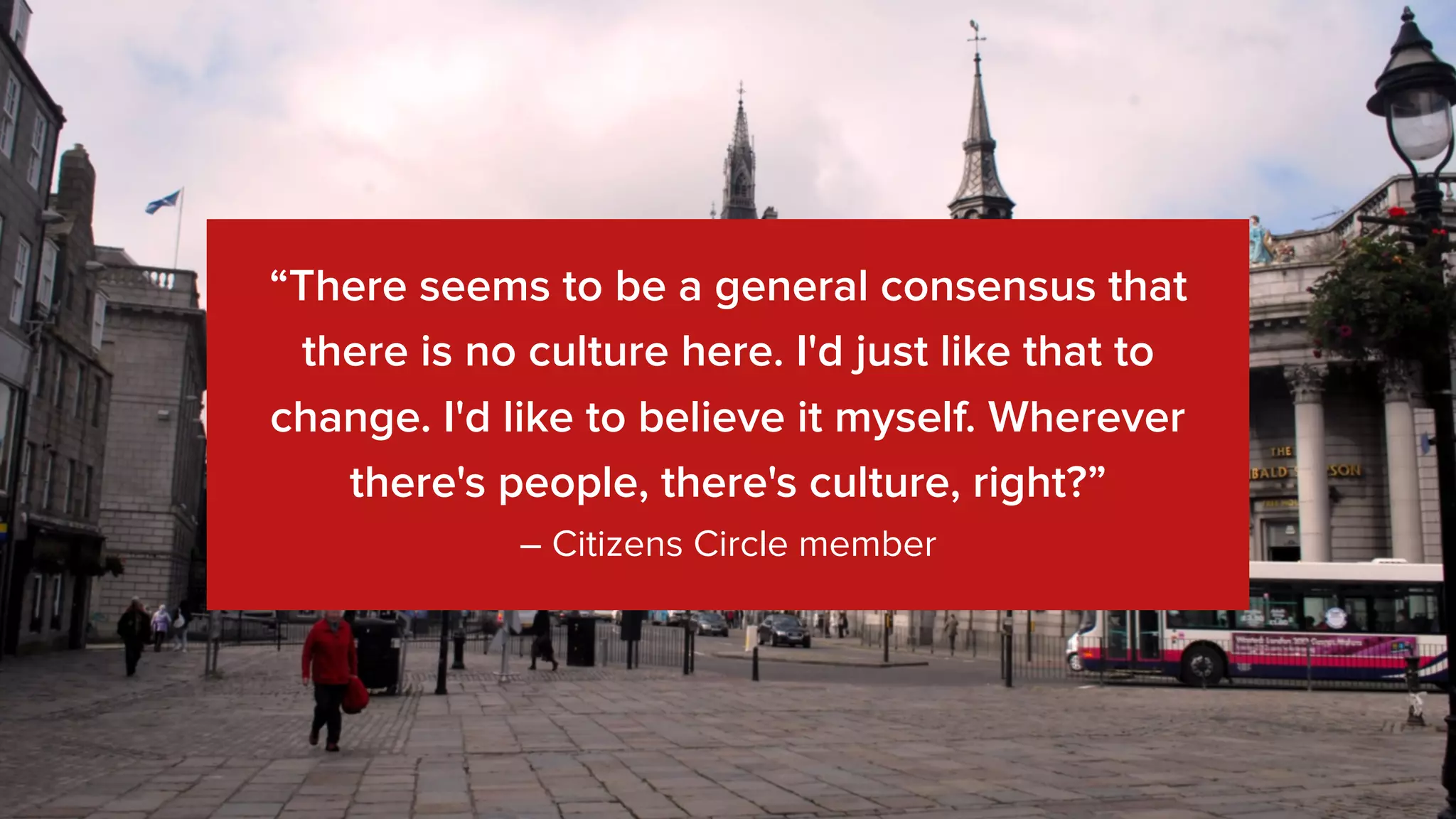
“There seems to be a general consensus that
there is no culture here. I'd just like that to
change. I'd like to believe it myself. Wherever
there's people, there's culture, right?”
– Citizens Circle member
| RELATIONSHIPS
| RELATIONSHIPS
| RELATIONSHIPS
| 1 RELATIONSHIPS
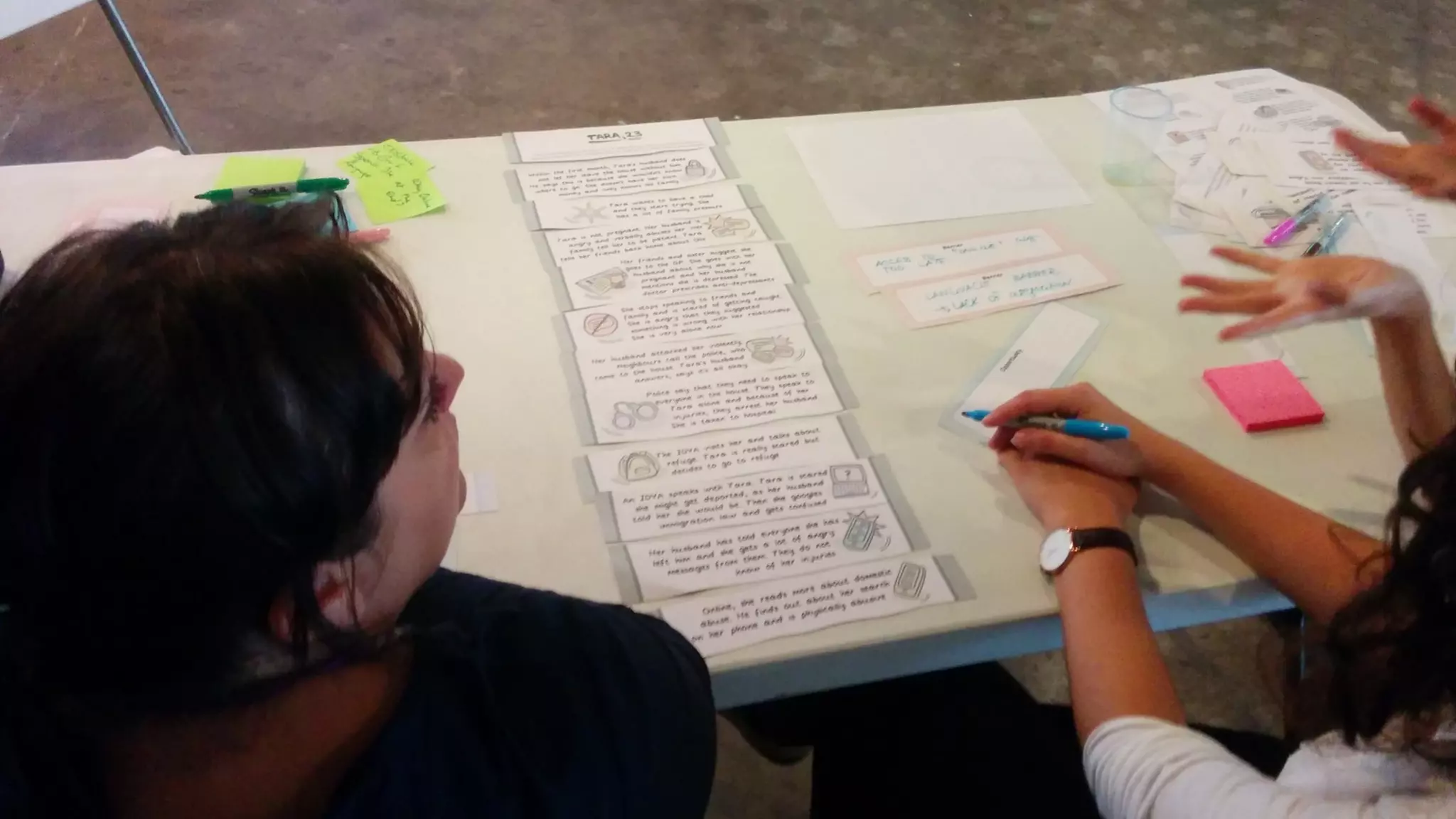
Tool(kit)s are just a
method to gather
insights
| RELATIONSHIPS
30
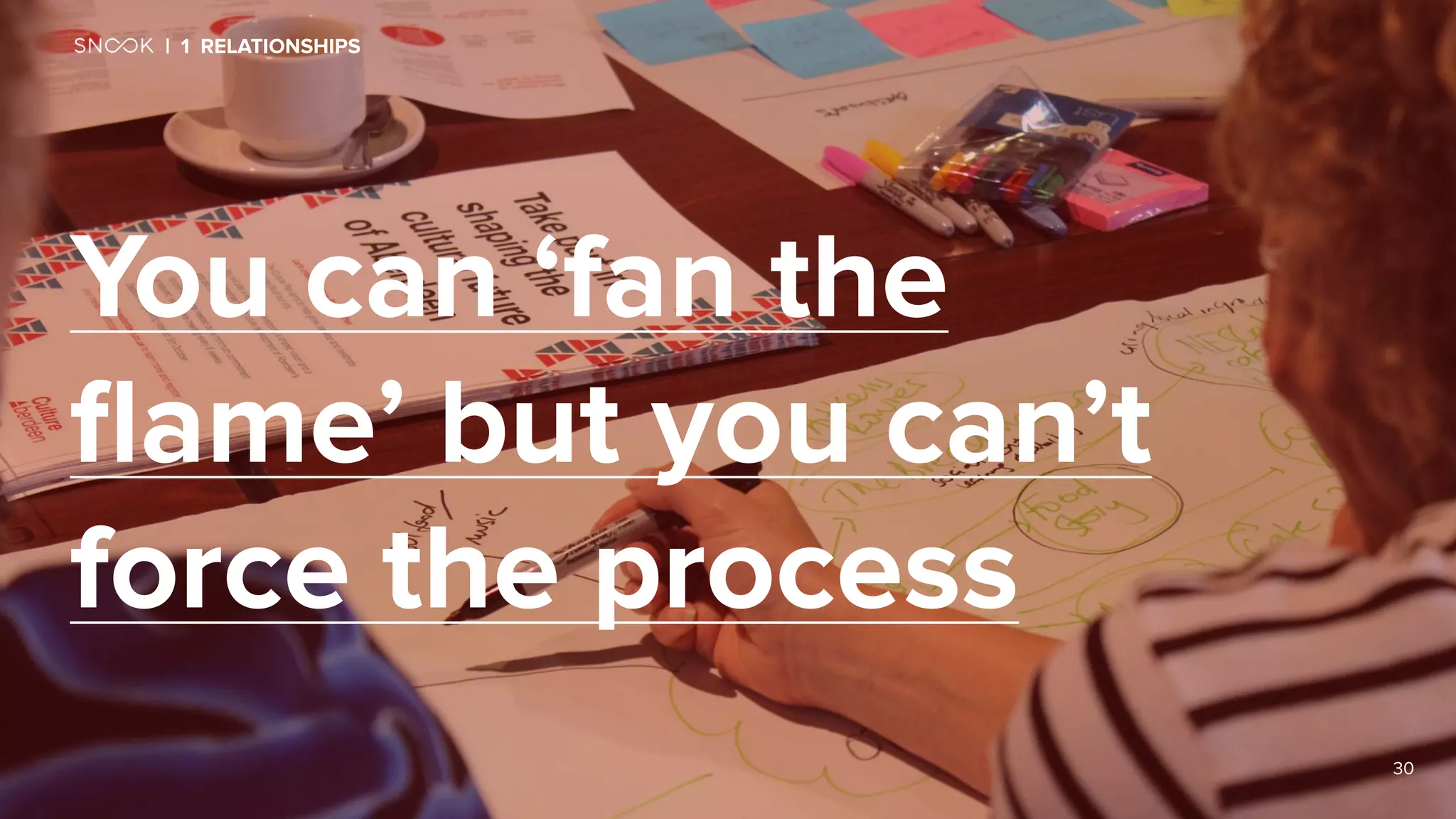
You can ‘fan the
flame’ but you can’t
force the process
| 1 RELATIONSHIPS
Service Design:
facilitation
Good facilitation is
about supporting
participants to
understand priorities
and needs, to enable
them to tackle
complex issues
We’re not just
designers.
We’re facilitators of
people’s knowledge.
| FACILITATION
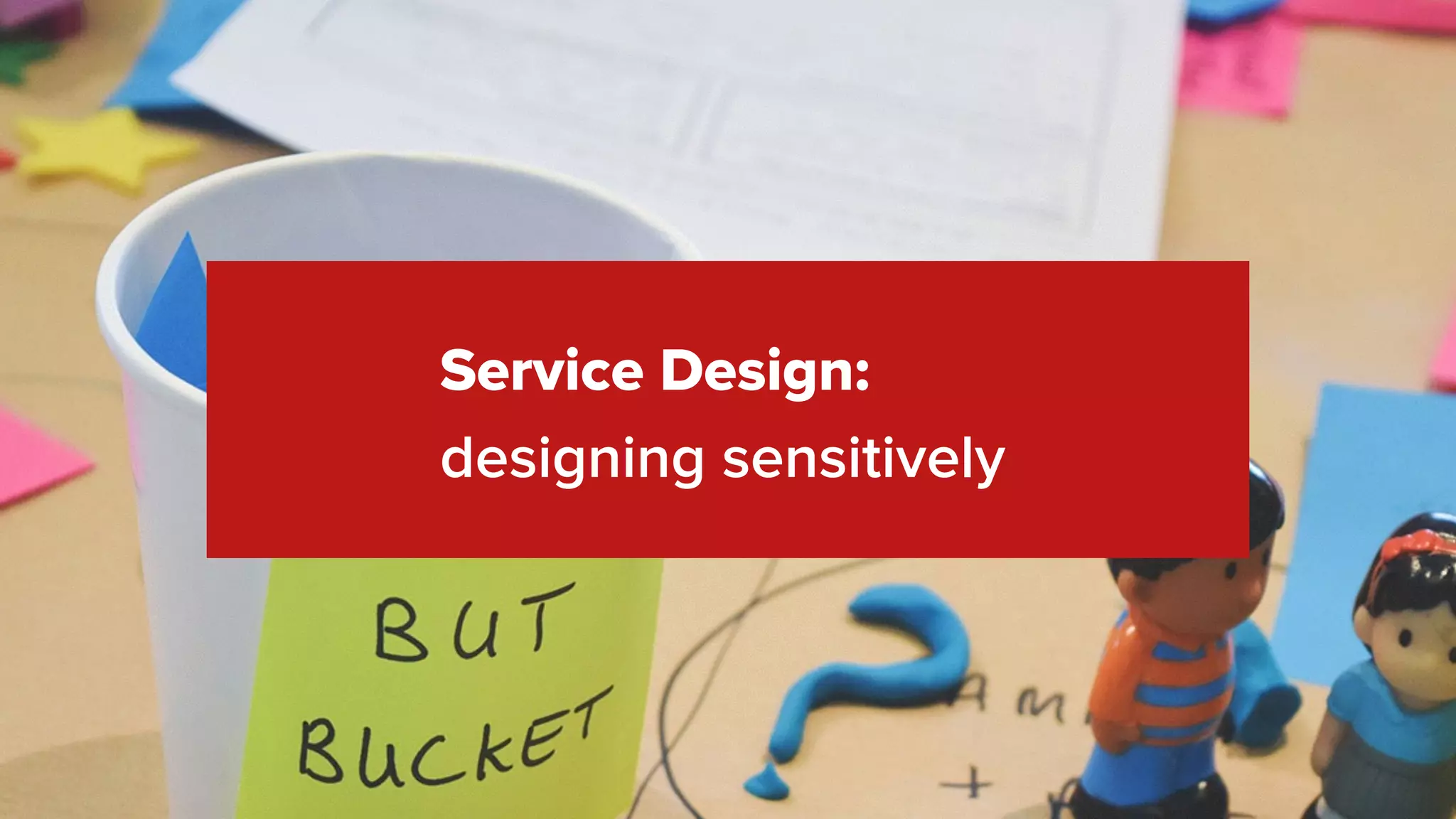
Service Design:
designing sensitively
Nurturing
relationships doesn’t
only take time. It
takes consideration.
| SENSITIVITY
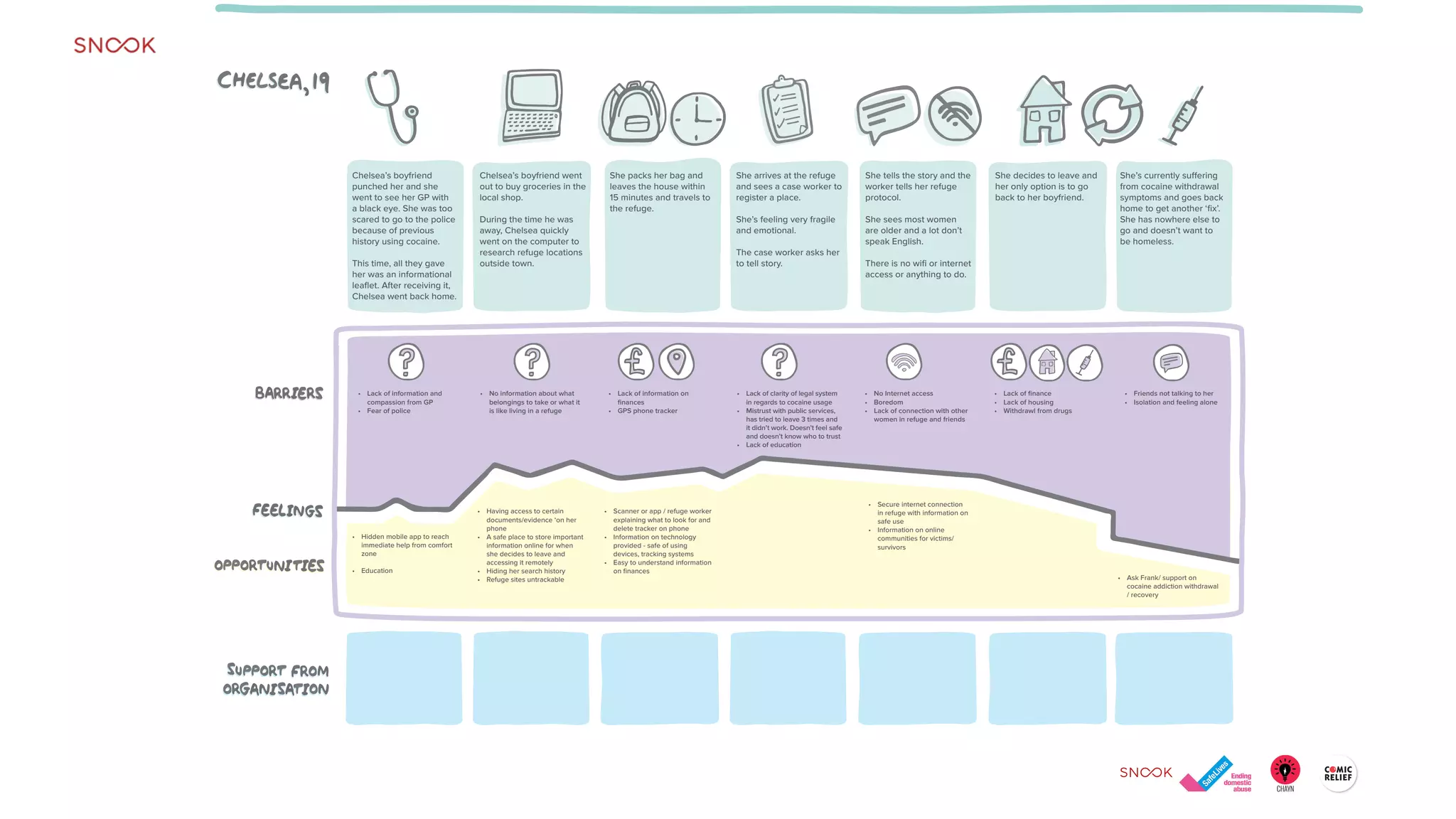
Chelsea’s boyfriend
punched her and she
went to see her GP with
a black eye. She was too
scared to go to the police
because of previous
history using cocaine.
This time, all they gave
her was an informational
leaflet. After receiving it,
Chelsea went back home.
• Lack of information and
compassion from GP
• Fear of police
• No information about what
belongings to take or what it is like
living in a refuge
• No Internet access
• Boredom
• Lack of connection with other
women in refuge and friends
• Lack of finance
• Lack of housing
• Withdrawl from drugs
• Friends not talking to her
• Isolation and feeling alone
• Lack of clarity of legal system in
regards to cocaine usage
• Mistrust with public services, has
tried to leave 3 times and it didn’t
work. Doesn’t feel safe and doesn’t
know who to trust
• Lack of education
• Hidden mobile app to reach
immediate help from comfort
zone
• Education
• Having access to certain
documents/evidence ‘on her
phone
• A safe place to store important
information online for when
she decides to leave and
accessing it remotely
• Hiding her search history
• Refuge sites untrackable • Ask Frank/ support on cocaine
addiction withdrawal / recovery
Chelsea’s boyfriend went
out to buy groceries in the
local shop.
During the time he was
away, Chelsea quickly
went on the computer to
research refuge locations
outside town.
She packs her bag and
leaves the house within
15 minutes and travels to
the refuge.
She arrives at the refuge
and sees a case worker to
register a place.
She’s feeling very fragile
and emotional.
The case worker asks her
to tell story.
She tells the story and the
worker tells her refuge
protocol.
She sees most women
are older and a lot don’t
speak English.
There is no wifi or internet
access or anything to do.
She decides to leave and
her only option is to go
back to her boyfriend.
She’s currently suffering
from cocaine withdrawal
symptoms and goes back
home to get another ‘fix’.
She has nowhere else to
go and doesn’t want to be
homeless.
Barriers
Support from
organisation
Chelsea, 19
Feelings
• Lack of information on finances
• GPS phone tracker
• Secure internet connection
in refuge with information on
safe use
• Information on online
communities for victims/
survivors
Opportunities
• Scanner or app / refuge worker
explaining what to look for and
delete tracker on phone
• Information on technology
provided - safe of using
devices, tracking systems
• Easy to understand information
on finances
Chelsea’s boyfriend
punched her and she
went to see her GP with
a black eye. She was too
scared to go to the police
because of previous
history using cocaine.
This time, all they gave
her was an informational
leaflet. After receiving it,
Chelsea went back home.
• Lack of information and
compassion from GP
• Fear of police
• No information about what
belongings to take or what it
is like living in a refuge
• No Internet access
• Boredom
• Lack of connection with other
women in refuge and friends
• Lack of finance
• Lack of housing
• Withdrawl from drugs
• Friends not talking to her
• Isolation and feeling alone
• Lack of clarity of legal system
in regards to cocaine usage
• Mistrust with public services,
has tried to leave 3 times and
it didn’t work. Doesn’t feel safe
and doesn’t know who to trust
• Lack of education
• Hidden mobile app to reach
immediate help from comfort
zone
• Education
• Having access to certain
documents/evidence ‘on her
phone
• A safe place to store important
information online for when
she decides to leave and
accessing it remotely
• Hiding her search history
• Refuge sites untrackable • Ask Frank/ support on
cocaine addiction withdrawal
/ recovery
Chelsea’s boyfriend went
out to buy groceries in the
local shop.
During the time he was
away, Chelsea quickly
went on the computer to
research refuge locations
outside town.
She packs her bag and
leaves the house within
15 minutes and travels to
the refuge.
She arrives at the refuge
and sees a case worker to
register a place.
She’s feeling very fragile
and emotional.
The case worker asks her
to tell story.
She tells the story and the
worker tells her refuge
protocol.
She sees most women
are older and a lot don’t
speak English.
There is no wifi or internet
access or anything to do.
She decides to leave and
her only option is to go
back to her boyfriend.
She’s currently suffering
from cocaine withdrawal
symptoms and goes back
home to get another ‘fix’.
She has nowhere else to
go and doesn’t want to
be homeless.
• Lack of information on
finances
• GPS phone tracker
• Secure internet connection
in refuge with information on
safe use
• Information on online
communities for victims/
survivors
• Scanner or app / refuge worker
explaining what to look for and
delete tracker on phone
• Information on technology
provided - safe of using
devices, tracking systems
• Easy to understand information
on finances
50
| ABOUT US
We have a
responsibility to
handle people’s
stories sensitively
| SENSITIVITY
Service Design:
5 key points
52
| ABOUT US
1. It takes time
2. Relationships, not processes
3. We’re all part of the problem.
And the solution
4. Genuineness and openness
5. Facilitation and sensitivity
| SERVICE DESIGN
Service Design is
more than meets the
post-it notes
| SERVICE DESIGN
THANKS!

There's more to service design than meets the post-it notes

  • 1.
    EVE GEORGIEVA
 Research &Service Design @dryandusty
 @wearesnook THERE’S MORE TO SERVICE DESIGN THAN MEETS THE POST-IT NOTES #UPFRONT
  • 2.
  • 3.
    “Frankly, one ofthe great strengths of design is that we have not settled on a single definition. Fields in which definitions is now a settled matter tend to be lethargic, dying, or dead fields, where inquiry no longer provides challenges to what is accepted as truth” - Richard Buchanan, 2001
  • 4.
    Service design isthe design of a service 4
  • 5.
    A service issomething that helps users do something
  • 6.
    6 5 principles of servicedesign: 1 User-centred 2 Co-creative 3 End-to-end 4 Aligning experiences 5 Holistic
  • 7.
    1 User-centred Service designis about understanding people’s experiences
  • 8.
  • 9.
    3 End-to-end Service designconsiders the end-to-end user journey
  • 10.
    4 Aligning experiences Considering experiences fromdifferent perspectives and matching these in the process
  • 11.
    5 Holistic Service designconsiders the entire environment of a service
  • 12.
    12 Service design isthe design of services but what are our guides?
  • 13.
    13 Snook’s principles 1 Workinglive 2 People as assets 3 Relationships as materials 4 Playing with politics 5 Designing sensitively
  • 14.
    14 Why is itimportant to build and nurture relationships?
  • 15.
    15 5 principles of servicedesign: 1 User-centred 2 Co-creative 3 End-to-end 4 Aligning experiences 5 Holistic
  • 16.
    16 5 principles of servicedesign: 1 User-centred 2 Co-creative 3 End-to-end 4 Aligning experiences 5 Holistic
  • 17.
    17 But behind this: 1Relationships 2 Facilitation 3 Mapping 4 Politics 5 Sensitivity 5 principles of service design: 1 User-centred 2 Co-creative 3 End-to-end 4 Aligning experiences 5 Holistic
  • 18.
    Service Design: building andnurturing relationships
  • 19.
  • 20.
  • 21.
    21 Designing a process tobring people together | RELATIONSHIPS
  • 22.
  • 24.
    “There seems tobe a general consensus that there is no culture here. I'd just like that to change. I'd like to believe it myself. Wherever there's people, there's culture, right?” – Citizens Circle member
  • 25.
  • 26.
  • 27.
  • 28.
  • 29.
    Tool(kit)s are justa method to gather insights | RELATIONSHIPS
  • 30.
    30 You can ‘fanthe flame’ but you can’t force the process | 1 RELATIONSHIPS
  • 31.
  • 33.
    Good facilitation is aboutsupporting participants to understand priorities and needs, to enable them to tackle complex issues
  • 34.
    We’re not just designers. We’refacilitators of people’s knowledge. | FACILITATION
  • 35.
  • 36.
    Nurturing relationships doesn’t only taketime. It takes consideration. | SENSITIVITY
  • 42.
    Chelsea’s boyfriend punched herand she went to see her GP with a black eye. She was too scared to go to the police because of previous history using cocaine. This time, all they gave her was an informational leaflet. After receiving it, Chelsea went back home. • Lack of information and compassion from GP • Fear of police • No information about what belongings to take or what it is like living in a refuge • No Internet access • Boredom • Lack of connection with other women in refuge and friends • Lack of finance • Lack of housing • Withdrawl from drugs • Friends not talking to her • Isolation and feeling alone • Lack of clarity of legal system in regards to cocaine usage • Mistrust with public services, has tried to leave 3 times and it didn’t work. Doesn’t feel safe and doesn’t know who to trust • Lack of education • Hidden mobile app to reach immediate help from comfort zone • Education • Having access to certain documents/evidence ‘on her phone • A safe place to store important information online for when she decides to leave and accessing it remotely • Hiding her search history • Refuge sites untrackable • Ask Frank/ support on cocaine addiction withdrawal / recovery Chelsea’s boyfriend went out to buy groceries in the local shop. During the time he was away, Chelsea quickly went on the computer to research refuge locations outside town. She packs her bag and leaves the house within 15 minutes and travels to the refuge. She arrives at the refuge and sees a case worker to register a place. She’s feeling very fragile and emotional. The case worker asks her to tell story. She tells the story and the worker tells her refuge protocol. She sees most women are older and a lot don’t speak English. There is no wifi or internet access or anything to do. She decides to leave and her only option is to go back to her boyfriend. She’s currently suffering from cocaine withdrawal symptoms and goes back home to get another ‘fix’. She has nowhere else to go and doesn’t want to be homeless. Barriers Support from organisation Chelsea, 19 Feelings • Lack of information on finances • GPS phone tracker • Secure internet connection in refuge with information on safe use • Information on online communities for victims/ survivors Opportunities • Scanner or app / refuge worker explaining what to look for and delete tracker on phone • Information on technology provided - safe of using devices, tracking systems • Easy to understand information on finances
  • 44.
    Chelsea’s boyfriend punched herand she went to see her GP with a black eye. She was too scared to go to the police because of previous history using cocaine. This time, all they gave her was an informational leaflet. After receiving it, Chelsea went back home. • Lack of information and compassion from GP • Fear of police • No information about what belongings to take or what it is like living in a refuge • No Internet access • Boredom • Lack of connection with other women in refuge and friends • Lack of finance • Lack of housing • Withdrawl from drugs • Friends not talking to her • Isolation and feeling alone • Lack of clarity of legal system in regards to cocaine usage • Mistrust with public services, has tried to leave 3 times and it didn’t work. Doesn’t feel safe and doesn’t know who to trust • Lack of education • Hidden mobile app to reach immediate help from comfort zone • Education • Having access to certain documents/evidence ‘on her phone • A safe place to store important information online for when she decides to leave and accessing it remotely • Hiding her search history • Refuge sites untrackable • Ask Frank/ support on cocaine addiction withdrawal / recovery Chelsea’s boyfriend went out to buy groceries in the local shop. During the time he was away, Chelsea quickly went on the computer to research refuge locations outside town. She packs her bag and leaves the house within 15 minutes and travels to the refuge. She arrives at the refuge and sees a case worker to register a place. She’s feeling very fragile and emotional. The case worker asks her to tell story. She tells the story and the worker tells her refuge protocol. She sees most women are older and a lot don’t speak English. There is no wifi or internet access or anything to do. She decides to leave and her only option is to go back to her boyfriend. She’s currently suffering from cocaine withdrawal symptoms and goes back home to get another ‘fix’. She has nowhere else to go and doesn’t want to be homeless. • Lack of information on finances • GPS phone tracker • Secure internet connection in refuge with information on safe use • Information on online communities for victims/ survivors • Scanner or app / refuge worker explaining what to look for and delete tracker on phone • Information on technology provided - safe of using devices, tracking systems • Easy to understand information on finances
  • 50.
    50 | ABOUT US Wehave a responsibility to handle people’s stories sensitively | SENSITIVITY
  • 51.
  • 52.
    52 | ABOUT US 1.It takes time 2. Relationships, not processes 3. We’re all part of the problem. And the solution 4. Genuineness and openness 5. Facilitation and sensitivity | SERVICE DESIGN
  • 53.
    Service Design is morethan meets the post-it notes | SERVICE DESIGN
  • 54.