Overcoming the Top Four Challenges to
Real-Time Performance in Large-Scale,
      Data-Centric Applications
             Tom Lubinski
           Founder and CEO
            SL Corporation
               7 March 2012
 Disclaimers

 In 30 years, we’ve learned a lot
           (a grizzled veteran)

 But, we don’t know everything …

 … we could be wrong !

 My other computer is a Mac

 We have “shipped” …
Background


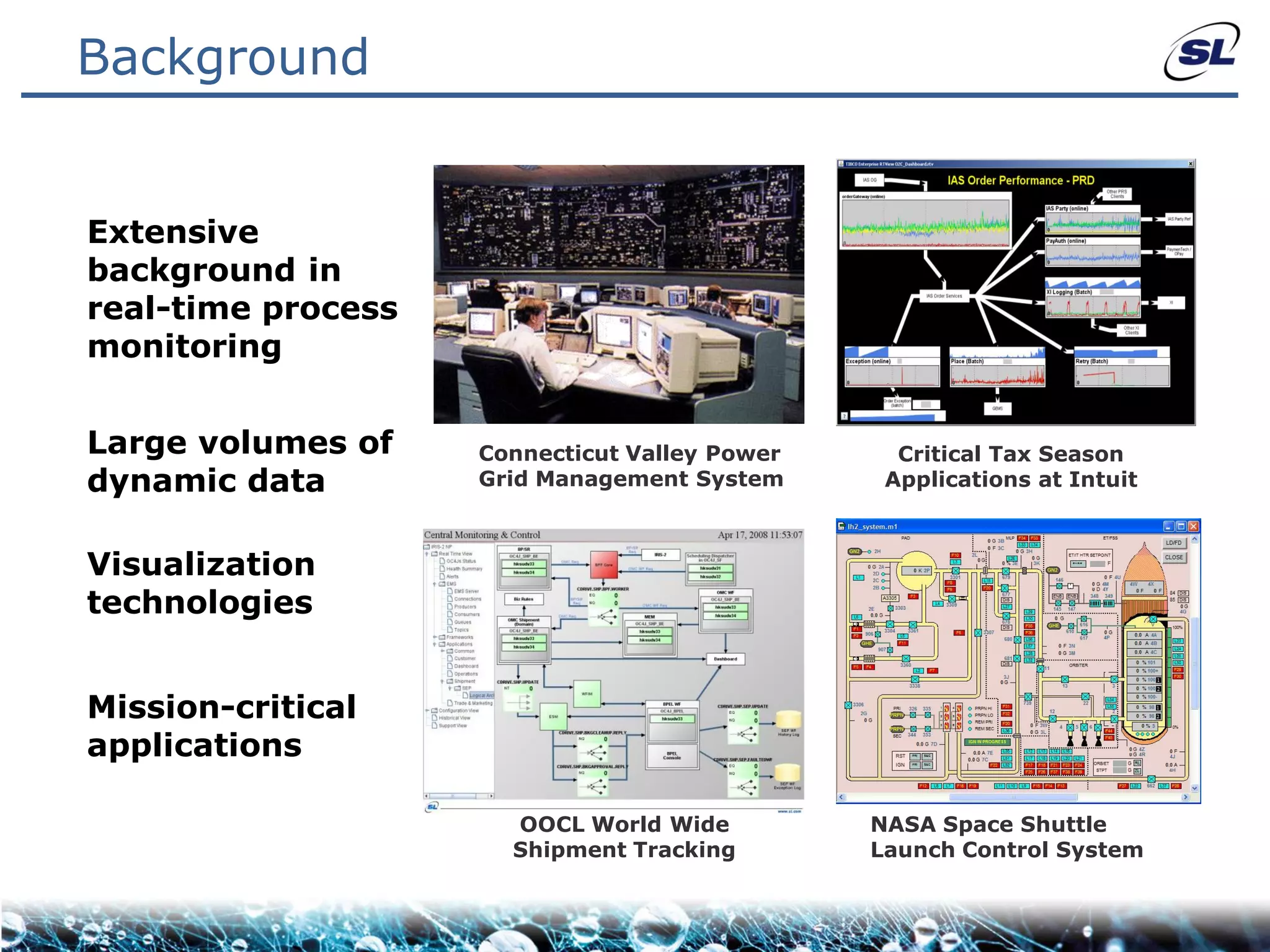
Extensive
background in
real-time process
monitoring


Large volumes of    Connecticut Valley Power     Critical Tax Season
dynamic data        Grid Management System      Applications at Intuit


Visualization
technologies


Mission-critical
applications

                      OOCL World Wide          NASA Space Shuttle
                      Shipment Tracking        Launch Control System
 Here to talk about Scalability and Performance

 Problem Space:

  Collection, Analysis, and Visualization in Real-Time
  of large volumes of monitoring data from large-
  scale, complex, distributed applications

  Emphasis: Real-Time, Large Volumes of Data
Challenges

 Challenge #1:

  Database Performance

     Common to see queries taking minutes
     How can you get real-time that way ?
Challenges

 Challenge #2:

  Network Data-Transfer Bandwidth

     Bigger pipes, but there’s more data to send
     How do you get the greatest throughput ?
Challenges

 Challenge #3:

  Processor Performance

     More cores just means more processes !
     How do you optimize your utilization ?
Challenges

 Challenge #4:

  Lack of Real-Time Predictability

     Virtualization is the new time-share !
     How can you trust your data ?

  “time-sharing”, “network computer”, “cloud”, do
  things ever really change ?
 Solution – Clues ?

 Facts of Life:

  Database – can’t live with it, can’t live without it

  Network – it’s a funnel, no way around it

  Processor – must limit what you ask it to do

  Virtualization - it’s erratic, have to compensate
Solutions

 Solution #1:

  Proper Data Model

     Data structures designed for real-time
     In-memory structures to buffer database
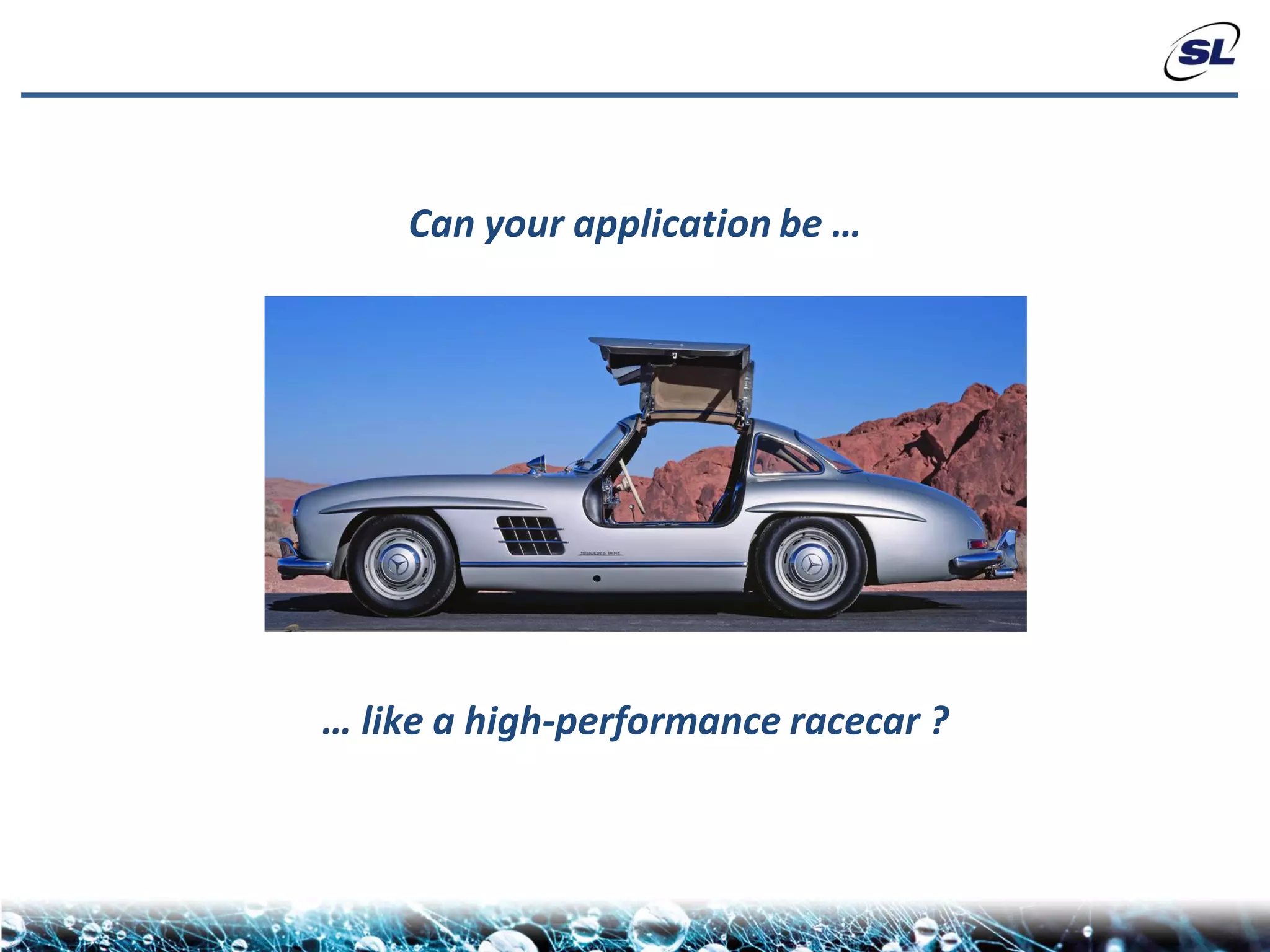
Can your application be …


… like a high-performance racecar ?
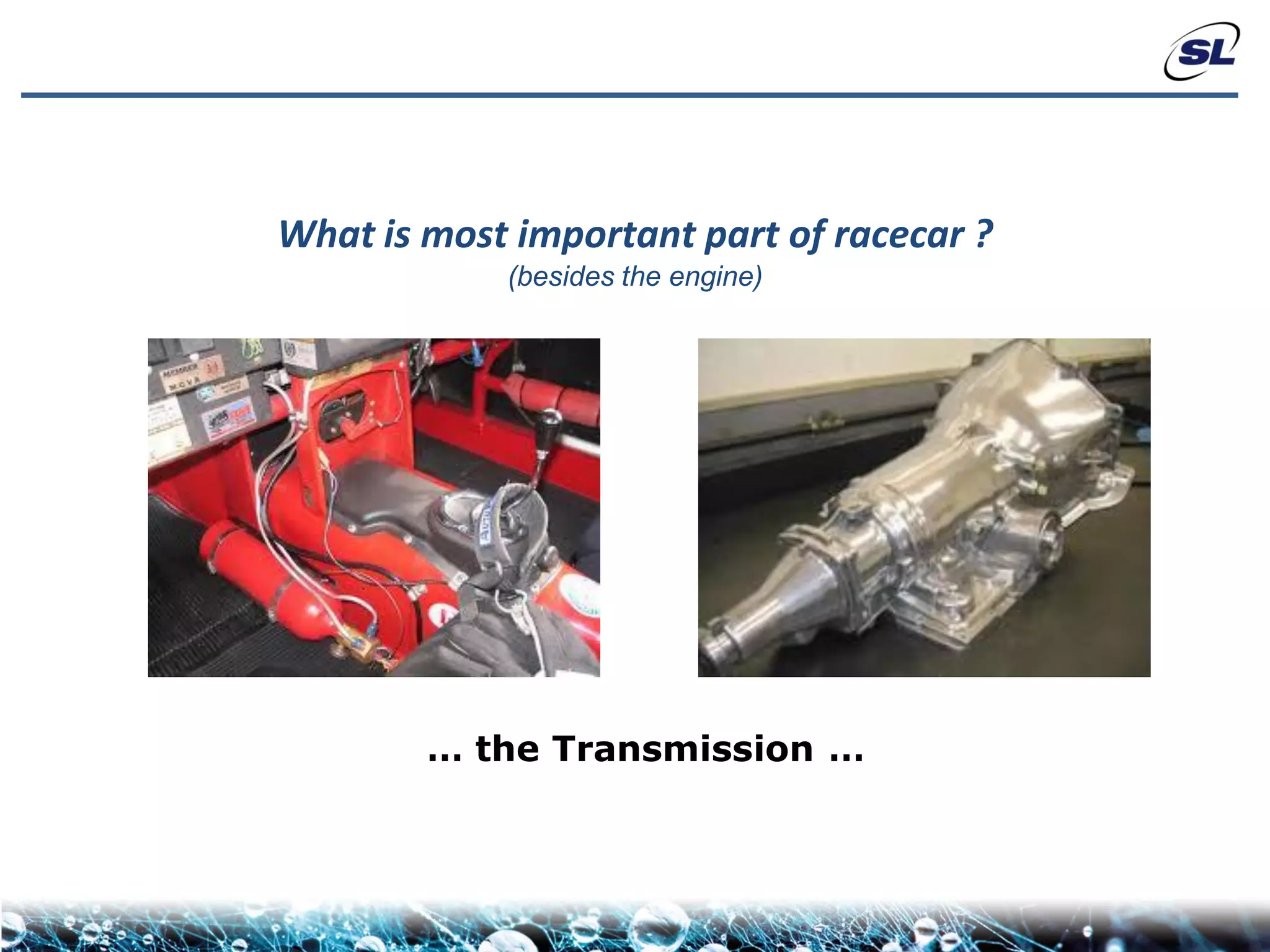
What is most important part of racecar ?
            (besides the engine)


        … the Transmission …
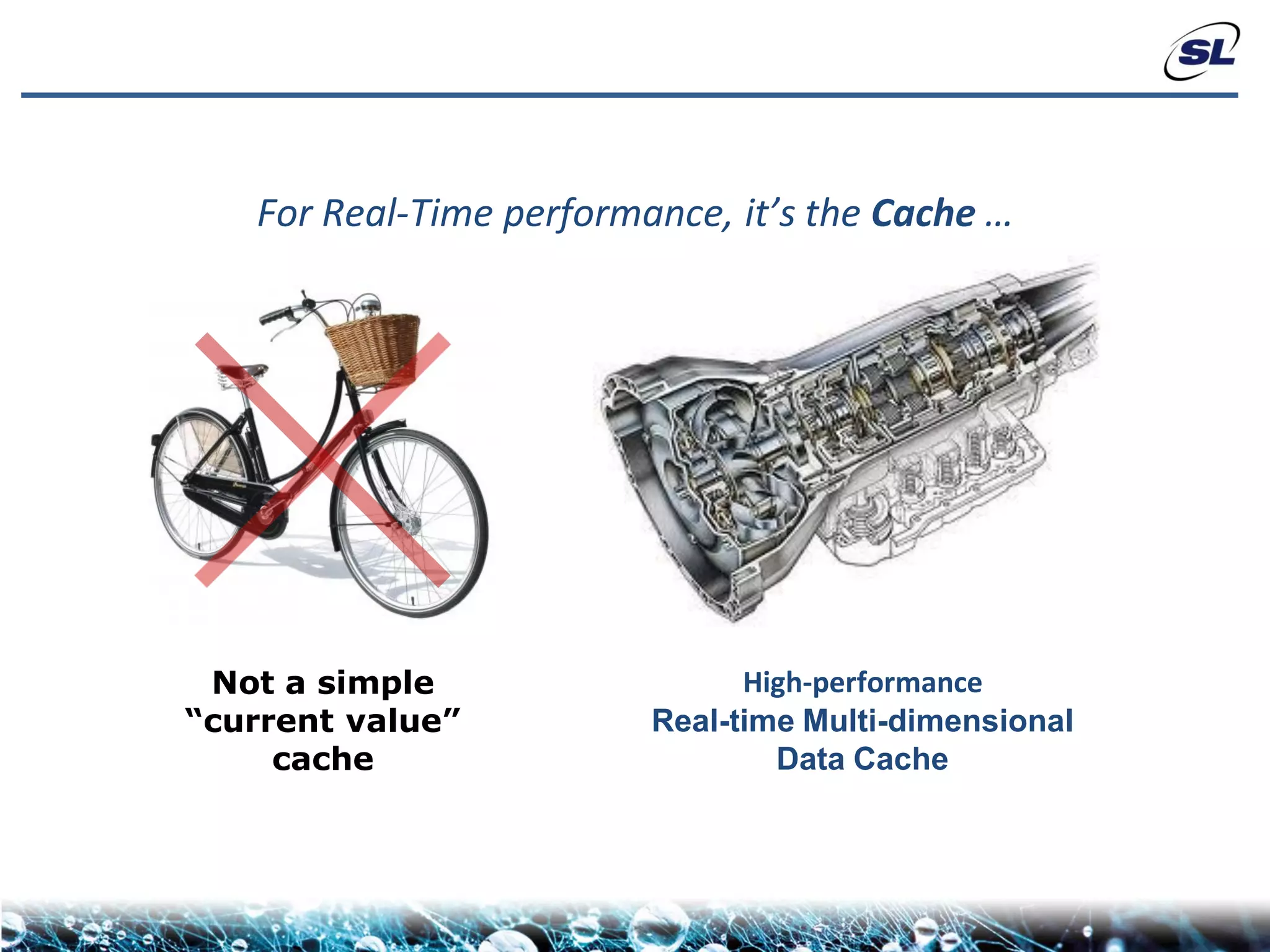
For Real-Time performance, it’s the Cache …


 Not a simple                  High-performance
“current value”          Real-time Multi-dimensional
     cache                       Data Cache
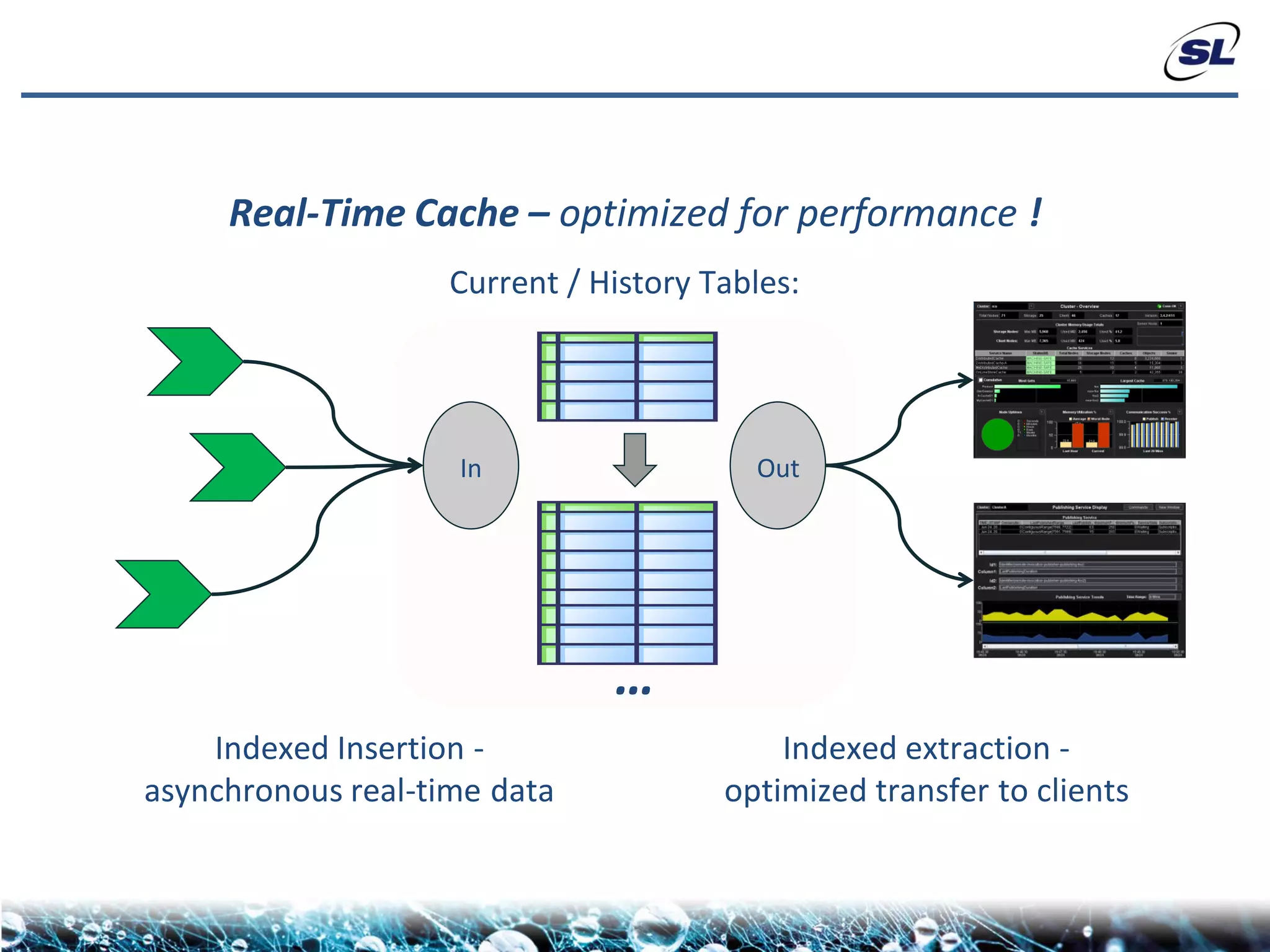
Real-Time Cache – optimized for performance !
                    Current / History Tables:


                    In                   Out


                               …
    Indexed Insertion -                    Indexed extraction -
asynchronous real-time data            optimized transfer to clients
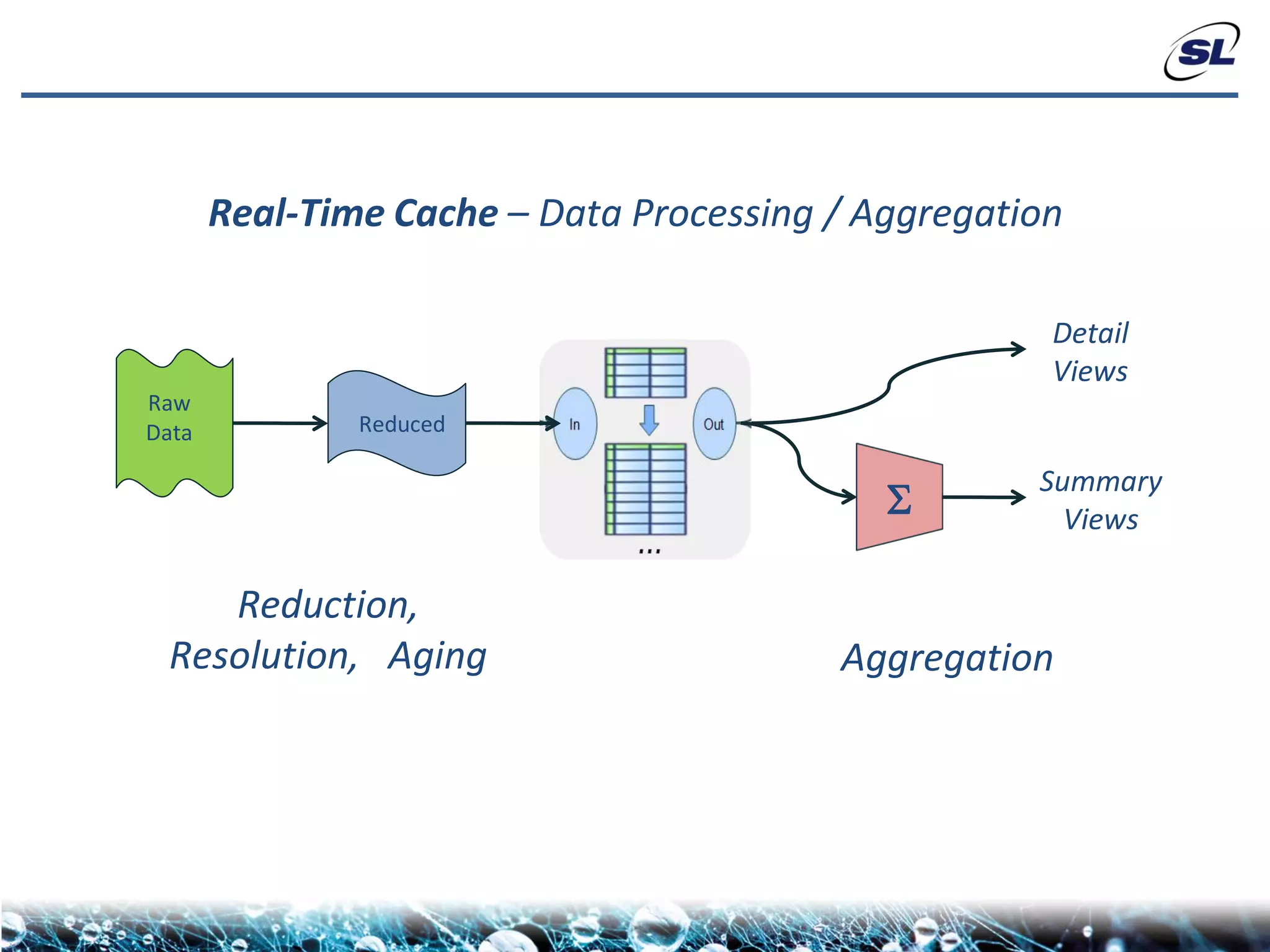
Real-Time Cache – Data Processing / Aggregation

                                                     Detail
                                                     Views
Raw
Data           Reduced

                                                    Summary
                                            S         Views

    Reduction,
 Resolution, Aging                       Aggregation
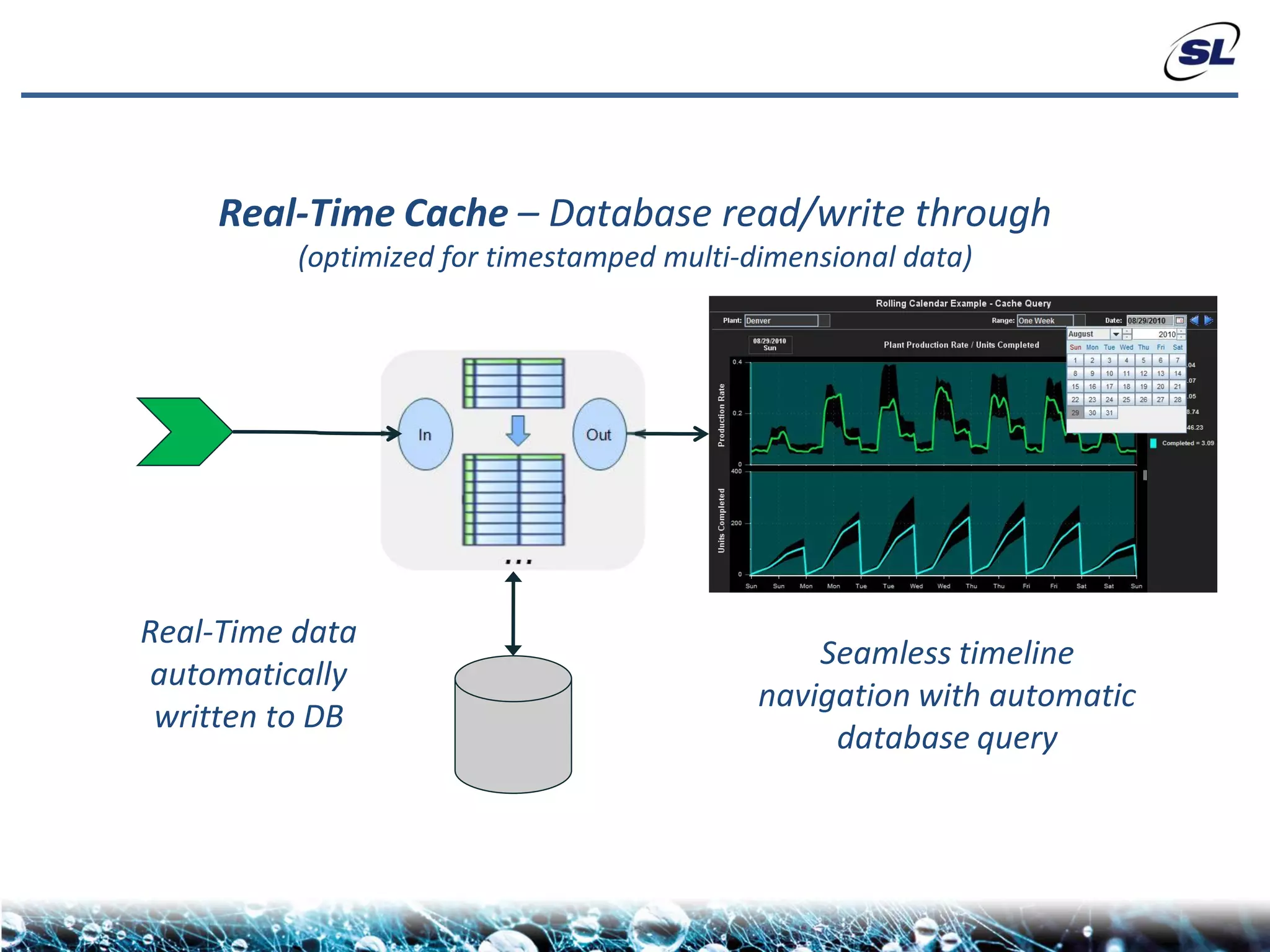
Real-Time Cache – Database read/write through
          (optimized for timestamped multi-dimensional data)


Real-Time data
                                                Seamless timeline
 automatically
                                            navigation with automatic
 written to DB
                                                 database query
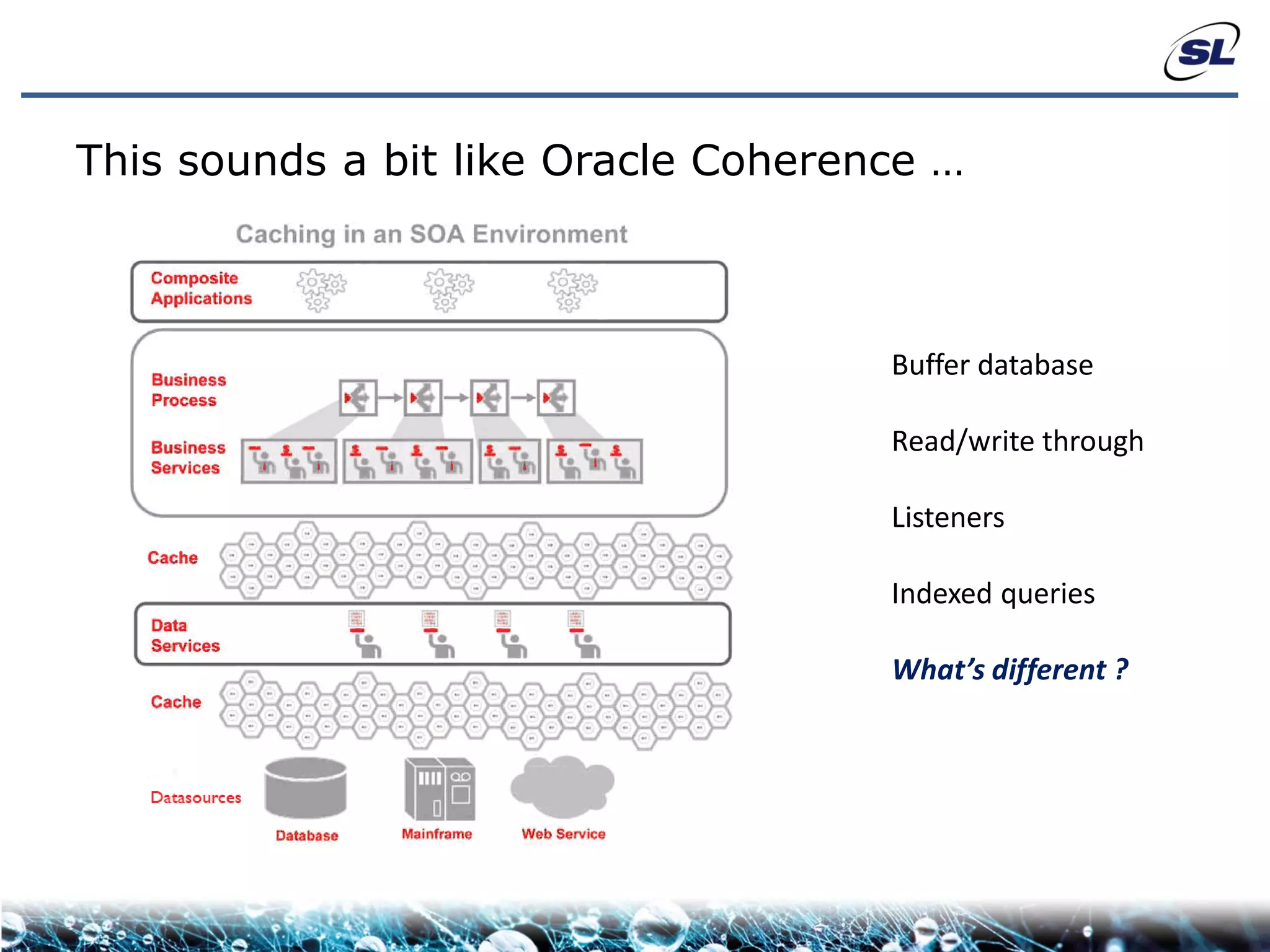
This sounds a bit like Oracle Coherence …


                                     Buffer database

                                     Read/write through

                                     Listeners

                                     Indexed queries

                                     What’s different ?
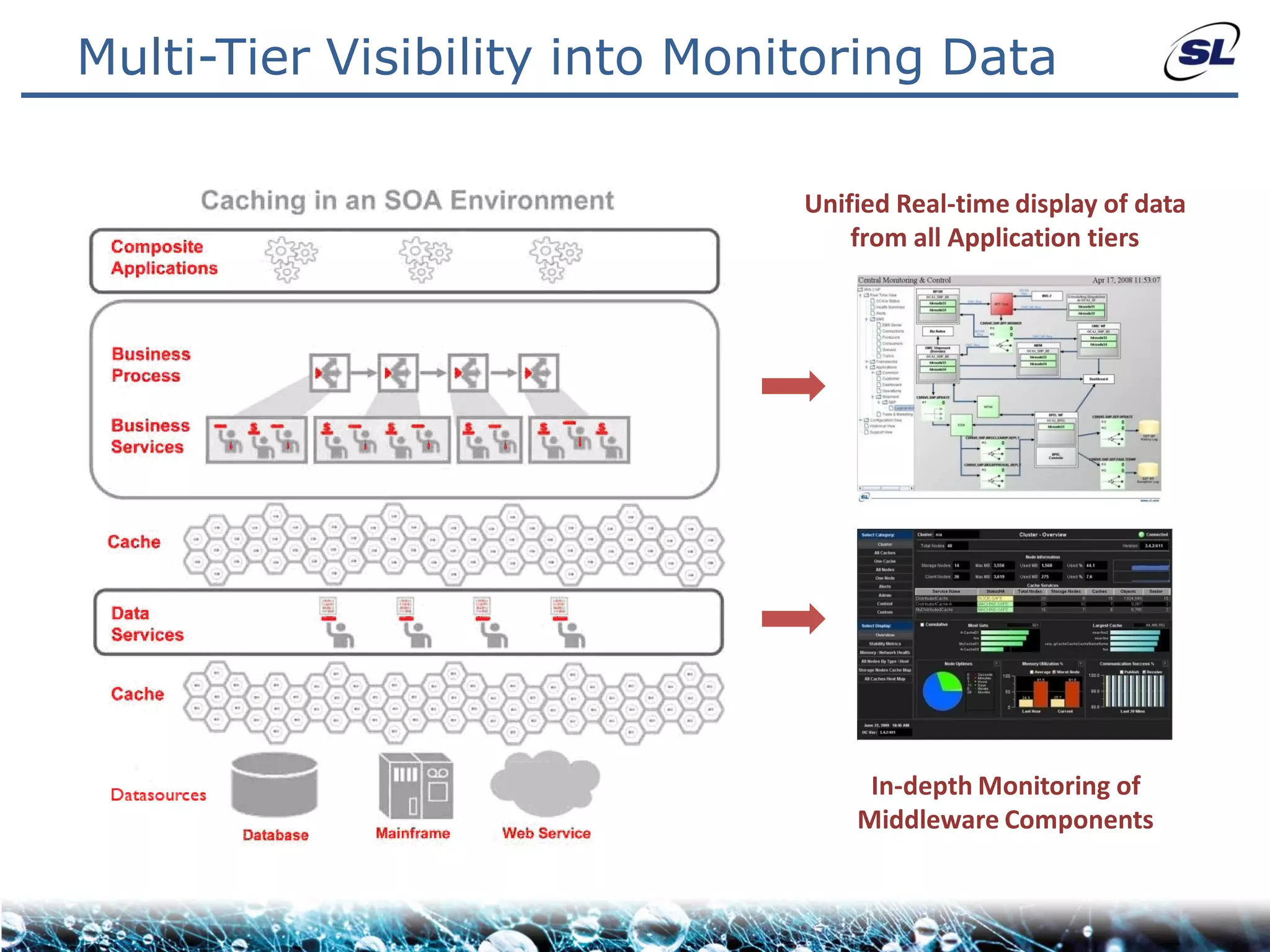
Multi-Tier Visibility into Monitoring Data

                                Unified Real-time display of data
                                    from all Application tiers


              Update for ORCL


                                     In-depth Monitoring of
                                    Middleware Components
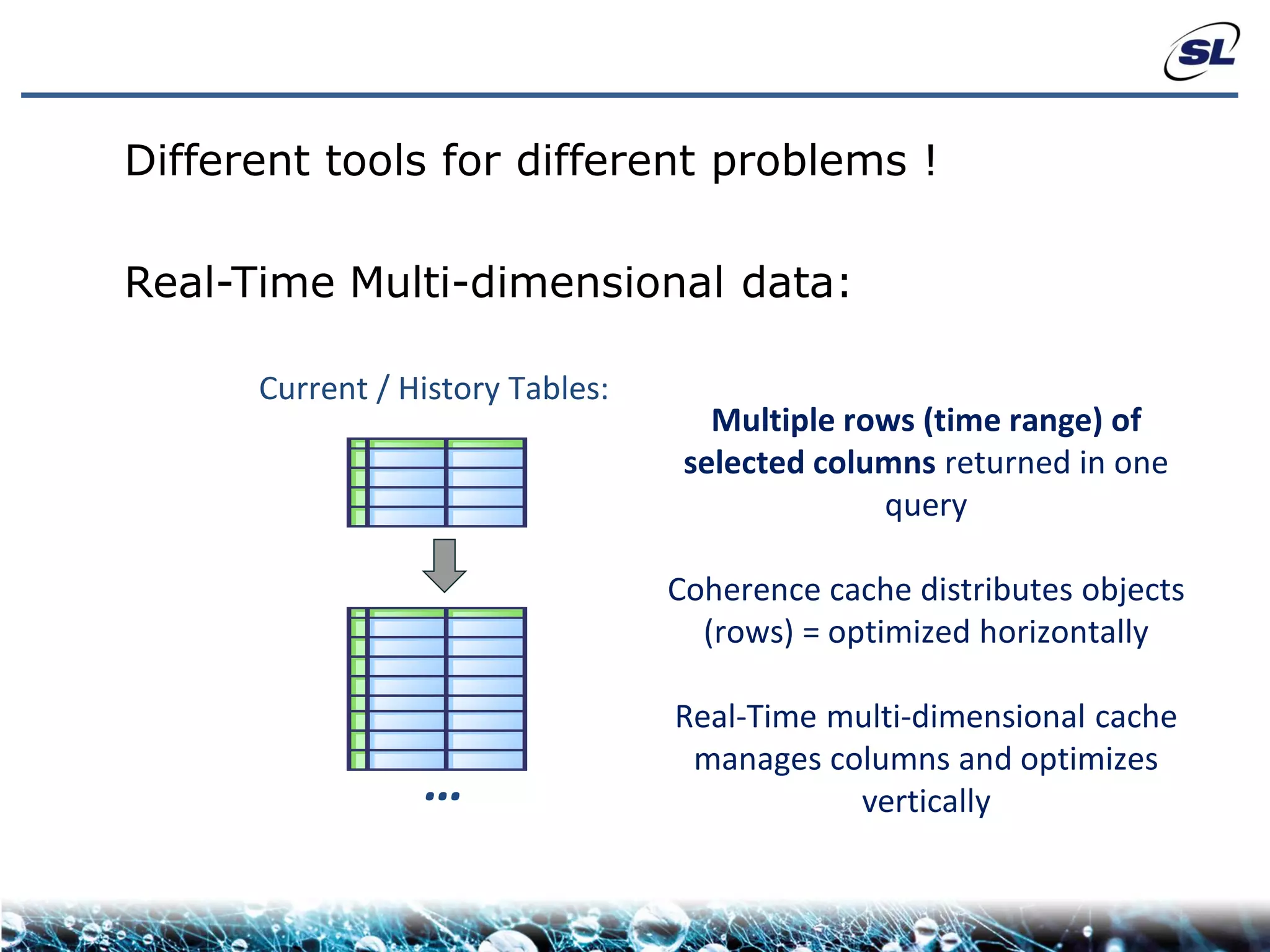
Different tools for different problems !

Real-Time Multi-dimensional data:

      Current / History Tables:
                                     Multiple rows (time range) of
                                   selected columns returned in one
                                                query

                                  Coherence cache distributes objects
                                    (rows) = optimized horizontally

                                  Real-Time multi-dimensional cache
                                   manages columns and optimizes
                 …                           vertically
Benefits: Indexed Real-Time Caching

Slow SQL queries minimized

Users shielded from database details

Minimize CPU load using effective indexing
Solutions

 Solution #2

  Server-Side Aggregation
     (am I being too obvious with this one ?)


     Know the use cases
     Joins and GroupBy done on server
     SQL does this, but do you need it ?
Problems with SQL Database Queries

Slow
Slowwer with concurrent queries
If you need it fast, it goes even slowwwwwwer !

SQL = Not portable
   (Timestamps, especially)
Know your problem space !

Real-Time Monitoring:
   Join and GroupBy heavily used

We wrote our own!
Performed in real-time on server-side data
Optimized for real-time requirements
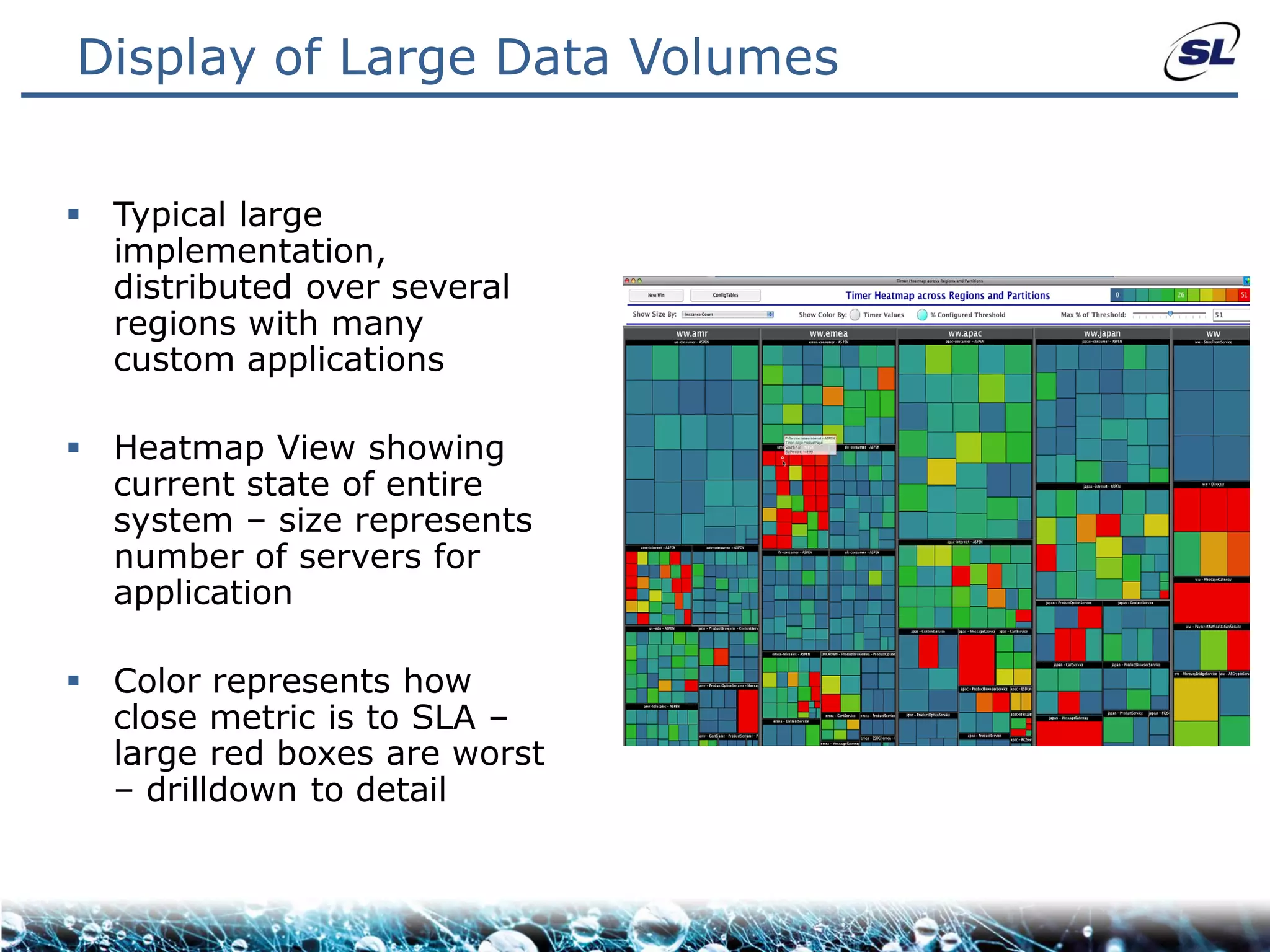
Display of Large Data Volumes


 Typical large
  implementation,
  distributed over several
  regions with many
  custom applications

 Heatmap View showing
  current state of entire
  system – size represents
  number of servers for
  application

 Color represents how
  close metric is to SLA –
  large red boxes are worst
  – drilldown to detail
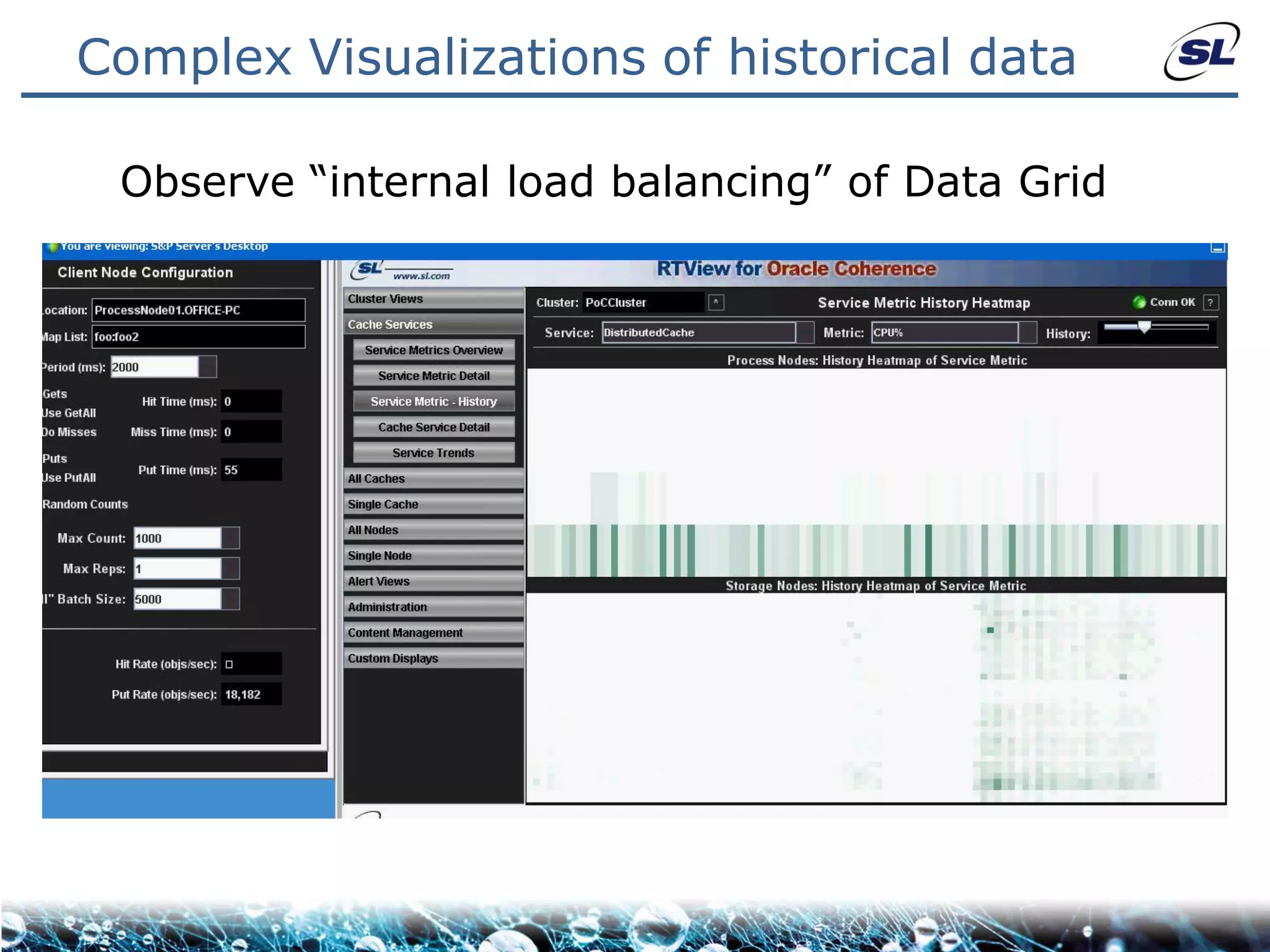
Complex Visualizations of historical data

 Observe “internal load balancing” of Data Grid
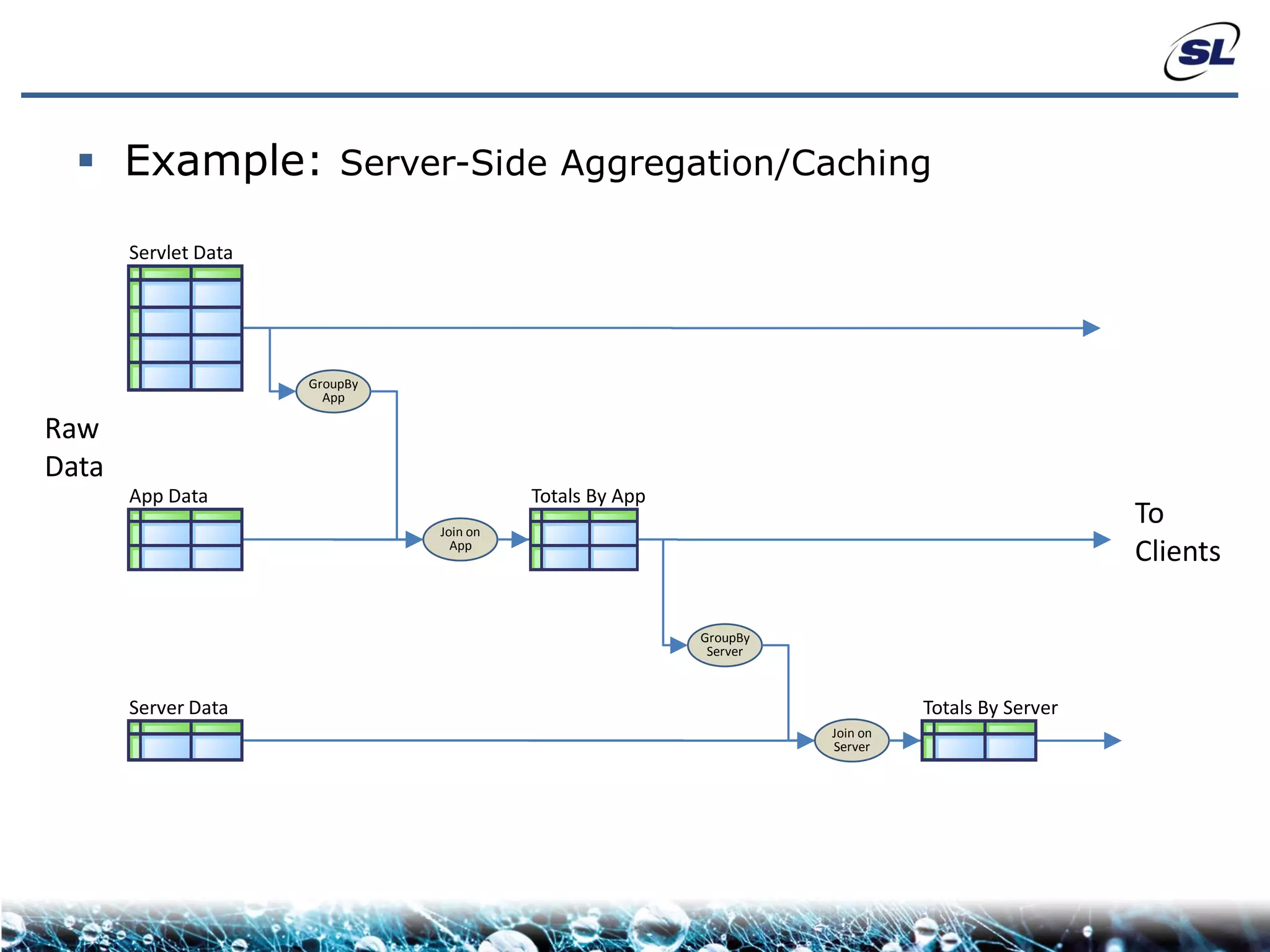
 Example: Server-Side Aggregation/Caching
       Servlet Data


                      GroupBy
                        App

Raw
Data
       App Data                           Totals By App
                                Join on
                                                                                                 To
                                  App
                                                                                                 Clients

                                                          GroupBy
                                                           Server


       Server Data                                                            Totals By Server
                                                                    Join on
                                                                    Server
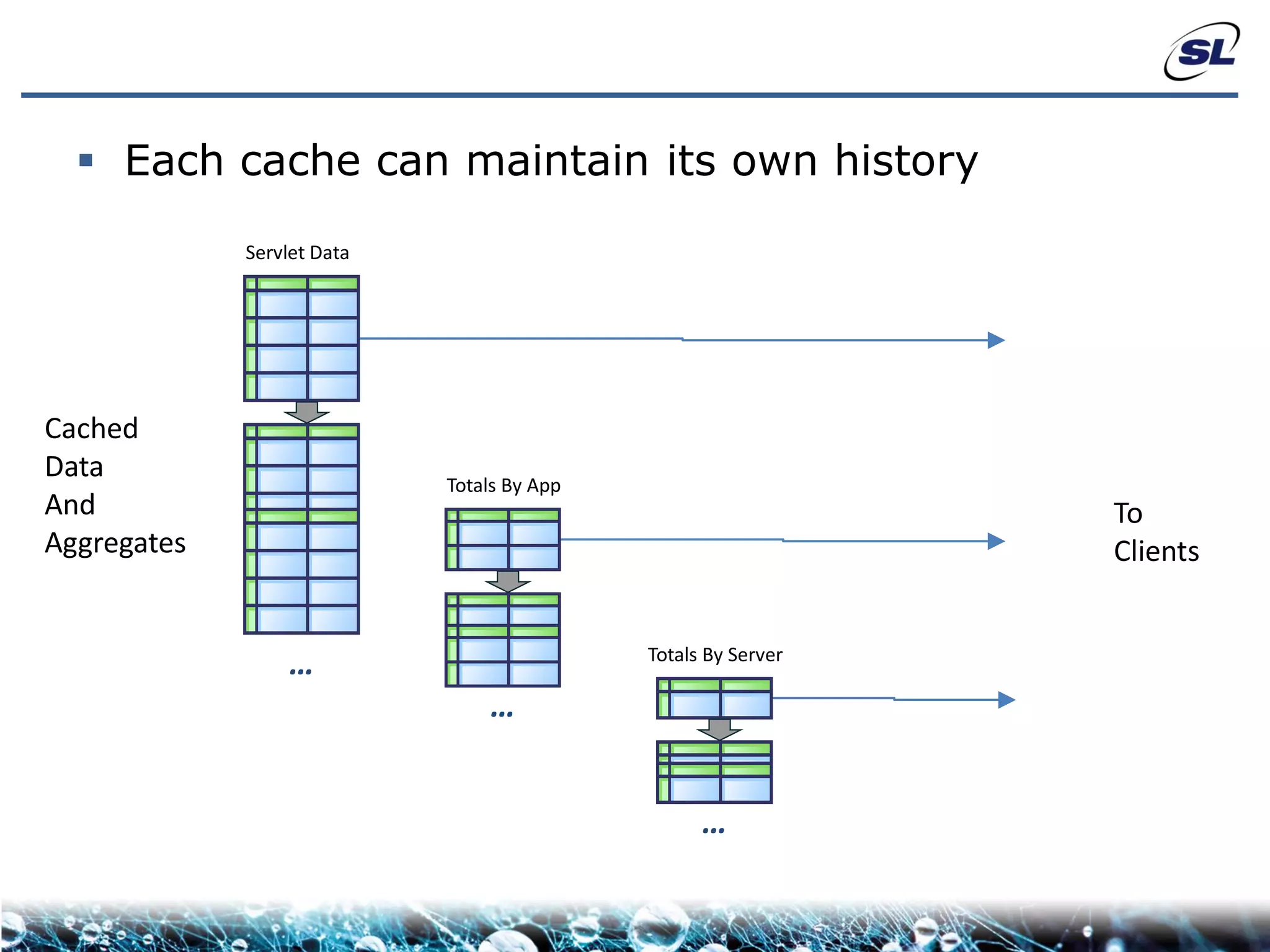
 Each cache can maintain its own history
             Servlet Data


Cached
Data                        Totals By App
And                                                            To
Aggregates                                                     Clients


                                            Totals By Server
                  …
                                …


                                                  …
 Result: trend chart of Totals by History has all
  data available immediately

 Using SQL would require:

   Query 3 tables
   2 GroupBys, 2 Joins, + Join on Timestamp (not portable)
Benefits: Server-Side Aggregation

Client requests and gets exactly what is needed

Client processing = zero
Server processing = done ahead of time
Current/History for aggregates readily available (No SQL)

Response time = fast
Solutions

 Solution #3

  Use Appropriate Design Patterns

     Server-Side vs. Client-Side Processing
     Efficient Data Transfer Patterns
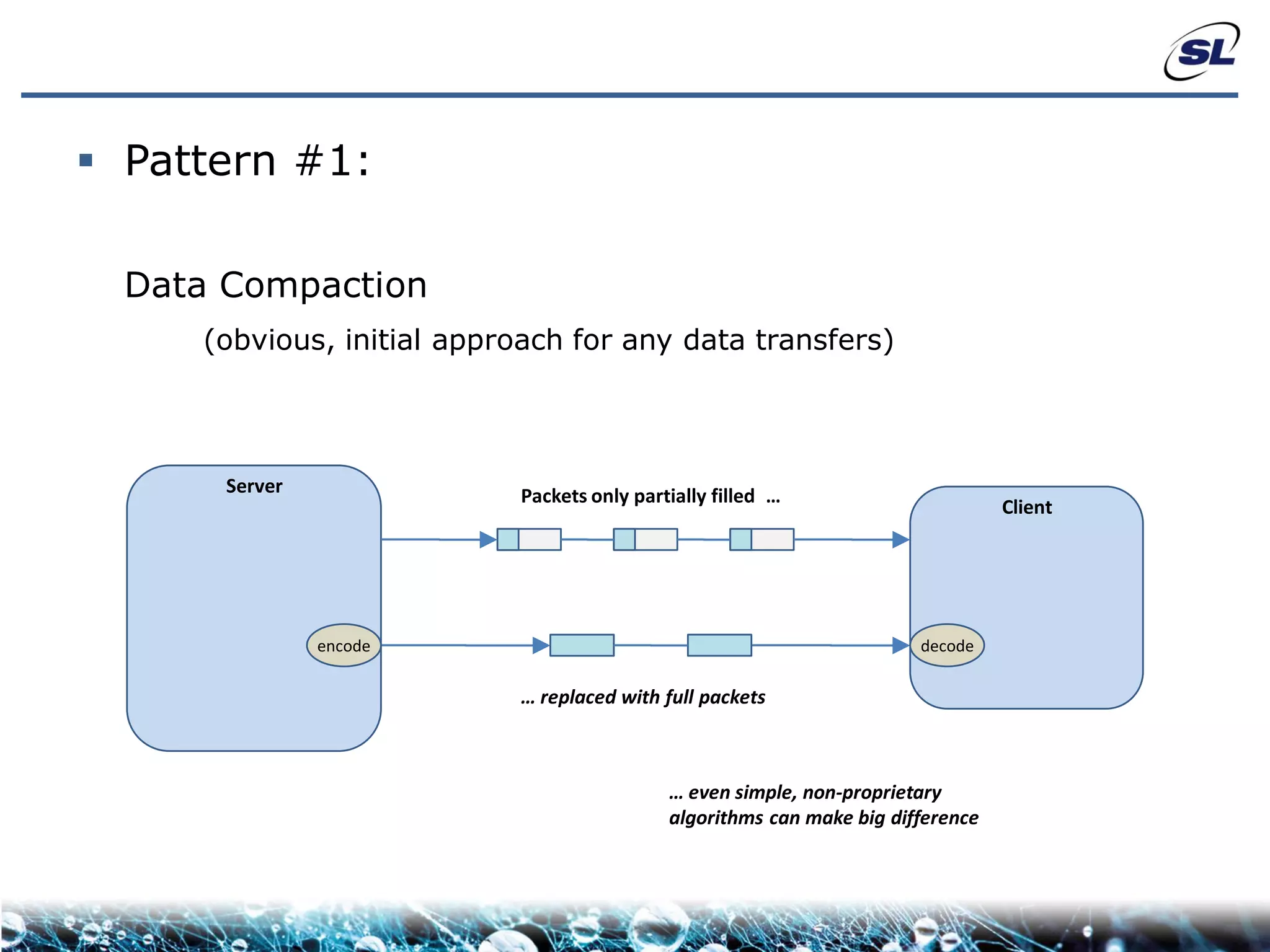
 Pattern #1:

  Data Compaction
     (obvious, initial approach for any data transfers)


       Server              Packets only partially filled …
                                                                                 Client


                encode                                                 decode

                           … replaced with full packets


                                            … even simple, non-proprietary
                                            algorithms can make big difference
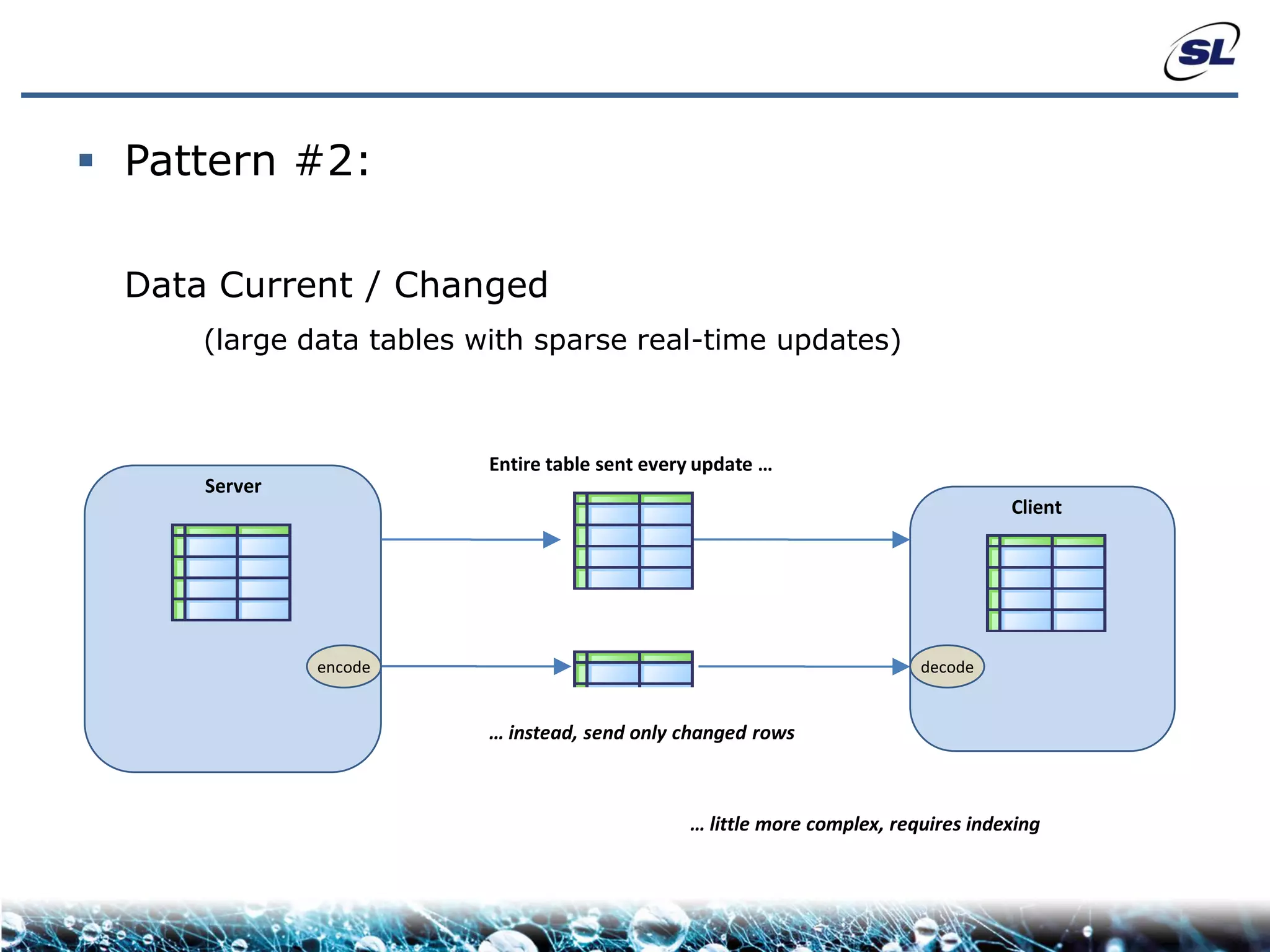
 Pattern #2:

  Data Current / Changed
      (large data tables with sparse real-time updates)


                          Entire table sent every update …
      Server
                                                                                    Client


               encode                                                     decode


                          … instead, send only changed rows


                                                … little more complex, requires indexing
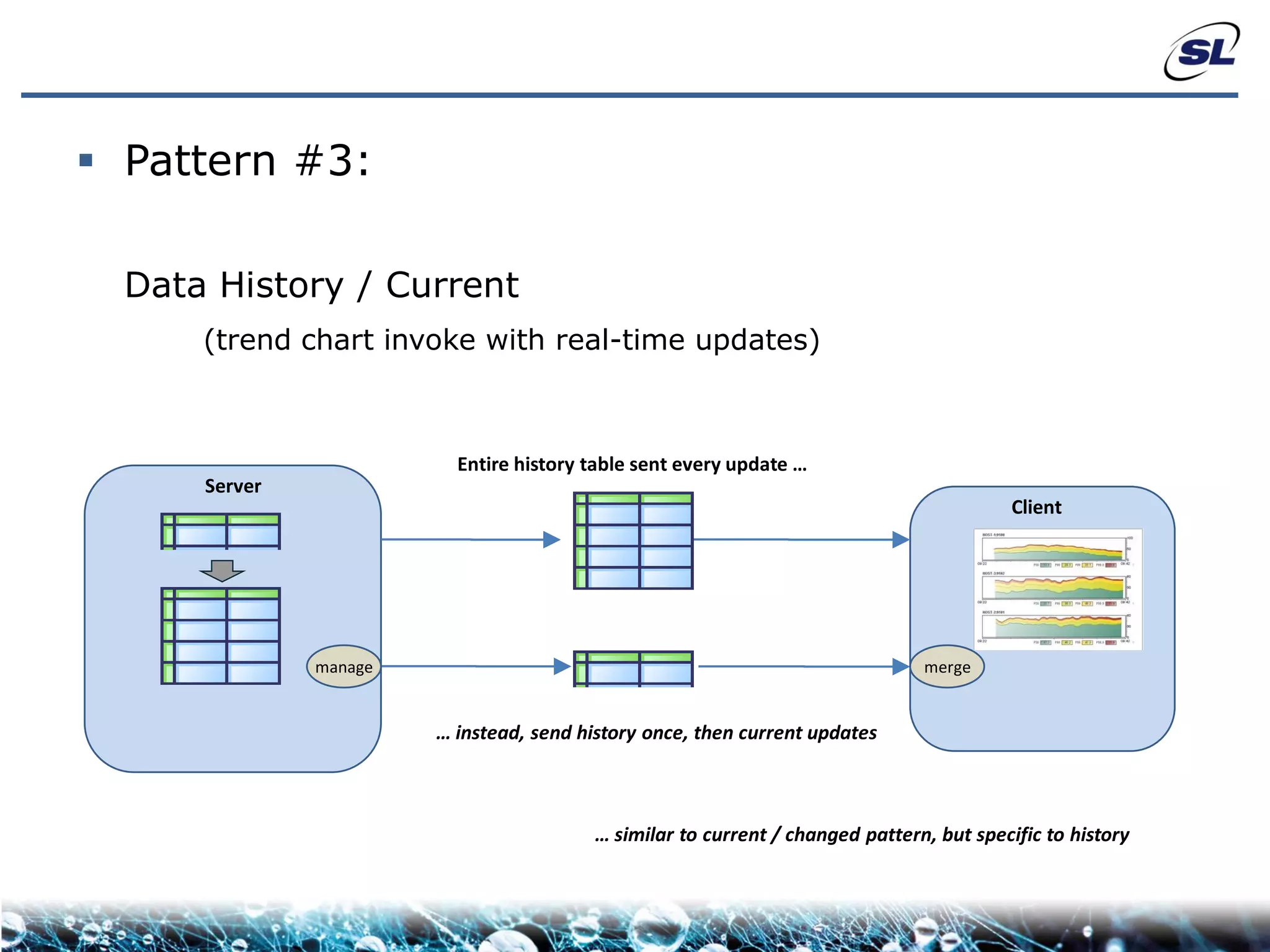
 Pattern #3:

  Data History / Current
      (trend chart invoke with real-time updates)


                          Entire history table sent every update …
      Server
                                                                                           Client


               manage                                                           merge
      …
                        … instead, send history once, then current updates


                                          … similar to current / changed pattern, but specific to history
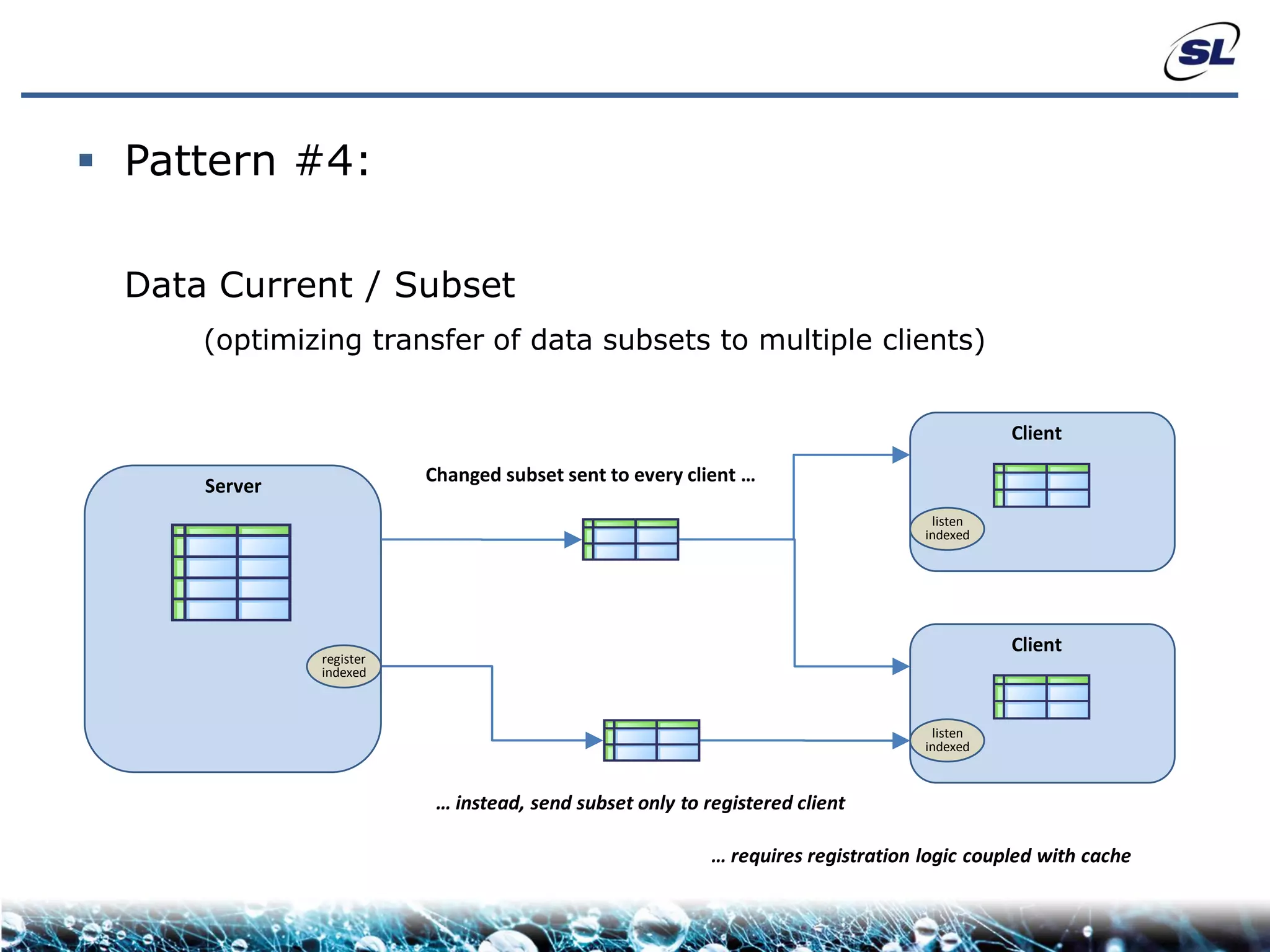
 Pattern #4:

  Data Current / Subset
      (optimizing transfer of data subsets to multiple clients)


                                                                                             Client
                          Changed subset sent to every client …
      Server
                                                                                    listen
                                                                                   indexed


                                                                                             Client
               register
               indexed


                                                                                    listen
                                                                                   indexed


                           … instead, send subset only to registered client

                                                           … requires registration logic coupled with cache
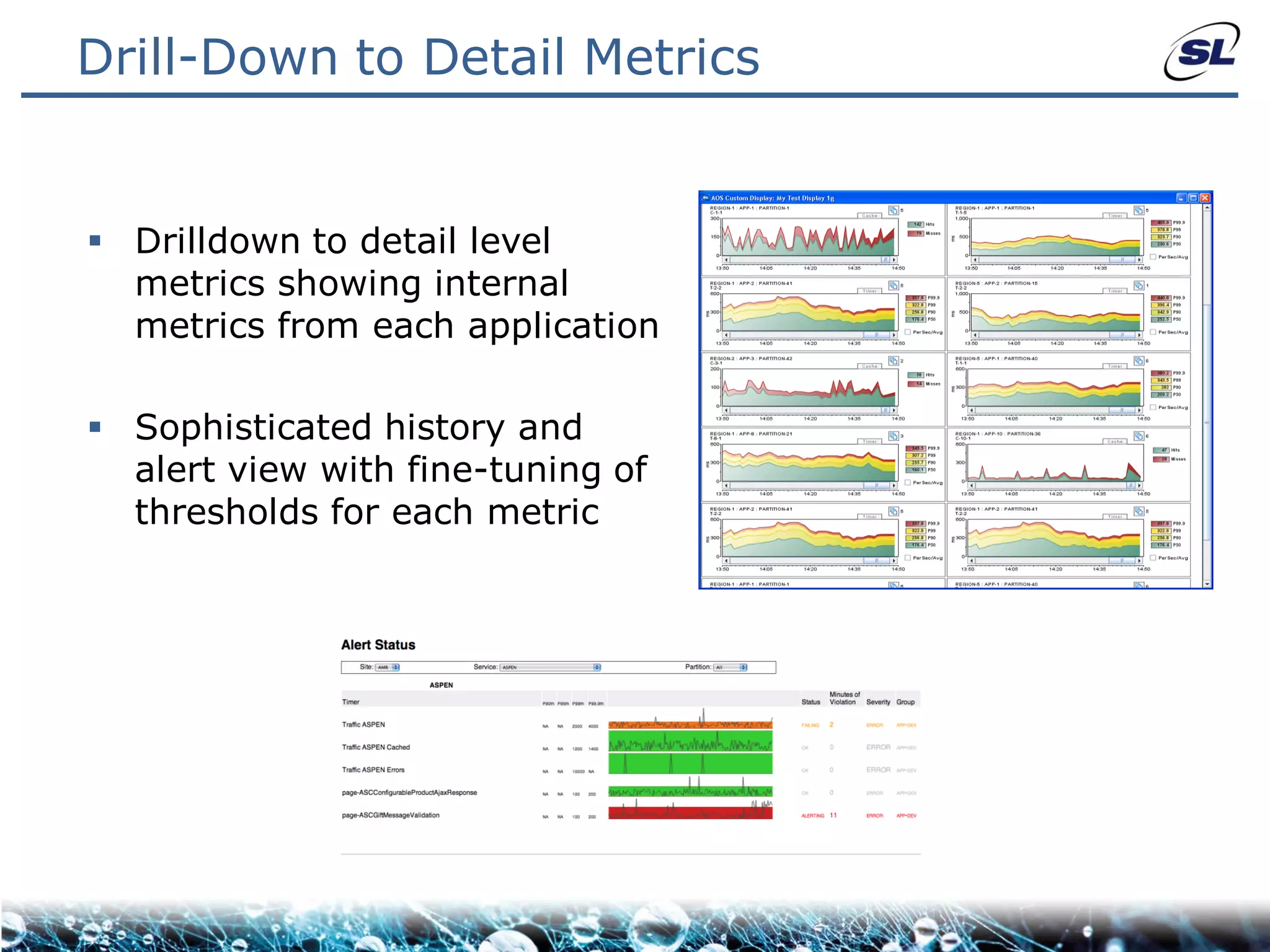
Drill-Down to Detail Metrics


 Drilldown to detail level
  metrics showing internal
  metrics from each application

 Sophisticated history and
  alert view with fine-tuning of
  thresholds for each metric
Benefits: Design Patterns for Data Transfer

Same problem over and over again solved similar way

Reduce load on network
Optimize response time – no unnecessary data
Conclusions

 Conclusion #1:

  Know your data !

     Data Model designed for real-time
     In-memory structures to buffer database
     Server-side aggregations
Conclusions

 Conclusion #2

  Respect Design Patterns !

     Server-Side vs. Client-Side Processing
     Efficient Data Transfer Patterns
     Don’t over-generalize – solve the problem
Questions?
            See www.sl.com
   for more into about SL and RTView

Don’t miss SL Booth on Exhibit Floor !

Overcoming the Top Four Challenges to Real-Time Performance in Large-Scale, Data-Centric Applications

  • 1.
    Overcoming the TopFour Challenges to Real-Time Performance in Large-Scale, Data-Centric Applications Tom Lubinski Founder and CEO SL Corporation 7 March 2012
  • 2.
     Disclaimers  In30 years, we’ve learned a lot (a grizzled veteran)  But, we don’t know everything …  … we could be wrong !  My other computer is a Mac  We have “shipped” …
  • 3.
    Background Extensive background in real-time process monitoring Largevolumes of Connecticut Valley Power Critical Tax Season dynamic data Grid Management System Applications at Intuit Visualization technologies Mission-critical applications OOCL World Wide NASA Space Shuttle Shipment Tracking Launch Control System
  • 4.
     Here totalk about Scalability and Performance  Problem Space: Collection, Analysis, and Visualization in Real-Time of large volumes of monitoring data from large- scale, complex, distributed applications Emphasis: Real-Time, Large Volumes of Data
  • 5.
    Challenges  Challenge #1: Database Performance Common to see queries taking minutes How can you get real-time that way ?
  • 6.
    Challenges  Challenge #2: Network Data-Transfer Bandwidth Bigger pipes, but there’s more data to send How do you get the greatest throughput ?
  • 7.
    Challenges  Challenge #3: Processor Performance More cores just means more processes ! How do you optimize your utilization ?
  • 8.
    Challenges  Challenge #4: Lack of Real-Time Predictability Virtualization is the new time-share ! How can you trust your data ? “time-sharing”, “network computer”, “cloud”, do things ever really change ?
  • 9.
     Solution –Clues ?  Facts of Life: Database – can’t live with it, can’t live without it Network – it’s a funnel, no way around it Processor – must limit what you ask it to do Virtualization - it’s erratic, have to compensate
  • 10.
    Solutions  Solution #1: Proper Data Model Data structures designed for real-time In-memory structures to buffer database
  • 11.
    Can your applicationbe … … like a high-performance racecar ?
  • 12.
    What is mostimportant part of racecar ? (besides the engine) … the Transmission …
  • 13.
    For Real-Time performance,it’s the Cache … Not a simple High-performance “current value” Real-time Multi-dimensional cache Data Cache
  • 14.
    Real-Time Cache –optimized for performance ! Current / History Tables: In Out … Indexed Insertion - Indexed extraction - asynchronous real-time data optimized transfer to clients
  • 15.
    Real-Time Cache –Data Processing / Aggregation Detail Views Raw Data Reduced Summary S Views Reduction, Resolution, Aging Aggregation
  • 16.
    Real-Time Cache –Database read/write through (optimized for timestamped multi-dimensional data) Real-Time data Seamless timeline automatically navigation with automatic written to DB database query
  • 17.
    This sounds abit like Oracle Coherence … Buffer database Read/write through Listeners Indexed queries What’s different ?
  • 18.
    Multi-Tier Visibility intoMonitoring Data Unified Real-time display of data from all Application tiers Update for ORCL In-depth Monitoring of Middleware Components
  • 19.
    Different tools fordifferent problems ! Real-Time Multi-dimensional data: Current / History Tables: Multiple rows (time range) of selected columns returned in one query Coherence cache distributes objects (rows) = optimized horizontally Real-Time multi-dimensional cache manages columns and optimizes … vertically
  • 20.
    Benefits: Indexed Real-TimeCaching Slow SQL queries minimized Users shielded from database details Minimize CPU load using effective indexing
  • 21.
    Solutions  Solution #2 Server-Side Aggregation (am I being too obvious with this one ?) Know the use cases Joins and GroupBy done on server SQL does this, but do you need it ?
  • 22.
    Problems with SQLDatabase Queries Slow Slowwer with concurrent queries If you need it fast, it goes even slowwwwwwer ! SQL = Not portable (Timestamps, especially)
  • 23.
    Know your problemspace ! Real-Time Monitoring: Join and GroupBy heavily used We wrote our own! Performed in real-time on server-side data Optimized for real-time requirements
  • 24.
    Display of LargeData Volumes  Typical large implementation, distributed over several regions with many custom applications  Heatmap View showing current state of entire system – size represents number of servers for application  Color represents how close metric is to SLA – large red boxes are worst – drilldown to detail
  • 25.
    Complex Visualizations ofhistorical data Observe “internal load balancing” of Data Grid
  • 26.
     Example: Server-SideAggregation/Caching Servlet Data GroupBy App Raw Data App Data Totals By App Join on To App Clients GroupBy Server Server Data Totals By Server Join on Server
  • 27.
     Each cachecan maintain its own history Servlet Data Cached Data Totals By App And To Aggregates Clients Totals By Server … … …
  • 28.
     Result: trendchart of Totals by History has all data available immediately  Using SQL would require: Query 3 tables 2 GroupBys, 2 Joins, + Join on Timestamp (not portable)
  • 29.
    Benefits: Server-Side Aggregation Clientrequests and gets exactly what is needed Client processing = zero Server processing = done ahead of time Current/History for aggregates readily available (No SQL) Response time = fast
  • 30.
    Solutions  Solution #3 Use Appropriate Design Patterns Server-Side vs. Client-Side Processing Efficient Data Transfer Patterns
  • 31.
     Pattern #1: Data Compaction (obvious, initial approach for any data transfers) Server Packets only partially filled … Client encode decode … replaced with full packets … even simple, non-proprietary algorithms can make big difference
  • 32.
     Pattern #2: Data Current / Changed (large data tables with sparse real-time updates) Entire table sent every update … Server Client encode decode … instead, send only changed rows … little more complex, requires indexing
  • 33.
     Pattern #3: Data History / Current (trend chart invoke with real-time updates) Entire history table sent every update … Server Client manage merge … … instead, send history once, then current updates … similar to current / changed pattern, but specific to history
  • 34.
     Pattern #4: Data Current / Subset (optimizing transfer of data subsets to multiple clients) Client Changed subset sent to every client … Server listen indexed Client register indexed listen indexed … instead, send subset only to registered client … requires registration logic coupled with cache
  • 35.
    Drill-Down to DetailMetrics  Drilldown to detail level metrics showing internal metrics from each application  Sophisticated history and alert view with fine-tuning of thresholds for each metric
  • 36.
    Benefits: Design Patternsfor Data Transfer Same problem over and over again solved similar way Reduce load on network Optimize response time – no unnecessary data
  • 37.
    Conclusions  Conclusion #1: Know your data ! Data Model designed for real-time In-memory structures to buffer database Server-side aggregations
  • 38.
    Conclusions  Conclusion #2 Respect Design Patterns ! Server-Side vs. Client-Side Processing Efficient Data Transfer Patterns Don’t over-generalize – solve the problem
  • 39.
    Questions? See www.sl.com for more into about SL and RTView Don’t miss SL Booth on Exhibit Floor !