INTRODUCTION
TO
EPIDEMIOLOGY
MR.J.C.FRANKLIN
Asst.professor
DEFINITION:
Epidemiology is derived from Greek word
“epidemic”
EPI – up on
DEMOS – people
LOGOS – study
Epidemiology means the study of disease in
human population.
DEFINITION
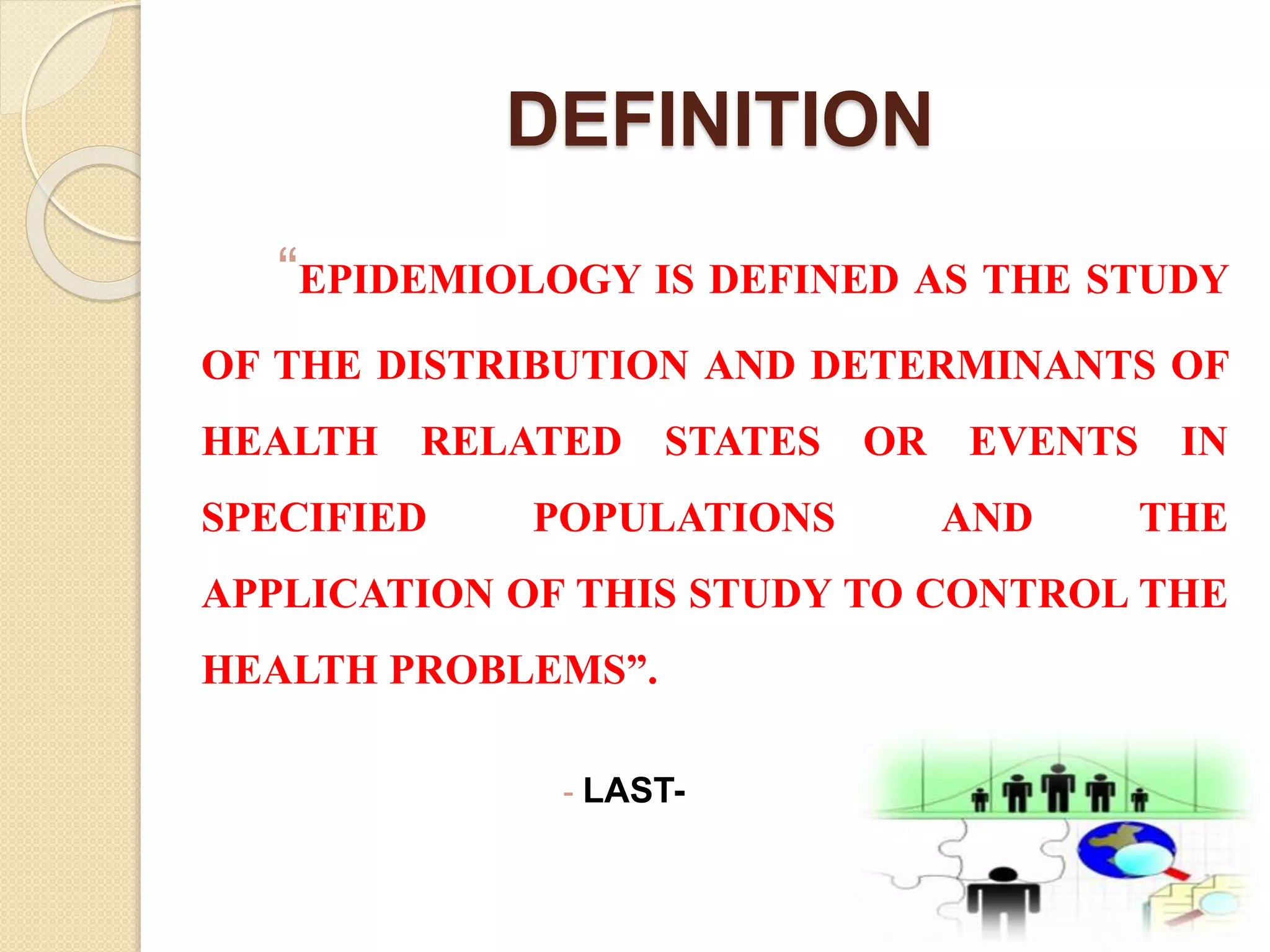
“EPIDEMIOLOGY IS DEFINED AS THE STUDY
OF THE DISTRIBUTION AND DETERMINANTS OF
HEALTH RELATED STATES OR EVENTS IN
SPECIFIED POPULATIONS AND THE
APPLICATION OF THIS STUDY TO CONTROL THE
HEALTH PROBLEMS”.
- LAST-
HISTORY OF EPIDEMIOLOGY
ADAM AND EVE
HIPPOCRATES
FLORENCE NIGHTINGALE
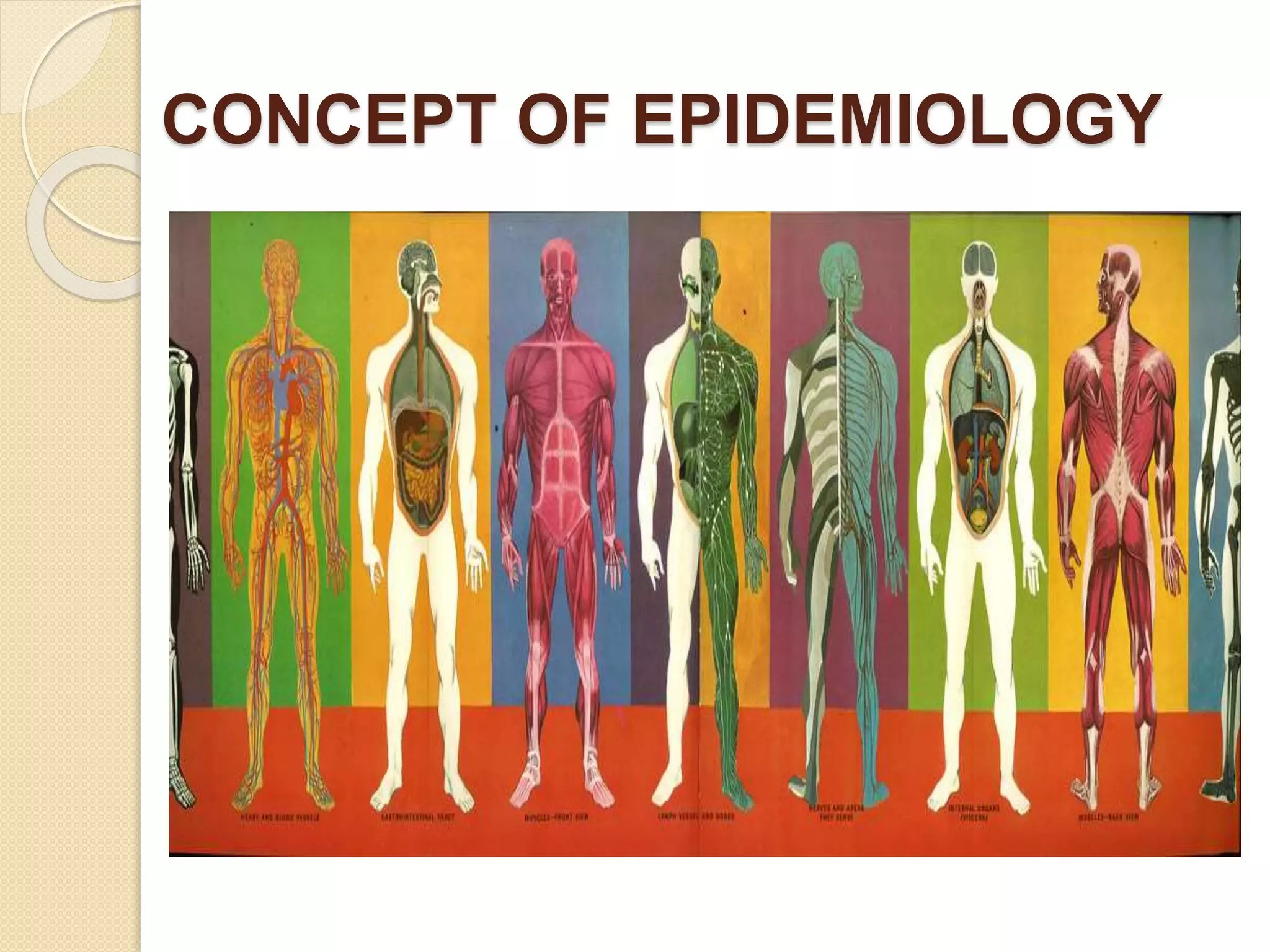
CONCEPT OF EPIDEMIOLOGY
PLATO AND ROUSEAU:
“FAULT OF HUMAN LUXUARY”
HIPPOCRATES:
“ENVIRONMENTAL INFLUENCES”
LOUIS PASTEUR
“INFECTIOUS DISEASES”
IBN KHATIMA:
“SMALL MINUTE BODIES”
AIMS OF EPIDEMIOLOGY
AIMS:
 TO DESCRIBE THE DISTRIBUTION AND SIZE OF
DISEASE PROBLEMS IN HUMAN POPULATION.
 TO IDENTIFY THE AETIOLOGICAL FACTORS.
 TO PROVIDE THE DATA ESSENTIAL TO THE PLANNING,
IMPLEMENTATION AND EVALUATION.
SCOPE OF EPIDEMIOLOGY
ACCORDING TO DISEASE GROUP
 INFECTIOUS DISEASE EPIDEIOLOGY
CARDIO VASCULAR EPIDEMIOLOGY
CANCER EPIDEMIOLOGY
ACCORDING TO GROUP OF FACTORS
 NUTRITIVE EPIDEMIOLOGY
REPRODUCTIVE EPIDEMIOLOGY
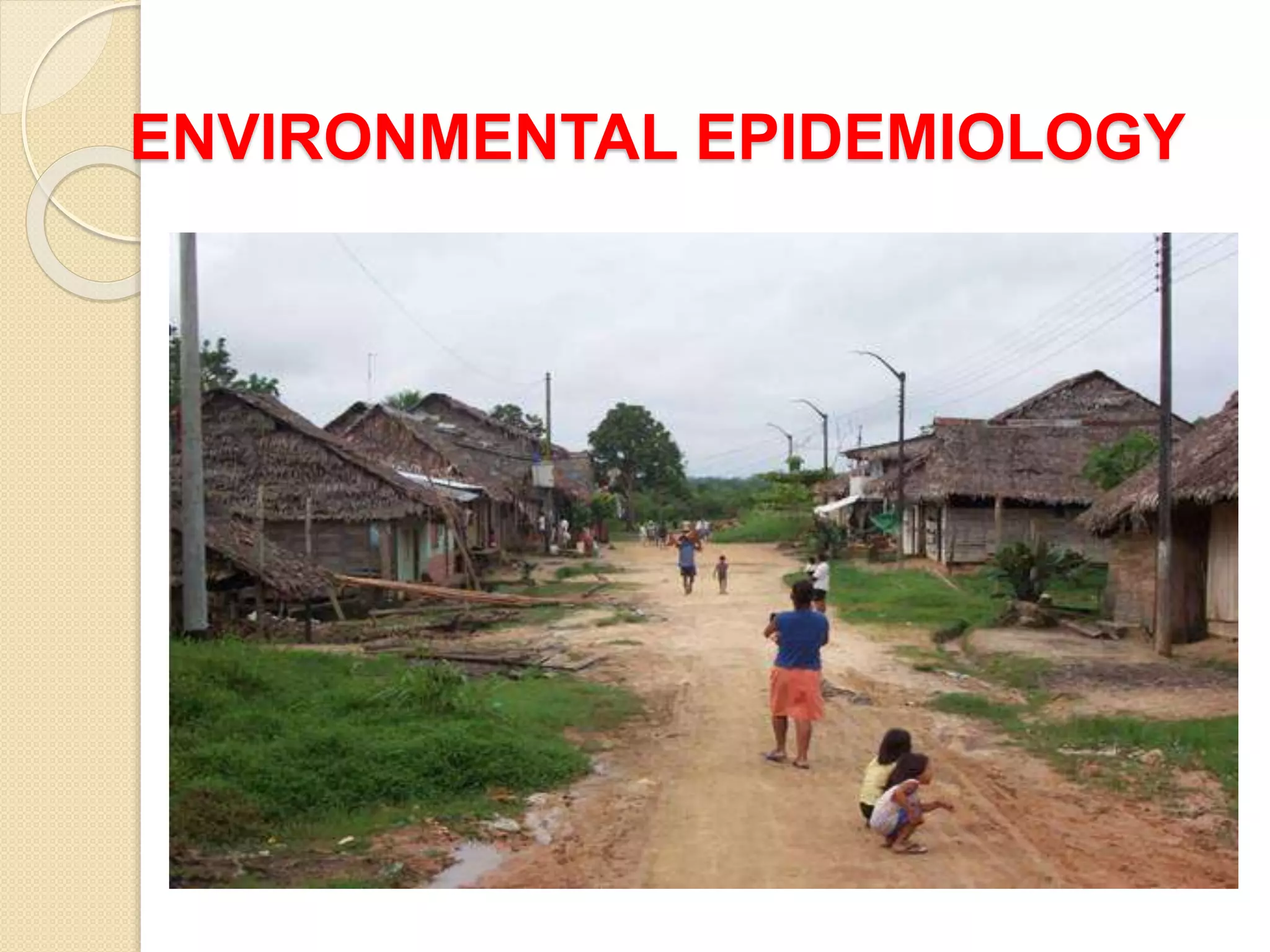
ENVIRONMENTAL EPIDEMIOLOGY
CLINICAL EPIDEMIOLOGY
MOLECULAR EPIDEMIOLOGY
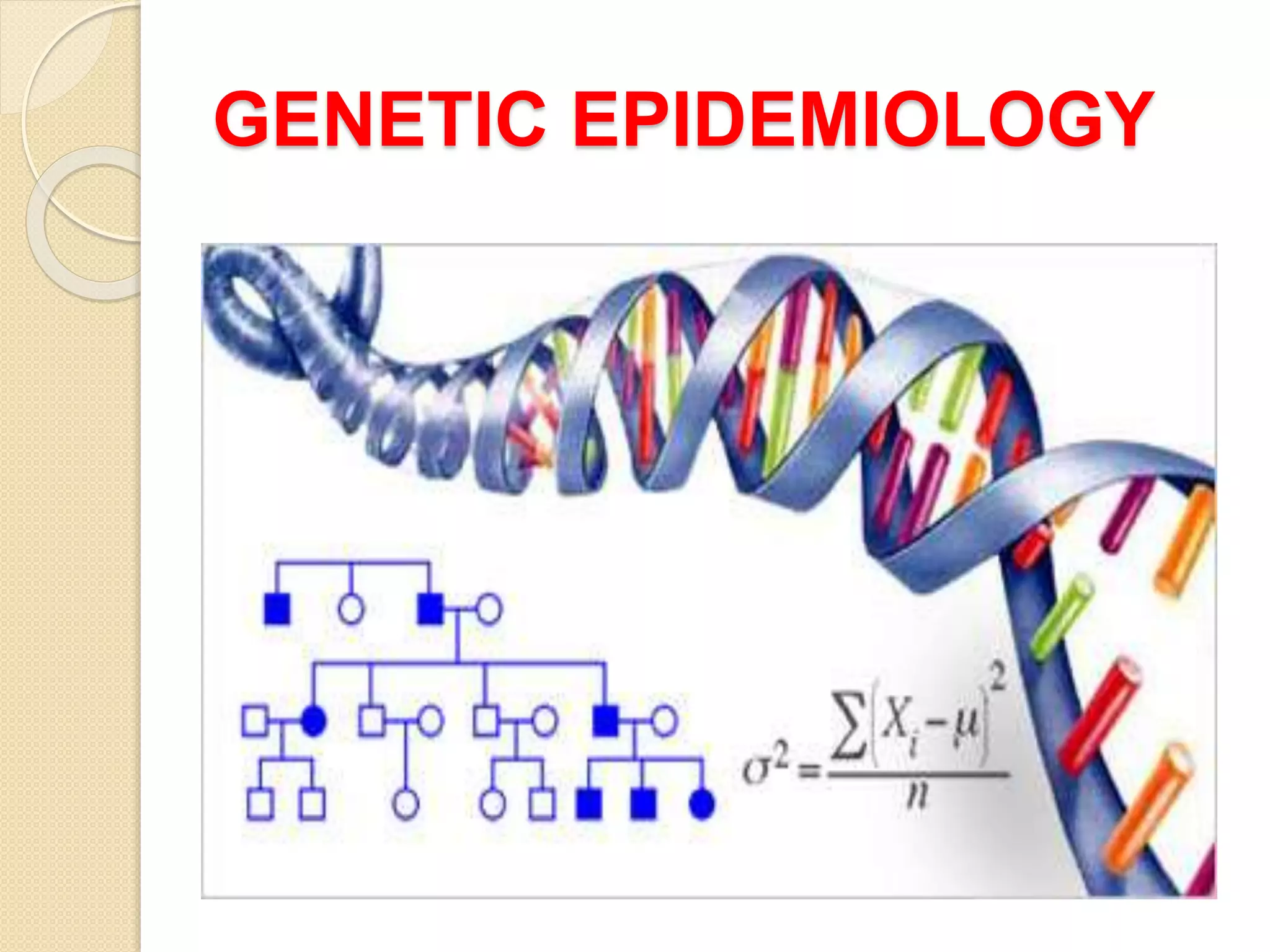
GENETIC EPIDEMIOLOGY
COMPUTATIONAL
EPIDEMIOLOGY
USES
OF
EPIDEMIOLOGY
 Search of cause / causes of diseases
 Helps to describe the health status of
population
 Helps to discover and bridge gaps in
natural history of diseases.
 Helps in controlling diseases
 Helps in better management of health
services
1. IDENTIFY THE CAUSES OF
DISEASES.
2. HELPS TO DESCRIBE THE HEALTH STATUS OF THE
POPULATION.
3.TO CONTROL THE DISEASE
TRANSMISSION.
4.PLANNING, IMPLEMENTING AND
EVALUATING HEALTH PROGRAMMES
ON EVIDENCE BASIS.
TERMINOLOGIES USED
IN
EPIDEMIOLOGY
INFECTION:
The entry and development or
multiplication of an infectious agent in the
body of man or animal.
ENDEMIC
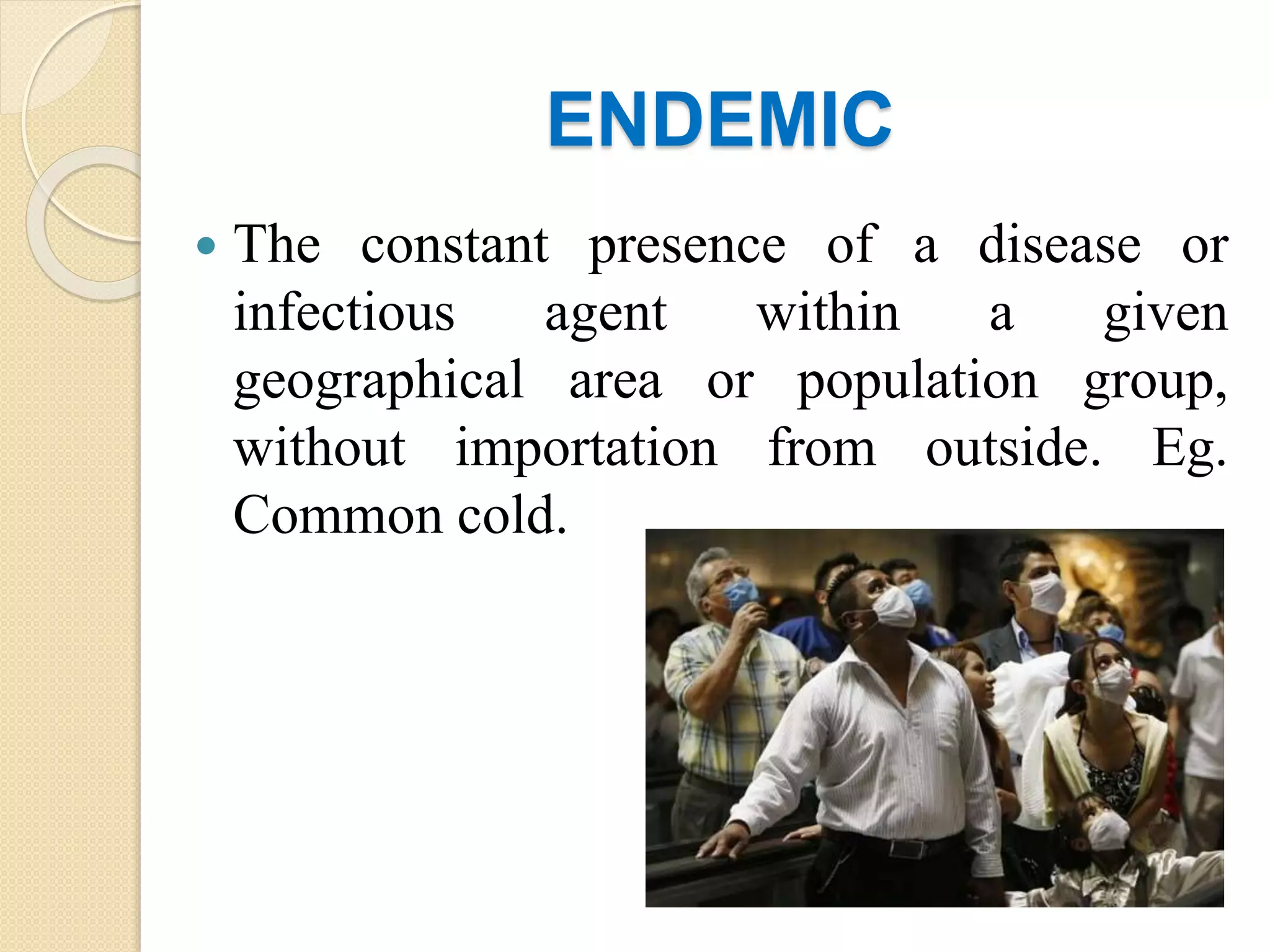
 The constant presence of a disease or
infectious agent within a given
geographical area or population group,
without importation from outside. Eg.
Common cold.
EPIDEMIC
 AN OUT BREAK OF
DISEASE IN A
COMMUNITY IN
EXCESS OF NORMAL
EXPECTATION AND
DERIVED FROM A
COMMON OR
PROPAGATED SOURCE.
SPORADIC
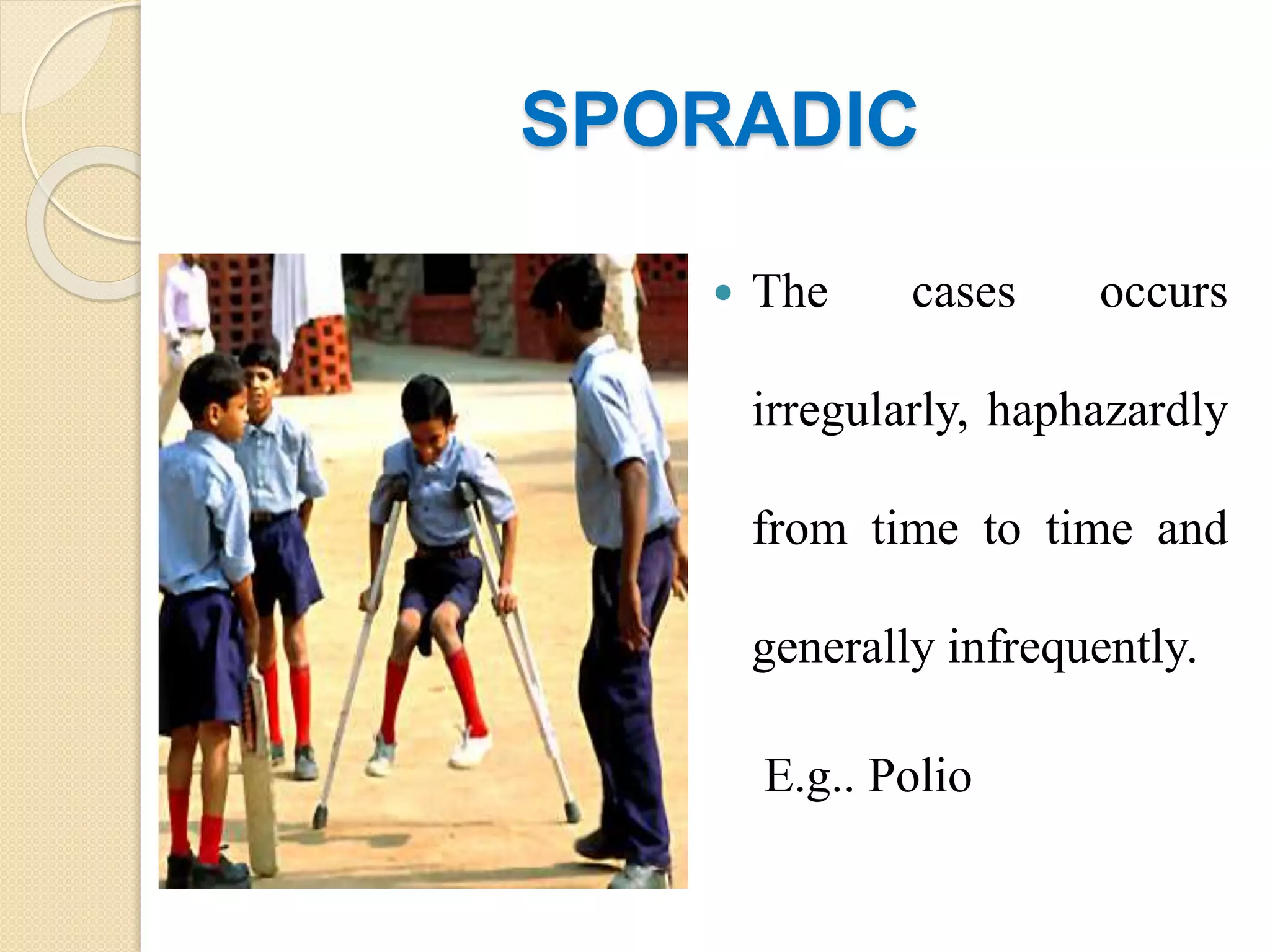
 The cases occurs
irregularly, haphazardly
from time to time and
generally infrequently.
E.g.. Polio
PANDEMIC
 An epidemic
which spreads
from country to
country or over the
whole world. Eg.
AIDS
ZOONOSES
 Diseases or
infections which are
naturally transmitted
between vertebrate
animals and men.
eg. Rabies, plague
INCUBATION PERIOD
 This is the time interval
between the entry of the
disease agent into the
body and the appearance
of first sign and
symptom of the disease.
CARRIER
 A person who
harbors the disease
agent without having
any outward signs
and symptoms.
ISOLATION
 A separation of a
person with
infectious disease
from contact with
other human beings
for the period of
communicability.
PATHOGENICITY
 Ability to cause
the disease.
CONTAGIOUS
A disease that is
transmitted through
contact.
Eg. STD and Leprosy.
RESERVOIR
 The habitat ( place
for living) where an
infectious agent
living, grows and
multiplies.
VIRULENCE
 Measure the severity
of disease.
FOMITES
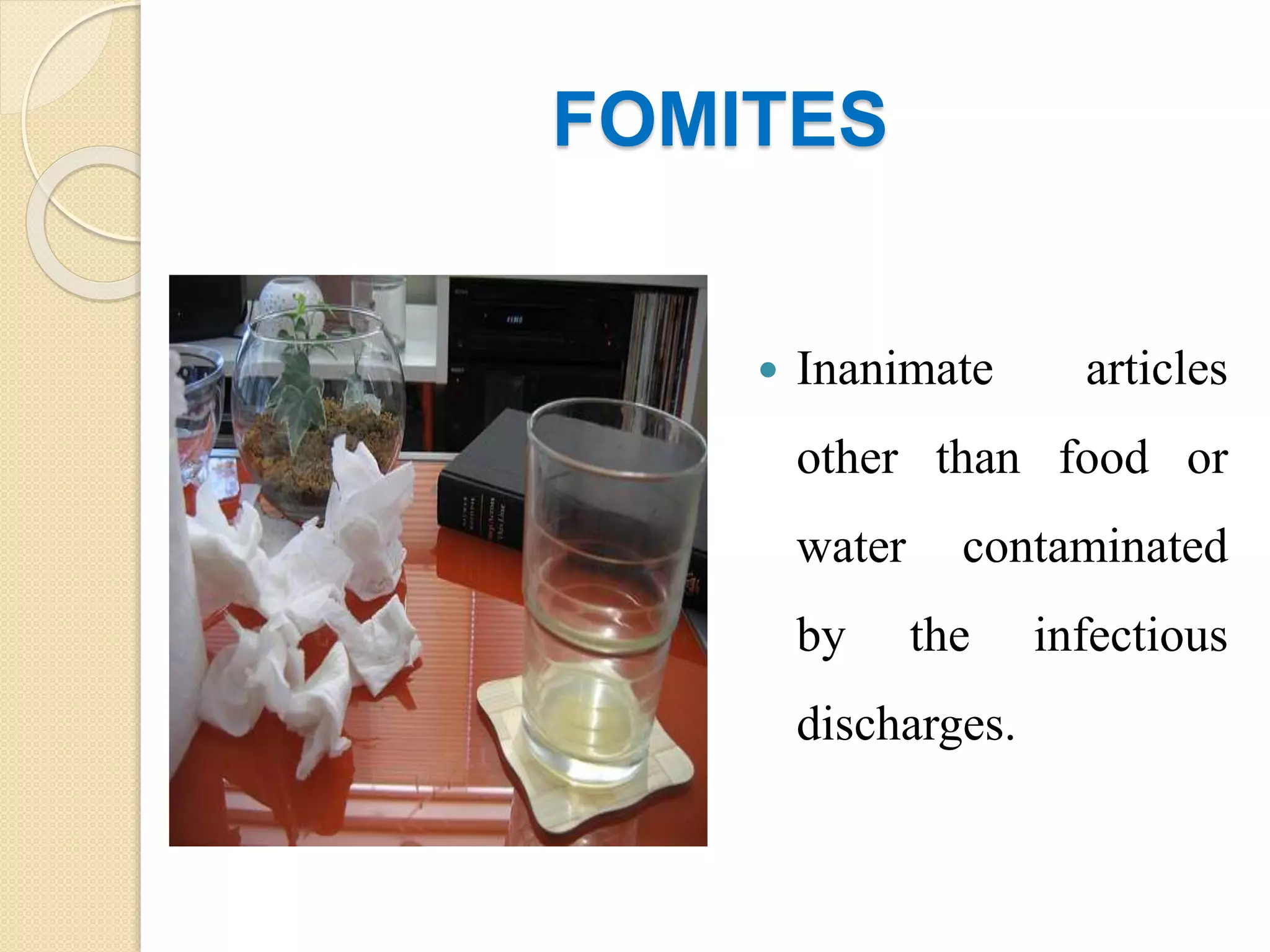
 Inanimate articles
other than food or
water contaminated
by the infectious
discharges.
VECTOR
 Usually an arthropod
eg. Mosquito which
transfers an
infectious agent from
an infected person to
a healthy person.
CONCLUSION
 INTRODUCTION
 HISTORY
 DEFINITION
 AIMS
 SCOPE
 USES
 TERMINOLOGIES
Epidemiology
Epidemiology

Epidemiology