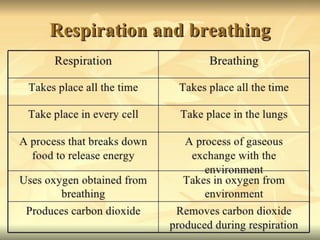
• Respiration involves the taking in of
oxygen to be used by the cells and the
giving off of carbon dioxide.
• Breathing is letting air in and out of the
body.
• The primary function of the respiratory
system is to supply the blood with
oxygen.
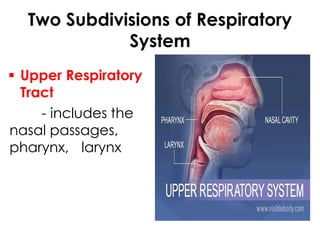
Two Subdivisions of Respiratory
System
 Upper Respiratory
Tract
- includes the
nasal passages,
pharynx, larynx
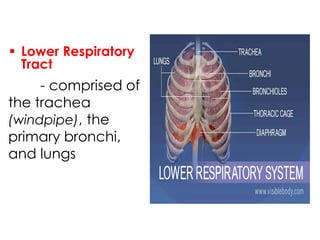
- comprised of
the trachea
(windpipe), the
primary bronchi,
and lungs
 Lower Respiratory
Tract
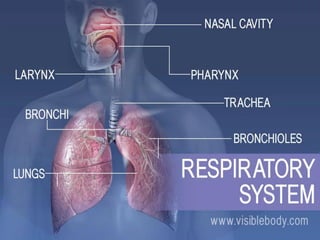
There are several organs that work
together to make respiration possible.
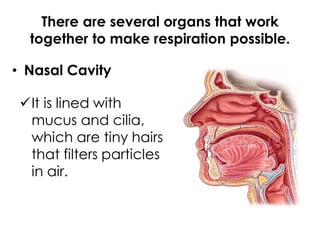
It is lined with
mucus and cilia,
which are tiny hairs
that filters particles
in air.
• Nasal Cavity
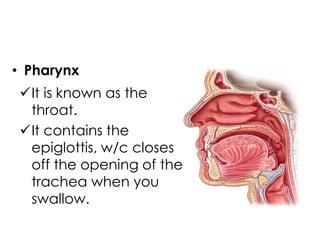
It is known as the
throat.
It contains the
epiglottis, w/c closes
off the opening of the
trachea when you
swallow.
• Pharynx
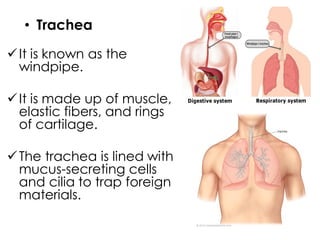
It is known as the
windpipe.
It is made up of muscle,
elastic fibers, and rings
of cartilage.
The trachea is lined with
mucus-secreting cells
and cilia to trap foreign
materials.
• Trachea
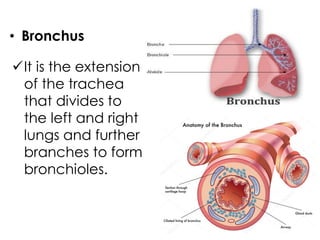
It is the extension
of the trachea
that divides to
the left and right
lungs and further
branches to form
bronchioles.
• Bronchus
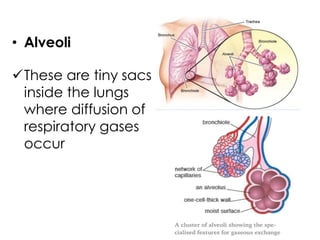
These are tiny sacs
inside the lungs
where diffusion of
respiratory gases
occur
• Alveoli
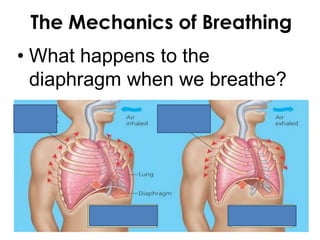
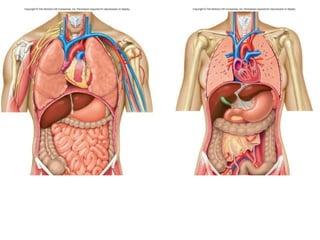
The Mechanics of Breathing
• What happens to the
diaphragm when we breathe?
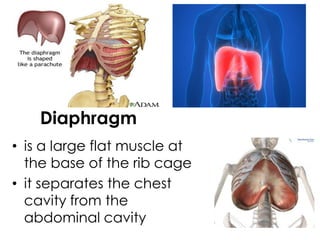
Diaphragm
• is a large flat muscle at
the base of the rib cage
• it separates the chest
cavity from the
abdominal cavity
• Inhaling and exhaling air actually
involves the movement of a flat
muscle called the diaphragm and the
muscles between the ribs called the
intercostal muscles.
• The diaphragm is a large flat muscle at
the base of the rib cage and it
separates the chest cavity from the
abdominal cavity.
• Ventilation is the
mechanics of breathing
in and out.
Diseases of the Respiratory
System
Disorders of the respiratory system can
be classified into four general areas:
1. Obstructive conditions
- e.g, emphysema, bronchitis,
asthma attacks
2. Restrictive conditions
- e.g, fibrosis, sarcoidosis, alveolar
damage, pleural effusion
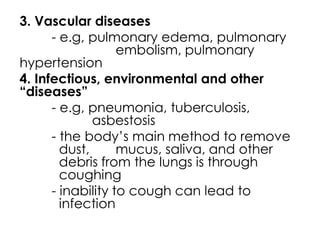
3. Vascular diseases
- e.g, pulmonary edema, pulmonary
embolism, pulmonary
hypertension
4. Infectious, environmental and other
“diseases”
- e.g, pneumonia, tuberculosis,
asbestosis
- the body’s main method to remove
dust, mucus, saliva, and other
debris from the lungs is through
coughing
- inability to cough can lead to
infection
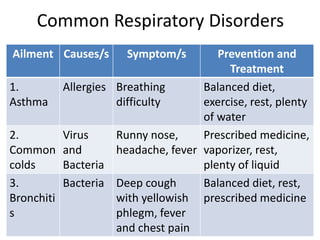
Common Respiratory Disorders
Ailment Causes/s Symptom/s Prevention and
Treatment
1.
Asthma
Allergies Breathing
difficulty
Balanced diet,
exercise, rest, plenty
of water
2.
Common
colds
Virus
and
Bacteria
Runny nose,
headache, fever
Prescribed medicine,
vaporizer, rest,
plenty of liquid
3.
Bronchiti
s
Bacteria Deep cough
with yellowish
phlegm, fever
and chest pain
Balanced diet, rest,
prescribed medicine
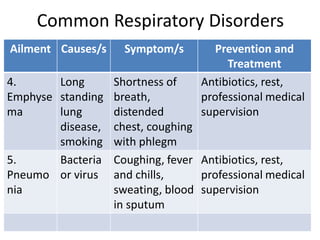
Common Respiratory Disorders
Ailment Causes/s Symptom/s Prevention and
Treatment
4.
Emphyse
ma
Long
standing
lung
disease,
smoking
Shortness of
breath,
distended
chest, coughing
with phlegm
Antibiotics, rest,
professional medical
supervision
5.
Pneumo
nia
Bacteria
or virus
Coughing, fever
and chills,
sweating, blood
in sputum
Antibiotics, rest,
professional medical
supervision
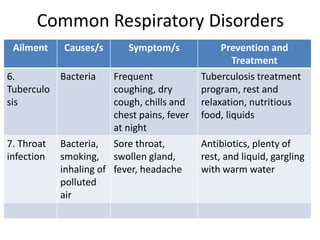
Common Respiratory Disorders
Ailment Causes/s Symptom/s Prevention and
Treatment
6.
Tuberculo
sis
Bacteria Frequent
coughing, dry
cough, chills and
chest pains, fever
at night
Tuberculosis treatment
program, rest and
relaxation, nutritious
food, liquids
7. Throat
infection
Bacteria,
smoking,
inhaling of
polluted
air
Sore throat,
swollen gland,
fever, headache
Antibiotics, plenty of
rest, and liquid, gargling
with warm water
Common Respiratory Disorders
Ailment Causes/s Symptom/s Prevention and
Treatment
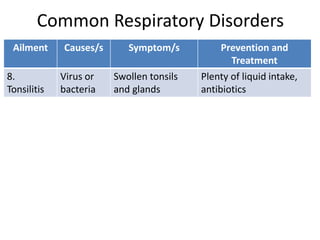
8.
Tonsilitis
Virus or
bacteria
Swollen tonsils
and glands
Plenty of liquid intake,
antibiotics
The Alveoli and Gas
• Hemoglobin is the red-colored
respiratory pigment in humans.
• When leaving the lungs, blood is 97%
saturated with oxygen.
• Oxygen from the air gets into the
blood vessels in the alveoli through the
process of diffusion, oxygen is brought
to all the cells of your body by the flow
of the blood.
Control of Respiration
• The rate of expansion and constriction
of the lungs is controlled by muscular
contraction and relaxation.
Two Systems Controlling
Breathing
 automatic response
- automatic breathing
regulation system allows you to
breathe while you sleep
voluntary response

Respiratory system

  • 3.
    • Respiration involvesthe taking in of oxygen to be used by the cells and the giving off of carbon dioxide. • Breathing is letting air in and out of the body. • The primary function of the respiratory system is to supply the blood with oxygen.
  • 4.
    Two Subdivisions ofRespiratory System  Upper Respiratory Tract - includes the nasal passages, pharynx, larynx
  • 5.
    - comprised of thetrachea (windpipe), the primary bronchi, and lungs  Lower Respiratory Tract
  • 6.
    There are severalorgans that work together to make respiration possible. It is lined with mucus and cilia, which are tiny hairs that filters particles in air. • Nasal Cavity
  • 7.
    It is knownas the throat. It contains the epiglottis, w/c closes off the opening of the trachea when you swallow. • Pharynx
  • 8.
    It is knownas the windpipe. It is made up of muscle, elastic fibers, and rings of cartilage. The trachea is lined with mucus-secreting cells and cilia to trap foreign materials. • Trachea
  • 9.
    It is theextension of the trachea that divides to the left and right lungs and further branches to form bronchioles. • Bronchus
  • 10.
    These are tinysacs inside the lungs where diffusion of respiratory gases occur • Alveoli
  • 11.
    The Mechanics ofBreathing • What happens to the diaphragm when we breathe?
  • 12.
    Diaphragm • is alarge flat muscle at the base of the rib cage • it separates the chest cavity from the abdominal cavity
  • 14.
    • Inhaling andexhaling air actually involves the movement of a flat muscle called the diaphragm and the muscles between the ribs called the intercostal muscles. • The diaphragm is a large flat muscle at the base of the rib cage and it separates the chest cavity from the abdominal cavity.
  • 15.
    • Ventilation isthe mechanics of breathing in and out.
  • 16.
    Diseases of theRespiratory System Disorders of the respiratory system can be classified into four general areas: 1. Obstructive conditions - e.g, emphysema, bronchitis, asthma attacks 2. Restrictive conditions - e.g, fibrosis, sarcoidosis, alveolar damage, pleural effusion
  • 17.
    3. Vascular diseases -e.g, pulmonary edema, pulmonary embolism, pulmonary hypertension 4. Infectious, environmental and other “diseases” - e.g, pneumonia, tuberculosis, asbestosis - the body’s main method to remove dust, mucus, saliva, and other debris from the lungs is through coughing - inability to cough can lead to infection
  • 18.
    Common Respiratory Disorders AilmentCauses/s Symptom/s Prevention and Treatment 1. Asthma Allergies Breathing difficulty Balanced diet, exercise, rest, plenty of water 2. Common colds Virus and Bacteria Runny nose, headache, fever Prescribed medicine, vaporizer, rest, plenty of liquid 3. Bronchiti s Bacteria Deep cough with yellowish phlegm, fever and chest pain Balanced diet, rest, prescribed medicine
  • 19.
    Common Respiratory Disorders AilmentCauses/s Symptom/s Prevention and Treatment 4. Emphyse ma Long standing lung disease, smoking Shortness of breath, distended chest, coughing with phlegm Antibiotics, rest, professional medical supervision 5. Pneumo nia Bacteria or virus Coughing, fever and chills, sweating, blood in sputum Antibiotics, rest, professional medical supervision
  • 20.
    Common Respiratory Disorders AilmentCauses/s Symptom/s Prevention and Treatment 6. Tuberculo sis Bacteria Frequent coughing, dry cough, chills and chest pains, fever at night Tuberculosis treatment program, rest and relaxation, nutritious food, liquids 7. Throat infection Bacteria, smoking, inhaling of polluted air Sore throat, swollen gland, fever, headache Antibiotics, plenty of rest, and liquid, gargling with warm water
  • 21.
    Common Respiratory Disorders AilmentCauses/s Symptom/s Prevention and Treatment 8. Tonsilitis Virus or bacteria Swollen tonsils and glands Plenty of liquid intake, antibiotics
  • 22.
    The Alveoli andGas • Hemoglobin is the red-colored respiratory pigment in humans. • When leaving the lungs, blood is 97% saturated with oxygen.
  • 23.
    • Oxygen fromthe air gets into the blood vessels in the alveoli through the process of diffusion, oxygen is brought to all the cells of your body by the flow of the blood.
  • 24.
    Control of Respiration •The rate of expansion and constriction of the lungs is controlled by muscular contraction and relaxation.
  • 25.
    Two Systems Controlling Breathing automatic response - automatic breathing regulation system allows you to breathe while you sleep voluntary response