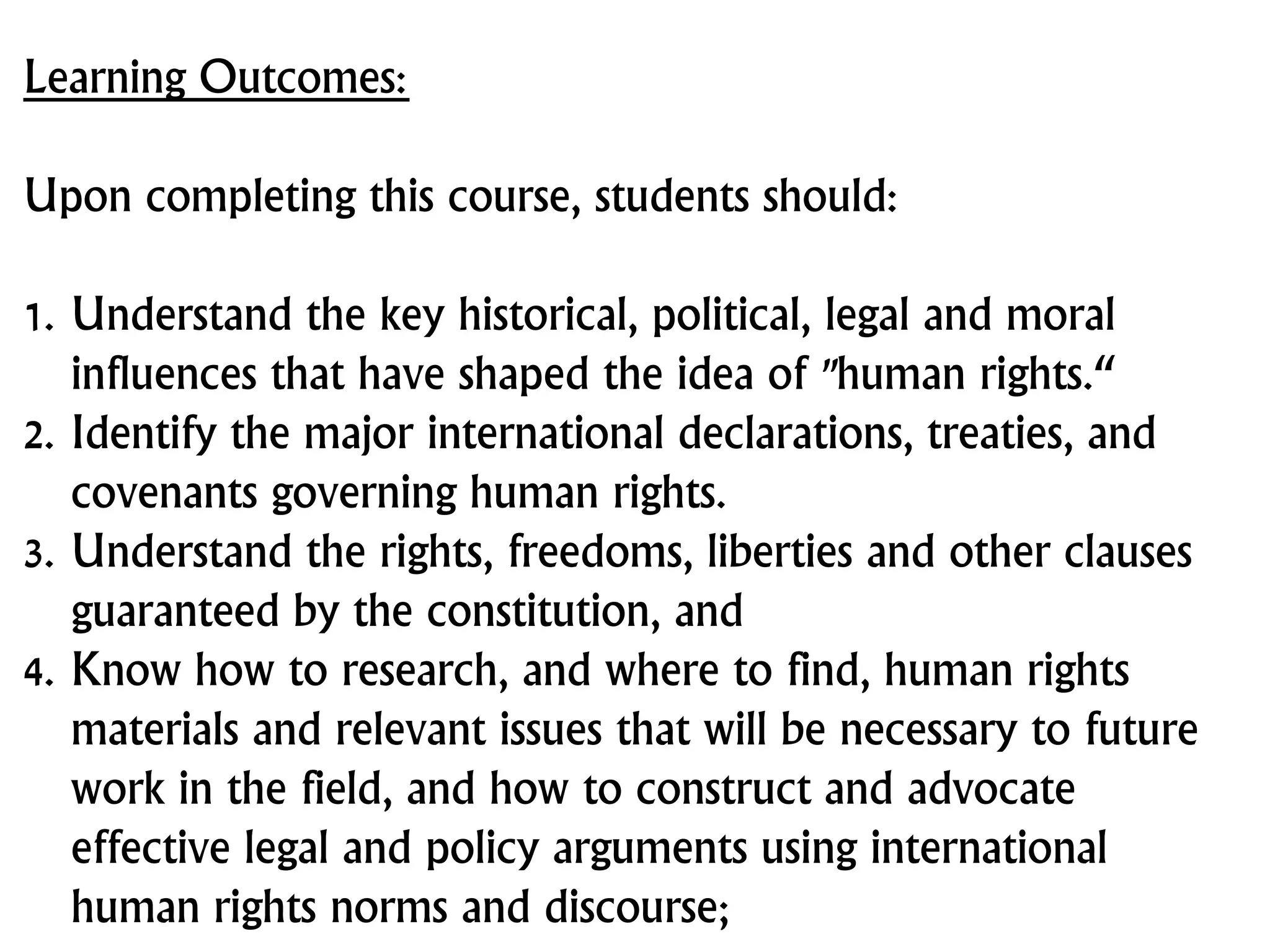
Learning Outcomes:
Upon completing this course, students should:
1. Understand the key historical, political, legal and moral
influences that have shaped the idea of "human rights.“
2. Identify the major international declarations, treaties, and
covenants governing human rights.
3. Understand the rights, freedoms, liberties and other clauses
guaranteed by the constitution, and
4. Know how to research, and where to find, human rights
materials and relevant issues that will be necessary to future
work in the field, and how to construct and advocate
effective legal and policy arguments using international
human rights norms and discourse;
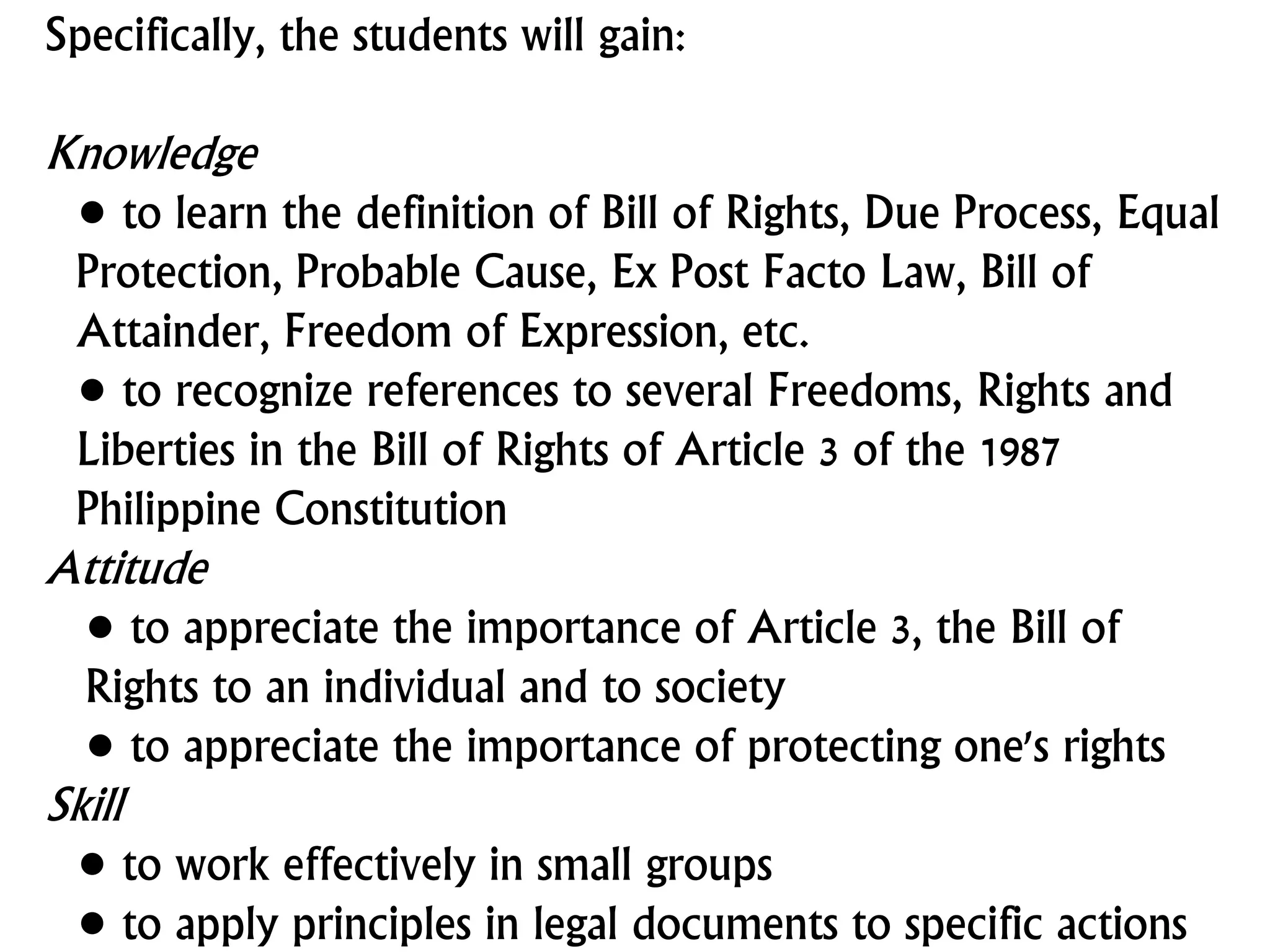
Specifically, the students will gain:
Knowledge
• to learn the definition of Bill of Rights, Due Process, Equal
Protection, Probable Cause, Ex Post Facto Law, Bill of
Attainder, Freedom of Expression, etc.
• to recognize references to several Freedoms, Rights and
Liberties in the Bill of Rights of Article 3 of the 1987
Philippine Constitution
Attitude
• to appreciate the importance of Article 3, the Bill of
Rights to an individual and to society
• to appreciate the importance of protecting one's rights
Skill
• to work effectively in small groups
• to apply principles in legal documents to specific actions
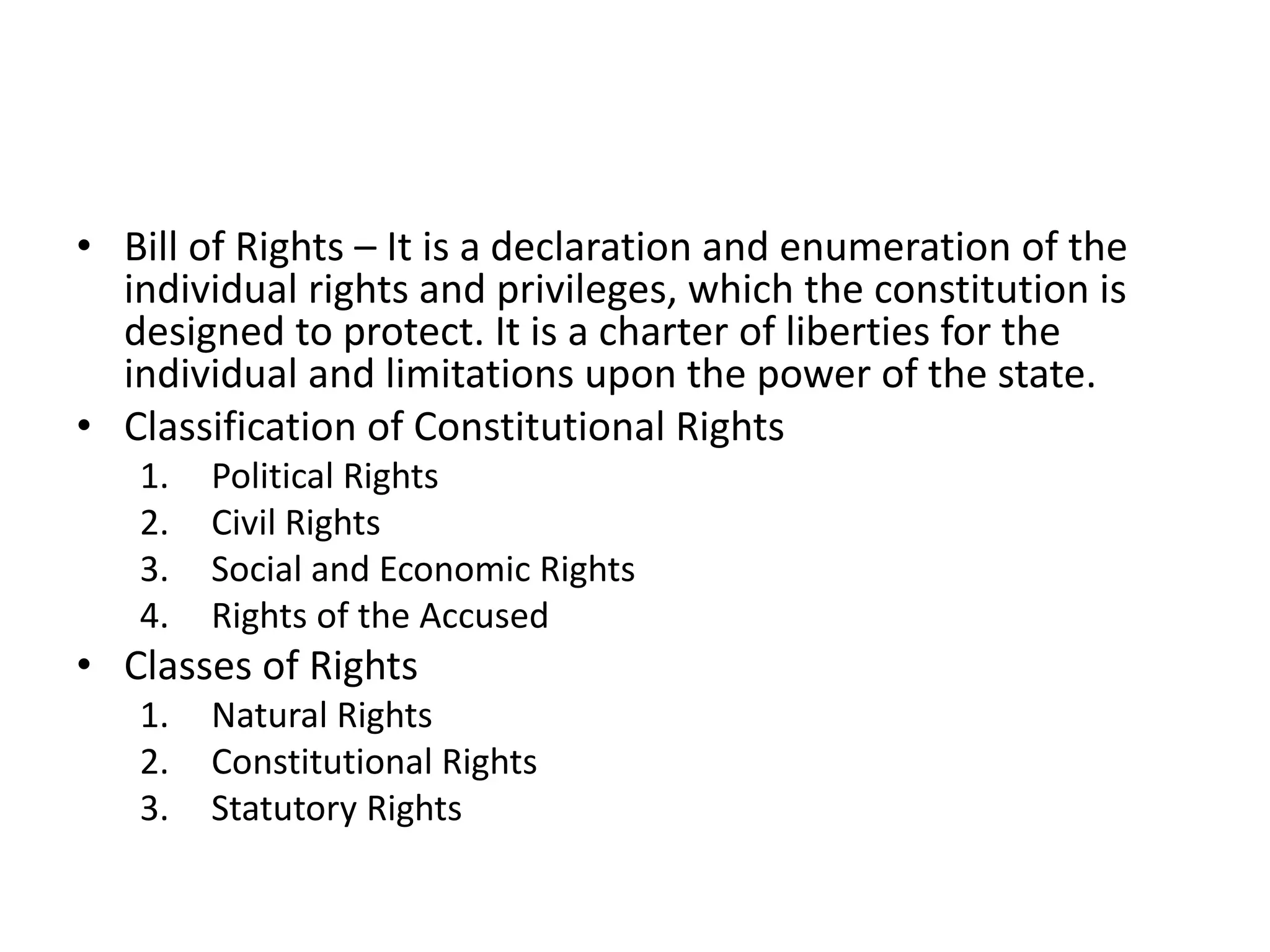
• Bill of Rights – It is a declaration and enumeration of the
individual rights and privileges, which the constitution is
designed to protect. It is a charter of liberties for the
individual and limitations upon the power of the state.
• Classification of Constitutional Rights
1. Political Rights
2. Civil Rights
3. Social and Economic Rights
4. Rights of the Accused
• Classes of Rights
1. Natural Rights
2. Constitutional Rights
3. Statutory Rights
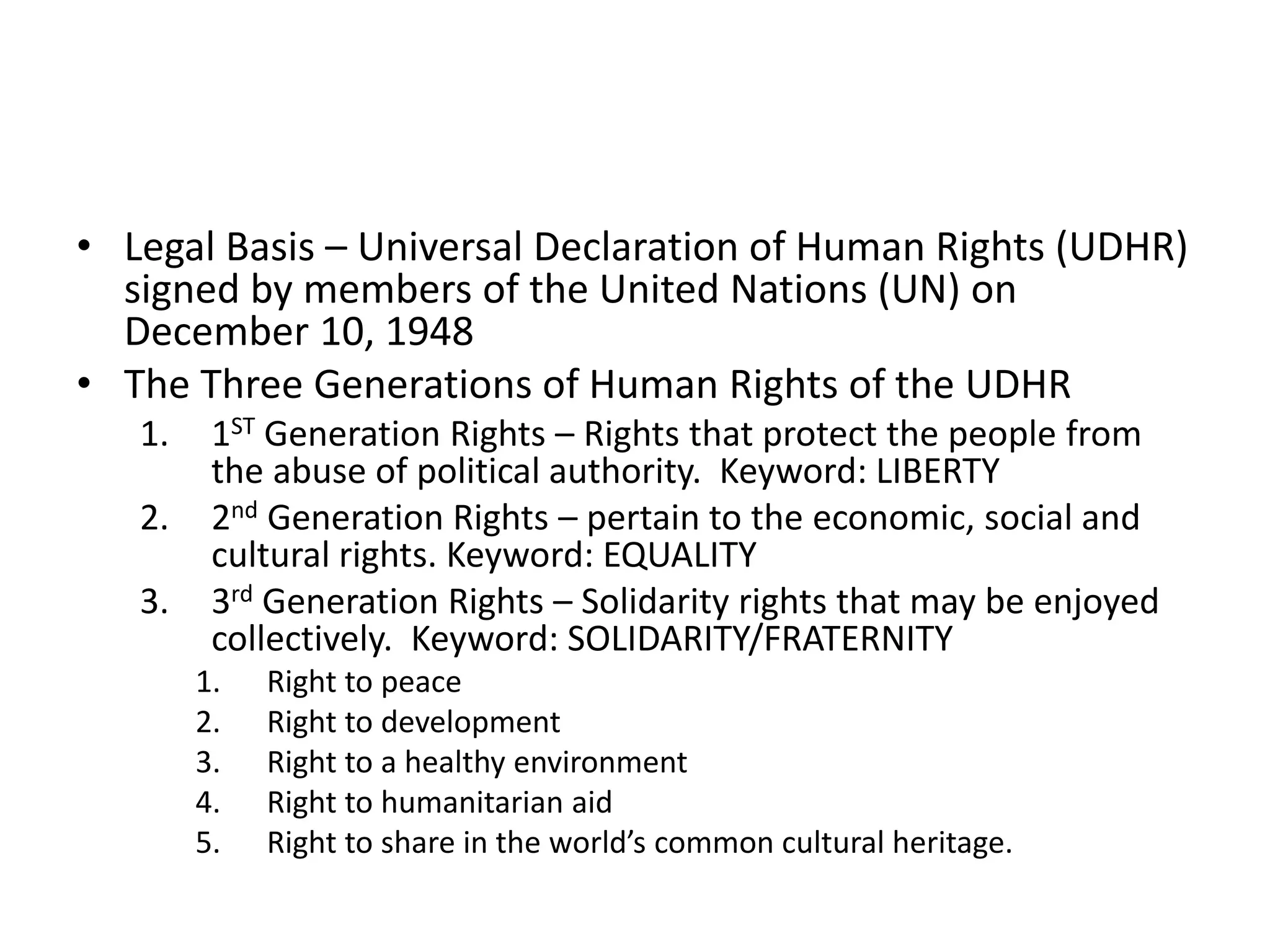
• Legal Basis – Universal Declaration of Human Rights (UDHR)
signed by members of the United Nations (UN) on
December 10, 1948
• The Three Generations of Human Rights of the UDHR
1. 1ST Generation Rights – Rights that protect the people from
the abuse of political authority. Keyword: LIBERTY
2. 2nd Generation Rights – pertain to the economic, social and
cultural rights. Keyword: EQUALITY
3. 3rd Generation Rights – Solidarity rights that may be enjoyed
collectively. Keyword: SOLIDARITY/FRATERNITY
1. Right to peace
2. Right to development
3. Right to a healthy environment
4. Right to humanitarian aid
5. Right to share in the world’s common cultural heritage.
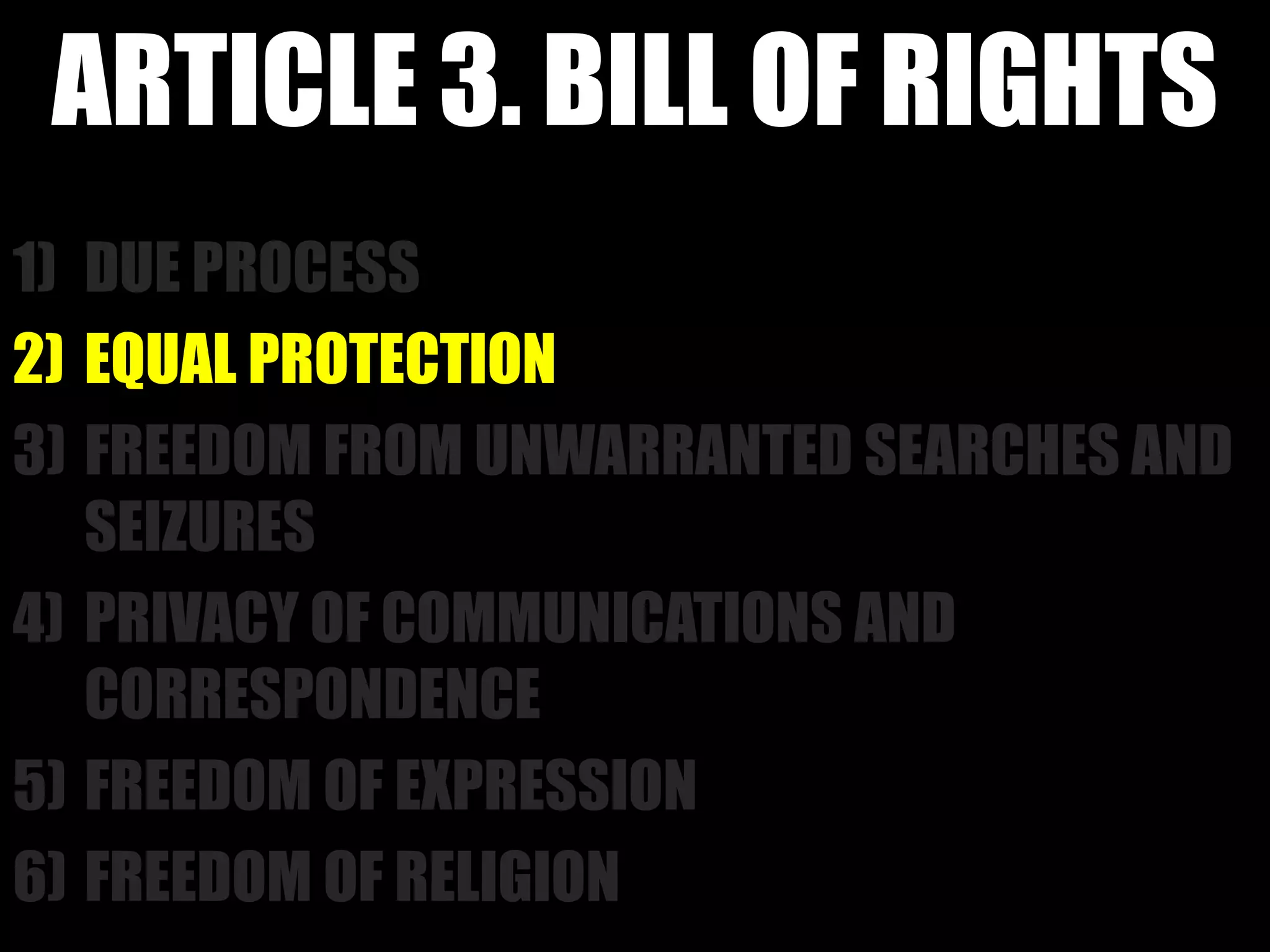
ARTICLE 3. BILL OF RIGHTS
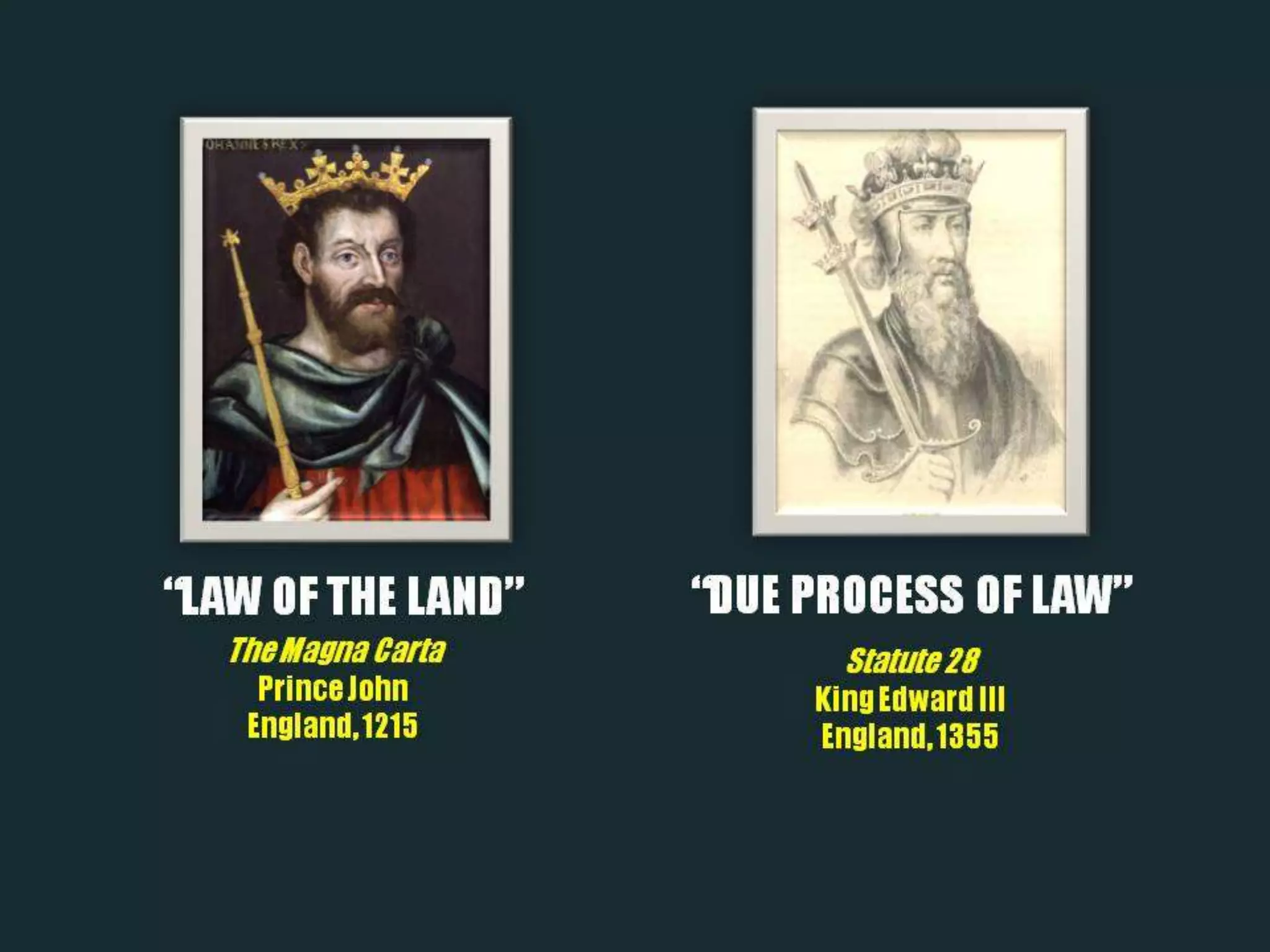
1) DUE PROCESS
2) EQUAL PROTECTION
3) FREEDOM FROM UNWARRANTED SEARCHES AND
SEIZURES
4) PRIVACY OF COMMUNICATIONS AND
CORRESPONDENCE
5) FREEDOM OF EXPRESSION
6) FREEDOM OF RELIGION
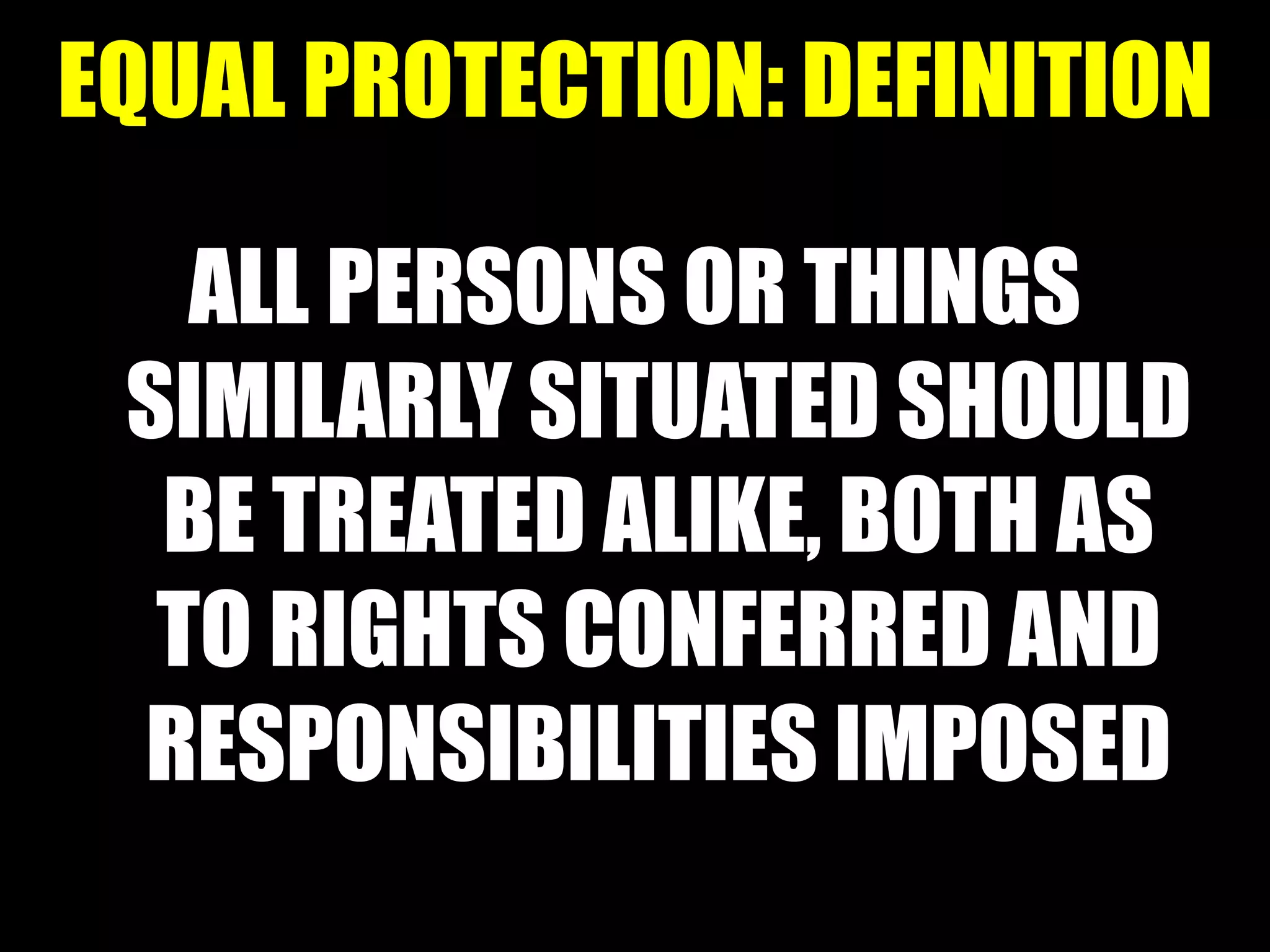
EQUAL PROTECTION: DEFINITION
ALL PERSONS OR THINGS
SIMILARLY SITUATED SHOULD
BE TREATED ALIKE, BOTH AS
TO RIGHTS CONFERRED AND
RESPONSIBILITIES IMPOSED
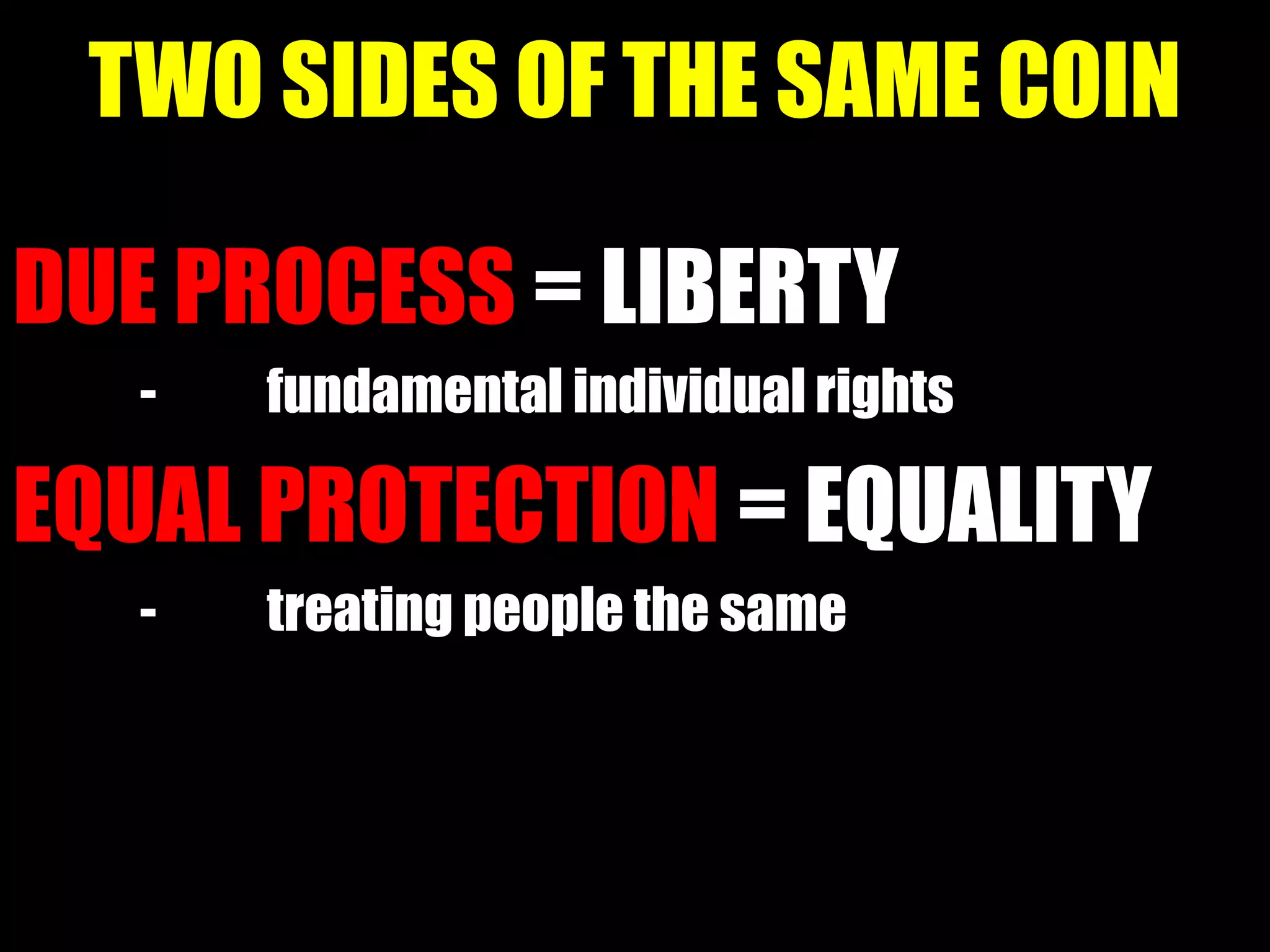
TWO SIDES OF THE SAME COIN
DUE PROCESS = LIBERTY
- fundamental individual rights
EQUAL PROTECTION = EQUALITY
- treating people the same
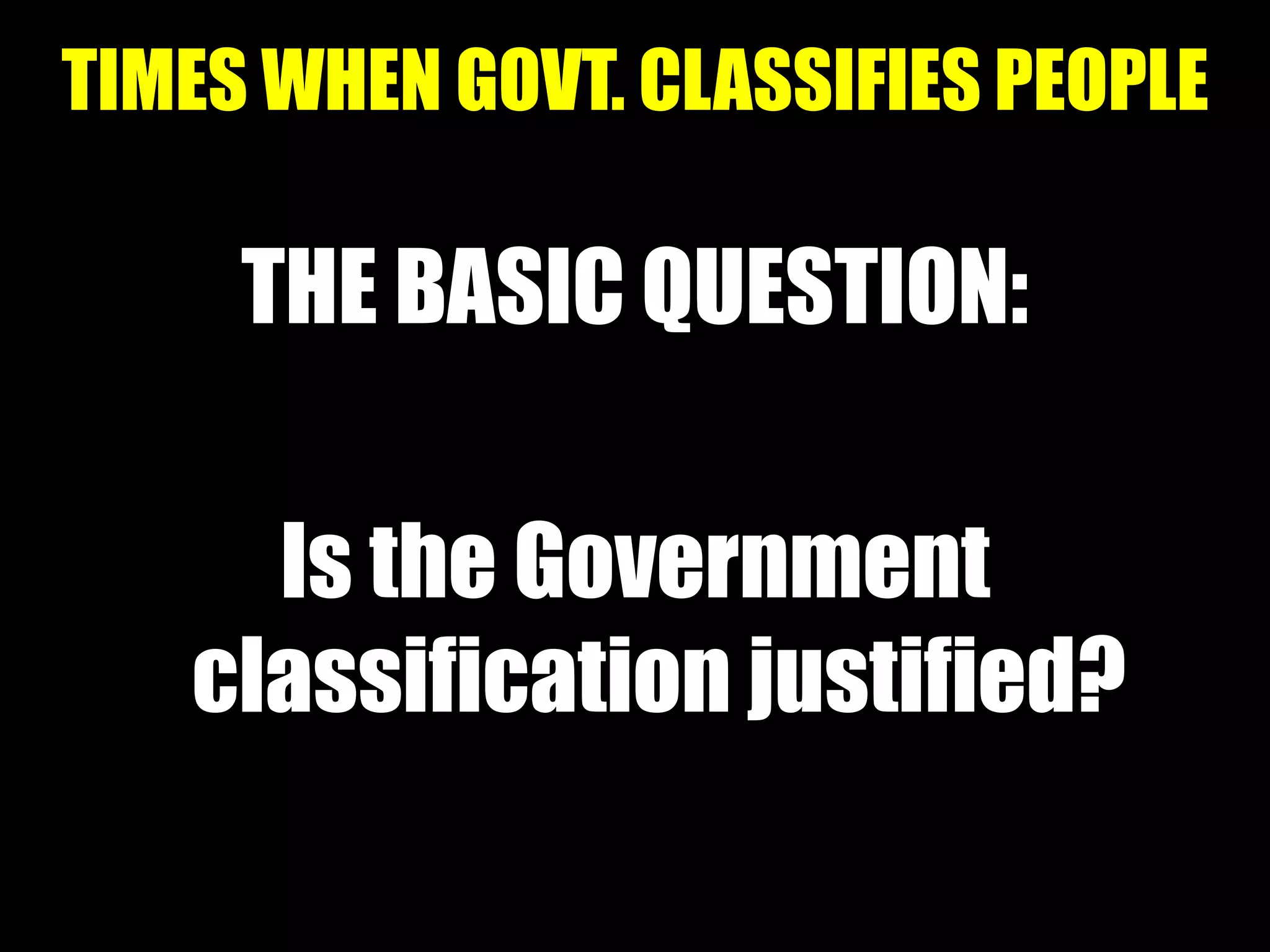
TIMES WHEN GOVT. CLASSIFIES PEOPLE
THE BASIC QUESTION:
Is the Government
classification justified?
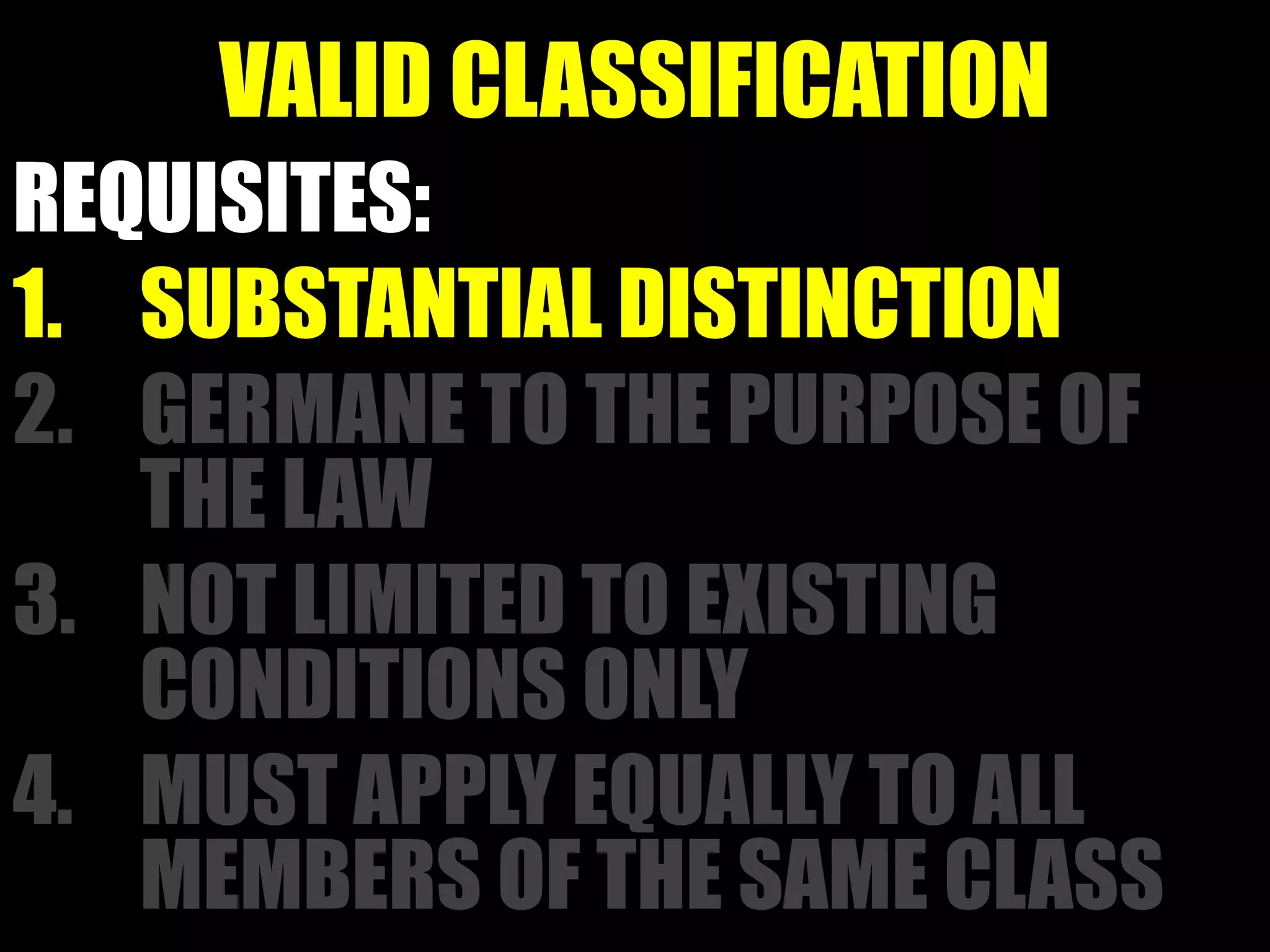
VALID CLASSIFICATION
REQUISITES:
1. SUBSTANTIAL DISTINCTION
2. GERMANE TO THE PURPOSE OF
THE LAW
3. NOT LIMITED TO EXISTING
CONDITIONS ONLY
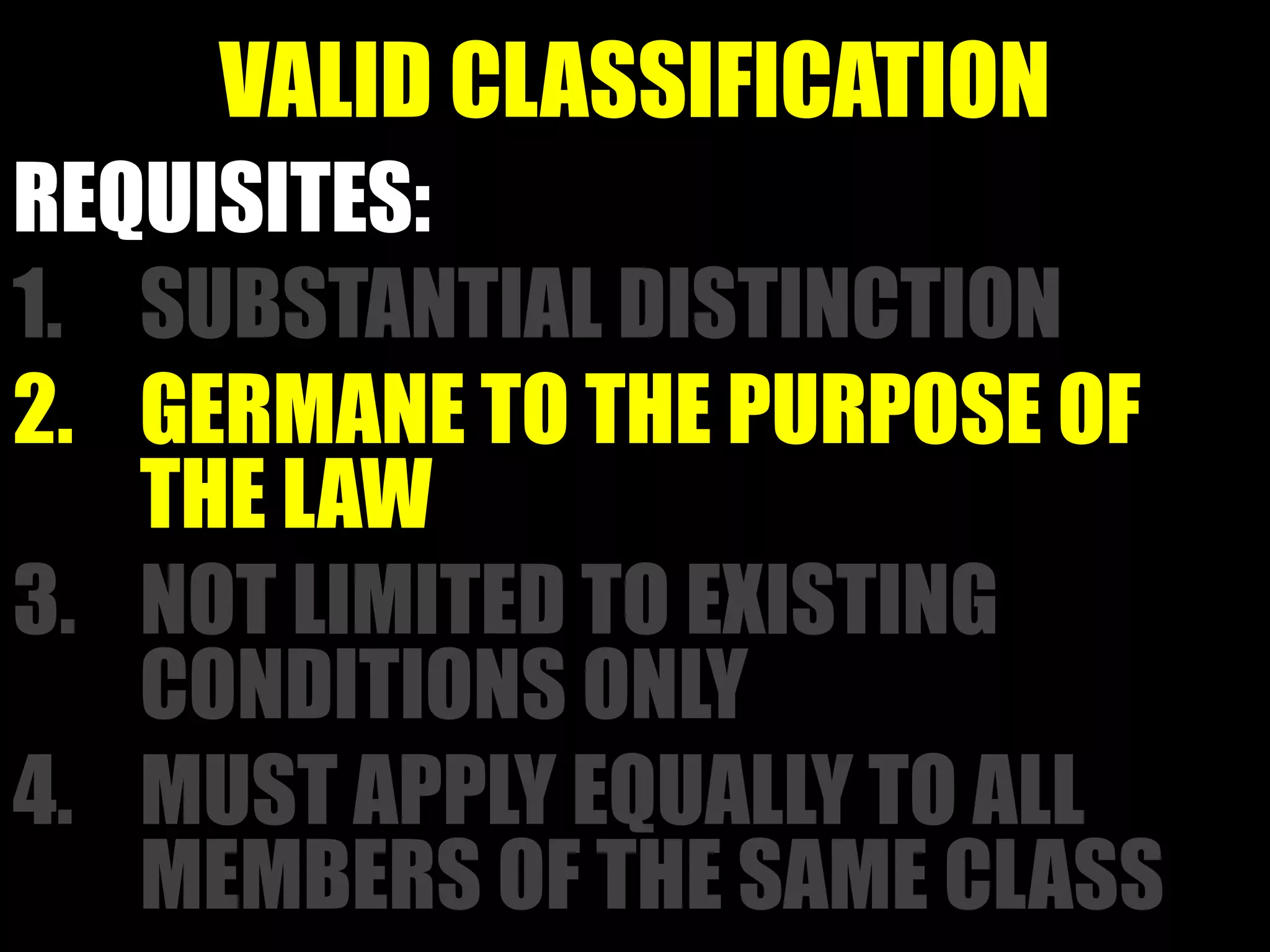
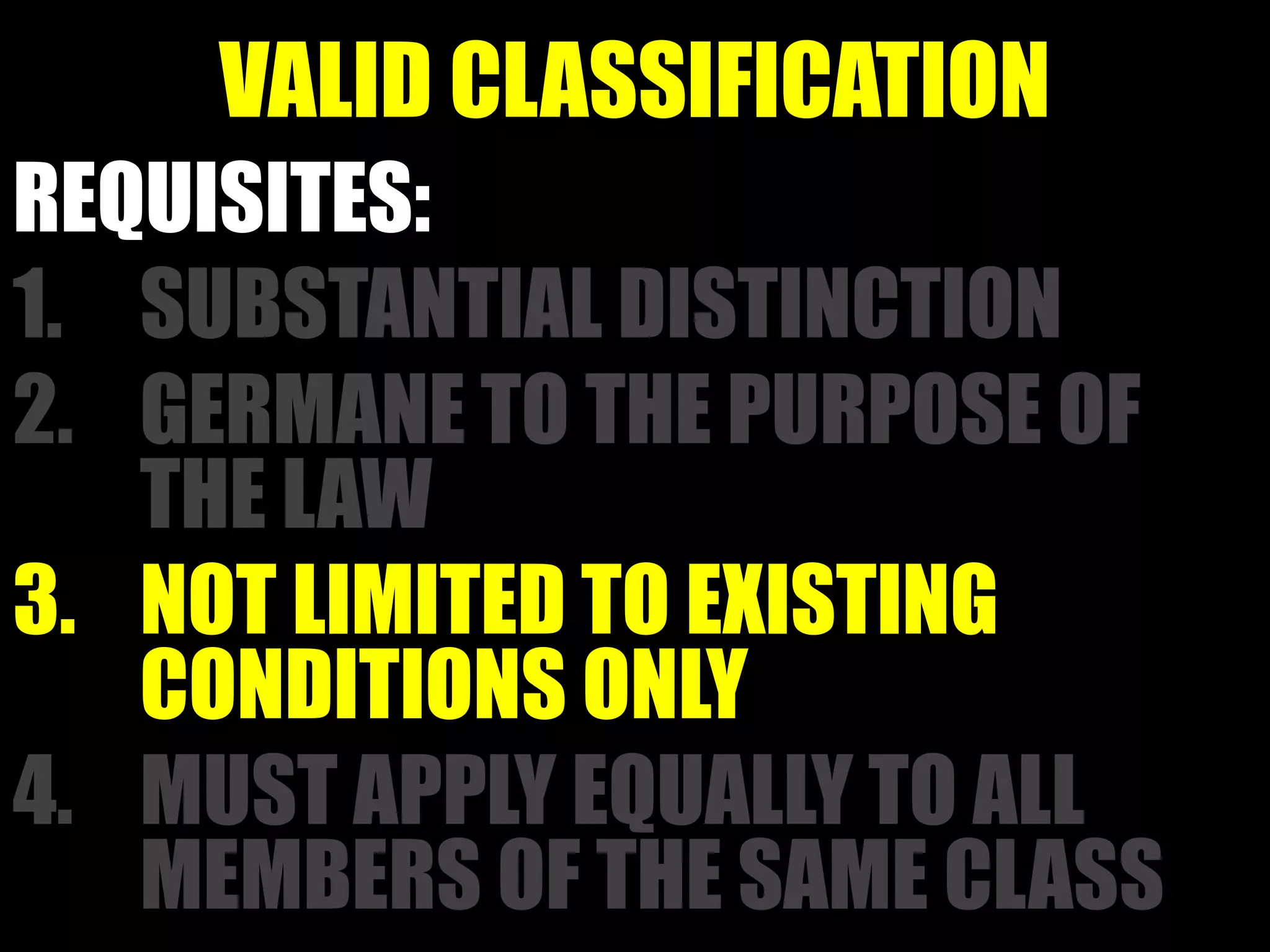
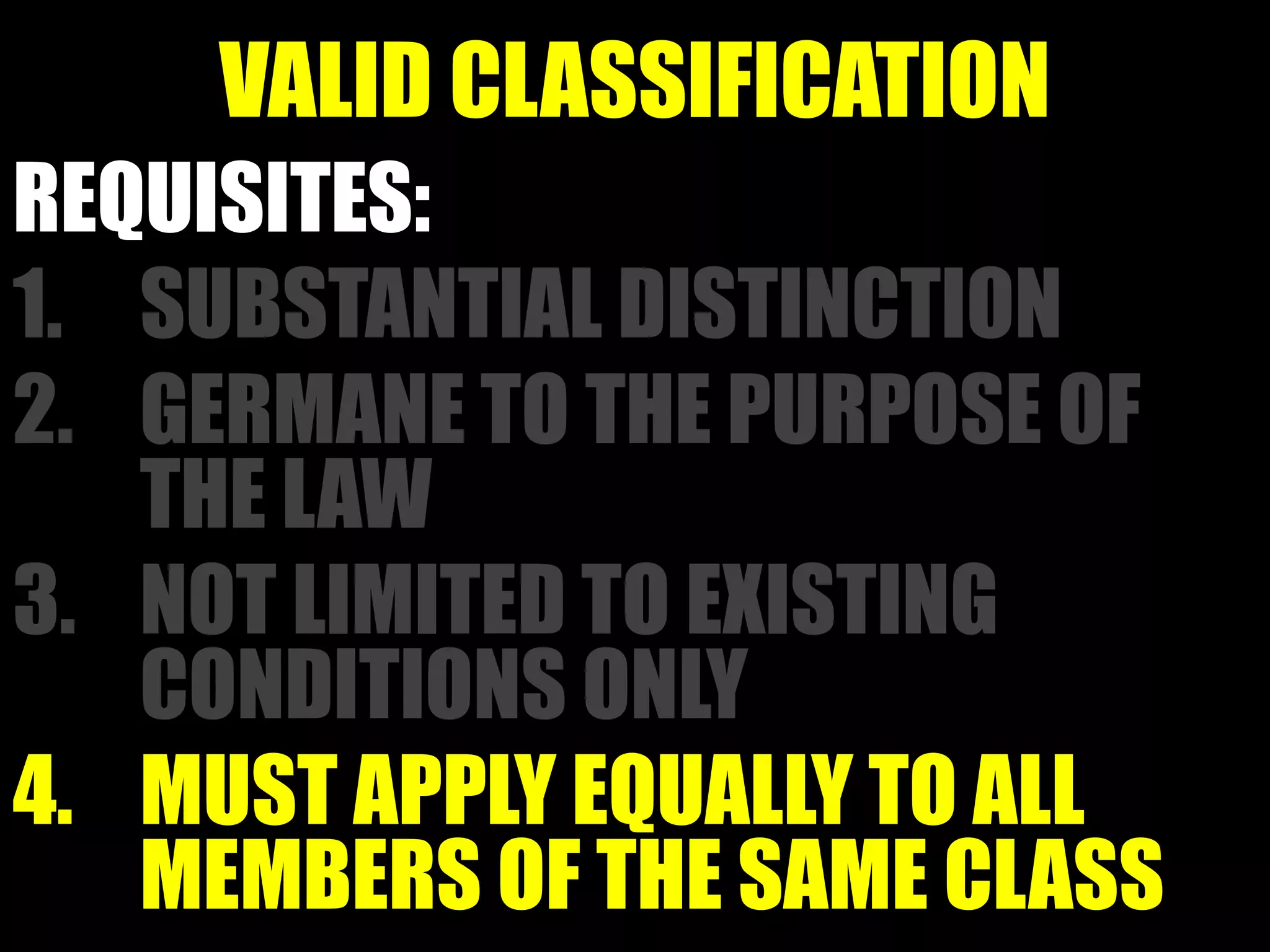
4. MUST APPLY EQUALLY TO ALL
MEMBERS OF THE SAME CLASS
VALID CLASSIFICATION
REQUISITES:
1. SUBSTANTIAL DISTINCTION
2. GERMANE TO THE PURPOSE OF
THE LAW
3. NOT LIMITED TO EXISTING
CONDITIONS ONLY
4. MUST APPLY EQUALLY TO ALL
MEMBERS OF THE SAME CLASS
VALID CLASSIFICATION
REQUISITES:
1. SUBSTANTIAL DISTINCTION
2. GERMANE TO THE PURPOSE OF
THE LAW
3. NOT LIMITED TO EXISTING
CONDITIONS ONLY
4. MUST APPLY EQUALLY TO ALL
MEMBERS OF THE SAME CLASS
VALID CLASSIFICATION
REQUISITES:
1. SUBSTANTIAL DISTINCTION
2. GERMANE TO THE PURPOSE OF
THE LAW
3. NOT LIMITED TO EXISTING
CONDITIONS ONLY
4. MUST APPLY EQUALLY TO ALL
MEMBERS OF THE SAME CLASS

DUMAUG_DUE PROCESS

  • 1.
    Learning Outcomes: Upon completingthis course, students should: 1. Understand the key historical, political, legal and moral influences that have shaped the idea of "human rights.“ 2. Identify the major international declarations, treaties, and covenants governing human rights. 3. Understand the rights, freedoms, liberties and other clauses guaranteed by the constitution, and 4. Know how to research, and where to find, human rights materials and relevant issues that will be necessary to future work in the field, and how to construct and advocate effective legal and policy arguments using international human rights norms and discourse;
  • 2.
    Specifically, the studentswill gain: Knowledge • to learn the definition of Bill of Rights, Due Process, Equal Protection, Probable Cause, Ex Post Facto Law, Bill of Attainder, Freedom of Expression, etc. • to recognize references to several Freedoms, Rights and Liberties in the Bill of Rights of Article 3 of the 1987 Philippine Constitution Attitude • to appreciate the importance of Article 3, the Bill of Rights to an individual and to society • to appreciate the importance of protecting one's rights Skill • to work effectively in small groups • to apply principles in legal documents to specific actions
  • 3.
    • Bill ofRights – It is a declaration and enumeration of the individual rights and privileges, which the constitution is designed to protect. It is a charter of liberties for the individual and limitations upon the power of the state. • Classification of Constitutional Rights 1. Political Rights 2. Civil Rights 3. Social and Economic Rights 4. Rights of the Accused • Classes of Rights 1. Natural Rights 2. Constitutional Rights 3. Statutory Rights
  • 4.
    • Legal Basis– Universal Declaration of Human Rights (UDHR) signed by members of the United Nations (UN) on December 10, 1948 • The Three Generations of Human Rights of the UDHR 1. 1ST Generation Rights – Rights that protect the people from the abuse of political authority. Keyword: LIBERTY 2. 2nd Generation Rights – pertain to the economic, social and cultural rights. Keyword: EQUALITY 3. 3rd Generation Rights – Solidarity rights that may be enjoyed collectively. Keyword: SOLIDARITY/FRATERNITY 1. Right to peace 2. Right to development 3. Right to a healthy environment 4. Right to humanitarian aid 5. Right to share in the world’s common cultural heritage.
  • 23.
    ARTICLE 3. BILLOF RIGHTS 1) DUE PROCESS 2) EQUAL PROTECTION 3) FREEDOM FROM UNWARRANTED SEARCHES AND SEIZURES 4) PRIVACY OF COMMUNICATIONS AND CORRESPONDENCE 5) FREEDOM OF EXPRESSION 6) FREEDOM OF RELIGION
  • 24.
    EQUAL PROTECTION: DEFINITION ALLPERSONS OR THINGS SIMILARLY SITUATED SHOULD BE TREATED ALIKE, BOTH AS TO RIGHTS CONFERRED AND RESPONSIBILITIES IMPOSED
  • 25.
    TWO SIDES OFTHE SAME COIN DUE PROCESS = LIBERTY - fundamental individual rights EQUAL PROTECTION = EQUALITY - treating people the same
  • 26.
    TIMES WHEN GOVT.CLASSIFIES PEOPLE THE BASIC QUESTION: Is the Government classification justified?
  • 27.
    VALID CLASSIFICATION REQUISITES: 1. SUBSTANTIALDISTINCTION 2. GERMANE TO THE PURPOSE OF THE LAW 3. NOT LIMITED TO EXISTING CONDITIONS ONLY 4. MUST APPLY EQUALLY TO ALL MEMBERS OF THE SAME CLASS
  • 28.
    VALID CLASSIFICATION REQUISITES: 1. SUBSTANTIALDISTINCTION 2. GERMANE TO THE PURPOSE OF THE LAW 3. NOT LIMITED TO EXISTING CONDITIONS ONLY 4. MUST APPLY EQUALLY TO ALL MEMBERS OF THE SAME CLASS
  • 29.
    VALID CLASSIFICATION REQUISITES: 1. SUBSTANTIALDISTINCTION 2. GERMANE TO THE PURPOSE OF THE LAW 3. NOT LIMITED TO EXISTING CONDITIONS ONLY 4. MUST APPLY EQUALLY TO ALL MEMBERS OF THE SAME CLASS
  • 30.
    VALID CLASSIFICATION REQUISITES: 1. SUBSTANTIALDISTINCTION 2. GERMANE TO THE PURPOSE OF THE LAW 3. NOT LIMITED TO EXISTING CONDITIONS ONLY 4. MUST APPLY EQUALLY TO ALL MEMBERS OF THE SAME CLASS