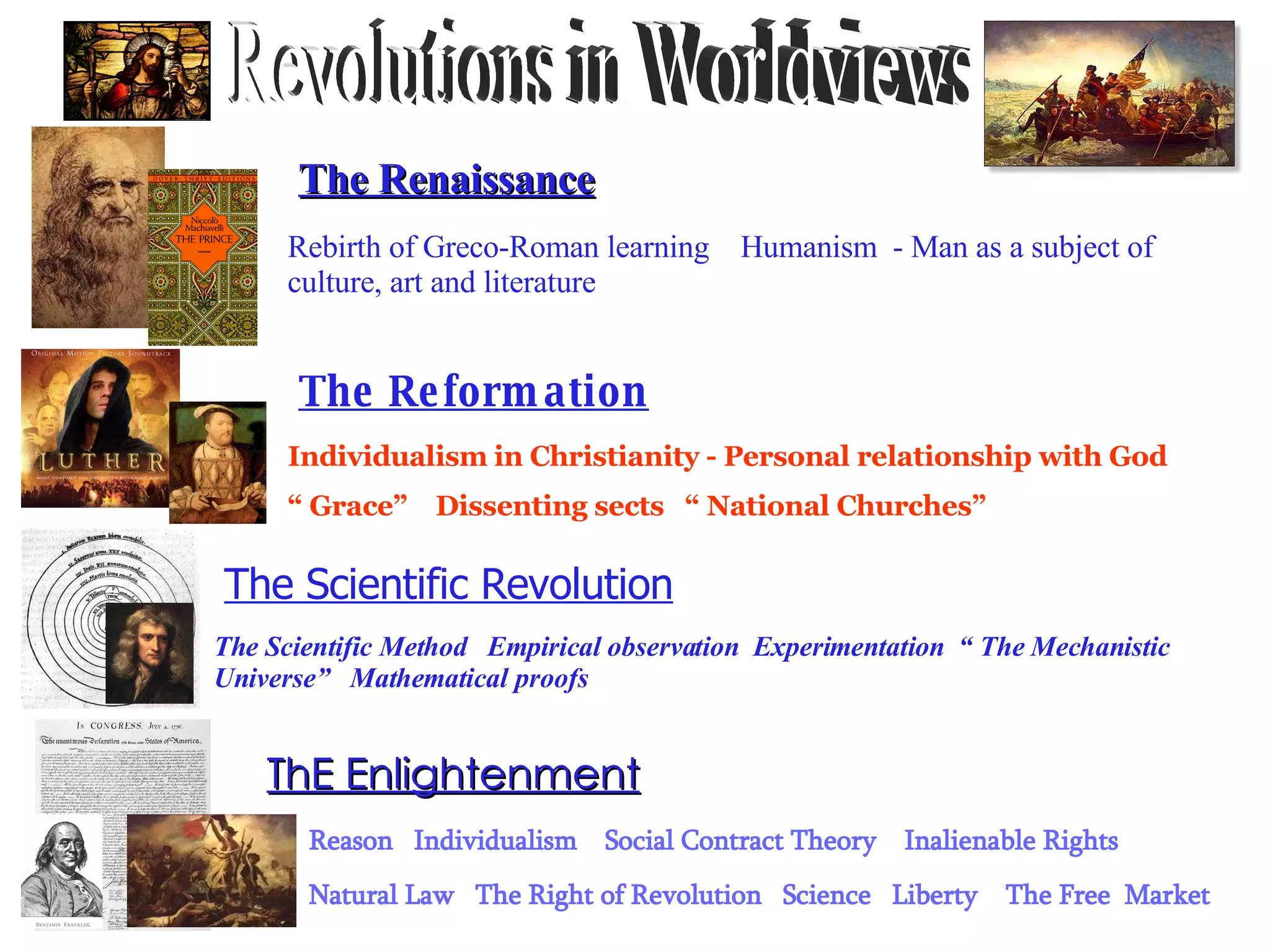
Revolutions in Worldviews The Renaissance Rebirth of Greco-Roman learning  Humanism  - Man as a subject of culture, art and literature The Reformation Individualism in Christianity - Personal relationship with God  “  Grace”  Dissenting sects  “ National Churches” The Scientific Revolution The Scientific Method  Empirical observation  Experimentation  “ The Mechanistic Universe”  Mathematical proofs   ThE Enlightenment Reason  Individualism  Social Contract Theory  Inalienable Rights  Natural Law  The Right of Revolution  Science  Liberty  The Free  Market
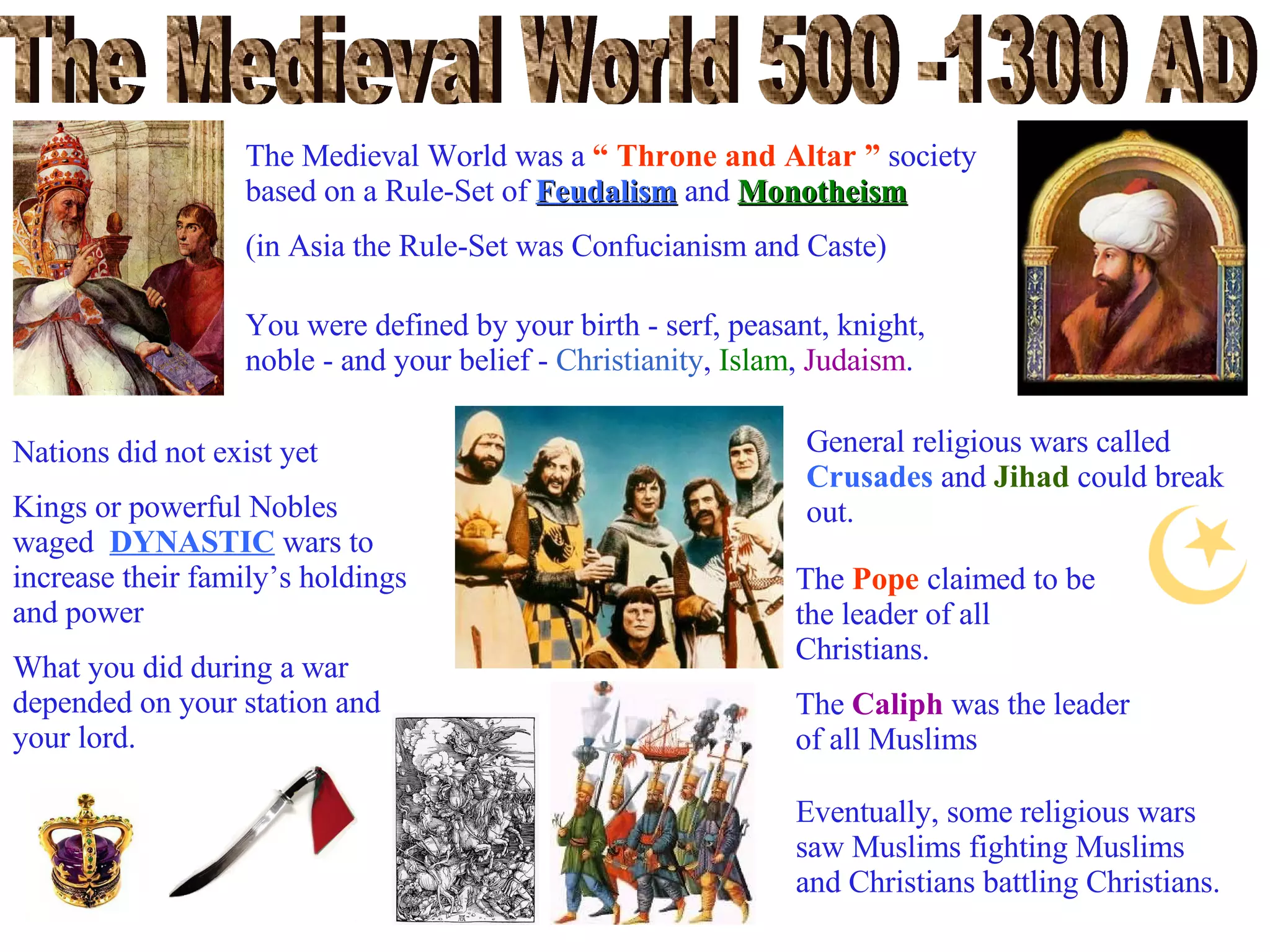
The Medieval World 500 -1300 AD The Medieval World was a  “ Throne and Altar ”  society based on a Rule-Set of  Feudalism  and  Monotheism (in Asia the Rule-Set was Confucianism and Caste)‏ You were defined by your birth - serf, peasant, knight, noble - and your belief -  Christianity ,  Islam ,  Judaism . Nations did not exist yet Kings or powerful Nobles waged  DYNASTIC  wars to increase their family’s holdings and power What you did during a war depended on your station and your lord. General religious wars called  Crusades  and   Jihad   could break out. The   Pope   claimed to be the leader of all Christians.  The  Caliph   was the leader of all Muslims Eventually, some religious wars saw Muslims fighting Muslims and Christians battling Christians.
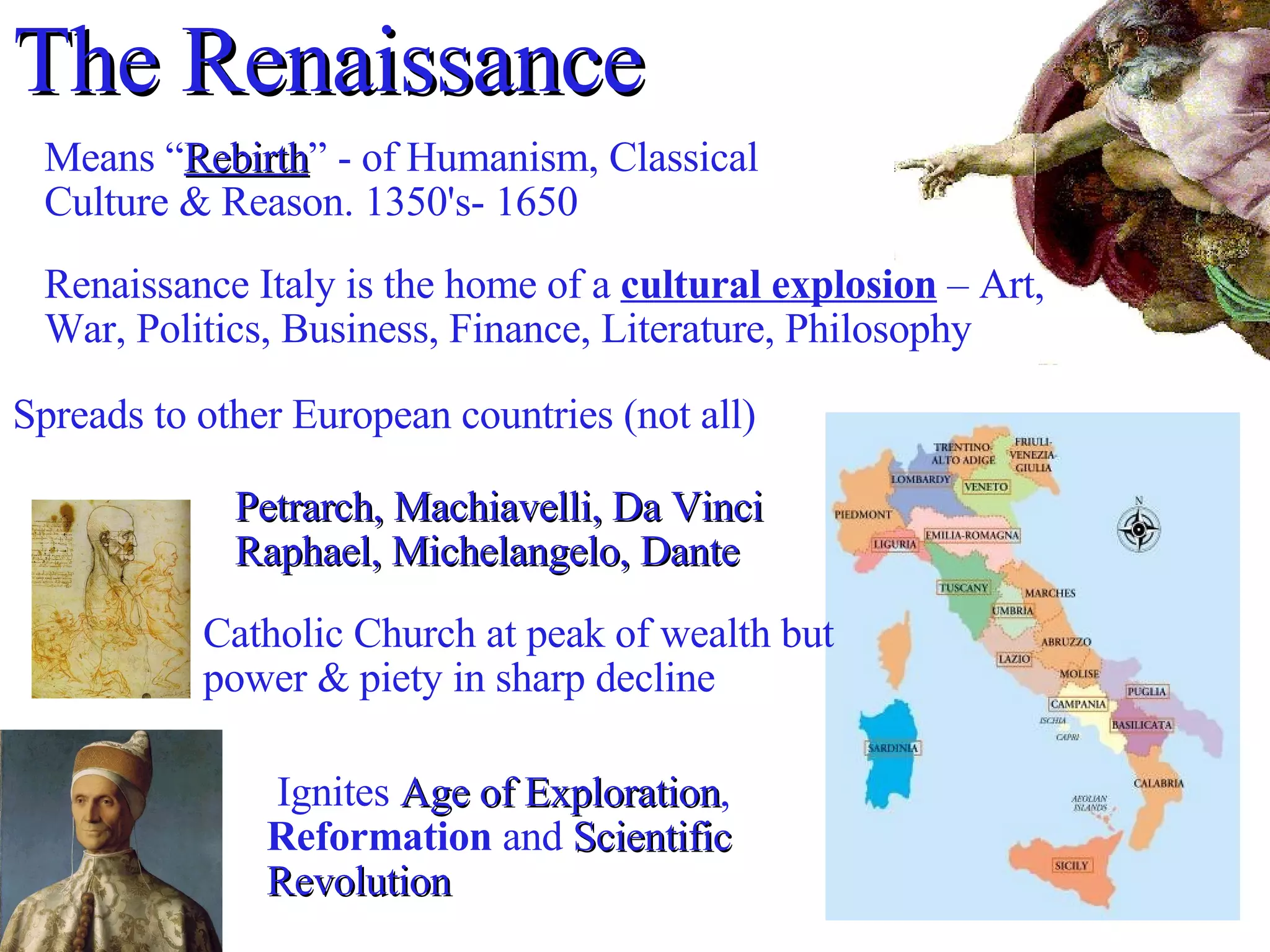
The Renaissance  Means “ Rebirth ” - of Humanism, Classical Culture & Reason. 1350's- 1650 Renaissance Italy is the home of a  cultural explosion  – Art, War, Politics, Business, Finance, Literature, Philosophy Spreads to other European countries (not all)‏ Ignites  Age of Exploration ,  Reformation  and  Scientific Revolution Catholic Church at peak of wealth but power & piety in sharp decline Petrarch, Machiavelli, Da Vinci Raphael, Michelangelo, Dante
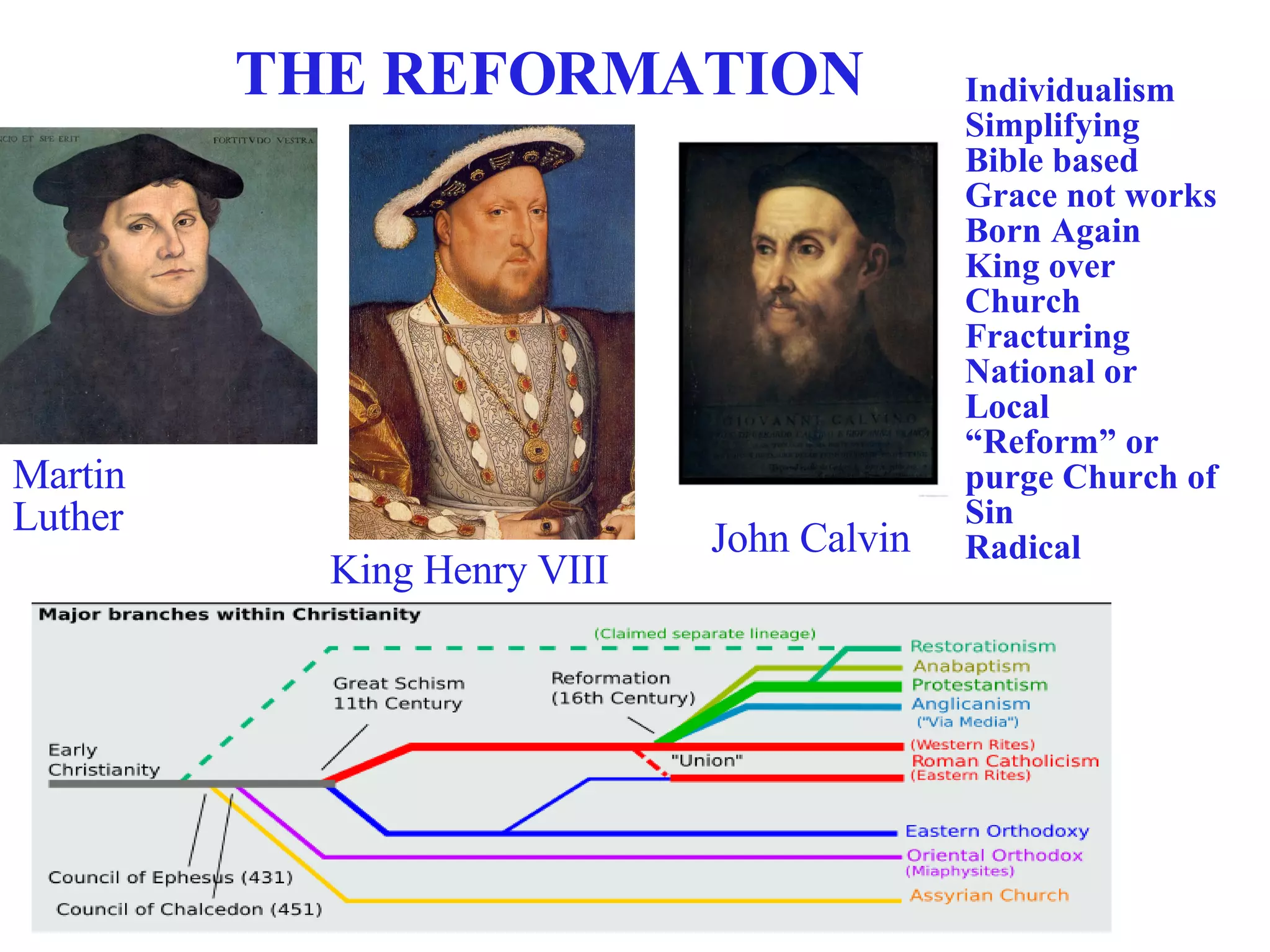
THE REFORMATION Martin Luther King Henry VIII John Calvin Individualism Simplifying Bible based Grace not works Born Again King over Church Fracturing National or Local “ Reform” or purge Church of Sin Radical
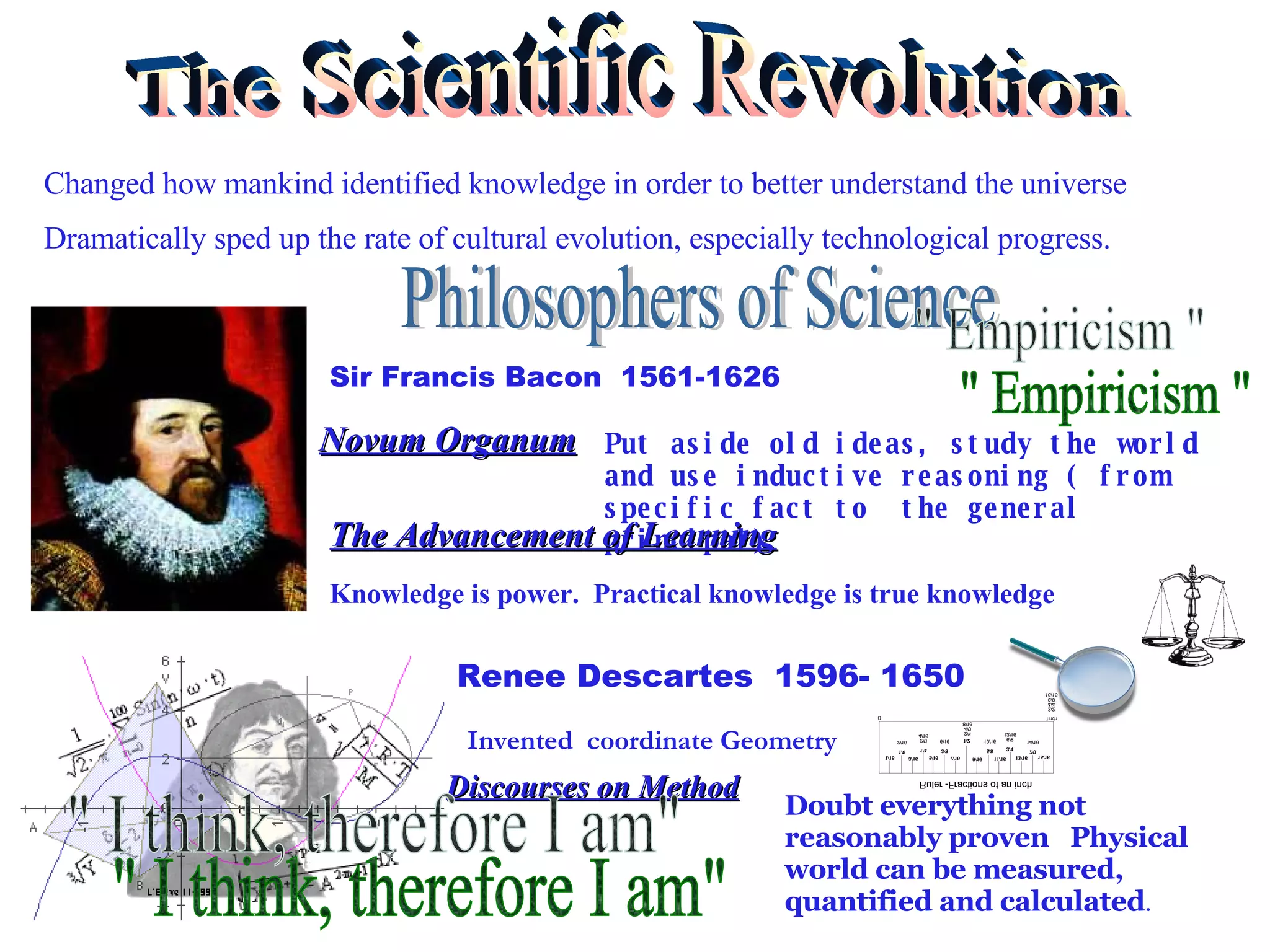
The Scientific Revolution Changed how mankind identified knowledge in order to better understand the universe Dramatically sped up the rate of cultural evolution, especially technological progress. Sir Francis Bacon  1561-1626 Philosophers of Science Novum Organum Put aside old ideas, study the world and use inductive reasoning ( from specific fact to  the general principal)‏ The Advancement of Learning Knowledge is power.  Practical knowledge is true knowledge " Empiricism " Renee Descartes  1596- 1650 Invented  coordinate Geometry Discourses on Method Doubt everything not reasonably proven  Physical world can be measured, quantified and calculated . " I think, therefore I am"
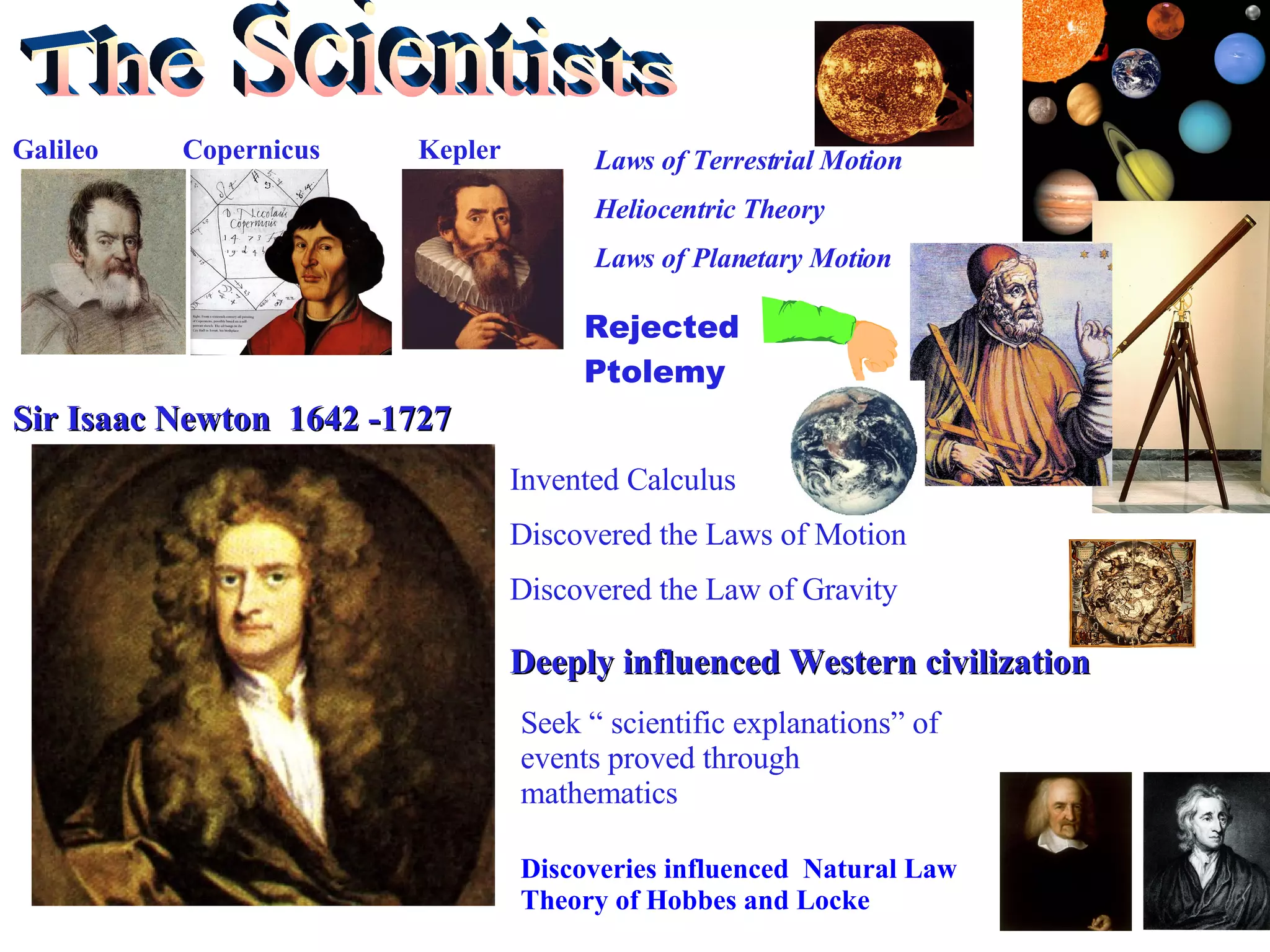
The Scientists Galileo  Copernicus  Kepler Laws of Terrestrial Motion Heliocentric Theory Laws of Planetary Motion Rejected Ptolemy Sir Isaac Newton  1642 -1727 Invented Calculus Discovered the Laws of Motion Discovered the Law of Gravity Deeply influenced Western civilization  Seek “ scientific explanations” of events proved through mathematics Discoveries influenced  Natural Law Theory of Hobbes and Locke

Revoworldview

  • 1.
    Revolutions in WorldviewsThe Renaissance Rebirth of Greco-Roman learning Humanism - Man as a subject of culture, art and literature The Reformation Individualism in Christianity - Personal relationship with God “ Grace” Dissenting sects “ National Churches” The Scientific Revolution The Scientific Method Empirical observation Experimentation “ The Mechanistic Universe” Mathematical proofs ThE Enlightenment Reason Individualism Social Contract Theory Inalienable Rights Natural Law The Right of Revolution Science Liberty The Free Market
  • 2.
    The Medieval World500 -1300 AD The Medieval World was a “ Throne and Altar ” society based on a Rule-Set of Feudalism and Monotheism (in Asia the Rule-Set was Confucianism and Caste)‏ You were defined by your birth - serf, peasant, knight, noble - and your belief - Christianity , Islam , Judaism . Nations did not exist yet Kings or powerful Nobles waged DYNASTIC wars to increase their family’s holdings and power What you did during a war depended on your station and your lord. General religious wars called Crusades and Jihad could break out. The Pope claimed to be the leader of all Christians. The Caliph was the leader of all Muslims Eventually, some religious wars saw Muslims fighting Muslims and Christians battling Christians.
  • 3.
    The Renaissance Means “ Rebirth ” - of Humanism, Classical Culture & Reason. 1350's- 1650 Renaissance Italy is the home of a cultural explosion – Art, War, Politics, Business, Finance, Literature, Philosophy Spreads to other European countries (not all)‏ Ignites Age of Exploration , Reformation and Scientific Revolution Catholic Church at peak of wealth but power & piety in sharp decline Petrarch, Machiavelli, Da Vinci Raphael, Michelangelo, Dante
  • 4.
    THE REFORMATION MartinLuther King Henry VIII John Calvin Individualism Simplifying Bible based Grace not works Born Again King over Church Fracturing National or Local “ Reform” or purge Church of Sin Radical
  • 5.
    The Scientific RevolutionChanged how mankind identified knowledge in order to better understand the universe Dramatically sped up the rate of cultural evolution, especially technological progress. Sir Francis Bacon 1561-1626 Philosophers of Science Novum Organum Put aside old ideas, study the world and use inductive reasoning ( from specific fact to the general principal)‏ The Advancement of Learning Knowledge is power. Practical knowledge is true knowledge " Empiricism " Renee Descartes 1596- 1650 Invented coordinate Geometry Discourses on Method Doubt everything not reasonably proven Physical world can be measured, quantified and calculated . " I think, therefore I am"
  • 6.
    The Scientists Galileo Copernicus Kepler Laws of Terrestrial Motion Heliocentric Theory Laws of Planetary Motion Rejected Ptolemy Sir Isaac Newton 1642 -1727 Invented Calculus Discovered the Laws of Motion Discovered the Law of Gravity Deeply influenced Western civilization Seek “ scientific explanations” of events proved through mathematics Discoveries influenced Natural Law Theory of Hobbes and Locke