
THE PROBLEM
TRACKING SYSTEM
Sonali Chawla
AU124060202002P
INTRODUCTION
 Tester’s primary work product - problem reports
 Use of problem tracking system
 Report bugs
 File bugs
 File retrieval
 Write summaries
The key problem with tracking system
 The system introduces project accountability
 As the system is used, significant personal and control
issues surface
 The system can monitor individual performance
 The system provides ammunition for cross-group wars
Benefits of good tracking system
 Improvements in communication and accountability
 Get bugs fixed
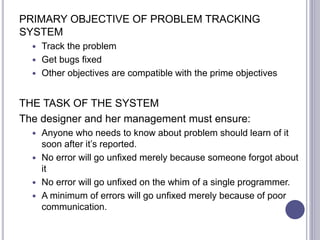
PRIMARY OBJECTIVE OF PROBLEM TRACKING
SYSTEM
 Track the problem
 Get bugs fixed
 Other objectives are compatible with the prime objectives
THE TASK OF THE SYSTEM
The designer and her management must ensure:
 Anyone who needs to know about problem should learn of it
soon after it’s reported.
 No error will go unfixed merely because someone forgot about
it
 No error will go unfixed on the whim of a single programmer.
 A minimum of errors will go unfixed merely because of poor
communication.
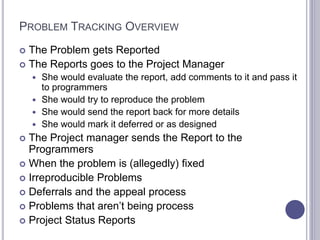
PROBLEM TRACKING OVERVIEW
 The Problem gets Reported
 The Reports goes to the Project Manager
 She would evaluate the report, add comments to it and pass it
to programmers
 She would try to reproduce the problem
 She would send the report back for more details
 She would mark it deferred or as designed
 The Project manager sends the Report to the
Programmers
 When the problem is (allegedly) fixed
 Irreproducible Problems
 Deferrals and the appeal process
 Problems that aren’t being process
 Project Status Reports
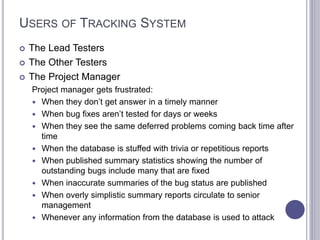
USERS OF TRACKING SYSTEM
 The Lead Testers
 The Other Testers
 The Project Manager
Project manager gets frustrated:
 When they don’t get answer in a timely manner
 When bug fixes aren’t tested for days or weeks
 When they see the same deferred problems coming back time after
time
 When the database is stuffed with trivia or repetitious reports
 When published summary statistics showing the number of
outstanding bugs include many that are fixed
 When inaccurate summaries of the bug status are published
 When overly simplistic summary reports circulate to senior
management
 Whenever any information from the database is used to attack
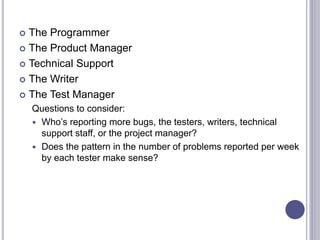
 The Programmer
 The Product Manager
 Technical Support
 The Writer
 The Test Manager
Questions to consider:
 Who’s reporting more bugs, the testers, writers, technical
support staff, or the project manager?
 Does the pattern in the number of problems reported per week
by each tester make sense?
 Senior Manager
Management-worthy bugs include:
 Program behavior that will embarrass the company
 Failure of the program to provide a core benefit that is either
being advertised or that a reasonable customer would always
expect
 Program behavior that will seriously anger a reasonable
person
 Lawyers
MECHANICS OF THE DATABASE
 Reporting New Problems
 Weekly Status Reports
 End of a Testing Cycle
 Resolved and Unresolved Problems
 Deferred Problems
 Progress Summaries
 When Development is Complete
 Reopen Deferred Bugs for next release
 Tracking Patches
FURTHER THOUGHTS ON PROBLEM REPORTING
 Exercising Judgment
 Similar Reports
 Allowing for Divergent Views
 Severity vs. Priority
 Treat as Deferred
 Comments in the comments section
 The appeal process
 Resolved vs. Closed
 Never reword a report
 Don’t filter reports that you disagree with
 Internal Details
THANK YOU

The Problem Tracking System

  • 1.
    THE PROBLEM TRACKING SYSTEM SonaliChawla AU124060202002P
  • 2.
    INTRODUCTION  Tester’s primarywork product - problem reports  Use of problem tracking system  Report bugs  File bugs  File retrieval  Write summaries
  • 3.
    The key problemwith tracking system  The system introduces project accountability  As the system is used, significant personal and control issues surface  The system can monitor individual performance  The system provides ammunition for cross-group wars Benefits of good tracking system  Improvements in communication and accountability  Get bugs fixed
  • 4.
    PRIMARY OBJECTIVE OFPROBLEM TRACKING SYSTEM  Track the problem  Get bugs fixed  Other objectives are compatible with the prime objectives THE TASK OF THE SYSTEM The designer and her management must ensure:  Anyone who needs to know about problem should learn of it soon after it’s reported.  No error will go unfixed merely because someone forgot about it  No error will go unfixed on the whim of a single programmer.  A minimum of errors will go unfixed merely because of poor communication.
  • 5.
    PROBLEM TRACKING OVERVIEW The Problem gets Reported  The Reports goes to the Project Manager  She would evaluate the report, add comments to it and pass it to programmers  She would try to reproduce the problem  She would send the report back for more details  She would mark it deferred or as designed  The Project manager sends the Report to the Programmers  When the problem is (allegedly) fixed  Irreproducible Problems  Deferrals and the appeal process  Problems that aren’t being process  Project Status Reports
  • 6.
    USERS OF TRACKINGSYSTEM  The Lead Testers  The Other Testers  The Project Manager Project manager gets frustrated:  When they don’t get answer in a timely manner  When bug fixes aren’t tested for days or weeks  When they see the same deferred problems coming back time after time  When the database is stuffed with trivia or repetitious reports  When published summary statistics showing the number of outstanding bugs include many that are fixed  When inaccurate summaries of the bug status are published  When overly simplistic summary reports circulate to senior management  Whenever any information from the database is used to attack
  • 7.
     The Programmer The Product Manager  Technical Support  The Writer  The Test Manager Questions to consider:  Who’s reporting more bugs, the testers, writers, technical support staff, or the project manager?  Does the pattern in the number of problems reported per week by each tester make sense?
  • 8.
     Senior Manager Management-worthybugs include:  Program behavior that will embarrass the company  Failure of the program to provide a core benefit that is either being advertised or that a reasonable customer would always expect  Program behavior that will seriously anger a reasonable person  Lawyers
  • 9.
    MECHANICS OF THEDATABASE  Reporting New Problems  Weekly Status Reports  End of a Testing Cycle  Resolved and Unresolved Problems  Deferred Problems  Progress Summaries  When Development is Complete  Reopen Deferred Bugs for next release  Tracking Patches
  • 10.
    FURTHER THOUGHTS ONPROBLEM REPORTING  Exercising Judgment  Similar Reports  Allowing for Divergent Views  Severity vs. Priority  Treat as Deferred  Comments in the comments section  The appeal process  Resolved vs. Closed  Never reword a report  Don’t filter reports that you disagree with  Internal Details
  • 11.