What happens to the wax when
a candle is burnt???
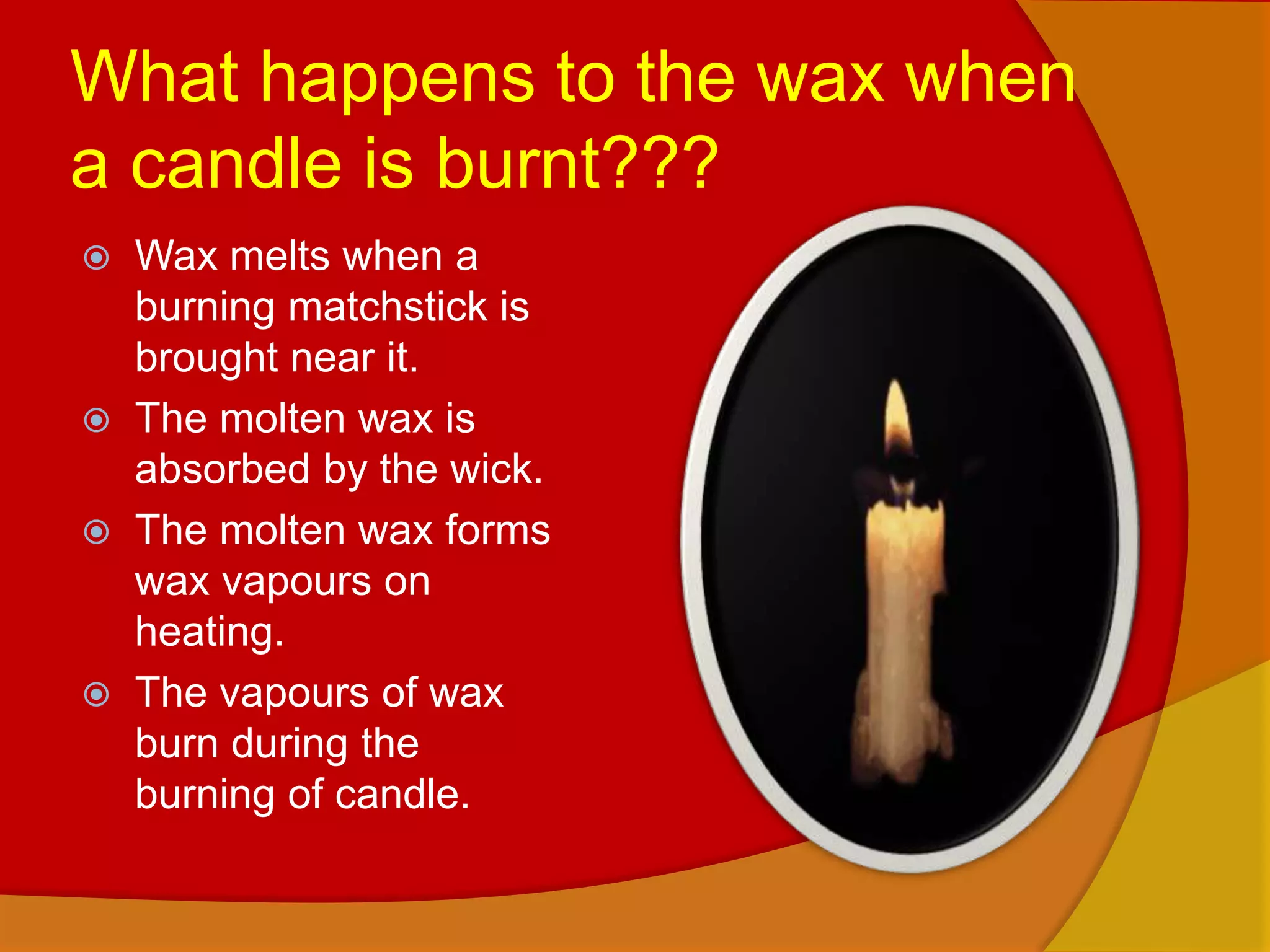
 Wax melts when a
burning matchstick is
brought near it.
 The molten wax is
absorbed by the wick.
 The molten wax forms
wax vapours on
heating.
 The vapours of wax
burn during the
burning of candle.
BLOW out the candle and see
MAGIC….
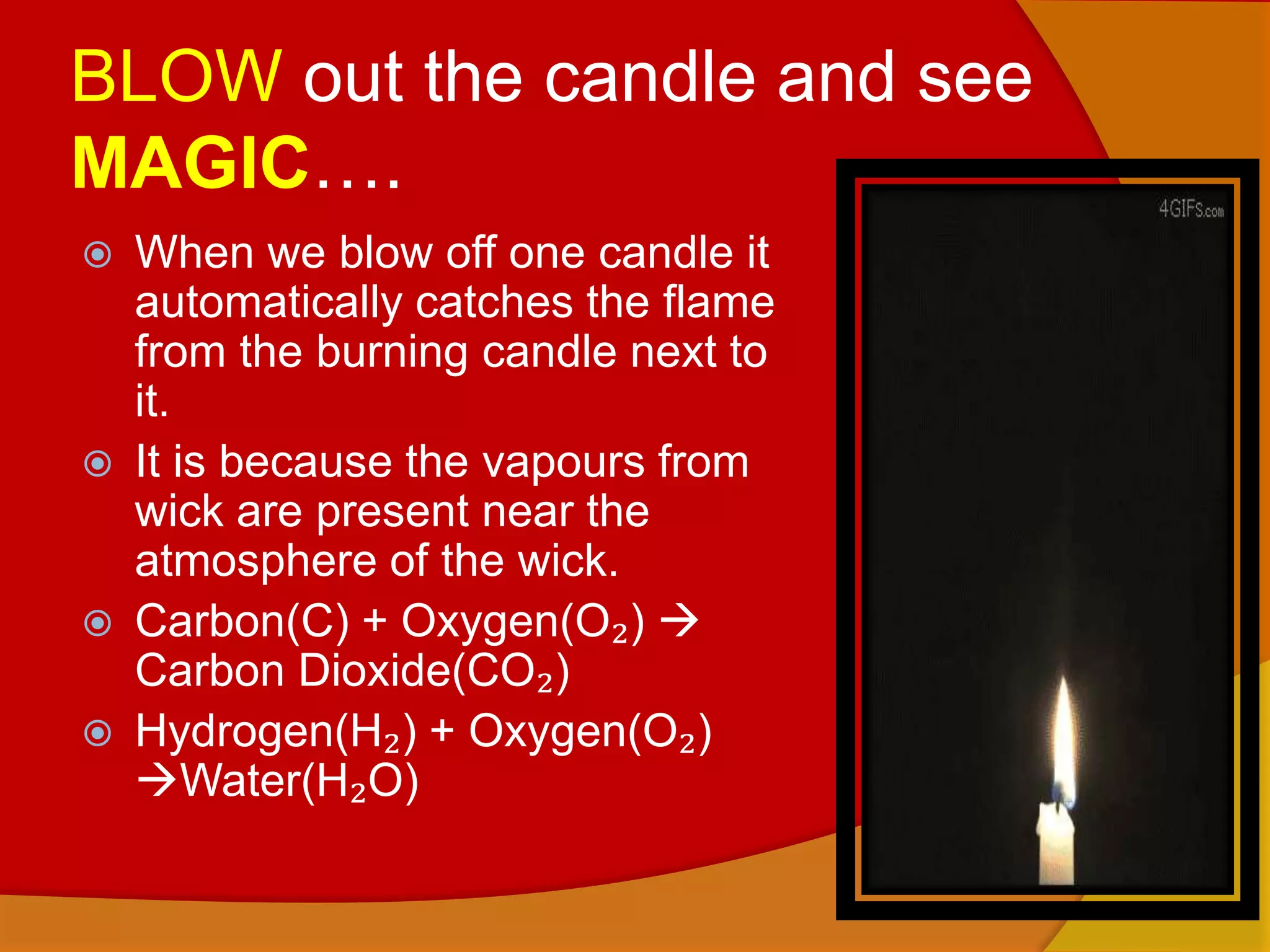
 When we blow off one candle it
automatically catches the flame
from the burning candle next to
it.
 It is because the vapours from
wick are present near the
atmosphere of the wick.
 Carbon(C) + Oxygen(O₂) 
Carbon Dioxide(CO₂)
 Hydrogen(H₂) + Oxygen(O₂)
Water(H₂O)
What happens when a Fossil
fuel Is burnt???
Methane(Natural Gas)+ Oxygen  Carbon Dioxide +Water
Butane(LPG) + Oxygen  Carbon Dioxide + Water
What is Combustion???
 A chemical process in which a
substance reacts with oxygen to
produce oxides and release energy is
called .
 The substance undergoing combustion
is called .
 The energy produced during combustion
is usually in the form of heat and light,
sometimes sound is also given out.
Types of
Combustion
Depending on the speed of reaction:
 Rapid Combustion— takes place very fast
 Slow Combustion--- takes place very slow
 Complete Combustion—takes place in
excess of oxygen/air
 Incomplete Combustion—takes place in
absence of oxygen/air
Ignition Temperature
 When the cloths of a person catch fire,
the person is covered with a blanket to
extinguish fire.
 The lowest temperature at which a
substance catches fire is called its
ignition temperature.
Necessary Condition
For Combustion!!!
 Presence of a combustible substance
 Presence of a supporter of combustion
 Attainment of Ignition temperature
Extinguishing Fire…
 Removal Of the Combustible Substance
 Removal Of the supported of Combustion
 By lowering down temperature
What is FLAME???
 A flame is the visible (light-emitting),
gaseous part of a fire.
 It is caused by a highly exothermic
reaction taking place in a zone.
Different Zones of Candle Flame
 Zone of Complete
Combustion
 Zone of Incomplete
Combustion
 Zone of No Combustion
BEST FUEL…
• Fairly cheap and easily available
• Moderate ignition temperature
• Easy to store
• Should not cause pollution on burning
• Should produce a large amount of heat
energy for less amount burnt
Harmful Effects Of Burning
Fuels
 Leads to global warming due to release
of carbon dioxide
 Coal burning release sulphur dioxide
which form acid rain
 Incomplete combustion of fuels releases
carbon monoxide gas which is very
poisonous
Combustion and flame

Combustion and flame

  • 2.
    What happens tothe wax when a candle is burnt???  Wax melts when a burning matchstick is brought near it.  The molten wax is absorbed by the wick.  The molten wax forms wax vapours on heating.  The vapours of wax burn during the burning of candle.
  • 3.
    BLOW out thecandle and see MAGIC….  When we blow off one candle it automatically catches the flame from the burning candle next to it.  It is because the vapours from wick are present near the atmosphere of the wick.  Carbon(C) + Oxygen(O₂)  Carbon Dioxide(CO₂)  Hydrogen(H₂) + Oxygen(O₂) Water(H₂O)
  • 4.
    What happens whena Fossil fuel Is burnt??? Methane(Natural Gas)+ Oxygen  Carbon Dioxide +Water Butane(LPG) + Oxygen  Carbon Dioxide + Water
  • 5.
    What is Combustion??? A chemical process in which a substance reacts with oxygen to produce oxides and release energy is called .  The substance undergoing combustion is called .  The energy produced during combustion is usually in the form of heat and light, sometimes sound is also given out.
  • 6.
    Types of Combustion Depending onthe speed of reaction:  Rapid Combustion— takes place very fast  Slow Combustion--- takes place very slow  Complete Combustion—takes place in excess of oxygen/air  Incomplete Combustion—takes place in absence of oxygen/air
  • 7.
    Ignition Temperature  Whenthe cloths of a person catch fire, the person is covered with a blanket to extinguish fire.  The lowest temperature at which a substance catches fire is called its ignition temperature.
  • 8.
    Necessary Condition For Combustion!!! Presence of a combustible substance  Presence of a supporter of combustion  Attainment of Ignition temperature
  • 9.
    Extinguishing Fire…  RemovalOf the Combustible Substance  Removal Of the supported of Combustion  By lowering down temperature
  • 10.
    What is FLAME??? A flame is the visible (light-emitting), gaseous part of a fire.  It is caused by a highly exothermic reaction taking place in a zone.
  • 11.
    Different Zones ofCandle Flame  Zone of Complete Combustion  Zone of Incomplete Combustion  Zone of No Combustion
  • 12.
    BEST FUEL… • Fairlycheap and easily available • Moderate ignition temperature • Easy to store • Should not cause pollution on burning • Should produce a large amount of heat energy for less amount burnt
  • 13.
    Harmful Effects OfBurning Fuels  Leads to global warming due to release of carbon dioxide  Coal burning release sulphur dioxide which form acid rain  Incomplete combustion of fuels releases carbon monoxide gas which is very poisonous