InterfaceSpecification
Interface
 A point where two systems, subjects,
organizations, etc. meet and interact.
 A device or program enabling a user to
communicate with a computer.
 A inter face is a intersection between system
and environment.
 Interface =system /environment
Specification
 A Specification is a agreement Between the
produce of the services Consumer of that services
Interface
Specification
 All software systems must operate with
existing systems that have already been
implemented and installed in an
environment.
 If the new system and existing systems must
work together, the interfaces of existing
systems have to be precisely specified.
 These specifications should be defined early
in the process and included in the
requirements document.
Typesof
Interface
Specification
 There are three types of Interface specification:
 Procedural interfaces.
 Data structures.
 Representations of data.
 Message passing interface.
Procedural
interfaces
Procedural interfaces where existing programs or
sub-systems offer a range of services that are
accessed by calling interface procedures. In simple
words it Is used for calling the existing programs by
the new programs These interfaces are sometimes
called Application Programming Interfaces (APLs).
Datastructures
 Data structures that are passed from one sub-
system to another. Graphical data models are the
best notations for this type of description
Representations
ofdata
 Representations of data (such as the ordering of bits)
that have been established for an existing sub-system.
These interfaces are most common in embedded, real-
time system. Some programming languages such as
Ada (although not Java) support this level of
Specification.
Message passing
interface
 Sub system requesting service from other
sub systems.
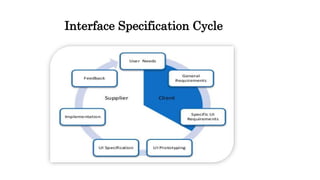
Interface Specification Cycle
Thanks

Interface specification

  • 1.
  • 2.
    Interface  A pointwhere two systems, subjects, organizations, etc. meet and interact.  A device or program enabling a user to communicate with a computer.  A inter face is a intersection between system and environment.  Interface =system /environment
  • 3.
    Specification  A Specificationis a agreement Between the produce of the services Consumer of that services
  • 4.
    Interface Specification  All softwaresystems must operate with existing systems that have already been implemented and installed in an environment.  If the new system and existing systems must work together, the interfaces of existing systems have to be precisely specified.  These specifications should be defined early in the process and included in the requirements document.
  • 5.
    Typesof Interface Specification  There arethree types of Interface specification:  Procedural interfaces.  Data structures.  Representations of data.  Message passing interface.
  • 6.
    Procedural interfaces Procedural interfaces whereexisting programs or sub-systems offer a range of services that are accessed by calling interface procedures. In simple words it Is used for calling the existing programs by the new programs These interfaces are sometimes called Application Programming Interfaces (APLs).
  • 7.
    Datastructures  Data structuresthat are passed from one sub- system to another. Graphical data models are the best notations for this type of description
  • 8.
    Representations ofdata  Representations ofdata (such as the ordering of bits) that have been established for an existing sub-system. These interfaces are most common in embedded, real- time system. Some programming languages such as Ada (although not Java) support this level of Specification.
  • 9.
    Message passing interface  Subsystem requesting service from other sub systems.
  • 10.
  • 11.