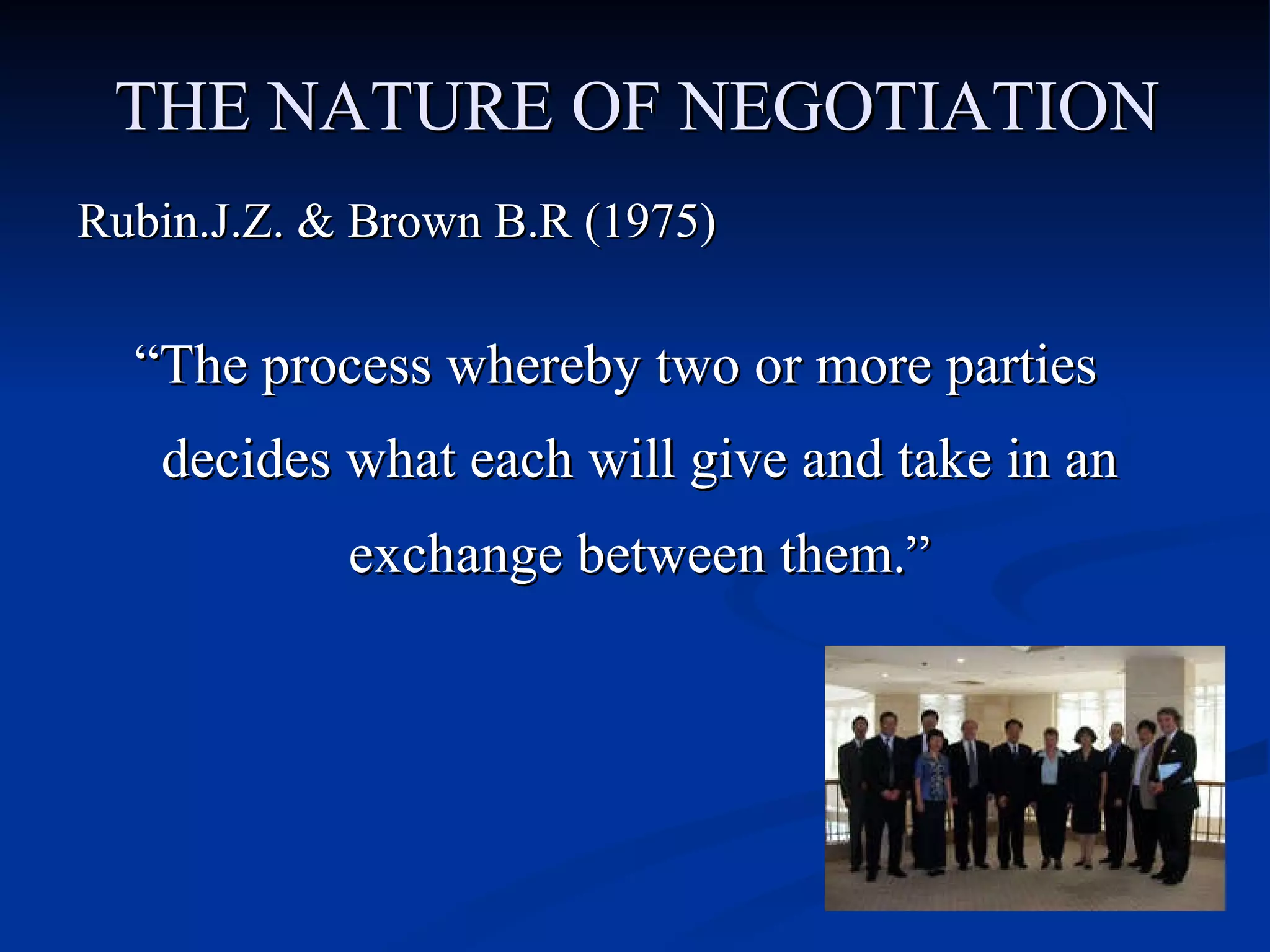
THE NATURE OF NEGOTIATION Rubin.J.Z. & Brown B.R (1975) “ The process whereby two or more parties decides what each will give and take in an exchange between them .”
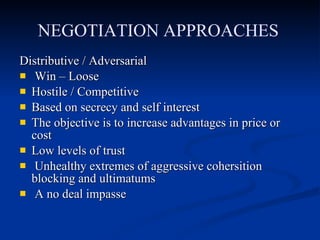
Distributive / Adversarial Win – Loose Hostile / Competitive Based on secrecy and self interest The objective is to increase advantages in price or cost Low levels of trust  Unhealthy extremes of aggressive cohersition  blocking and ultimatums A no deal impasse NEGOTIATION APPROACHES
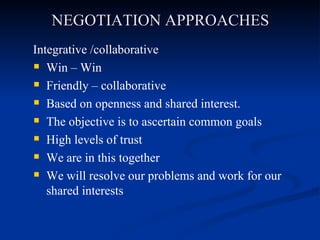
NEGOTIATION APPROACHES Integrative /collaborative Win – Win Friendly – collaborative Based on openness and shared interest. The objective is to ascertain common goals High levels of trust We are in this together  We will resolve our problems and work for our shared interests
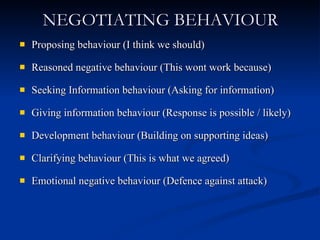
NEGOTIATING BEHAVIOUR Proposing behaviour (I think we should) Reasoned negative behaviour (This wont work because) Seeking Information behaviour (Asking for information) Giving information behaviour (Response is possible / likely) Development behaviour (Building on supporting ideas) Clarifying behaviour (This is what we agreed) Emotional negative behaviour (Defence against attack)
TIME Have patience  If there are benefits to resolving the negotiation quickly, sell the other party on the value a quick settlement will have for him  Realise deadlines can be moved, changed or eliminated  Try to find out the other party’s deadline Take your time
NEGOTIATION GOALS Substance goals. Outcomes that relate to content issues. Relationship goals . Outcomes that relate to how well people involved in the negotiations and any constituencies they represent are able to work with one another once the process is concluded.
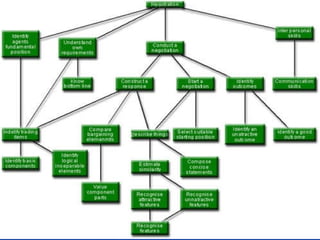
THE NEGOTIATION PROCESS Prenegotiation The actual negotiation Post negotiation
 
PRENEGOTIATION Who is to negotiate? Individual approach Team approach Spokesperson, recorder, experts .  The venue Buyers should expect vendor [Lyson] Home ground Easy access to files Expert advice facilitated
PRENEGOTIATION Intelligence gathering ascertaining respective strengths & weaknesses. Relative data assembly (cost, sales, production etc) preparing presentable data (charts, graphs etc)  Negotiation objectives Specific  Clarification Strategy and tactics Overall plan Right attitude
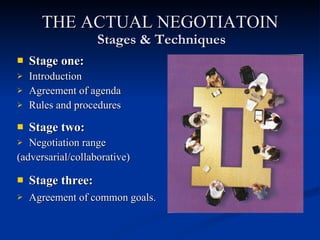
THE ACTUAL NEGOTIATOIN   Stages & Techniques Stage one: Introduction Agreement of agenda Rules and procedures Stage two: Negotiation range (adversarial/collaborative) Stage three: Agreement of common goals.
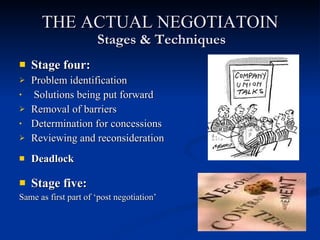
THE ACTUAL NEGOTIATOIN   Stages & Techniques Stage four: Problem identification Solutions being put forward Removal of barriers Determination for concessions Reviewing and reconsideration Deadlock Stage five: Same as first part of ‘post negotiation’
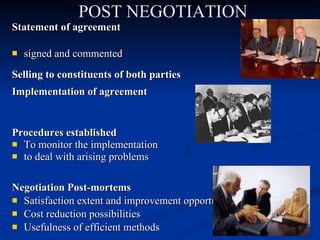
POST   NEGOTIATION Statement of agreement signed and commented Selling to constituents of both parties Implementation of agreement  Procedures established To monitor the implementation to deal with arising problems Negotiation Post-mortems Satisfaction extent and improvement opportunities Cost reduction possibilities Usefulness of efficient methods
ETHICS IN NEGOTIATION
“ these replies are typical, the meaning of ethics is hard to pin down and the views many people have about ethics are shaky how can you equate ethics with your feelings, being ethical is clearly not a matter of following ones own feelings and in fact feelings frequently deviate from what is ethical”.  Professor Raymond Harvard Business School
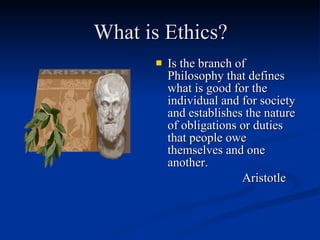
What is Ethics? Is the branch of Philosophy that defines what is good for the individual and for society and establishes the nature of obligations or duties that people owe themselves and one another.  Aristotle
Why Ethics in Negotiations?   its all about … Trust Relationship Fair Honest and Openness Reflection
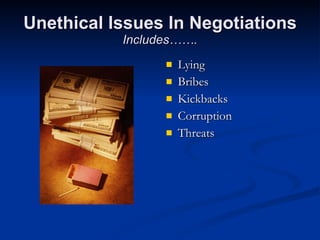
Unethical Issues In Negotiations Includes……. Lying Bribes Kickbacks Corruption Threats
HOW TO IMPLEMENT ETHICS Ethical Codes
“ The very exercise of developing a code is in itself worthwhile; it forces a large number of people...to think through in a fresh way about their mission and the important obligations they as a group and as individuals have with respect to society as a whole.” Jane Gibbs Chartered Institute of Purchasing and Supply
ARE THEY…….
QUESTIONS
 
http://www.akri.org/services/images/negotiate.jpg http://web.indstate.edu/ctl/TAGA/devo/conflict/toyes/negotiation.jpg www.monetarystress.com/. ../negotiation.html  www.consumer.org.nz/ topic.asp?docid=1909&cate...

The negotiation process

  • 1.
    THE NATURE OFNEGOTIATION Rubin.J.Z. & Brown B.R (1975) “ The process whereby two or more parties decides what each will give and take in an exchange between them .”
  • 2.
    Distributive / AdversarialWin – Loose Hostile / Competitive Based on secrecy and self interest The objective is to increase advantages in price or cost Low levels of trust Unhealthy extremes of aggressive cohersition blocking and ultimatums A no deal impasse NEGOTIATION APPROACHES
  • 3.
    NEGOTIATION APPROACHES Integrative/collaborative Win – Win Friendly – collaborative Based on openness and shared interest. The objective is to ascertain common goals High levels of trust We are in this together We will resolve our problems and work for our shared interests
  • 4.
    NEGOTIATING BEHAVIOUR Proposingbehaviour (I think we should) Reasoned negative behaviour (This wont work because) Seeking Information behaviour (Asking for information) Giving information behaviour (Response is possible / likely) Development behaviour (Building on supporting ideas) Clarifying behaviour (This is what we agreed) Emotional negative behaviour (Defence against attack)
  • 5.
    TIME Have patience If there are benefits to resolving the negotiation quickly, sell the other party on the value a quick settlement will have for him Realise deadlines can be moved, changed or eliminated Try to find out the other party’s deadline Take your time
  • 6.
    NEGOTIATION GOALS Substancegoals. Outcomes that relate to content issues. Relationship goals . Outcomes that relate to how well people involved in the negotiations and any constituencies they represent are able to work with one another once the process is concluded.
  • 7.
    THE NEGOTIATION PROCESSPrenegotiation The actual negotiation Post negotiation
  • 8.
  • 9.
    PRENEGOTIATION Who isto negotiate? Individual approach Team approach Spokesperson, recorder, experts . The venue Buyers should expect vendor [Lyson] Home ground Easy access to files Expert advice facilitated
  • 10.
    PRENEGOTIATION Intelligence gatheringascertaining respective strengths & weaknesses. Relative data assembly (cost, sales, production etc) preparing presentable data (charts, graphs etc) Negotiation objectives Specific Clarification Strategy and tactics Overall plan Right attitude
  • 11.
    THE ACTUAL NEGOTIATOIN Stages & Techniques Stage one: Introduction Agreement of agenda Rules and procedures Stage two: Negotiation range (adversarial/collaborative) Stage three: Agreement of common goals.
  • 12.
    THE ACTUAL NEGOTIATOIN Stages & Techniques Stage four: Problem identification Solutions being put forward Removal of barriers Determination for concessions Reviewing and reconsideration Deadlock Stage five: Same as first part of ‘post negotiation’
  • 13.
    POST NEGOTIATION Statement of agreement signed and commented Selling to constituents of both parties Implementation of agreement Procedures established To monitor the implementation to deal with arising problems Negotiation Post-mortems Satisfaction extent and improvement opportunities Cost reduction possibilities Usefulness of efficient methods
  • 14.
  • 15.
    “ these repliesare typical, the meaning of ethics is hard to pin down and the views many people have about ethics are shaky how can you equate ethics with your feelings, being ethical is clearly not a matter of following ones own feelings and in fact feelings frequently deviate from what is ethical”. Professor Raymond Harvard Business School
  • 16.
    What is Ethics?Is the branch of Philosophy that defines what is good for the individual and for society and establishes the nature of obligations or duties that people owe themselves and one another. Aristotle
  • 17.
    Why Ethics inNegotiations? its all about … Trust Relationship Fair Honest and Openness Reflection
  • 18.
    Unethical Issues InNegotiations Includes……. Lying Bribes Kickbacks Corruption Threats
  • 19.
    HOW TO IMPLEMENTETHICS Ethical Codes
  • 20.
    “ The veryexercise of developing a code is in itself worthwhile; it forces a large number of people...to think through in a fresh way about their mission and the important obligations they as a group and as individuals have with respect to society as a whole.” Jane Gibbs Chartered Institute of Purchasing and Supply
  • 21.
  • 22.
  • 23.
  • 24.