THE MIDDLE AGES
By: Moko, Eva, Jane, Game
CHAPTER 10
What is the Middle Ages?
• The Middle Ages was the period from the fall of
Rome to the Renaissance.
• Also known as the “Dark Ages”
• It had suffered the loss of two successive empires
(Roman & Byzantine) and had not recovered from their
losses.
Split into 2 Historical Periods
• The Early Middle Ages
• The Late Middle Ages
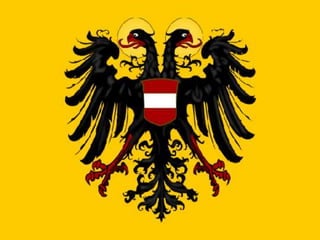
The Holy Roman Empire
• Why was Charlemagne was the greatest
medieval king?
• Why did the Pope crowned him as the new
emperor?
• Why was the Holy Roman Empire a fake
empire?
The Franks
• The strongest kingdom to emerge from the fall
of Rome.
• Rose to power in the late 15th century under
the ruthless leadership of Clovis (466-511)
• Clovis increased the lands of the Roman
Catholic Church
• Crushed the Arian heretics, who threatened
the Pope
• After Clovis the successors were weak
• Chief minister Charles Martel became the
leader of the Franks kingdom
• Defeated the Moors in the Battle of Tours (732
AD)
• Stopped the advancement of Islam into
Western Europe by land
• Founded the Carolingian Dynasty
• Organized a strong central government
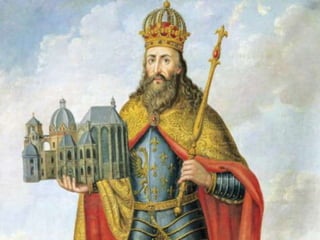
Who is Charlemagne?
• An able general who conquered an empire
that reunited large areas of the former
Western Roman Empire
• 768-814
• Was a part of the Franks kingdom
• Grandson of Charles Martel
• Made the Franks the most successful former
barbarians and the most loyal Christian of all
tribes.
Why was Charlemagne was the greatest
medieval king?
• He forced all that he conquered to be baptized
into the Roman Catholic Church
• Thus, increased the number of nominal
Christians in the West
• He insisted on an orderly and settled life for
the people
• Supported the Church to organize parishes or
rural districts with each having its own priest
• Required all Christians to pay the tithe ( ten
percent of their income) to the Church
• Established schools for the people
• Made the language of the Franks (French) to
become the most widely used language
among the literate in Europe, apart from Latin
Why did the Pope crowned him as the
new emperor?
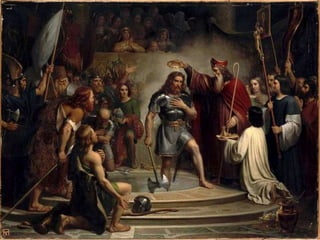
On December 5 800 AD, at St. Peter’s Church in Rome, a large crowd of
the most important people in Christendom had just finished the mass
led by Pope Leo III himself. To everyone’s surprise the Pope walked over
to the kneeling Charlemagne, placed a golden crown on his head and
proclaimed him as “Emperor of the Romans”.
• The Pope wanted to establish the idea that popes can
grant the power to name kings into office.
• By crowning Charlemagne as “emperor” the Pope really
wanted to organize a new empire in Europe to oust the
rival empire in Byzantium.
• But Charlemagne was not comfortable with this idea
• After the death of Charlemagne (814 AD), the
dynasty broke up
• Split into 3 separate kingdoms
France, Germany and Italy
• To unite them Otto the Great (912-973) the
Duke of Saxony (Germany) started the Holy
Roman Empire
• But it was a fake empire
• Lasted for 844 years (962-1806)
Why was the Holy Roman Empire a
fake empire?
• The “emperor” of the Holy Roman Empire was only a symbolic
figurehead, without real powers
• He was elected for a limited time, and presided over the members,
who could ignore him
• None of the “emperors” was a Roman or an absolute ruler
• The main role of the new emperor was really to defend and protect
the Roman Catholic Pope against other troublesome Christians
especially the ones at the Byzantine empire (Protestants)
• In the 18th century French philosopher Voltaire ridiculed it as
“neither holy, nor Roman, nor an empire” due to its weakness, lack
of unity and unchristian purposes
• How did feudalism and the nobles rise to
power?
• The importance of feudal contracts, feudal
lord, fiefs, vassals, the manor, knights and
word of honor.
• Why did chivalry matter?
• How did the feudal life affect women, homes,
health, amusements and law?
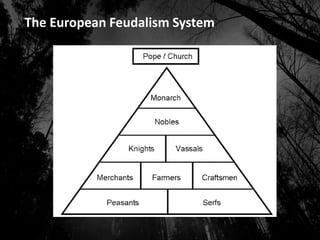
Feudalism means a socio-economic system based
on land ownership by a few wealthy people
Not a unified, single system
Age of Feudalism is when Europe broke up into 3
separate kingdoms
• France
• Germany
• Italy
The most prominent features of feudalism were the
nobles, knights, serfs and crusades
The European Feudalism System
• Grew out of barbaric customs
• To fight for the leader and the leader shall
provide for their needs
• Able to protect and control the common people
who lived in their feudal lands because they had
an army of knights under their personal
employment
• While remaining loyal to their national king, the
feudal lords usually acted independently
• The feudal lords were in charge of their lands not
the national king
Rise of Feudalism
How did feudalism and nobles rise to
power?
• Because of the lack of a strong central
government, the region broke up into small
feudal estates, where the nobles lived like
small kings
• It grew out of the custom of rewarding
military lords for their services.
• In 8th century Charles Martel had no money to
pay for his officers. So he gave them land.
• The officers became feudal lords
3 Contributions to the growth of
Feudalism
1. The Feudal Lords
2. The Stirrup (Horse Saddle)
3. The Feudal Contracts
Importance of Feudal Lords
• Provides the knights with armor, horses and
training
• Gives the common people and knights land to
live on
• Provides the common people with protection
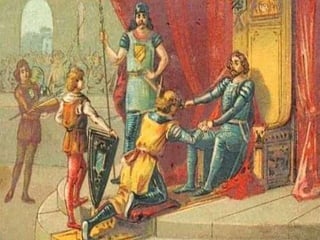
Importance of Vassals
Vassal means lesser lord
• Under the contract of a lord a vassal gets a fief
range depending on the importance of the vassal
• The lord still owned the land but the vassal had
the right to use it and pass it on to their heirs
• Gives the lord military services for about 40 days
a year
• Pays an annual rent like ransom for the lord if he
were kidnapped, or for the marriage of the lord’s
daughter or son’s knighting
Importance of Feudal Contracts
Feudal Contracts meaning is an unwritten
exchange of rights and duties between nobles
and the lower people
• Grants the permission of giving lands in
exchange for services
Importance of Fiefs
Fief is an estate of range of land usually a few
hectares that can owned by a vassal
• Provides space to build homes, farms and
other important building for the people
• Where the common people can live
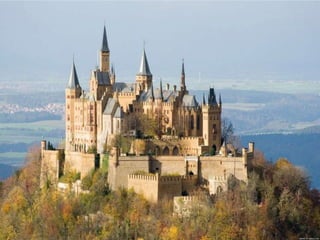
Importance of Manors
A Manor or a Feudal Land is owned by a
nobleman or feudal lord, who passed it from
generation to generation in the family
• It included a castle, other houses, farms and
forests
• Provided living space for a feudal lord and had
space for farming
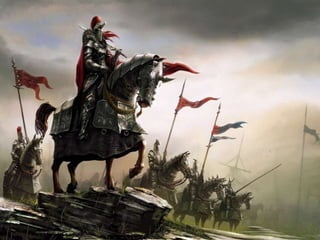
Importance of Knights
• Knights are armed soldiers underemployment
of a feudal lord given to by the vassal
• They ride on horses, wear protective armor
and carry heavy weapons such as a sword
• They protect the feudal land and its citizens
• They go to warfare with other feudal lands
• An army of knights destroy crops, seize their
animals and women and burn down homes of
other feudal lands
Importance of Word of Honor
• Word of Honor
a pledge of one's honor that a specified
condition or a bargain will be fulfilled
• Sets boundaries
• Provides trust for both people agreeing to a
word of honor
• Forms alliances
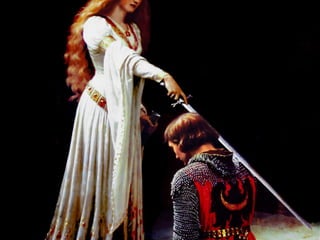
• Feudal nobles developed a code of conduct called
chivalry
• The code of chivalry mattered because it combined
Christian values and virtues of being a warrior
• Dictates the rules of fighting
• A knight was expected to be brave, loyal, generous and
courteous. He was supposed to protect and respect
noblewomen and defends his family’s honor
• The rules were not always followed
• Did not apply to peasants and common women
• The nobility look down on the poor and the latter were
at the mercy of the rich and powerful
Why did Chivalry matter?
• Chivalry promoted ways of behavior that
reduced the brutality of a fighting age
• It gave the impression that the former
barbarians who were now Christians that they
had left their shameful past behind (but really
they didn’t)
• Placed noblewomen on a pedestal as objects
to be loved or protected
How did Feudal life affect Women?
• The feudal life was really dull, dirty, cold and
short.
• A noble, knight or peasants' life span was short
or perhaps no more than 30 or 35 years of age
• Hence, a woman’s first duty was to raise a large
family, whether she was a noblewoman or a
commoner
• A big family ensured continuity of the family line,
especially if she gave birth to boys
How did Feudal life affect Homes?
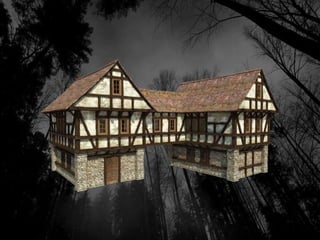
• Medieval homes had no toilets, running water
or heater
• They had feasts that were loud and long for at
there was big fireplace in the hall
• They did not have eating implements or
porcelain plates
How did Feudal life affect Health?
• Medieval folks had a phobia for taking baths,
because it could make them sick
• They had poor hygiene, drink too much and
the fighting killed off people young
• So people got sick very often
• Their medicine were bizarre and mostly don’t
work
• A lot of people die everyday
How did Feudal life affect
Amusement?
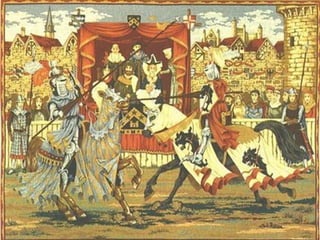
• The feudal lords and knights loved dueling or
friendly tournaments. It gave them a chance
to practice and display their fighting skills
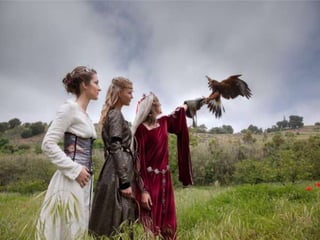
• Next to feasting and fighting, the upper class
went on hunts for wild boars or deer in vast
forests. They even trained falcons to hunt
• They had an occasional medieval fair
• There were also important festivals such as
Christmas and Easter
How did Feudal life affect Law?
• Trial by combat or ordeal
• All free people had the right to be tried by their
peers (trial by jury)
• But for serious crimes, the accused had 2 choices
• One, he or she chose to prove innocence by an
ordeal, like carrying a burning hot iron without
being burned or two swimming a long distance
without drowning.
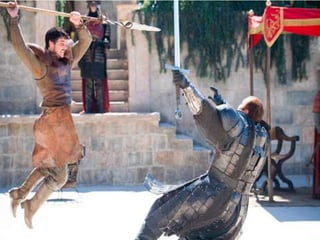
• In trial by combat, two knights face each other,
and the accused one had to win to prove his or
her innocence
• Who suffered most in feudalism?
• What improvements in agriculture helped
move the center of Western civilization to
northern Europe?
• What problems did the Church face in the
Middle Ages?
• How the Church adapted to become an
important part of daily life in feudal times?
Who Suffered Most in Feudalism?
• The other people living in the manor were the servants,
skilled freemen (artisans, entertainers, etc.) and the peasant
serf farmers
• They lived under the lord’s authority and depended on him
for their living
• The serf owed their lord certain payments
• They were required to work for the lord 3 days a week in the
farm or house
• Each peasant paid rent for their small farm, fees for using the
mill for grinding grains and the ovens for baking bread
• Serfs often paid their fees with grain, woven cloth, chickens
or eggs
• The poor had no hope of escaping poverty
What Improvements in Agriculture Helped
Move the Center of Western Civilization to
Northern Europe?
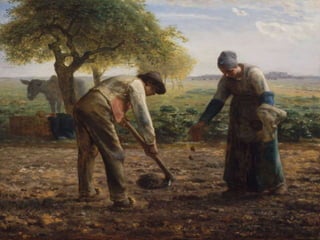
• New inventions also grew more food
• These inventions included the iron plow, the
horseshoe, harness, the use of the horse
instead of an oxen, the watermill and windmill
• In northern Europe, miners produced great
quantities of iron for farming tools, as well as
weapons and plows
• The windmills and watermills provided new
sources of energy for grinding grain
• The improvements in agriculture led to food
surpluses which supported a growing
population
• As the population of Northern Europe
increased, the center of Western civilization
shifted from Southern Europe(Italy) to
Northern Europe (France, England, Germany)
What Problems did the Church Face
During the Middle Ages?
In the early Middle Ages, the Church faced 2
problems
• Converting Non-Christians
• Adapting Church Organization to new
circumstances
The barbarian tribes were converted one by one
because of the influence of women and
missionaries
How the Church Adapted to Become
an Important Part of Feudal Life?
The Church influenced every aspect of feudal life.
• The Church officials gave blessings at ceremonies
for knighthood, baptisms, weddings or deaths
Officials documents were notarized by a member of
the clergy
Knights waged war in the name of the Christian
ideals
Feuds and wars can only be stopped when the
Church declared the truce of God or a period of
peace
Evil Effects of Feudalism
1. Created an aristocracy or upper class that
was selfish, greedy and snobbish
2. It delayed the formation of national states
because strong feudal lords had no national
consciousness or love of nation
3. It perpetuated the worst kind of economy,
without opportunities for the poor
4. The Church grew into absolute power, due to
its union with feudal authorities
Decline of Feudalism
1. The Crusades
2. The growth of towns and cities
3. The rise of kings and a more centralized
government
4. The introduction of new weapons of warfare
5. The Renaissance and Reformation which
changed the cultural and religious attitudes
of people
• What sparked the Crusades?
• Why were both sides fighting a holy war?
• What important events in the Crusades
influenced world history?
• Which two events in the Crusades shocked the
Christendom?
• Why the Battle of Lepanto did not stop the
Muslim control of the Mediterranean?
• Why were the Crusades a failure?
• Who really won the Crusades?
What Sparked the Crusades?
• The capture of the city of Jerusalem by the
Seljuk Moors in 1055 was the immediate spark
that ignited the first Crusade
• The Moors destroyed sites holy to
Christendom, massacred Christians, and
closed the Holy Land to pilgrims and trade
What is a Crusade?
A Crusade was a holy war declared by the Pope who
commanded the kings and nobles into a military
expedition
The word “crusade” today means a harmless prayer to a
Christian but to a Muslim it is the declaration of war
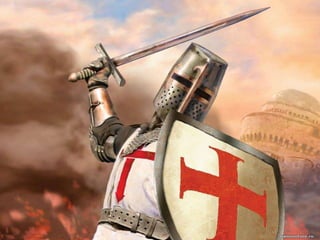
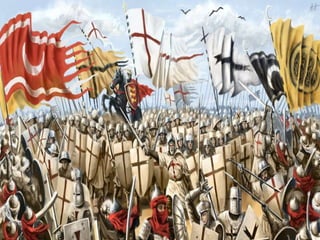
• A Christian warrior’s emblem was a red cross on his
armor and on his shield
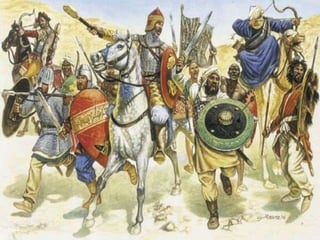
• The Moors also regarded the wars as their jihad (holy
war) against enemies of Islam
• Their emblem was a red crescent, the sign of Islam
• At least 9 were regular crusades against the Moors in
the Holy Land
Why were both sides Fighting a Holy
War?
• The crusaders joined the Crusade because the
popes granted them plenary indulgence (total
pardon) for their sins and the promise of
immediate entry into heaven if they died
(avoiding purgatory)
• Thus each side thought he was participating in
a holy war for religion and glory
• They had promises of spiritual and material
rewards
What Important Events in the
Crusades Influenced World History?
1. Pope Urban II called for the First Crusade to the
Holy Land (1066-1099). The battle cry of the
crusaders to their enemies was “It is the will of
God!” It is the only successful crusade. The
Christians briefly captured Jerusalem but
eventually they lost it and all they gained
2. Two famous organizations originated from the
crusades. The St. John’s Knights and the Knights
Templar. They became the Masonic Society, a
worldwide brotherhood.
3. The Third Crusade (1189-92) was known as the
“Crusade of Kings” because it included Richard of
Lionhearted of England, Philip Augustus of France
and Frederick Barbarossa of Germany. The Syrian
folk hero, Saladin, defeated all three kings and
leaped into his place in world history
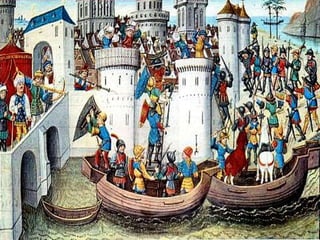
4. The Fourth Crusade (1104) was rerouted to
Constantinople, where the Roman Catholic
knights burned and looted the city, and
massacred the unprepared Byzantine Orthodox
knights. The bloody battle between brothers in
the faith shocked the Christendom
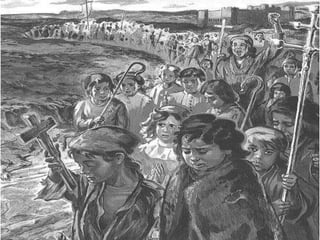
5. In the Children's Crusade (1212), about 30,000
boys and girls, aged nine to twelve, left home and
marched to the Holy Land on foot, thinking they
would be protected by their religious signs and
relics. Most children were killed or taken into
slavery. The tragedy shocked the world
6. In Europe, Catholic Spain won the crusades
against the Moors in Andalucía ( 719-1492) Out of
these wars came the story of Rodrigo Vivar (El
Cid)m the greatest Spanish knight and the joint
monarchy of Ferdinand and Isabella, the first kings
of Spain
7. In the 16th century, Legazpi and his troops
were filled with crusade fever after learning that
there were Moorish raiding parties and
flourishing kingdoms in the Philippines. Had it
not been for their crusading zeal, the Philippines
might have become mostly Muslim, like nearby
countries. Hence the Spanish-Moro wars in the
Philippines were the real “Last Crusades”
What Two Events in the Crusades
Shocked the Christendom?
• The Fourth Crusade
• The Fifth Crusade (Children’s Crusade)
Battle of Lepanto
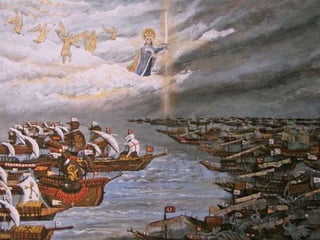
• In Europe, the Battle of Lepanto (1571) was the last
Crusade
• The Ottoman Turks attempted to invade Europe after
the fall of Constantinople and their control of the
Mediterranean
• Spain being the defender of Christianity was asked by
the Pope to stop the Moorish naval invasion
• Philip II hastily organized a coalition navy made up of
Spanish, Austrian and Italian ships and placed it under
the command of his stepbrother Don Juan of Austria
Why did the Battle of Lepanto did not Stop the
Muslims Control of the Mediterranean?
• The Christian fleet decisively defeated the
Turkish navy and stopped their naval invasion
of Europe.
• However, the Turks soon rebuilt their navy and
closed the Mediterranean to Christian voyages
anyways
Why were the Crusades a Failure?
Historians regard the crusades as an overall
miserable failure for the Christian popes and
nobles, who started them.
• The successive failures of the crusades killed
the enthusiasm of European popes and nobles
to fight anymore.
• Relations worsened between the two main
Christian empires due to the crusaders
invading who invaded Byzantine in 1104
Who really won the Crusades?
The Turkish Moors conquered all of the Holy
Land and the Mediterranean Sea and closed the
land and sea routes to Christians for centuries
Unintended Benefits of the Crusades
1. Europeans came in direct contact with the advanced
civilization of the East and developed a knowledge
and liking for their innovations of the East
2. The Crusades created a demand for the exotic goods
from the more developed world of Asia (spices,
medicine, fruits, cloth, weapons)
3. The need arose for a new route to the East by sailing
Westwards, thus the Age of Western exploration and
discovery
4. The Crusades quite literally killed off feudalism, due
to the many deaths of feudal lords and knights in the
Crusades.
• How did the free cities practice democracy in the
medieval ages?
• Why was the money economy better than the land
economy?
• Why did merchants and skilled craftsmen prosper?
• Why did a learning revival produced new knowledge?
• What did universities do during medieval times?
• Why was medieval science unable to stop the Black
Death?
• What were the exceptions to the religious themes in
medieval art and music?
Those who returned home were broke and
could not defy their kings, pay their merchant
creditors or oppose the people.
This created a new political economy that led to
the Age of Kings, the beginning of mercantilism
How the Free Cities Practice
Democracy in Medieval Times?
• The crusaders died or came home broke. To
wipe off their debts to the bankers and
merchants, the nobles transferred the land to
them and agreed to a written charter of
freedom
• The medieval towns and cities were the
cradles of modern democracy and capitalism
• They learned to exercise the right to elections,
make laws and to enforce laws
Why was the Money Economy better
than the Land Economy?
• In the feudal era, goods and services were
exchanged by the barter system
• The main source of feudal wealth was the land
and that was not easy to exchange
• The money economy was gold or silver coins or
credit notes, very easy to handle and to
exchange.
• In order to buy or sell goods and services, all you
had to do was “show me the money”
• The system invented in Western Europe was
more widespread than the earlier ones in Asia
Why did skilled merchants and
craftsmen prosper?
• In the towns were merchant or craft guilds, or
associations of businessmen and skilled
workers.
• Their main purpose was economic protection
of the members
• By uniting their members into a guild, they
became strong political group
• They could now stand up to the kings, nobles,
or even town leaders
What did Universities do during
Medieval times?
• In some towns, scholars set up medieval
centers of learning that grew into universities
• The first university was an associations of
students and teachers like medieval guilds
• Soon they obtained official charters, just as
towns had, which gave them academic
freedom
• The teaching language was Latin
The Black Death
• The Black Death came from the Mongol invasions in
Asia and the trade and migration routes to Europe
• The disease was called the “Black Death” because of
the color of the victims as they died from bubonic
plague
• It is estimated that the Black Death killed 30% of
Europe’s population
• Reduced medieval world population from 450 million
to 350 million
• The Black Death had a profound effect on the religious,
social and economic life in Europe
Why was Medieval Science unable to
stop the Black Death?
• Many believed that illness was due to evil
spirits or some punishments from God
• During the first outbreak of the Black Death or
the bubonic plague in Europe (1347-51), the
victims only said, “It is the will of God!”
• Others prayed for a cure
• Some people went on pilgrimages to holy
shrines, and prayed for a miracle
• After it peaked in the mid-14th century, the
plague appeared from time to time in lesser
epidemics
• Europe did not recover its vitality and strength
until the 16th century
What were the Exceptions to the Religious
Themes in Medieval Arts and Music?
• Medieval art and music also had religious themes
• Churches had sculptured figures of saints and
grotesque evil spirits, or scenes from religious
history
• Medieval art and music hardly departed from the
officially approved religious themes, in order not
to offend the all powerful Roman Church
• The only exceptions were the portrait busts,
statues and paintings of the rich and famous; the
tales of romance and adventure sang by
troubadours and the funny court jesters at castle
feasts
The Middle Ages

The Middle Ages

  • 1.
    THE MIDDLE AGES By:Moko, Eva, Jane, Game CHAPTER 10
  • 2.
    What is theMiddle Ages? • The Middle Ages was the period from the fall of Rome to the Renaissance. • Also known as the “Dark Ages” • It had suffered the loss of two successive empires (Roman & Byzantine) and had not recovered from their losses. Split into 2 Historical Periods • The Early Middle Ages • The Late Middle Ages
  • 3.
    The Holy RomanEmpire • Why was Charlemagne was the greatest medieval king? • Why did the Pope crowned him as the new emperor? • Why was the Holy Roman Empire a fake empire?
  • 4.
    The Franks • Thestrongest kingdom to emerge from the fall of Rome. • Rose to power in the late 15th century under the ruthless leadership of Clovis (466-511) • Clovis increased the lands of the Roman Catholic Church • Crushed the Arian heretics, who threatened the Pope • After Clovis the successors were weak
  • 5.
    • Chief ministerCharles Martel became the leader of the Franks kingdom • Defeated the Moors in the Battle of Tours (732 AD) • Stopped the advancement of Islam into Western Europe by land • Founded the Carolingian Dynasty • Organized a strong central government
  • 7.
    Who is Charlemagne? •An able general who conquered an empire that reunited large areas of the former Western Roman Empire • 768-814 • Was a part of the Franks kingdom • Grandson of Charles Martel • Made the Franks the most successful former barbarians and the most loyal Christian of all tribes.
  • 9.
    Why was Charlemagnewas the greatest medieval king? • He forced all that he conquered to be baptized into the Roman Catholic Church • Thus, increased the number of nominal Christians in the West • He insisted on an orderly and settled life for the people • Supported the Church to organize parishes or rural districts with each having its own priest
  • 10.
    • Required allChristians to pay the tithe ( ten percent of their income) to the Church • Established schools for the people • Made the language of the Franks (French) to become the most widely used language among the literate in Europe, apart from Latin
  • 11.
    Why did thePope crowned him as the new emperor? On December 5 800 AD, at St. Peter’s Church in Rome, a large crowd of the most important people in Christendom had just finished the mass led by Pope Leo III himself. To everyone’s surprise the Pope walked over to the kneeling Charlemagne, placed a golden crown on his head and proclaimed him as “Emperor of the Romans”. • The Pope wanted to establish the idea that popes can grant the power to name kings into office. • By crowning Charlemagne as “emperor” the Pope really wanted to organize a new empire in Europe to oust the rival empire in Byzantium. • But Charlemagne was not comfortable with this idea
  • 12.
    • After thedeath of Charlemagne (814 AD), the dynasty broke up • Split into 3 separate kingdoms France, Germany and Italy • To unite them Otto the Great (912-973) the Duke of Saxony (Germany) started the Holy Roman Empire • But it was a fake empire • Lasted for 844 years (962-1806)
  • 14.
    Why was theHoly Roman Empire a fake empire? • The “emperor” of the Holy Roman Empire was only a symbolic figurehead, without real powers • He was elected for a limited time, and presided over the members, who could ignore him • None of the “emperors” was a Roman or an absolute ruler • The main role of the new emperor was really to defend and protect the Roman Catholic Pope against other troublesome Christians especially the ones at the Byzantine empire (Protestants) • In the 18th century French philosopher Voltaire ridiculed it as “neither holy, nor Roman, nor an empire” due to its weakness, lack of unity and unchristian purposes
  • 15.
    • How didfeudalism and the nobles rise to power? • The importance of feudal contracts, feudal lord, fiefs, vassals, the manor, knights and word of honor. • Why did chivalry matter? • How did the feudal life affect women, homes, health, amusements and law?
  • 16.
    Feudalism means asocio-economic system based on land ownership by a few wealthy people Not a unified, single system Age of Feudalism is when Europe broke up into 3 separate kingdoms • France • Germany • Italy The most prominent features of feudalism were the nobles, knights, serfs and crusades
  • 17.
  • 18.
    • Grew outof barbaric customs • To fight for the leader and the leader shall provide for their needs • Able to protect and control the common people who lived in their feudal lands because they had an army of knights under their personal employment • While remaining loyal to their national king, the feudal lords usually acted independently • The feudal lords were in charge of their lands not the national king Rise of Feudalism
  • 19.
    How did feudalismand nobles rise to power? • Because of the lack of a strong central government, the region broke up into small feudal estates, where the nobles lived like small kings • It grew out of the custom of rewarding military lords for their services. • In 8th century Charles Martel had no money to pay for his officers. So he gave them land. • The officers became feudal lords
  • 20.
    3 Contributions tothe growth of Feudalism 1. The Feudal Lords 2. The Stirrup (Horse Saddle) 3. The Feudal Contracts
  • 21.
    Importance of FeudalLords • Provides the knights with armor, horses and training • Gives the common people and knights land to live on • Provides the common people with protection
  • 23.
    Importance of Vassals Vassalmeans lesser lord • Under the contract of a lord a vassal gets a fief range depending on the importance of the vassal • The lord still owned the land but the vassal had the right to use it and pass it on to their heirs • Gives the lord military services for about 40 days a year • Pays an annual rent like ransom for the lord if he were kidnapped, or for the marriage of the lord’s daughter or son’s knighting
  • 24.
    Importance of FeudalContracts Feudal Contracts meaning is an unwritten exchange of rights and duties between nobles and the lower people • Grants the permission of giving lands in exchange for services
  • 25.
    Importance of Fiefs Fiefis an estate of range of land usually a few hectares that can owned by a vassal • Provides space to build homes, farms and other important building for the people • Where the common people can live
  • 26.
    Importance of Manors AManor or a Feudal Land is owned by a nobleman or feudal lord, who passed it from generation to generation in the family • It included a castle, other houses, farms and forests • Provided living space for a feudal lord and had space for farming
  • 28.
    Importance of Knights •Knights are armed soldiers underemployment of a feudal lord given to by the vassal • They ride on horses, wear protective armor and carry heavy weapons such as a sword • They protect the feudal land and its citizens • They go to warfare with other feudal lands • An army of knights destroy crops, seize their animals and women and burn down homes of other feudal lands
  • 30.
    Importance of Wordof Honor • Word of Honor a pledge of one's honor that a specified condition or a bargain will be fulfilled • Sets boundaries • Provides trust for both people agreeing to a word of honor • Forms alliances
  • 31.
    • Feudal noblesdeveloped a code of conduct called chivalry • The code of chivalry mattered because it combined Christian values and virtues of being a warrior • Dictates the rules of fighting • A knight was expected to be brave, loyal, generous and courteous. He was supposed to protect and respect noblewomen and defends his family’s honor • The rules were not always followed • Did not apply to peasants and common women • The nobility look down on the poor and the latter were at the mercy of the rich and powerful
  • 32.
    Why did Chivalrymatter? • Chivalry promoted ways of behavior that reduced the brutality of a fighting age • It gave the impression that the former barbarians who were now Christians that they had left their shameful past behind (but really they didn’t) • Placed noblewomen on a pedestal as objects to be loved or protected
  • 34.
    How did Feudallife affect Women? • The feudal life was really dull, dirty, cold and short. • A noble, knight or peasants' life span was short or perhaps no more than 30 or 35 years of age • Hence, a woman’s first duty was to raise a large family, whether she was a noblewoman or a commoner • A big family ensured continuity of the family line, especially if she gave birth to boys
  • 36.
    How did Feudallife affect Homes? • Medieval homes had no toilets, running water or heater • They had feasts that were loud and long for at there was big fireplace in the hall • They did not have eating implements or porcelain plates
  • 38.
    How did Feudallife affect Health? • Medieval folks had a phobia for taking baths, because it could make them sick • They had poor hygiene, drink too much and the fighting killed off people young • So people got sick very often • Their medicine were bizarre and mostly don’t work • A lot of people die everyday
  • 40.
    How did Feudallife affect Amusement? • The feudal lords and knights loved dueling or friendly tournaments. It gave them a chance to practice and display their fighting skills • Next to feasting and fighting, the upper class went on hunts for wild boars or deer in vast forests. They even trained falcons to hunt • They had an occasional medieval fair • There were also important festivals such as Christmas and Easter
  • 42.
    How did Feudallife affect Law? • Trial by combat or ordeal • All free people had the right to be tried by their peers (trial by jury) • But for serious crimes, the accused had 2 choices • One, he or she chose to prove innocence by an ordeal, like carrying a burning hot iron without being burned or two swimming a long distance without drowning. • In trial by combat, two knights face each other, and the accused one had to win to prove his or her innocence
  • 44.
    • Who sufferedmost in feudalism? • What improvements in agriculture helped move the center of Western civilization to northern Europe? • What problems did the Church face in the Middle Ages? • How the Church adapted to become an important part of daily life in feudal times?
  • 45.
    Who Suffered Mostin Feudalism? • The other people living in the manor were the servants, skilled freemen (artisans, entertainers, etc.) and the peasant serf farmers • They lived under the lord’s authority and depended on him for their living • The serf owed their lord certain payments • They were required to work for the lord 3 days a week in the farm or house • Each peasant paid rent for their small farm, fees for using the mill for grinding grains and the ovens for baking bread • Serfs often paid their fees with grain, woven cloth, chickens or eggs • The poor had no hope of escaping poverty
  • 47.
    What Improvements inAgriculture Helped Move the Center of Western Civilization to Northern Europe? • New inventions also grew more food • These inventions included the iron plow, the horseshoe, harness, the use of the horse instead of an oxen, the watermill and windmill • In northern Europe, miners produced great quantities of iron for farming tools, as well as weapons and plows • The windmills and watermills provided new sources of energy for grinding grain
  • 48.
    • The improvementsin agriculture led to food surpluses which supported a growing population • As the population of Northern Europe increased, the center of Western civilization shifted from Southern Europe(Italy) to Northern Europe (France, England, Germany)
  • 49.
    What Problems didthe Church Face During the Middle Ages? In the early Middle Ages, the Church faced 2 problems • Converting Non-Christians • Adapting Church Organization to new circumstances The barbarian tribes were converted one by one because of the influence of women and missionaries
  • 50.
    How the ChurchAdapted to Become an Important Part of Feudal Life? The Church influenced every aspect of feudal life. • The Church officials gave blessings at ceremonies for knighthood, baptisms, weddings or deaths Officials documents were notarized by a member of the clergy Knights waged war in the name of the Christian ideals Feuds and wars can only be stopped when the Church declared the truce of God or a period of peace
  • 51.
    Evil Effects ofFeudalism 1. Created an aristocracy or upper class that was selfish, greedy and snobbish 2. It delayed the formation of national states because strong feudal lords had no national consciousness or love of nation 3. It perpetuated the worst kind of economy, without opportunities for the poor 4. The Church grew into absolute power, due to its union with feudal authorities
  • 52.
    Decline of Feudalism 1.The Crusades 2. The growth of towns and cities 3. The rise of kings and a more centralized government 4. The introduction of new weapons of warfare 5. The Renaissance and Reformation which changed the cultural and religious attitudes of people
  • 53.
    • What sparkedthe Crusades? • Why were both sides fighting a holy war? • What important events in the Crusades influenced world history? • Which two events in the Crusades shocked the Christendom? • Why the Battle of Lepanto did not stop the Muslim control of the Mediterranean? • Why were the Crusades a failure? • Who really won the Crusades?
  • 54.
    What Sparked theCrusades? • The capture of the city of Jerusalem by the Seljuk Moors in 1055 was the immediate spark that ignited the first Crusade • The Moors destroyed sites holy to Christendom, massacred Christians, and closed the Holy Land to pilgrims and trade
  • 55.
    What is aCrusade? A Crusade was a holy war declared by the Pope who commanded the kings and nobles into a military expedition The word “crusade” today means a harmless prayer to a Christian but to a Muslim it is the declaration of war • A Christian warrior’s emblem was a red cross on his armor and on his shield • The Moors also regarded the wars as their jihad (holy war) against enemies of Islam • Their emblem was a red crescent, the sign of Islam • At least 9 were regular crusades against the Moors in the Holy Land
  • 58.
    Why were bothsides Fighting a Holy War? • The crusaders joined the Crusade because the popes granted them plenary indulgence (total pardon) for their sins and the promise of immediate entry into heaven if they died (avoiding purgatory) • Thus each side thought he was participating in a holy war for religion and glory • They had promises of spiritual and material rewards
  • 59.
    What Important Eventsin the Crusades Influenced World History? 1. Pope Urban II called for the First Crusade to the Holy Land (1066-1099). The battle cry of the crusaders to their enemies was “It is the will of God!” It is the only successful crusade. The Christians briefly captured Jerusalem but eventually they lost it and all they gained 2. Two famous organizations originated from the crusades. The St. John’s Knights and the Knights Templar. They became the Masonic Society, a worldwide brotherhood.
  • 60.
    3. The ThirdCrusade (1189-92) was known as the “Crusade of Kings” because it included Richard of Lionhearted of England, Philip Augustus of France and Frederick Barbarossa of Germany. The Syrian folk hero, Saladin, defeated all three kings and leaped into his place in world history 4. The Fourth Crusade (1104) was rerouted to Constantinople, where the Roman Catholic knights burned and looted the city, and massacred the unprepared Byzantine Orthodox knights. The bloody battle between brothers in the faith shocked the Christendom
  • 61.
    5. In theChildren's Crusade (1212), about 30,000 boys and girls, aged nine to twelve, left home and marched to the Holy Land on foot, thinking they would be protected by their religious signs and relics. Most children were killed or taken into slavery. The tragedy shocked the world 6. In Europe, Catholic Spain won the crusades against the Moors in Andalucía ( 719-1492) Out of these wars came the story of Rodrigo Vivar (El Cid)m the greatest Spanish knight and the joint monarchy of Ferdinand and Isabella, the first kings of Spain
  • 62.
    7. In the16th century, Legazpi and his troops were filled with crusade fever after learning that there were Moorish raiding parties and flourishing kingdoms in the Philippines. Had it not been for their crusading zeal, the Philippines might have become mostly Muslim, like nearby countries. Hence the Spanish-Moro wars in the Philippines were the real “Last Crusades”
  • 64.
    What Two Eventsin the Crusades Shocked the Christendom? • The Fourth Crusade • The Fifth Crusade (Children’s Crusade)
  • 67.
    Battle of Lepanto •In Europe, the Battle of Lepanto (1571) was the last Crusade • The Ottoman Turks attempted to invade Europe after the fall of Constantinople and their control of the Mediterranean • Spain being the defender of Christianity was asked by the Pope to stop the Moorish naval invasion • Philip II hastily organized a coalition navy made up of Spanish, Austrian and Italian ships and placed it under the command of his stepbrother Don Juan of Austria
  • 69.
    Why did theBattle of Lepanto did not Stop the Muslims Control of the Mediterranean? • The Christian fleet decisively defeated the Turkish navy and stopped their naval invasion of Europe. • However, the Turks soon rebuilt their navy and closed the Mediterranean to Christian voyages anyways
  • 70.
    Why were theCrusades a Failure? Historians regard the crusades as an overall miserable failure for the Christian popes and nobles, who started them. • The successive failures of the crusades killed the enthusiasm of European popes and nobles to fight anymore. • Relations worsened between the two main Christian empires due to the crusaders invading who invaded Byzantine in 1104
  • 71.
    Who really wonthe Crusades? The Turkish Moors conquered all of the Holy Land and the Mediterranean Sea and closed the land and sea routes to Christians for centuries
  • 72.
    Unintended Benefits ofthe Crusades 1. Europeans came in direct contact with the advanced civilization of the East and developed a knowledge and liking for their innovations of the East 2. The Crusades created a demand for the exotic goods from the more developed world of Asia (spices, medicine, fruits, cloth, weapons) 3. The need arose for a new route to the East by sailing Westwards, thus the Age of Western exploration and discovery 4. The Crusades quite literally killed off feudalism, due to the many deaths of feudal lords and knights in the Crusades.
  • 73.
    • How didthe free cities practice democracy in the medieval ages? • Why was the money economy better than the land economy? • Why did merchants and skilled craftsmen prosper? • Why did a learning revival produced new knowledge? • What did universities do during medieval times? • Why was medieval science unable to stop the Black Death? • What were the exceptions to the religious themes in medieval art and music?
  • 74.
    Those who returnedhome were broke and could not defy their kings, pay their merchant creditors or oppose the people. This created a new political economy that led to the Age of Kings, the beginning of mercantilism
  • 75.
    How the FreeCities Practice Democracy in Medieval Times? • The crusaders died or came home broke. To wipe off their debts to the bankers and merchants, the nobles transferred the land to them and agreed to a written charter of freedom • The medieval towns and cities were the cradles of modern democracy and capitalism • They learned to exercise the right to elections, make laws and to enforce laws
  • 76.
    Why was theMoney Economy better than the Land Economy? • In the feudal era, goods and services were exchanged by the barter system • The main source of feudal wealth was the land and that was not easy to exchange • The money economy was gold or silver coins or credit notes, very easy to handle and to exchange. • In order to buy or sell goods and services, all you had to do was “show me the money” • The system invented in Western Europe was more widespread than the earlier ones in Asia
  • 77.
    Why did skilledmerchants and craftsmen prosper? • In the towns were merchant or craft guilds, or associations of businessmen and skilled workers. • Their main purpose was economic protection of the members • By uniting their members into a guild, they became strong political group • They could now stand up to the kings, nobles, or even town leaders
  • 78.
    What did Universitiesdo during Medieval times? • In some towns, scholars set up medieval centers of learning that grew into universities • The first university was an associations of students and teachers like medieval guilds • Soon they obtained official charters, just as towns had, which gave them academic freedom • The teaching language was Latin
  • 79.
    The Black Death •The Black Death came from the Mongol invasions in Asia and the trade and migration routes to Europe • The disease was called the “Black Death” because of the color of the victims as they died from bubonic plague • It is estimated that the Black Death killed 30% of Europe’s population • Reduced medieval world population from 450 million to 350 million • The Black Death had a profound effect on the religious, social and economic life in Europe
  • 80.
    Why was MedievalScience unable to stop the Black Death? • Many believed that illness was due to evil spirits or some punishments from God • During the first outbreak of the Black Death or the bubonic plague in Europe (1347-51), the victims only said, “It is the will of God!” • Others prayed for a cure • Some people went on pilgrimages to holy shrines, and prayed for a miracle
  • 81.
    • After itpeaked in the mid-14th century, the plague appeared from time to time in lesser epidemics • Europe did not recover its vitality and strength until the 16th century
  • 82.
    What were theExceptions to the Religious Themes in Medieval Arts and Music? • Medieval art and music also had religious themes • Churches had sculptured figures of saints and grotesque evil spirits, or scenes from religious history • Medieval art and music hardly departed from the officially approved religious themes, in order not to offend the all powerful Roman Church • The only exceptions were the portrait busts, statues and paintings of the rich and famous; the tales of romance and adventure sang by troubadours and the funny court jesters at castle feasts