Medieval Europe   (500 – 1500)
The  Middle Ages  or   Medieval Europe   is the 1,000 year period after the fall of Rome and before the Renaissance.
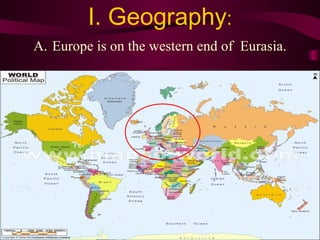
I. Geography : Europe is on the western end of  Eurasia.
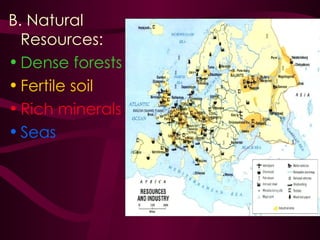
B. Natural Resources:  Dense forests Fertile soil Rich minerals Seas
II. Causes
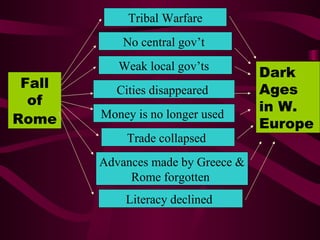
Fall of Rome   Dark Ages in W. Europe Tribal Warfare Money is no longer used   Cities disappeared   Advances made by Greece & Rome forgotten   Trade collapsed   No central gov’t   Weak local gov’ts  Literacy declined
III. Germanic Tribes A. Farmers and herders 1. No written laws  2. Divided W. Europe into small  kingdoms
Not  these  Franks!
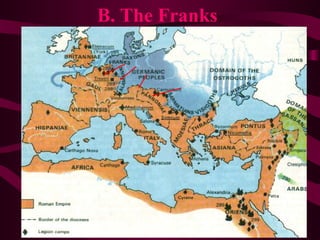
B. The Franks
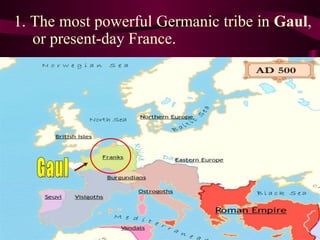
1. The most powerful Germanic tribe in  Gaul , or present-day France. Gaul
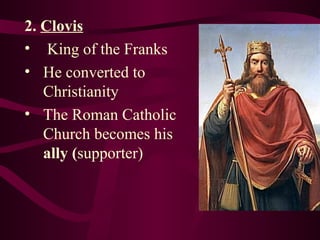
2.  Clovis King of the Franks He converted to Christianity The Roman Catholic Church becomes his  ally ( supporter)
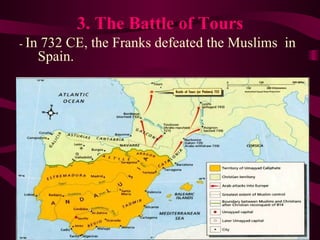
3. The Battle of Tours -  In 732 CE, the Franks defeated the Muslims  in Spain.
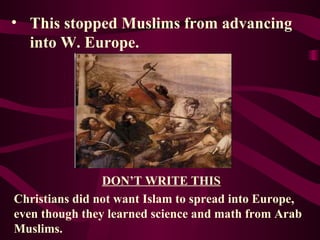
This stopped Muslims from advancing into W. Europe.  DON’T WRITE THIS Christians did not want Islam to spread into Europe, even though they learned science and math from Arab Muslims.
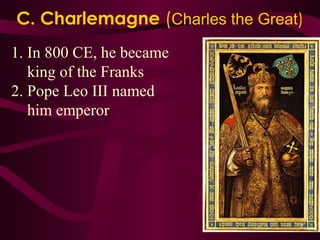
C. Charlemagne  ( Charles the Great ) 1. In 800 CE, he became  king of the Franks 2. Pope Leo III named  him emperor
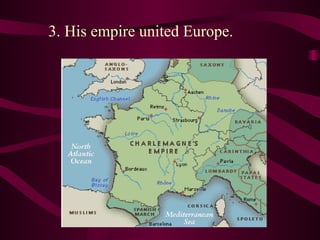
3. His empire united Europe.
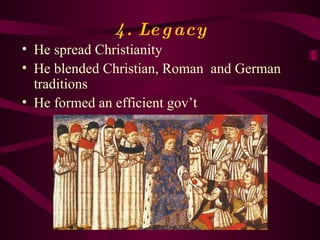
4. Legacy He spread Christianity He blended Christian, Roman  and German traditions He formed an efficient gov’t
Charlemagne  tried to  revive  learning  He set up schools to educate officials and children. Edumacation!
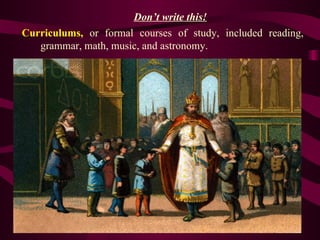
Curriculums,  or formal courses of study, included reading, grammar, math, music, and astronomy. Don’t write this!
D. New Attacks 1. After Charlemagne’s death in 814 CE, Muslims, Magyars and Vikings attacked.
Peace Out, Charlemagne! When Charlemagne died in 814, his empire fell apart as his heirs fought over it. Don’t write this!
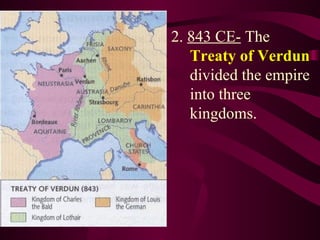
2.  843 CE-  The  Treaty of Verdun  divided the empire into three kingdoms.
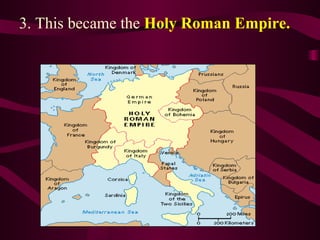
3. This became the  Holy Roman Empire.
Life in Medieval Europe   (500 – 1500 CE)
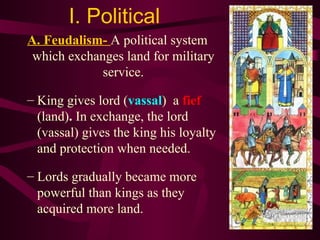
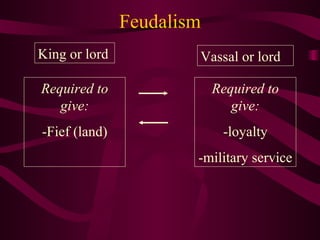
I. Political  A. Feudalism-  A political system which exchanges land for military service. King gives lord ( vassal )   a  fief  (land) .   In exchange, the lord (vassal) gives the king his loyalty and protection when needed.  Lords gradually became more powerful than kings as they acquired more land.
Feudalism King or lord Required to give: -Fief (land) Vassal or lord Required to give: -loyalty -military service
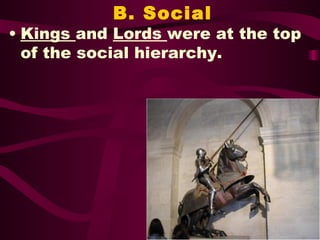
B. Social Kings  and  Lords  were at the top of the social hierarchy.
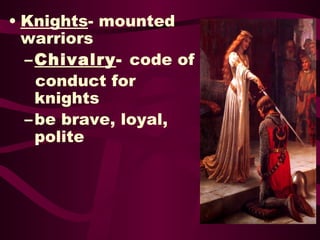
Knights - mounted warriors Chivalry -  code of  conduct for knights  be brave, loyal, polite
 
 
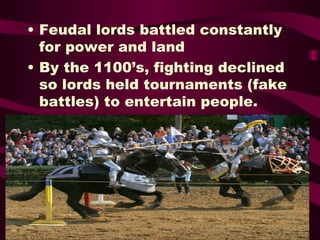
Feudal lords battled constantly for power and land By the 1100’s, fighting declined so lords held tournaments (fake battles) to entertain people.
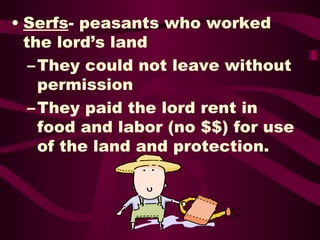
Serfs - peasants who worked the lord’s land  They could not leave without permission They paid the lord rent in food and labor (no $$) for use of the land and protection.
DON’T WRITE THIS! Role of Women Noblewomen managed the household and were in change when men were away.  Rights: Received a limited inheritance Arranged marriages, expected to have many kids Few knew how to read and write Chivalry raised women to a new status.  They were protected and cherished.
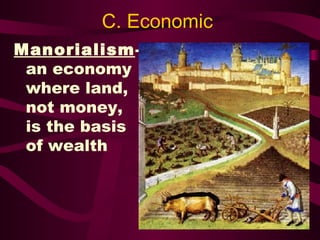
C. Economic Manorialism - an economy where land, not money, is the basis of wealth
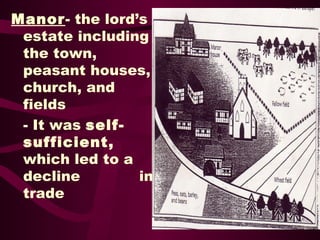
Manor - the lord’s estate including the town, peasant houses, church, and fields - It was  self-sufficient,  which led to a decline  in trade
Three-field system -  two fields planted, one left  fallow  (empty) to regain fertility
Remember Europe was  isolated  BUT, there were advanced civilizations in the Middle East, South Asia, and China!

The Early Midle Ages

  • 1.
    Medieval Europe (500 – 1500)
  • 2.
    The MiddleAges or Medieval Europe is the 1,000 year period after the fall of Rome and before the Renaissance.
  • 3.
    I. Geography :Europe is on the western end of Eurasia.
  • 4.
    B. Natural Resources: Dense forests Fertile soil Rich minerals Seas
  • 5.
  • 6.
    Fall of Rome Dark Ages in W. Europe Tribal Warfare Money is no longer used Cities disappeared Advances made by Greece & Rome forgotten Trade collapsed No central gov’t Weak local gov’ts Literacy declined
  • 7.
    III. Germanic TribesA. Farmers and herders 1. No written laws 2. Divided W. Europe into small kingdoms
  • 8.
    Not these Franks!
  • 9.
  • 10.
    1. The mostpowerful Germanic tribe in Gaul , or present-day France. Gaul
  • 11.
    2. ClovisKing of the Franks He converted to Christianity The Roman Catholic Church becomes his ally ( supporter)
  • 12.
    3. The Battleof Tours - In 732 CE, the Franks defeated the Muslims in Spain.
  • 13.
    This stopped Muslimsfrom advancing into W. Europe. DON’T WRITE THIS Christians did not want Islam to spread into Europe, even though they learned science and math from Arab Muslims.
  • 14.
    C. Charlemagne ( Charles the Great ) 1. In 800 CE, he became king of the Franks 2. Pope Leo III named him emperor
  • 15.
    3. His empireunited Europe.
  • 16.
    4. Legacy Hespread Christianity He blended Christian, Roman and German traditions He formed an efficient gov’t
  • 17.
    Charlemagne triedto revive learning He set up schools to educate officials and children. Edumacation!
  • 18.
    Curriculums, orformal courses of study, included reading, grammar, math, music, and astronomy. Don’t write this!
  • 19.
    D. New Attacks1. After Charlemagne’s death in 814 CE, Muslims, Magyars and Vikings attacked.
  • 20.
    Peace Out, Charlemagne!When Charlemagne died in 814, his empire fell apart as his heirs fought over it. Don’t write this!
  • 21.
    2. 843CE- The Treaty of Verdun divided the empire into three kingdoms.
  • 22.
    3. This becamethe Holy Roman Empire.
  • 23.
    Life in MedievalEurope (500 – 1500 CE)
  • 24.
    I. Political A. Feudalism- A political system which exchanges land for military service. King gives lord ( vassal ) a fief (land) . In exchange, the lord (vassal) gives the king his loyalty and protection when needed. Lords gradually became more powerful than kings as they acquired more land.
  • 25.
    Feudalism King orlord Required to give: -Fief (land) Vassal or lord Required to give: -loyalty -military service
  • 26.
    B. Social Kings and Lords were at the top of the social hierarchy.
  • 27.
    Knights - mountedwarriors Chivalry - code of conduct for knights be brave, loyal, polite
  • 28.
  • 29.
  • 30.
    Feudal lords battledconstantly for power and land By the 1100’s, fighting declined so lords held tournaments (fake battles) to entertain people.
  • 31.
    Serfs - peasantswho worked the lord’s land They could not leave without permission They paid the lord rent in food and labor (no $$) for use of the land and protection.
  • 32.
    DON’T WRITE THIS!Role of Women Noblewomen managed the household and were in change when men were away. Rights: Received a limited inheritance Arranged marriages, expected to have many kids Few knew how to read and write Chivalry raised women to a new status. They were protected and cherished.
  • 33.
    C. Economic Manorialism- an economy where land, not money, is the basis of wealth
  • 34.
    Manor - thelord’s estate including the town, peasant houses, church, and fields - It was self-sufficient, which led to a decline in trade
  • 35.
    Three-field system - two fields planted, one left fallow (empty) to regain fertility
  • 36.
    Remember Europe was isolated BUT, there were advanced civilizations in the Middle East, South Asia, and China!

Editor's Notes

  • #2 The Early Middle Ages