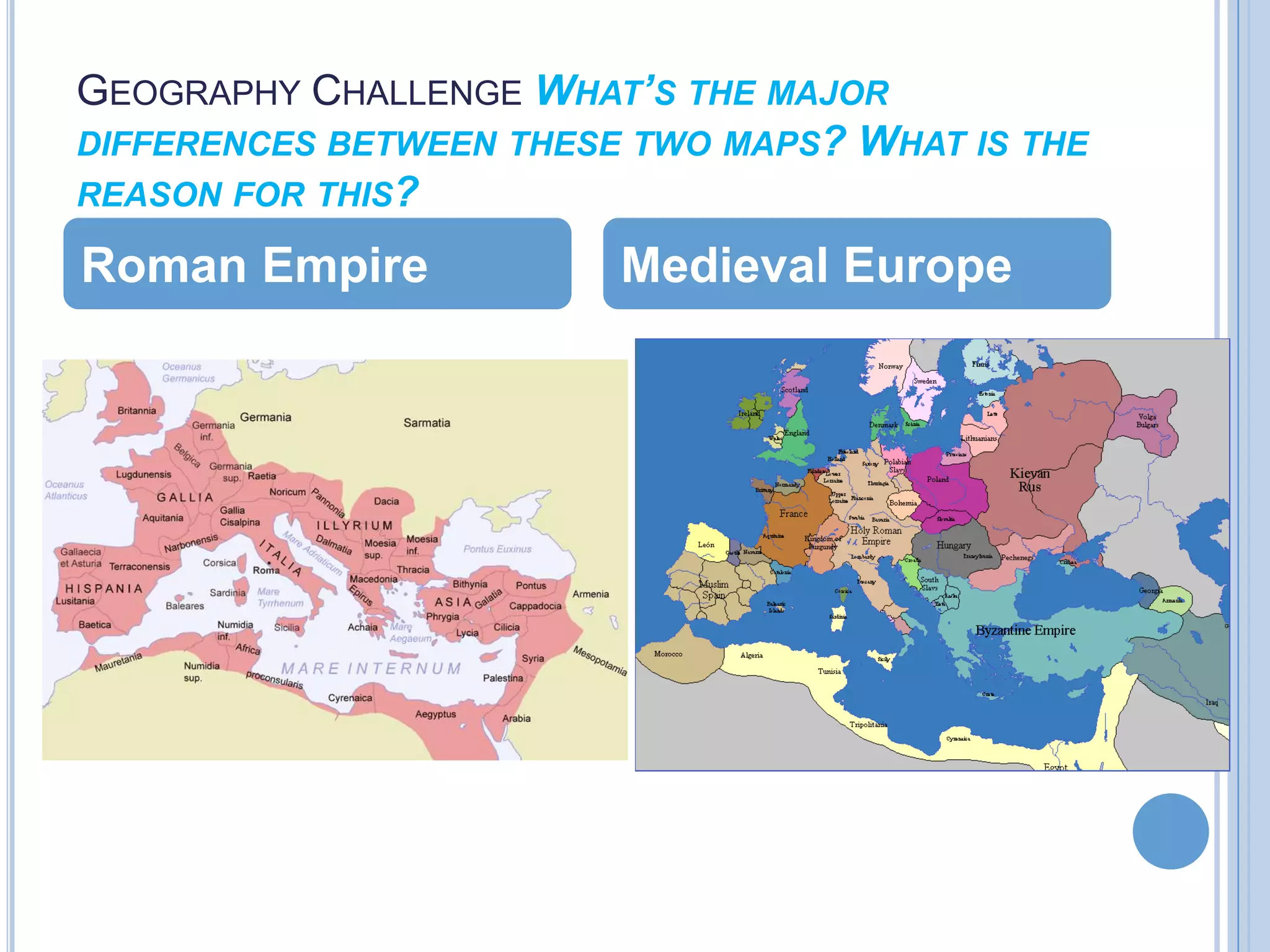
GEOGRAPHY CHALLENGE WHAT’S THE MAJOR
DIFFERENCES BETWEEN THESE TWO MAPS? WHAT IS THE
REASON FOR THIS?

Roman Empire             Medieval Europe
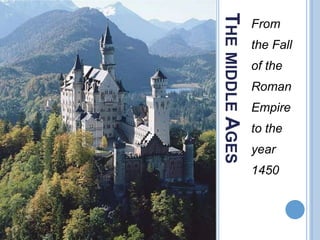
THE MIDDLE AGES
                  From
                  the Fall
                  of the
                  Roman
                  Empire
                  to the
                  year
                  1450
WHAT'S SO MIDDLE ABOUT THE MIDDLE
AGES?
               The Middle Ages
                The Dark Ages
               Medieval Period

                     Feudalism         Renaissance
                     Crusades
                    Black Death
                                       begins in Italy
                      Castles
                  Knights/ Chivalry
                    Magna Carta


   476                                 1400

             No more unity in Europe
                after the Romans
HOW WELL DID FEUDALISM ESTABLISH ORDER IN
EUROPE IN THE MIDDLE AGES?
   Fall of the Roman Empire= beginning of the Middle
    Ages

   Early Middle Ages:
     Survival was hard
     Lots of invasions and starvation


   People needed:
     Food
     Protection
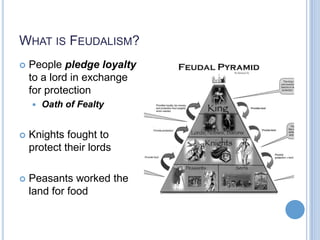
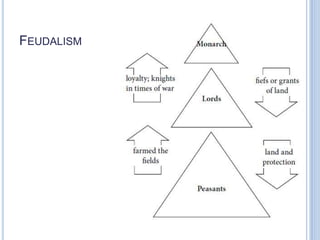
WHAT IS FEUDALISM?
   People pledge loyalty
    to a lord in exchange
    for protection
       Oath of Fealty


   Knights fought to
    protect their lords

   Peasants worked the
    land for food
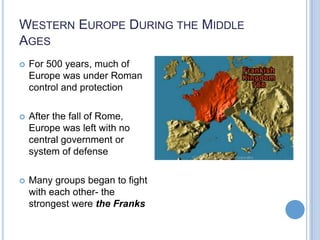
WESTERN EUROPE DURING THE MIDDLE
AGES
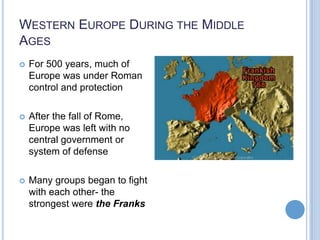
   For 500 years, much of
    Europe was under Roman
    control and protection

   After the fall of Rome,
    Europe was left with no
    central government or
    system of defense

   Many groups began to fight
    with each other- the
    strongest were the Franks
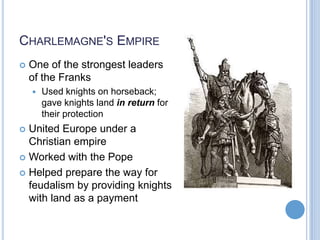
CHARLEMAGNE'S EMPIRE
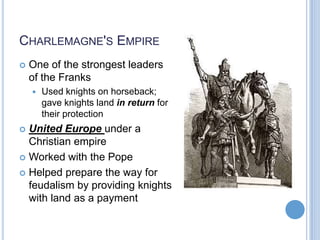
   One of the strongest leaders
    of the Franks
       Used knights on horseback;
        gave knights land in return for
        their protection
 United Europe under a
  Christian empire
 Worked with the Pope

 Helped prepare the way for
  feudalism by providing knights
  with land as a payment
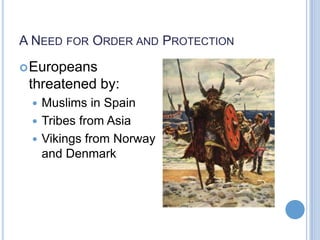
A NEED FOR ORDER AND PROTECTION
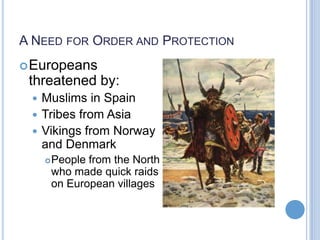
 Europeans
 threatened by:
  Muslims in Spain
  Tribes from Asia
  Vikings from Norway
   and Denmark
FEUDALISM
WESTERN EUROPE DURING THE MIDDLE
AGES
   For 500 years, much of
    Europe was under Roman
    control and protection

   After the fall of Rome,
    Europe was left with no
    central government or
    system of defense

   Many groups began to fight
    with each other- the
    strongest were the Franks
CHARLEMAGNE'S EMPIRE
   One of the strongest leaders
    of the Franks
       Used knights on horseback;
        gave knights land in return for
        their protection
 United Europe under a
  Christian empire
 Worked with the Pope

 Helped prepare the way for
  feudalism by providing knights
  with land as a payment
A NEED FOR ORDER AND PROTECTION
 Europeans
 threatened by:
  Muslims in Spain
  Tribes from Asia
  Vikings from Norway
   and Denmark
        People from the North
         who made quick raids
         on European villages
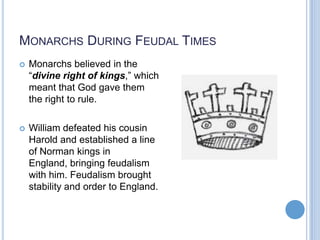
MONARCHS DURING FEUDAL TIMES
   Monarchs believed in the
    “divine right of kings,” which
    meant that God gave them
    the right to rule.

   William defeated his cousin
    Harold and established a line
    of Norman kings in
    England, bringing feudalism
    with him. Feudalism brought
    stability and order to England.
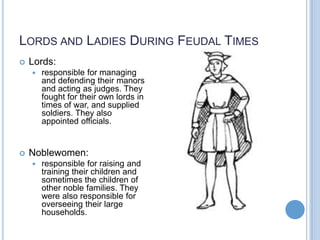
LORDS AND LADIES DURING FEUDAL TIMES
   Lords:
       responsible for managing
        and defending their manors
        and acting as judges. They
        fought for their own lords in
        times of war, and supplied
        soldiers. They also
        appointed officials.


   Noblewomen:
       responsible for raising and
        training their children and
        sometimes the children of
        other noble families. They
        were also responsible for
        overseeing their large
        households.
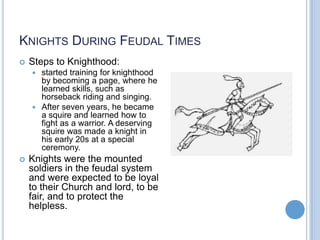
KNIGHTS DURING FEUDAL TIMES
   Steps to Knighthood:
     started training for knighthood
      by becoming a page, where he
      learned skills, such as
      horseback riding and singing.
     After seven years, he became
      a squire and learned how to
      fight as a warrior. A deserving
      squire was made a knight in
      his early 20s at a special
      ceremony.
   Knights were the mounted
    soldiers in the feudal system
    and were expected to be loyal
    to their Church and lord, to be
    fair, and to protect the
    helpless.
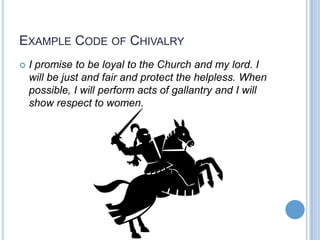
EXAMPLE CODE OF CHIVALRY
   I promise to be loyal to the Church and my lord. I
    will be just and fair and protect the helpless. When
    possible, I will perform acts of gallantry and I will
    show respect to women.
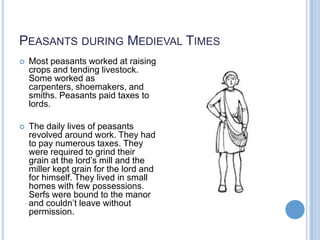
PEASANTS DURING MEDIEVAL TIMES
   Most peasants worked at raising
    crops and tending livestock.
    Some worked as
    carpenters, shoemakers, and
    smiths. Peasants paid taxes to
    lords.

   The daily lives of peasants
    revolved around work. They had
    to pay numerous taxes. They
    were required to grind their
    grain at the lord’s mill and the
    miller kept grain for the lord and
    for himself. They lived in small
    homes with few possessions.
    Serfs were bound to the manor
    and couldn’t leave without
    permission.

Feudalism Notes

  • 1.
    GEOGRAPHY CHALLENGE WHAT’STHE MAJOR DIFFERENCES BETWEEN THESE TWO MAPS? WHAT IS THE REASON FOR THIS? Roman Empire Medieval Europe
  • 2.
    THE MIDDLE AGES From the Fall of the Roman Empire to the year 1450
  • 3.
    WHAT'S SO MIDDLEABOUT THE MIDDLE AGES? The Middle Ages The Dark Ages Medieval Period Feudalism Renaissance Crusades Black Death begins in Italy Castles Knights/ Chivalry Magna Carta 476 1400 No more unity in Europe after the Romans
  • 4.
    HOW WELL DIDFEUDALISM ESTABLISH ORDER IN EUROPE IN THE MIDDLE AGES?  Fall of the Roman Empire= beginning of the Middle Ages  Early Middle Ages:  Survival was hard  Lots of invasions and starvation  People needed:  Food  Protection
  • 5.
    WHAT IS FEUDALISM?  People pledge loyalty to a lord in exchange for protection  Oath of Fealty  Knights fought to protect their lords  Peasants worked the land for food
  • 6.
    WESTERN EUROPE DURINGTHE MIDDLE AGES  For 500 years, much of Europe was under Roman control and protection  After the fall of Rome, Europe was left with no central government or system of defense  Many groups began to fight with each other- the strongest were the Franks
  • 7.
    CHARLEMAGNE'S EMPIRE  One of the strongest leaders of the Franks  Used knights on horseback; gave knights land in return for their protection  United Europe under a Christian empire  Worked with the Pope  Helped prepare the way for feudalism by providing knights with land as a payment
  • 8.
    A NEED FORORDER AND PROTECTION  Europeans threatened by:  Muslims in Spain  Tribes from Asia  Vikings from Norway and Denmark
  • 9.
  • 10.
    WESTERN EUROPE DURINGTHE MIDDLE AGES  For 500 years, much of Europe was under Roman control and protection  After the fall of Rome, Europe was left with no central government or system of defense  Many groups began to fight with each other- the strongest were the Franks
  • 11.
    CHARLEMAGNE'S EMPIRE  One of the strongest leaders of the Franks  Used knights on horseback; gave knights land in return for their protection  United Europe under a Christian empire  Worked with the Pope  Helped prepare the way for feudalism by providing knights with land as a payment
  • 12.
    A NEED FORORDER AND PROTECTION  Europeans threatened by:  Muslims in Spain  Tribes from Asia  Vikings from Norway and Denmark  People from the North who made quick raids on European villages
  • 13.
    MONARCHS DURING FEUDALTIMES  Monarchs believed in the “divine right of kings,” which meant that God gave them the right to rule.  William defeated his cousin Harold and established a line of Norman kings in England, bringing feudalism with him. Feudalism brought stability and order to England.
  • 14.
    LORDS AND LADIESDURING FEUDAL TIMES  Lords:  responsible for managing and defending their manors and acting as judges. They fought for their own lords in times of war, and supplied soldiers. They also appointed officials.  Noblewomen:  responsible for raising and training their children and sometimes the children of other noble families. They were also responsible for overseeing their large households.
  • 15.
    KNIGHTS DURING FEUDALTIMES  Steps to Knighthood:  started training for knighthood by becoming a page, where he learned skills, such as horseback riding and singing.  After seven years, he became a squire and learned how to fight as a warrior. A deserving squire was made a knight in his early 20s at a special ceremony.  Knights were the mounted soldiers in the feudal system and were expected to be loyal to their Church and lord, to be fair, and to protect the helpless.
  • 16.
    EXAMPLE CODE OFCHIVALRY  I promise to be loyal to the Church and my lord. I will be just and fair and protect the helpless. When possible, I will perform acts of gallantry and I will show respect to women.
  • 17.
    PEASANTS DURING MEDIEVALTIMES  Most peasants worked at raising crops and tending livestock. Some worked as carpenters, shoemakers, and smiths. Peasants paid taxes to lords.  The daily lives of peasants revolved around work. They had to pay numerous taxes. They were required to grind their grain at the lord’s mill and the miller kept grain for the lord and for himself. They lived in small homes with few possessions. Serfs were bound to the manor and couldn’t leave without permission.