Europe during the Middle
Ages
Periodization
 The Middle Ages lasted from approximately 500
to 1500 CE.
 The medieval era is broken down into three phases
 Early Middle Ages: ca. 500 – 1000 CE
 Political decentralization
 High Middle Ages: ca. 1000 – 1300 CE
 Revival
 Nations became defined
 Economy grew healthier
 Late Middle Ages: ca. 1300 – 1500 CE
 Crisis and advancement
 Social Unrest, Warfare, and the Black Death
 The Renaissance
Feudalism
 After the collapse of the Roman Empire, no single ruler
was able to provide Europe with Central Authority
 No power, no money, or military strength
 The solution was: Feudalism
 Lords and Monarchs award land to loyal followers (vassals).
 In exchange, the vassals guaranteed that
 their parcel of land (fief) would be governed
 Law and justice would be dispensed
 Crops would be grown
 The land would be protected.
Feudalism
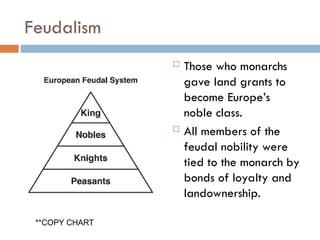
 Those who monarchs
gave land grants to
become Europe’s
noble class.
 All members of the
feudal nobility were
tied to the monarch by
bonds of loyalty and
landownership.
**COPY CHART
Feudalism
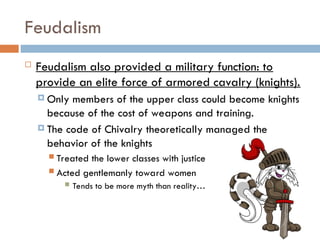
 Feudalism also provided a military function: to
provide an elite force of armored cavalry (knights).
 Only members of the upper class could become knights
because of the cost of weapons and training.
 The code of Chivalry theoretically managed the
behavior of the knights
 Treated the lower classes with justice
 Acted gentlemanly toward women
 Tends to be more myth than reality…
Manorialism
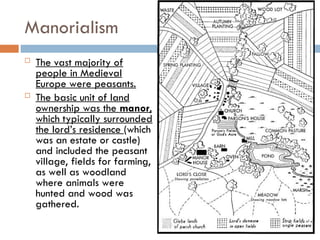
 The vast majority of
people in Medieval
Europe were peasants.
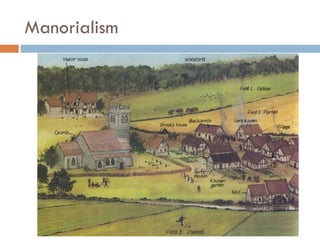
 The basic unit of land
ownership was the manor,
which typically surrounded
the lord’s residence (which
was an estate or castle)
and included the peasant
village, fields for farming,
as well as woodland
where animals were
hunted and wood was
gathered.
Manorialism
Economy of the Middle Ages
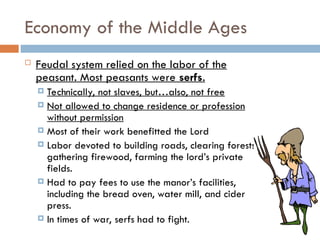
 Feudal system relied on the labor of the
peasant. Most peasants were serfs.
 Technically, not slaves, but…also, not free
 Not allowed to change residence or profession
without permission
 Most of their work benefitted the Lord
 Labor devoted to building roads, clearing forests,
gathering firewood, farming the lord’s private
fields.
 Had to pay fees to use the manor’s facilities,
including the bread oven, water mill, and cider
press.
 In times of war, serfs had to fight.
Christianity
 Christianity acted as a binding force for European
nations following the fall of Rome.
 Cultural and Political unification…
 Monasteries preserve Latin and Greek manuscripts
from the Roman Era
 Scientific and philosophical essays, literary works, etc.
Christianity
 Leader of the Catholic Church was the pope
 Archbishops and Cardinals act as advisors
 Bishops
 Priests
 Monks and Nuns
 After 1000 CE, the church became increasingly
powerful.
Early Kingdoms
 Weak states, decentralized governments dominate
the 500’s and 600’s
 Viking raids and Muslim invasions
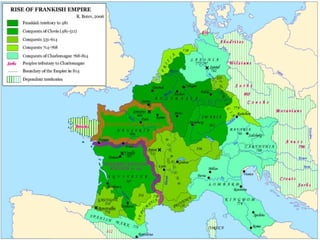
 The Frankish Kingdom (Carolingian Empire by the
700s)
 The Franks were a Germanic tribe
 Under King Clovis (465-511) who acquired parts of
Germany, France, etc.
 Converted his people to Catholicism
Early Kingdoms
 Charlemagne (768-814)
 Defended Frankish territory against Viking, Barbarian, and
Muslims.
 Expanded the kingdom and transformed it into the Carolingian
Empire
 Pope crowned him Holy Roman Emperor in 800.
 Supporter of education (church-based)
 Strong, but still feudal.
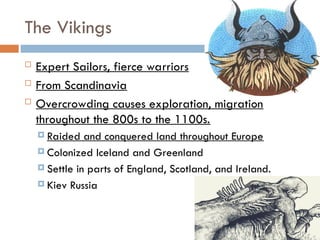
The Vikings
 Expert Sailors, fierce warriors
 From Scandinavia
 Overcrowding causes exploration, migration
throughout the 800s to the 1100s.
 Raided and conquered land throughout Europe
 Colonized Iceland and Greenland
 Settle in parts of England, Scotland, and Ireland.
 Kiev Russia
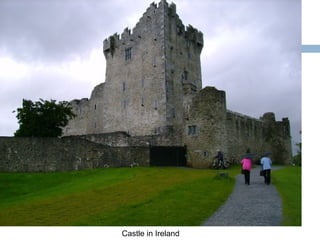
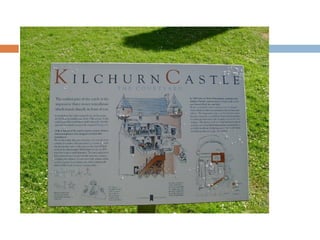
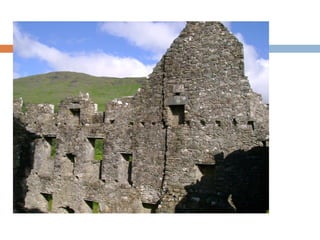
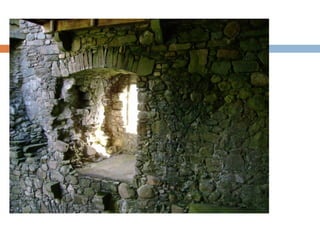
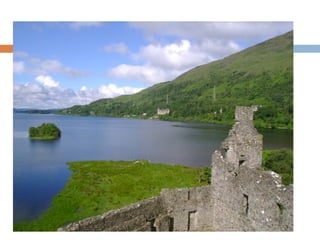
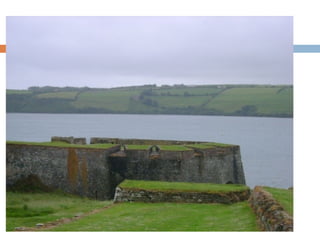
Castle in Ireland
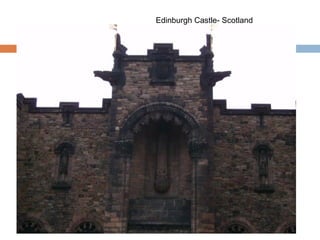
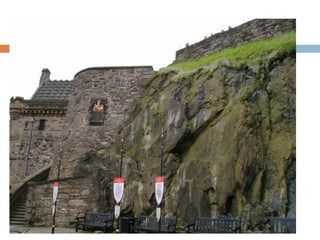
Edinburgh Castle- Scotland
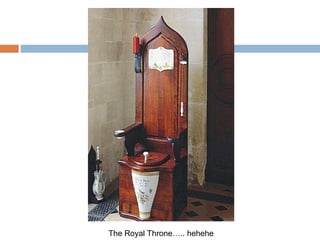
The Royal Throne….. hehehe
England and France
 In 1066, William the Conqueror leads the Norman
Conquest of England.
 Normans were descendants of Vikings who had settled
in France.
 William defeated the Saxon King in England.
 Norman Conquest brought Feudalism Monarchy to
England
England and France
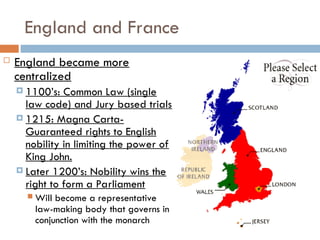
 England became more
centralized
 1100’s: Common Law (single
law code) and Jury based trials
 1215: Magna Carta-
Guaranteed rights to English
nobility in limiting the power of
King John.
 Later 1200’s: Nobility wins the
right to form a Parliament
 Will become a representative
law-making body that governs in
conjunction with the monarch
England and France
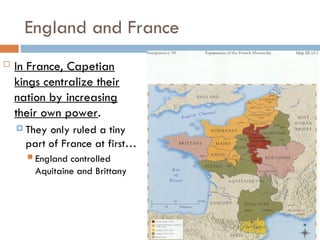
 In France, Capetian
kings centralize their
nation by increasing
their own power.
 They only ruled a tiny
part of France at first…
 England controlled
Aquitaine and Brittany
Central and Southern Europe
 Holy Roman Empire dominated most of Central Europe
 Multi-cultural monarchy in which the crown passed back and
forth amongst a group of German noble families.
 Founded in the 900’s by the heirs of Charlemagne
 The Emperor was supposed to work in partnership with the
Pope, but in reality they clashed more than cooperated.
 The Holy Roman Empire was one of Medieval Europe's
largest states, but the Emperor’s powers were
comparatively weak.
 Position was not hereditary…chosen by the empire’s most
powerful noble families
Central and Southern Europe
 Italy: Part of Northern Italy was under the control of
the Holy Roman Empire.
 The parts of Italy that remained free were
governed by dozens of city-states.
 Italy was highly urbanized, highly cultured, and had
a strong commercial economy.
 Venice created this era’s richest and most powerful
maritime and commercial empires.
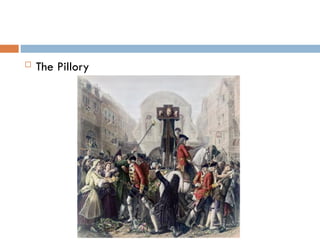
 The Pillory
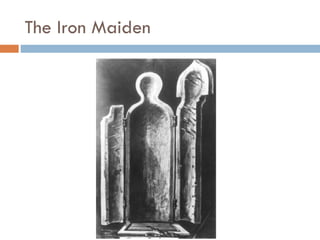
The Iron Maiden
Urbanization
 From 1000 to 1300 population growth in Europe was
considerable.
 Advanced agricultural techniques
 Three-field system of crop rotation
 Invention of better plows
 Food supply increases
 Trade and commerce become a part of European economy.
 Political stability encourages
 Banking
 Movement of goods (on water)
 Trade routes
 Trade routes sprang up in Italy, on the Rhine River, in the North
Sea and English Channel, and throughout the Baltic Sea
 Hanseatic League: Group of traders whose influence stretched from
England in the west to Russia in the East.
Urbanization
 Banking made trade more feasible and dependable.
 The majority of people remained on the countryside as
peasants and serfs. But, there was an increasingly large
number of people moving to cities.
 Great sources of trade
 Attracted artists, writers, and scholars.
 Urban populations included shopkeepers, artisans, tradespeople,
and laborers
 Growth of cities encouraged specialization of labor.
 Skilled trades were organized in the Guild System, which were
labor groups that maintained a monopoly on their trade.
 Restricted membership, established prices, and set standards of quality
and fair practice.
Social Stress
 Persecution of witches
 Black Death (bubonic plague)
 After killing millions of people in China, the disease
traveled westward to the Middle East, then onto the
shores of Sicily in 1347.
 1347-1348: Southern Europe
 1349-1350: Central Europe and the British isles
 1351-1353: Russia and Scandinavia
 The initial bout of the plague killed 25-30 million
people, roughly 1/3 of the population of Europe.
Women in Medieval Europe
 Women were subservient to men in Europe. Rights were
determined by social status.
 Lower Status: Cared for the household and assisted with
farm work, bore children and raised them, work as
servants for upper class families.
 Women had some property rights
 Could own and inherit land and property.
 Women could separate from husbands, but divorces and
annulments were difficult.
 Women had legal protection, but often not equal.
Medieval Culture
 Medieval Art was religious in nature
 Icons, or religious paintings, were inspired by Byzantine
styles, even in Catholic Europe.
 Medieval music was plainsong, known as Gregorian
chant…human voice, unaccompanied by instruments.
 Over time, arrangements become more complex,
including instruments
 The greatest achievement of medieval architecture
was the cathedral, which required skill, money, and
decades to build.
Medieval Culture
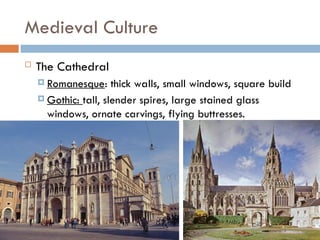
 The Cathedral
 Romanesque: thick walls, small windows, square build
 Gothic: tall, slender spires, large stained glass
windows, ornate carvings, flying buttresses.
Medieval Culture
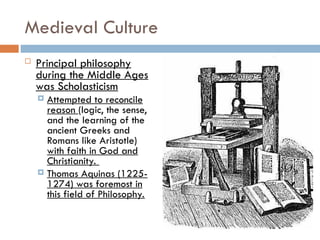
 Principal philosophy
during the Middle Ages
was Scholasticism
 Attempted to reconcile
reason (logic, the sense,
and the learning of the
ancient Greeks and
Romans like Aristotle)
with faith in God and
Christianity.
 Thomas Aquinas (1225-
1274) was foremost in
this field of Philosophy.

EuropeduringtheMiddleAgesandtheRenaissancech10.ppt

  • 1.
    Europe during theMiddle Ages
  • 2.
    Periodization  The MiddleAges lasted from approximately 500 to 1500 CE.  The medieval era is broken down into three phases  Early Middle Ages: ca. 500 – 1000 CE  Political decentralization  High Middle Ages: ca. 1000 – 1300 CE  Revival  Nations became defined  Economy grew healthier  Late Middle Ages: ca. 1300 – 1500 CE  Crisis and advancement  Social Unrest, Warfare, and the Black Death  The Renaissance
  • 3.
    Feudalism  After thecollapse of the Roman Empire, no single ruler was able to provide Europe with Central Authority  No power, no money, or military strength  The solution was: Feudalism  Lords and Monarchs award land to loyal followers (vassals).  In exchange, the vassals guaranteed that  their parcel of land (fief) would be governed  Law and justice would be dispensed  Crops would be grown  The land would be protected.
  • 4.
    Feudalism  Those whomonarchs gave land grants to become Europe’s noble class.  All members of the feudal nobility were tied to the monarch by bonds of loyalty and landownership. **COPY CHART
  • 5.
    Feudalism  Feudalism alsoprovided a military function: to provide an elite force of armored cavalry (knights).  Only members of the upper class could become knights because of the cost of weapons and training.  The code of Chivalry theoretically managed the behavior of the knights  Treated the lower classes with justice  Acted gentlemanly toward women  Tends to be more myth than reality…
  • 6.
    Manorialism  The vastmajority of people in Medieval Europe were peasants.  The basic unit of land ownership was the manor, which typically surrounded the lord’s residence (which was an estate or castle) and included the peasant village, fields for farming, as well as woodland where animals were hunted and wood was gathered.
  • 7.
  • 8.
    Economy of theMiddle Ages  Feudal system relied on the labor of the peasant. Most peasants were serfs.  Technically, not slaves, but…also, not free  Not allowed to change residence or profession without permission  Most of their work benefitted the Lord  Labor devoted to building roads, clearing forests, gathering firewood, farming the lord’s private fields.  Had to pay fees to use the manor’s facilities, including the bread oven, water mill, and cider press.  In times of war, serfs had to fight.
  • 9.
    Christianity  Christianity actedas a binding force for European nations following the fall of Rome.  Cultural and Political unification…  Monasteries preserve Latin and Greek manuscripts from the Roman Era  Scientific and philosophical essays, literary works, etc.
  • 10.
    Christianity  Leader ofthe Catholic Church was the pope  Archbishops and Cardinals act as advisors  Bishops  Priests  Monks and Nuns  After 1000 CE, the church became increasingly powerful.
  • 11.
    Early Kingdoms  Weakstates, decentralized governments dominate the 500’s and 600’s  Viking raids and Muslim invasions  The Frankish Kingdom (Carolingian Empire by the 700s)  The Franks were a Germanic tribe  Under King Clovis (465-511) who acquired parts of Germany, France, etc.  Converted his people to Catholicism
  • 12.
    Early Kingdoms  Charlemagne(768-814)  Defended Frankish territory against Viking, Barbarian, and Muslims.  Expanded the kingdom and transformed it into the Carolingian Empire  Pope crowned him Holy Roman Emperor in 800.  Supporter of education (church-based)  Strong, but still feudal.
  • 14.
    The Vikings  ExpertSailors, fierce warriors  From Scandinavia  Overcrowding causes exploration, migration throughout the 800s to the 1100s.  Raided and conquered land throughout Europe  Colonized Iceland and Greenland  Settle in parts of England, Scotland, and Ireland.  Kiev Russia
  • 15.
  • 16.
  • 18.
  • 24.
    England and France In 1066, William the Conqueror leads the Norman Conquest of England.  Normans were descendants of Vikings who had settled in France.  William defeated the Saxon King in England.  Norman Conquest brought Feudalism Monarchy to England
  • 25.
    England and France England became more centralized  1100’s: Common Law (single law code) and Jury based trials  1215: Magna Carta- Guaranteed rights to English nobility in limiting the power of King John.  Later 1200’s: Nobility wins the right to form a Parliament  Will become a representative law-making body that governs in conjunction with the monarch
  • 26.
    England and France In France, Capetian kings centralize their nation by increasing their own power.  They only ruled a tiny part of France at first…  England controlled Aquitaine and Brittany
  • 27.
    Central and SouthernEurope  Holy Roman Empire dominated most of Central Europe  Multi-cultural monarchy in which the crown passed back and forth amongst a group of German noble families.  Founded in the 900’s by the heirs of Charlemagne  The Emperor was supposed to work in partnership with the Pope, but in reality they clashed more than cooperated.  The Holy Roman Empire was one of Medieval Europe's largest states, but the Emperor’s powers were comparatively weak.  Position was not hereditary…chosen by the empire’s most powerful noble families
  • 28.
    Central and SouthernEurope  Italy: Part of Northern Italy was under the control of the Holy Roman Empire.  The parts of Italy that remained free were governed by dozens of city-states.  Italy was highly urbanized, highly cultured, and had a strong commercial economy.  Venice created this era’s richest and most powerful maritime and commercial empires.
  • 31.
  • 32.
  • 33.
    Urbanization  From 1000to 1300 population growth in Europe was considerable.  Advanced agricultural techniques  Three-field system of crop rotation  Invention of better plows  Food supply increases  Trade and commerce become a part of European economy.  Political stability encourages  Banking  Movement of goods (on water)  Trade routes  Trade routes sprang up in Italy, on the Rhine River, in the North Sea and English Channel, and throughout the Baltic Sea  Hanseatic League: Group of traders whose influence stretched from England in the west to Russia in the East.
  • 34.
    Urbanization  Banking madetrade more feasible and dependable.  The majority of people remained on the countryside as peasants and serfs. But, there was an increasingly large number of people moving to cities.  Great sources of trade  Attracted artists, writers, and scholars.  Urban populations included shopkeepers, artisans, tradespeople, and laborers  Growth of cities encouraged specialization of labor.  Skilled trades were organized in the Guild System, which were labor groups that maintained a monopoly on their trade.  Restricted membership, established prices, and set standards of quality and fair practice.
  • 35.
    Social Stress  Persecutionof witches  Black Death (bubonic plague)  After killing millions of people in China, the disease traveled westward to the Middle East, then onto the shores of Sicily in 1347.  1347-1348: Southern Europe  1349-1350: Central Europe and the British isles  1351-1353: Russia and Scandinavia  The initial bout of the plague killed 25-30 million people, roughly 1/3 of the population of Europe.
  • 36.
    Women in MedievalEurope  Women were subservient to men in Europe. Rights were determined by social status.  Lower Status: Cared for the household and assisted with farm work, bore children and raised them, work as servants for upper class families.  Women had some property rights  Could own and inherit land and property.  Women could separate from husbands, but divorces and annulments were difficult.  Women had legal protection, but often not equal.
  • 37.
    Medieval Culture  MedievalArt was religious in nature  Icons, or religious paintings, were inspired by Byzantine styles, even in Catholic Europe.  Medieval music was plainsong, known as Gregorian chant…human voice, unaccompanied by instruments.  Over time, arrangements become more complex, including instruments  The greatest achievement of medieval architecture was the cathedral, which required skill, money, and decades to build.
  • 38.
    Medieval Culture  TheCathedral  Romanesque: thick walls, small windows, square build  Gothic: tall, slender spires, large stained glass windows, ornate carvings, flying buttresses.
  • 39.
    Medieval Culture  Principalphilosophy during the Middle Ages was Scholasticism  Attempted to reconcile reason (logic, the sense, and the learning of the ancient Greeks and Romans like Aristotle) with faith in God and Christianity.  Thomas Aquinas (1225- 1274) was foremost in this field of Philosophy.